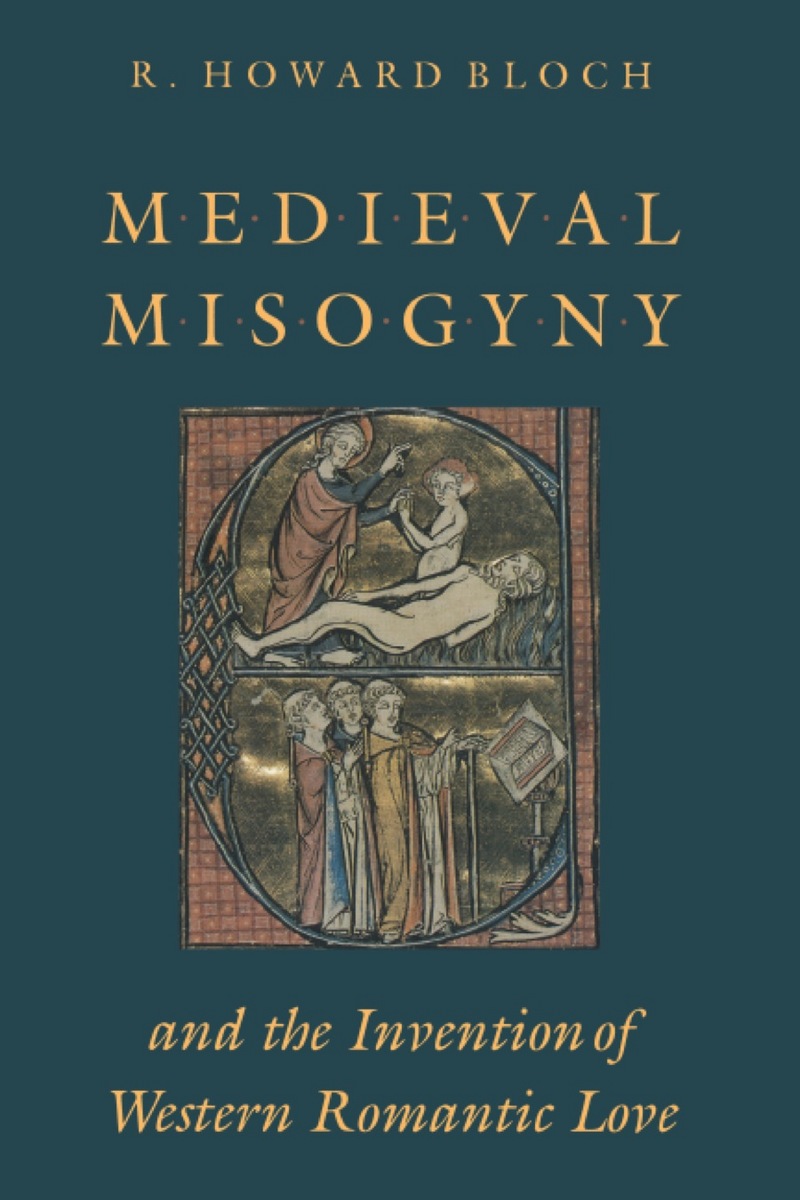
Medieval Misogyny and the Invention of Western Romantic Love
University of Chicago Press, 1991
Cloth: 978-0-226-05972-3 | Paper: 978-0-226-05973-0 | Electronic: 978-0-226-05990-7
DOI: 10.7208/chicago/9780226059907.001.0001
Cloth: 978-0-226-05972-3 | Paper: 978-0-226-05973-0 | Electronic: 978-0-226-05990-7
DOI: 10.7208/chicago/9780226059907.001.0001
AVAILABLE FROM
University of Chicago Press (paper, ebook)Amazon Kindle (PDF)
Brytewave (CafeScribe-Follett Higher Ed)
DeGruyter Multi-User Ebook Program
ebrary
EBSCO eBooks (formerly NetLibrary)
Kno
ABOUT THIS BOOKTABLE OF CONTENTS
ABOUT THIS BOOK
Until now the advent of Western romantic love has been seen as a liberation from—or antidote to—ten centuries of misogyny. In this major contribution to gender studies, R. Howard Bloch demonstrates how similar the ubiquitous antifeminism of medieval times and the romantic idealization of woman actually are.
Through analyses of a broad range of patristic and medieval texts, Bloch explores the Christian construction of gender in which the flesh is feminized, the feminine is aestheticized, and aesthetics are condemned in theological terms. Tracing the underlying theme of virginity from the Church Fathers to the courtly poets, Bloch establishes the continuity between early Christian antifeminism and the idealization of woman that emerged in the twelfth and thirteenth centuries. In conclusion he explains the likely social, economic, and legal causes for the seeming inversion of the terms of misogyny into those of an idealizing tradition of love that exists alongside its earlier avatar until the current era.
This startling study will be of great value to students of medieval literature as well as to historians of culture and gender.
Through analyses of a broad range of patristic and medieval texts, Bloch explores the Christian construction of gender in which the flesh is feminized, the feminine is aestheticized, and aesthetics are condemned in theological terms. Tracing the underlying theme of virginity from the Church Fathers to the courtly poets, Bloch establishes the continuity between early Christian antifeminism and the idealization of woman that emerged in the twelfth and thirteenth centuries. In conclusion he explains the likely social, economic, and legal causes for the seeming inversion of the terms of misogyny into those of an idealizing tradition of love that exists alongside its earlier avatar until the current era.
This startling study will be of great value to students of medieval literature as well as to historians of culture and gender.
TABLE OF CONTENTS
Cover
Acknowledgments
Introduction
ONE Molestiae Nuptiarum and the Yahwist Creation
TWO Early Christianity and the Estheticization of Gender
THREE "Devil's Gateway" and "Bride of Christ"
FOUR The Poetics of Virginity
FIVE The Old French Lay and the Myriad Modes of Male Indiscretion
SIX The Love Lyric and the Paradox of Perfection
SEVEN Heiresses and Dowagers: The Power of Women to Dispose
Notes
Bibliography
Index