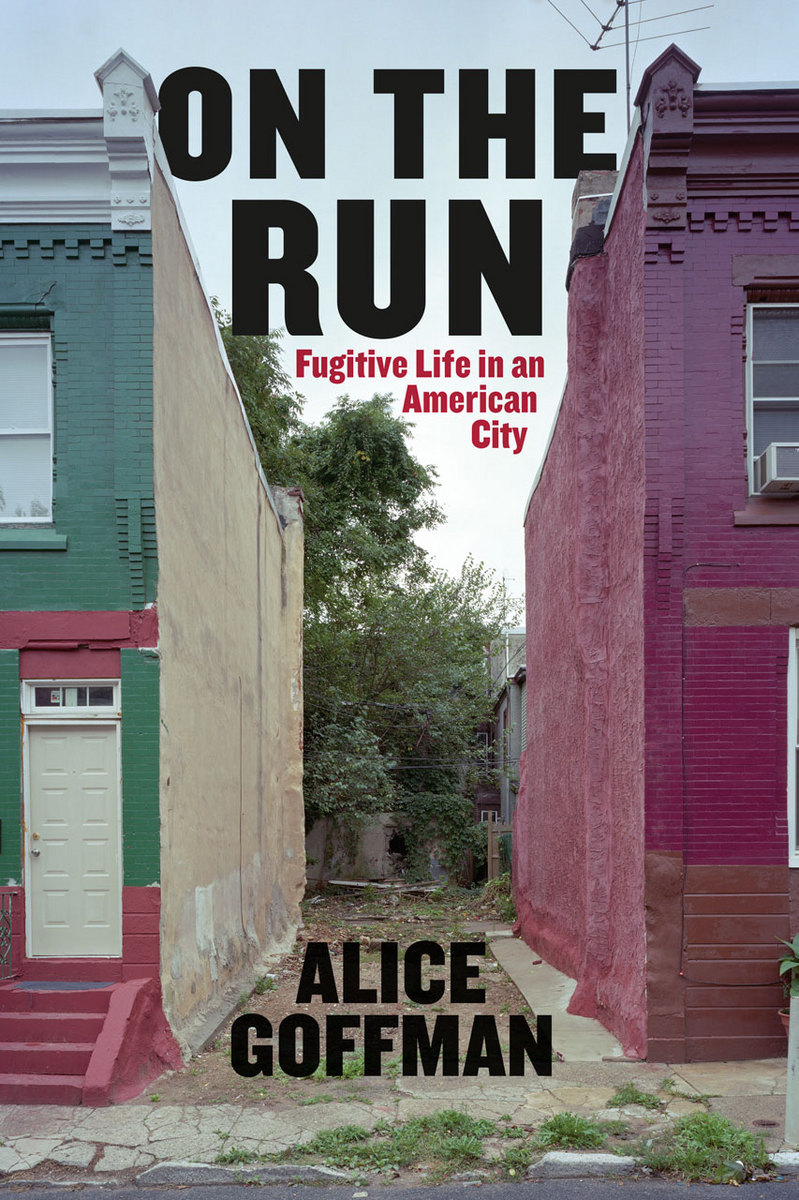
On the Run
Fugitive Life in an American City
University of Chicago Press, 2014
Cloth: 978-0-226-13671-4 | Paper: 978-0-226-27540-6 | Electronic: 978-0-226-13685-1
DOI: 10.7208/chicago/9780226136851.001.0001
Cloth: 978-0-226-13671-4 | Paper: 978-0-226-27540-6 | Electronic: 978-0-226-13685-1
DOI: 10.7208/chicago/9780226136851.001.0001
AVAILABLE FROM
University of Chicago Press (cloth, paper, ebook)Chegg Inc
ebrary
EBSCO eBooks (formerly NetLibrary)
Kno
ABOUT THIS BOOKAUTHOR BIOGRAPHYREVIEWSTABLE OF CONTENTS
ABOUT THIS BOOK
Forty years in, the War on Drugs has done almost nothing to prevent drugs from being sold or used, but it has nonetheless created a little-known surveillance state in America’s most disadvantaged neighborhoods. Arrest quotas and high-tech surveillance techniques criminalize entire blocks, and transform the very associations that should stabilize young lives—family, relationships, jobs—into liabilities, as the police use such relationships to track down suspects, demand information, and threaten consequences.
Alice Goffman spent six years living in one such neighborhood in Philadelphia, and her close observations and often harrowing stories reveal the pernicious effects of this pervasive policing. Goffman introduces us to an unforgettable cast of young African American men who are caught up in this web of warrants and surveillance—some of them small-time drug dealers, others just ordinary guys dealing with limited choices. All find the web of presumed criminality, built as it is on the very associations and friendships that make up a life, nearly impossible to escape. We watch as the pleasures of summer-evening stoop-sitting are shattered by the arrival of a carful of cops looking to serve a warrant; we watch—and can’t help but be shocked—as teenagers teach their younger siblings and cousins how to run from the police (and, crucially, to keep away from friends and family so they can stay hidden); and we see, over and over, the relentless toll that the presumption of criminality takes on families—and futures.
While not denying the problems of the drug trade, and the violence that often accompanies it, through her gripping accounts of daily life in the forgotten neighborhoods of America's cities, Goffman makes it impossible for us to ignore the very real human costs of our failed response—the blighting of entire neighborhoods, and the needless sacrifice of whole generations.
AUTHOR BIOGRAPHY
Alice Goffman is assistant professor of sociology at the University of Wisconsin–Madison. She lives in Madison.
REVIEWS
"An exceptional book. . . . Devastating."
— Malcolm Gladwell, New Yorker“A remarkable feat of reporting.”
— Alex Kotlowitz, New York Times Book Review"This is a remarkable chronicle, informed by Goffman's scholarship, detailed from personal experience as 'participant observer,' and related with honesty and compassion."
— Publishers Weekly"Alice Goffman's On the Run is the best treatment I know of the wretched underside of neo-liberal capitalist America. Despite the social misery and fragmented relations, she gives us a subtle analysis and poignant portrait of our fellow citizens who struggle to preserve their sanity and dignity."
— Cornel West“This is a truly wonderful book that identifies the casualties of the war on drugs that extend beyond the prison walls. The punitive ghettoisation of the poor leaves few families untouched. The detail is incredible. The research is impeccable. Read it and weep."
"Extraordinary. . . . The best work of ethnography I have read in a very, very long time."
— LSE Review of Books"On the Run is riveting--a clear-headed and sobering account of the 'way it is' for too many of the nation's young black men who live in the killing fields called American cities. It reveals how the everyday lives of these men--their loved ones--are closely monitored and mined for evidence that is then used against them, exacerbating their alienation and fueling the prison-industrial complex. This brilliant book should be required reading for everyone, including President Obama, Congress, and public officials throughout the nation."
— Elijah Anderson, author of Code of the Street"On the Run tells, in gripping, hard-won detail, what it’s like to be trapped on the wrong side of the law with no way out--the situation of so many young Black Americans today. A brilliant fieldworker and a smart analyst of what she saw and heard, Goffman has made a lasting contribution to our understanding of the administration of the law, urban life and race relations, in a book you will never forget reading."
— Howard Becker, author of Writing for Social Scientists"By turns On the Run is heartbreaking and clear-eyed, sad and entangled. With rich ethnographic detail, Alice Goffman reveals the emotional arc of deceptively complex young lives that are criminalized daily in one Black neighborhood in Philadelphia. A triumphant achievement!"
— Carol Stack, author of All Our Kin"Powerful. . . . It's clear that Goffman didn’t just research this book; she lived it. . . . Goffman has a gift for bringing to life the troubles and anxieties of ordinary people. . . . Invaluable. . . . A dramatic record of how race is still a key predictor of whether or not some young Americans will have a chance at a 'pursuit of happiness.'"
— Los Angeles Review of BooksTABLE OF CONTENTS
Prologue
Preface
1. The 6th Street Boys and Their Legal Entanglements
3. When the Police Knock Your Door In
4. Turning Legal Troubles into Personal Resources
5. The Social Life of Criminalized Young People
6. The Market in Protections and Privileges
Conclusion: A Fugitive Community
Epilogue: Leaving 6th Street
Acknowledgments
Appendix: A Methodological Note
Notes