Cloth: 978-0-226-32068-7 | Paper: 978-0-226-32066-3 | Electronic: 978-0-226-32115-8
DOI: 10.7208/chicago/9780226321158.001.0001
AVAILABLE FROM
University of Chicago Press (paper, ebook)Brytewave (CafeScribe-Follett Higher Ed)
ebrary
EBSCO eBooks (formerly NetLibrary)
Kno
ABOUT THIS BOOK
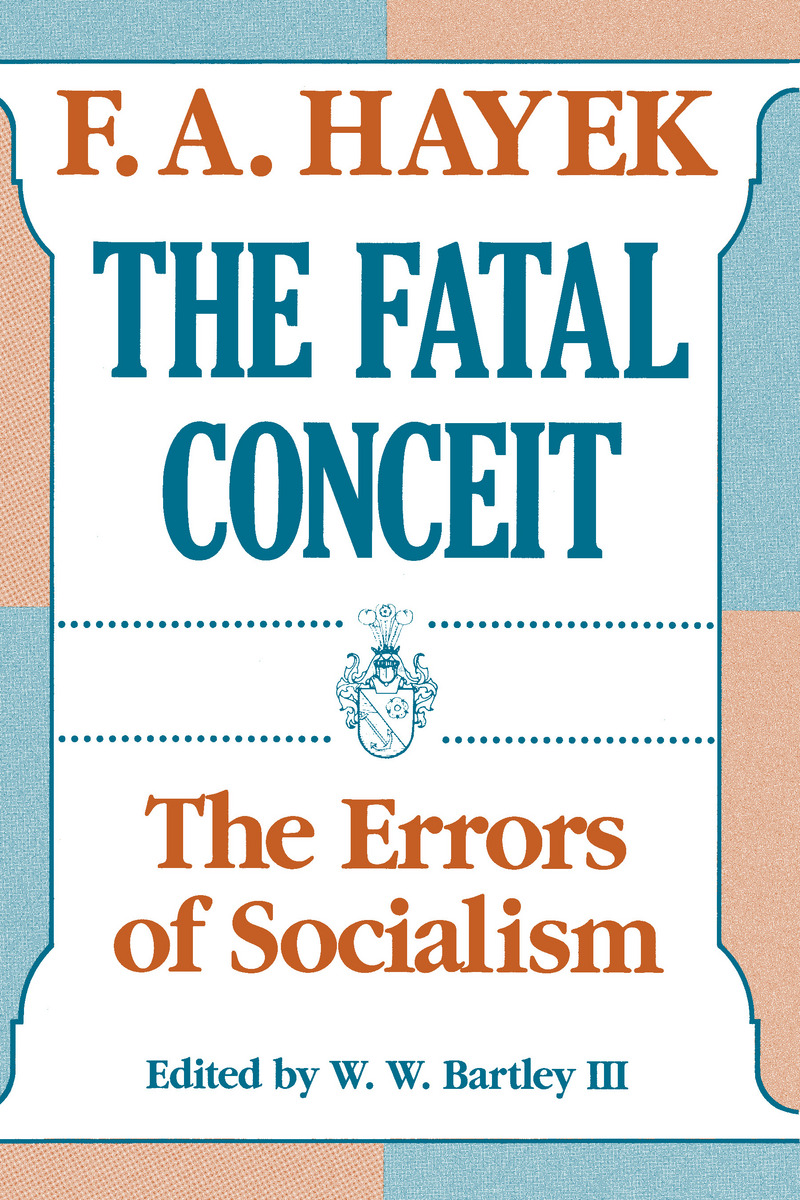
"The achievement of The Fatal Conceit is that it freshly shows why socialism must be refuted rather than merely dismissed—then refutes it again."—David R. Henderson, Fortune.
"Fascinating. . . . The energy and precision with which Mr. Hayek sweeps away his opposition is impressive."—Edward H. Crane, Wall Street Journal
F. A. Hayek is considered a pioneer in monetary theory, the preeminent proponent of the libertarian philosophy, and the ideological mentor of the Reagan and Thatcher "revolutions."
AUTHOR BIOGRAPHY
F. A. Hayek (1899-1992), recipient of the Medal of Freedom in 1991 and co-winner of the Nobel Memorial Prize in Economics in 1974, was a pioneer in monetary theory and a leading proponent of classical liberalism in the twentieth century. He taught at the University of London, the University of Chicago, and the University of Freiburg.TABLE OF CONTENTS
Editorial Foreword
Preface
Introduction: Was Socialism a Mistake?
One: Between Instinct and Reason
Two: The Origins of Liberty, Property and Justice
Three: The Evolution of the Market: Trade and Civilisation
Four: The Revolt of Instinct and Reason
Five: The Fatal Conceit
Six: The Mysterious World of Trade and Money
Seven: Our Poisoned Language
Eight: The Extended Order and Population Growth
Nine: Religion and the Guardians of Tradition
Appendices
A. 'Natural' vs. 'Artificial'
B. The Complexity of Problems of Human Interaction
C. Time and the Emergence and Replication of Structures
D. Alienation, Dropouts, and the Claims of Parasites
E. Play, the School of Rules
F. Remarks on the Economics and Anthropology of Population
G. Superstition and the Preservation of Tradition
Editor's Acknowledgements
Bibliography
Name Index
Subject Index