
 A SCHOLARLY BOOK REPOSITORY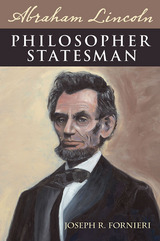
2015 ISHS Superior Achievement Award
What constitutes Lincoln’s political greatness as a statesman? As a great leader, he saved the Union, presided over the end of slavery, and helped to pave the way for an interracial democracy. His great speeches provide enduring wisdom about human equality, democracy, free labor, and free society. Joseph R. Fornieri contends that Lincoln’s political genius is best understood in terms of a philosophical statesmanship that united greatness of thought and action, one that combined theory and practice. This philosophical statesmanship, Fornieri argues, can best be understood in terms of six dimensions of political leadership: wisdom, prudence, duty, magnanimity, rhetoric, and patriotism. Drawing on insights from history, politics, and philosophy, Fornieri tackles the question of how Lincoln’s statesmanship displayed each of these crucial elements.
Providing an accessible framework for understanding Lincoln’s statesmanship, this thoughtful study examines the sixteenth president’s political leadership in terms of the traditional moral vision of statecraft as understood by epic political philosophers such as Aristotle and St. Thomas Aquinas. Fornieri contends that Lincoln’s character is best understood in terms of Aquinas’s understanding of magnanimity or greatness of soul, the crowning virtue of statesmanship. True political greatness, as embodied by Lincoln, involves both humility and sacrificial service for the common good. The enduring wisdom and timeless teachings of these great thinkers, Fornieri shows, can lead to a deeper appreciation of statesmanship and of its embodiment in Abraham Lincoln.
With the great philosophers and books of western civilization as his guide, Fornieri demonstrates the important contribution of normative political philosophy to an understanding of our sixteenth president. Informed by political theory that draws on the classics in revealing the timelessness of Lincoln’s example, his interdisciplinary study offers profound insights for anyone interested in the nature of leadership, statesmanship, political philosophy, political ethics, political history, and constitutional law.
An accidental glance at a newspaper notice causes Rousseau to collapse under the force of a vision. A car accidentally hits Giacometti, and he experiences an epiphany. Darwin introduces accident to the basic process of life, and Freud looks to accident as the expression of unconscious desire. Accident, Ross Hamilton claims, is the force that makes us modern. Tracing the story of accident from Aristotle to Buster Keaton and beyond, Hamilton’s daring book revives the tradition of the grand history of ideas.
Accident tells an original history of Western thought from the perspective of Aristotle’s remarkably durable categories of accident and substance. Throughout antiquity and the Middle Ages, Aristotle’s distinction underwrote an insistence on order and subordination of the inessential. In a groundbreaking innovation, Hamilton argues that after the Reformation, the concept of accident began to change places with that of substance: accident became a life-transforming event and effectively a person’s essence. For moderns, it is the accidental, seemingly trivial moments of consciousness that, like Wordsworth’s “spots of time,” create constellations of meaning in our lives. Touching on a broad array of images and texts—Augustine, Dante, the frescoes of Raphael, Descartes, Jane Austen, the work of the surrealists, and twentieth-century cinema—Hamilton provides a new way to map the mutations of personal identity and subjectivity.
Although America’s founders may have been inspired by the political thought of ancient Greece and Rome, the United States is more often characterized by its devotion to the pursuit of commerce. Some have even said that a modern commercial republic such as the United States unavoidably lowers its moral horizon to little more than a concern with securing peace and prosperity so that commerce can flourish.
Stephanos and his teacher return in Aristotle and Poetic Justice, when a party given by wealthy Athenian silver miners leads to kidnapping, a ghost, a road trip to Delphi, and, of course, murder. More historical fiction than a detective novel, this sequel runs the gamut of Athenian social customs, myth, politics, and economics—from the trials of virgin love to the dangers of silver lust.
With Aristotle and the Secrets of Life, tensions between the Athenians and the Makedonians—followers of another of Aristotle’s former students, Alexander the Great—draw our heroes across the Aegean Sea. Even as Aristotle and Stephanos escape from pirates, uncover conspiracy, and face the horrors of war, Aristotle finds time to discuss his studies of the natural world in this gripping tale of their quest into darkness.
Today, democracy is seen as the best or even the only legitimate form of government. With this book, Delba Winthrop punctures this complacency and takes up the challenge of justifying democracy through Aristotle’s political science. In Aristotle’s time and in ours, democrats want inclusiveness; they want above all to include everyone as a part of a whole. But what makes a whole? This is a question for both politics and philosophy, and Winthrop shows that Aristotle pursues the answer in the Politics. She uncovers in his political science the insights philosophy brings to politics and, especially, the insights politics brings to philosophy. Through her appreciation of this dual purpose and her skilled execution of her argument, Winthrop makes profound discoveries. Central to politics, she maintains, is the quality of assertiveness—the kind of speech that demands to be heard. Aristotle, she shows for the first time, carries assertive speech into philosophy, where human reason claims its due as a contribution to the universe. Political science has the high role of teaching ordinary folk about democracy and what sustains it.
This posthumous publication is more than an honor to Delba Winthrop’s memory. It is a gift to partisans of democracy, advocates of justice, and students of Aristotle.
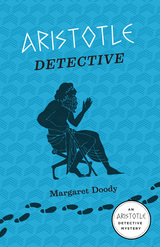
In Aristotle Detective, we first meet Stephanos—naive Watson to Aristotle’s learned Holmes—a young landed Athenian and student of Aristotle. With the aid of his cunning, olive-loving teacher, Stephanos must clear his exiled cousin of murder and save his family’s honor in a tense public trial. Will Stephanos survive to cinch the case?
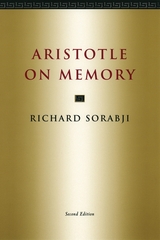
“Sorabji has produced a first-class book on an important topic. All Aristotelians, and anyone with an interest in any aspect of memory, will be in his debt.”—Jonathan Barnes, Isis
“Anyone concerned with Aristotle’s psychology, theory of mind, or rhetoric, anyone interested in mnemonic systems, and anyone trying to work out for himself a theory of memory, should read Aristotle’s treatise On Memory, with the comments by Richard Sorabji.”—International Studies in Philosophy
“Sorabji’s book is a sample of care, intelligence, and subtlety that the Anglo-Saxon philosophers do not hesitate to invest in such enterprises. . . . The notes seem to leave no detail, no textual difficulty unilluminated.”—Revue de Métaphysique et de Morale
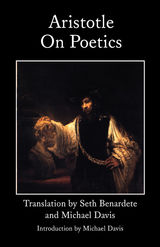
Aristotle’s much-translated On Poetics is the earliest and arguably the best treatment that we possess of tragedy as a literary form. The late Seth Benardete and Michael Davis have translated it anew with a view to rendering Aristotle’s text into English as precisely as possible. A literal translation has long been needed, for in order to excavate the argument of On Poetics one has to attend not simply to what is said on the surface but also to the various puzzles, questions, and peculiarities that emerge only on the level of how Aristotle says what he says and thereby leads one to revise and deepen one’s initial understanding of the intent of the argument. As On Poetics is about how tragedy ought to be composed, it should not be surprising that it turns out to be a rather artful piece of literature in its own right.
Benardete and Davis supplement their edition of On Poetics with extensive notes and appendices. They explain nuances of the original that elude translation, and they provide translations of passages found elsewhere in Aristotle’s works as well as in those of other ancient authors that prove useful in thinking through the argument of On Poetics both in terms of its treatment of tragedy and in terms of its broader concerns. By following the connections Aristotle plots between On Poetics and his other works, readers will be in a position to appreciate the centrality of this little book for his thought on the whole.
In an introduction that sketches the overall interpretation of On Poetics, Davis argues that, while On Poetics is certainly about tragedy, it has a further concern extending beyond poetry to the very structure of the human soul in its relation to what is, and that Aristotle reveals in the form of his argument the true character of human action.
Here Robert C. Bartlett offers a literal, yet easily readable, new translation of Aristotle’s “Art of Rhetoric,” one that takes into account important alternatives in the manuscript and is fully annotated to explain historical, literary, and other allusions. Bartlett’s translation is also accompanied by an outline of the argument of each book; copious indexes, including subjects, proper names, and literary citations; a glossary of key terms; and a substantial interpretive essay.
What is the good life for a human being? Aristotle’s exploration of this question in the Nicomachean Ethics has established it as a founding work of Western philosophy, though its teachings have long puzzled readers and provoked spirited discussion. Adopting a radically new point of view, Ronna Burger deciphers some of the most perplexing conundrums of this influential treatise by approaching it as Aristotle’s dialogue with the Platonic Socrates.
Tracing the argument of the Ethics as it emerges through that approach, Burger’s careful reading shows how Aristotle represents ethical virtue from the perspective of those devoted to it while standing back to examine its assumptions and implications.
“This is the best book I have read on Aristotle’s Nicomachean Ethics. It is so well crafted that reading it is like reading the Ethics itself, in that it provides an education in ethical matters that does justice to all sides of the issues.”—Mary P. Nichols, Baylor University
The most precise and authoritative translation of one of the founding works of Western culture, in an edition supported by helpful, effective notes
The Nicomachean Ethics is one of Aristotle’s most widely read and influential works. Ideas central to ethics—that happiness is the end of human endeavor, that moral virtue is formed through action and habituation, and that good action requires prudence—found their most powerful proponent in the person medieval scholars simply called “the Philosopher.” Drawing on their intimate knowledge of Aristotle’s thought, Robert C. Bartlett and Susan D. Collins have produced here an English-language translation of the Ethics that is as remarkably faithful to the original as it is graceful in its rendering.
Aristotle is well known for the precision with which he chooses his words, and in this elegant translation his work has found its ideal match. Bartlett and Collins provide copious notes and a glossary providing context and further explanation for students, as well as an introduction and a substantial interpretive essay that sketch central arguments of the work and the seminal place of Aristotle’s Ethics in his political philosophy as a whole.
The Nicomachean Ethics has engaged the serious interest of readers across centuries and civilizations—of peoples ancient, medieval, and modern; pagan, Christian, Muslim, and Jewish—and this new edition will take its place as the standard English-language translation.
Aristotle may be the only thinker to propose a noncircular definition of change. With his landmark argument that change did, in fact, exist, Aristotle challenged established assumptions about what it is and developed a set of conceptual frameworks that continue to provide insight into the nature of reality. This groundbreaking work on change, however, has long been interpreted through a Platonist view of change as unreal. By offering a comprehensive reexamination of Aristotle’s pivotal arguments, and establishing his positive ontological conception of change, Sentesy makes a significant contribution to scholarship on Aristotle, ancient philosophy, the history and philosophy of science, and metaphysics.
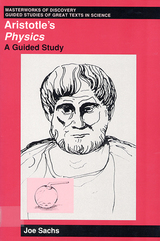
This is a new translation, with introduction, commentary, and an explanatory glossary.
"Sachs's translation and commentary rescue Aristotle's text from the rigid, pedantic, and misleading versions that have until now obscured his thought. Thanks to Sachs's superb guidance, the Physics comes alive as a profound dialectical inquiry whose insights into the enduring questions about nature, cause, change, time, and the 'infinite' are still pertinent today. Using such guided studies in class has been exhilarating both for myself and my students." ––Leon R. Kass, The Committee on Social Thought, University of Chicago
Aristotle’s Physics is the only complete and coherent book we have from the ancient world in which a thinker of the first rank seeks to say something about nature as a whole. For centuries, Aristotle’s inquiry into the causes and conditions of motion and rest dominated science and philosophy. To understand the intellectual assumptions of a powerful world view—and the roots of the Scientific Revolution—reading Aristotle is critical. Yet existing translations of Aristotle’s Physics have made it difficult to understand either Aristotle’s originality or the lasting value of his work.
In this volume in the Masterworks of Discovery series, Joe Sachs provides a new plain-spoken English translation of all of Aristotle’s classic treatise and accompanies it with a long interpretive introduction, a running explication of the text, and a helpful glossary. He succeeds brilliantly in fulfilling the aim of this innovative series: to give the general reader the tools to read and understand a masterwork of scientific discovery.
The core of the book is a fresh appraisal of Aristotle's view of tragic drama, in which Halliwell contends that at the heart of the Poetics lies a philosophical urge to instill a secularized understanding of Greek tragedy.
"Essential reading not only for all serious students of the Poetics . . . but also for those—the great majority—who have prudently fought shy of it altogether."—B. R. Rees, Classical Review
"A splendid work of scholarship and analysis . . . a brilliant interpretation."—Alexander Nehamas, Times Literary Supplement
Close examination of Aristotle’s treatise, Garver finds, reveals a significant, practical role for philosophy to play in politics. Philosophers present arguments about issues—such as the right and the good, justice and modes of governance, the relation between the good person and the good citizen, and the character of a good life—that politicians must then make appealing to their fellow citizens. Completing Garver’s trilogy on Aristotle’s unique vision, Aristotle’s Politics yields new ways of thinking about ethics and politics, ancient and modern.
In this book, Jasper Neel’s sure-to-be-controversial resituating of Aristotle centers around three questions that have been constants in his twenty-two years of teaching experience: What does itmean to teach writing? What should one know before teaching writing? And, if there is such a thing as "research in the teaching of writing," what is it?
Believing that all composition teachers are situated politically and socially, both as part of the institution in which they teach and as beings with lived histories, Neel examines his own life and the life of composition studies as a discipline in the context of Aristotle. Neel first situates the Rhetoric as a political document; he then situates the Rhetoric in the Aristotelian system and describes how professional discourse came to know itself through Aristotle’s way of studying the world; finally, he examines the operation of the Rhetoric inside itself before arguing the need to turn to Aristotle’s notion of sophistry as a way of negating his system.
By pointing out the connections among Aristotelian rhetoric, the contemporary university, and the contemporary writing teacher, Neel shows that Aristotle’s frightening social theories are as alive today as are Aristotelian notions of discourse.
Neel explains that by their very nature teachers must speak with a professional voice. It is through showing how to "hear" one’s professional voice that Neel explores the notion of professional discourse that originates with Aristotle. In maintaining that one must pay a high price in order to speak through Aristotle’s theory or to assume the role of "professional," he argues that no neutral ground exists either for pedagogy or for the analysis of pedagogy. Neel concludes this discussion by proposing that Aristotelian sophistry is both an antidote to Aristotelian racism, sexism, and bigotry and a way of allowing Aristotelian categories of discourse to remain useful.
Finally, as an Aristotelian, a teacher, and a writer, Neel responds both to Aristotle and to professionalism by rethinking the influence of the past and reviving the voice of Aristotelian sophistry.
Abū al-Walīd Muḥammad ibn Aḥmad ibn Rushd (d. 1198 AD), known as Averroes in the West, wrote one of the most significant medieval Arabic commentaries on Aristotle’s famous treatise, Rhetoric. Averroes worked within a tradition that included the Muslim philosophers Al-Farabi (d. 950) and Avicenna (d. 1037), who together built an early canon introducing Aristotle’s writings to the academies of medieval Europe. Here, for the first time, Lahcen El Yazghi Ezzaher translates Averroes’ Middle Commentary into English, with analysis highlighting its shaping of philosophical thought.
Ibn Rushd was born into a prominent family living in Córdoba and Seville during the reign of the Almoḥad dynasty in the Maghreb and al-Andalus. At court, he received support to write a body of rhetorical commentaries extending the work of his Arabic-Muslim predecessors, a critical step in fostering Aristotle’s influence on European scholasticism and Western education. Ezzaher’s meticulous translation of Averroes’ Middle Commentary reflects the depth and breadth of this engagement, incorporating a discussion of the Arabic-Muslim commentary tradition and Averroes’ contribution to it. His research illuminates the complexity of Averroes’ position, articulating the challenges Muslim scholars faced in making non-Muslim texts available to their community. Through his work, we see how people at different historical moments have adapted intellectual concepts to preserve rhetoric’s vitality and relevance in new contexts.
Averroes’ Middle Commentary exemplifies the close connections between ancient Greece and medieval Muslim scholarship and the ways Muslim scholars navigated an appreciation for Aristotelian philosophy alongside a commitment to their cultural and religious systems.
What is the good life? Posing this question today would likely elicit very different answers. Some might say that the good life means doing good—improving one’s community and the lives of others. Others might respond that it means doing well—cultivating one’s own abilities in a meaningful way. But for Aristotle these two distinct ideas—doing good and doing well—were one and the same and could be realized in a single life. In Confronting Aristotle’s Ethics, Eugene Garver examines how we can draw this conclusion from Aristotle's works, while also studying how this conception of the good life relates to contemporary ideas of morality.
The key to Aristotle’s views on ethics, argues Garver, lies in the Metaphysics or, more specifically, in his thoughts on activities, actions, and capacities. For Aristotle, Garver shows, it is only possible to be truly active when acting for the common good, and it is only possible to be truly happy when active to the extent of one’s own powers. But does this mean we should aspire to Aristotle’s impossibly demanding vision of the good life? In a word, no. Garver stresses the enormous gap between life in Aristotle’s time and ours. As a result, this bookwill be a welcome rumination on not only Aristotle, but the relationship between the individual and society in everyday life.
In this text, Aristotle discusses his predecessors’ views of life, defines the principle of life (“soul”), discusses the principle sorts of living things (plants, animals, and human beings), and analyzes the chief activities of each sort of life. In the case of rational life, he shows that the ability to think implies an immaterial aspect to the human soul.
The De Anima is necessary not only to the study of biology, but also advances the understanding of metaphysics, of ethics and of politics, and even of logic, insofar as logic directs the acts of the human mind.
Like Coughlin’s translation of Aristotle’s Physics (also published by St. Augustine Press), this translation attempts to be literal and concrete. The edition includes the translation, introduction, glossary, index, and explanatory notes.
Moving back and forth between Aristotle's writings and contemporary legal and political theory, Frank breathes new life into our conceptions of property, justice, and law by viewing them not only as institutions but as dynamic activities as well. Frank's innovative approach to Aristotle stresses his appreciation of the tensions and complexities of politics so that we might rethink and reorganize our own political ideas and practices. A Democracy of Distinction will be of enormous value to classicists, political scientists, and anyone interested in revitalizing democratic theory and practice.
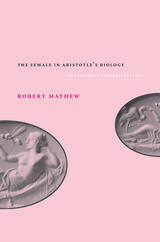
Mayhew points out that the tools of modern science and scientific experimentation were not available to the Greeks during Aristotle's time and that, consequently, Aristotle had relied not only on empirical observations when writing about living organisms but also on a fair amount of speculation. Further, he argues that Aristotle's remarks about females in his biological writings did not tend to promote the inferior status of ancient Greek women.
Written with passion and precision, The Female in Aristotle's Biology will be of enormous value to students of philosophy, the history of science, and classical literature.

Building upon the scholarship of an earlier volume, Dionysus Reborn, Spariosu her continues to draw on Dionysus—the “God of many names,” of both poetic play and sacred power—as a mythical embodiment of the two sides of the classical Greek mentality. Combining philosophical reflection with close textual analysis, the author examines the divided nature of the Hellenic mentality in such primary canonic texts as the Iliad, the Odyssey, the Theogony, Works and Days, the most well-known of the Presocratic fragments, Euripides’ Bacchae, Aristophanes’ The Frogs, Plato’s Republic and Laws, and Aristotle’s Poetics and Politics.
Spariosu’s model illuminates the many of the most enduring questions in contemporary humanistic study and addresses modern questions about the nature of the interrelation of poetry, ethics, and politics.
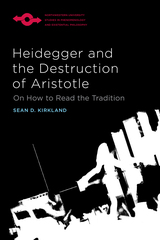
A bold new conception of Heidegger’s project of Destruktion as a method of interpreting history
For Martin Heidegger, our inherited traditions provide the concepts through which we make our world intelligible. Concepts we can also oppose, disrupt, and even exceed. First, however, if Western philosophy is our inheritance, we must submit it to Destruktion—starting with Aristotle. Heidegger and the Destruction of Aristotle: On How to Read the Tradition presents a new conception of Heidegger’s “destruction” as a way of reading.
Situated between Nietzschean genealogy and Derridean deconstruction, this method uncovers in Aristotle the most vital originating articulations of the Western tradition and gives us the means to confront it. Sean D. Kirkland argues this is not a rejection of the past but a sophisticated and indeed timely hermeneutic tool—a complex, illuminating, and powerful method for interpreting historical texts at our present moment. Acknowledging the historical Heidegger as a politically compromised and still divisive figure, Kirkland demonstrates that Heideggerian destruction is a method of interpreting history that enables us to reorient and indeed transform its own most troubling legacies.
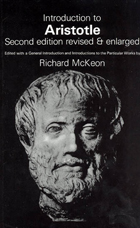
Aristotle's contribution to Western civilization is enormous. Our language, our distinctions, our ways of thinking, all are profoundly affected by his work. Since an understanding of Aristotle is indispensable for the understanding of our own culture, the ready availability of his work is crucial.
This collection, for students and general readers alike, provides in one volume Posterior Analytics (Logic), De Anima (On the Soul), Nicomachean Ethics, and Poetics, complete and unabridged, together with generous selections from Physics, On the Parts of Animals, Metaphysics, Politics, and Rhetoric. These works, together with Professor McKeon's revised introductions, provide a convenient and thorough exposure to the works of Aristotle and to the structural interrelations in the Aristotelian system of thought.
A bonus addition to this volume in the Dallas lecture series is Koon's “Aristotle, god and the Quantum.”
A fresh reading of the relationship between moral and political philosophy in Aristotle’s thought.
Our democracies promise the rights to life, liberty, and the pursuit of happiness—at least, within the confines of the law. Yet the law is an ineffective guide to the good life; laws can be arbitrary, even immoral. What other limit, then, should direct us as we pursue our own fulfillment?
In Law and the Good Life, philosopher Robert C. Bartlett examines Aristotle’s consideration of this question. Rather than defer to authority, Aristotle invites us to ground ourselves in moral virtue and intellectual fulfillment, an argument he develops in both Politics and Nicomachean Ethics. As political creatures, Aristotle tells us, we are capable of moral action and therefore must embrace that capacity; at the same time, as rational creatures, we must understand what is true, even without regard to action. In taking these insights together, Bartlett offers a new reading of Aristotle’s political philosophy, one he hopes might serve as a prudent lodestar in our own turbulent times.
Of all the writings on theory and aesthetics—ancient, medieval, or modern—the most important is indisputably Aristotle’s Poetics, the first philosophical treatise to propound a theory of literature. In the Poetics, Aristotle writes that he will speak of comedy—but there is no further mention of comedy. Aristotle writes also that he will address catharsis and an analysis of what is funny. But he does not actually address any of those ideas. The surviving Poetics is incomplete.
Until today. Here, Walter Watson offers a new interpretation of the lost second book of Aristotle's Poetics. Based on Richard Janko’s philological reconstruction of the epitome, a summary first recovered in 1839 and hotly contested thereafter, Watson mounts a compelling philosophical argument that places the statements of this summary of the Aristotelian text in their true context. Watson renders lucid and complete explanations of Aristotle’s ideas about catharsis, comedy, and a summary account of the different types of poetry, ideas that influenced not only Cicero’s theory of the ridiculous, but also Freud’s theory of jokes, humor, and the comic.
Finally, more than two millennia after it was first written, and after five hundred years of scrutiny, Aristotle’s Poetics is more complete than ever before. Here, at last, Aristotle’s lost second book is found again.

The Middle Included also explores human language in Aristotelian philosophy. After an account of acoustic phenomena and animal communication, Aygün argues that human language for Aristotle is the ability to understand and relay both first-hand experiences and non-first-hand experiences. This definition is key to understanding many core human experiences such as science, history, news media, education, sophistry, and indeed philosophy itself. Logos is thus never associated with any other animal nor with anything divine—it remains strictly and rigorously secular, humane, and yet full of the wonder.
Nowhere is Montesquieu’s critique of the despotic ideas of Europe more powerful than in his enormously influential The Spirit of the Laws, and Vickie B. Sullivan guides readers through Montesquieu’s sometimes veiled, yet sharply critical accounts of Machiavelli, Hobbes, Aristotle, and Plato, as well as various Christian thinkers. He finds deleterious consequences, for example, in brutal Machiavellianism, in Hobbes’s justifications for the rule of one, in Plato’s reasoning that denied slaves the right of natural defense, and in the Christian teachings that equated heresy with treason and informed the Inquisition.
In this new reading of Montesquieu’s masterwork, Sullivan corrects the misconception that it offers simple, objective observations, showing it instead to be a powerful critique of European politics that would become remarkably and regrettably prescient after Montesquieu’s death when despotism wound its way through Europe.
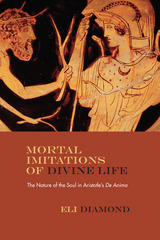
In Mortal Imitations of Divine Life, Diamond offers an interpretation of De Anima, which explains how and why Aristotle places souls in a hierarchy of value. Aristotle’s central intention in De Anima is to discover the nature and essence of soul—the principle of living beings. He does so by identifying the common structures underlying every living activity, whether it be eating, perceiving, thinking, or moving through space. As Diamond demonstrates through close readings of De Anima, the nature of the soul is most clearly seen in its divine life, while the embodied soul’s other activities are progressively clear approximations of this principle. This interpretation shows how Aristotle’s psychology and biology cannot be properly understood apart from his theological conception of God as life, and offers a new explanation of De Anima’s unity of purpose and structure.
“Necessity, Cause and Blame would be counted by all as one of Sorabji’s finest. The book is essential for philosophers—both specialists on the Greeks and modern thinkers about free will—and also compelling for non-specialists.”—Martha Nussbaum
“Original and important . . . The book relates Aristotle’s discussions to both the contemporary debates on determinism and causation and the ancient ones. It is especially detailed on Stoic arguments about necessity . . . and on the social and legal background to Aristotle’s thought.”—Choice
“It is difficult to convey the extraordinary richness of this book. . . . A Greekless philosopher could read it with pleasure . . . At the same time, its learning and scholarship are enormous.”—G. E. M. Anscombe, Times Literary Supplement
Published by Bucknell University Press. Distributed worldwide by Rutgers University Press.
Rabinoff's project is philosophically motivated both by the details of Aristotle’s thought and more generally by an increasing philosophical awareness that the ethical agent is an embodied, situated individual, rather than primarily a disembodied, abstract rational will.
In his masterful translation and accompanying notes, Dr. Else makes a special effort to achieve maximum clarity, while remaining faithful to the original. His constant aim is to provide -- for all readers -- a "way in" to Aristotle's processes of thinking about literature.
This important modern translation is made form the 1965 Oxford Classical Text edition of the Poetics by Rudolf Kassel and thus reflects the latest and most authoritative textual scholarship. Not only the translation but the valuable fund of commentary will delight anyone -- literary critic, philosopher, classicist, or general reader -- who want to learn what Aristotle really said.
This new translation of one of the fundamental texts of Western political thought combines strict fidelity to Aristotle's Greek with a contemporary English prose style. Lord's intention throughout is to retain Aristotle's distinctive style.
The accompanying notes provide literary and historical references, call attention to textual problems, and supply other essential information and interpretation. A glossary supplies working definitions of key terms in Aristotle's philosophical-political vocabulary as well as a guide to linguistic relationships that are not always reflected in equivalent English terms. Lord's extensive Introduction presents a detailed account of Aristotle's life in relation to the political situation and events of his time and then discusses the problematic character and history of Aristotle's writings in general and of the Politics in particular. Lord also outlines Aristotle's conception of political science, tracing its relation to theoretical science on the one hand and to ethics on the other. In conclusion, he briefly traces the subsequent history and influence of the Politics up to modern times.
"Lord's translation is clearly the best available."—Claremont Review

Practical Reason, Aristotle, and Weakness of the Will was first published in 1984. Minnesota Archive Editions uses digital technology to make long-unavailable books once again accessible, and are published unaltered from the original University of Minnesota Press editions.
One of the central problems in recent moral philosophy is the apparent tension between the "practical" or "action-guiding" side of moral judgments and their objectivity. That tension would not exist if practical reason existed (if reason played a substantial role in producing motivation) and if recognition of obligation were one of the areas in which practical reason operated. In Practical Reason, Aristotle, and the Weakness of the Will,Norman Dahl argies that, despite widespread opinion to the contrary, Aristotle held a position on practical reason that both provides an objective basis for ethics and satisfies an important criterion of adequacy—that it acknowledges genuine cases of weakness of the will. In arguing for this, Dahl distinguishes Aristotle's position from that of David Hume, who denied the existence of practical reason. An important part of his argument is an account of the role that Aristotle allowed the faculty nous to play in the acquisition of general ends. Relying both on this argument and on an examination of passages from Aristotle's ethics and psychology, Dahl argues that Aristotle recognized that a genuine conflict of motives can occur in weakness of the will. This provides him with the basis for an interpretation that finds Aristotle acknowledging genuine cases of weakness of the will.
Dahl's arguments have both a philosophical and a historical point. He argues that Aristotle's position on practical reason deserves to be taken seriously, a conclusion he reinforces by comparing that position with more recent attempts, by Kant, Nagel, and Rawls, to base ethics on practical reason.
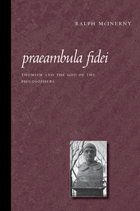

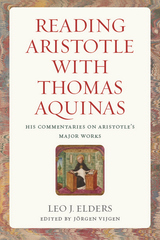
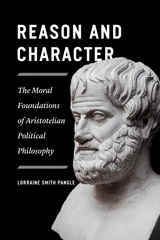
A close and selective commentary on Aristotle’s Nicomachean Ethics, offering a novel interpretation of Aristotle’s teachings on the relation between reason and moral virtue.
What does it mean to live a good life or a happy life, and what part does reason play in the quest for fulfillment? Lorraine Smith Pangle shows how Aristotle’s arguments for virtue as the core of happiness and for reason as the guide to virtue emerge in response to Socrates’s paradoxical claim that virtue is knowledge and vice is ignorance.
Against Socrates, Aristotle does justice to the effectual truth of moral responsibility—that our characters do indeed depend on our own voluntary actions. But he also incorporates Socratic insights into the close interconnection of passion and judgment and the way passions and bad habits work not to overcome knowledge that remains intact but to corrupt the knowledge one thinks one has. Reason and Character presents fresh interpretations of Aristotle’s teaching on the character of moral judgment and moral choice, on the way reason finds the mean—especially in justice—and on the relation between practical and theoretical wisdom.
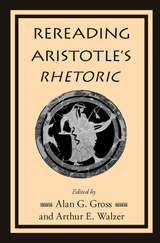
In this collection edited by Alan G. Gross and Arthur E. Walzer, scholars in communication, rhetoric and composition, and philosophy seek to “reread” Aristotle’s Rhetoric from a purely rhetorical perspective. So important do these contributors find the Rhetoric, in fact, that a core tenet in this book is that “all subsequent rhetorical theory is but a series of responses to issues raised by the central work.”
The essays reflect on questions basic to rhetoric as a humanistic discipline. Some explore the ways in which the Rhetoric explicates the nature of the art of rhetoric, noting that on this issue, the tensions within the Rhetoric often provide a direct passageway into our own conflicts.

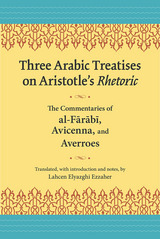
Winner, 2018 MLA Aldo and Jeanne Scaglione Prize for a Translation of a Scholarly Study of Literature
It is increasingly well documented that western rhetoric’s journey from pagan Athens to the medieval academies of Christian Europe was significantly influenced by the intellectual thought of the Muslim Near East. Lahcen Elyazghi Ezzaher contributes to the contemporary chronicling of this influence in Three Arabic Treatises on Aristotle’s Rhetoric: The Commentaries of al-Farabi, Avicenna, and Averroes, offering English translations of three landmark medieval Arabic commentaries on Aristotle's famous rhetorical treatise together in one volume for the first time. Elegant and practical, Elyazghi Ezzaher’s translations give English-speaking scholars and students of rhetoric access to key medieval Arabic rhetorical texts while elucidating the unique and important contribution of those texts to the revival of European interest in the rhetoric and logic of Aristotle, which in turn influenced the rise of universities and the shaping of Western intellectual life.
With a focus on Book I of Aristotle’s Rhetoric, the commentaries ofal-Farabi, Avicenna, and Averroes translated by Elyazghi Ezzaher are paramount examples of an extensive Arabic-Muslim tradition of textual commentary while also serving as rich corollaries to the medieval Greek and Latin rhetorical commentaries produced in Europe. Elyazghi Ezzaher’s translations are each accompanied by insightful scholarly introductions and notes that contextualize—both historically and culturally—these immensely significant works while highlighting a comparative, multidisciplinary approach to rhetorical scholarship that offers new perspectives on one of the field’s foundational texts.
A remarkable addition to rhetorical studies, Three Arabic Treatises on Aristotle’s Rhetoric: The Commentaries of al-Farabi, Avicenna, and Averroes not only provides vibrant English translations of essential medieval Arabic rhetorical texts but also challenges scholars and students of rhetoric to consider their own historical, cultural, and linguistic relationships to the texts and objects they study.
READERS
Browse our collection.
PUBLISHERS
See BiblioVault's publisher services.
STUDENT SERVICES
Files for college accessibility offices.
RECENTLY PUBLISHED




UChicago Accessibility Resources
home | accessibility | search | about | contact us
BiblioVault ® 2001 - 2026
The University of Chicago Press