
 A SCHOLARLY BOOK REPOSITORY
Merging newly discovered documents from Ghana's armed forces and declassified sources on American military assistance to Africa, this work argues that military-sponsored travel made individual Ghanaians' outlooks on the world more international, just as military assistance planners hoped they would, but the Ghanaian state struggled to turn that new identity into political or economic progress.
In war films, the portrayal of deep friendships between men is commonplace. Given the sexually anxious nature of the American imagination, such bonds are often interpreted as carrying a homoerotic subtext. In Armed Forces , Robert Eberwein argues that an expanded conception of masculinity and sexuality is necessary in order to understand more fully the intricacy of these intense and emotional human relationships. Drawing on a range of examples from silent films such as What Price Glory and Wings to sound era works like The Deer Hunter, Platoon, Three Kings, and Pearl Harbor , he shows how close readings of war films, particularly in relation to their cultural contexts, demonstrate that depictions of heterosexual love, including those in romantic triangles, actually help to define and clarify the nonsexual nature of male love. The book also explores the problematic aspects of masculinity and sexuality when threatened by wounds, as in The Best Years of Our Lives, and considers the complex and persistent analogy between weapons and the male body, as in Full Metal Jacket and Saving Private Ryan .
--Richard H. Kohn
"In my opinion Arms and Men is a splendid piece of work, clearly organized, well argued and beautifully written. We have long needed an informed and intelligent commentary on the evolution of American military policy; and in Mr. Millis' book we have it. I think that his book will awaken great interest and be widely used. I am sure also that professional students of the subject will find it possible, after reading this book, to see the course of American military affairs with a new perspective. That is one of the great services performed by Mr. Millis. He has covered the whole subject with authority, but - thank heaven - in a short book, in which the arguments are not blunted by unnecessary detail."
--Gordon A. Craig
"This author knows weapons, politics and human nature. His perceptive grasp of these complexes shines in the writing."
--The New York Times
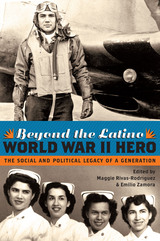
Maggie Rivas-Rodríguez 's edited volume Mexican Americans & World War II brought pivotal stories from the shadows, contributing to the growing acknowledgment of Mexican American patriotism as a meaningful force within the Greatest Generation. In this latest anthology, Rivas-Rodríguez and historian Emilio Zamora team up with scholars from various disciplines to add new insights. Beyond the Latino World War II Hero focuses on home-front issues and government relations, delving into new arenas of research and incorporating stirring oral histories.
These recollections highlight realities such as post-traumatic stress disorder and its effects on veterans' families, as well as Mexican American women of this era, whose fighting spirit inspired their daughters to participate in Chicana/o activism of the 1960s and 1970s. Other topics include the importance of radio as a powerful medium during the war and postwar periods, the participation of Mexican nationals in World War II, and intergovernmental negotiations involving Mexico and Puerto Rico. Addressing the complexity of the Latino war experience, such as the tandem between the frontline and the disruption of the agricultural migrant stream on the home front, the authors and contributors unite diverse perspectives to harness the rich resources of an invaluable oral history.
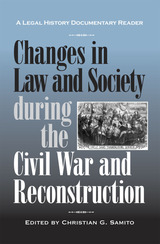
The first comprehensive collection of legal history documents from the Civil War and Reconstruction, this volume shows the profound legal changes that occurred during the Civil War era and highlights how law, society, and politics inextricably mixed and set American legal development on particular paths that were not predetermined. Editor Christian G. Samito has carefully selected excerpts from legislation, public and legislative debates, court cases, investigations of white supremacist violence in the South, and rare court-martial records, added his expert analysis, and illustrated the selections with telling period artwork to create an outstanding resource that demonstrates the rich and important legal history of the era.
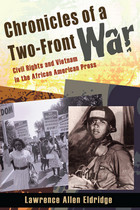
Eldridge reveals how the black press not only reported the war but also weighed its significance in the context of the civil rights movement.
Eldridge examines not only the role of reporters during the war, but also those of editors, commentators, and cartoonists. Especially enlightening is the research drawn from extensive oral histories by prominent journalist Ethel Payne, the first African American woman to receive the title of war correspondent. She described a widespread practice in black papers of reworking material from major white papers without providing proper credit, as the demand for news swamped the small budgets and limited staffs of African American papers. The author analyzes both the strengths of the black print media and the weaknesses in their coverage.
The black press ultimately viewed the Vietnam War through the lens of African American experience, blaming the war for crippling LBJ’s Great Society and the War on Poverty. Despite its waning hopes for an improved life, the black press soldiered on.
Milton calls attention to fabrications of our post-truth era but goes further to deeply explore the ways members of the Peruvian military see their past, how they actively commemorate and curate it in the present, and why they do so. Her nuanced approach upends frameworks of memory studies that reduce military and ex-military to a predictable role of outright denial.
In nine insightful chapters, this volume's contributors outline each nation's demilitarization choices and how they were made. They investigate factors such as military defeat, border security risks, economic pressures, and the development of strong peace cultures among citizenry. Also at center stage is the influence of the United States, which fills a paradoxical role as both an enabler of demilitarization and a leader in steadily accelerating militarization.
Bookended by Peter N. Stearns' thought-provoking historical introduction and forward-looking conclusion, the chapters in this volume explore what true demilitarization means and how it impacts a society at all levels, military and civilian, political and private. The examples chosen reveal that successful demilitarization must go beyond mere troop demobilization or arms reduction to generate significant political and even psychological shifts in the culture at large. Exemplifying the political difficulties of demilitarization in both its failures and successes, Demilitarization in the Contemporary World provides a possible roadmap for future policies and practices.
Until 1930, Argentina was one of the great hopes for stable democracy in Latin America. Argentines themselves believed in the destiny of their nation to become the leading Latin American country in wealth, power, and culture. But the revolution of 1930 unleashed the scourges of modern militarism and chronic instability in the land. Between 1930 and 1966, the Argentine armed forces, or factions of the armed forces, overthrew the government five times.
For several decades, militarism was the central problem in Argentine political life. In this study, Marvin Goldwert interprets the rise, growth, and development of militarism in Argentina from 1930 to 1966. The tortuous course of Argentine militarism is explained through an integrating hypothesis. The army is viewed as a “power factor,” torn by a permanent dichotomy of values, which rendered it incapable of bringing modernization to Argentina. Caught between conflicting drives for social order and modernization, the army was an ambivalent force for change. First frustrated by incompetent politicians (1916–1943), the army was later driven by Colonel Juan D. Perón into an uneasy alliance with labor (1943–1955). Peronism initially represented the means by which army officers could have their cake—nationalistic modernization—and still eat it in peace, with the masses organized in captive unions tied to an authoritarian state.
After 1955, when Perón was overthrown, a deeply divided army struggled to contain the remnants of its own dictatorial creation. In 1966, the army, dedicated to staunch anti-Peronism, again seized the state and revived the dream of reconciling social order and modernization through military rule.
Although militarism has been a central problem in Argentine political life, it is also the fever that suggests deeper maladies in the body politic. Marvin Goldwert seeks to relate developments in the military to the larger political, social, and economic developments in Argentine history. The army and its factions are viewed as integral parts of the whole political spectrum during the period under study.
In a groundbreaking study, Marybeth Peterson Ulrich explores the attitudes of the leaders of the armed forces in Russia and the Czech Republic toward the new democratic governments and suggests ways in which we might encourage the development of politically neutral militaries in these states. Building on the work of Samuel Huntington and others on the relationship between the military and the state, the author suggests that norms of military professionalism must change if the armies in countries making a transition from communist rule are to become strong supporters of the democratic state. The Czech Republic and Russia are interesting cases, because they have had very different experiences in the transition; they have different geopolitical goals; and they experienced different military-civilian relationships during the Soviet period. The author also explores American and NATO programs to promote democratization in these militaries and suggests changes in the programs.
Marybeth Peterson Ulrich is Associate Professor of Government, U.S. Army War College.
This multidisciplinary collection brings in the perspectives of scholars from folklore, literary studies, psychology, and media studies, as well as the first-person perspectives of veterans. It includes chapters on the vernacular genres of bodylore, folksong, personal narrative, and legend; literary items like soldiers’ memoirs and poetry; the artwork of soldier cartoonists; and accounts of defying the chain of command in the field. Ideally, the goal of military basic training is to replace recruits’ focus on their own individuality with an unquestioned devotion to group solidarity. In reality, unit cohesion is constantly challenged by humans clinging obstinately to their non-collective personalities. Different Drummers focuses on those in uniform who feel themselves to be both of the military culture and at odds with it. It shows how these loyal “discontents” find ways of communicating and interacting with others that sometimes defy institutional expectations.
Contributors:
Ron Ben-Tovim, Carol Burke, Richard Allen Burns, Catherine Calloway, James I. Deutsch, Ronald Fry, Angus Kress Gillespie, Christina M. Knopf, Jay Mechling, Matthew David Perry, Mark C. Russell, John Paul Wallis
In Disease, War, and the Imperial State, Erica Charters demonstrates how disease played a vital role in shaping strategy and campaigning, British state policy, and imperial relations during the Seven Years’ War. Military medicine was a crucial component of the British war effort; it was central to both eighteenth-century scientific innovation and the moral authority of the British state. Looking beyond the traditional focus of the British state as a fiscal war-making machine, Charters uncovers an imperial state conspicuously attending to the welfare of its armed forces, investing in medical research, and responding to local public opinion. Charters shows military medicine to be a credible scientific endeavor that was similarly responsive to local conditions and demands.
Disease, War, and the Imperial State is an engaging study of early modern warfare and statecraft, one focused on the endless and laborious task of managing manpower in the face of virulent disease in the field, political opposition at home, and the clamor of public opinion in both Britain and its colonies.
The Ethiopian popular revolution of 1974 ended a monarchy that claimed descent from King Solomon and the Queen of Sheba, and brought to power a military government that created one of the largest and best-equipped armies in Africa. In his panoramic study of the Ethiopian army, Fantahun Ayele draws upon his unprecedented access to Ethiopian Ministry of Defense archives to study the institution that was able to repel the Somali invasion of 1977 and suppress internal uprisings, but collapsed in 1991 under the combined onslaught of armed insurgencies in Eritrea and Tigray. Besides military operations, The Ethiopian Army discusses tactical areas such as training, equipment, intelligence, and logistics, as well as grand strategic choices such as ending the 1953 Ethio-American Mutual Defense Agreement and signing a treaty of military assistance with the Soviet Union. The result sheds considerable light on the military developments that have shaped Ethiopia and the Horn in the twentieth century.
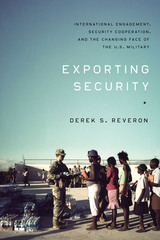
Given U.S. focus on the continuing wars in Iraq and Afghanistan, it is easy to miss that the military does much more than engage in combat. On any given day, military engineers dig wells in East Africa, medical personnel provide vaccinations in Latin America, and special forces mentor militaries in southeast Asia.
To address today's security challenges, the military partners with civilian agencies, NGOs, and the private sector both at home and abroad. By doing so, the United States seeks to improve its international image, strengthen the state sovereignty system by training and equipping partners’ security forces, prevent localized violence from escalating into regional crises, and protect U.S. national security by addressing underlying conditions that inspire and sustain violent extremism.
In Exporting Security, Derek Reveron provides a comprehensive analysis of the shift in U.S. foreign policy from coercive diplomacy to cooperative military engagement, examines how and why the U.S. military is an effective tool of foreign policy, and explores the methods used to reduce security deficits around the world.
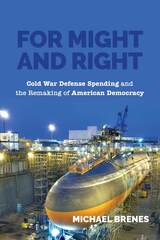
How did the global Cold War influence American politics at home? For Might and Right traces the story of how Cold War defense spending remade participatory politics, producing a powerful and dynamic political coalition that reached across party lines. This “Cold War coalition” favored massive defense spending over social welfare programs, bringing together a diverse array of actors from across the nation, including defense workers, community boosters, military contractors, current and retired members of the armed services, activists, and politicians. Faced with neoliberal austerity and uncertainty surrounding America's foreign policy after the 1960s, increased military spending became a bipartisan solution to create jobs and stimulate economic growth, even in the absence of national security threats.
Using a rich array of archival sources, Michael Brenes draws important connections between economic inequality and American militarism that enhance our understanding of the Cold War's continued impact on American democracy and the resilience of the military-industrial complex, up to the age of Donald Trump.
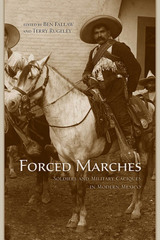
When Mexico first became a nation, its military and militias were two of the country’s few major institutions besides the Catholic Church. The army and local provincial militias functioned both as political pillars, providing institutional stability of a crude sort, and as springboards for the ambitions of individual officers. Military service provided upward social mobility, and it taught a variety of useful skills, such as mathematics and bookkeeping.
In the postcolonial era, however, militia units devoured state budgets, spending most of the national revenue and encouraging locales to incur debts to support them. Men with rifles provided the principal means for maintaining law and order, but they also constituted a breeding-ground for rowdiness and discontent. As these chapters make clear, understanding the history of state-making in Mexico requires coming to terms with its military past.

By the Cold War's end, U.S. military bases harbored nearly 20,000 toxic waste sites. All told, cleaning the approximately 27 million acres is projected to cost hundreds of billions of dollars. And yet while progress has been made, efforts to integrate environmental and national security concerns into the military's operations have proven a daunting and intrigue-filled task that has fallen short of professed goals in the post-Cold War era.
In The Greening of the U.S. Military, Robert F. Durant delves into this too-little understood world of defense environmental policy to uncover the epic and ongoing struggle to build an environmentally sensitive culture within the post-Cold War military. Through over 100 interviews and thousands of pages of documents, reports, and trade newsletter accounts, he offers a telling tale of political, bureaucratic, and intergovernmental combat over the pace, scope, and methods of applying environmental and natural resource laws while ensuring military readiness. He then discerns from these clashes over principle, competing values, and narrow self-interest a theoretical framework for studying and understanding organizational change in public organizations.
From Dick Cheney's days as Defense Secretary under President George H. W. Bush to William Cohen's Clinton-era-tenure and on to Donald Rumsfeld's Pentagon, the battle over "greening" the military has been one with high-stakes consequences for both national defense and public health, safety, and the environment. Durant's polity-centered perspective and arguments will evoke needed scrutiny, debate, and dialogue over these issues in environmental, military, policymaking, and academic circles.
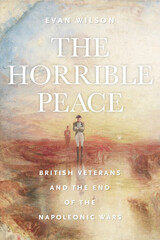
Few battles in world history provide a cleaner dividing line than Waterloo: before, there was Napoleon; after, there was the Pax Britannica. While Waterloo marked France’s defeat and Britain’s ascendance as an imperial power, the war was far from over for many soldiers and sailors, who were forced to contend with the lasting effects of battlefield trauma, the realities of an impossibly tight labor market, and growing social unrest. The Horrible Peace details a story of distress and discontent, of victory complicated by volcanism, and of the challenges facing Britain at the beginning of its victorious century.
Examining the process of demobilization and its consequences for British society, Evan Wilson draws on archival research and veterans’ memoirs to tell the story of this period through the experiences of veterans who struggled to reintegrate and soldiers and sailors who remained in service as Britain attempted to defend and expand the empire. Veterans were indeed central to Britain’s experience of peace, as they took to the streets to protest the government’s indifference to widespread unemployment and misery. The fighting did not stop at Waterloo.

With attention to the distinct cultural, political, and historical contexts across Latin America, the essays reveal how military figures and institutions appropriate mechanisms of truth-telling and accountability to reframe the past, blur the lines between perpetrator and victim, and weaponize memory itself.
Contributors: Mariana Achugar, Gabriela Fried Amilivia, Rebecca Atencio, Jo-Marie Burt, Rachel Hatcher, Nicolás Rodríguez Idárraga, Michael J. Lazzara, Cynthia E. Milton, Carla Granados Moya, María Emma Wills Obregón, Leith Passmore, Valentina Salvi, Gladys Vásquez Zevallos
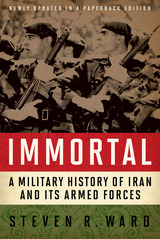
Immortal is the only single-volume English-language survey of Iran’s military history. CIA analyst Steven R. Ward shows that Iran’s soldiers, from the famed “Immortals” of ancient Persia to today’s Revolutionary Guard, have demonstrated through the centuries that they should not be underestimated. This history also provides background on the nationalist, tribal, and religious heritages of the country to help readers better understand Iran and its security outlook.
Immortal begins with the founding of ancient Persia’s empire under Cyrus the Great and continues through the Iran-Iraq War (1980–1988) and up to the present. Drawing on a wide range of sources including declassified documents, the author gives primary focus to the modern era to relate the build-up of the military under the last Shah, its collapse during the Islamic revolution, its fortunes in the Iran-Iraq War, and its rise from the ashes to help Iran become once again a major regional military power. He shows that, despite command and supply problems, Iranian soldiers demonstrate high levels of bravery and perseverance and have enjoyed surprising tactical successes even when victory has been elusive. These qualities and the Iranians’ ability to impose high costs on their enemies by exploiting Iran’s imposing geography bear careful consideration today by potential opponents.
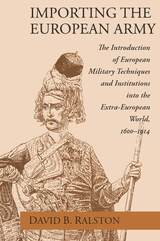
Following the same format in his discussion of each country, Ralston makes this central theme in world history easily accessible to students while offering scholars a sophisticated understanding of the exact nature of the changes brought about by Europeanizing military reforms.
David B. Ralston, associate professor of history at the Massachusetts Institute of Technology, is the author of The Army of the Republic.

Since the Civil War, music has coursed through the United States military. Soldiers have sung while marching, listened to phonographs and armed forces radio, and packed the seats at large-scale USO shows. “Reveille” has roused soldiers in the morning and “Taps” has marked the end of a long day. Whether the sounds came from brass instruments, weary and homesick singers, or a pair of heavily used earbuds, where there was war, there was music, too.
Instrument of War is a first-of-its-kind study of music in the lives of American soldiers. Although musical activity has been part of war since time immemorial, the significance of the US military as a musical institution has generally gone unnoticed. Historian David Suisman traces how the US military used—and continues to use—music to train soldiers and regulate military life, and how soldiers themselves have turned to music to cope with war’s emotional and psychological realities. Opening our ears to these practices, Suisman reveals how music has enabled more than a century and a half of American war-making. Instrument of War unsettles assumptions about music as a force of uplift and beauty, demonstrating how it has also been entangled in large-scale state violence.
Whether it involves chanting “Sound off!” in basic training, switching on a phonograph or radio, or cueing up an iPod playlist while out on patrol, the sound of music has long resonated in soldiers’ wartime experiences. Now we all can finally hear it.
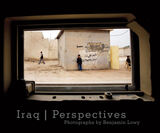
The Center for Documentary Studies / Honickman First Book Prize in Photography
Benjamin Lowy’s powerful and arresting color photographs, taken over a six-year period through Humvee windows and military-issue night vision goggles, capture the desolation of a war-ravaged Iraq as well as the tension and anxiety of both U.S. soldiers and Iraqi civilians. To photograph on the streets unprotected was impossible for Lowy, so he made images that illuminate this difficulty by shooting photographs through the windows and goggles meant to help him, and soldiers, to see. In doing so he provides us with a new way of looking at the war—an entirely different framework for regarding and thinking about the everyday activities of Iraqis in a devastated landscape and the movements of soldiers on patrol, as well as the alarm and apprehension of nighttime raids.
“Iraq was a land of blast walls and barbed wire fences. I made my first image of a concrete blast wall through the window of my armored car. These pictures show a fragment of Iraqi daily life taken by a transient passenger in a Humvee; yet they are a window to a world where work, play, tension, grief, survival, and everything in between are as familiar as the events of our own lives. . . . [In] the ‘Nightvision’ images . . . as soldiers weave through the houses and bedrooms of civilians during nighttime military raids, they encounter the faces of their suspects as well as bystanders, many of whom are parents protecting their children. . . . I hope that these images provide the viewer with momentary illumination of the fear and desperation that is war.”—Benjamin Lowy
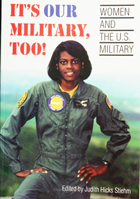
In the last twenty-five years the U.S. military has seen the abolition of women's separate corps, the appointment of women generals, and an unprecedented increase in the ratio of women to men. Also, women are now permitted to serve on combat planes and ships. Despite these developments, most civilians know very little about women in the military.
This collection includes unusual accounts by women on active duty, retired officers, women who have worked for the armed forces in a civilian capacity, and civilian academics. The book offers insights on a variety of pressing issues including minority women, lesbians, combat, the role of gender in weapons design, and the changing mission of the military.
Through personal accounts and commentaries, this book dispels many of the myths about women and the military and explores the reasons for the persistence of misconceptions in the face of increased female participation. This comprehensive effort will be of interest to anyone who wants to know the truth about women in the armed forces and will be a wake-up call to women who feel that the military is irrelevant to them.
Contributors: Rhonda Cornum, Virginia Solms, Billie Mitchell, Connie L. Reeves, Brenda L. Moore, Nina Richman-Loo, Rachel Weber, Lucinda Joy Peach, M. C. Devilbiss, Carol Burke, Susan Jeffords, Miriam Cooke.
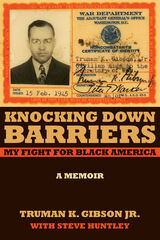
Recipient, 2007 Hyde Park Historical Society Paul Cornell Award
Sixty years ago, when Truman Gibson reported for duty at the War Department, Washington, D.C. was a southern city in its unbending segregation as well as in its steamy summers. Gibson had no illusions, but as someone who'd enjoyed the best of the vibrant black culture of prewar America, he was shocked to find the worst of the Jim Crow South in the nation's capital. What Gibson accomplished as an advocate for African American soldiers-first as a lawyer working for the Secretary of War, then as a member of President Truman's "Black Cabinet"--is a large part of the history of the struggle for civil rights in the American military; and it is a compelling part of the story that Gibson tells in this book, a memoir of a life spent making a difference in the world one step at a time.
A graduate of the University of Chicago Law School, Gibson took his fight for racial justice to the corridors of powers, arguing against restrictive real estate covenants before the U.S. Supreme Court, opposing such iconic figures as Generals Dwight Eisenhower and George C. Marshall in campaigning for the integration of the armed forces, and challenging white control of professional sports by creating a boxing promotion empire that made television history. A firsthand account of the nitty-gritty of twentieth-century race relations in the worlds of law, the military, sports, and entertainment, Gibson's memoir is also an engaging recollection of encounters with the likes of Thurgood Marshall, W. E. B. DuBois, Eleanor Roosevelt, George Patton, Jackie Robinson, and Joe Louis, among others. As a historical record and as an intimate look at a bygone era with all its charms and hardships, the book is an essential chapter in our nation's story.

As visceral horrors and everyday banalities of the war threaten to engulf Paul, he, like his great-great-grandfather, finds his very own refuge in Afghanistan’s natural world. In a diary filled with exquisite drawings of birds and ruminations on the life he left behind, Paul describes his experiences living with two comrades who are fighting their own demons and his befriending of an Afghan man, Nassim, as well as his dreams of escaping the restrictive base camp and visiting the shores of a lake visible from the lookout tower. But when he finally reaches the lake one night, he finds himself in the midst of a chain of events that, with his increasingly fragile state of mind, has dramatic—and ultimately heartbreaking—consequences.
A meditative novel that shows a new side to the conflict in Afghanistan, The Language of Birds takes a moving look at the all-too-human costs of war and questions what it truly means to fight for freedom.
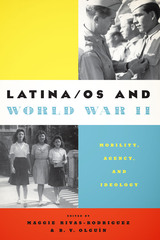
The first book-length study of Latina/o experiences in World War II over a wide spectrum of identities and ancestries—from Cuban American, Spanish American, and Mexican American segments to the under-studied Afro-Latino experience—Latina/os and World War II probes the controversial aspects of Latina/o soldiering and citizenship in the war, the repercussions of which defined the West during the twentieth century. The editors also offer a revised, more accurate tabulation of the number of Latina/os who served in the war.
Spanning imaginative productions, such as vaudeville and the masculinity of the soldado razo theatrical performances; military segregation and the postwar lives of veterans; Tejanas on the homefront; journalism and youth activism; and other underreported aspects of the wartime experience, the essays collected in this volume showcase rarely seen recollections. Whether living in Florida in a transformed community or deployed far from home (including Mexican Americans who were forced to endure the Bataan Death March), the men and women depicted in this collection yield a multidisciplinary, metacritical inquiry. The result is a study that challenges celebratory accounts and deepens the level of scholarly inquiry into the realm of ideological mobility for a unique cultural crossroads. Taking this complex history beyond the realm of war narratives, Latina/os and World War II situates these chapters within the broader themes of identity and social change that continue to reverberate in postcolonial lives.
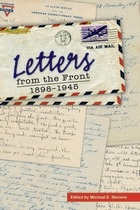
This volume tells the stories of 62 men and women from Wisconsin who served in the Spanish-American War, World War I, and World War II. Letters from the Front is a vivid social history of wartime as told by those who took part in these foreign conflicts. Most of them are "ordinary" people, uprooted from farms, factories, and offices, who took part in extraordinary events. This work explores how war changed their lives and reveals the emotions they felt in uniform, in remote outposts, in combat, and in prison camps. These letters, diaries, oral histories, newspapers, and contemporary accounts provide a history of adaptation to military life; they also reflect the changes that occurred over the half-century encompassing these confilcts, an era of great technological innovation — and one in which America's vision of itself also changed.
"Lifting the Fog of Peace is a captivating study of an agile and adaptive military evolving through the chaos of the post-9/11 world. In what is certain to be regarded as the definitive analysis of the reshaping of American combat power in the face of a complex and uncertain future, Dr. Janine Davidson firmly establishes herself as a rising intellectual star in government and politics. A thoroughly captivating study of organizational learning and adaptation—a 'must read' for leaders in every field."
---LTG William B. Caldwell, IV, Commanding General, NATO Training Mission - Afghanistan
"In Lifting the Fog of Peace, Dr. Janine Davidson explains how the American military has adapted itself to succeed in the wars in Afghanistan and Iraq that are the most likely future face of combat. The book is informed by her experience of these wars in the Department of Defense, where she now plays a critical role in continuing the process of learning that has so visibly marked the military's performance in today's wars. Highly recommended."
---John A. Nagl, President, Center for a New American Security
"Janine Davidson’s Lifting the Fog of Peace is a superb, concise, and well-written book that makes important contributions in three areas. It advances our knowledge of organizational learning in the Armed Forces. It also accurately captures the rich post-Vietnam operational and doctrinal history of the Army and the Marine Corps. The simplistic cartoon of dim-witted generals fixated on the Fulda Gap is replaced here by a more accurate version, where engaged senior officers studied the security environment, absorbed important lessons, and began to improve the learning capacity of the military services. Finally, Lifting the Fog of Peace assesses the state of contemporary stability operations and what must be done to further prepare our Armed Forces for modern war on the low end of the spectrum of conflict. It will be a 'must read' on the E-Ring of the Pentagon and in security studies programs across the nation."
---Joseph J. Collins, Professor, National War College, and former Deputy Assistant Secretary of Defense for Stability Operations
Counterinsurgency and stability operations in Iraq and Afghanistan are only the most recent examples of the U.S. Armed Forces fighting insurgents, building infrastructure, enforcing laws, and governing cities. For more than two centuries, these assignments have been a regular part of the military's tasks; yet until recently the lessons learned from the experiences have seldom been formally incorporated into doctrine and training. As a result, each generation of soldiers has had to learn on the job.
Janine Davidson traces the history of the U.S. military's involvement in these complex and frustrating missions. By comparing the historical record to the current era, Davidson assesses the relative influence of organizational culture and processes, institutional structures, military leadership, and political factors on the U.S. military's capacity to learn and to adapt. Pointing to the case of Iraq, she shows that commanders serving today have benefited at the tactical level from institutional changes following the Vietnam War and from the lessons of the 1990s. Davidson concludes by addressing the question of whether or not such military learning, in the absence of enhanced capabilities and capacity in other U.S. government agencies, will be sufficient to meet the complex challenges of the 21st century.
Janine Davidson, a former Air Force pilot, is a professor of national security at George Mason University, currently serving in the Pentagon as Deputy Assistant Secretary of Defense for Plans.
The views presented in this book are those of the author and do not necessarily represent the views of the Department of Defense or its Components.
A compelling union of analysis and rich storytelling, Making the Immigrant Soldier traces the complexities of serving in the military in order to pursue the American dream.

Drawing on declassified archival material in the United States and the United Kingdom, the author considers Khrushchev’s reversal of Stalinist expansionism by examining the motivation, function, and operation of the initial occupation of Romania; the complex involvement of Soviet diplomacy and its perception by the United States and other Western powers; the process by which Khrushchev decided to withdraw Soviet troops from that country; and the impact of this decision on Soviet policy. Verona extends his analysis, providing comparisons between Khrushchev’s and Gorbachev’s approaches to Eastern Europe, noting that similarities exist not only in domestic policies but in the realm of foreign policy as well.
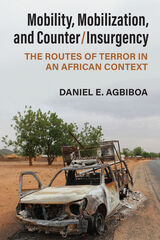
In Mobility, Mobilization, and Counter/Insurgency, Daniel Agbiboa takes African insurgencies back to their routes by providing a transdisciplinary perspective on the centrality of mobility to the strategies of insurgents, state security forces, and civilian populations caught in conflict. Drawing on one of the world’s deadliest insurgencies, the Boko Haram insurgency in northeast Nigeria and the Lake Chad region, this well-crafted and richly nuanced intervention offers fresh insights into how violent extremist organizations exploit forms of local immobility and border porosity to mobilize new recruits, how the state’s “war on terror” mobilizes against so-called subversive mobilities, and how civilian populations in transit are treated as could-be terrorists and subjected to extortion and state-sanctioned violence en route. The multiple and intersecting flows analyzed here upend Eurocentric representations of movement in Africa as one-sided, anarchic, and dangerous. Instead, this book underscores the contradictions of mobility in conflict zones as simultaneously a resource and a burden. Intellectually rigorous yet clear, engaging, and accessible, Mobility, Mobilization, and Counter/Insurgency is a seminal contribution that lays bare the neglected linkages between conflict and mobility.
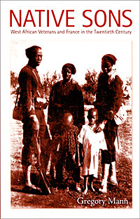
Focusing on the period between World War I and 1968, Mann draws on archival research and extensive interviews with surviving Malian veterans of French wars to explore the experiences of the African soldiers. He describes the effects their long absences and infrequent homecomings had on these men and their communities, he considers the veterans’ status within contemporary Malian society, and he examines their efforts to claim recognition and pensions from France. Mann contends that Mali is as much a postslavery society as it is a postcolonial one, and that specific ideas about reciprocity, mutual obligation, and uneven exchange that had developed during the era of slavery remain influential today, informing Malians’ conviction that France owes them a “blood debt” for the military service of African soldiers in French wars.
Richard Moser uses interviews and personal stories of Vietnam veterans to offer a fundamentally new interpretation of the Vietnam War and the antiwar movement. Although the Vietnam War was the most important conflict of recent American history, its decisive battle was not fought in the jungles of Vietnam, or even in the streets of the United States, but rather in the hearts and minds of American soldiers. To a degree unprecedented in American history, soldiers and veterans acted to oppose the very war they waged. Tens of thousands of soldiers and veterans engaged in desperate conflicts with their superiors and opposed the war through peaceful protest, creating a mass movement of dissident organizations and underground newspapers.
Moser shows how the antiwar soldiers lived out the long tradition of the citizen soldier first created in the American Revolution and Civil War. Unlike those great upheavals of the past, the Vietnam War offered no way to fulfill the citizen-soldier's struggle for freedom and justice. Rather than abandoning such ideals, however, tens of thousands abandoned the war effort and instead fulfilled their heroic expectations in the movements for peace and justice. According to Moser, this transformation of warriors into peacemakers is the most important recent development of our military culture.
The struggle for peace took these new winter soldiers into America rather than away from it. Collectively these men and women discovered the continuing potential of American culture to advance the values of freedom, equality, and justice on which the nation was founded.
Considers what the military presence in Hawai’i tells us about colonialism, gender, race, and class.
Everywhere you look in Hawai’i, you might see the military. And yet, in daily life few residents see the military at all-it is hidden in plain sight. This paradox of invisibility and visibility, of the available and the hidden, is the subject of Oh, Say, Can You See?, which maps the power relations involving gender, race, and class that define Hawai’i in relation to the national security state.
Western intruders into Hawai’i-from the early explorers, missionaries, and sugar planters to the military, tourists, and foreign investors-have seen the island nation as a feminine place, waiting to embrace those who come to penetrate, protect, mold, and develop, yet conveniently lacking whatever the newcomers claim to possess. Thus feminized, this book contends, the islands and the people have been reinscribed with meanings according to the needs, fears, and desires of outsiders. Authors Kathy E. Ferguson and Phyllis Turnbull locate and “excavate” sites of memory, such as cemeteries, memorials, monuments, and museums, to show how the military constructs its gendered narrative upon prior colonial discourses. Among the sites considered are Fort DeRussy, Pearl Harbor, and Punchbowl Cemetery, as well as the practices of citizenship that are produced or foreclosed by the narratives of order and security written upon Hawai’i by the military.This semiotic investigation of ways the military marks Hawai’i necessarily explores the intersection of immigration, colonialism, military expansion, and tourism on the islands. Attending to the ways in which the military represents itself and others represent the military, the authors locate the particular representational elements that both conceal and reveal the military’s presence and power; in doing so, they seek to expand discursive space so that other voices can be heard. ISBN 0-8166-2978-1 Cloth $49.95xxISBN 0-81662979-X Paper $19.95x240 pages 5 7/8 x 9 DecemberBorderlines Series, Volume 10Translation inquiries: University of Minnesota Press
Both sides base their views on assumptions about the consequences of integration. Even defenders of the ban grudgingly acknowledge that homosexuals are fully capable of serving with distinction. Few question gay service members' abilities or patriotism; justifications for the ban are now predicated on heterosexuals' negative reactions.
Out in Force refutes the notions that homosexuality is incompatible with military service and that gay personnel would undermine order and discipline. Leading social science scholars of sexual orientation and the military offer reasoned and comprehensive discussions about military organizations, human sexuality, and attitudes toward individuals and groups. They demonstrate forcefully that the debate is really about the military as an institution, and how that institution will adapt to larger social changes. The contributors show that the ban could be successfully eliminated, and set forth a program for implementation. In sorting opinion from fact, myth from reality, Out in Force stands as an invaluable guide for the military, lawmakers, and the courts as they continue to grapple with this question of institutional and societal change.

Focusing on the causes that generated nineteenth-century predatory militarism, including political illegitimacy and US support, Guevara Mann analyzes the so-called professionalization of the armed forces — institutionalized militarism — and the polices developed by the 1968-89 military regime.
The author cautions that although Panamanian Defense Forces were abolished after the US invasion of December 1989, and although the state’s security apparatus has been placed under civilian direction, Panama’s stability remains threatened. Lack of legitimacy — the characteristic which informs military involvement in politics — still persists, and militarism could well reappear if the Panamanian polity fails to achieve legitimacy.
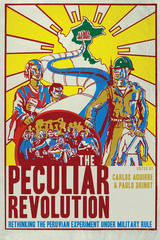
On October 3, 1968, a military junta led by General Juan Velasco Alvarado took over the government of Peru. In striking contrast to the right-wing, pro–United States/anti-Communist military dictatorships of that era, however, Velasco’s “Revolutionary Government of the Armed Forces” set in motion a left-leaning nationalist project aimed at radically transforming Peruvian society by eliminating social injustice, breaking the cycle of foreign domination, redistributing land and wealth, and placing the destiny of Peruvians into their own hands. Although short-lived, the Velasco regime did indeed have a transformative effect on Peru, the meaning and legacy of which are still subjects of intense debate.
The Peculiar Revolution revisits this fascinating and idiosyncratic period of Latin American history. The book is organized into three sections that examine the era’s cultural politics, including not just developments directed by the Velasco regime but also those that it engendered but did not necessarily control; its specific policies and key institutions; and the local and regional dimensions of the social reforms it promoted. In a series of innovative chapters written by both prominent and rising historians, this volume illuminates the cultural dimensions of the revolutionary project and its legacies, the impact of structural reforms at the local level (including previously understudied areas of the country such as Piura, Chimbote, and the Amazonia), and the effects of state policies on ordinary citizens and labor and peasant organizations.
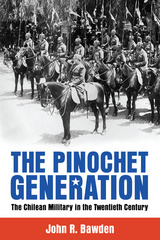
Chilean soldiers in the twentieth century appear in most historical accounts, if they appear at all, as decontextualized figures or simply as a single man: Augusto Pinochet. In his incisive study The Pinochet Generation: The Chilean Military in the Twentieth Century, John R. Bawden provides compelling new insights into the era and posits that Pinochet and his men were responsible for two major transformations in Chile’s constitution as well as the political and economic effects that followed.
Determined to refocus what he sees as a “decontextualized paucity” of historical information on Chile’s armed forces, Bawden offers a new perspective to explain why the military overthrew the government in 1973 as well as why and how Chile slowly transitioned back to a democracy at the end of the 1980s. Standing apart from other views, Bawden insists that the Chilean military’s indigenous traditions and customs did more than foreign influences to mold their beliefs and behavior leading up to the 1973 coup of Salvador Allende.
Drawing from defense publications, testimonial literature, and archival materials in both the United States and Chile, The Pinochet Generation characterizes the lens through which Chilean officers saw the world, their own actions, and their place in national history. This thorough analysis of the Chilean services’ history, education, values, and worldview shows how this military culture shaped Chilean thinking and behavior, shedding light on the distinctive qualities of Chile’s armed forces, the military’s decision to depose Allende, and the Pinochet dictatorship’s resilience, repressiveness, and durability.
Bawden’s account of Chile’s vast and complex military history of the twentieth century will appeal to political scientists, historians, faculty and graduate students interested in Latin America and its armed forces, students of US–Latin American diplomacy, and those interested in issues of human rights.

The volume, developed from a 1984 National Bureau of Economic Research conference, focuses on various labor issues in military and other governmental employment. Several contributors discuss compensation in the armed forces and its relationship to that in the private sector, as well as the interaction between the military and the private sector in the employment of youth. This latter is of particular interest because studies of youth employment have generally ignored the important influence of military hiring practices on labor market conditions. In other contributions, the response of wages and employment in the public sector to economic conditions is analyzed, and a detailed study of government pension plans is presented. Also included is a theoretical and empirical analysis of comparable worth in the public sector from the viewpoint of analytical labor economics. The volume concludes with a look at public school teachers' salaries in the context of current debates over improving the quality of American education.
A valuable resource to policymakers, Public Sector Payrolls will be an important addition to research in the field of labor economics.
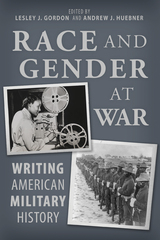
Beyond the battlefield: How race and gender redefined war, identity, and memory in Civil War America.
Race and Gender at War is a collection of essays that illuminates ways that race and gender have persistently shaped the military history of the United States. Editors Lesley J. Gordon and Andrew J. Huebner showcase historians with varied research agendas in the field of “war and society,” a fertile area of inquiry that shares space (and often overlaps) with operational studies inside the broader field of military history. Chronicling more than 150 years of American history, the essays in this volume demonstrate that the tensions and injustices surrounding race, gender, and the military remain relevant and controversial, and continue to roil American politics, society, and culture to this day.
Spanning the two centuries from the 1830s to the present, the collection examines topics such as Choctaw Natives who served in the Confederate Army, the trailblazing but fraught experiences of Black servicemen from the Civil War through World War I, the hypersexualized images of World War II servicemen, and the varied and mutable roles of women in the armed services. Utilizing diverse methodologies, the book examines how these factors influenced everything from military policy to civilian experiences, encompassing topics like martial rhetoric, citizenship, propaganda, and patriotism.
CONTRIBUTORS
Kevin Adams / Amanda Bellows / Kari L. Boyd-Weisenberger / Michele Curran Cornell / Lesley J. Gordon / Andrew J. Huebner / Gregory Mixon / Caroline Wood Newhall / Heather Marie Stur / Patrick T. Troester / Chad L. Williams / Fay A. Yarbrough
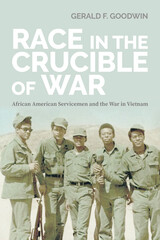
When African American servicemen went to fight in the Vietnam War, discrimination and prejudice followed them. Even in a faraway country, their military experiences were shaped by the racial environment of the home front. War is often viewed as a crucible that can transform society, but American race relations proved remarkably durable.
In Race in the Crucible of War, Gerald F. Goodwin examines how Black servicemen experienced and interpreted racial issues during their time in Vietnam. Drawing on more than fifty new oral interviews and significant archival research, as well as newspapers, periodicals, memoirs, and documentaries, Goodwin reveals that for many African Americans the front line and the home front were two sides of the same coin. Serving during the same period as the civil rights movement and the race riots in Chicago, Detroit, and dozens of other American cities, these men increasingly connected the racism that they encountered in the barracks and on the battlefields with the tensions and violence that were simmering back home.
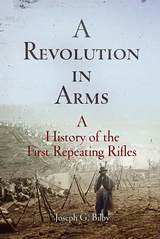
Historians often call the American Civil War the first modern war, pointing to the use of observation balloons, the telegraph, trains, mines, ironclad ships, and other innovations. Although recent scholarship has challenged some of these “firsts,” the war did witness the introduction of the first repeating rifles. No other innovation of the turbulent 1860s would have a greater effect on the future of warfare. In A Revolution in Arms: A History of the First Repeating Rifles, historian Joseph G. Bilby unfolds the fascinating story of how two New England inventors, Benjamin Henry and Christopher Spencer, each combined generations of cartridge and rifle technology to develop reliable repeating rifles. In a stroke, the Henry rifle and Spencer rifle and carbine changed warfare forever, accelerating the abandonment of the formal battle line tactics of previous generations and when properly applied, repeating arms could alter the course of a battle. Although slow to enter service, the repeating rifle soon became a sought after weapon by both Union and Confederate troops. Oliver Winchester purchased the rights to the Henry and transformed it into “the gun that won the West.” The Spencer, the most famous of all Civil War small arms, was the weapon of choice for Federal cavalrymen. The revolutionary technology represented by repeating arms used in the American Civil War, including self-contained metallic cartridges, large capacity magazines, and innovative cartridge feeding systems, was copied or adapted by arms manufacturers around the world, and these features remain with us today.
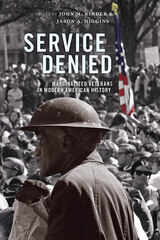
Wartime military service is held up as a marker of civic duty and patriotism, yet the rewards of veteran status have never been equally distributed. Certain groups of military veterans—women, people of color, LGBTQ people, and former service members with stigmatizing conditions, “bad paper” discharges, or criminal records—have been left out of official histories, excised from national consciousness, and denied state recognition and military benefits.
Chronicling the untold stories of marginalized veterans in the twentieth and twenty-first centuries, Service Denied uncovers the generational divides, cultural stigmas, and discriminatory policies that affected veterans during and after their military service. Together, the chapters in this collection recast veterans beyond the archetype, inspiring an innovative model for veterans studies that encourages an intersectional and interdisciplinary analysis of veterans history. In addition to contributions from the volume editors, this collection features scholarship by Barbara Gannon, Robert Jefferson, Evan P. Sullivan, Steven Rosales, Heather Marie Stur, Juan Coronado, Kara Dixon Vuic, John Worsencroft, and David Kieran.
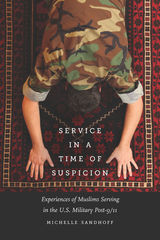
In Service in a Time of Suspicion, fifteen such service members talk about what it means to be Muslim, American, and a uniformed member of the armed services in the twenty-first century. These honest accounts remind us of our shared humanity.

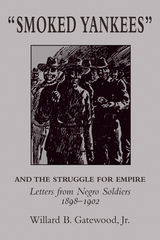
Called upon for the first time to render military service outside the States, Negro soldiers (called Smoked Yankees by the Spaniards) were eager to improve their status at home by fighting for the white man in the Spanish-American War. Their story is told through countless letters sent to black U.S. newspapers that lacked resources to field their own reporters. The collection constitutes a remarkably complete and otherwise undisclosed amount of the black man’s role in—and attitude toward—America’s struggle for empire.
In first-hand reports of battles in the Philippine Islands and Cuba, Negro soldiers wrote from the perspective of dispossessed citizens struggling to obtain a larger share of the rights and privileges of Americans.
These letters provide a fuller understanding of the exploits of black troops through their reports of military activities and accounts of foreign peoples and its cultures.
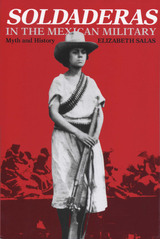
Since pre-Columbian times, soldiering has been a traditional life experience for innumerable women in Mexico. Yet the many names given these women warriors—heroines, camp followers, Amazons, coronelas, soldadas, soldaderas, and Adelitas—indicate their ambivalent position within Mexican society. In this original study, Elizabeth Salas explores the changing role of the soldadera, both in reality and as a cultural symbol, from pre-Columbian times up to the present day.
Drawing on military archival data, anthropological studies, and oral history interviews, Salas first explores the real roles played by Mexican women in armed conflicts. She finds that most of the functions performed by women easily equate to those performed by revolutionaries and male soldiers in the quartermaster corps and regular ranks. She then turns her attention to the soldadera as a continuing symbol in Mexican and Chicano culture, examining the image of the soldadera in literature, corridos, art, music, and film.
Challenging many traditional stereotypes, Salas finds that the fundamental realities of war link all Mexican women, regardless of time period, social class, or nom de guerre.
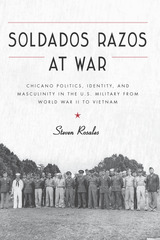
What were the catalysts that motivated Mexican American youth to enlist or readily accept their draft notices in World War II, Korea, or Vietnam? In Soldados Razos at War, historian and veteran Steven Rosales chronicles the experiences of Chicano servicemen who fought for the United States, explaining why these men served, how they served, and the impact of their service on their identity and political consciousness.
As a social space imbued with its own martial and masculine ethos, the U.S. military offers an ideal way to study the aspirations and behaviors that carried over into the civilian lives of these young men. A tradition of martial citizenship forms the core of the book. Using rich oral histories and archival research, Rosales investigates the military’s transformative potential with a particular focus on socioeconomic mobility, masculinity, and postwar political activism across three generations.
The national collective effort characteristic of World War II and Korea differed sharply from the highly divisive nature of American involvement in Vietnam. Thus, for Mexican Americans, military service produced a wide range of ideological reactions, with the ideals of each often in opposition to the others. Yet a critical thread connecting these diverse outcomes was a redefined sense of self and a willingness to engage in individual and collective action to secure first-class citizenship.
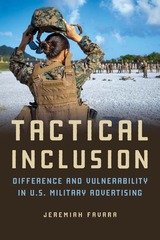
Compelling and eye-opening, Tactical Inclusion combines original analysis with personal experience to chart advertising’s role in building the all-volunteer military.
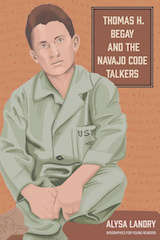
The life story of this World War II Navajo Code Talker introduces middle-grade readers to an unforgettable person and offers a close perspective on aspects of Navajo (or Diné) history and culture.
Thomas H. Begay was one of the young Navajo men who, during World War II, invented and used a secret, unbreakable communications code based on their native Diné language to help win the war in the Pacific. Although the book includes anecdotes from other code talkers, its central narrative revolves around Begay. It tells his story, from his birth near the Navajo reservation, his childhood spent herding sheep, his adolescence in federally mandated boarding schools, and ultimately, his decision to enlist in the US Marine Corps.
Alysa Landry relies heavily on interviews with Begay, who, as of this writing, is in his late nineties and one of only three surviving code talkers. Begay’s own voice and sense of humor make this book particularly significant in that it is the only Code Talker biography for young readers told from a soldier’s perspective. Begay was involved with the book every step of the way, granting Landry unlimited access to his military documents, personal photos, and oral history. Additionally, Begay’s family contributed by reading and fact-checking the manuscript. This truly is a unique collaborative project.
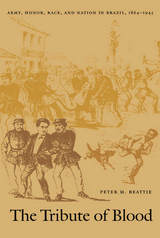
Beattie looks through sociological, anthropological, and historical lenses to analyze archival sources such as court-martial cases, parliamentary debates, published reports, and the memoirs and correspondence of soldiers and officers. Combining these materials with a colorful array of less traditional sources—such as song lyrics, slang, grammatical evidence, and tattoo analysis—he reveals how the need to reform military recruitment with a conscription lottery became increasingly apparent in the wake of the Paraguayan War of 1865–1870 and again during World War I. Because this crucial reform required more than changing the army’s institutional roles and the conditions of service, The Tribute of Blood is ultimately the story of how entrenched conceptions of manhood, honor, race, citizenship, and nation were transformed throughout Brazil.
Those interested in social, military, and South American history, state building and national identity, and the sociology of the poor will be enriched by this pathbreaking study.
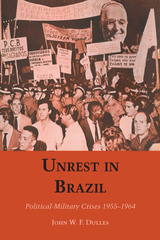
… I offer my life in a holocaust … This people whose slave I was will no longer be slave to anyone. My sacrifice will remain forever in their souls and my blood will be the price of their ransom.
President Getulio Vargas' testament—written shortly before his suicide on August 24, 1954—was prophetic, for the Vargas legacy was to cast a shadow on political-military events of the next decade.
With news of Vargas' suicide, opponents of the late President, who were usually out of power, tried to organize. The military itself was split, but those favoring Kubitschek, apparent winner of the 1955 presidential election on a ticket of Vargas-created parties, gained control. To assure Kubitschek's inauguration Army leaders deposed two acting Presidents in 1955.
During Kubitschek's presidency (1956–1961 ) there were manifestations of discontent by military and political groups who ascribed numerous evils to Vargas and his followers.
In 1961, when Kubitschek's successor, Jânio Quadros, resigned after six months in office, the unrest intensified. Vice President Jango Goulart assumed the presidency and sought unsuccessfully to conciliate contending forces; his battle for reform seemed to make him an ally of "far leftists." Feeling that discipline was being undermined by men close to the President and that only military action could save Brazil from following the path favored by influential Communist labor leaders, a majority of the Army officers agreed to overthrow Goulart's administration in 1964.
Unrest in Brazil describes in exciting detail the government crises and resulting military interventions that punctuated the power struggle between supporters and opponents of Vargas in the decade following his death.
Field Manual 3-07, Stability Operations, represents a milestone in Army doctrine.
With a focus on transforming conflict, managing violence when it does occur and maintaining stable peace, The U.S. Army Stability Operations Field Manual (otherwise known as FM 3-07) signals a stark departure from traditional military doctrine. The Army officially acknowledges the complex continuum from conflict to peace, outlines the military's responsibility to provide stability and security, and recognizes the necessity of collaboration, coordination, and cooperation among military, state, commercial, and non-government organizations in nation-building efforts.
The manual reflects a truly unique collaboration between the Army and a wide array of experts from hundreds of groups across the United States Government, the intergovernmental and non-governmental communities, America's allies around the world, and the private sector. All branches of the armed forces, U.S. agencies ranging from the State Department to Homeland Security to Health and Human Services, international agencies from the United Nations to the Red Cross to the World Bank, countries from the United Kingdom to India to South Africa, private think tanks from RAND to the United States Institute of Peace to the Center for New American Security, all took part in the shaping of this document.
The U.S. Army Stability Operations FieldManual, marks just the second time in modern history that the U.S. Army has worked with a private publisher to produce a military doctrinal document.
Lieutenant General William B. Caldwell, IV is Commander of the Combined Arms Center at Fort Leavenworth, Kansas.
Michèle Flournoy, Under Secretary of Defense for Policy
Shawn Brimley, Fellow, Center for a New American Security
Janine Davidson, Deputy Assistant Secretary of Defense for Plans
"It is a roadmap from conflict to peace, a practical guidebook for adaptive, creative leadership at a critical time in our history. It institutionalizes the hard-won lessons of the past while charting a path for tomorrow. This manual postures our military forces for the challenges of an uncertain future, an era of persistent conflict where the unflagging bravery of our Soldiers will continue to carry the banner of freedom, hope, and opportunity to the people of the world."
—From the foreword by Lieutenant General William B. Caldwell, IV, Commander of the Combined Arms Center at Fort Leavenworth, Kansas
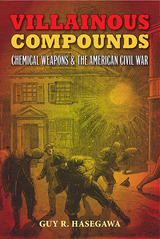
In chilling detail, Hasegawa describes the weapons proposed and prepared for use during the war and introduces the people behind the concepts. Although many of the ideas for chemical weapons had a historical precedent, most of the suggested agents were used in industry or medicine, and their toxicity was common knowledge. Proponents, including a surprisingly high number of civilian physicians, suggested a wide variety of potential chemical weapons—from liquid chlorine in artillery shells to cayenne pepper solution sprayed from fire engines. Some weapons advocates expressed ethical qualms, while others were silent on the matter or justified their suggestions as necessary under current circumstances.
As Hasegawa explains, bureaucrats in the war departments of both armies either delayed or rejected outright most of these unusual weapons, viewing them as unneeded or unworkable. Nevertheless, many of the proposed armaments presaged the widespread use of chemical weapons in the twentieth and twenty-first centuries. For example, while Civil War munitions technology was not advanced enough to deliver poison gas in artillery shells as some advocates suggested, the same idea saw extensive use during World War I. Similarly, forms of an ancient incendiary weapon, Greek fire, were used sparingly during the Civil War and appeared in later conflicts as napalm bombs and flamethrowers.
Especially timely with today’s increased chemical threats from terrorists and the alleged use of chemical agents in the Syrian Civil War, Villainous Compounds: Chemical Weapons and the American Civil War reveals the seldom-explored chemical side of Civil War armaments and illuminates an underappreciated stage in the origins of modern chemical warfare.
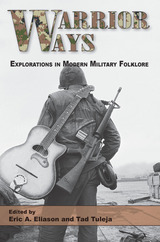
Warrior Ways is one of the first book-length explorations of military folklife, and focuses on the lore produced by modern American warriors, illuminating the ways in which members of the armed services creatively express the complex experience of military life. In short, lively essays, contributors to the volume, all of whom have close personal or professional relationships to the military, examine battlefield talismans, personal narrative (storytelling), “Jody calls” (marching and running cadences), slang, homophobia and transgressive humor, music, and photography, among other cultural expressions.
Military folklore does not remain in an isolated subculture; it reveals our common humanity by delighting, disturbing, infuriating, and inspiring both those deeply invested in and those peripherally touched by military life. Highlighting the contemporary and historical importance of the military in American life, Warrior Ways will be of interest to scholars and students of folklore, anthropology, and popular culture; those involved in veteran services and education; and general readers interested in military culture.
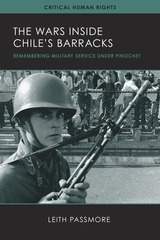
Relying on unpublished material, testimony, interviews, and field notes, Passmore locates these individuals' narratives of victimhood at the intersection of long-term histories of patriotism, masculinity, and cyclical poverty. These accounts reveal in detail how Pinochet's war against his own citizens—as well as the "almost-wars" with neighboring Peru, Bolivia, and Argentina—were also waged inside Chile's army barracks.
The thirteen essays in When War Becomes Personal tell the enduring truths of battle, stripping away much of the romance, myth, and fantasy.
Soldiers more than anyone know what they are capable of destroying; when they write about war, they are trying to preserve the world.
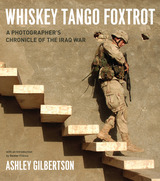
Whiskey Tango Foxtrot gathers the best of Gilbertson’s photographs, chronicling America’s early battles in Iraq, the initial occupation of Baghdad, the insurgency that erupted shortly afterward, the dramatic battle to overtake Falluja, and ultimately, the country’s first national elections. No Western photojournalist has done as much sustained work in occupied Iraq as Gilbertson, and this wide-ranging treatment of the war from the viewpoint of a photographer is the first of its kind. Accompanying each section of the book is a personal account of Gilbertson’s experiences covering the conflict. Throughout, he conveys the exhilaration and terror of photographing war, as well as the challenges of photojournalism in our age of embedded reporting. But ultimately, and just as importantly, Whiskey Tango Foxtrot tells the story of Gilbertson’s own journey from hard-drinking bravado to the grave realism of a scarred survivor. Here he struggles with guilt over the death of a marine escort, tells candidly of his own experience with post-traumatic stress, and grapples with the reality that Iraq—despite the sacrifice in Iraqi and American lives—has descended into a civil war with no end in sight.
A searing account of the American experience in Iraq, Whiskey Tango Foxtrot is sure to become one of the classic war photography books of our time.
Women and Gender Perspectives in the Military compares the integration of women, gender perspectives, and the women, peace, and security agenda into the armed forces of eight countries plus NATO and United Nations peacekeeping operations. This book brings a much-needed crossnational analysis of how militaries have or have not improved gender balance, what has worked and what has not, and who have been the agents for change.
The country cases examined are Sweden, the Netherlands, Canada, the United States, the United Kingdom, Israel, Australia, and South Africa. Despite increased opportunities for women in the militaries of many countries and wider recognition of the value of including gender perspectives to enhance operational effectiveness, progress has encountered roadblocks even nearly twenty years after United Nations Security Council Resolution 1325 kicked off the women, peace, and security agenda. Robert Egnell, Mayesha Alam, and the contributors to this volume conclude that there is no single model for change that can be applied to every country, but the comparative findings reveal many policy-relevant lessons while advancing scholarship about women and gendered perspectives in the military.
READERS
Browse our collection.
PUBLISHERS
See BiblioVault's publisher services.
STUDENT SERVICES
Files for college accessibility offices.
RECENTLY PUBLISHED






UChicago Accessibility Resources
home | accessibility | search | about | contact us
BiblioVault ® 2001 - 2026
The University of Chicago Press