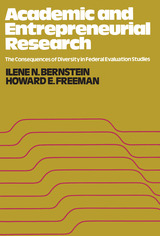
front cover of Academic and Entrepreneurial Research
Academic and Entrepreneurial Research
Consequences of Diversity in Federal Evaluation Studies
Ilene Nagel Bernstein
Russell Sage Foundation, 1975
As social action programs in health, education, and welfare have expanded, interest has grown in evaluating their implementation and effectiveness. Policymakers and social planners--at all levels of government and in the private sector--are currently confronted with the problem of evaluating the large number of human service programs that compete for available resources. Academic and Entrepreneurial Research presents a systematic study of the expenditure of federal funds for evaluation research. It reviews federally-supported evaluations of programs, including evaluations of social change experiments and research-demonstration programs funded by the various executive departments of the federal government. Evaluation studies of these large-scale programs vary in scope, quality, and potential utility. Bernstein and Freeman examine all projects initiated during fiscal year 1970 in order to understand better the methods employed, the types of persons engaged in such research, and expectations regarding the utilization of findings. The book provides data about "high" and "low" quality evaluation research and contains recommendations for restructuring the entire evaluation research enterprise in light of the findings.
[more]

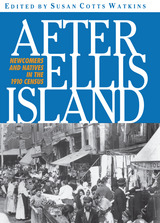
front cover of After Ellis Island
After Ellis Island
Newcomers and Natives in the 1910 Census
Susan Cotts Watkins
Russell Sage Foundation, 1994
After Ellis Island is an unprecedented study of America's foreign-born population at a critical juncture in immigration history. The new century had witnessed a tremendous surge in European immigration, and by 1910 immigrants and their children numbered nearly one third of the U.S. population. The census of that year drew from these newcomers a particularly rich trove of descriptive information, one from which the contributors to After Ellis Island draw to create an unmatched profile of American society in transition. Chapters written especially for this volume explore many aspects of the immigrants' lives, such as where they settled, the jobs they held, how long they remained in school, and whether or not they learned to speak English. More than a demographic catalog, After Ellis Island employs a wide range of comparisons among ethnic groups to probe whether differences in childbirth, child mortality, and education could be traced to cultural or environmental causes. Did differences in schooling levels diminish among groups in the same social and economic circumstances, or did they persist along ethnic lines? Did absorption into mainstream America—measured through duration of U.S. residence, neighborhood mingling, and ability to speak English—blur ethnic differences and increase chances for success? After Ellis Island also shows how immigrants eased the nation's transition from agriculture to manufacturing by providing essential industrial laborers. After Ellis Island offers a major assessment of ethnic diversity in early twentieth century American society. The questions it addresses about assimilation and employment among immigrants in 1910 acquire even greater significance as we observe a renewed surge of foreign arrivals. This volume will be valuable to sociologists and historians of immigration, to demographers and economists, and to all those interested in the relationship of ethnicity to opportunity.
[more]

front cover of Aging and Society
Aging and Society
A Sociology of Age Stratification
Matilda White Riley
Russell Sage Foundation, 1972
Represents the first integrated effort to deal with age as a crucial variable in the social system. Of special interest to sociologists for whom the sociology of age seems destined to become a special field.
[more]

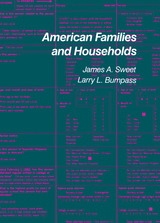
front cover of American Families and Households
American Families and Households
James A. Sweet
Russell Sage Foundation, 1987
Changes in family and household composition are part of every individual's life course. Childhood families expand and contract; the individual leaves to set up an independent household; he or she may marry, raise children, lose a spouse. These transitions have a profound effect on the economic and social well-being of individuals, and the relative prevalence of different living arrangements affects the very character of society. American families and Households takes advantage of the large samples provided by the decennial censuses to document recent major transformations in the individual life cycle and consequent changes in the composition of the American population. As James Sweet and Larry Bumpass demonstrate, these changes have been dramatic—rates of marriage and childbirth are down, rates of marital disruption are up, and those who can are more likely to maintain independent households despite the rapid acceleration of change during recent years, however, the authors find that contemporary trends are continuous with long-term changes in Western society. This meticulous work makes a significant contribution to our understanding of the American Family and the individual life experiences that are translated into the larger population experience. "Jim Sweet and Larry Bumpass provide detailed descriptions of three components of the households and families of Americans: family transitions; the prevalence of different family and household arrangements; and the economic and social circumstances of people living in different types of families and households....As a reference work, the volume is a gold mine, with many rich veins of useful information....Anyone interested in American families and how they have been changing will want to refer to this volume." —American Journal of Sociology A Volume in the Russell Sage Foundation Census Series
[more]

front cover of American Neighborhoods and Residential Differentiation
American Neighborhoods and Residential Differentiation
Michael J. White
Russell Sage Foundation, 1987
Residential patterns are reflections of social structure; to ask, "who lives in which neighborhoods," is to explore a sorting-out process that is based largely on socioeconomic status, ethnicity, and life cycle characteristics. This benchmark volume uses census data, with its uniquely detailed information on small geographic areas, to bring into focus the familiar yet often vague concept of neighborhood. Michael White examines nearly 6,000 census tracts (approximating neighborhoods) in twenty-one representative metropolitan areas, from Atlanta to Salt Lake City, Newark to San Diego. The availability of statistics spanning several decades and covering a wide range of demographic characteristics (including age, race, occupation, income, and housing quality) makes possible a rich analysis of the evolution and implications of differences among neighborhoods. In this complex mosaic, White finds patterns and traces them over time—showing, for example, how racial segregation has declined modestly while socioeconomic segregation remains constant, and how population diffusion gradually affects neighborhood composition. His assessment of our urban settlement system also illuminates the social forces that shape contemporary city life and the troubling policy issues that plague it. A Volume in the Russell Sage Foundation Census Series
[more]

front cover of The American People
The American People
Census 2000
Reynolds Farley
Russell Sage Foundation, 2005
For more than 200 years, America has turned to the decennial census to answer questions about itself. More than a mere head count, the census is the authoritative source of information on where people live, the types of families they establish, how they identify themselves, the jobs they hold, and much more. The latest census, taken at the cusp of the new millennium, gathered more information than ever before about Americans and their lifestyles. The American People, edited by respected demographers Reynolds Farley and John Haaga, provides a snapshot of those findings that is at once analytically rich and accessible to readers at all levels. The American People addresses important questions about national life that census data are uniquely able to answer. Mary Elizabeth Hughes and Angela O'Rand compare the educational attainment, economic achievement, and family arrangements of the baby boom cohort with those of preceding generations. David Cotter, Joan Hermsen, and Reeve Vanneman find that, unlike progress made in previous decades, the 1990s were a time of stability—and possibly even retrenchment—with regard to gender equality. Sonya Tafoya, Hans Johnson, and Laura Hill examine a new development for the census in 2000: the decision to allow people to identify themselves by more than one race. They discuss how people form multiracial identities and dissect the racial and ethnic composition of the roughly seven million Americans who chose more than one racial classification. Former Census Bureau director Kenneth Prewitt discusses the importance of the census to democratic fairness and government efficiency, and notes how the high stakes accompanying the census count (especially the allocation of Congressional seats and federal funds) have made the census a lightening rod for criticism from politicians. The census has come a long way since 1790, when U.S. Marshals setout on horseback to count the population. Today, it holds a wealth of information about who we are, where we live, what we do, and how much we have changed. The American People provides a rich, detailed examination of the trends that shape our lives and paints a comprehensive portrait of the country we live in today. A Volume in the Russell Sage Foundation Census Series
[more]

front cover of American Women in Transition
American Women in Transition
Suzanne M. Bianchi
Russell Sage Foundation, 1986
This is the first in a series of eighteen projected volumes, to be published over the next two years, aimed at converting the vast statistical yield of the 1980 Census into authoritative analyses of major changes and trends in American life. A collaborative research effort, funded by public and private foundations, this series revives a tradition of independent Census analysis (the last such project was undertaken in 1960) and offers an unparalleled array of studies on various ethnic, geographic, and status dimensions of the U.S. population. It is entirely appropriate that the inaugural volume in this series should document trends in the status of American women. Dramatic social and demographic changes over the past two decades make American Women in Transition a landmark, an invaluable one-volume summary and assessment of women's move from the private domain to the public. Clearly and in detail, the authors describe women's increasing educational attainment and labor force participation, their lagging earning power, their continued commitment to marriage and family, and the "balancing act" necessitated by this overlap of roles. Supplementing 1980 Census data with even more recent surveys from the Census Bureau and other federal agencies, Bianchi and Spain are able to extend these trends into the 1980s and sketch the complex challenges posed by such lasting and historic changes. This definitive and sensitive study is certain to become a standard reference work on American women today, and an essential foundation for future scholarship and policy concerning the status of women in our society. A Volume in the Russell Sage Foundation Census Series
[more]

front cover of Anthropological Demography
Anthropological Demography
Toward a New Synthesis
Edited by David I. Kertzer and Tom Fricke
University of Chicago Press, 1997
Although in its early years anthropology often used demographic research and showed interest in demographic issues, anthropology and demography have more recently grown to distrust each other's guiding assumptions and methods. Demographers have stressed universal causal models and standardized survey methods, while sociocultural anthropologists have increasingly focused on the uniqueness of different peoples and their cultures.

Showing that the two disciplines have much to offer each other, this book bridges the demography/anthropology divide. The editors begin the volume with an in-depth historical account of the relations between the fields. Eminent contributors from both disciplines then examine the major issues and controversies in anthropological demography, including the demographic implications of differing family and kinship systems; the influence of new developments in cultural, gender, and identity theory on population study; the limits of quantitative approaches in demographic study; and demographers' views of the limits of anthropological methods.
[more]

front cover of Asians and Pacific Islanders in the United States
Asians and Pacific Islanders in the United States
Herbert Barringer
Russell Sage Foundation, 1993
Asians and Pacific Islanders in the United States examines in comprehensive detail the most rapidly growing and quickly changing minority group in the United States. Once a small population, this group is now recognized by official census counts and by society as a diverse people, comprised of Japanese, Chinese, Koreans, Filipinos, Hawaiians, Samoans, and many other heritages. However, the conception that Asians are a single and successful model minority still exists, though they are in fact a complex and multidimensional people still struggling in the pursuit of the American dream. "...a major addition to the literature on recent immigration. The book is lucidly written by three demographers eager to convey their findings and analyses to general readers as well as to fellow professionals. It provides easily accessible information and useful commentary, making it an excellent resource for anyone interested in those groups now lumped together under a single Census Bureau rubric." —Choice "This is a demographer's delight....The major question addressed in this book is: How well are the new Asian immigrants adapting to American society? Barringer, Gardner, and Levin cogently argue and convincingly demonstrate that the response to the question is much more complex than suggested by articles in the popular press....an important book and highly recommended." —Contemporary Sociology "For the real scoop on the state of Asian America, turn to the Russell Sage Foundation's excellent Asians and Pacific Islanders of the United States. The best demographic overview, it makes a strong case for Asian-American success without overlooking genuine problems." —Reason "...a comprehensive study of the size, diversity, and complexity of the Asian and Pacific Islander populations based on the 1980 census and subsequent mid-census assessments prior to the 1990 census....sheds a particularly interesting light on the shifting nature of recent Asian and Pacific Islander immigration and the related but often undocumented secondary movement of populations after arrival." —The Annals of the American Academy of Political and Social Science A Volume in the Russell Sage Foundation Census Series
[more]

front cover of Beyond White Picket Fences
Beyond White Picket Fences
Evolution of an American Town
Catherine Simpson Bueker
Russell Sage Foundation, 2025
Wellesley, Massachusetts has long been considered the archetypal New England WASP community. However, as new groups moved in over the 20th and 21st centuries, Wellesley has undergone slow but consistent change, transforming into a more demographically diverse and multilayered town. In Beyond White Picket Fences, sociologist Catherine Simpson Bueker explores how Wellesley has been shaped—and continues to be shaped—by its diversity.

Drawing on interviews, archival data, and participant observations, Bueker examines how Italian, Jewish, and Chinese newcomers influenced and were influenced by the established Wellesley community. She examines the ways in which immigrant and ethnic groups assimilate, retain their cultural backgrounds, and respond to discrimination, sometimes simultaneously, and, in doing so, alter the mainstream. Some new residents responded to Wellesley by assimilating to it. They developed relationships with long-term resident neighbors, volunteered in their children’s schools, and ran for elected positions. In adapting themselves to their new community, however, they also influenced it by virtue of their distinct cultural backgrounds.

Other new residents worked to preserve their cultures by establishing ethnic-specific organizations, lobbying to have new holidays incorporated into the calendar, and hewing to their own ethnic culinary traditions. Their efforts also influenced the established community. When newcomers attempted to retain their culture by requesting ethnic-specific food items be stocked at the local grocery store, opening ethic restaurants, or renting space for a new organization, for example, they impacted the established community. New individuals and groups also responded to experiences of hostility and discrimination. Italian residents fought against attempts at school redistricting targeting them in the 1930s, Jewish residents pushed back against housing discrimination in the 1950s and 1960s, and Chinese residents responded to anti-Asian incidents in the wake of the COVID-19 pandemic in 2020. These groups had to engage with the larger community to rectify these injustices. Some of the changes in Wellesley have come about with little recognition or response, others have been met with resistance and anger. Whether the changes are subtle or obvious and whether new groups are embraced or resisted, the whole town is altered in an ongoing process as new groups continue to move to and settle in Wellesley.

Beyond White Picket Fences is a timely and compelling examination of the ways newcomers become part of and shape American communities.

 
[more]

front cover of Birth and Fortune
Birth and Fortune
The Impact of Numbers on Personal Welfare
Richard A. Easterlin
University of Chicago Press, 1987
In this influential work, Richard A. Easterlin shows how the size of a generation—the number of persons born in a particular year—directly and indirectly affects the personal welfare of its members, the make-up and breakdown of the family, and the general well being of the economy.

"[Easterlin] has made clear, I think unambiguously, that the baby-boom generation is economically underprivileged merely because of its size. And in showing this, he demonstrates that population size can be as restrictive as a factor as sex, race, or class on equality of opportunity in the U.S."—Jeffrey Madrick, Business Week

[more]

front cover of Birth Quake
Birth Quake
The Baby Boom and Its Aftershocks
Diane J. Macunovich
University of Chicago Press, 2002
Between 1965 and 1985, the Western world and the United States in particular experienced a staggering amount of social and economic change. In Birth Quake, Diane J. Macunovich argues that the common thread underlying all these changes was the post-World War II baby boom—in particular, the passage of the baby boomers into young adulthood.

Macunovich focuses on the pervasive effects of changes in "relative cohort size," the ratio of young to middle-aged adults, as masses of young people tried to achieve the standard of living to which they had become accustomed in their parents' homes despite dramatic reductions in their earning potential relative to that of their parents. Macunovich presents the results of detailed empirical analyses that illustrate how varied and important cohort effects can be on a wide range of economic indicators, social factors, and even on more tumultuous events including the stock market crash of 1929, the "oil shock" of 1973, and the "Asian flu" of the 1990s. Birth Quake demonstrates that no discussion of business or economic trends can afford to ignore the effects of population.
[more]

front cover of Century of Difference
Century of Difference
How America Changed in the Last One Hundred Years
Claude S. Fischer
Russell Sage Foundation, 1976
In every generation, Americans have worried about the solidarity of the nation. Since the days of the Mayflower, those already settled here have wondered how newcomers with different cultures, values, and (frequently) skin color would influence America. Would the new groups create polarization and disharmony? Thus far, the United States has a remarkable track record of incorporating new people into American society, but acceptance and assimilation have never meant equality. In Century of Difference, Claude Fischer and Michael Hout provide a compelling—and often surprising—new take on the divisions and commonalities among the American public over the tumultuous course of the twentieth century. Using a hundred years worth of census and opinion poll data, Century of Difference shows how the social, cultural, and economic fault lines in American life shifted in the last century. It demonstrates how distinctions that once loomed large later dissipated, only to be replaced by new ones. Fischer and Hout find that differences among groups by education, age, and income expanded, while those by gender, region, national origin, and, even in some ways, race narrowed. As the twentieth century opened, a person's national origin was of paramount importance, with hostilities running high against Africans, Chinese, and southern and eastern Europeans. Today, diverse ancestries are celebrated with parades. More important than ancestry for today's Americans is their level of schooling. Americans with advanced degrees are increasingly putting distance between themselves and the rest of society—in both a literal and a figurative sense. Differences in educational attainment are tied to expanding inequalities in earnings, job quality, and neighborhoods. Still, there is much that ties all Americans together. Century of Difference knocks down myths about a growing culture war. Using seventy years of survey data, Fischer and Hout show that Americans did not become more fragmented over values in the late-twentieth century, but rather were united over shared ideals of self-reliance, family, and even religion. As public debate has flared up over such matters as immigration restrictions, the role of government in redistributing resources to the poor, and the role of religion in public life, it is important to take stock of the divisions and linkages that have typified the U.S. population over time. Century of Difference lucidly profiles the evolution of American social and cultural differences over the last century, examining the shifting importance of education, marital status, race, ancestry, gender, and other factors on the lives of Americans past and present. A Volume in the Russell Sage Foundation Census Series
[more]

front cover of Child Benefits
Child Benefits
The Smart Investment for America's Future
Jane Waldfogel
Russell Sage Foundation, 2025
The United States has one of the highest child poverty rates among wealthy countries and stands out among its peers as the only country that does not offer a child benefit – regular payments from the government to most or all families with children, not conditioned on parental employment. During the temporary expansion of the Child Tax Credit (CTC) in 2021, the CTC functioned as a child benefit, and the child poverty rate fell to the lowest level ever recorded in the United States. Despite this decrease, the CTC expansion was not renewed. Concerns about enacting a child benefit include the cost, the possibility of misuse of money by parents, and how it might affect parental employment and fertility. In Child Benefits, social policy scholar Jane Waldfogel details the history and origins of child benefits around the world and comprehensively assesses how child benefits affect family spending, fertility, employment, child poverty, and child wellbeing to address such concerns and to determine the benefits of enacting such a policy permanently.
 
Drawing on research from peer countries in the Organization for Economic Cooperation and Development as well as the United States, Waldfogel shows that a child benefit would prevent poverty and hardship and protect children from deep poverty and income instability. The research is clear that families would spend the money from a child benefit on food, clothing, and other items for their children and that a child benefit would not have large negative impacts on parental employment or family decisions about fertility. It also shows that a child benefit would promote short- and longer-term child and family wellbeing. Child benefits have been shown to enhance opportunity and benefit society through healthier and better-educated young adults and stronger and more stable families. And rigorous benefit-cost analyses indicate that a child benefit, while costly, would more than pay for itself, yielding a large return on investment.
 
Waldfogel evaluates four current, major proposals for a child benefit and provides recommendations for a policy that would deliver the best outcomes for children and families and the best return on investment. She argues that such a policy would be more generous, not tied to parental employment or earnings, available to all parents but phased out for higher-income families, delivered in monthly payments through the tax system, and provided in addition to existing social programs.
 
Child Benefits provides fascinating insights on the history and impacts of child benefits and makes a clear and definitive argument for the establishment of a child benefit in the United States.

 
[more]

front cover of The Color Line and the Quality of Life in America
The Color Line and the Quality of Life in America
Reynolds Farley
Russell Sage Foundation, 1987
Is the United States a nation divided by the "color line," as W.E.B. Dubois declared? What is the impact of race on the lives of Americans today? In this powerful new assessment of the social reality of race, Reynolds Farley and Walter Allen compare demographic, social, and economic characteristics of blacks and whites to discover how and to what extent racial identity influences opportunities and outcomes in our society. They conclude that despite areas of considerable gain, black Americans continue to be substantially disadvantaged relative to whites. A Volume in the Russell Sage Foundation Census Series
[more]

front cover of The Company We Keep
The Company We Keep
Interracial Friendships and Romantic Relationships from Adolescence to Adulthood
Grace Kao
Russell Sage Foundation, 2019
With hate crimes on the rise and social movements like Black Lives Matter bringing increased attention to the issue of police brutality, the American public continues to be divided by issues of race. How do adolescents and young adults form friendships and romantic relationships that bridge the racial divide? In The Company We Keep, sociologists Grace Kao, Kara Joyner, and Kelly Stamper Balistreri examine how race, gender, socioeconomic status, and other factors affect the formation of interracial friendships and romantic relationships among youth. They highlight two factors that increase the likelihood of interracial romantic relationships in young adulthood: attending a diverse school and having an interracial friendship or romance in adolescence.

While research on interracial social ties has often focused on whites and blacks, Hispanics are the largest minority group and Asian Americans are the fastest growing racial group in the United States. The Company We Keep examines friendships and romantic relationships among blacks, whites, Hispanics, and Asian Americans to better understand the full spectrum of contemporary race relations. Using data from the National Longitudinal Study of Adolescent to Adult Health, the authors explore the social ties of more than 15,000 individuals from their first survey responses as middle and high school students in the mid-1990s through young adulthood nearly fifteen years later. They find that while approval for interracial marriages has increased and is nearly universal among young people, interracial friendships and romantic relationships remain relatively rare, especially for whites and blacks. Black women are particularly disadvantaged in forming interracial romantic relationships, while Asian men are disadvantaged in the formation of any romantic relationships, both as adolescents and as young adults. They also find that people in same-sex romantic relationships are more likely to have partners from a different racial group than are people in different-sex relationships. The authors pay close attention to how the formation of interracial friendships and romantic relationships depends on opportunities for interracial contact. They find that the number of students choosing different-race friends and romantic partners is greater in schools that are more racially diverse, indicating that school segregation has a profound impact on young people’s social ties.

Kao, Joyner, and Balistreri analyze the ways school diversity and adolescent interracial contact intersect to lay the groundwork for interracial relationships in young adulthood. The Company We Keep provides compelling insights and hope for the future of living and loving across racial divides.

[more]

front cover of Contemporary Marriage
Contemporary Marriage
Kingsley Davis
Russell Sage Foundation, 1985
This fascinating symposium is based on an assumption that no longer seems to need justification: that the institution of marriage is today experiencing profound changes. But the nature of those changes—their causes and consequences—is very much in need of explication. The experts contributing to this volume bring a wide range of perspectives—sociological, anthropological, economic, historical, psychological, and legal—to the problem of marriage in modern society. Together these essays help illuminate a form of relationship that is both vulnerable and resilient, biological and social, a reflection of and an influence on other social institutions. Contemporary Marriage begins with an important assessment of the revolution in marital behavior since World War II, tracing trends in marriage age, cohabitation, divorce, and fertility. The focus here is primarily on the United States and on idustrial societies in general. Later chapters provide intriguing case studies of particular countries. There is a recurrent interest in the impact on marriage of modernization itself, but a number of essays probe influences other than industrial development, such as strong cultural and historical patterns or legislation and state control. Beliefs and expectations about marriage are explored, and human sexuality and gender roles are also considered as factors in the nature of marriage. Contemporary Marriage offers a rich spectrum of approaches to a problem of central importance. The volume will reward an equally broad spectrum of readers interested in the meaning and future of marriage in our society.
[more]

front cover of Cycle of Segregation
Cycle of Segregation
Social Processes and Residential Stratification
Maria Krysan
Russell Sage Foundation, 2017
The Fair Housing Act of 1968 outlawed housing discrimination by race and provided an important tool for dismantling legal segregation. But almost fifty years later, residential segregation remains virtually unchanged in many metropolitan areas, particularly where large groups of racial and ethnic minorities live. Why does segregation persist at such high rates and what makes it so difficult to combat? In Cycle of Segregation, sociologists Maria Krysan and Kyle Crowder examine how everyday social processes shape residential stratification. Past neighborhood experiences, social networks, and daily activities all affect the mobility patterns of different racial groups in ways that have cemented segregation as a self-perpetuating cycle in the twenty-first century.
 
Through original analyses of national-level surveys and in-depth interviews with residents of Chicago, Krysan and Crowder find that residential stratification is reinforced through the biases and blind spots that individuals exhibit in their searches for housing. People rely heavily on information from friends, family, and coworkers when choosing where to live. Because these social networks tend to be racially homogenous, people are likely to receive information primarily from members of their own racial group and move to neighborhoods that are also dominated by their group. Similarly, home-seekers who report wanting to stay close to family members can end up in segregated destinations because their relatives live in those neighborhoods. The authors suggest that even absent of family ties, people gravitate toward neighborhoods that are familiar to them through their past experiences, including where they have previously lived, and where they work, shop, and spend time. Because historical segregation has shaped so many of these experiences, even these seemingly race-neutral decisions help reinforce the cycle of residential stratification. As a result, segregation has declined much more slowly than many social scientists have expected.
 
To overcome this cycle, Krysan and Crowder advocate multi-level policy solutions that pair inclusionary zoning and affordable housing with education and public relations campaigns that emphasize neighborhood diversity and high-opportunity areas. They argue that together, such programs can expand the number of destinations available to low-income residents and help offset the negative images many people hold about certain neighborhoods or help introduce them to places they had never considered. Cycle of Segregation demonstrates why a nuanced understanding of everyday social processes is critical for interrupting entrenched patterns of residential segregation.

 
[more]

logo for University of Chicago Press
Data Are Made, Not Found
A Story of Politics, Power, and the Civil Servants Who Saved the US Census
danah boyd
University of Chicago Press, 2026

An eye-opening story of the people who make the census, the United States’ largest and most consequential dataset, and the growing threats to their crucial work. 

By many measures, the US census is the government’s largest non-wartime operation, and one of the world’s oldest and biggest data-making endeavors. The 2020 census required more than a decade of planning and technical work—not to mention managing nearly a quarter of a million temporary workers simultaneously—to collect data about the American public. That data was then processed to count each of 331,449,281 residents once—and only once—and in the right place. The operation is also one of the country’s most consequential. Census data determine how political power and federal funding are allocated. Census data make politics, and consequently, politics make census data. In this urgent book, danah boyd explores what it took for the Census Bureau to make the 2020 census, amidst a global pandemic and natural disasters, and while navigating political forces that constrained the budget, micro-managed the schedule, and attacked statisticians’ methods. 

With rare insider access to the Census Bureau, boyd observed and interviewed hundreds of government civil servants who made the 2020 census. By documenting the perspectives of government workers, Data Are Made, Not Found provides a rare glimpse into what it takes to make democracy’s data. Each chapter reveals a different challenge—ranging from the last-minute fights about a citizenship question to the not-so-helpful help of well-intended stakeholders to avoid undercounts—and shows how civil servants responded to each problem, controversy, and hurdle. Boyd shows how many of the challenges that the Census Bureau faced in 2020 resulted from decades of political operatives, data users, and various stakeholders playing what boyd calls “Jenga politics,” weakening the administrative state for short-term political gains by removing support and adding more requirements. 

Civil servants saved the 2020 census, but future censuses—and other data-making efforts related to elections, health, and the economy—are precarious. Boyd’s message is clear and compelling: protecting democracy means protecting the people and institutions that produce this data.
[more]

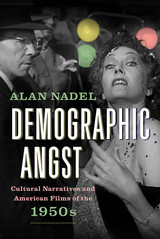
front cover of Demographic Angst
Demographic Angst
Cultural Narratives and American Films of the 1950s
Nadel, Alan
Rutgers University Press, 2017
Prolific literature, both popular and scholarly, depicts America  in the period of the High Cold War as being obsessed with normality, implicitly figuring the postwar period as a return to the way of life that had been put on hold, first by the Great Depression and then by Pearl Harbor. 

Demographic Angst argues that mandated normativity—as a political agenda and a social ethic—precluded explicit expression of the anxiety produced by America’s radically reconfigured postwar population.  Alan Nadel explores influential non-fiction books, magazine articles, and public documents in conjunction with films such as Singin’ in the Rain, On the Waterfront, Sunset Boulevard, and Sayonara, to examine how these films worked through fresh anxieties that emerged during the 1950s.  
 
[more]

front cover of The Demographics of Empire
The Demographics of Empire
The Colonial Order and the Creation of Knowledge
Karl Ittmann
Ohio University Press, 2010

The Demographics of Empire is a collection of essays examining the multifaceted nature of the colonial science of demography in the last two centuries. The contributing scholars of Africa and the British and French empires focus on three questions: How have historians, demographers, and other social scientists understood colonial populations? What were the demographic realities of African societies and how did they affect colonial systems of power? Finally, how did demographic theories developed in Europe shape policies and administrative structures in the colonies? The essays approach the subject as either broad analyses of major demographic questions in Africa’s history or focused case studies that demonstrate how particular historical circumstances in individual African societies contributed to differing levels of fertility, mortality, and migration. Together, the contributors to The Demographics of Empire question demographic orthodoxy, and in particular the assumption that African societies in the past exhibited a single demographic regime characterized by high fertility and high mortality.

[more]

front cover of Demography and Nation
Demography and Nation
Social Legislation and Population Policy in Bulgaria
Svetla Baloutzova
Central European University Press, 2011
The monograph investigates the origins of state policy toward population and the family in Bulgaria. Reconstructs the evolution of state legislation in the field of social policy toward the family between the two World Wars, colored by concerns about the national good and demographic considerations. It sets the laws regarding family welfare in their framework of a distinctively cultural, historical and political discourse to follow the motives behind the legislative initiatives.
[more]

front cover of Demography and the Economy
Demography and the Economy
Edited by John B. Shoven
University of Chicago Press, 2010

Demographics is a vital field of study for understanding social and economic change and it has attracted attention in recent years as concerns have grown over the aging populations of developed nations. Demographic studies help make sense of key aspects of the economy, offering insight into trends in fertility, mortality, immigration, and labor force participation, as well as age, gender, and race specific trends in health and disability.

Demography and the Economy
explores the connections between demography and economics, paying special attention to what demographic trends can reveal about the sustainability of traditional social security programs and the larger implications for economic growth. The volume brings together some of the leading scholars working at the border between the two disciplines, and it provides an eclectic overview of both fields. Contributors also offer deeper analysis of a variety of issues such as the impact of greater wealth on choices about marriage and childbearing and the effects of aging populations on housing prices, Social Security, and Medicare.


[more]

front cover of The Demography of the Semai Senoi
The Demography of the Semai Senoi
Alan G. Fix
University of Michigan Press, 1977
During 1968 and 1969, Alan G. Fix conducted an anthropological and genetic study among the Semai Senoi of Malaysia. His goal was to measure the amount of genetic exchange between local populations and document the effects of that exchange. This work combines results from that study with data from a 1965 census of aborigines and an expanded analysis.
[more]

front cover of Disciplining Statistics
Disciplining Statistics
Demography and Vital Statistics in France and England, 1830–1885
Libby Schweber
Duke University Press, 2006
In Disciplining Statistics Libby Schweber compares the science of population statistics in England and France during the nineteenth century, demonstrating radical differences in the interpretation and use of statistical knowledge. Through a comparison of vital statistics and demography, Schweber describes how the English government embraced statistics, using probabilistic interpretations of statistical data to analyze issues related to poverty and public health. The French were far less enthusiastic. Political and scientific élites in France struggled with the “reality” of statistical populations, wrestling with concerns about the accuracy of figures that aggregated heterogeneous groups such as the rich and poor and rejecting probabilistic interpretations.

Tracing the introduction and promotion of vital statistics and demography, Schweber identifies the institutional conditions that account for the contrasting styles of reasoning. She shows that the different reactions to statistics stemmed from different criteria for what counted as scientific knowledge. The French wanted certain knowledge, a one-to-one correspondence between observations and numbers. The English adopted an instrumental approach, using the numbers to influence public opinion and evaluate and justify legislation.

Schweber recounts numerous attempts by vital statisticians and demographers to have their work recognized as legitimate scientific pursuits. While the British scientists had greater access to government policy makers, and were able to influence policy in a way that their French counterparts were not, ultimately neither the vital statisticians nor the demographers were able to institutionalize their endeavors. By 1885, both fields had been superseded by new forms of knowledge. Disciplining Statistics highlights how the development of “scientific” knowledge was shaped by interrelated epistemological, political, and institutional considerations.
[more]

front cover of Diversity and Disparities
Diversity and Disparities
America Enters a New Century
John Logan is professor of sociology and director of the Research Initiative on Spatial Structures in the Social Sciences at Brown University and editor of Diversity and Disparities: America Enters a New Century.
Russell Sage Foundation, 2014
The United States is more diverse than ever before. Increased immigration has added to a vibrant cultural fabric, and women and minorities have made significant strides in overcoming overt discrimination. At the same time, economic inequality has increased significantly in recent decades, and the Great Recession substantially weakened the economic standing not only of the poor but also of the middle class. Diversity and Disparities, edited by sociologist John Logan, assembles impressive new studies that interpret the social and economic changes in the United States over the last decade. The authors, leading social scientists from many disciplines, analyze changes in the labor market, family structure, immigration, and race. They find that while America has grown more diverse, the opportunities available to disadvantaged groups have become more unequal. Drawing on detailed data from the decennial census, the American Community Survey, and other sources, the authors chart the growing diversity and the deepening disparities among different groups in the United States Harry J. Holzer and Marek Hlavac document that although the economy always rises and falls over the business cycle, the Great Recession of 2007–2009 was a catastrophic event that saw record levels of unemployment, especially among less-educated workers, young people, and minorities. Emily Rosenbaum shows how the Great Recession amplified disparities in access to home ownership, and demonstrates that young adults, especially African Americans, are falling behind previous cohorts not only in home ownership and wealth but even in starting their own families and households. Sean F. Reardon and Kendra Bischoff explore the rise of class segregation as higher-income Americans are moving away from others into separate and privileged neighborhoods and communities. Immigration has also seen class polarization, with an increase in both highly skilled workers and undocumented immigrants. As Frank D. Bean and his colleagues show, the lack of a path to legal status for undocumented immigrants inhibits the educational and economic opportunities for their children and grandchildren. Barrett Lee and colleagues demonstrate that the nation and most cities and towns are becoming more diverse by race and ethnicity. However, while black-white segregation is slowly falling, Hispanics and Asians remain as segregated today as they were in 1980. Diversity and Disparities raises concerns about the extent of socioeconomic immobility in the United States today. This volume provides valuable information for policymakers, journalists, and researchers seeking to understand the current state of the nation.
[more]

front cover of Ethnic Los Angeles
Ethnic Los Angeles
Roger Waldinger
Russell Sage Foundation, 1996
Since 1965 more immigrants have come to Los Angeles than anywhere else in the United States. These newcomers have rapidly and profoundly transformed the city's ethnic makeup and sparked heated debate over their impact on the region's troubled economy. Ethnic Los Angeles presents a multi-investigator study of L.A.'s immigrant population, exploring the scope, characteristics, and consequences of ethnic transition in the nation's second most populous urban center. Using the wealth of information contained in the U.S. censuses of 1970, 1980, and 1990, essays on each of L.A.'s major ethnic groups tell who the immigrants are, where they come from, the skills they bring and their sources of employment, and the nature of their families and social networks. The contributors explain the history of legislation and economic change that made the city a magnet for immigration, and compare the progress of new immigrants to those of previous eras. Recent immigrants to Los Angeles follow no uniform course of adaptation, nor do they simply assimilate into the mainstream society. Instead, they have entered into distinct niches at both the high and low ends of the economic spectrum. While Asians and Middle Easterners have thrived within the medical and technical professions, low-skill newcomers from Central America provide cheap labor in light manufacturing industries. As Ethnic Los Angeles makes clear, the city's future will depend both on how well its economy accommodates its diverse population, and on how that population adapts to economic changes. The more prosperous immigrants arrived already possessed of advanced educations and skills, but what does the future hold for less-skilled newcomers? Will their children be able to advance socially and economically, as the children of previous immigrants once did? The contributors examine the effect of racial discrimination, both in favoring low-skilled immigrant job seekers over African Americans, and in preventing the more successful immigrants and native-born ethnic groups from achieving full economic parity with whites. Ethnic Los Angeles is an illuminating portrait of a city whose unprecedented changes are sure to be replicated in other urban areas as new concentrations of immigrants develop. Backed by detailed demographic information and insightful analyses, this volume engages all of the issues that are central to today's debates about immigration, ethnicity, and economic opportunity in a post-industrial urban society.
[more]

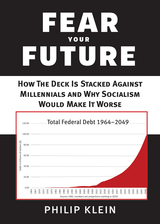
front cover of Fear Your Future
Fear Your Future
How the Deck Is Stacked against Millennials and Why Socialism Would Make It Worse
Philip Klein
Templeton Press, 2019
It’s become fashionable to demean millennials as the “snowflake” generation. Raised during the peace and prosperity of the ‘90s, they’re often perceived as carrying an entitlement mentality and being incapable of handling adversity. But Philip Klein sees them differently. Given the economic headwinds they faced at the start of their working lives, millennials have shown commendable fortitude.  And as Klein argues, they will need to maintain this character strength going forward because further challenges loom in their future.  

The aftershocks of the Great Recession, the skyrocketing cost of living, and the titanic weight of student loan debt have made the American Dream seem to be forever retreating toward the horizon. As if that weren’t enough, millennials will face the largest federal debt in history as boomers retire and extract trillions of dollars from Social Security and Medicare—far more than they contributed.  

In this concise, data-driven book, Klein begins the work of brightening the future for millennials by analyzing the problem compassionately yet objectively. There are real reasons to worry about what lies ahead if nothing changes. But the facts laid out in Klein’s book can steer the conversation to realistic solutions.

 
[more]

front cover of Fertility Change in Contemporary Japan
Fertility Change in Contemporary Japan
Robert W. Hodge and Naohiro Ogawa
University of Chicago Press, 1992
The authors examine the striking decline in Japan's birthrate in light of the rapid urbanization, industrialization, and socioeconomic development experienced by the nation since World War II.
[more]

front cover of The Fertility Revolution
The Fertility Revolution
A Supply-Demand Analysis
Richard A. Easterlin and Eileen M. Crimmins
University of Chicago Press, 1985
For most of human history a "natural fertility" regime has prevailed throughout the world: there has been almost no conscious limitation of family size within marriage, and women have spent their reproductive lives tied to the "wheel of childbearing." Only recently in developed countries has fertility been brought under conscious control by individual couples and childbearing fallen to an average of two births per woman. The explanation of this "fertility revolution" is the main concern of this book.

Richard A. Easterlin and Eileen M. Crimmins present and test a fertility theory that has gained increasing attention over the last decade, a "supply-demand theory" that integrates economic and sociological approaches to fertility determination. The results of the tests, which draw on data from four developing countries—Colombia, India, Sri Lanka, and Taiwan—are highly consistent, though a number of the conclusions are likely to arouse controversy. For example, couples' motivation for fertility control appears to be the prime mover in the fertility revolution, rather than access to family planning services or unfavorable attitudes toward such services.

The interdisciplinary approach and nontechnical exposition of this study will attract a wide readership among economists, sociologists, demographers, anthropologists, statisticians, biologists, and others.

[more]

front cover of Free Trade In The Bermuda Triangle
Free Trade In The Bermuda Triangle
And Other Tales Of Counterglobalization
Brett Neilson
University of Minnesota Press, 2003
Shangri-La, the Bermuda Triangle, Transylvania, the Golden Triangle—far-flung in popular conception, these anomalous places nonetheless occupy the same mysterious zone, a mythography of unruly cartographic practices. And because this mythography becomes associated with a particular area of the earth’s surface, it may well suggest an alternative means of mapping the world, dissociated from the dominant geographical paradigms of nation-state, economic region, and the global/local marketing nexus. Large-scale nonnational geographical spaces that find their genesis in popular feeling, mystery, and belief, these four sites provide Brett Neilson with the basis not only for rethinking the current global reorganization of space and time but also for questioning the dominant narrative by which globalization marks the victory of capitalism. Free Trade in the Bermuda Triangle moves between analysis of popular fantasies and engagement with on-the-ground realities, weaving together topics as diverse as airplane disasters off the U.S. Atlantic coast, the global drug trade, vampire culture in postsocialist Europe, and the search for utopia in Chinese-occupied Tibet. The study of globalization is largely a solemn affair, occupied with increasing economic polarities, environmental degradation, and global insecurity. Free Trade in the Bermuda Triangle maintains a critical focus on these sobering issues but at the same time asks how popular pleasure and enjoyment can create viable alternatives to the current global order. Neilson takes seriously the proposition that capitalism must be contested at its own level of generality, finding provisional grounds for resistance in nonlocal transnational spaces that embody quotidian hopes, desires, and anxieties. By studying the real and imagined dimensions of these popular geographies, his book seeks resources for social betterment in the fallen mythologies of the contemporary postutopian world.Brett Neilson is senior lecturer in the School of Humanities at the University of Western Sydney, where he is also a member of the Centre for Cultural Research.
[more]

front cover of From Many Strands
From Many Strands
Ethnic and Racial Groups in Contemporary America
Stanley Lieberson
Russell Sage Foundation, 1988
The 1980 Census introduced a radical change in the measurement of ethnicity by gathering information on ancestry for all respondents, regardless of how long ago their forebears migrated to America, and by allowing respondents of mixed background to list more than one ancestry. The result, presented for the first time in this important study, is a unique and sometimes startling picture of the nation's ethnic makeup. From Many Strands focuses on each of the sixteen principal European ethnic groups, as well as on major non-European groups such as blacks and Hispanics. The authors describe differences and similarities across a range of dimensions, including regional distribution, income, marriage patterns, and education. While some findings lend support to the "melting pot" theory of assimilation (levels of educational attainment have become more comparable and ingroup marriage is declining), other findings suggest the persistence of pluralism (settlement patterns resist change and some current occupational patterns date from the turn of the century). In these contradictions, and in the striking number of respondents who report no ethnic background or report it incorrectly, Lieberson and Waters find evidence of considerable ethnic flux and uncover the growing presence of a new, "unhyphenated American" ethnic strand in the fabric of national life. A Volume in the Russell Sage Foundation Census Series
[more]

front cover of The Future of the Family
The Future of the Family
Daniel Patrick Moynihan
Russell Sage Foundation, 2004
High rates of divorce, single-parenthood, and nonmarital cohabitation are forcing Americans to reexamine their definition of family. This evolving social reality requires public policy to evolve as well. The Future of the Family brings together the top scholars of family policy—headlined by editors Lee Rainwater, Tim Smeeding, and, in his last published work, the late Senator Daniel Patrick Moynihan—to take stock of the state of the family in the United States today and address the ways in which public policy affects the family and vice versa. The volume opens with an assessment of new forms of family, discussing how reduced family income and lower parental involvement can disadvantage children who grow up outside of two-parent households. The book then presents three vastly dissimilar recommendations—each representing a different segment of the political spectrum—for how family policy should adapt to these changes. Child psychologist Wade Horn argues the case of political conservatives that healthy two-parent families are the best way to raise children and therefore should be actively promoted by government initiatives. Conversely, economist Nancy Folbre argues that government's role lies not in prescribing family arrangements but rather in recognizing and fostering the importance of caregivers within all families, conventional or otherwise. Will Marshall and Isabel Sawhill borrow policy prescriptions from the left and the right, arguing for more initiatives that demand personal responsibility from parents, as well as for an increase in workplace flexibility and the establishment of universal preschool programs. The book follows with commentary by leading policy analysts Samuel Preston, Frank Furstenberg Jr., and Irwin Garfinkel on the merits of the conservative and liberal arguments. Each suggests that marriage promotion alone is not enough to ensure a happy, healthy, and prosperous future for American children who are caught up in the vortex of family change. They agree that government investments in children, however, can promote superior developmental outcomes and even potentially encourage traditional families by enlarging the pool of "marriageable" individuals for the next generation. No government action can reverse trends in family formation or return America to the historic nuclear family model. But understanding social change is an essential step in fashioning effective policy for today's families. With authoritative insight, The Future of the Family broadens and updates our knowledge of how public policy and demography shape one another.
[more]

front cover of Gen Z, Explained
Gen Z, Explained
The Art of Living in a Digital Age
Roberta Katz, Sarah Ogilvie, Jane Shaw, and Linda Woodhead
University of Chicago Press, 2021
An optimistic and nuanced portrait of a generation that has much to teach us about how to live and collaborate in our digital world.

Born since the mid-1990s, members of Generation Z comprise the first generation never to know the world without the internet, and the most diverse generation yet. As Gen Z starts to emerge into adulthood and enter the workforce, what do we really know about them? And what can we learn from them? Gen Z, Explained is the authoritative portrait of this significant generation. It draws on extensive interviews that display this generation’s candor, surveys that explore their views and attitudes, and a vast database of their astonishingly inventive lexicon to build a comprehensive picture of their values, daily lives, and outlook. Gen Z emerges here as an extraordinarily thoughtful, promising, and perceptive generation that is sounding a warning to their elders about the world around them—a warning of a complexity and depth the “OK Boomer” phenomenon can only suggest.

Much of the existing literature about Gen Z has been highly judgmental. In contrast, this book provides a deep and nuanced understanding of a generation facing a future of enormous challenges, from climate change to civil unrest. What’s more, they are facing this future head-on, relying on themselves and their peers to work collaboratively to solve these problems. As Gen Z, Explained shows, this group of young people is as compassionate and imaginative as any that has come before, and understanding the way they tackle problems may enable us to envision new kinds of solutions. This portrait of Gen Z is ultimately an optimistic one, suggesting they have something to teach all of us about how to live and thrive in this digital world.
 
[more]

front cover of A Generation of Change
A Generation of Change
A Profile of America's Older Population
Jacob S. Siegel
Russell Sage Foundation, 1993
A Generation of Change is an exceptional study of the nation's elderly, a population that has undergone profound changes in the years since World War II. As modern medicine extends the average life span and the baby boom generation begins to approach middle age, the number of older Americans is expected to more than double in the next century. Currently, 75 percent of U.S. health care expenditures go toward the elderly. But as national trends toward early retirement and low birthrate continue, an aging American population could face crises in meeting their financial and physical needs. According to Jacob S. Siegel in A Generation of Change, astute public planning must be informed by an understanding of the demographic, social, and economic characteristics of the older population, as it is today and as it will be in the coming years. Siegel employs census and survey data from 1950 through the mid-1980s to describe a population constantly shifting in its ethnic and gender composition, geographic distribution, marital and living arrangements, health, employment, and economic status. Surprisingly, there is tremendous disparity in the quality of life among the elderly. Although their average poverty rate is below that of the general population, there are dramatic levels of poverty among older women, who are far more likely than men to live alone or in institutions. As the elderly progress from the "young old" to the "aged old"—those over 85—sharp differences emerge as income and employment decrease and degrees of chronic illness increase. In addition, residential location influences the quality of health care and public assistance available to the elderly, an effect that may account for the marked migration of older people to Florida and Arizona. Siegel analyzes the full range of characteristics for this heterogenous population and, through comparisons with other age groups as well as with the elderly of the previous decades, portrays the crucial influence of social and economic conditions over the life course on the quality of later life. With our elderly population growing more numerous and long lived, accurate information about them is increasingly essential. A Generation of Change will serve as a valuable resource for policymakers seeking more effective solutions in critical areas such as housing, long-term health care, and the funding of Social Security and retirement programs. A Volume in the Russell Sage Foundation Census Series
[more]

front cover of The Hard Count
The Hard Count
The Political and Social Challenges of Census Mobilization
D. Sunshine Hillygus
Russell Sage Foundation, 2006
American democracy relies on an accurate census to fairly allocate political representation and billions of dollars in federal funds. Declining participation in previous censuses and a general waning of civic engagement in society raised the possibility that the 2000 count would miss many Americans—disproportionately ethnic and racial minorities—depriving them of their share of influence in American society and yielding an unfair distribution of federal resources. Faced with this possibility, the Census Bureau launched a massive mobilization campaign to encourage Americans to complete and return their census forms. In The Hard Count, former Census Bureau director Kenneth Prewitt, D. Sunshine Hillygus, Norman H. Nie, and Heili Pals present a rigorous evaluation of this campaign. Can a busy, mobile, disengaged public be motivatived to participate in this civic activity? Using a rich set of data and drawing on theories of civic mobilization, political persuasion, and media effects, the authors assess the factors that influenced participation in the 2000 census.. The Hard Count profiles a watershed moment in the history of the American census. As the mobilization campaign was underway, political opposition to the census sprang up, citing privacy issues and seeking to limit the kind of data the census could collect. Hillygus, Nie, Prewitt, and Pals analyze the competing effects of the mobilization campaign and the privacy controversy on public attitudes and cooperation with the census. Using an internet based survey, the authors tracked a representative sample of Americans over time to gauge changes in census attitudes, privacy concerns, and their eventual decision whether or not to return their census form. The study uniquely captures the public's exposure to census advertising, community mobilization, and news stories, and was designed so people could view video clips and photos of actual campaign advertisements on their sets in their homes. The authors find that the Census Bureau campaign did in fact raise awareness of the census and census participation. The mobilization campaign was especially effective at increasing participation among groups historically undercounted by the census. They also find that census participation would have been higher if not for the privacy controversy, which discouraged many people from cooperating with the census and led others to omit information from their census form. The findings of The Hard Count have important policy implications for future census counts and offer theoretical insights regarding the influence of mobilization campaigns on civic participation. The goal of full and equal cooperation with the decennial census and other government surveys is an important national priority. The Hard Count shows that a mobilization campaign can dramatically increase voluntary participation in the decennial headcount and identifies emerging social and political challenges that may threaten future census counts and contribute to the growing fragility of our national statistical system.. A Volume in the Russell Sage Foundation Census Series
[more]

front cover of Hispanic Population of the United States
Hispanic Population of the United States
Frank D. Bean
Russell Sage Foundation, 1987
The Hispanic population in the United States is a richly diverse and changing segment of our national community. Frank Bean and Marta Tienda emphasize a shifting cluster of populations—Mexican, Puerto Rican, Cuban, Central and South American, Spanish, and Caribbean—as they examine fertility and immigration, family and marriage patterns, education, earnings, and employment. They discuss, for instance, the effectiveness of bilingual education, recommending instead culturally supportive programs that will benefit both Hispanic and non-Hispanic students. A study of the geographic distribution of Hispanics shows that their tendency to live in metropolitan areas may, in fact, result in an isolation which denies them equal access to schooling, jobs, and health care. Bean and Tienda offer a critical, much-needed assessment of how Hispanics are faring and what the issues for the future will be. Their findings reveal and reflect differences in the Hispanic population that will influence policy decisions and affect the Hispanic community on regional and national levels. "...represents the state of the art for quantitative analysis of ethnic groups in the United States." —American Journal of Sociology A Volume in the Russell Sage Foundation Census Series
[more]

front cover of Housing America in the 1980s
Housing America in the 1980s
John S. Adams
Russell Sage Foundation, 1987
Housing provides shelter, in a variety of forms, but it is also resonant with meaning on many other levels--as a financial asset, a status symbol, an expression of private aspirations and identities, a means of inclusion or exclusion, and finally as a battleground for social change. John Adams' impressive new study explores this complex topic in all its dimensions. Using census data and other housing surveys, Adams describes the recent history of housing in America; the nature of housing supply and demand; patterns of housing use; and selected housing policy questions. Adams supplements this national and regional analysis with a remarkable set of small-area analyses, revealing how neighborhood settings affect housing use and how market forces and other trends interact to shape a neighborhood. These analyses focus on a sample of over fifty urbanized areas, including the nation's three largest cities (New York, Los Angeles, and Chicago). Special two-color maps illustrate the dynamics of housing use in each of these communities. Clearly and insightfully, this volume paints a unique picture of the American "housing landscape," a landscape that reflects and regulates significant aspects of our national life. A Volume in the Russell Sage Foundation Census Series
[more]

front cover of Immigrants and Boomers
Immigrants and Boomers
Forging a New Social Contract for the Future of America
Dowell Myers
Russell Sage Foundation, 2007
"This story of hope for both immigrants and native-born Americans is a well-researched, insightful, and illuminating study that provides compelling evidence to support a policy of homegrown human investment as a new priority. A timely, valuable addition to demographic and immigration studies. Highly recommended." —Choice Virtually unnoticed in the contentious national debate over immigration is the significant demographic change about to occur as the first wave of the Baby Boom generation retires, slowly draining the workforce and straining the federal budget to the breaking point.  In this forward-looking new book, noted demographer Dowell Myers proposes a new way of thinking about the influx of immigrants and the impending retirement of the Baby Boomers. Myers argues that each of these two powerful demographic shifts may hold the keys to resolving the problems presented by the other. Immigrants and Boomers looks to California as a bellwether state—where whites are no longer a majority of the population and represent just a third of residents under age twenty—to afford us a glimpse into the future impact of immigration on the rest of the nation. Myers opens with an examination of the roots of voter resistance to providing social services for immigrants. Drawing on detailed census data, Myers demonstrates that long-established immigrants have been far more successful than the public believes. Among the Latinos who make up the bulk of California's immigrant population, those who have lived in California for over a decade show high levels of social mobility and use of English, and 50 percent of Latino immigrants become homeowners after twenty years. The impressive progress made by immigrant families suggests they have the potential to pick up the slack from aging boomers over the next two decades. The mass retirement of the boomers will leave critical shortages in the educated workforce, while shrinking ranks of middle-class tax payers and driving up entitlement expenditures. In addition, as retirees sell off their housing assets, the prospect of a generational collapse in housing prices looms. Myers suggests that it is in the boomers' best interest to invest in the education and integration of immigrants and their children today in order to bolster the ranks of workers, taxpayers, and homeowners America they will depend on ten and twenty years from now. In this compelling, optimistic book, Myers calls for a new social contract between the older and younger generations, based on their mutual interests and the moral responsibility of each generation to provide for children and the elderly. Combining a rich scholarly perspective with keen insight into contemporary political dilemmas, Immigrants and Boomers creates a new framework for understanding the demographic challenges facing America and forging a national consensus to address them.
[more]

front cover of Immigration and Opportuntity
Immigration and Opportuntity
Race, Ethnicity, and Employment in the United States
Frank D. Bean
Russell Sage Foundation, 1999
The American dream of equal opportunity and social mobility still holds a powerful appeal for the many immigrants who arrive in this country each year. but if immigrant success stories symbolize the fulfillment of the American dream, the persistent inequality suffered by native-born African Americans demonstrates the dream's limits. Although the experience of blacks and immigrants in the United States are not directly comparable, their fates are connected in ways that are seldom recognized. Immigration and Opportunity brings together leading sociologists and demographers to present a systematic account of the many ways in which immigration affects the labor market experiences of native-born African Americans. With the arrival of large numbers of nonwhite immigrants in recent decades, blacks now represent less than 50 percent of the U.S. minority population. Immigration and Opportunity reveals how immigration has transformed relations between minority populations in the United States, creating new forms of labor market competition between native and immigrant minorities. Recent immigrants have concentrated in a handful of port-of-entry cities, breaking up established patterns of residential segregation,and, in some cases, contributing to the migration of native blacks out of these cities. Immigrants have secured many of the occupational niches once dominated by blacks and now pass these jobs on through ethnic hiring networks that exclude natives. At the same time, many native-born blacks find jobs in the public sector, which is closed to those immigrants who lack U.S. citizenship. While recent immigrants have unquestionably brought economic and cultural benefits to U.S. society, this volume makes it clear that the costs of increased immigration falls particularly heavily upon those native-born groups who are already disadvantaged. Even as large-scale immigration transforms the racial and ethnic make-up of U.S. society—forcing us to think about race and ethnicity in new ways—it demands that we pay renewed attention to the entrenched problems of racial disadvantage that still beset native-born African Americans.
[more]

front cover of Immigration and the Remaking of Black America
Immigration and the Remaking of Black America
Tod G. Hamilton
Russell Sage Foundation, 2019
Winner of the 2020 Otis Dudley Duncan Award for Outstanding Scholarship in Social Demography
Honorable Mention for the 2020 Thomas and Znaniecki Award from the International Migration Section of the American Sociological Association​​​​​​​


Over the last four decades, immigration from the Caribbean and sub-Saharan Africa to the U. S. has increased rapidly. In several states, African immigrants are now major drivers of growth in the black population. While social scientists and commentators have noted that these black immigrants’ social and economic outcomes often differ from those of their native-born counterparts, few studies have carefully analyzed the mechanisms that produce these disparities. In Immigration and the Remaking of Black America, sociologist and demographer Tod Hamilton shows how immigration is reshaping black America. He weaves together interdisciplinary scholarship with new data to enhance our understanding of the causes of socioeconomic stratification among both the native-born and newcomers.
 
Hamilton demonstrates that immigration from the Caribbean and sub-Saharan Africa is driven by selective migration, meaning that newcomers from these countries tend to have higher educational attainment than those who stay behind. As a result, they arrive in the U.S. with some advantages over native-born blacks, and, in some cases, over whites. He also shows the importance of historical context: prior to the Civil Rights Movement, black immigrants’ socioeconomic outcomes resembled native-born blacks’ much more closely, regardless of their educational attainment in their country of origin. Today, however, certain groups of black immigrants have better outcomes than native-born black Americans—such as lower unemployment rates and higher rates of homeownership—in part because they immigrated at a time of expanding opportunities for minorities and women in general. Hamilton further finds that rates of marriage and labor force participation among native-born blacks that move away from their birth states resemble those of many black immigrants, suggesting that some disparities within the black population stem from processes associated with migration, rather than from nativity alone.
 
Hamilton argues that failing to account for this diversity among the black population can lead to incorrect estimates of the social progress made by black Americans and the persistence of racism and discrimination. He calls for future research on racial inequality to disaggregate different black populations. By richly detailing the changing nature of black America, Immigration and the Remaking of Black America helps scholars and policymakers to better understand the complexity of racial disparities in the twenty-first century.
[more]

front cover of Increase And Multiply
Increase And Multiply
Governing Cultural Reproduction In Early Modern England
David Glimp
University of Minnesota Press, 2003

A wide-ranging study of the ideology of population control in early modern England

Across the sixteenth and seventeenth centuries, a growing notion of the value of a large populace created a sense of urgency about reproduction; accordingly, a wide array of English writers of the time voiced the need not merely to add more people but also to ensure that England had an abundance of the right kinds of people. This need, in turn, called for a variety of institutions to train—and thus make, through a kind of nonbiological procreation—pious, enterprising, and dutiful subjects. In Increase and Multiply, David Glimp examines previously unexplored links between this emergent demographic mentality and Renaissance literature.

Glimp’s analysis centers on humanist pedagogy as a mechanism for creating people capable of governing both themselves and others. Acknowledging the ways in which authors such as Sidney, Shakespeare, and Milton advance their own work by appealing to this vision, Glimp argues that their texts allow us to read the scope and limits of this generative ideal, its capacity to reinforce order and to become excessive and destabilizing. His work provides unprecedented insight into the role of fantasies of nonbiological reproduction in early modern political theory, government practice, and literary production.
[more]

front cover of Indicators of Change in the American Family
Indicators of Change in the American Family
Abbott Lamoyne Ferriss
Russell Sage Foundation, 1970
Provides a selection of existing and new measures of family change. The statistical time series are presented and organized around the topics of marriage, marital status, households, fertility, divorce, dependency, work and income, and poverty. The series selected for inclusion were chosen because of an apparent or assumed significant change which they displayed. They are illustrated by graphs and accompanied by a brief commentary. The statistical series are numbered in an appendix, and sources of the data are cited at the foot of the page of commentary.
[more]

front cover of Indicators of Social Change
Indicators of Social Change
Concepts and Measurements
Eleanor Bernert Sheldon
Russell Sage Foundation, 1968
Includes many original contributions by an assembly of distinguished social scientists. They set forth the main features of a changing American society: how its organization for accomplishing major social change has evolved, and how its benefits and deficits are distributed among the various parts of the population. Theoretical developments in the social sciences and the vast impact of current events have contributed to a resurgence of interest in social change; in its causes, measurement, and possible prediction. These essays analyze what we know, and examine what we need to know in the study, prediction, and possible control of social change.
[more]

front cover of Indicators of Trends in American Education
Indicators of Trends in American Education
Abbott Lamoyne Ferriss
Russell Sage Foundation, 1969
Assembles, collates, and analyzes data bearing on trends in American education. The author presents the basic data on school enrollment, retention, and attainment, indicating changes in the educational characteristics of the population and comparable time-series statistics on teachers and school finances reflecting change within the school system itself. Dr. Ferriss then relates these data to a statement of educational goals set some ten years ago, utilizing the data to provide an assessment of progress toward those goals.
[more]

front cover of Indicators of Trends in the Status of American Women
Indicators of Trends in the Status of American Women
Abbott Lamoyne Ferriss
Russell Sage Foundation, 1971
Assembles, collates, and analyzes data bearing on trends in American education. The author presents the basic data on school enrollment, retention, and attainment, indicating changes in the educational characteristics of the population and comparable time-series statistics on teachers and school finances reflecting change within the school system itself. Dr. Ferriss then relates these data to a statement of educational goals set some ten years ago, utilizing the data to provide an assessment of progress toward those goals.
[more]

front cover of Inequalities of Love
Inequalities of Love
College-Educated Black Women and the Barriers to Romance and Family
Averil Y. Clarke
Duke University Press, 2011
Inequalities of Love uses the personal narratives of college-educated black women to describe the difficulties they face when trying to date, marry, and have children. While conventional wisdom suggests that all women, regardless of race, must sacrifice romance and family for advanced educations and professional careers, Averil Y. Clarke’s research reveals that educated black women’s disadvantages in romance and starting a family are consequences of a system of racial inequality and discrimination. The author analyzes the accounts of black women who repeatedly return to incompatible partners as they lose hope of finding “Mr. Right” and reject unwed parenting because it seems to affirm a negative stereotype of black women’s sexuality that is inconsistent with their personal and professional identities. She uses national survey data to compare college-educated black women’s experiences of romance, reproduction, and family to those of less-educated black women and those of white and Hispanic women with degrees. She reports that degreed black women’s lives include less marriage and sex, and more unwanted pregnancy, abortion, and unwed childbearing than college-educated white and Hispanic women. Black women’s romantic limitations matter because they constitute deprivation and constraint in romance and because they illuminate important links between race, class, and gender inequality in the United States. Clarke’s discussion of the inequities that black women experience in romance highlights the connections between individuals’ sexual and reproductive decisions, their performance of professional or elite class identities, and the avoidance of racial stigma.
[more]

front cover of The Institutional Context of Population Change
The Institutional Context of Population Change
Patterns of Fertility and Mortality across High-Income Nations
Fred C. Pampel
University of Chicago Press, 2001
Despite having similar economies and political systems, high-income nations show persistent diversity. In this pioneering work, Fred C. Pampel looks at fertility, suicide, and homicide rates in eighteen high-income nations to show how they are affected by institutional structures. European nations, for example, offer universal public benefits for men and women who are unable to work and have policies to ease the burdens of working mothers. The United States, in contrast, does not. This study demonstrates how public policy differences such as these affect childbearing among working women, moderate pressures for suicide and homicide among the young and old, and shape sex difference in suicide and homicide.

The Institutional Context of Population Change cuts across numerous political and sociological topics, including political sociology, stratification, sex and gender, and aging. It persuasively shows the importance of public policies for understanding the demographic consequences of population change and the importance of demographic change for understanding the consequences of public policies.
[more]

front cover of Israeli Society in the Twenty-First Century
Israeli Society in the Twenty-First Century
Immigration, Inequality, and Religious Conflict
Calvin Goldscheider
Brandeis University Press, 2015
This volume illuminates changes in Israeli society over the past generation. Goldscheider identifies three key social changes that have led to the transformation of Israeli society in the twenty-first century: the massive immigration of Jews from the former Soviet Union, the economic shift to a high-tech economy, and the growth of socioeconomic inequalities inside Israel. To deepen his analysis of these developments, Goldscheider focuses on ethnicity, religion, and gender, including the growth of ethnic pluralism in Israel, the strengthening of the Ultra-Orthodox community, the changing nature of religious Zionism and secularism, shifts in family patterns, and new issues and challenges between Palestinians and Arab Israelis given the stalemate in the peace process and the expansions of Jewish settlements. Combining demography and social structural analysis, the author draws on the most recent data available from the Israeli Central Bureau of Statistics and other sources to offer scholars and students an innovative guide to thinking about the Israel of the future. This book will be of interest to scholars and students of contemporary Israel, the Middle East, sociology, demography and economic development, as well as policy specialists in these fields. It will serve as a textbook for courses in Israeli history and in the modern Middle East.
[more]

front cover of The Jews of Europe in the Modern Era
The Jews of Europe in the Modern Era
A Socio-Historical Outline
Victor Karady
Central European University Press, 2003
Discusses the socio-historical problem areas related to the presence of Jews in major European societies from the 18th century to our days; differently from most other studies, covers the post-Shoah situation also. The approach is multi-disciplinary, mobilizing resources gained from sociology, demography and political science, based on substantial statistical information. Presents and compares the different patterns of Jewish policies of the emerging nation states and established empires. Discusses education and socio-professional stratification of Jews. Deals with the challenges of emancipation and assimilation, the emergence of Jewish nationalism in various forms, Zionism above all, as well as antisemitic ideologies. The book ends with a scrutiny of post-Shoah situation opposing in this regard Western Europe to the Sovietised East, discussing finally strategies of dissimulation or reconstruction of Jewish identity.
[more]

front cover of The Journey into Adulthood in Uncertain Times
The Journey into Adulthood in Uncertain Times
Robert Crosnoe
Russell Sage Foundation, 2025
Concerns about the welfare of young adults have received increasing public attention. Numerous magazine and newspaper articles ask “Are young adults failing to launch?” and “Are global crises creating generations of lost youth?” These questions are driven by worries that young people are either unable or unwilling to transition to adulthood, even when they have aged past traditional definitions of childhood and adolescence. In The Journey into Adulthood in Uncertain Times, sociologists Robert Crosnoe and Shannon E. Cavanagh examine whether young people today are either refusing or failing to grow up.

Drawing on both quantitative and qualitative survey data over five decades, Crosnoe and Cavanagh find that young adults are, in fact, waiting longer to take on “real” adult roles, such as worker or parent. However, this is not out of a reluctance to grow up. Instead, increased inequality and changes in the economy have forced young people to adapt their lives in new ways. Young adults are now spending more time in school, have more trouble finding their footing in the labor force, and consequently postpone getting married and having children. They also mix and match roles in more complicated ways now than in the past—going back and forth between school and work over longer periods of time or disconnecting parenthood from their romantic relationships. While the period from late teens to mid-twenties does look different now than in the past, the change has been slow and steady rather than a dramatic shift due to social crises. The Great Recession, for example, had a more muted effect on young people’s social and economic attainment and family formation than fears of a lost generation would suggest. 

Crosnoe and Cavanagh find that while the panic over young adults today may be somewhat overblown, this conclusion should not obscure some clear concerns. Young adults do struggle with their social and emotional wellbeing. They are more depressed than their counterparts in previous generations, drink less alcohol in ways that suggest less engagement with social life, and express deep distrust of social institutions and the idea of the American Dream. The authors argue that worries about the state of young adulthood today should trigger more reflection about how to support young people rather than how to fix them.

The Journey into Adulthood in Uncertain Times is a comprehensive and illuminating examination of the challenges faced by contemporary young adults.
 
[more]

front cover of Legalized Inequalities
Legalized Inequalities
Immigration and Race in the Low-wage Workplace
Kati L. Griffith
Russell Sage Foundation, 2025
Beyond unlivable wages and a lack of upward mobility, low-wage work in the United States is rife with danger and degrading treatment. Immigrants and people of color are overrepresented in these “bad jobs” and often feel as though they are unable to change their working conditions. In Legalized Inequalities, law scholar Kati L. Griffith, sociologist Shannon Gleeson, anthropologist Darlène Dubuisson, and political scientist Patricia Campos-Medina investigate the government’s role in perpetuating poor and dangerous work environments for low-wage immigrant workers of color.

Drawing on interviews with over three hundred low-wage Haitian and Central American workers and worker advocates, Griffith, Gleeson, Dubuisson, and Campos-Medina reveal how U.S. policies produce and sustain job instability and insecurity. Together, contemporary U.S. labor and employment law, immigration policy, and enduring racial inequality work in tandem to keep workers’ wages low, lock them into substandard working conditions, and minimize opportunities to push for change. Workplace regulations meant to protect workers are weak and underenforced, privileging employers over workers. At-will employment policies, which allow employers to terminate employees without cause, discourage workers from bargaining for better jobs or holding employers accountable for even the most egregious mistreatment. Federal immigration policy further disempowers workers by deputizing employers to act as immigration enforcement agents through immigration status verification requirements. Undocumented workers often believe they must endure maltreatment or risk deportation. Anti-immigrant sentiment—encouraged by U.S. policy—impacts workers across all status groups. Additionally, despite a proliferation of civil rights legislation, racial disparities remain in the workplace. Workers of color are often paid less, forced to complete more dangerous and demeaning tasks, and subjected to racial harassment. 

While these workers face formidable barriers to fighting for their rights, they are not entirely powerless. Some low-wage workers filed formal complaints with government agencies. Others, on their own or collectively, confronted their employers to demand fair and dignified treatment. Some even quit in protest of their poor working conditions. The authors argue that reforming labor and employment law, immigration law, and Civil Rights law is necessary to reshape the low-wage workplace. They suggest increasing funding for workers’ rights enforcement agenciesremoving the mandate for employers to verify a worker’s immigration status, and making it easier to prove that employment discrimination has occurred, among other policy proposals, to help empower and protect low-wage immigrant workers of color.

Legalized Inequalities not only highlights the crushing consequences of U.S. policy on low-wage immigrant workers of color but showcases their resilience in the face of these obstacles.
[more]

front cover of Men without Work
Men without Work
Post-Pandemic Edition (2022)
Eberstadt, Nicholas
Templeton Press, 2022
Nicholas Eberstadt’s landmark 2016 study, Men Without Work, cast a spotlight on the collapse of work for men in modern America. Rosy reports of low unemployment rates and “full or near full employment” conditions, he contends, were overlooking a quiet, continuing crisis: Depression-era work rates for American men of “prime working age” (25–54).
   The grim truth: over six million prime-age men were neither working nor looking for work. Conventional unemployment measures ignored these labor force dropouts, but their ranks had been rising relentlessly for half a century. Eberstadt’s unflinching analysis was, in the words of The New York Times, “an unsettling portrait not just of male unemployment, but also of lives deeply alienated from civil society.”
   The famed American work ethic was once near universal: men of sound mind and body took pride in contributing to their communities and families. No longer, warned Eberstadt. And now—six years and one catastrophic pandemic later—the problem has not only worsened: it has seemingly been spreading among prime-age women and workers over fifty-five.
   In a brand new introduction, Eberstadt explains how the government’s response to Covid-19 inadvertently exacerbated the flight from work in America. From indiscriminate pandemic shutdowns to almost unconditional “unemployment” benefits, Americans were essentially paid not to work.
   Thus today, despite the vaccine rollouts, inexplicable numbers of working age men and women are sitting on the sidelines while over 11 million jobs go unfilled. Current low rates of unemployment, touted by pundits and politicians, are grievously misleading. The truth is that fewer prime-age American men are looking for readily available work than at any previous juncture in our history. And others may be catching the “Men Without Work” virus too.
   Given the devastating economic impact of the Covid calamity and the unforeseen aftershocks yet to come, this reissue of Eberstadt’s groundbreaking work is timelier than ever.
[more]

front cover of Migration and Residential Mobility in the United States
Migration and Residential Mobility in the United States
Larry Long
Russell Sage Foundation, 1988
Americans have a reputation for moving often and far, for being committed to careers or lifestyles, not place. Now, with curtailed fertility, residential mobility plays an even more important role in the composition of local populations—and by extension, helps shape local and national economic trends, social service requirements, and political constituencies. In Migration and Residential Mobility in the United States, Larry Long integrates diverse census and survey data and draws on many academic disciplines to offer a uniquely comprehensive view of internal migration patterns since the 1930s. Long describes an American population that lives up to its reputation for high mobility, but he also reports a surprising recent decline in interstate migration and an unexpected fluctuation in the migration balance toward nonmetropolitan areas.  He provides unprecedented insight into reasons for moving and explores return and repeat migration, regional balance, changing migration flows of blacks and whites, and the policy implications of movement by low-income populations. How often, how far, and why people move are important considerations in characterizing the lifestyles of individuals and the nature of social institutions.  This volume illuminates the extent and direction, as well as the causes and consequences, of population turnover in the United States. A Volume in the Russell Sage Foundation Census Series
[more]

front cover of Mixed Heritage in the Family
Mixed Heritage in the Family
Racial Identity, Spousal Choice, and Childrearing
Carolyn Liebler
Russell Sage Foundation, 2025
As interracial unions and multiracial people become more common in the United States, mixed-heritage people have come to be regarded by some as a bellwether of race relations in the country. Is the growth of this population a sign that we are now in a post-racial era and our racial identities no longer impact our daily lives? In Mixed Heritage in the Family,sociologists Carolyn A. Liebler and Miri Song explore how racially mixed people navigate racial boundaries as they choose spouses and raise families.
Liebler and Song break new ground by being the first to combine and integrate the study of three aspects of life for people of mixed racial heritage – identity, spouse choice, and childrearing. This integrated approach reveals how complicated racial identification can be, and how it can be expressed in one’s choice of partner or in how one raises their children. The authors draw on census data and interviews with Asian-White, Black-White, and American Indian/Alaska Native-White mixed people to better understand how their identity choices are related to their choice of spouse and how they racially identify and raise their children.
Increasingly, mixed people in the United States are identifying with multiple races. However, the authors find that mixed-race people are not a monolith and that how and why they identify varies considerably between and within each group. They found several common factors that influenced whether mixed-race people choose to identify as biracial, solely White, or solely as a racial minority. These factors include the history of the specific minority race in the U.S., the racial demographics of where they were raised, their social and cultural exposure to their White and non-White backgrounds, their attachment to their racial backgrounds, and how they are seen racially by others. 
 
The way mixed-heritage people identify was closely tied to the race of their spouse. However, having a White spouse did not necessarily mean the mixed-race person felt disconnected from their non-White heritage. White spouses varied in their racial consciousness and their interest in the culture of their mixed-race spouse’s minority ancestry. The spouse’s race, and the nature of racial overlap between the spouses, was also key in the racial upbringing of a mixed-heritage person’s child. In families where the parents share a minority racial heritage, couples lean into their shared ‘family race’, which guides their parenting choices and family life. Many mixed heritage parents found it important to foster racial pride in their children and combat negative racial stereotypes. 
 
Liebler and Song caution against making superficial predictions about the state of race relations in the U.S. based on an increase in the multiracial population. They show that race has not become less salient in the lives of many mixed-race people—American society is not post-racial. 
 
Mixed Heritage in the Family breaks new ground, provides compelling insights in its examination of the lives of mixed-race people, and shows how complicated racial identification can be.

 
 
[more]

front cover of The Motherlode
The Motherlode
Why Most US Mothers Will Find Themselves Financially Supporting Their Children
Jennifer L. Glass
Russell Sage Foundation, 2026

front cover of The New American Reality
The New American Reality
Who We Are, How We Got Here, Where We Are Going
Reynolds Farley
Russell Sage Foundation, 1996
"A fascinating and authoritative account of American social history since 1960 as viewed through the prism of government statistics....[Farley] uses publicly available data, straight forward methods, and modest...language, to provide more information and insight about recent social trends than any other volume in print." —American Journal of Sociology "A brilliant piece of work. Farley is absolutely masterful at taking tens of thousands of national survey statistics and weaving from them a fascinating and beautifully illustrated tapestry of who we are." —Barry Bluestone, Frank L. Boyden Professor of Political Economy, University of Massachusetts, Boston The New American Reality presents a compelling portrait of an America strikingly different from what it was just forty years ago.Gone is the idealized vision of a two-parent, father-supported Ozzie and Harriet society. In its place is an America of varied races andethnic backgrounds, where families take on many forms and mothers frequently work outside the home. Drawing on a definitive analysis of the past four U.S. censuses, author Reynolds Farley reveals a country that offers new opportunities for a broader spectrum of people, while at the same time generating frustration and apprehension for many who once thought their futures secure. The trends that have so transformed the nation were kindled in the 1960s, a watershed period during which many Americans redefined their attitudes toward the rights of women and blacks. The New American Reality describes the activism, federal policymaking, and legal victories that eliminated overtracial and sexual discrimination. But along with open doors came new challenges. Divorce and out-of-wedlock births grew commonplace, forcing more women to raise children alone and—despite improved wages—increasing their chances of falling into poverty. Residential segregation, inadequate schooling, and a particularly high ratio of female-headed families severely impaired the economic progress of African Americans, many of whom were left behind in declining central cities as businesses migrated to suburbs. A new generation of immigrants from many nations joined the ranks of those working to support families and improve their prospects, and rapidly transformed the nation's ethnic composition. In the 1970s, unprecedented economic restructuring on a global scale created unexpected setbacks for the middle class. The long era of postwar prosperity ended as the nation's dominant industry shifted from manufacturing to services, competition from foreign producers increased, interest rates rose, and a new emphasis on technology and cost-cutting created a demand for more sophisticated skills in the workplace. The economic recovery of the 1980s generated greater prosperity for the well-educated and highly skilled, and created many low paying jobs, but offered little to remedy the stagnant and declining wages of the middle class. Income inequalitybecame a defining feature in the economic life of America: overall, the rich got richer while the poor and middle class found it increasingly difficult to meet their financial demands. The New American Reality reports some good news about America. Our lives are longer and healthier, the elderly are much better off than ever before, consumer spending power has increased, and minorities and women have many more opportunities. But this book does not shy away from the significant problems facing large portions of the population, and provides a valuable perspective on efforts to remedy them. The New American Reality offers the information necessary to understandthe critical trends affecting America today, from how we earn a living to how and when we form families, where we live, and whether or not we will continue to prosper. A Volume in the Russell Sage Founadtion Census Series
[more]

front cover of The New Chosen People
The New Chosen People
Immigrants in the United States
Guillermina Jasso
Russell Sage Foundation, 1990
Stories of immigrant success have traditionally illustrated the basic principles of political and economic freedom in the United States. In reality, the presence and achievements of the foreign-born are the complex result of attitudes, choices, and decisions, not only of the immigrants themselves but also of the U.S. government and its native-born citizens. Based on census data and government administrative records, The New Chosen People presents a comprehensive picture of this interaction as the authors examine immigrant behavior in the United States. Jasso and Rosenzweig trace the factors that influence the immigrants' adjustment and achievements in a broad area of concerns—learning English, finding work and earning a living, and raising a family. The authors devote special attention to family relationships—kinship migration, family reunification, and the marriage market—and to the factors determining where immigrants choose to settle. Jasso and Rosenzweig also consider the situation of the largest recent groups of refugees—Cubans and Indochinese—who have entered the U.S. under very different rules than those governing the selection of immigrants from other countries. They also look at how the foreign-born population has changed over time, drawing comparisons between post-1960 immigrants and those of 1900 through 1910. For all foreign-born, the authors discuss the factors that influence decisions to naturalize and the economic and social consequences of achieving legal status. Jasso and Rosenzweig also detail the policy choices that affect the composition of the foreign-born population. What criteria determine who is eligible to enter the country? How do these regulations differ for each country of origin, and how have they changed over the years? The New Chosen People emphasizes the determining influence of choice and selection on the foreign-born population of the United States. For policymakers and social scientists, the book provides a valuable assessment of the economic and social well-being of the nation and its newcomers. A Volume in the Russell Sage Foundation Census Series
[more]

front cover of New People in Old Neighborhoods
New People in Old Neighborhoods
The Role of Immigrants in Rejuvenating New York's Communities
Louis Winnick
Russell Sage Foundation, 1990
The recent wave of immigration into this country has given rise to myriad concerns—from the worries about the impact of immigration on the nation's economy to questions about whether multilingual education should be used in public schools. The resulting debates have overshadowed some very good news: this influx of New Immigrants has resulted in an astonishing rebirth of many of our older, decaying cities. Nowhere has this demographic renewal been more apparent than in New York City, as Louis Winnick demonstrates in New People in Old Neighborhoods, a timely and perceptive study of the effects of immigration in Brooklyn's Sunset Park. Sunset Park was born of the late nineteenth century flood of immigrants who developed a prosperous waterfront commerce; by the end of World War I the community had achieved a thriving maturity. Yet the decades following World War II brought about a period of urban decay lifted only by the post-1965 influx of more than 20,000 immigrants, most notably from Asia and the Caribbean Basin. These New Immigrants not only revived the dying community but enriched it with greater ethnic diversity than it had ever known. Winnick combines data on ethnic change and living patterns with data on employment, housing, school enrollment, and subway ridership to study the revitalization of Sunset Park. He discusses the ethnic composition and characteristics of the new immigrants; trends in self-employment and entrepreneurship ("microcapitalism"); immigrant impact upon retailing, manufacturing, and the lower echelons of the service industries; skill and education levels; and presence in the professions. Winnick also discusses the immigrants' positive effect on faltering New York systems, such as the subways and public schools, and places immigrant renewal within the larger context of overall housing and economic regeneration in New York City. New People in Old Neighborhoods views today's immigrants as the historic heirs to the community builders of the last century, and offers important insights into the often-troubled yet transforming relationship between the nation and its foreign-born population. The future of these immigrants will be a yardstick to measure the quality and performance of our cities and their neighborhoods in the years ahead.
[more]

front cover of The New Race Question
The New Race Question
How the Census Counts Multiracial Individuals
Joel Perlmann
Russell Sage Foundation, 2002
The change in the way the federal government asked for information about race in the 2000 census marked an important turning point in the way Americans measure race. By allowing respondents to choose more than one racial category for the first time, the Census Bureau challenged strongly held beliefs about the nature and definition of race in our society. The New Race Question is a wide-ranging examination of what we know about racial enumeration, the likely effects of the census change, and possible policy implications for the future. The growing incidence of interracial marriage and childrearing led to the change in the census race question. Yet this reality conflicts with the need for clear racial categories required by anti-discrimination and voting rights laws and affirmative action policies. How will racial combinations be aggregated under the Census's new race question? Who will decide how a respondent who lists more than one race will be counted? How will the change affect established policies for documenting and redressing discrimination? The New Race Question opens with an exploration of what the attempt to count multiracials has shown in previous censuses and other large surveys. Contributor Reynolds Farley reviews the way in which the census has traditionally measured race, and shows that although the numbers of people choosing more than one race are not high at the national level, they can make a real difference in population totals at the county level. The book then takes up the debate over how the change in measurement will affect national policy in areas that rely on race counts, especially in civil rights law, but also in health, education, and income reporting. How do we relate data on poverty, graduation rates, and disease collected in 2000 to the rates calculated under the old race question? A technical appendix provides a useful manual for bridging old census data to new. The book concludes with a discussion of the politics of racial enumeration. Hugh Davis Graham examines recent history to ask why some groups were determined to be worthy of special government protections and programs, while others were not. Posing the volume's ultimate question, Jennifer Hochschild asks whether the official recognition of multiracials marks the beginning of the end of federal use of race data, and whether that is a good or a bad thing for society? The New Race Question brings to light the many ways in which a seemingly small change in surveying and categorizing race can have far reaching effects and expose deep fissures in our society. A Volume in the Russell Sage Foundation Census Series Copublished with the Levy Economics Institute of Bard College
[more]

front cover of The New Second Generation
The New Second Generation
Alejandro Portes
Russell Sage Foundation, 1996
The children of the past decade's influx of immigrants comprise a second generation far different than any this country has known before. Largely non-white and from the world's developing nations, these children struggle with complex problems of racial and ethnic relations in multicultural urban neighborhoods, attend troubled inner city schools, and face discriminatory labor markets and an economy that no longer provides the abundant manufacturing jobs that sustained previous generations of immigrants. As the contributors to The New Second Generation make clear, the future of these children is an open question that will be key to understanding the long-range consequences of current immigration. The New Second Generation chronicles the lives of second generation youth in Miami, New York City, New Orleans, and Southern California. The contributors balance careful analysis with the voices of the youngsters themselves, focusing primarily on education, career expectations, language preference, ethnic pride, and the influence of their American-born peers. Demographic portraits by Leif Jensen and Yoshimi Chitose and by Charles Hirschman reveal that although most immigrant youths live at or below the official poverty line, this disadvantage is partially offset by the fact that their parents are typically married, self-employed, and off welfare. However, the children do not always follow the course set by their parents, and often challenge immigrant ethics with a desire to embrace American culture. Mary Waters examines how the tendency among West Indian teens to assume an American black identity links them to a legacy of racial discrimination. Although the decision to identify as American or as immigrant usually presages how well second generation children will perform in school, the formation of this self-image is a complex process. M. Patricia Fernandez-Kelly and Richard Schauffler find marked differences among Hispanic groups, while Ruben G. Rumbaut explores the influence of individual and family characteristics among Asian, Latin, and Caribbean youths. Nativists frequently raise concerns about the proliferation of a non-English speaking population heavily dependent on welfare for economic support. But Alejandro Portes and Richard Schauffler's historical analysis of language preferences among Miami's Hispanic youth reveals their unequivocal preference for English. Nor is immigrationan inevitable precursor to a swollen welfare state: Lisandro Perez and Min Zhou and Carl L. Bankston demonstrate the importance of extended families and ethnic community solidarity in improving school performance and providing increased labor opportunities. As immigration continues to change the face of our nation's cities, we cannot ignore the crucial issue of how well the second generation youth will adapt. The New Second Generation provides valuable insight into issues that may spell the difference between regeneration and decay across urban America.
[more]

front cover of One Nation Divisible
One Nation Divisible
What America Was and What It Is Becoming
Michael B. Katz
Russell Sage Foundation, 2006
American society today is hardly recognizable from what it was a century ago. Integrated schools, an information economy, and independently successful women are just a few of the remarkable changes that have occurred over just a few generations. Still, the country today is influenced by many of the same factors that revolutionized life in the late nineteenth century—immigration, globalization, technology, and shifting social norms—and is plagued by many of the same problems—economic, social, and racial inequality. One Nation Divisible, a sweeping history of twentieth-century American life by Michael B. Katz and Mark J. Stern, weaves together information from the latest census with a century's worth of data to show how trends in American life have changed while inequality and diversity have endured. One Nation Divisible examines all aspects of work, family, and social life to paint a broad picture of the American experience over the long arc of the twentieth century. Katz and Stern track the transformations of the U.S. workforce, from the farm to the factory to the office tower. Technological advances at the beginning and end of the twentieth century altered the demand for work, causing large population movements between regions. These labor market shifts fed both the explosive growth of cities at the dawn of the industrial age and the sprawling suburbanization of today. One Nation Divisible also discusses how the norms of growing up and growing old have shifted. Whereas the typical life course once involved early marriage and living with large, extended families, Americans today commonly take years before marrying or settling on a career path, and often live in non-traditional households. Katz and Stern examine the growing influence of government on trends in American life, showing how new laws have contributed to more diverse neighborhoods and schools, and increased opportunities for minorities, women, and the elderly. One Nation Divisible also explores the abiding economic paradox in American life: while many individuals are able to climb the financial ladder, inequality of income and wealth remains pervasive throughout society. The last hundred years have been marked by incredible transformations in American society. Great advances in civil rights have been tempered significantly by rising economic inequality. One Nation Divisible provides a compelling new analysis of the issues that continue to divide this country and the powerful role of government in both mitigating and exacerbating them. A Volume in the Russell Sage Foundation Census Series
[more]

front cover of Out of Wedlock
Out of Wedlock
Causes and Consequences of Nonmarital Fertility
Larry Wu
Russell Sage Foundation, 2001
Today, one third of all American babies are born to unmarried mothers—a startling statistic that has prompted national concern about the consequences for women, children, and society. Indeed, the debate about welfare and the overhaul of the federal welfare program for single mothers was partially motivated by the desire to reduce out of wedlock births. Although the proportion of births to unwed mothers has stopped climbing for the first time since the 1960s, it has not decreased, and recent trends are too complex to attribute solely to policy interventions. What are these trends and how do they differ across groups? Are they peculiar to the United States, or rooted in more widespread social forces? Do children of unmarried mothers face greater life challenges, and if so what can be done to help them? Out of Wedlock investigates these questions, marshalling sociologists, demographers, and economists to review the state of current research and to provide both empirical information and critical analyses. The conflicting data on nonmarital fertility give rise to a host of vexing theoretical, methodological, and empirical issues, some of which researchers are only beginning to address. Out of Wedlock breaks important new ground, bringing clarity to the data and examining policies that may benefit these particularly vulnerable children.
[more]

front cover of Parents Without Papers
Parents Without Papers
The Progress and Pitfalls of Mexican American Integration
Frank D. Bean is Distinguished Professor of Sociology and Director of the Center for Research on International Migration at the University of California, Irvine. Susan K. Brown is associate professor of sociology at the University of California, Irvine. James D. Bachmeier is assistant professor of sociology at Temple University.
Russell Sage Foundation, 2015
For several decades, Mexican immigrants in the United States have outnumbered those from any other country. Though the economy increasingly needs their labor, many remain unauthorized. In Parents Without Papers, immigration scholars Frank D. Bean, Susan K. Brown, and James D. Bachmeier document the extent to which the outsider status of these newcomers inflicts multiple hardships on their children and grandchildren.

Parents Without Papers provides both a general conceptualization of immigrant integration and an in-depth examination of the Mexican American case. The authors draw upon unique retrospective data to shed light on three generations of integration. They show in particular that the “membership exclusion” experienced by unauthorized Mexican immigrants—that is, their fear of deportation, lack of civil rights, and poor access to good jobs—hinders the education of their children, even those who are U.S.-born. Moreover, they find that children are hampered not by the unauthorized entry of parents itself but rather by the long-term inability of parents, especially mothers, to acquire green cards.

When unauthorized parents attain legal status, the disadvantages of the second generation begin to disappear. These second-generation men and women achieve schooling on par with those whose parents come legally. By the third generation, socioeconomic levels for women equal or surpass those of native white women. But men reach parity only through greater labor-force participation and longer working hours, results consistent with the idea that their integration is delayed by working-class imperatives to support their families rather than attend college.

An innovative analysis of the transmission of advantage and disadvantage among Mexican Americans, Parents Without Papers presents a powerful case for immigration policy reforms that provide not only realistic levels of legal less-skilled migration but also attainable pathways to legalization. Such measures, combined with affordable access to college, are more important than ever for the integration of vulnerable Mexican immigrants and their descendants.

[more]

front cover of Place Names in Alabama
Place Names in Alabama
Virginia O. Foscue
University of Alabama Press, 1988

The first systematic attempt to account for all the names of the counties, cities, town, water courses, bodies of water, and mountains that appear on readily available maps of Alabama

In dictionary format, this volume contains some 2,610 place names, selected according to strict criteria as outlined in the introductions, from more than 52,000 available for the state of Alabama. Included in each entry is a description of the geographical feature, its exact location, the etymology of each name the feature has carried through the years, the historical circumstances and dates of each naming, and the sources for these facts, which include both written documents and interviews with local informants.
 
“…provides fascinating insights, into not only the origin of the name but also many of the people who settled the state.” —Joab L. Thomas, President of The University of Alabama

“An invaluable resource for television news and talk shows…not to mention a treasure for trivia buffs!” —Tom York, WBRC-6
[more]

front cover of Places in Need
Places in Need
The Changing Geography of Poverty
Scott W. Allard
Russell Sage Foundation, 2017
Americans think of suburbs as prosperous areas that are relatively free from poverty and unemployment. Yet, today more poor people live in the suburbs than in cities themselves. In Places in Need, social policy expert Scott W. Allard tracks how the number of poor people living in suburbs has more than doubled over the last 25 years, with little attention from either academics or policymakers. Rising suburban poverty has not coincided with a decrease in urban poverty, meaning that solutions for reducing poverty must work in both cities and suburbs. Allard notes that because the suburban social safety net is less-developed than the urban safety net, a better understanding of suburban communities is critical for understanding and alleviating poverty in metropolitan areas.
 
Using census data, administrative data from safety net programs, and interviews with nonprofit leaders in the Chicago, Los Angeles, and Washington, D.C. metropolitan areas, Allard shows that poor suburban households resemble their urban counterparts in terms of labor force participation, family structure, and educational attainment. In the last few decades, suburbs have seen increases in single-parent households, decreases in the number of college graduates, and higher unemployment rates. As a result, suburban demand for safety net assistance has increased. Concerning is evidence suburban social service providers­—which serve clients spread out over large geographical areas, and often lack the political and philanthropic support that urban nonprofit organizations can command—do not have sufficient resources to meet the demand.
 
To strengthen local safety nets, Allard argues for expanding funding and eligibility to federal programs such as SNAP and the Earned Income Tax Credit, which have proven effective in urban and suburban communities alike.  He also proposes to increase the capabilities of community-based service providers through a mix of new funding and capacity-building efforts.
 
Places in Need demonstrates why researchers, policymakers, and nonprofit leaders should focus more on the shared fate of poor urban and suburban communities. This account of suburban vulnerability amidst persistent urban poverty provides a valuable foundation for developing more effective antipoverty strategies.

 
[more]

front cover of A Plague of Paradoxes
A Plague of Paradoxes
AIDS, Culture, and Demography in Northern Tanzania
Philip W. Setel
University of Chicago Press, 1999
Since recording its first AIDS cases in 1983, Tanzania has reported nearly 90,000 more to the World Health Organization—more than any other country in Africa. As AIDS spread, the devastating syndrome came to be known simply as ugonjwa huo: "that disease."

The AIDS epidemic has forced Africans to reflect upon the meaning of traditional ideas and practices related to sexuality and fertility, and upon modernity and biomedicine. In A Plague of Paradoxes, anthropologist Philip Setel observes Tanzania's Chagga people and their attempts to cope with and understand AIDS—the latest in a series of crises over which they feel they have little, if any, control.

Timely and well-researched, A Plague of Paradoxes is an extended case study of the most serious epidemic of the twentieth century and the cultural circumstances out of which it emerged. It is a unique book that brings together anthropology, demography, and epidemiology to explain how a particular community in Africa experiences AIDS.

[more]

front cover of The Politics of Numbers
The Politics of Numbers
William Alonso
Russell Sage Foundation, 1987
The Politics of Numbers is the first major study of the social and political forces behind the nation's statistics. In more than a dozen essays, its editors and authors look at the controversies and choices embodied in key decisions about how we count—in measuring the state of the economy, for example, or enumerating ethnic groups. They also examine the implications of an expanding system of official data collection, of new computer technology, and of the shift of information resources into the private sector. A Volume in the Russell Sage Foundation Census Series
[more]

front cover of The Population of the South
The Population of the South
Structure and Change in Social Demographic Context
Edited by Dudley L. Poston, Jr., and Robert H. Weller
University of Texas Press, 1981

The expression “the New South” was introduced by Henry Grady, editor of the Atlanta Constitution, to a New York audience in 1886; every generation of writers since has used the term. The southern population, unique in its socioeconomic and cultural characteristics, has always been a topic of major interest with U.S. demographers.

The articles in this book, the majority of which were originally presented at the Southern Regional Demographic Group meeting in 1976, deal with fertility, mortality, migration, and the factors that influence these components. A number of the contributors trace patterns of demographic change in the South showing convergence with the rest of the United States. Questions are raised about whether the convergence represents a permanent trend—possibly due to increased communication—or whether further divergence may be expected in the future.

The contributors include Dudley L. Poston, Jr., William J. Serow, Robert H. Weller, Ronald R. Rindfuss, Harry M. Rosenberg, Drusilla Burnham, David F. Sly, Omer R. Galle, Robert N. Stern, Joachim Singelmann, Susan E. Clarke, and George C. Myers.
[more]

front cover of Population Trends in New Jersey
Population Trends in New Jersey
James W. Hughes
Rutgers University Press, 2022
To fully understand New Jersey in the 2020s and beyond, it is crucial to understand its ever-changing population. This book examines the twenty-first century demographic trends that are reshaping the state now and will continue to do so in the future. But trend analysis requires a deep historical context. Present-day New Jersey is the result of a long demographic and economic journey that has taken place over centuries, constantly influenced by national and global forces. This book provides a detailed examination of this journey.  The result is present-day New Jersey.
 
The authors also highlight key trends that will continue to transform the state: domestic migration out of the state and immigration into it; increasing diversity; slower overall population growth; contracting fertility; the household revolution and changing living arrangements; generational disruptions; and suburbanization versus re-urbanization. All of these factors help place in context the result of the 2020 decennial U.S. Census.

While the book focuses on New Jersey, the Garden State is a template of demographic, economic, social, and other forces characterizing the United States in the twenty-first century.
[more]

front cover of Queer Migration and Asylum in Europe
Queer Migration and Asylum in Europe
Edited by Richard C. M. Mole
University College London, 2021
A wide-ranging study on the reasons why queer individuals migrate to Europe and the sociopolitical frameworks they navigate. 

Europe is a popular destination for LGBTQ people seeking to escape discrimination and persecution. Yet, while European institutions have done much to promote the legal equality of sexual minorities and a number of states pride themselves on their acceptance of sexual diversity, the image of European tolerance is often quite different from the reality faced by LGBTQ migrants and asylum seekers. Queer Migration and Asylum in Europe brings together scholars from politics, sociology, urban studies, anthropology, and law to analyze how and why queer individuals migrate to Europe, as well as the legal, social, and political frameworks they are forced to navigate in the destination societies. The subjects covered include LGBTQ Latino migrants in queer and diasporic spaces in London; the diasporic consciousness of queer Polish, Russian, and Brazilian migrants in Berlin; the role of the Council of Europe in shaping legal and policy frameworks relating to queer migration and asylum; the challenges facing bisexual asylum seekers; queer asylum and homonationalism in the Netherlands; and the role of space, faith, and LGBTQ organizations in Germany, Italy, the UK, and France in supporting queer asylum seekers.
 
[more]

front cover of Race, Ethnicity, and Economic Statistics for the 21st Century
Race, Ethnicity, and Economic Statistics for the 21st Century
Edited by Randall Akee, Lawrence F. Katz, and Mark A. Loewenstein
University of Chicago Press, 2026

Categorizing race and ethnicity for twenty-first-century statistics and economics.

The increasing racial and ethnic diversity of the US population raises the question of whether the race and ethnicity categories and definitions used by federal statistical agencies to create demographic statistics on which government officials, business decision-makers, and private citizens rely fully reflect the changing population. Official definitions of existing race and ethnic groups do not always command wide agreement, and over time, some definitions that were once widely accepted may become less so based on political, legal, and social factors. Comparable measures of race and ethnicity over time are needed to accurately track historical changes in economic and social outcomes, as well as racial and ethnic segregation.

This volume explores the production of economic statistics that accurately depict the complex racial and ethnic diversity of the US population in the twenty-first century. The chapters examine the consequences for economic analyses of different measurement choices concerning race and ethnicity, assess the likely implications of the 2024 changes in federal race and ethnicity measurement standards, introduce new data sets with richer demographic information, and compare measures of race and ethnicity in administrative versus survey data. They also apply existing data in creative ways to develop alternative characterizations of the changing US workforce and to illuminate important policy questions related to criminal justice, immigration, labor market discrimination, the social safety net, health care, and child welfare.
[more]

front cover of Regional and Metropolitan Growth and Decline in the US
Regional and Metropolitan Growth and Decline in the US
William H. Frey
Russell Sage Foundation, 1988
During the 1970s, several striking population shifts attracted widespread attention and colorful journalistic labels. Urban gentrification, the rural renaissance, the rise of the Sunbelt—these phenomena signaled major reversals in long-term patterns of population distribution. In Regional and Metropolitan Growth and Decline in the United States, authors Frey and Speare place such reversals in context by examining a rich array of census data. This comprehensive study describes new population distribution patterns, explores their consequences, and evaluates competing explanations of current trends. The authors also provide an in-depth look at the changing race, status, and household demographics of the nation's largest cities and discuss the broad societal forces precipitating such changes. Frey and Speare conclude that the 1970s represented a "transition decade" in the history of population distribution and that patterns now emerging do not suggest a return to the past. With impressive scope and detail, this volume offers an unmatched picture of regional growth and decline across the United States. A Volume in the Russell Sage Foundation Census Series.
[more]

front cover of Rotten Boroughs, Political Thickets, and Legislative Donnybrooks
Rotten Boroughs, Political Thickets, and Legislative Donnybrooks
Redistricting in Texas
Edited by Gary A. Keith
University of Texas Press, 2013

Every ten years, the Texas legislature redistricts itself and the state’s congressional districts in an attempt to ensure equality in representation. With a richly textured cultural fabric, Texas often experiences redistricting battles that are heated enough to gain national attention. Collecting a variety of voices, including legislators themselves, in addition to lawyers, community organizers, political historians, and political scientists, Rotten Boroughs, Political Thickets, and Legislative Donnybrooks delivers a multidimensional picture of how redistricting works in Texas today, and how the process evolved.

In addition to editor Gary Keith’s historical narrative, which emphasizes the aftermath of the Warren Court’s redistricting decisions, longtime litigators David Richards and J. D. Pauerstein describe the contentious lines drawn from the 1970s into the 2000s. Former state legislator and congressman Craig Washington provides an insider’s view, while redistricting attorney and grassroots organizer Jose Garza describes the repercussions for Mexican Americans in Texas. Balancing these essays with a quantitative perspective, political scientists Seth McKee and Mark McKenzie analyze the voting data for the 2000 decade to describe the outcomes of redistricting. The result is a timely tour that provides up-to-date context, particularly on the role of the Voting Rights Act in the twenty-first century. From local community engagement to the halls of the Capitol, this is the definitive portrait of redistricting and its repercussions for all Texans.
[more]

front cover of RSF
RSF
The Russell Sage Foundation Journal of the Social Sciences: Growing Up Rural: Education, Health, Family, and Economic Outcomes
Shelley Clark
Russell Sage Foundation, 2022
Note copy pertains to both volumes of this double issue:

Nearly 46 million Americans live in rural counties – areas with small populations that are often located far from large cities. Yet we know relatively little about how living in a rural area influences child and adolescent life trajectories and adult outcomes when compared to their urban counterparts. In this special double issue of RSF, sociologist Shelley Clark, epidemiologist Sam Harper, and agricultural economist Bruce Weber, and an interdisciplinary group of contributors provide a comprehensive look at the impact that growing up rural has across the lifespan, examining both the challenges and advantages of growing up in rural America.
 
The 15 articles in this double issue explore the effects of rural life on family, educational attainment, economic security, and health. Issue 1 looks at the impact of rural families and schools on children’s and adolescents’ educational aspirations and wellbeing. Contributors Jennifer Sherman and Kai A. Schafft find that while rural gentrification brings needed resources to struggling communities, it can also exacerbate educational inequality. Jessica C. Drescher and colleagues reveal that only modest differences in educational outcomes exist between rural and non-rural students overall and that socioeconomic status is less predictive of academic achievement in rural areas compared to non-rural areas. Ryan Parsons shows that rural students with college aspirations, particularly students of color, incur social and emotional costs in pursuing upward mobility not experienced by their urban counterparts, such as having to permanently relocate to more advantaged areas.
 
Issue 2 examines transitions to adulthood in rural areas and the longer-term influences of growing up in rural areas on adults’ health and economic attainment. Emily Miller and Kathryn Edin find that low-income rural young adults have children and marry earlier than their peers, but achieve other markers of adulthood, such as leaving the parental home, more slowly and often only tentatively. Robert D. Francis shows that rural, working-class men will employ various strategies to improve their employment opportunities in ways that support their identities as rural, working-class men. For example, they pursue additional education and training in fields that will allow them to continue to hold traditionally masculine, working-class jobs, such as obtaining credentials to be truck drivers or mechanics. Evan Roberts and colleagues find that growing up on or moving to a farm were associated with better health outcomes. Emily Parker and colleagues find that rural residents who live in counties that receive a higher amount of federal funding and moved from their home county in adulthood were more likely to achieve higher educational attainment and earnings than those in counties that received less funding.
 
This volume of RSF provides a more nuanced understanding of the advantages and disadvantage of growing up in rural areas and how it shapes the life trajectories of rural Americans.
 
 
[more]

front cover of RSF
RSF
The Russell Sage Foundation Journal of the Social Sciences: Growing Up Rural: Education, Health, Family, and Economic Outcomes
Shelley Clark
Russell Sage Foundation, 2022
Note copy refers to both issues. This is a double issue.

 
Nearly 46 million Americans live in rural counties – areas with small populations that are often located far from large cities. Yet we know relatively little about how living in a rural area influences child and adolescent life trajectories and adult outcomes when compared to their urban counterparts. In this special double issue of RSF, sociologist Shelley Clark, epidemiologist Sam Harper, and agricultural economist Bruce Weber, and an interdisciplinary group of contributors provide a comprehensive look at the impact that growing up rural has across the lifespan, examining both the challenges and advantages of growing up in rural America.
 
The 15 articles in this double issue explore the effects of rural life on family, educational attainment, economic security, and health. Issue 1 looks at the impact of rural families and schools on children’s and adolescents’ educational aspirations and wellbeing. Contributors Jennifer Sherman and Kai A. Schafft find that while rural gentrification brings needed resources to struggling communities, it can also exacerbate educational inequality. Jessica C. Drescher and colleagues reveal that only modest differences in educational outcomes exist between rural and non-rural students overall and that socioeconomic status is less predictive of academic achievement in rural areas compared to non-rural areas. Ryan Parsons shows that rural students with college aspirations, particularly students of color, incur social and emotional costs in pursuing upward mobility not experienced by their urban counterparts, such as having to permanently relocate to more advantaged areas.
 
Issue 2 examines transitions to adulthood in rural areas and the longer-term influences of growing up in rural areas on adults’ health and economic attainment. Emily Miller and Kathryn Edin find that low-income rural young adults have children and marry earlier than their peers, but achieve other markers of adulthood, such as leaving the parental home, more slowly and often only tentatively. Robert D. Francis shows that rural, working-class men will employ various strategies to improve their employment opportunities in ways that support their identities as rural, working-class men. For example, they pursue additional education and training in fields that will allow them to continue to hold traditionally masculine, working-class jobs, such as obtaining credentials to be truck drivers or mechanics. Evan Roberts and colleagues find that growing up on or moving to a farm were associated with better health outcomes. Emily Parker and colleagues find that rural residents who live in counties that receive a higher amount of federal funding and moved from their home county in adulthood were more likely to achieve higher educational attainment and earnings than those in counties that received less funding.
 
This volume of RSF provides a more nuanced understanding of the advantages and disadvantage of growing up in rural areas and how it shapes the life trajectories of rural Americans.
 
[more]

front cover of RSF
RSF
The Russell Sage Foundation Journal of the Social Sciences: Suburban Inequality
L'Heureux Lewis-McCoy
Russell Sage Foundation, 2023
Note this copy pertains to two issues. This is a double issue.

Suburbs are home to almost half of all Americans and have undergone dramatic demographic shifts over the past 20 years. Yet, suburbs remain understudied, and we know little about the changes taking place in these communities. In this special double issue of RSF, sociologists R. L’Heureux Lewis-McCoy, Natasha Warikoo, Stephen A. Matthews, education scholar Nadirah Farah Foley, and an interdisciplinary group of contributors examine how suburbs have evolved and growing suburban inequality.
 
Issue 1 looks at the diversification of suburbs as well as inequality in suburban housing. Daniel T. Litcher and colleagues find that a majority of residents living in metropolitan areas now live in suburbs and this change has been driven by a migration of ethnic and racial minorities to suburban areas. Devin Q. Rutan and colleagues reveal that the number of suburban evictions has steadily risen over time, even as urban evictions have remained stable. Jennifer Girouard finds that while the state of Massachusetts passed Chapter 40B in 1969, a law that ensures affordable housing is built in the suburbs, local residents and leaders use tactics such as creating narratives of the town being victimized by predatory developers to resist the law and the development of affordable housing.
 
Issue 2 examines suburban schools, how community institutions function in suburban areas, and suburban politics. Shruti Bathia and colleagues find that between 2000 and 2015 Latino children attending elementary school in the suburbs had more exposure to White peers than their counterparts attending urban schools. However, suburban Latino children’s exposure to White students declined during that same time period. Scott W. Allard and Elizabeth Pelletier reveal that the nonprofit safety net is less responsive in suburban areas than urban centers and that nonprofit services are less robust in high poverty suburban areas and suburban areas with larger Black populations. Brenden Beck shows that suburbs with large Black populations rely the most on fine-and-fee revenue and that municipalities that rely more on monetary sanctions have more police killings. Kiara Wyndham Douds finds that incorporated suburbs are Whiter and less racially diverse than unincorporated suburbs, suggesting that incorporation has been an effective strategy for racial exclusion.
 
This volume of RSF investigates the underexamined and pressing issue of inequality in suburbs and explores how it develops within and between suburban communities.
 
[more]

front cover of RSF
RSF
The Russell Sage Foundation Journal of the Social Sciences: Suburban Inequality
L'Heureux Lewis-McCoy
Russell Sage Foundation, 2023
Note this copy pertains to two issues. This is a double issue.

Suburbs are home to almost half of all Americans and have undergone dramatic demographic shifts over the past 20 years. Yet, suburbs remain understudied, and we know little about the changes taking place in these communities. In this special double issue of RSF, sociologists R. L’Heureux Lewis-McCoy, Natasha Warikoo, Stephen A. Matthews, education scholar Nadirah Farah Foley, and an interdisciplinary group of contributors examine how suburbs have evolved and growing suburban inequality.
 
Issue 1 looks at the diversification of suburbs as well as inequality in suburban housing. Daniel T. Litcher and colleagues find that a majority of residents living in metropolitan areas now live in suburbs and this change has been driven by a migration of ethnic and racial minorities to suburban areas. Devin Q. Rutan and colleagues reveal that the number of suburban evictions has steadily risen over time, even as urban evictions have remained stable. Jennifer Girouard finds that while the state of Massachusetts passed Chapter 40B in 1969, a law that ensures affordable housing is built in the suburbs, local residents and leaders use tactics such as creating narratives of the town being victimized by predatory developers to resist the law and the development of affordable housing.
 
Issue 2 examines suburban schools, how community institutions function in suburban areas, and suburban politics. Shruti Bathia and colleagues find that between 2000 and 2015 Latino children attending elementary school in the suburbs had more exposure to White peers than their counterparts attending urban schools. However, suburban Latino children’s exposure to White students declined during that same time period. Scott W. Allard and Elizabeth Pelletier reveal that the nonprofit safety net is less responsive in suburban areas than urban centers and that nonprofit services are less robust in high poverty suburban areas and suburban areas with larger Black populations. Brenden Beck shows that suburbs with large Black populations rely the most on fine-and-fee revenue and that municipalities that rely more on monetary sanctions have more police killings. Kiara Wyndham Douds finds that incorporated suburbs are Whiter and less racially diverse than unincorporated suburbs, suggesting that incorporation has been an effective strategy for racial exclusion.
 
This volume of RSF investigates the underexamined and pressing issue of inequality in suburbs and explores how it develops within and between suburban communities.
 
[more]

front cover of RSF
RSF
The Russell Sage Foundation Journal of the Social Sciences: U.S. Census 2020: Continuity and Change
Zhenchao Qian
Russell Sage Foundation, 2025
Catalog copy pertains to both volumes 11.1 and 11.2

The census has registered more than two centuries of growth and transformation in America’s political, social, and economic life. It traditionally gives us the opportunity to ask big questions about and measure changes in American society. Sociologist and demographer Zhenchao Qian, economist Trevon Logan, and an interdisciplinary group of contributors examine how American society has changed — or stayed the same — from 2010-2020.
 
Topics examined in Issue 1 include the impact of census counts, changes in neighborhood demographics, gender inequality in education, and racial inequality in employment. Lisa Neidert and colleagues find that the census consistently undercounts Hispanics, Blacks, and Native Americans and overcounts Whites and Asians, which has negative impacts on state and federal funding for vulnerable communities. Nima Dahir shows the arrival of Black immigrants into Black American neighborhoods often results in a decline in the native Black American population and an increase in White residents. Claudia Buchmann and colleagues reveal that women are now earning more advanced degrees than men in the U.S., however rising shares of women, including those who are pursing advanced degrees, are attending for profit institutions and carrying student debt. Julie Y. Cai and Marybeth J. Mattingly find that workers with variable hours have lower incomes than those who have more stable hours and Black workers earn substantially less than their White counterparts when working jobs with volatile hours.
 
Themes explored in Issue 2 include changes in living arrangements, divergent families, and rural America. Hyunjoon Parkand colleagues find that despite growing public concern about the potential rise in solitary living, the likelihood of living alone has not changed much over the last four decades except for older men, who have an increased likelihood of living alone. Christopher S. Carpenter and colleagues show that gender minority individuals, including transgender and nonbinary individuals, are less likely to be married, more likely to be widowed, and less likely to live in a traditional two-adult household compared to their cisgender counterparts. Daniel T. Lichter and Kenneth M. Johnson reveal that while rural America is often envisioned as a monolith, it is made up of complex and diverse economic, social, and demographic conditions.
 
This volume of RSF provides an updated and insightful snapshot of American society in the 2010s.
 
[more]

front cover of RSF
RSF
The Russell Sage Foundation Journal of the Social Sciences: U.S. Census 2020: Continuity and Change
Zhenchao Qian
Russell Sage Foundation, 2024
Catalog copy pertains to both volumes 11.1 and 11.2

The census has registered more than two centuries of growth and transformation in America’s political, social, and economic life. It traditionally gives us the opportunity to ask big questions about and measure changes in American society. Sociologist and demographer Zhenchao Qian, economist Trevon Logan, and an interdisciplinary group of contributors examine how American society has changed — or stayed the same — from 2010-2020.
 
Topics examined in Issue 1 include the impact of census counts, changes in neighborhood demographics, gender inequality in education, and racial inequality in employment. Lisa Neidert and colleagues find that the census consistently undercounts Hispanics, Blacks, and Native Americans and overcounts Whites and Asians, which has negative impacts on state and federal funding for vulnerable communities. Nima Dahir shows the arrival of Black immigrants into Black American neighborhoods often results in a decline in the native Black American population and an increase in White residents. Claudia Buchmann and colleagues reveal that women are now earning more advanced degrees than men in the U.S., however rising shares of women, including those who are pursing advanced degrees, are attending for profit institutions and carrying student debt. Julie Y. Cai and Marybeth J. Mattingly find that workers with variable hours have lower incomes than those who have more stable hours and Black workers earn substantially less than their White counterparts when working jobs with volatile hours.
 
Themes explored in Issue 2 include changes in living arrangements, divergent families, and rural America. Hyunjoon Parkand colleagues find that despite growing public concern about the potential rise in solitary living, the likelihood of living alone has not changed much over the last four decades except for older men, who have an increased likelihood of living alone. Christopher S. Carpenter and colleagues show that gender minority individuals, including transgender and nonbinary individuals, are less likely to be married, more likely to be widowed, and less likely to live in a traditional two-adult household compared to their cisgender counterparts. Daniel T. Lichter and Kenneth M. Johnson reveal that while rural America is often envisioned as a monolith, it is made up of complex and diverse economic, social, and demographic conditions.
 
This volume of RSF provides an updated and insightful snapshot of American society in the 2010s.
 
[more]

front cover of Rural and Small Town America
Rural and Small Town America
Glenn V. Fuguitt
Russell Sage Foundation, 1989
Important differences persist between rural and urban America, despite profound economic changes and the notorious homogenizing influence of the media. As Glenn V. Fuguitt, David L. Brown, and Calvin L. Beale show in Rural and Small Town America, the much-heralded disappearance of small town life has not come to pass, and the nonmetropolitan population still constitutes a significant dimension of our nation's social structure. Based on census and other recent survey data, this impressive study provides a detailed and comparative picture of rural America. The authors find that size of place is a critical demographic factor, affecting population composition (rural populations are older and more predominantly male than urban populations), the distribution of poverty (urban poverty tends to be concentrated in neighborhoods; rural poverty may extend over large blocks of counties), and employment opportunities (job quality and income are lower in rural areas, though rural occupational patterns are converging with those of urban areas). In general, rural and small town America still lags behind urban America on many indicators of social well-being. Pointing out that rural life is no longer synonymous with farming, the authors explore variations among nonmetropolitan populations. They also trace the impact of major national trends—the nonmetropolitan growth spurt of the 1970s and its current reversal, for example, or changing fertility rates—on rural life and on the relationship between metropolitan and nonmetropolitan communities. By describing the special characteristics and needs of rural populations as well as the features they share with urban America, this book clearly demonstrates that a more accurate picture of nonmetropolitan life is essential to understanding the larger dynamics of our society. A Volume in the Russell Sage Foundation Census Series
[more]

front cover of A Shared Space
A Shared Space
James S. Griffith
Utah State University Press, 1995

Where it divides Arizona and Sonora, the international boundary between Mexico and the United States is both a political reality, literally expressed by a fence, and, to a considerable degree, a cultural illusion. Mexican, Anglo, and Native American cultures straddle the fence; people of various ethnic backgrounds move back and forth across the artificial divide, despite increasing obstacles to free movement. On either side is found a complex cultural mix of ethnic, religious, and occupational groups. In A Shared Space James Griffith examines many of the distinctive folk expressions of this varied cultural region.
[more]

front cover of The Shotgun Method
The Shotgun Method
The Demography of the Ancient Greek City-State Culture
Mogens Herman Hansen
University of Missouri Press, 2006

Although the polis, or city-state, defined the essence of classical Greek civilization, evidence of its most basic characteristics is woefully inadequate. Now a leading scholar in the evaluation of data from the ancient world sheds new light on how those units were constituted.
            In a work of cutting-edge research, Mogens Herman Hansen develops a novel method for estimating the overall size and local distribution of the Greek population throughout the ancient world—in both the Greek homeland and its colonies—and explains his reconstruction step by step.  Reflecting the innovative work of the Copenhagen Polis Centre in its 2004 inventory of archaic and classical Greek city-states, Hansen’s book makes it possible for the first time to assess the total population of the ancient Greek world.
            For 232 out of circa 1,000 city-states, the size of the urban center can be estimated, and for 636 city-states, we have an idea about the size of the territory. Employing a “shotgun method” Hansen derives approximate population figures and argues that, in the age of Alexander the Great, the population of all the Greek city-states must have totaled some 8-10 million people. His new estimates take into account not only adult male citizens, but all inhabitants—citizens, foreigners, and slaves of both sexes and all ages. In addressing often-conflicting views on estimating populations, their distribution in various regions, and their settlement patterns within individual states, Hansen particularly challenges the long-standing opinion that the majority of ancient Greeks lived a rural life outside of poleis, and he calls for a reconsideration of long-held assumptions about the prevalence of a subsistence economy with little long-distance trade. 
            Although quantifications of ancient history are never precise, they can provide us with valuable information about ancient societies.  The Shotgun Method is a rigorous evaluation of data that puts antiquity in a new light and provides a new context for understanding many aspects of Greek history.
[more]

front cover of The Slow Failure
The Slow Failure
Population Decline and Independent Ireland, 1920–1973
Mary E. Daly
University of Wisconsin Press, 2006

    Today Ireland’s population is rising, immigration outpaces emigration, most families have two or at most three children, and full-time farmers are in steady decline. But the opposite was true for more than a century, from the great famine of the 1840s until the 1960s. Between 1922 and 1966—most of the first fifty years after independence—the population of Ireland was falling, in the 1950s as rapidly as in the 1880s. Mary Daly’s The Slow Failure examines not just the reasons for the decline, but the responses to it by politicians, academics, journalists, churchmen, and others who publicly agonized over their nation’s “slow failure.” Eager to reverse population decline but fearful that economic development would undermine Irish national identity, they fashioned statistical evidence to support ultimately fruitless policies to encourage large, rural farm families. Focusing on both Irish government and society, Daly places Ireland’s population history in the mainstream history of independent Ireland.
    Daly’s research reveals how pastoral visions of an ideal Ireland made it virtually impossible to reverse the fall in population. Promoting large families, for example, contributed to late marriages, actually slowing population growth further. The crucial issue of emigration failed to attract serious government attention except during World War II; successive Irish governments refused to provide welfare services for emigrants, leaving that role to the Catholic Church. Daly takes these and other elements of an often-sad story, weaving them into essential reading for understanding modern Irish history
[more]

front cover of Social Change in a Metropolitan Community
Social Change in a Metropolitan Community
Otis Dudley Duncan
Russell Sage Foundation, 1973
How has American society changed over the last fifteen years? Do we raise our children differently now than in 1953? Has women's liberation produced a shift in attitudes toward marriage or altered our idea about appropriate activities for women? Have our attitudes toward race undergone a significant revision? In this challenging volume, three eminent sociologists examine questions like these in the light of hard data which have become available, year by year, over the last two decades. The major purpose of the book is to demonstrate how measures of social change can be developed, capitalizing on past efforts in survey research. An omnibus survey, carried out in 1971, was designed almost entirely as a selective repitition of questions originally asked in the 1950s. It provides precise and reliable measures of change in such areas as marital and sex roles, social participation, child rearing, religious behavior, political orientations, and racial attitudes. Lucid and authoritative, Social Change in a Metropolitan Community presents a unique body of information on changes in public opinion, social norms, and institutional behavior. Its large number of statistical measurements are presented in an extremely accessible form—almost always as simple percentage comparisons. The research findings included here are unduplicated by any other study, and as a source of information on current social trends they provide fascinating reading for anyone who wishes to enlarge his understanding of the temper of our times.
[more]

front cover of A Society Transformed
A Society Transformed
Hungary in Time-Space Perspective
Richard Rose
Central European University Press, 1999
In the past half-century every Central and East European society has been twice subject to transformation. Initially, Hungary was transformed by communist-style modernization, increasing industry, expanding secondary education and improving health. The second shock was the collapse of the communist regime and the introduction of democratic institutions and a market economy. How much or how little impact has institutional change had on the lives of ordinary people? Drawing on detailed surveys, highlighted in tables and figures, the authors identify long-term changes in Hungary from the late 1940s to the late 1980s and provide an in-depth analysis of the impact of the collapse of the communist system in the 1990s. They also compare long-term and shor-term change in Hungary with trends in other Central and Eastern European countries.
[more]

front cover of Stagnant Dreamers
Stagnant Dreamers
How the Inner City Shapes the Integration of the Second Generation
Maria G. Rendon
Russell Sage Foundation, 2019

Winner of the 2020 Robert E. Park Award for Best Book from the Community and Urban Sociology Section of the American Sociological Association

Winner of the 2020 Distinguished Contribution to Research Award from the Latino/a Section of the American Sociological Association

Honorable Mention for the 2020 Thomas and Znaniecki Award from the International Migration Section of the American Sociological Association​​​​​​​


A quarter of young adults in the U.S. today are the children of immigrants, and Latinos are the largest minority group.  In Stagnant Dreamers, sociologist and social policy expert María Rendón follows 42 young men from two high-poverty Los Angeles neighborhoods as they transition into adulthood. Based on in-depth interviews and ethnographic observations with them and their immigrant parents, Stagnant Dreamers describes the challenges they face coming of age in the inner city and accessing higher education and good jobs, and demonstrates how family-based social ties and community institutions can serve as buffers against neighborhood violence, chronic poverty, incarceration, and other negative outcomes.

Neighborhoods in East and South Central Los Angeles were sites of acute gang violence that peaked in the 1990s, shattering any romantic notions of American life held by the immigrant parents. Yet, Rendón finds that their children are generally optimistic about their life chances and determined to make good on their parents’ sacrifices. Most are strongly oriented towards work. But despite high rates of employment, most earn modest wages and rely on kinship networks for labor market connections. Those who made social connections outside of their family and neighborhood contexts, more often found higher quality jobs. However, a middle-class lifestyle remains elusive for most, even for college graduates.

Rendón debunks fears of downward assimilation among second-generation Latinos, noting that most of her subjects were employed and many had gone on to college. She questions the ability of institutions of higher education to fully integrate low-income students of color. She shares the story of one Ivy League college graduate who finds himself working in the same low-wage jobs as his parents and peers who did not attend college. Ironically, students who leave their neighborhoods to pursue higher education are often the most exposed to racism, discrimination, and classism.

Rendón demonstrates the importance of social supports in helping second-generation immigrant youth succeed. To further the integration of second-generation Latinos, she suggests investing in community organizations, combating criminalization of Latino youth, and fully integrating them into higher education institutions. Stagnant Dreamers presents a realistic yet hopeful account of how the Latino second generation is attempting to realize its vision of the American dream.


[more]

front cover of State of the Union
State of the Union
America in the 1990s, Economic Trends
Reynolds Farley
Russell Sage Foundation, 1995
 "The Census is a most valuable source of information about our lives; these volumes make the story it has to tell accessible to all who want to know." —Lee Rainwater, Center for Advanced Study in the Behavioral Sciences "A lucid and balanced overview of major trends in the United States and essential reading for policymakers. State of the Union is a reality check that provides the factual basis for policy analysis."—Peter Gottschalk, Boston College State of the Union: America in the 1990s is the definitive new installment to the United States Census Series, carrying forward a tradition of census-based reports on American society that began with the 1930 Census. These two volumes offer a systematic, authoritative, and concise interpretation of what the 1990 Census reveals about the American people today. •Volume One: Economic Trends focuses on the schism between the wealthy and the poor that intensified in the 1980s as wages went up for highly educated persons but fell for those with less than a college degree. This gap was reflected geographically, as industries continued their migration from crumbling inner cities to booming edge cities, often leaving behind an impoverished minority population. Young male workers lost ground in the 1980s, but women made substantial strides, dramatically reducing the gender gap in earnings. The amount of family income devoted to housing rose over the decade, but while housing quality improved for wealthy, older Americans, it declined for younger, poorer families. •Volume Two: Social Trends examines the striking changes in American families and the rapid shifts in our racial and ethnic composition. Americans are marrying much later and divorcing more often, and increasing numbers of unmarried women are giving birth. These shifts have placed a growing proportion of children at risk of poverty. In glaring contrast, the elderly were the only group to make gains in the 1980s, and are now healthier and more prosperous than ever before. The concentrated immigration of Asians and Latinos to a few states and cities created extraordinary pockets of diversity within the population. Throughout the 1990s, the nation will debate questions about the state of the nation and the policies that should be adopted to address changing conditions. Will continued technological change lead to even more economic polarization? Will education become an increasingly important factor in determining earnings potential? Did new immigrants stimulate the economy or take jobs away from American-born workers? Will we be able to support the rapidly growing population of older retirees? State of the Union will help us to answer these questions and better understand how well the nation is adapting to the pervasive social and economic transformations of our era. A Volume in the Russell Sage Foundation Census Series
[more]

front cover of State of the Union
State of the Union
America in the 1990s, Social Trends
Reynolds Farley
Russell Sage Foundation, 1995
 "The Census is a most valuable source of information about our lives; these volumes make the story it has to tell accessible to all who want to know." —Lee Rainwater, Center for Advanced Study in the Behavioral Sciences "A lucid and balanced overview of major trends in the United States and essential reading for policymakers. State of the Union is a reality check that provides the factual basis for policy analysis."—Peter Gottschalk, Boston College State of the Union: America in the 1990s is the definitive new installment to the United States Census Series, carrying forward a tradition of census-based reports on American society that began with the 1930 Census. These two volumes offer a systematic, authoritative, and concise interpretation of what the 1990 Census reveals about the American people today. •Volume One: Economic Trends focuses on the schism between the wealthy and the poor that intensified in the 1980s as wages went up for highly educated persons but fell for those with less than a college degree. This gap was reflected geographically, as industries continued their migration from crumbling inner cities to booming edge cities, often leaving behind an impoverished minority population. Young male workers lost ground in the 1980s, but women made substantial strides, dramatically reducing the gender gap in earnings. The amount of family income devoted to housing rose over the decade, but while housing quality improved for wealthy, older Americans, it declined for younger, poorer families. •Volume Two: Social Trends examines the striking changes in American families and the rapid shifts in our racial and ethnic composition. Americans are marrying much later and divorcing more often, and increasing numbers of unmarried women are giving birth. These shifts have placed a growing proportion of children at risk of poverty. In glaring contrast, the elderly were the only group to make gains in the 1980s, and are now healthier and more prosperous than ever before. The concentrated immigration of Asians and Latinos to a few states and cities created extraordinary pockets of diversity within the population. Throughout the 1990s, the nation will debate questions about the state of the nation and the policies that should be adopted to address changing conditions. Will continued technological change lead to even more economic polarization? Will education become an increasingly important factor in determining earnings potential? Did new immigrants stimulate the economy or take jobs away from American-born workers? Will we be able to support the rapidly growing population of older retirees? State of the Union will help us to answer these questions and better understand how well the nation is adapting to the pervasive social and economic transformations of our era. A Volume in the Russell Sage Foundation Census Series
[more]

front cover of Texas-Style Exclusion
Texas-Style Exclusion
Mexican Americans and the Legacy of Limited Opportunity
Jennifer Van Hook
Russell Sage Foundation, 2024
While Americans largely support legal immigration, this support is conditional on the basis that immigrants do not make use of public assistance. Previous generations of immigrants, such as European-origin Industrial Era immigrants, came to U.S. impoverished, worked hard, and achieved the American Dream seemingly on their own. Mexican immigrants, the nation’s largest contemporary immigrant group, are often viewed with suspicion and are accused of being dependent on the government and refusing to integrate into American society the “right way.” In Texas-Style Exclusion, sociologists Jennifer Van Hook and James D. Bachmeier investigate such claims by comparing how American society has responded to different groups of immigrants over time.
 
Drawing on census and archival data on the quality of public schooling, Van Hook and Bachmeier find that Industrial Era European immigrants, who were primarily located in the northeastern U.S., benefited from programs and policies championed by the Americanization and Progressive movements. The Americanization movement sought to help acclimate new arrivals and transform “foreigners” into “Americans” by providing night school programs to promote civic integration and basic education, as well as other services. The Progressive movement, which aimed to improve education, work, and health conditions, sought to expand investment in public schools and make primary and secondary schooling mandatory, which kept working class children in school as opposed to entering the workforce. This access to education allowed for integration and astonishing intergenerational mobility.
 
Mexican immigrants in the 1920s and 1930s, the majority of whom resided in Texas, had radically different experiences from their European counterparts. Mexicans in Texas were subjected to racism, segregation, labor exploitation, and intentional school failures. This resulted in tremendous generational disadvantage that persists to the current day. Mexicans from this cohort who left Texas for states with strong Americanization and Progressive movements saw improved educational outcomes and integration. Additionally, Mexicans who immigrated after the Civil Rights Movement saw significantly greater inter-generational mobility and educational attainment than earlier cohorts due to the protections provided by civil rights laws. Van Hook and Bachmeier conclude that whether one is optimistic or pessimistic about the integration of Mexican Americans depends on when and where one looks.
 
Texas-Style Exclusion is an engaging examination of policies and practices that have been glossed over and forgotten that promoted mobility and integration for certain immigrant groups and impeded them for others.
[more]

front cover of Uncertain Honor
Uncertain Honor
Modern Motherhood in an African Crisis
Jennifer Johnson-Hanks
University of Chicago Press, 2005
In most countries, educated women have fewer children and have them later than uneducated women. In Uncertain Honor, Jennifer Johnson-Hanks argues that this demographic fact has social causes by offering a rich case study of contraception, abortion, and informal adoption among educated, ethnic Beti women in southern Cameroon.

Combining insights from demography and cultural anthropology, Johnson-Hanks argues that Beti women delay motherhood as part of a broader attempt to assert a modern form of honor only recently made possible by formal education, Catholicism, and economic change. Through itinerant school careers and manipulations of marriage, educated Beti women now manage their status as mothers in order to coordinate major life events in the face of social and economic uncertainty.

Carefully researched and clearly written, Uncertain Honor offers an intimate look at the lives of African women trying to reconcile motherhood with new professional roles in a context of dramatic social change.

[more]

front cover of Unsettled Futures
Unsettled Futures
Carceral Circuits and Old Age in Japan
Jason Danely
Vanderbilt University Press, 2024
There are two prevailing myths about Japanese society: first, that it has a successful elderly welfare system and second, that it has a successful criminal justice system. Both of these myths reinforce a social imaginary where cultural values of family and community harmony make extensive state intervention unnecessary. Yet not only are both of these myths and their arguments deeply flawed, but they also obscure the more troubling reality that institutions of welfare and punishment in Japan are co-extensive, both keeping Japan’s growing population of “excess” older people contained and controlled rather than providing ways for them to integrate and flourish.

Elderly ex-offenders are some of the most vulnerable and marginalized groups in Japan today, with high levels of poverty and homelessness, disability, mental health problems, and social isolation. Those with a history of incarceration and, by extension, their family, face stigma and discrimination that further erodes their ability to reintegrate and puts them at greater risk of reoffending. Unlike in any other country in the world, older people in Japan have a higher rate of reoffending than other age groups. In Unsettled Futures, author Jason Danely argues that we cannot dismiss these individuals merely as deviants; rather, their circumstances reveal deep contradictions in the overlapping terrain of welfare and punishment, and the precarity that forecloses on possibilities for older people to build a good life.
[more]

front cover of Utah at the Beginning of the New  Millennium
Utah at the Beginning of the New Millennium
A Demographic Perspective
Zick and Smith
University of Utah Press, 2006
To outsiders, the state of Utah often conjures many unsurprising stereotypes and images: Mormons, polygamy, large families, national parks, and skiing. Is there more to Utah and its residents than these generalizations? Few doubt that the religious institutions in Utah affect the state’s quality of life in many ways. But it is equally true that numerous features of the population are steadily and profoundly altering the very nature of Utah and its residents. This book describes the many fundamental demographic, social, and economic pressures that will likely alter the state’s path in the future.
Utah’s leading social scientists and population-related scholars draw on their specific areas of expertise and analyze Utah’s population using recent sources of data such as the 2000 U.S. Census. The chapters are organized into three broad topical sections: the foundations of Utah’s population (basic demographics), how the nature of the population affects our daily lives (quality of life issues), and the public policy challenges that will face Utah’s leaders (emerging issues).
[more]

front cover of Value Change in Global Perspective
Value Change in Global Perspective
Paul R. Abramson and Ronald Inglehart
University of Michigan Press, 1995
In this pioneering work, Paul R. Abramson and Ronald Inglehart show that the gradual shift
from Materialist values (such as the desire for economic and physical security) to Post-materialist values (such as the desire for freedom, self-expression, and the quality of life) is in all likelihood a global phenomenon. Value Change in Global Perspective analyzes over thirty years worth of national surveys in European countries and presents the most comprehensive and nuanced discussion of this shift to date. By paying special attention to the way generational replacement transforms values among mass publics, the authors are able to present a comprehensive analysis of the processes through which values change.
In addition, Value Change in Global Perspective analyzes the 1990-91 World Values Survey, conducted in forty societies representing over seventy percent of the world's population. These surveys cover an unprecedentedly broad range of the economic and political spectrum, with data from low-income countries (such as China, India, Mexico, and Nigeria), newly industrialized countries (such as South Korea) and former state-socialist countries in Eastern Europe and the former Soviet Union. This data adds significant new meaning to our understanding of attitude shifts throughout the world.
Value Change in Global Perspective has been written to meet the needs of scholars and students alike. The use of percentage, percentage differences, and algebraic standardization procedures will make the results easy to understand and useful in courses in comparative politics and in public opinion.
Paul R. Abramson is Professor of Political Science, Michigan State University. Ronald Inglehart is Professor of Political Science and Program Director, Institute for Social Research, University of Michigan.
[more]

front cover of Where the Hood At?
Where the Hood At?
Fifty Years of Change in Black Neighborhoods
Michael C. Lens
Russell Sage Foundation, 2024
Substantial gaps exist between Black Americans and other racial and ethnic groups in the U.S., most glaringly Whites, across virtually all quality-of-life indicators. Despite strong evidence that neighborhood residence affects life outcomes, we lack a comprehensive picture of Black neighborhood conditions and how they have changed over time. In Where the Hood At? urban planning and public policy scholar Michael C. Lens examines the characteristics and trajectories of Black neighborhoods across the U.S. over the fifty years since the Fair Housing Act.
 
Hip hop music was born out of Black neighborhoods in the 1970s and has evolved alongside them. In Where the Hood At? Lens uses rap’s growth and influence across the country to frame discussions about the development and conditions of Black neighborhoods. Lens finds that social and economic improvement in Black neighborhoods since the 1970s has been slow. However, how well Black neighborhoods are doing varies substantially by region. Overall, Black neighborhoods in the South are doing well and growing quickly. Washington D.C. and Atlanta, in particular, stand out as centers of Black affluence. Black neighborhoods in the Midwest and the Rust Belt, on the other hand, are particularly disadvantaged. The welfare of Black neighborhoods is related not only to factors within neighborhoods, such as the unemployment rate, but also to characteristics of the larger metropolitan area, such as overall income inequality. Lens finds that while gentrification is increasingly prevalent, it is growing slowly, and is not as pressing an issue as public discourse would make it seem. Instead, concentrated disadvantage is by far the most common and pressing problem in Black neighborhoods.
 
Lens argues that Black neighborhoods represent urban America’s greatest policy failures, and that recent housing policies have only had mild success. He provides several suggestions for policies with the goal of uplifting Black neighborhoods. One radical proposal is enacting policies and programs, such as tax breaks for entrepreneurs or other small business owners, that would encourage Black Americans to move back to the South. Black Americans migrating South would have a better chance at moving to an advantaged Black neighborhood as improving neighborhood location is higher when moving across regions. It would also help Black Americans expand their political and economic power. He also suggests a regional focus for economic development policies, particularly in the Midwest where Black neighborhoods are struggling the most. One way to boost economic development would be to move federal agencies to the area. He also calls for building more affordable housing in Black suburbs. Black poverty is lower in suburbs than in central cities, so increasing housing in Black suburbs would allow Black households to relocate to more advantaged neighborhoods, which research has shown leads to improved life outcomes.
 
Where the Hood At? is a remarkable and comprehensive account of Black neighborhoods that helps us to better understand the places and conditions that allow them flourish or impedes their advancement.
 
 
[more]

front cover of Who Counts?
Who Counts?
The Politics of Census-Taking in Contemporary America
Margo Anderson
Russell Sage Foundation, 2001
One of Choice Magazine's Outstanding Academic Books of 2000 For those interested in understanding the historical and scientific context of the census adjustment controversy, Who Counts? is absolutely essential reading. —Science Ever since the founding fathers authorized a national headcount as the means of apportioning seats in the federal legislature, the decennial census has been a political battleground. Political power, and more recently the allocation of federal resources, depend directly upon who is counted and who is left out. Who Counts? is the story of the lawsuits, congressional hearings, and bureaucratic intrigues surrounding the 1990 census. These controversies formed largely around a single vexing question: should the method of conducting the census be modified in order to rectify the demonstrated undercount of poor urban minorities? But they also stemmed from a more general debate about the methods required to count an ever more diverse and mobile population of over two hundred million. The responses to these questions repeatedly pitted the innovations of statisticians and demographers against objections that their attempts to alter traditional methods may be flawed and even unconstitutional. Who Counts? offers a detailed review of the preparation, implementation, and aftermath of the last three censuses. It recounts the growing criticisms of innaccuracy and undercounting, and the work to develop new enumeration strategies. The party shifts that followed national elections played an increasingly important role in the politization of the census, as the Department of Commerce asserted growing authority over the scientific endeavors of the Census Bureau. At the same time, each decade saw more city and state governments and private groups bringing suit to challenge census methodology and results. Who Counts? tracks the legal course that began in 1988, when a coalition led by New York City first sued to institute new statistical procedures in response to an alleged undercount of urban inhabitants. The challenge of accurately classifying an increasingly mixed population further threatens the legitimacy of the census, and Who Counts? investigates the difficulties of gaining unambiguous measurements of race and ethnicity, and the proposal that the race question be eliminated in favor of ethnic origin. Who Counts? concludes with a discussion of the proposed census design for 2000, as well as the implications of population counts on the composition and size of Congress. This volume reveals in extraordinary detail the interplay of law, politics, and science that propel the ongoing census debate, a debate whose outcome will have a tremendous impact on the distribution of political power and economic resources among the nation's communities. A Volume in the Russell Sage Foundation Census Series
[more]

front cover of Work in Black and White
Work in Black and White
Striving for the American Dream
Enobong Hannah Branch
Russell Sage Foundation, 2022

The ability to achieve economic security through hard work is a central tenet of the American Dream, but significant shifts in today’s economy have fractured this connection. While economic insecurity has always been a reality for some Americans, Black Americans have historically long experienced worse economic outcomes than Whites. In Work in Black and White, sociologists Enobong Hannah Branch and Caroline Hanley draw on interviews with 80 middle-aged Black and White Americans to explore how their attitudes and perceptions of success are influenced by the stories American culture has told about the American Dream – and about who should have access to it and who should not.

Branch and Hanley find that Black and White workers draw on racially distinct histories to make sense of today’s rising economic insecurity. White Americans have grown increasingly pessimistic and feel that the American Dream is now out of reach, mourning the loss of a sense of economic security which they took for granted. But Black Americans tend to negotiate their present insecurity with more optimism, since they cannot mourn something they never had. All educated workers bemoaned the fact that their credentials no longer guarantee job security, but Black workers lamented the reality that even with an education, racial inequality continues to block access to good jobs for many.

The authors interject a provocative observation into the ongoing debate over opportunity, security, and the American Dream: Among policymakers and the public alike, Americans talk too much about education. The ways people navigate insecurity, inequality, and uncertainty rests on more than educational attainment. The authors call for a public policy that ensures dignity in working conditions and pay while accounting for the legacies of historical inequality.

Americans want the game of life to be fair. While the survey respondents expressed common ground on the ideal of meritocracy, opinions about to achieve economic security for all diverge along racial lines, with the recognition – or not – of differences in current and past access to opportunity in America.

Work in Black and White is a call to action for meaningful policies to make the premise of the American Dream a reality.

[more]

logo for University of Chicago Press
World Population Growth and Aging
Demographic Trends in the Late Twentieth Century
Nathan Keyfitz and Wilhelm Flieger
University of Chicago Press, 1991
Drawing data from official sources in 60 countries, as well as from the United Nations and the World Bank, this compendium of statistical information on population, fertility, and mortality treats every one of the UN-recognized countries in at least summary form. With data from 1950 onward and projections through 2020, this volume extends the dataset of Nathan Keyfitz and Wilhelm Flieger's landmark work, World Population: An Analysis of Vital Data (1968), with virtually no overlap.

All the life tables, standardized rates, and projections have been generated by uniform methods to ensure easy comparison among countries. More than 800 charts provide a foundation for analyzing the radical demographic changes now taking place: the historic lows of fertility in Germany and other industrial countries, Africa's persistently high fertility, and the worldwide extension of life expectancy. The product of cautious and painstaking labor, this work promises to be an important resource for further demographic research as well as a valuable comparative resource for studies of the status of global social welfare and the environment.
[more]


Send via email Share on Facebook Share on Twitter