
 A SCHOLARLY BOOK REPOSITORY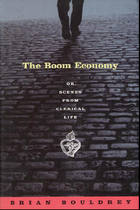
Dennis Bacchus is a man who has outlived himself. HIV-positive and prepared to die at any minute, he finds himself in the late 1990s blessed with life-giving drugs, supportive friends, a boom economy, and an era of never-ending celebration—and he doesn’t know what to do with himself.
For ten years he has traveled and celebrated a curtailed life with the similarly infected Jimmy and, though Dennis was never that close to Jimmy, he decided to let the friendship run its course to the end. Now there’s no end in sight. Stuck with leftover friendships, careers, and commitments, what can a man do but become a priest? The Boom Economy covers what was supposed to be the last decade of Dennis Bacchus’ life, but turns out to be the first decade of the rest of it.
The Boom Economy is a novel about conversion—not just seroconversion or religious conversion, but all of the social, spiritual, and emotional problems of changing from one life to another. At once raucous and serious, pagan and saintly, it’s a look at the way we live now. Again.


There was a time, as made clear by this monument, when the English church not only revered such relations between men, but also blessed them. Taking this remarkable idea as its cue, The Friend explores the long and storied relationship between friendship and the traditional family of the church in England. This magisterial work extends from the year 1000, when Europe acquired a shape that became its enduring form, and pursues its account up to the eighteenth and nineteenth centuries. Spanning a vast array of fascinating examples, which range from memorial plaques and burial brasses to religious rites and theological imagery to classic works of philosophy and English literature, Bray shows how public uses of private affection were very common in premodern times. He debunks the now-familiar readings of friendship by historians of sexuality who project homoerotic desires onto their subjects when there were none. And perhaps most notably, he evaluates how the ethics of friendship have evolved over the centuries, from traditional emphases on loyalty to the Kantian idea of moral benevolence to the more private and sexualized idea of friendship that emerged during the modern era.
Finely nuanced and elegantly conceived, The Friend is a book rich in suggestive propositions as well as eye-opening details. It will be essential reading for anyone interested in the history of England and the importance of friendship in everyday life.
History Today’s Book of the Year, 2004
“Bray’s loving coupledom is something with a proper historical backbone, with substance and form, something you can trace over time, visible and archeologicable. . . . Bray made a great contribution in helping to bring this long history to light.”— James Davidson, London Review of Books
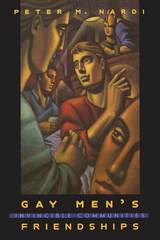
Nardi explores the meaning of friends to some gay men, how friends often become a surrogate family, how sexual behavior and attraction affects these friendships, and how, for many, friends mean more and last longer than romantic relationships. While looking at the psychological joys and sorrows of friendship, he also considers the cultural constraints limiting gay men in contemporary urban America—especially those that deal with dominant images of masculinity and heterosexuality—and how they relate to friendship.
By listening to gay men talk about their interactions, Nardi offers a rare glimpse into the mechanisms of gay life. We learn how gay men meet their friends, what they typically do and talk about, and how these strong relationships contain the roots of larger cultural forces such as social movements and gay identities and neighborhoods. Nardi also points out the political and social consequences when friendships fail to provide support against oppression.
An intimate and informative look at gay life in urban America, Gay Men's Friendships ultimately shows how these relationships challenge the gender order of our society by questioning how masculinity is constructed and by offering a model for a more creative blending of gay and heterosexual masculinity.
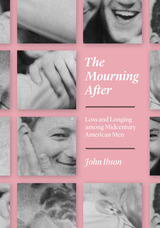

Winner of the Laurence Wylie Prize in French Cultural Studies
One of the first books on “Gays in the Military” published following the historic repeal of “Don't Ask Don't Tell” in 2011, Napoleonic Friendship examines the history of male intimacy in the French military, from Napoleon to the First World War. Echoing the historical record of gay soldiers in the United States, Napoleonic Friendship is the first book-length study on the origin of queer soldiers in modern France. Based on extensive archival research in France, the book traces the development of affectionate friendships in the French Army from 1789 to 1916.
Following the French Revolution, radical military reforms created conditions for new physical and emotional intimacy between soldiers, establishing a model of fraternal affection during the Revolutionary and Napoleonic Wars that would persist amid the ravages of the Franco-Prussian War and World War I. Through readings of Napoleonic military memoirs (and other non-fiction archival material) and French military fiction (from Hugo and Balzac to Zola and Proust), Martin examines a broad range of emotional and erotic relationships, from combat buddies to soldier lovers. He argues that the French Revolution's emphasis on military fraternity evolved into an unprecedented sense of camaraderie in the armies of Napoleon. For many soldiers, the hardships of combat led to intimate friendships. For some, the homosociality of military life inspired mutual affection, lifelong commitment, and homoerotic desire.
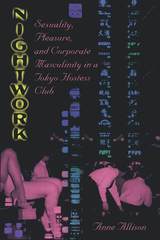
Allison describes in detail a typical company outing to such a club—what the men do, how they interact with the hostesses, the role the hostess is expected to play, and the extent to which all of this involves "play" rather than "work." Unlike previous books on Japanese nightlife, Allison's ethnography of one specific hostess club (here referred to as Bijo) views the general phenomenon from the eyes of a woman, hostess, and feminist anthropologist.
Observing that clubs like Bijo further a kind of masculinity dependent on the gestures and labors of women, Allison seeks to uncover connections between such behavior and other social, economic, sexual, and gendered relations. She argues that Japanese corporate nightlife enables and institutionalizes a particular form of ritualized male dominance: in paying for this entertainment, Japanese corporations not only give their male workers a self-image as phallic man, but also develop relationships to work that are unconditional and unbreakable. This is a book that will appeal to anyone interested in gender roles or in contemporary Japanese society.
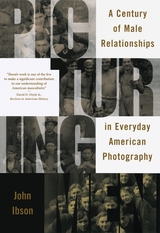
Such is the time John Ibson evokes in Picturing Men, a striking visual record of changes in attitudes about relationships between gentlemen, soldiers, cowboys, students, lumberjacks, sailors, and practical jokers. Spanning from 1850 to 1950, the 142 everyday photographs that richly illustrate Picturing Men radiate playfulness, humor, and warmth. They portray a lost world for American men: a time when their relationships with each other were more intimate than they commonly are today, regardless of sexual orientation. Picturing Men starkly contrasts the calm affection displayed in earlier photographs with the absence of intimacy in photos from the mid-1950s on. In doing so, this lively, accessible book makes a significant contribution to American history and cultural studies, gender studies, and the history of photography.
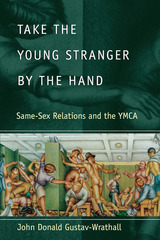
"Gustav-Wrathall's book offers an in-depth history of the origins and purposes of the Young Men's Christian Association and how it evolved into—and out of—a gay playland."—Arnie Kantrowitz, Lambda Book Report
"The book's absorbing exploration of the sometimes schismatic, sometimes synergistic relationship between spirituality and sexuality is a fascinating addition to the growing body of social history."—Jim Van Buskirk, San Francisco Bay Guardian

This book explores romantic relationships between teenage boys as they were portrayed before, during, and immediately after World War II. The author takes the reader through a rich landscape of media -- sci fi pulps, comics, adventure stories, tales of teen sleuths, boys' serial novels, wartime bestsellers, and movies populated by many types of male adolescents: Boys Next Door, Adventure Boys, Jungle Boys, and Lost Boys. In Hollywood movies, Boys Next Door like Jackie Cooper, Ronald Sinclair, and Jimmy Lydon were constantly falling in love, but not with girls. In serial novels, Jungle Boys like Bomba, Sorak, and Og Son of Fire swung through the trees to rescue teenage boys, not teenage girls. In comic strips and on the radio, Adventure Boys like Don Study, Jack Armstrong, and Tim Tyler formed lasting romantic partnerships with other boys or men. Lost Boys like Frankie Darro, Leo Gorcey, and Billy Halop starred in dozens of movies about pairs of poor urban teenagers sticking together, with never a girl in sight.
READERS
Browse our collection.
PUBLISHERS
See BiblioVault's publisher services.
STUDENT SERVICES
Files for college accessibility offices.
RECENTLY PUBLISHED






UChicago Accessibility Resources
home | accessibility | search | about | contact us
BiblioVault ® 2001 - 2026
The University of Chicago Press