
 A SCHOLARLY BOOK REPOSITORY
Air pollution prematurely kills seven million people every year, including more than one hundred thousand Americans. It is strongly linked to strokes, heart attacks, many kinds of cancer, dementia, and premature birth, among other ailments. In Choked, Beth Gardiner travels the world to tell the story of this modern-day plague, taking readers from the halls of power in Washington and the diesel-fogged London streets she walks with her daughter to Poland’s coal heartland and India’s gasping capital. In a gripping narrative that’s alive with powerful voices and personalities, she exposes the political decisions and economic forces that have kept so many of us breathing dirty air. This is a moving, up-close look at the human toll, where we meet the scientists who have transformed our understanding of pollution’s effects on the body and the ordinary people fighting for a cleaner future.
In the United States, air is far cleaner than it once was. But progress has failed to keep up with the science, which tells us that even today’s lower pollution levels are doing real damage. And as the Trump administration rips up the regulations that have brought us where we are, decades of gains are now at risk. Elsewhere, the problem is far worse, and choking nations like China are scrambling to replicate the achievements of an American agency—the EPA—that until recently was the envy of the world.
Clean air feels like a birthright. But it can disappear in a puff of smoke if the rules that protect it are unraveled. At home and around the world, it’s never been more important to understand how progress happened and what dangers might still be in store. Choked shows us that we hold the power to build a cleaner, healthier future: one in which breathing, life’s most basic function, no longer carries a hidden danger.
Green Earth Book Award, Honor Book
There are days in late winter when the Pacific coast enjoys a brief spell of clear, warm weather. Most of the winter storms have passed and the summer fog has not yet settled in. This is when some coastal communities plan their annual beach clean-ups.
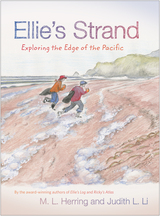
In this sequel to Ellie’s Log and Ricky’s Atlas, Ellie and Ricky travel to the Oregon coast from their home in the Cascade Mountains to help with a one-day beach clean-up. Hoping to find a prized Japanese glass float, they instead find more important natural treasures, and evidence of an ocean that needs its own global-scale clean-up.
Ellie and Ricky are amazed by their discoveries at the edge of the world’s largest ocean. Together, they realize the power of volunteering and grapple with the challenges of ocean conservation. In her journal Ellie records her observations of their adventures in her own words and pictures.
With charming pen-and-ink drawings and a compelling story, Ellie's Strand makes coastal science exciting for upper elementary school students. It will be a treasured companion for young beach explorers everywhere.

America has more than 130,000 lakes of significant size. Ninety percent of all Americans live within fifty miles of a lake, and our 1.8 billion trips to watery places make them our top vacation choice. Yet despite this striking popularity, more than 45 percent of surveyed lakes and 80 percent of urban lakes do not meet water quality standards. For Love of Lakes weaves a delightful tapestry of history, science, emotion, and poetry for all who love lakes or enjoy nature writing. For Love of Lakes is an affectionate account documenting our species’ long relationship with lakes—their glacial origins, Thoreau and his environmental message, and the major perceptual shifts and advances in our understanding of lake ecology. This is a necessary and thoughtful book that addresses the stewardship void while providing improved understanding of our most treasured natural feature.
Factory fires, chemical explosions, and aerial pollutants have inexorably shaped South Baltimore into one of the most polluted places in the country. In Futures after Progress, anthropologist Chloe Ahmann explores the rise and fall of industrial lifeways on this edge of the city and the uncertainties that linger in their wake. Writing from the community of Curtis Bay, where two hundred years of technocratic hubris have carried lethal costs, Ahmann also follows local efforts to realize a good future after industry and the rifts competing visions opened between neighbors.
Examining tensions between White and Black residents, environmental activists and industrial enthusiasts, local elders and younger generations, Ahmann shows how this community has become a battleground for competing political futures whose stakes reverberate beyond its six square miles in a present after progress has lost steam. And yet—as one young resident explains—“that’s not how the story ends.” Rigorous and moving, Futures after Progress probes the deep roots of our ecological predicament, offering insight into what lies ahead for a country beset by dreams deferred and a planet on the precipice of change.
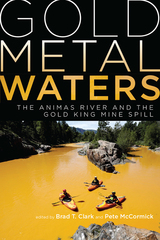
This singular event is surveyed and interpreted from multiple diverse perspectives—college professors, students, and scientists and activists from a range of academic and epistemological backgrounds—with each chapter reflecting unique professional and personal experiences. Contributors examine both the context for this event and responses to it, embedding this discussion within the broader context of the tens of thousands of mines leaking pollutants into waterways and soils throughout Colorado and the failure to adequately mitigate the larger ongoing crisis.
The Gold King Mine spill was the catalyst that finally brought Superfund listing to the Silverton area; it was a truly sensational event in many respects. Gold Metal Waters will be of interest to students and scholars in all disciplines, but especially in environmental history, western history, mining history, politics, and communication, as well as general readers concerned with human relationships with the environment.
Contributors: Alane Brown, Brian L. Burke, Karletta Chief, Steven Chischilly, Becky Clausen, Michael A. Dichio, Betty Carter Dorr, Cynthia Dott, Gary Gianniny, David Gonzales, Andrew Gulliford, Lisa Marie Jacobs, Ashley Merchant, Teresa Montoya, Scott W. Roberts, Lorraine L. Taylor, Jack Turner, Keith D. Winchester, Megan C. Wrona, Janene Yazzie
Britain's supremacy in the nineteenth century depended in large part on its vast deposits of coal. This coal not only powered steam engines in factories, ships, and railway locomotives but also warmed homes and cooked food. As coal consumption skyrocketed, the air in Britain's cities and towns became filled with ever-greater and denser clouds of smoke.
In this far-reaching study, Peter Thorsheim explains that, for much of the nineteenth century, few people in Britain even considered coal smoke to be pollution. To them, pollution meant miasma: invisible gases generated by decomposing plant and animal matter. Far from viewing coal smoke as pollution, most people considered smoke to be a valuable disinfectant, for its carbon and sulfur were thought capable of rendering miasma harmless.
Inventing Pollution examines the radically new understanding of pollution that emerged in the late nineteenth century, one that centered not on organic decay but on coal combustion. This change, as Peter Thorsheim argues, gave birth to the smoke-abatement movement and to new ways of thinking about the relationships among humanity, technology, and the environment.
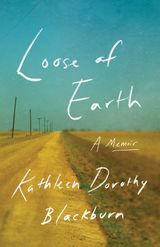
An arresting memoir of love and unbending religion, toxicity and disease, and one family’s desperate wait for a miracle that never came.
Kathleen Dorothy Blackburn was the oldest of five children, a twelve-year-old from Lubbock, Texas, whose evangelical family eschewed public education for homeschooling, and wove improbable scientific theories into literal interpretations of the Bible. Then her father, a former air force pilot, was diagnosed with cancer at the age of thirty-eight, and, “it was like throwing gasoline on the Holy Spirit.” Stirred by her mother, the family committed to an extreme diet and sought deliverance from equally extreme sources: a traveling tent preacher, a Malaysian holy man, a local faith-healer who led services called “Miracles on 34th Street.”
What they didn’t know at the time was that their lives were entangled with a larger, less visible environmental catastrophe. Fire-fighting foams containing carcinogenic compounds had contaminated the drinking water of every military site where her father worked. Commonly referred to as “forever chemicals,” the presence of PFAS in West Texas besieged a landscape already burdened with vanishing water, taking up residence in wells and in the bloodstreams of people who lived there. An arresting portrait of the pernicious creep of decline, and a powerful cry for environmental justice, Loose of Earth captures the desperate futility and unbending religious faith that devastated a family, leaving them waiting for a miracle that would never come.
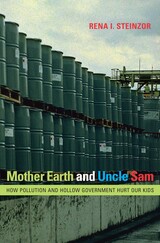
In this compelling study, Rena Steinzor highlights the ways in which the government, over the past twenty years, has failed to protect children from harm caused by toxic chemicals. She believes these failures—under-funding, excessive and misguided use of cost/benefit analysis, distortion of science, and devolution of regulatory authority—have produced a situation in which harm that could be reduced or eliminated instead persists.
Steinzor states that, as a society, we are neglecting our children's health to an extent that we would find unthinkable as individual parents, primarily due to the erosion of the government's role in protecting public health and the environment. At this pace, she asserts, our children will inherit a planet under grave threat. We can arrest these developments if a critical mass of Americans become convinced that these problems are urgent and the solutions are near at hand.
By focusing on three specific case studies—mercury contamination through the human food chain, perchlorate (rocket fuel) in drinking water, and the effects of ozone (smog) on children playing outdoors—Steinzor creates an analysis grounded in law, economics, and science to prove her assertions about the existing dysfunctional system.
Steinzor then recommends a concise and realistic series of reforms that could reverse these detrimental trends and serve as a blueprint for restoring effective governmental intervention. She argues that these recommendations offer enough material to guide government officials and advocacy groups toward prompt implementation, for the sake of America's—and the world's—future generations.
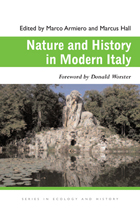
Is Italy il bel paese—the beautiful country—where tourists spend their vacations looking for art, history, and scenery? Or is it a land whose beauty has been cursed by humanity’s greed and nature’s cruelty? The answer is largely a matter of narrative and the narrator’s vision of Italy. The fifteen essays in Nature and History in Modern Italy investigate that nation’s long experience in managing domesxadtixadcated rather than wild natures and offer insight into these conflicting visions. Italians shaped their land in the most literal sense, producing the landscape, sculpting its heritage, embedding memory in nature, and rendering the two different visions inseparxadable. The interplay of Italy’s rich human history and its dramatic natural diversity is a subject with broad appeal to a wide range of readers.
Finding that these organizations do have a positive impact, Daniel Sabet seeks to understand how autonomous nonprofit organizations have emerged and developed along the border. He employs data from more than 250 interviews with members of civil society organizations and public officials, surveys of neighborhood association leaders, observations at public meetings, and many secondary sources. His research compares the experiences of third-sector organizations in four prominent Mexican border cities: Tijuana, Nogales, Ciudad Juárez, and Nuevo Laredo.
Sabet finds that political change is a necessary precondition for the establishment of an independent third sector. The demise of one-party rule in Mexico has given nonprofit organizations greater opportunities to flourish, he finds, but persistent informal rules still obstruct their emergence and development. Sabet concludes that the success of the third sector will depend on the organizations’ networks. He examines organizational ties to three key groups—U.S. nonprofits, the business community, and government-created methods for public participation—and evaluates the importance of these connections for the future.
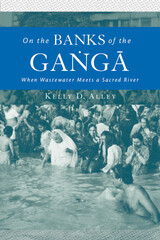
Alley investigates ethno-semantic, discursive, and institutional data to flesh out the interplay between religious, scientific, and official discourses about the river Ganga. Using a new outward layering methodology, she points out that anthropological analysis must separate the historical and discursive strands of the debates concerning waste and sacred purity in order to reveal the cultural complexities that surround the Ganga. Ultimately, she addresses a deeply rooted cultural paradox: if the Ganga river is considered sacred by Hindus across India, then why do the people allow it to become polluted?
Examining areas of contemporary concern such as water usage and urban waste management in the most populated river basin in the world, this book will appeal to anthropologists and readers in religious, environmental, and Asian studies, as well as geography and law.
Kelly D. Alley is Associate Professor and Director of Anthropology at Auburn University. In addition to being a prolific writer, she has conducted research on public culture and environmental issues in northern India for over a decade. Alley is currently overseeing a project to ameliorate river pollution problems in India.
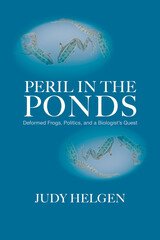
By the 1990s, wetlands across the United States were endangered from pollution and decades of drainage to convert them into farmland and urban developments. But when deformed frogs—many with missing legs or eyes, footless stumps, or misshapen jaws—began to emerge from Minnesota wetlands, alarm bells went off. What caused such deformities? Pollution? Ultraviolet rays? Biological agents? And could the mysterious cause also pose a threat to humans?
Judy Helgen writes with passionate concern about vulnerable frogs and wetlands as she navigates through a maze of inquisitive media and a reluctant government agency. She reports on the complexity of a growing catastrophe for frogs and broadens the issue as she researches and meets with scientists from around the world. She affirms the importance of examining aquatic life to understand pollution and the need to rescue our remaining wetlands. She also shares the fears expressed by the teachers, students, and other citizens who found these creatures, sensed a problem, and looked to her for answers. Ultimately, this is a story about the biological beauty of wetlands and our need to pay attention to the environment around us.
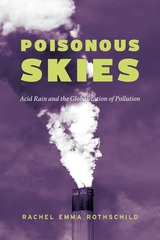
The identification of acid rain in the 1960s changed scientific and popular understanding of fossil fuel pollution’s potential to cause regional—and even global—environmental harms. It showed scientists that the problem of fossil fuel pollution was one that crossed borders—it could travel across vast stretches of the earth’s atmosphere to impact ecosystems around the world. This unprecedented transnational reach prompted governments, for the first time, to confront the need to cooperate on pollution policies, transforming environmental science and diplomacy. Studies of acid rain and other pollutants brought about a reimagining of how to investigate the natural world as a complete entity, and the responses of policy makers, scientists, and the public set the stage for how societies have approached other prominent environmental dangers on a global scale, most notably climate change.
Grounded in archival research spanning eight countries and five languages, as well as interviews with leading scientists from both government and industry, Poisonous Skies is the first book to examine the history of acid rain in an international context. By delving deep into our environmental past, Rothschild hopes to inform its future, showing us how much is at stake for the natural world as well as what we risk—and have already risked—by not acting.

Winner of the 2023 Merton Award from the Science, Knowledge, and Technology section of the American Sociological Association
Residues offers readers a new approach for conceptualizing the environmental impacts of chemicals production, consumption, disposal, and regulation. Environmental protection regimes tend to be highly segmented according to place, media, substance, and effect; academic scholarship often reflects this same segmented approach. Yet, in chemical substances we encounter phenomena that are at once voluminous and miniscule, singular and ubiquitous, regulated yet unruly. Inspired by recent studies of materiality and infrastructures, we introduce “residual materialism” as a framework for attending to the socio-material properties of chemicals and their world-making powers. Tracking residues through time, space, and understanding helps us see how the past has been built into our present chemical environments and future-oriented regulatory systems, why contaminants seem to always evade control, and why the Anthropocene is as inextricably harnessed to the synthesis of carbon into new molecules as it is driven by carbon’s combustion.
For over four decades, the US federal government has undertaken efforts to police and prosecute environmental crimes to protect public health and the natural environment. Yet, we still know very little about how US federal agencies have monitored and sanctioned water pollution violations and if these actions actually deter crime. In Rivers on Fire and Corporate Liars, Joshua Ozymy and Melissa Jarrell Ozymy examined over one thousand federal water pollution investigations and prosecutions undertaken by the US EPA and Department of Justice from 1983 to 2023 to answer these questions. Their analysis provides the most comprehensive empirical examination to date of how the criminal enforcement of water pollution has evolved over time, patterns in prosecutions, and how criminals were sanctioned.

Butte’s history, a long-standing subject of historical inquiry, gains new depth as Quivik examines the technological developments pioneered by local mining companies. He challenges the simplistic narrative of a powerful corporation imposing its will on helpless agricultural communities. Local communities mounted strong opposition to the industry’s polluting methods; Quivik acknowledges this dynamic while also revealing efforts by the Anaconda Copper Mining Company to address environmental issues. The company developed and implemented technical solutions to minimize resource waste and mitigate damage, driven by both economic interests and litigation pressures. While these advancements lessened some of the environmental harm, they were insufficient to prevent long-term consequences. The operations in Butte and Anaconda ultimately created the largest Superfund complex in the United States, requiring billions of dollars in remediation.
Quivik’s nuanced approach opens the “black box” of technology, showing how innovations both alleviated and exacerbated the environmental challenges of mining, milling, and smelting. In addition to contributing to the rich literature on smelter smoke, this book breaks new ground by examining the underexplored environmental impacts of tailings, offering a fresh perspective on the intersection of industry, technology, and environmental change. The cultural landscapes of Butte and Anaconda retain many features of the region’s history of both environmental degradation and remediation. Smoke and Tailings is an essential addition to the study of Butte’s industrial and ecological history.

Willamette River cleanup efforts between 1926 and 1975 centered on a struggle between abatement advocates and the two primary polluters in the watershed, the City of Portland and the pulp and paper industry. Beginning in 1926, clean streams advocates created ad hoc groups of public health experts, sanitary engineers, conservationists, sportsmen, and others to pressure Portland officials and industry representatives to cease polluting the river. By the late 1960s, these grassroots initiatives found political footholds at the state level. As governor between 1967 and 1975, Tom McCall took the issue of environmental protection personally, providing the charisma and leadership that was needed to finally make substantive progress toward cleaning the Willamette.
Speaking for the River is the first book to describe the historical roots of Willamette River pollution, providing important context for understanding the political, fiscal, and technological antecedents to the present-day conundrum. Hillegas-Elting’s contribution to the academic literature on environmental and urban history in Oregon will be welcomed by policy makers, environmentalists, and concerned citizens alike.
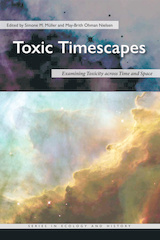
An interdisciplinary environmental humanities volume that explores human-environment relationships on our permanently polluted planet.
While toxicity and pollution are ever present in modern daily life, politicians, juridical systems, media outlets, scholars, and the public alike show great difficulty in detecting, defining, monitoring, or generally coming to terms with them. This volume’s contributors argue that the source of this difficulty lies in the struggle to make sense of the intersecting temporal and spatial scales working on the human and more-than-human body, while continuing to acknowledge race, class, and gender in terms of global environmental justice and social inequality.
The term toxic timescapes refers to this intricate intersectionality of time, space, and bodies in relation to toxic exposure. As a tool of analysis, it unpacks linear understandings of time and explores how harmful substances permeate temporal and physical space as both event and process. It equips scholars with new ways of creating data and conceptualizing the past, present, and future presence and possible effects of harmful substances and provides a theoretical framework for new environmental narratives. To think in terms of toxic timescapes is to radically shift our understanding of toxicants in the complex web of life.
Toxicity, pollution, and modes of exposure are never static; therefore, dose, timing, velocity, mixture, frequency, and chronology matter as much as the geographic location and societal position of those exposed. Together, these factors create a specific toxic timescape that lies at the heart of each contributor’s narrative. Contributors from the disciplines of history, human geography, science and technology studies, philosophy, and political ecology come together to demonstrate the complex reality of a toxic existence. Their case studies span the globe as they observe the intersection of multiple times and spaces at such diverse locations as former battlefields in Vietnam, aging nuclear-weapon storage facilities in Greenland, waste deposits in southern Italy, chemical facilities along the Gulf of Mexico, and coral-breeding laboratories across the world.
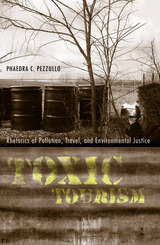
The first book length study of the environmental justice movement, tourism, and the links between race, class, and waste

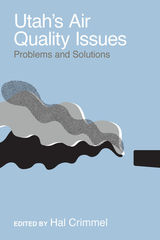
Utah’s Air Quality Issues: Problems and Solutions is the first book to tackle the subject. Written by scholars in a variety of fields, including chemical engineering, economics, atmospheric science, health care, law, parks and recreation and public policy, the book provides a one-stop resource on the causes, impacts, and possible solutions to the state’s air quality dilemma. This volume is a must read for anyone wanting to understand Utah’s air pollution problem and what can be done about it.
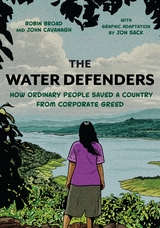
Initially excited by the company’s promises of jobs and prosperity, farmer Vidalina Morales, brothers Marcelo and Miguel Rivera, and others soon realized that the trade-off was catastrophic contamination of El Salvador’s main source of fresh water. Facing corporate machinations and violence, the ordinary people of San Isidro and surrounding communities built a transnational coalition that prevailed over powerful adversaries to score an environmental victory with worldwide repercussions.
Broad and Cavanagh draw on over a decade of research, interviews, and experience as allies and experts in international development to recount the harrowing saga. A blueprint for civic bravery and local-to-global activism, as well as a rich history of Central America’s political conflicts and people’s fights against environmental and economic exploitation, this story will inspire anyone who feels helpless against corporate malfeasance.
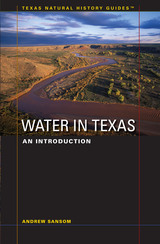
No natural resource issue has greater significance for the future of Texas than water. The state's demand for water for municipal, industrial, agricultural, and recreational uses continues to grow exponentially, while the supply from rivers, lakes, aquifers, and reservoirs is limited. To help Texans manage their water resources today and plan for future needs, one of Texas's top water experts has compiled this authoritative overview of water issues in Texas.
Water in Texas covers all the major themes in water management and conservation:
- Living with a Limited Resource
- The Molecule that Moves Mountains
- A Texas Water Journey
- The Gulf Shores of Texas
- Who's Who in Water
- Texas Water Law: A Blend of Two Cultures
- Does Texas Have Enough Water?
- Planning for the Future
- What's in Your Water?
- How Much is Water Worth?
- Water is Our Legacy
Illustrated with color photographs and maps, Water in Texas will be the essential resource for landowners, citizen activists, policymakers, and city planners.

READERS
Browse our collection.
PUBLISHERS
See BiblioVault's publisher services.
STUDENT SERVICES
Files for college accessibility offices.
RECENTLY PUBLISHED





UChicago Accessibility Resources
home | accessibility | search | about | contact us
BiblioVault ® 2001 - 2026
The University of Chicago Press