
 A SCHOLARLY BOOK REPOSITORY
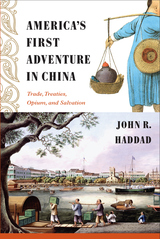
In America's First Adventure in China, John Haddad provides a colorful history of the evolving cultural exchange and interactions between these countries. He recounts how American expatriates adopted a pragmatic attitude-as well as an entrepreneurial spirit and improvisational approach-to their dealings with the Chinese. Haddad shows how opium played a potent role in the dreams of Americans who either smuggled it or opposed its importation, and he considers the missionary movement that compelled individuals to accept a hard life in an alien culture.
As a result of their efforts, Americans achieved a favorable outcome—they established a unique presence in China—and cultivated a relationship whose complexities continue to grow.

The essays range across a variety of topics. These include a look at tile production during the reign of the Qaytbay, the book bindings associated with Qansuh al-Ghuri, and the relationship between Mamluk metalwork and that found in Rasulid Yemen and Italy. Several essays examine inscriptions found on buildings of the Fatimid, Mamluk, and Ottoman periods, and others look at the debt of European lacquer works to Persian craftsmen, the Armenian patrons of eighteenth-century Chinese exports, and the influences of Islam on art and architecture found all across India. The result is a sweeping but deeply researched look at one of the richest networks of artistic traditions the world has ever known.
"His conceptually rigorous and tightly reasoned study . . . reminds us that power is never value neutral but organizes commercial systems in liberal or imperial terms."
---Perspectives on Politics
"Lobell's book is tightly written, nicely argued and thoroughly researched to a fault. He seems to delight in historical detail. The complexity of his approach is refreshing."
---International Affairs
"The Challenge of Hegemony is a pleasure to read. It is both theoretically sophisticated and empirically rich."
---International Studies Review
"The Challenge of Hegemony offers a compelling reinterpretation of key historical cases and provides wise guidance as to how the United States should wield its power today."
--Charles A. Kupchan, Council on Foreign Relations
"Lobell demonstrates clearly how the international environment confronting great powers interacts with their domestic political coalitions to produce different grand strategies. Through a masterful sweep of history, Lobell shows us the alternative trajectories before the United States today."
--David A. Lake, University of California, San Diego
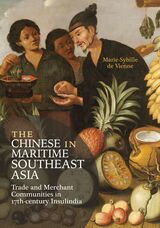
Connections between Asian and European markets increased dramatically in the seventeenth century, indicating a turning point in the global history of trade. The Dutch East-India Company (or VOC) was central to this process; however, counter to the VOC’s aims, the winners of the game in maritime Southeast Asia were often Chinese merchants. As this book shows, at the time, these merchants were the only economic agents capable of trading both in major Southeast Asian commercial hubs and developing exchanges with China and Japan. The Chinese operated with a flexibility of means and a fluidity of management that allowed them to react rapidly and quickly gain returns on investment. In Batavia, as in other Southeast Asian emporiums, the increasingly numerous and diverse Chinese elites assumed direct responsibility for the management of their community; this made them the most important non-European free community in the city during the second half of the seventeenth century.
The Chinese in Maritime Southeast Asia tells this remarkable story through an examination of the VOC’s abundant sources, which record relations between the Chinese minority and the Dutch rulers who relied upon them.

Margócsy introduces a number of natural historians, physicians, and curiosi in Amsterdam, London, St. Petersburg, and Paris who, in their efforts to boost their trade, developed modern taxonomy, invented color printing and anatomical preparation techniques, and contributed to philosophical debates on topics ranging from human anatomy to Newtonian optics. These scientific practitioners, including Frederik Ruysch and Albertus Seba, were out to do business: they produced and sold exotic curiosities, anatomical prints, preserved specimens, and atlases of natural history to customers all around the world. Margócsy reveals how their entrepreneurial rivalries transformed the scholarly world of the Republic of Letters into a competitive marketplace.
Margócsy’s highly readable and engaging book will be warmly welcomed by anyone interested in early modern science, global trade, art, and culture.

The move to encourage trade with Canada and Mexico during the 1990s, culminating with the negotiation of the North American Free Trade Agreement (NAFTA), has had a long background extending as far back as the late eighteenth century. American trade with both Canada and Latin America rapidly increased during the last third of the nineteenth century as a result of burgeoning industry and agriculture in the United States. The Diplomacy of Trade and Investment is the first detailed examination of the economic and political forces behind this rapid growth and their effect on government policy.
Based on a thorough examination of government documents, congressional debates and reports, private papers of government and business leaders, and newspapers, David M. Pletcher begins this monumental study with a comprehensive survey of U.S. trade following the Civil War. He goes on to outline the problems of building a coherent trade policy toward Canada, Mexico, Central America, the Caribbean, and South America. The study concludes by analyzing a series of abortive trade reform efforts and examining the effects of the Spanish-American War.
Pletcher rejects the long-held belief that American business and government engaged in a deliberate, consistent drive for economic hegemony in the hemisphere during the late 1800s. Instead he finds that the American government improvised and experimented with ways to further trade expansion. But American businessmen were often more interested in domestic trade than in trade with foreign markets. In fact, many of them resisted efforts to lower the American tariff or otherwise encourage American trade abroad.
The combination of traditionalist and revisionist insight with Pletcher's own deep knowledge and research provides the reader with a comprehensive new interpretation of hemispheric trade expansion at the end of the nineteenth century.


Ruvuma used fashion to build varied communities, from local to pan-regional, reflecting the dynamic relationships among inland groups. Examples of Ruvuma popular fashions reveal processes of meaning making and community building that call for us to expand our attention to the ways in which East African peoples interacted alongside, as well as beyond, trade networks that sourced prestige and commercial goods. Popular culture here emerges as a heterarchical force that shaped lasting multidirectional connections across and between Ruvuma and their neighbors. As both a subject and a strategy for analysis, the history of popular fashion shifts how we view histories of small, decentralized societies as they encounter larger economies. Felber-Seligman demonstrates that this has implications for our understanding not only of trade but of material culture, community, gender, and family.

“The authors make some very critical interventions in this debate and scholars engaged in the environmental ‘pollution haven’ and ‘race to the bottom’ debates will need to take the arguments made here seriously, re-evaluating their own preferred theories to respond to the insightful theorizing and empirically rigorous testing that Zeng and Eastin present in the book.”
—Ronald Mitchell, University of Oregon
Prompted by the growing internationalization of the U.S. labor market since the 1970s, contributors to Immigration, Trade, and the Labor Market provide an innovative and comprehensive analysis of the labor market impact of the international movements of people, goods, and capital. Their provocative findings are brought into perspective by studies of two other major immigrant-recipient countries, Canada and Australia. The differing experiences of each nation stress the degree to which labor market institutions and economic policies can condition the effect of immigration and trade on economic outcomes
Contributors trace the flow of immigrants by comparing the labor market and migration behavior of individual immigrants, explore the effects of immigration on wages and employment by comparing the composition of the work force in local labor markets, and analyze the impact of trade on labor markets in different industries. A unique data set was developed especially for this study—ranging from an effort to link exports/imports with wages and employment in manufacturing industries, to a survey of illegal Mexican immigrants in the San Diego area—which will prove enormously valuable for future research.
Largely a victory for OECD countries, the present state of intellectual property rights has important implications for developing countries. The incorporation of intellectual property rights into the WTO system will eventually change the relationship of trade, competition, and intellectual property. It will equally have to assist in providing equitable sharing of benefits in the use of plant genetic resources. All of these issues are essential for the revision of exclusions from patenting in TRIPs. This volume offers insights into how this difficult task could and should be approached in a balanced manner and will be essential reading for economists and trade and intellectual property lawyers interested in the subject. Moreover, the volume will be relevant to agricultural economists as it addresses complex problems in the interstices of trade, intellectual property, plant genetic resources, and sustainable development.
Thomas Cottier is Professor of European and International Economic Law, University of Bern, and Managing Director, World Trade Institute, University of Bern.
Petros C. Mavroidis is Professor of Law, University of Neuchâtel. He formerly worked in the Legal Affairs Division of the World Trade Organization.
Marion Panizzon is Research Fellow, University of Bern.
Simon Lacey is Research Fellow, University of Bern.

Whether Price is reflecting on the rhythm of his day-to-day writing process or ruminating about the central character in what would become, for instance, Kate Vaiden—should she be a woman, what would be her name, why would the story be told in the first person?—he envelops the reader in the task at hand, in the trade being practiced. Instead of personal memoir or a collection of literary fragments, Learning a Trade presents what Price has called the “ongoing minutes” of his effort to learn his craft. Equally enlightening as an overview of a career of developing prominence or as a perspective on the building of individual literary works, this volume not only allows the reader to hear the author’s internal dialogue on the hundreds of questions that must be turned and mulled during the planning and writing of a novel but, in an unplanned way, creates its own compelling narrative.
These notebooks begin in “that distant summer in dazed Eisenhower America,” a month after Price’s graduation from Duke University, and conclude in “the raucous millennial present” with plans for his most recent novel, Roxanna Slade. Revealing the genesis and resolution of such works as The Surface of Earth, The Source of Light, Kate Vaiden, Clear Pictures, and Blue Calhoun, Learning a Trade offers a rich reward to those seeking to enter the guild of writers, as well as those intrigued by the process of the literary life or captured by the work of Reynolds Price.

Drawing on more than two years of archival and ethnographic research, Spyer examines the dynamics of contact with the Dutch and Europeans, Suharto’s postcolonial regime, and with the competing religions of Islam, Protestantism, and Catholicism in the context of the recent conversion of pagan Aruese. While arguing that Aru identity and community are defined largely in terms of absence, longing, memory, and desire, she also incorporates present-day realities—such as the ecological destruction wrought by the Aru trade in such luxury goods as pearls and shark fins—without overlooking the mystique and ritual surrounding these activities. Imprinted on the one hand by the archipelago’s long engagement with extended networks of commerce and communication and, on the other, by modernity’s characteristic repressions and displacements, Aruese make and manage their lives somewhat precariously within what they often seem to construe as a dangerously expanding—if still enticing—world. By documenting not only the particular expectations and strategies Aruese have developed in dealing with this larger world but also the price they pay for participation therein, The Memory of Trade speaks to problems commonly faced elsewhere in the frontier spaces of modern nation-states.
Balancing particularly astute analysis with classic ethnography, The Memory of Trade will appeal not only to anthropologists and historians but also to students and specialists of Southeast Asia, modernity, and globalization.
Contributors to Misalignment of Exchange Rates address a series of questions about misalignment. Several papers investigate the causes of misalignment and the extent to which observed movements in real exchange rates can be attributed to misalignment. These studies are conducted both empirically, through the experiences of the United States, Great Britain, Japan, and the countries of the European Monetary System, and theoretically, through models of imperfect competition. Attention is then turned to the effects of misalignment, especially on employment and production, and to detailed estimates of the effects of changes in exchange rates on several industries, including the U.S. auto industry. In response to the contention that there is significant "hysteresis" in the adjustment of employment and production to changes in exchange rates, contributors also attempt to determine whether the effects of misalignment can be reversed once exchange rates return to earlier levels. Finally, the issue of how to avoid—or at least control—misalignment through macroeconomic policy is confronted.

Fuller first untangles the economic and cultural currents that have eroded the efficacy of—and our trust in—large institutions over the past half century. From there we meet intrepid leaders who have been doing things differently. Traveling from a charter school in San Francisco to a veterans service network in Iowa, from a Pennsylvania health-care firm to the Manhattan branch of a Swedish bank, he explores how creative managers have turned local staff loose to craft inventive practices, untethered from central rules and plain-vanilla routines. By holding their successes and failures up to the same analytical light, he vividly reveals the key cornerstones of social organization on which motivating and effective decentralization depends. Ultimately, he brings order and evidence to the often strident debates about who has the power—and on what scale—to structure how we work and live locally.
Written for managers, policy makers, and reform activists, Organizing Locally details the profound decentering of work and life inside firms, unfolding across postindustrial societies. Its fresh theoretical framework explains resurging faith in decentralized organizations and the ingredients that deliver vibrant meaning and efficacy for residents inside. Ultimately, it is a synthesizing study, a courageous and radical new way of conceiving of American vitality, creativity, and ambition.

Providing an important and original perspective for understanding both the development process and policies aimed at raising the standard of living in poorer nations, Perspectives on Trade and Development gathers sixteen of Anne O. Krueger's most important essays on international trade and development economics. Her essays discuss the relationships between trade strategies and development; the links between factor endowments, developing countries' policies, and trade strategies in terms of their growth; the role of economic policy in development; and the international economic environment in which development efforts are taking place. Her analyses are extended to trade and development policies generally, and account for a substantial part of the residue unexplained by past theories. This insightful contribution by an influential scholar will be essential reading for all scholars of trade and development.



Rival Empires of Trade in the Orient, 1600-1800 was first published in 1976. Minnesota Archive Editions uses digital technology to make long-unavailable books once again accessible, and are published unaltered from the original University of Minnesota Press editions.
This volume presents an account of European expansion in Asia through the seventeenth and eighteenth centuries - the story of the rivalries of the East India companies and the growth of British maritime dominance which forged the Pax Britannica destined to keep Asia under European control until 1941. The author explains that it is called Rival Empires of Trade in the Orient because the few thousands of Europeans who built these empires thought of themselves primarily as merchants rather than as rulers.
The book consists of two parts, the first, narrative, the second, interpretive. The story of European commercial activity in the East is told in three chapters, the first ending with the Dutch conquest of Ceylon in 1656 and the reorganization and revival of the English East India Company as a permanent joint stock company under Oliver Cromwell's charter of 1657. The second chapter ends with the European peace settlement at Utrecht in 1713, and the third with the establishment of British preponderance in the East India trade at the close of the eighteenth century.
In the second part the author discusses the organization and structure of East India companies, the commodities in East India trade, the nature, growth, and development of the "country trade," and the relations between Europeans and Asians with some reference to the growth of European knowledge of Asia and the influence of the European presence in Asia on social history in both Asia and Europe.
Until this century, Northern Nigeria was a major center of textile production and trade. Textile Ascendancies: Aesthetics, Production, and Trade in Northern Nigeria examines this dramatic change in textile aesthetics, technologies, and social values in order to explain the extraordinary shift in textile demand, production, and trade.
Textile Ascendancies provides information for the study of the demise of textile manufacturing outside Nigeria. The book also suggests the conundrum considered by George Orwell concerning the benefits and disadvantages of “mechanical progress,” and digital progress, for human existence. While textile mill workers in northern Nigeria were proud to participate in the mechanization of weaving, the “tendency for the mechanization of the world” represented by more efficient looms and printing equipment in China has contributed to the closing of Nigerian mills and unemployment.
Textile Ascendancies will appeal toanthropologists for its analyses of social identity as well as how the ethnic identity of consumers influences continued handwoven textile production. The consideration of aesthetics and fashionable dress will appeal to specialists in textiles and clothing. It will be useful to economic historians for the comparative analysis of textile manufacturing decline in the 21st century. It will also be of interest to those thinking about global futures, about digitalization, and how new ways of making cloth and clothing may provide both employment and environmentally sound production practices.
Ten countries are studied: Brazil, Chile, Colombia, Indonesia, the Ivory Coast, Pakistan, South Korea, Thailand, Tunisia, and Uruguay. The contributors to the volume analyze the link between trade strategies and employment within a common framework, and the analyses of trade policy include the level and structure of protection, the relation of trade policy to labor demand, the labor intensiveness of trade, and the extent of distortions in factor markets and their effects on trade.
The papers in this volume were developed from a conference that addressed the need to discover which structural determinants and policies shape the close economic ties among these nations. Leading experts on trade and macroeconomics from all three countries examine disproportionate saving rates, exchange rate volatility, varying industrial policies and levels of financial innovation, the effects of present tax policies and proposed reforms, and the dynamism of major Pacific nations and the leadership role Japan may play in U.S. relations with that region. Several important conclusions are reached by the contributors. They assert that Japan's trade barriers are relatively low overall and are comparable to those maintained by the United States and Canada, and that divergent fiscal policies have been the major source of macroeconomic imbalances between the United States and other major countries in the 1980s. They also conclude that current trade imbalances may persist for some time. The analyses offered here are likely to prove influential in future policymaking and will be of interest to a wide audience, including academic economists, government officials, and students of theoretical and policy issues of international trade, investment, and finance.

But when England and Spain became declared enemies in the War of Jenkins’ Ear and the French and Indian Wars, this tacit trade arrangement was threatened, and the result was a rise of privateering in the region. Rather than do without Spanish goods, the English began to attack and capture Spanish vessels with their cargoes at sea. Likewise, the Spaniards resorted to privateering as a means of steadily supplying the Florida colony. Harman concludes that, both willingly and unwillingly, the English colonies helped their Spanish neighbor to sustain its position in the Southeast.
The authors look at the current global trading system and at the potential threats to East Asian economies from possible regional arrangements, such as separate trading blocks in the Western Hemisphere and Europe. They cover trade between the United States and Japan, Korea and Japan, and Japanese-East Asian trade policies; trade in agriculture and semiconductors and the frictions that have jeopardized this trade; and direct foreign investment. The contributors round out the work with discussions of the political economy of protection in Korea and Taiwan and political economy considerations as they affect trade policy in general.
This is the second volume of the National Bureau of Economic Research-East Asia Seminar on Economics. The first volume, The Political Economy of Tax Reform, also edited by Takatoshi Ito and Anne O. Krueger, addresses tax reform in the global economy.

Themes in the research reported here includes the sectoral composition of output and trade; rates of structural change in production and exports and their relation to economic growth; the effect of abundant resource endowments on industrialization and manufactured exports; the nature of the mix between active government policies and market forces; and the balance between demand-determined and supply-determined industrialization and exports. Many of the issues explored have important implications for United States foreign economic policy, and the volume includes a look at the basic economic and political forces influencing shifts in United States trade policy in the postwar period.
A timely and informative analysis, the volume probes the causes and consequences of economic growth in Pacific Asia, focusing on the interaction of exports of manufactured goods and the developmental process. The results reported contribute to ongoing research in structural change and economic policy and will be important to economists working on empirical patters in international trade and the process of economic development.

In this book, Sarah E. Bond reveals the construction and motivations for these attitudes, and to show how they created inequalities, informed institutions, and changed over time. Additionally, she shows how political and cultural shifts mutated these taboos, reshaping economic markets and altering the status of professionals at work within these markets.
Bond investigates legal stigmas in the form of infamia and other marks of legal disrepute. She expands on anthropological theories of pollution, closely studying individuals who regularly came into contact with corpses and other polluting materials, and considering communication and network formation through the disrepute attached to town criers, or praecones. Ideas of disgust and the language of invective are brought forward looking at tanners. The book closes with an exploration of caste-like systems created in the later Roman Empire. Collectively, these professionals are eloquent about economies and changes experienced within Roman society between 45 BCE and 565 CE.
Trade and Taboo will interest those studying Roman society, issues of historiographical method, and the topic of taboo in preindustrial cultures.
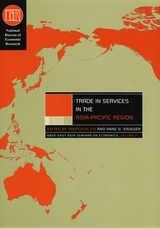
This volume is the first book-length attempt to analyze trade in services in the Asia-Pacific region. Contributors provide overviews of basic issues involved in studying the service sector; investigate the impact of increasing trade in services on the economies of Taiwan, Korea, and Hong Kong; present detailed analyses of specific service sectors (telecommunications, financial services, international tourism, and accounting); and extend our understanding of trade in services beyond the usual concept (measured in balance of payment statistics) to include indirect services and services undertaken abroad by subsidiaries and affiliates.


Drawing on decades of experience as a researcher and teacher, Howard Becker brings to students and researchers the many valuable techniques for conducting research that he learned and taught. Tricks of the Trade will help students learn how to think about research projects. Assisted by Becker's sage advice, students can make better sense of their research and simultaneously generate fresh ideas on where to look next for new data. The tricks cover four broad areas of social science: the creation of the "imagery" to guide research; methods of "sampling" to generate maximum variety in the data; the development of "concepts" to organize findings; and the use of "logical" methods to explore systematically the implications of what is found. Becker's advice ranges from simple tricks such as changing an interview question from "Why?" to "How?" (as a way of getting people to talk without asking for a justification) to more technical tricks such as how to manipulate truth tables.
Becker has extracted these tricks from a variety of fields such as art history, anthropology, sociology, literature, and philosophy; and his dazzling variety of references ranges from James Agee to Ludwig Wittgenstein. Becker finds the common principles that lie behind good social science work, principles that apply to both quantitative and qualitative research. He offers practical advice, ideas students can apply to their data with the confidence that they will return with something they hadn't thought of before.

The Malian market at the terminus in Dakar was bulldozed in 2009 and, following the privatization of the railway, passenger services in Senegal soon ceased altogether. The consequences were felt especially by women traders who had traveled the line since its inauguration, making the terminus in Dakar the center of a thriving network of traders and migrants. To examine the fates of those whose livelihoods were destroyed or disrupted, Gunvor Jónsson spent a year with the women evicted from the terminus. Urban Displacement and Trade in a Senegalese Market explores what happens at the end of urban displacement, when people find themselves scattered in sometimes unfamiliar surroundings, trying to pick up the pieces and create something meaningful.
In this book, Jónsson argues that rupture and ensuing displacement do not produce a clean slate where identities, networks, and histories must be produced from scratch. When evicted, traders and their markets do not simply vanish into thin air. The book examines not only what is lost but what emerges when a dense node, such as the terminus, is dissolved and fragmented. The ethnography of the traders reveals that the aftermath of eviction in cities may lead to diasporic forms of consciousness and identity formations. Displacement, whether on a local or global scale, demands difficult adjustments, and people’s capacities to adapt to new circumstances and environments vary. This book uncovers the different capacities and variations in traders’ reactions to displacement.
READERS
Browse our collection.
PUBLISHERS
See BiblioVault's publisher services.
STUDENT SERVICES
Files for college accessibility offices.
RECENTLY PUBLISHED






UChicago Accessibility Resources
home | accessibility | search | about | contact us
BiblioVault ® 2001 - 2026
The University of Chicago Press