
 A SCHOLARLY BOOK REPOSITORY
"This highly readable account aimed at a general audience excels at telling the plight of the victims and how local political authorities reacted. The saddest lesson is how little the public and the government learned from Camille. Highly recommended for all public libraries, especially those on the Gulf and East coasts."
—Library Journal online
As the unsettled social and political weather of summer 1969 played itself out amid the heat of antiwar marches and the battle for civil rights, three regions of the rural South were devastated by the horrifying force of Category 5 Hurricane Camille.
Camille's nearly 200 mile per hour winds and 28-foot storm surge swept away thousands of homes and businesses along the Gulf Coast of Louisiana and Mississippi. Twenty-four oceangoing ships sank or were beached; six offshore drilling platforms collapsed; 198 people drowned. Two days later, Camille dropped 108 billion tons of moisture drawn from the Gulf onto the rural communities of Nelson County, Virginia-nearly three feet of rain in 24 hours. Mountainsides were washed away; quiet brooks became raging torrents; homes and whole communities were simply washed off the face of the earth.
In this gripping account, Ernest Zebrowski and Judith Howard tell the heroic story of America's forgotten rural underclass coping with immense adversity and inconceivable tragedy.
Category 5 shows, through the riveting stories of Camille's victims and survivors, the disproportionate impact of natural disasters on the nation's poorest communities. It is, ultimately, a story of the lessons learned-and, in some cases, tragically unlearned-from that storm: hard lessons that were driven home once again in the awful wake of Hurricane Katrina.
"Emergency responses to Katrina were uncoordinated, slow, and--at least in the early days--woefully inadequate. Politicians argued about whether there had been one disaster or two, as if that mattered. And before the last survivors were even evacuated, a flurry of finger-pointing had begun. The question most neglected was: What is the shelf life of a historical lesson?"
Ernest Zebrowski is founder of the doctoral program in science and math education at Southern University, a historically black university in Baton Rouge, Louisiana, and Professor of Physics at Pennsylvania State University's Pennsylvania College of Technology. His previous books include Perils of a Restless Planet: Scientific Perspectives on Natural Disasters. Judith Howard earned her Ph.D. in clinical social work from UCLA, and writes a regular political column for the Ruston, Louisiana, Morning Paper.
"Category 5 examines with sensitivity the overwhelming challenges presented by the human and physical impacts from a catastrophic disaster and the value of emergency management to sound decisions and sustainability."
--John C. Pine, Chair, Department of Geography & Anthropology and Director of Disaster Science & Management, Louisiana State University
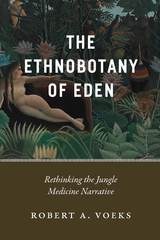
By exploring the interconnected worlds of anthropology, botany, and geography, Voeks shows that well-intentioned scientists and environmentalists originally crafted the jungle narrative with the primary goal of saving the world’s tropical rainforests from destruction. It was a strategy deployed to address a pressing environmental problem, one that appeared at a propitious point in history just as the Western world was taking a more globalized view of environmental issues. And yet, although supported by science and its practitioners, the story was also underpinned by a persuasive mix of myth, sentimentality, and nostalgia for a long-lost tropical Eden. Resurrecting the fascinating history of plant prospecting in the tropics, from the colonial era to the present day, The Ethnobotany of Eden rewrites with modern science the degradation narrative we’ve built up around tropical forests, revealing the entangled origins of our fables of forest cures.

Recent discoveries show that dramatic changes in climate and ocean circulation can occur very quickly, and that ecological communities respond just as rapidly. Abrupt changes in the composition of fossil assemblages, formerly dismissed as artifacts of a poor fossil record, now are seen as accurate records of swift changes in the composition of ocean communities.
The twenty-four contributors use current work in paleontology, geology, oceanography, anthropology, ecology, and evolution to paint this challenging portrait of rapid environmental and evolutionary change. Their conclusions argue for a revision of existing interpretations of the fossil record and the processes—including invading Eurasian peoples—that have produced it.
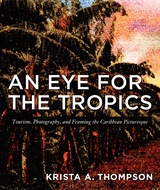
Illustrated with more than one hundred images, including many in color, An Eye for the Tropics is a nuanced evaluation of the aesthetics of the “tropicalizing images” and their effects on Jamaica and the Bahamas. Thompson describes how representations created to project an image to the outside world altered everyday life on the islands. Hoteliers imported tropical plants to make the islands look more like the images. Many prominent tourist-oriented spaces, including hotels and famous beaches, became off-limits to the islands’ black populations, who were encouraged to act like the disciplined, loyal colonial subjects depicted in the pictures.
Analyzing the work of specific photographers and artists who created tropical representations of Jamaica and the Bahamas between the 1880s and the 1930s, Thompson shows how their images differ from the English picturesque landscape tradition. Turning to the present, she examines how tropicalizing images are deconstructed in works by contemporary artists—including Christopher Cozier, David Bailey, and Irénée Shaw—at the same time that they remain a staple of postcolonial governments’ vigorous efforts to attract tourists.

Foundations of Tropical Forest Biology makes essential works in the development of tropical biology available in a convenient form to both senior scholars interested in the roots of their discipline and to students encountering the field for the first time, as well as to everyone concerned with tropical conservation.
"The algorithms in this book have been developed by Drs. Warren and Mahmoud, as the result of a systematic effort to produce such guides. The book is presented as another in the series "Studies in Infectious Disease Research" and is a most welcome addition, certain to supply a major and hitherto inadequately fulfilled need."—from the Foreword, by Edward H. Kass, M. D., Ph.D


Although the Japanese interregnum was brief, its dramatic commencement and equally dramatic conclusion represented a watershed in the history of the young state of Sarawak.
In recent years, there has been a groundswell of interest in the war years, culminating in an attempt at reassessment of the Japanese occupation in Southeast Asia by Western and Japanese scholars as well as by those from Southeast Asia.
Presented here in a two-volume edition is a history of the Japanese occupation of Sarawak narrated through the compelling testimonies of the actual participants based on their recollections, memoirs, and correspondence.

The canonical works of authors such as Joseph Conrad, Andre Malraux, Jose Eustasio Rivera, and others present jungles and wildernesses as fundamentally corrupting and dangerous. Rogers explores how the methods these authors use to communicate the physical and psychological maladies that afflict their characters evolved symbiotically with modern medicine. While the wilderness challenges Conrad's and Malraux's European travelers to question their civility and mental stability, Latin American authors such as Alejo Carpentier deftly turn pseudoscientific theories into their greatest asset, as their characters transform madness into an essential creative spark.
Ultimately, Jungle Fever suggests that the greatest horror of the jungle is the unknown regions of the character's own mind.

In this reflective account of life in the tropics, Alexander Skutch offers readers both his observations and his interpretations of what he has experienced. In the many chapters about birds and their behavior, he describes a dove that defends its nest with rare courage, castlebuilders who create elaborate nests of interlaced twigs, oropendolas that cluster long woven pouches in high treetops, and an exceptionally graceful hummingbird who fails to pay for its nectar by pollinating the flowers that yield it. Skutch also describes curious plants and their flowers, including a birthwort that holds its pollinating flies captive and fern fronds that twine high up trunks in the rain forest.
With penetrating clarity, Skutch considers the significance of all this restless activity: he examines the origins of beauty and our ability to appreciate it, the foundations of tropical splendor, the factors that help us feel close to nature or alienated from it, and the possibility of consciousness and emotion in animals. He also addresses the quandary of the biologist contemplating painful experiments on animals rather than learning by direct observation, and he asserts that our capacity to care for the world around us is the truest criterion of our evolutionary advancement.
Skutch brings a thoughtful, unequaled voice to the description of the world he has grown to know and understand, a world considered forbidding by most northerners and still largely unexplored.
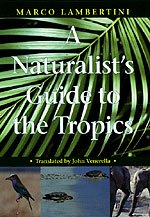
Whether you're a first-time visitor or a veteran of many trips, this convenient guidebook can help you plan your vacation and serve as a knowledgeable companion to answer the many questions that may arise during the course of your journey. Why are tropical birds and fishes so colorful? What is an atoll, and how do they form? Why are tropical soils red and sterile, while rainforests are lush and green? Why does Madagascar have lemurs but not monkeys? Special features of the book include chapters on the conservation status of the Tropics and how to prepare with "caution without obsession" for tropical dangers such as infectious diseases and charging rhinoceroses.
The first comprehensive introduction to the natural history of the Tropics worldwide, A Naturalist's Guide to the Tropics has been completely revised and updated by the author and the translator to reflect the most current information available.
* first field guide in English to cover all the world's tropics, not just specific regions or countries
* more than 350 illustrations, many in color
* sturdy flexibound cover and compact size ideal for travelers
* boxes in text define scientific terms or explore side topics in more detail, such as "What Is Biodiversity?" and "Why Is Tropical Fauna So Colorful?"
* discusses tropical dangers and precautions to cope with them, such as vaccinations to obtain and foods to avoid
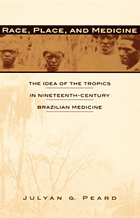
Peard shows how the Tropicalistas adapted Western medicine and challenged the Brazilian medical status quo in order to find new answers to the old question of whether the diseases of warm climates were distinct from those of temperate Europe. They carried out innovative research on parasitology, herpetology, and tropical disorders, providing evidence that countered European assumptions about Brazilian racial and cultural inferiority. In the face of European fatalism about health care in the tropics, the Tropicalistas forged a distinctive medicine based on their beliefs that public health would improve only if large social issues—such as slavery and abolition—were addressed and that the delivery of health care should encompass groups hitherto outside the doctors’ sphere, especially women. But the Tropicalistas’ agenda, which included biting social critiques and broad demands for the extension of health measures to all of Brazil’s people, was not sustained. Race, Place, and Medicine shows how imported models of tropical medicine—constructed by colonial nations for their own needs—downplayed the connection between socioeconomic factors and tropical disorders.
This study of a neglected episode in Latin American history will interest Brazilianists, as well as scholars of Latin American, medical, and scientific history.
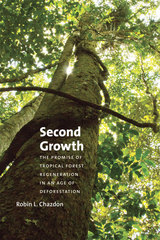
Even as human activities result in extensive fragmentation and deforestation, tropical forests demonstrate a great capacity for natural and human-aided regeneration. Although these damaged landscapes can take centuries to regain the characteristics of old growth, Chazdon shows here that regenerating—or second-growth—forests are vital, dynamic reservoirs of biodiversity and environmental services. What is more, they always have been.
With chapters on the roles these forests play in carbon and nutrient cycling, sustaining biodiversity, providing timber and non-timber products, and integrated agriculture, Second Growth not only offers a thorough and wide-ranging overview of successional and restoration pathways, but also underscores the need to conserve, and further study, regenerating tropical forests in an attempt to inspire a new age of local and global stewardship.

The stories collected in This Is Not the Tropics come from the geographic center of a divided nation, and its protagonists evoke a split personality—one half submerged in America’s own diehard mythology, the other half searching to escape tradition. Together they form a portrait of the Plains that is both quirky and poignant. While the themes in this collection are familiar—love and betrayal, loneliness and regret, the needs of the individual versus the needs of the community—the tales themselves are startling and new. Whether it is the story of an eccentric out-of-work accordion player; a woman ending a long marriage against the backdrop of a visit from her failing mother; a young girl who wishes to solve a mystery until real mystery enters her life; or all of the men in a small Nebraska town who annually compete in a hilariously earnest beauty pageant, these are tales that speak of the lives lived in the small towns, the prairie cities, and on the dirt roads off blue highways in the middle of nowhere and everywhere.
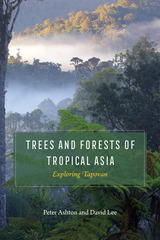
Trees and Forests of Tropical Asia invites readers on an expedition into the leafy, humid, forested landscapes of tropical Asia—the so-called tapovan, a Sanskrit word for the forest where knowledge is attained through tapasya, or inner struggle. Peter Ashton and David Lee, two of the world’s leading scholars on Asian tropical rain forests, reveal the geology and climate that have produced these unique forests, the diversity of species that inhabit them, the means by which rain forest tree species evolve to achieve unique ecological space, and the role of humans in modifying the landscapes over centuries. Following Peter Ashton’s extensive On the Forests of Tropical Asia, the first book to describe the forests of the entire tropical Asian region from India east to New Guinea, this new book provides a more condensed and updated overview of tropical Asian forests written accessibly for students as well as tropical forest biologists, ecologists, and conservation biologists.
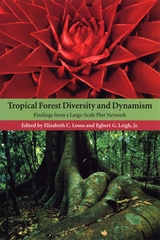
Written by experts in the field of tropical ecology, Tropical Forest Diversity and Dynamism will appeal to students and professionals with an interest in community ecology and patterns of diversity.
Tropical Forest Remnants provides the best information available to help us
understand, manage, and conserve the remaining fragments. Covering geographic areas from Southeast Asia and Australia to Madagascar and the New World, this volume summarizes what is known about the ecology, management, restoration, socioeconomics, and conservation of fragmented forests. Thirty-three papers present results of recent research as
well as updates from decades-long projects in progress. Two final chapters synthesize the state of research on tropical forest fragmentation and identify key priorities for future work.
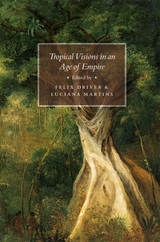
Bringing together a group of distinguished contributors from disciplines across the arts and humanities, this volume contains eleven beautifully illustrated essays—arranged in three sections devoted to voyages, mappings, and sites—that consider the ways that tropical places were encountered, experienced, and represented in visual form. Covering a wide range of tropical sites in the Pacific, South Asia, West Africa, the Caribbean, and Latin America, the book will appeal to a broad readership: scholars of postcolonial studies, art history, literature, imperial history, history of science, geography, and anthropology.
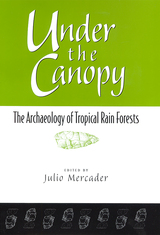
Did our ancestors live in tropical forests? Although we see the rainforest as a bountiful environment teeming with life forms, most anthropologists and archaeologists have long viewed these areas as too harsh for human occupation during the pre-agricultural stages of hominid development.
Under the Canopy turns conventional wisdom on its head by providing a well-documented, geographically diverse overview of Stone Age sites in the wet tropics. New research indicates that, as humanity and its precursors increased their geographical and ecological ranges, rainforests were settled at a much earlier period than had previously been thought.
Featuring the work of leading scholars from Australia, Brazil, Canada, Colombia, France, Malaysia, Panama, Spain, and the United States, Under the Canopy creates a new niche in paleolithic studies: the archaeology of tropical rainforests. This book provides the first synthesis of archaeological research in early foraging sites across the rainforest zone, and indicates that tropical forests could harbor important clues to human evolution, origins of modern behavior, cultural diversity, and human impact on tropical ecosystems.
READERS
Browse our collection.
PUBLISHERS
See BiblioVault's publisher services.
STUDENT SERVICES
Files for college accessibility offices.
RECENTLY PUBLISHED






UChicago Accessibility Resources
home | accessibility | search | about | contact us
BiblioVault ® 2001 - 2026
The University of Chicago Press