
 A SCHOLARLY BOOK REPOSITORY
A new translation for scholars and students of biblical interpretation and ancient Christianity
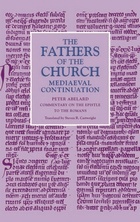
The ancient writer dubbed Ambrosiaster was a pioneer in the revival of interest in the Pauline Epistles in the later fourth century. He was read by Latin writers, including Pelagius and Augustine, and his writings, passed on pseudonymously, had a long afterlife in the biblical commentaries, theological treatises, and canonical literature of the medieval and the early modern periods. In addition to his importance as an interpreter of scripture, Ambrosiaster provides unique perspectives on many facets of Christian life in Rome, from the emergence of clerical celibacy to the development of liturgical practices to the subordination of women.
Features
- An up-to-date overview of what is known about Ambrosiaster, the transmission of his commentary on the Pauline Epistles, his exegetical method, his theological orientation, and aspects of Christianity in Rome in the fourth century
- A scholarly translation of the final version of the commentary, along with notes that identify significant variants from prior versions of the commentary
- Bibliography thatincludes a comprehensive list of the scholarly literature on Ambrosiaster
In the aftermath of the 2016 presidential election, biblical scholar Andrea L. Weiss and graphic designer Lisa M. Weinberger teamed up to create Values & Voices, a national nonpartisan campaign that used letters and social media to highlight core American values connected to our diverse religious traditions. The result was American Values, Religious Voices: 100 Days, 100 Letters, a collection of one hundred letters written by some of America's most accomplished and thoughtful scholars of religion interspersed with original artwork during the first one hundred days of the Trump presidency.
In 2021, Weiss and Weinberger invited religious scholars and leaders to address President Biden, Vice President Harris, and members of the 117th Congress in their national letter writing and social media campaign. During the first 100 days of the Biden administration, religious leaders from across the country and from a range of religious denominations once again sent one letter a day to elected leaders in Washington. These letters bring an array of religious texts and teachings to bear on our most pressing contemporary issues. Arranged chronologically, the 2021 edition features 59 returning letter writers and 42 new scholars, new artwork, original essays, and and a new section focused on putting the letters into practice by using them for teaching, preaching, meditative practice, civic activism, and more. An alternate table of contents arranged by core values that emerged in the letters over the 100 days allows for thematic reading.
“Extraordinary,” says the New York Times, “will leave no reader’s understanding of Genesis unchanged.”
Examining Genesis in a philosophical light, Leon Kass presents it not as a story of what happened long ago, but as the enduring story of humanity itself. He asserts that the first half of Genesis contains insights about human nature that “rival anything produced by the great philosophers.” Kass here reads these first stories—from Adam and Eve to the tower of Babel—as a mirror for self-discovery that reveals truths about human reason, speech, freedom, sexual desire, pride, shame, anger, and death. Taking a step further in the second half of his book, Kass explores the struggles in Genesis to launch a new way of life that addresses mankind’s morally ambiguous nature by promoting righteousness and holiness.
Even readers who don’t agree with Kass’s interpretations will find The Beginning of Wisdom a compelling book—a masterful philosophical take on one of the world’s seminal religious texts.
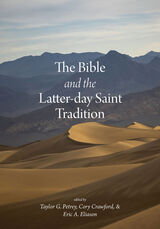
Like other Christian denominations, the Church of Jesus Christ of Latter-day Saints (Mormons) has been engaged in the battle for the Bible since challenges to biblical authority began to exert significant influence in America toward the end of the nineteenth century. Other believing communities have responded with various reevaluations of the biblical text. Latter-day Saints have experimented with similar approaches, often taking liberal positions on biblical authority and conservative positions on history and authorship. However, Latter-day Saints accept additional scripture and embrace a theology notably distinct from traditional Christianity. Hence, they relate to the Bible differently from other Christians, creating gaps with mainstream biblical studies. This volume bridges that gap.
From comparing the Book of Mormon to the Bible or the Dead Sea Scrolls, to Mormon feminists’ views on the Gospels, this volume takes a comprehensive and inclusive approach to understanding Bible scholarship’s role in Mormon history, exploring these differences for both scholars and students. A diverse group of contributors presents an accessible resource to mediate between Latter-day Saint traditions and the broader context of biblical history, literature, and scholarship. Each essay provides a synopsis of relevant major scholarly views and delivers new insights into varied crosscurrents of biblical studies.
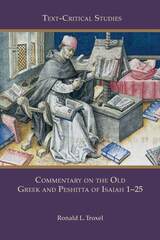
The first thorough commentary on the Old Greek and Peshitta of Isaiah
Ronald L. Troxel’s new textual commentary on Isaiah focuses on the book’s Greek and Syriac translations and seeks to recover, as much as possible, the Hebrew texts on which these early translations relied. Troxel treats the Greek and Syriac together in order to present a detailed analysis of their relationship, devoting particular attention to whether the Syriac was directly or indirectly influenced by the Greek. This comparison sheds light on both the shared and distinct approaches that the translators took in rendering lexemes, phrases, verses, and even passages. In addition Troxel presents observations about the literary structures the translators created that differ from those implicit in their source texts (as we understand them), to produce coherent discourse in the target language.
Features:
- Textual commentary on the life of the text of Isaiah 1–25
- Use of the Dead Sea Scrolls to shed light on particular issues
- Detailed comparison of the Masoretic Text, the Old Greek, and the Peshitta
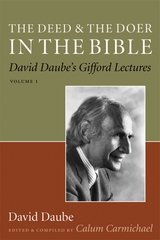
David Daube (1909–1999) was a world-renowned biblical law scholar. He was a fellow at All Souls College at Oxford, an emeritus professor of law at Oxford, and an emeritus professor of law at the University of California, Berkeley. Scholars have hailed his essential research on Roman law, biblical law, Hebraic Law, and ethics throughout his life and today.
Daube produced dozens of books and published over 150 articles in scholarly journals. Now, for the first time, his twenty Gifford Lectures, delivered in 1962 and 1964, will be available to the public. His first ten Gifford Lectures have been collected in The Deed and the Doer in the Bible: David Daube's Gifford Lectures, Volume 1.
The theme of Daube's Gifford Lectures is law and wisdom in the Bible. His wide-ranging deliberations reveal how complicated and profound the biblical text is. He analyzes deeds described in the Bible and considers, for example, what causes people to act in a certain way, the role of intent, why unintended deeds are sometimes punishable, and how the origin of a deed is determined. His lectures are aimed at professionals in biblical criticism, biblical history, ethics, and the history of law concerning its roots in Old Testament traditions. Daube is a recognized master in these fields, and there are substantial applications to current ethical and legal issues.
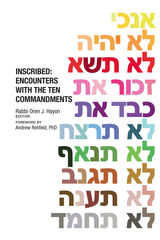
This anthology gives voice to the many diverse and contemporary perspectives about each of the Ten Commandments. Written by an impressive collection of rabbis and scholars, the volume allots multiple chapters for each of the commandments in order to engage with the ways in which these timeless utterances have inspired contemporary laws, ethics, and moral guidelines.


"That over forty years after they were delivered these famous but unavailable Gifford Lectures should be published is occasion for celebration. Once again we hear Daube’s voice, patient and probing, as he turns over, tests, pushes fresh inquiries, and finds new insights. No man has had such a subtle sense of scriptural texts matched by such a supple sense of the practices and peculiarities of human beings engaged in the legal process. Law and Wisdom in the Bible is classic Daube." mdash;John T. Noonan Jr., United States Circuit Judge
David Daube (1909–99) was known for his unique and sophisticated research on Roman law, biblical law, Jewish Law, and medical ethics. In Law and Wisdom in the Bible, the first published collection of his 1964 Gifford Lectures, Daube derives from his complex understanding of biblical texts both ancient and contemporary notions about wisdom, justice, and education.
In addressing these and other profound issues, Daube crosses traditional disciplinary boundaries and bridges the
gap between humanism and religion, especially with regard to Christianity and Judaism. With his sophisticated understanding of Talmudic law and literature, his thinking, which is on full display in these lectures, revolutionized prevailing perceptions about the New Testament.

Braided and spiral loaves of challah have long been a delicious centerpiece of the Jewish table, but with a few extra twists, the beloved Shabbat bread can become a work of art that teaches Torah. In Loaves of Torah, Rabbi Vanessa M. Harper— creator of the hit Instagram account @lechlechallah—shapes interpretive challot for each weekly Torah portion and Jewish holiday. A creative journey through the Jewish year, the book pairs gorgeous color photographs with insightful commentary, in-depth questions for reflection and discussion, as well as beautiful kavanot. Rabbi Harper also includes blessings, recipes, and tips for creating your own interpretive challot. A fresh, contemporary commentary on our holiest text, Loaves of Torah will inspire you to think outside the braid and take Torah into your own hands.
In his short work The Lord, Swedenborg presents an answer to the time-honored question of how Jesus and God are related: he argues that they became in every way one and the same. Throughout his works Swedenborg uses the term “Lord” to refer to Jesus as the embodiment of God. In this work he emphasizes that the traditional trinity of Father, Son, and Holy Spirit should be thought of not as three separate divine Persons that have always coexisted but as three aspects now present within one divine Person—Jesus in his resurrection.
The Lord also touches upon key themes in Swedenborg’s theology: the spiritual reasons why the Lord came to earth; the significance of the death and resurrection of his human form; and the ways in which his coming was foretold in the Old Testament. Throughout the book, Swedenborg provides extensive biblical references to support his arguments. He concludes with a brief chapter describing the New Jerusalem, a reference to both the city described in the book of Revelation and the new spiritual age that is now unfolding.
The Lord is part of the New Century Edition of the Works of Emanuel Swedenborg (NCE), an ongoing translation series. The NCE series incorporates the latest scholarship and translation standards for a more accurate and accessible rendering of Swedenborg’s works. Traditionally titled The Doctrine of the Lord, this short work is often published together with three other short works—Life, Faith, and Sacred Scripture—under the title The Four Doctrines. The Swedenborg Foundation will publish these four titles together in the forthcoming NCE hardcover annotated volume The Shorter Works of 1763.
A concise study of a large number of examples of pluses and minus providing insight into translation from Hebrew to Greek
Van der Vorm-Croughs focuses this translation study on the processes leading to pluses and minuses including linguistic and stylistic aspects (i.e., cases in which elements have been added or omitted for the sake of a proper use of the Greek language), literary aspects (additions and omissions meant to embellish the Greek text), translation technical aspects (e.g., the avoidance of redundancy), and contextual and intertextual exegesis and harmonization. This work also covers the relation between the Greek Isaiah and its possible Hebrew Vorlage to try to determine which pluses and minuses may have been the result of the translator’s use of a different Hebrew text.
Features:
- Eleven categories for the pluses and minuses of the Greek Isaiah
- Examination of translation techniques and translator errors
- Use of Joseph Ziegler’s critical edition
This book also explores the intriguing ways in which Latter-day Saints have interpreted and engaged with this ancient text and the author navigates their diverse interpretations of it. He examines how individuals have alternately embraced the Old Testament as myth or history, law or legend, wise counsel or sacred scripture. He shows where many traditional interpretations have come from, and offers many ways to encourage a more nuanced understanding of the text.
Drawing from a wealth of scholarly research and his own unique perspective, Douglas presents a compelling and multidimensional analysis of the Old Testament. However readers approach the text, this book sheds light on the complex nature of the Old Testament and its enduring relevance to the Latter-day Saint tradition.
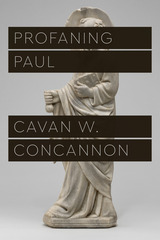
The letters of Paul have been used to support and condone a host of evils over the span of more than two millennia: racism, slavery, imperialism, misogyny, and anti-Semitism, to name a few. Despite, or in some cases because of, this history, readers of Paul have felt compelled to reappropriate his letters to fit liberal or radical politics, seeking to set right the evils done in Paul’s name. Starting with the language of excrement, refuse, and waste in Paul’s letters, Profaning Paul looks at how Paul’s “shit” is recycled and reconfigured. It asks why readers, from liberal Christians to academic biblical scholars to political theorists and philosophers, feel compelled to make Paul into a hero, mining his words for wisdom. Following the lead of feminist, queer, and minoritized scholarship, Profaning Paul asks what would happen if we stopped recycling Paul’s writings. By profaning the status of his letters as sacred texts, we might open up new avenues for imagining political figurations to meet our current and coming political, economic, and ecological challenges.
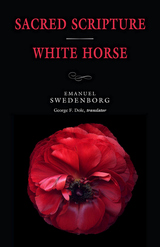
In Sacred Scripture, Swedenborg explains how the inner meaning of the Bible relates to its outer (literal) meaning, and he cites numerous biblical passages to show how similar themes emerge again and again. He describes two distinct layers of inner meaning—the heavenly and the spiritual—and shows how an understanding of that inner meaning strengthens a person’s connection with Deity and with heaven.
White Horse begins with a short summary of the spiritual meaning of the white horse described in Revelation 19:11. In form, what then follows is a series of statements about the inner meaning of the Bible with references to explanatory passages in Secrets of Heaven. However, when read in sequence, those statements are also a concise summary of Swedenborg’s theology of biblical interpretation.
The perspective provided by these two short works allows the reader to see through the Bible’s clouds of baffling, obscure, and seemingly inconsistent details to the power and unity of divine love and wisdom within the text. Students or seekers interested in Swedenborg’s teachings about the interrelationship between the spiritual world and the physical one will find this volume a helpful guide. Sacred Scripture / White Horse is part of the New Century Edition of the Works of Emanuel Swedenborg (NCE), an ongoing translation series. The NCE series incorporates the latest scholarship and translation standards for a more accurate and accessible rendering of Swedenborg’s works.
Explore the groundwork for a new commentary series from SBL Press
This book contains verse by verse commentary on selections from the Greek text of the Hebrew Bible known as the Septuagint. Each chapter is from a different bible book, for which there will eventually be a full commentary published in the Society of Biblical Literature Commentary on the Septuagint. The commentary series focuses on the actual process of translation, so its authors try to describe and explain the kinds of decisions the ancient Alexandrian translators made about how to render Hebrew into Greek.
Features
- Translations from and commentary on Genesis, Exodus, Leviticus, Numbers, Esther, Job, and Psalms Contributions from eight experts on the Septuagint
- Guidelines and procedures used in the production of the translations in the series
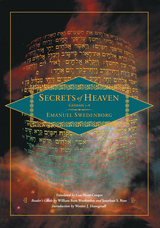
The first major theological work of the Swedish scientist-turned-seer Emanuel Swedenborg, Secrets of Heaven is in one sense a traveler's account. It reveals the unseen realms that await beyond death--the light, the warmth, and harmony of the angelic heavens and the varied darkness of the multitudinous hells. But in addition, the work offers a detailed examination of Genesis and Exodus, providing a model for a new way to understand the entire Bible. Prized for both the simplicity of its explanation and the breadth and depth of its vision, Swedenborg's reading of Scripture discloses layer upon layer of inner meaning, all without undermining the power and import of the literal word.
This first of the multivolume work contains an introduction by Wouter J. Hanegraaff, professor of History of Hermetic Philosophy and Related Currents at the University of Amsterdam, and a reader's guide by Swedenborgian scholar William Ross Woofenden and New Century Edition Series Editor Jonathan S. Rose.
The New Century Edition of the Works of Emanuel Swedenborg is a modern-language, scholarly translation of Swedenborg’s theological works. The series’ easy-to-read style retains the dignity, variety, clarity, and gender-inclusive language of Swedenborg’s original Latin, bringing his thought to life. Introductions and annotations by eminent, international scholars place Swedenborg’s writings in their historical context and illuminate obscure references within the text, enabling readers to understand and trace Swedenborg’s influence as never before.
The first major theological work of the Swedish scientist-turned-seer Emanuel Swedenborg, Secrets of Heaven is in one sense a traveler's account. It reveals the unseen realms that await beyond death--the light, the warmth, and harmony of the angelic heavens and the varied darkness of the multitudinous hells. But in addition, the work offers a detailed examination of Genesis and Exodus, providing a model for a new way to understand the entire Bible. Prized for both the simplicity of its explanation and the breadth and depth of its vision, Swedenborg's reading of Scripture discloses layer upon layer of inner meaning, all without undermining the power and import of the literal word.
The New Century Edition of the Works of Emanuel Swedenborg is a modern-language, scholarly translation of Swedenborg’s theological works. The series’ easy-to-read style retains the dignity, variety, clarity, and gender-inclusive language of Swedenborg’s original Latin, bringing his thought to life.
This portable edition of Secrets of Heaven vol. 1 includes the text of the New Century Edition without the introduction, annotations, and other supplementary of the deluxe hardcover and paperback editions.
The first major theological work of the Swedish scientist-turned-seer Emanuel Swedenborg, Secrets of Heaven is in one sense a traveler's account. It reveals the unseen realms that await beyond death--the light, the warmth, and harmony of the angelic heavens and the varied darkness of the multitudinous hells. But in addition, the work offers a detailed examination of Genesis and Exodus, providing a model for a new way to understand the entire Bible. Prized for both the simplicity of its explanation and the breadth and depth of its vision, Swedenborg's reading of Scripture discloses layer upon layer of inner meaning, all without undermining the power and import of the literal word.
The New Century Edition of the Works of Emanuel Swedenborg is a modern-language, scholarly translation of Swedenborg’s theological works. The series’ easy-to-read style retains the dignity, variety, clarity, and gender-inclusive language of Swedenborg’s original Latin, bringing his thought to life.
This portable edition of Secrets of Heaven vol. 1 includes the text of the New Century Edition without the introduction, annotations, and other supplementary of the deluxe hardcover and paperback editions.

In Secrets of Heaven, Volume 10, the eighteenth century Christian mystic Emanuel Swedenborg presents the meaning behind the words of Exodus chapters 1–8, decoding the spiritual significance of key events—including the oppression of the Israelites, the birth and calling of Moses, and the first plagues upon Egypt. Using what he calls “correspondences,” Swedenborg connects these stories to the struggles of the human soul, the process of spiritual rebirth, and the challenges of embracing divine truth.
For example, when Moses is placed in a basket and hidden among the reeds of the Nile (Exodus 2), Swedenborg unpacks this iconic moment as a metaphor for divine truth being born within us—but initially concealed. The river represents worldly falsities and confusion, while the basket covered in tar and pitch reflects how, early in our spiritual awakening, truth is wrapped in external, imperfect layers. Yet, like Moses, this truth is protected by divine care until it grows strong enough to emerge. For Swedenborg, this story becomes a tender image of how our spiritual understanding often begins quietly, even hidden, before it transforms us.
Presented in a clear, modern translation, this Portable New Century Edition offers an accessible entry point to Swedenborg’s visionary theology. Since its original publication in Neo-Latin as Arcana Coelestia in the mid-1700s, Swedenborg’s Secrets of Heaven series has been providing a compelling perspective on the hidden wisdom within scripture to biblical scholars, spiritual seekers, and individuals exploring the deeper layers of faith.
Where the literal text recounts historical events, Swedenborg uncovers the inner sense—a symbolic layer that reveals how these stories reflect the realities of human life and spiritual growth. The plagues of Egypt, for example, are shown to represent the conflict between truth and falsity, good and evil, and the resistance of the human ego to divine influence. The journey out of Egypt becomes a picture of the soul’s deliverance from bondage to selfishness and its gradual awakening to divine love and wisdom.
This Portable New Century Edition has been designed to serve both dedicated Swedenborg readers and those encountering his thought for the first time. Its faithful yet accessible translation preserves the clarity of the Latin original while presenting Swedenborg’s ideas in language that is accessible to contemporary seekers.
In Swedenborg’s original Arcana Coelestia, written in neo-Latin, he published a single volume covering Exodus chapters 1–15. The New Century Edition divides that material into Volumes 10 and 11, which together correspond to Swedenborg’s original Volume 6. Together volumes 10 and 11 explore the events of the children of Israel in Egypt.
Among the themes explored in this volume are:
- The meaning of heaven and hell as inner states of being
- The symbolic role of angels and spirits in human life
- The significance of Israel, Pharaoh, and Egypt as representations of spiritual dynamics
- The unfolding of faith, truth, and goodness in the life of the soul
Swedenborg’s unique method of biblical interpretation invites readers to see the Bible as a living document that speaks to the challenges and transformations of the spirit. The Exodus story, in this light, reflects every individual’s journey toward freedom, renewal, and a deeper relationship with the divine.
Compact in size, contemplative in tone, and faithful in translation, this volume is an invitation to pause, reflect, and discover the spiritual meaning of Scripture as Swedenborg saw it: a pathway of light for the inner life.
As the Israelites cry for bread and water, Swedenborg perceives the soul’s own desolation and its longing for nourishment from heaven. Every miracle in the wilderness, every law engraved on stone, is a parable of consciousness and transformation. He invites the reader to see the text not as distant history but as an unfolding map of inner experience—one that traces how divine truth and divine goodness shape the journey from selfhood to love.
Repentance, for Swedenborg, is not penitence but a science of renewal—the first infusion of spiritual light into the human will.
This “food from heaven” becomes a recurring emblem for regeneration itself: divine sustenance descends daily, as mercy is renewed each morning.
Even the Ten Commandments, Swedenborg insists, are not merely rules but correspondences of inner states—stages of rebirth through which the individual becomes a spiritual person.
Beyond Sinai, he turns to the so-called judgments of Exodus—laws about servants, injuries, and oxen—and finds there a mirror of the spiritual world itself. Each ordinance reflects a cosmic order, binding together the human mind, the natural world, and heaven.
In this way, Secrets of Heaven Volume 12 carries the reader from the literal wilderness into the landscape of the soul. It shows that life after death, the inner meaning of the Bible, and the struggles of conscience all belong to one unified revelation. Part of the Portable New Century Edition from the Swedenborg Foundation, this volume continues a project that has reintroduced Arcana Coelestia to modern readers—compact, approachable, and faithful to the luminous insights of Swedenborg’s thought.
At first glance, Exodus chapters 22–24 appear to present a series of laws and regulations governing justice, property, and social responsibility. In Secrets of Heaven Volume 13, Emanuel Swedenborg looks deeply into the biblical symbolism of these writings to reveal that the passages describe something far more personal and universal: the development of conscience, perception, and moral awareness.
Swedenborg’s Exodus commentary explores how the inner meaning of Scripture reflects the structure of the human mind. He shows that spiritual growth is not merely about following external rules, but about cultivating an inner life shaped by divine goodness and divine truth. These two principles—goodness and truth—form the foundation of spiritual perception. From them, we gain the ability to recognize both goodness and distortion within ourselves.
“...evil can be seen from the viewpoint of goodness, and falsity from the viewpoint of truth, but not the reverse. This is because goodness and truth stand in heaven and in its light, but evil and falsity stand in hell and in its darkness.” §9128.2
A central theme of this work is the idea that self-awareness is not neutral. Swedenborg explains that we can only clearly see our own limitations and blind spots when we are grounded in a life of faith and charity. In his terms, this means living in truth and goodness. From this perspective, conscience becomes more than a moral guideline; it becomes a form of inner sight.
This insight places Secrets of Heaven Volume 13 in conversation with what we might now call spiritual psychology, and it is a repeated theme elsewhere in Secrets of Heaven. For example, in Secrets of Heaven Volume 1, when commenting on Genesis, Swedenborg says:
“When the earliest people described Jehovah as speaking, they meant perception, because they realized that the Lord made it possible for them to perceive. This capacity for perception lasted only as long as love had primary importance. When love for the Lord came to an end, and love for others consequently did the same, perception died out. To the extent that love remained, perception remained.” Secrets of Heaven Volume 1 §371
Additionally, Secrets of Heaven Volume 13 provides insights on concepts such as “flesh” and “blood,” which are reinterpreted not as physical elements, but as representations of divine goodness and divine truth—forces that nourish the inner spiritual life. Through these interpretations, Swedenborg connects familiar scriptural language to lived experience. In the inter-chapter material (§§9350 - 9362) Swedenborg also addresses the question of why the Lord, Swedenborg’s customary term for Jesus Christ, was born on Earth rather than on another planet. In Chapter 24, he continues exploration of life beyond Earth.
For readers seeking the deeper meaning of the Hebrew scriptures (“Old Testament”), this volume provides a thoughtful and structured approach to spiritual interpretation. It invites reflection on moral decision making, the development of conscience, and the ongoing process of spiritual growth and transformation.
Secrets of Heaven Volume 13 offers a compelling perspective on how ancient spiritual texts can illuminate modern questions of conscience, perception, and inner life.
Secrets of Heaven is Emanuel Swedenborg’s magnum opus, a fifteen-volume work that delves into the inner, spiritual meaning of the Bible. Starting from the first verse, Swedenborg goes through Genesis and Exodus verse by verse, sometimes word by word, uncovering the fascinating teachings behind the literal account. By doing careful comparison of passages and tracing individual images and motifs through the Bible, he demonstrates that it contains a profound, coherent, and unified inner meaning.
The second volume covers Genesis 9–15, beginning with God’s covenant with Noah following the Flood and then following the familiar story of the patriarch Abraham. In the process, Swedenborg discusses the concept of regeneration, or spiritual rebirth, and describes the way the people act before and after rebirth. He also talks about an epoch of human history that he calls the ancient church and the spiritual state of the people in that church. Interspersed with the biblical commentary are chapters on related topics such as the lives of angels in heaven, how distance and time work in the spiritual world, and the nature of hell.
Secrets of Heaven provides essential insight into Swedenborg’s theology and lays the groundwork for the rest of his writings. This new translation, part of the New Century Edition series, makes his insights into Scripture and his accounts of his spiritual experiences more accessible than ever before.
This third volume covers the inner meaning of Genesis 16–21, giving an account of the early stages of Jesus’ inward development, including the interactions of his human side and his divine side. It additionally addresses other topics, and in particular the true nature of the Last Judgment.
This new translation, part of the New Century Edition series, makes Swedenborg’s insights into Scripture and his accounts of his spiritual experiences more accessible than ever before.
This fourth volume covers the inner meaning of Genesis 22–26, which on the surface recount God’s testing of Abraham and the generational shift that occurs as Sarah and Abraham die, Isaac and Rebekah marry, and Jacob and Esau are born. The intricacies of this narrative are interpreted as the processes Jesus went through inwardly as he united his human and divine natures and established a new religious culture on earth. Much of this volume also explores the concepts of correspondence and representation as underlying realities present in the natural and spiritual worlds and in the Bible.
This new translation, part of the New Century Edition series, makes Swedenborg’s insights into Scripture and his accounts of his spiritual experiences more accessible than ever before.
Secrets of Heaven is Emanuel Swedenborg’s magnum opus, a fifteen-volume work that delves into the inner, spiritual meaning of the Bible. Starting from the first verse, Swedenborg goes through Genesis and Exodus verse by verse, sometimes word by word, uncovering the fascinating teachings behind the literal account. By doing careful comparison of passages and tracing individual images and motifs through the Bible, he demonstrates that it contains a profound, coherent, and unified inner meaning.
This fifth volume continues the exposition with an examination of Jacob’s story, as found in Genesis 27–30. Jacob’s flight to his uncle Laban’s house, where he initially labors for the right to marry, then weds Leah and Rachel, and eventually rises to great prosperity, parallels the stage of Jesus’ transformation in which his earthly self (represented by Jacob) had to climb from attachment to outer truth (Leah) to a love of inner truth (Rachel) so that his earthly self could become fully divine. Within each chapter, Swedenborg also addresses the decline of the Christian church and unfolds his foundational premise that heaven, as a whole and in detail, is in God’s image and can therefore be called the “universal human.”
This new translation, part of the New Century Edition series, makes Swedenborg’s insights into Scripture and his accounts of his spiritual experiences more accessible than ever before.
Secrets of Heaven is Emanuel Swedenborg’s magnum opus, a fifteen-volume work that delves into the inner, spiritual meaning of the Bible. Starting from the first verse, Swedenborg goes through Genesis and Exodus verse by verse, sometimes word by word, uncovering the fascinating teachings behind the literal account. By engaging in a careful comparison of passages and tracing individual images and motifs through the Bible, he shows that it contains a profound, coherent, and unified inner meaning.
This sixth volume interprets the inner narrative of Genesis 31–35, in which Jacob leaves Laban’s house, wrestles with God, and reunites with Esau. These acts, Swedenborg argues, are each symbolic of the inner separations, struggles, and unifications that Jesus accomplished on his path to divinity. Swedenborg continues to explore two themes found in previous volumes: the Last Judgment as the ending of an old church and the beginning of a new church, and the correlation between human individuals and the “universal human.”
This new translation, part of the New Century Edition series, makes Swedenborg’s insights into Scripture and his accounts of his spiritual experiences more accessible than ever before.
Secrets of Heaven is Emanuel Swedenborg’s magnum opus, a fifteen-volume work that delves into the inner, spiritual meaning of the Bible. Starting from the first verse, Swedenborg goes through Genesis and Exodus verse by verse, sometimes word by word, uncovering the fascinating teachings behind the literal account. By engaging in a careful comparison of passages and tracing individual images and motifs through the Bible, he demonstrates that it contains a profound, coherent, and unified inner meaning.
In this seventh volume, covering Genesis 36–40, Joseph’s story begins. The literal narrative describes how after dreaming of greatness Joseph is sold into slavery by his jealous brothers and wrongfully imprisoned. The inner narrative, Swedenborg explains, describes the trials and opposition endured by the Lord’s divine humanity, which is represented by Joseph. In this volume Swedenborg also interprets a number of parables in Matthew, relating their meaning to the Lord’s Second Coming. His exploration of the correspondences of the various parts and functions of the body is also continued from the previous volume.
This new translation, part of the New Century Edition series, makes Swedenborg’s insights into Scripture and his accounts of his spiritual experiences more accessible than ever before.

Secrets of Heaven is Emanuel Swedenborg’s magnum opus, a fifteen-volume work that delves into the inner, spiritual meaning of the Bible. Starting from the first verse, Swedenborg goes through Genesis and Exodus verse by verse, sometimes word by word, uncovering the fascinating teachings behind the literal account. By engaging in a careful comparison of passages and tracing individual images and motifs through the Bible, he demonstrates that it contains a profound, coherent, and unified inner meaning.
In this eighth volume, covering Genesis 41–44, the explication of the deeper meaning behind Joseph’s story continues. Joseph’s rise to power in Egypt and the aid he gives his brothers during the famine are presented by Swedenborg as symbolizing the strengthening of Jesus’ inner self and the benefit it provided to his outer self during his process of transformation to divine humanity. Swedenborg also completes his survey of the correspondence of the human body with some attention to the correspondence of disease. He then begins a new theme in which he describes the influence that the spiritual world has on human beings through angels and spirits.
This new translation, part of the New Century Edition series, makes Swedenborg’s insights into Scripture and his accounts of his spiritual experiences more accessible than ever before.

Each Secrets of Heaven volume can be read in sequence, or as a stand-alone book. In this volume, Swedenborg returns to themes central to understanding the spiritual world’s influence on humanity—how divine forces shape the human will and intellect, and how they operate within the soul and the outer and inner selves. His insights provide a window into the complex relationships between the spiritual and natural worlds, helping readers make sense of life’s greater purpose and the divine wisdom underlying Scripture.
This edition, translated with clarity and precision by Lisa Hyatt Cooper, brings these profound teachings to modern readers in an accessible format. Whether you are a long-time student of Swedenborg, a spiritual seeker looking to dive deeper into Christian mysticism, or someone drawn to the mysteries of Genesis and Exodus, this volume serves as a powerful guide on the journey toward inner spiritual meaning.
With its focus on making Emanuel Swedenborg’s writings accessible to contemporary readers, the Portable New Century Edition is both a trusted reference and a source of ongoing reflection. Scholars, ministers, and those identifying as "spiritual but not religious" will find Secrets of Heaven: Volume 9 to be an essential addition to their spiritual library, offering insights that enrich the soul and open the mind.
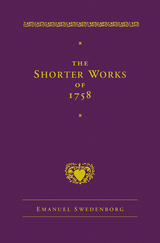
This volume contains four shorter works by the influential eighteenth-century mystic Emanuel Swedenborg. Translators George F. Dole and Jonathan S. Rose have produced an accessible rendering of these important yet easily overlooked works.
New Jerusalem: In this work Swedenborg outlines his theology in twenty-three brief chapters on major Christian topics such as love, faith, regeneration, the inner self and outer self, and the nature of the Bible. Nearly every chapter ends with what is in effect an index to that topic as it appears in his much larger study Secrets of Heaven.
Last Judgment: This work on the “end times” asserts that the Last Judgment foretold in the Bible does not involve the end of the physical world. Rather, the Last Judgment was an event of tremendous upheaval in the spiritual world, a nonmaterial apocalypse which has already occurred and which Swedenborg himself witnessed.
White Horse: This brief work is divided into two parts. The first presents the inner meaning of the white horse mentioned in chapter 19 of the book of Revelation. The second is effectively an index to passages concerning the Bible and its inner meaning in Swedenborg’s much larger work Secrets of Heaven. This work is a good short introduction to Swedenborg’s principle of correspondences between the spiritual and physical worlds, as well as to his unique view of the nature of the Bible.
Other Planets: Building on the eighteenth-century fascination with the possibility of life on other worlds and with traveler’s tales of other cultures, this work describes life on other planets in our solar system and elsewhere in the universe. Swedenborg undertook this work specifically to demonstrate that Jesus is God not just of planet Earth but also of the universe as a whole.
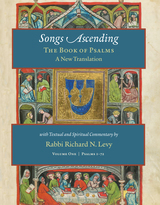
A beautiful, poetic translation of the Book of Psalms, Songs Ascending includes textual commentary and insights into the translation process, illuminating the choices of the original composers and the choices facing us in the 21st century as we try to make each psalm our own. The spiritual commentary asks: To what events, struggles, and triumphs in our lives might this psalm speak? How might this psalm articulate an aspect of our own sacred existence, or how might it help us celebrate a special day in our lives? How might it provide comfort when we are bereft and most in need of consolation, or how might it help us provide comfort for someone else? Songs Ascending explores all this and more, engaging the reader in dialogue that will inform and inspire.
This volume is the first in The Bible and Women series. It presents a history of the reception of the Bible as embedded in Western cultural history with a special focus on the history of women and issues of gender. It introduces the series, explaining the choice of the Hebrew canon in connection with the Christian tradition and preparing the way for a changed view of women throughout the series. The contributors explore the gendered significance of the canonical writings as well as the process of their canonization and the social-historical background of ancient Near Eastern women’s lives, both of which play key roles in the series. Turning to the Pentateuch, essays address a variety of texts and issues still relevant today, such as creation and male-female identity in the image of God, women’s roles in the genealogies of the Pentateuch and in salvation history, the rights and responsibilities of women according to the Hebrew Bible's legal and ritual texts, and how archaeology and iconography can illustrate the texts of the Torah. Contributors include Sophie Démare-Lafont, Dorothea Erbele-Küster, Karin Finsterbusch, Irmtraud Fischer, Mercedes García Bachmann, Thomas Hieke, Carol Meyers, Mercedes Navarro Puerto, Jorunn Økland, Ursula Rapp, Donatella Scaiola, Silvia Schroer, Jopie Siebert-Hommes, and Adriana Valerio.
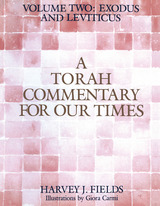
A helpful approach to the weekly parashah, juxtaposing the insights of ancient, medieval, and modern commentators (including the author). Perfect for both beginning Torah students and scholars seeking new angles on the text. The volumes are available individually or as a three-volume set, ideal for a bar or bat mitzvah or confirmation gift.
A helpful approach to the weekly parashah, juxtaposing the insights of ancient, medieval, and modern commentators (including the author). Perfect for both beginning Torah students and scholars seeking new angles on the text. The volumes are available individually or as a three-volume set, ideal for a bar or bat mitzvah or confirmation gift.
A helpful approach to the weekly parashah, juxtaposing the insights of ancient, medieval, and modern commentators (including the author). Perfect for both beginning Torah students and scholars seeking new angles on the text. The volumes are available individually or as a three-volume set, ideal for a bar or bat mitzvah or confirmation gift.
The Old Testament is rich in metaphor. Metaphorical expressions appear not only in places where you might expect them, like the poetic verses, but also in the legal texts. They appear in the preambles to collections of laws, in their final summaries, in general considerations on compliance with and violation of the law, in texts concerning the meaning of the law, and those dealing with topics now reserved for legal theory and legal philosophy. These metaphorical expressions reveal how the authors of the relevant Torah/Law texts understood their function in society and what the society of the time preferred in the law.
Anchored in cognitive and cultural linguistics, The Torah/Law Is a Journey investigates Hebrew metaphorical expressions concerning the key Old Testament concept of Torah/Law. Ivana Procházková identifies Hebrew conceptual metaphors and explicates the metaphorical expressions. She also uses cognitive linguistic analysis to look at modern translations of selected metaphorical expressions into Czech and English. Procházková closes with an analysis of the metaphors used in the Council of Europe publication Compass: Manual for Human Rights Education with Young People to conceptualize human rights.

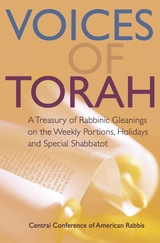
A wonderful Torah study resource! Discover multiple perspectives on every parashah in this rich collection of commentary written by CCAR members. Includes holiday portions as well. Makes a great gift for students, teachers, and congregational leaders.
Available in a discounted bundle with Voices of Torah, Volume 2
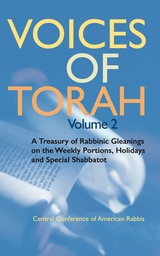
In this second volume of the classic CCAR publication, you'll find a compilation of multiple commentaries written by CCAR members on every parashah, including holiday portions. A great resource for d'var Torah preparation for lay leaders and clergy alike, this volume makes a great gift for students, teachers, and congregational leaders.
Available in a discounted bundle with Voices of Torah, Volume 1
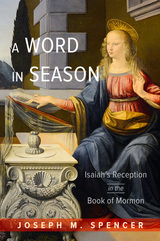
The Book of Mormon’s narrative privileges Isaiah over other sources, provocatively interpreting and at times inventively reworking the biblical text. Joseph M. Spencer sees within the Book of Mormon a programmatic investigation regarding the meaning and relevance of the Book of Isaiah in a world increasingly removed from the context of the times that produced it. Working from the crossroads of reception studies and Mormon studies, Spencer investigates and clarifies the Book of Mormon’s questions about the vitality of Isaiah’s prophetic project. Spencer’s analysis focuses on the Book of Mormon’s three interactions with the prophet: the character of Abinadi; the resurrected Jesus Christ; and the nation-founding figure of Nephi. Working from the Book of Mormon as it was dictated, Spencer details its vital and overlooked place in Isaiah’s reception while recognizing the interpretation of Isaiah as an organizing force behind the Book of Mormon.
READERS
Browse our collection.
PUBLISHERS
See BiblioVault's publisher services.
STUDENT SERVICES
Files for college accessibility offices.
RECENTLY PUBLISHED




UChicago Accessibility Resources
home | accessibility | search | about | contact us
BiblioVault ® 2001 - 2026
The University of Chicago Press