
 A SCHOLARLY BOOK REPOSITORY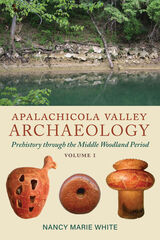
The definitive archaeological record and what is known or speculated about the ancient Apalachicola and lower Chattahoochee Valley region of northwest Florida, southeast Alabama, and southwest Georgia.
In this meticulously researched volume, Nancy Marie White provides a major holistic synthesis of the archaeological record and what is known or surmised about the peoples of the Apalachicola and lower Chattahoochee Valley region of northwest Florida, southeast Alabama, and southwest Georgia. White transforms a neglected research area into a lively saga that spans the time of the first human settlement, around 14,000 years ago, through the Middle Woodland period, ending about AD 700.
White reveals that Paleoindian habitation was more extensive than once surmised. Archaic sites were widespread, and those societies persisted when the Ice Age ended 10,000 years ago. Pottery appeared in the Late Archaic period (before 4000 BP), and Early Woodland–period burial mounds demonstrate a flowering of religious and ritual systems. Middle Woodland societies expanded this mortuary ceremony, and the complex pottery of the Swift Creek and the early Weeden Island ceramic series show an increased fascination with the ornate and unusual. Yet, basic Native American lifeways continued with gathering-fishing-hunting subsistence traditions similar to those of their ancestors.
This volume and its companion form the definitive work on the Apalachicola–lower Chattahoochee Valley region for both scholars and general readers interested in Native Americans of the Southeast.
A comprehensive synthesis tracing 1,300 years of cultural transformation in the Apalachicola–lower Chattahoochee Valley, from Late Woodland societies to the modern era.
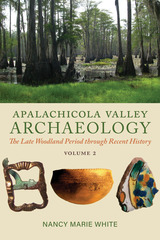
Apalachicola Valley Archaeology: The Late Woodland Period through Recent History, Volume 2, synthesizes the archaeology and history of the Native Americans, African Americans, and Euro-Americans of the Apalachicola–lower Chattahoochee Valley region of northwest Florida, southeast Alabama, and southwest Georgia from about 1300 years ago until the present. The region extends from Columbia, Alabama, to the Gulf of Mexico. It is culturally and environmentally distinct but little known archaeologically because it crosses historic political boundaries at the frontier.
Early chapters overview the environment and archaeology. Coverage then surveys time periods, from the Late Woodland to present. Topics include settlement, archaeological findings and material culture, subsistence and seasonality, history, sociopolitical systems, and peoples.
White’s prodigious work reveals that the prehistoric Late Woodland cultures who developed maize agriculture developed into Fort Walton chiefdoms. Post-invasion and Spanish and British colonization, these peoples were replaced by consolidated groups of Native American survivors and maroons moving around the region. These multiethnic societies with blended material cultures developed new identities, living at the edges of colonial territories. Creek societies, many becoming Seminoles, fought on all sides of European and American conflicts until most Indians were forcibly removed in the 1830s. Then the region became important for cotton, cattle, and timber, which were often produced by enslaved labor and transported by steamboat. Later expansion of agriculture and silviculture, as well as turpentine, tupelo honey, and other industries, left material evidence. The usefulness of the information to modern society is noted. Copious illustrations enhance the scientific analyses and the telling of the human stories.
David L. DeJarnette, the founder of scientific archaeology in the state of Alabama, reports on archaeological surveys and excavations undertaken in the Chattahoochee River Valley between 1947 and 1962. The three contributors, Wesley R. Hurt, Edward B. Kurjack, and Fred Lamar Pearson Jr., each made signal contributions to the archaeology of the southeastern states. With their mentor, David L. DeJarnette, they worked out a viable cultural chronology of the region from the earliest Paleoindian and Archaic foragers to the period of early European-Indian contact. They excavated key sites, including the Woodland period Shorter Mound, the protohistoric Abercrombie village, and Spanish Fort Apalachicola, in addition to a number of important Creek Indian town sites of the eighteenth century. All are here, illustrated abundantly by site photographs, maps, and of course, the artifacts recovered from these remarkable investigations.
Copublication with the Historic Chattahoochee Commission
The Muskogee Indians who lived along the lower Chattahoochee and Flint River watersheds had, and continue to have, a profound influence on the development of the southeastern United States, especially during the historic period (circa 1540–1836). Our knowledge of that culture is limited to what we can learn from their descendants and from archaeological and historical sources.
Combining historical documents and archaeological research on all known Lower Muskogee Creek sites, Thomas Foster has accurately pinpointed town locations discussed in the literature and reported in contemporary Creek oral histories. In so doing, this volume synthesizes the archaeological diversity and variation within the Lower Creek Indians between 1715 and 1836. The book is a study of archaeological methods because it analyzes the temporal and geographic variation within a single archaeological phase and the biases of that archaeological data. Foster’s research segregates the variation between Lower Creek Indian towns through a regional and direct historic approach. Consequently, he is able to discern the unique differences between individual Creek Indian towns.
Foster argues that the study of Creek Indian history should be at the level of towns instead of archaeological phases and that there is significant continuity between the culture of the Historic Period Indians and the Prehistoric and Protohistoric peoples.
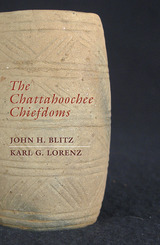
As objects from the mounds were unearthed, occasionally illustrated and discussed in print, attention became focused on the aesthetic qualities of the artifacts, the origins of the remains, and the possible relationship to the Creek Indians. Beginning in the 20th century, new concerns emerged as the developing science of archaeology was introduced to the region. As many of the sites became threatened or destroyed by reservoir construction, trained archaeologists initiated extensive excavations of the mounds. Although classification of artifacts and sites into a chronological progression of cultures was the main objective of this effort, a second concern, sometimes more latent than manifest, was the reconstruction of a past way of life. Archaeologists hoped to achieve a better understanding of the sociopolitical organization of the peoples who built the mounds and of how those organizations changed through time.
Contemporary archaeologists, while in agreement on many aspects of the ancient cultures, debate the causes, forms, and degrees of sociopolitical complexity in the ancient Southeast. Do the mounds mark the capitals of political territories? If so, what was the scale and scope of these ancient “provinces”? What manner of society constructed the mound settlements? What was the sociopolitical organization of these long-dead populations? How can archaeologists answer such queries with the mute and sometimes ordinary materials with which they work: pottery, stone tools, organic residues, and the strata of remnant settlements, buildings, and mounds?
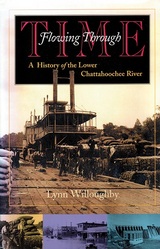
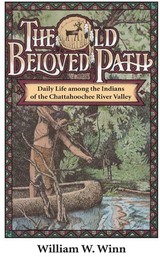
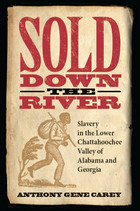
Examines a small part of slavery’s North American domain, the lower Chattahoochee River Valley between Alabama and Georgia
In the New World, the buying and selling of slaves and of the commodities that they produced generated immense wealth, which reshaped existing societies and helped build new ones. From small beginnings, slavery in North America expanded until it furnished the foundation for two extraordinarily rich and powerful slave societies, the United States of America and then the Confederate States of America. The expansion and concentration of slavery into what became the Confederacy in 1861 was arguably the most momentous development after nationhood itself in the early history of the American republic.
This book examines a relatively small part of slavery’s North American domain, the lower Chattahoochee river Valley between Alabama and Georgia. Although geographically at the heart of Dixie, the valley was among the youngest parts of the Old South; only thirty-seven years separate the founding of Columbus, Georgia, and the collapse of the Confederacy. In those years, the area was overrun by a slave society characterized by astonishing demographic, territorial, and economic expansion. Valley counties of Georgia and Alabama became places where everything had its price, and where property rights in enslaved persons formed the basis of economic activity. Sold Down the River examines a microcosm of slavery as it was experienced in an archetypical southern locale through its effect on individual people, as much as can be determined from primary sources.
Published in cooperation with the Historic Chattahoochee Commission and the Troup County Historical Society.
READERS
Browse our collection.
PUBLISHERS
See BiblioVault's publisher services.
STUDENT SERVICES
Files for college accessibility offices.
RECENTLY PUBLISHED






UChicago Accessibility Resources
home | accessibility | search | about | contact us
BiblioVault ® 2001 - 2026
The University of Chicago Press