
 A SCHOLARLY BOOK REPOSITORY


Explore richly embellished Armenian tales of biblical heroes
This fifth book of Michael E. Stone's English translations of stories from medieval Armenian manuscripts illustrates how authors transmitted and transformed accounts of biblical heroes. Texts focus on important figures such as Adam, Noah, Abraham, Solomon, Daniel and Susanna, and more. This collection reflects not only the richness of Armenian creativity stimulated by piety and learning but also Michael E. Stone's career-long search for reworkings of biblical traditions, stories, and persons in the Armenian tradition.
Features:
- A rich tradition of biblical exegesis and commentary, much of it in genres of the older apocryphal and pseudepigraphical literature
- Reflections on the roots of Armenian texts in ancient Judaism and earliest Christianity
- Texts, translations, and a critical apparatus
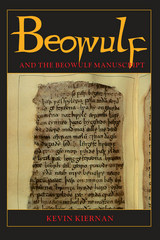
Kevin S. Kiernan, one of the world's foremost Beowulf scholars, has studied the manuscript extensively with the most up-to-date methods, including fiber-optic backlighting and computer digitization. This volume reprints Kiernan's earlier study of the manuscript, in which he presented his novel conclusions about the date of Beowulf. It also offers a new Introduction in which the author describes the value of electronic study of Beowulf, and a new Appendix that lists all the letters and parts of letters revealed by backlighting.
This important volume will be a must-read not only for the scholar of early English history and literature, but for all those who are interested in practical applications of the new technologies.
In Beowulf and the Grendel-kin: Politics and Poetry in Eleventh-Century England, Helen Damico presents the first concentrated discussion of the initiatory two-thirds of Beowulf’s 3,182 lines in the context of the sociopolitically turbulent years that composed the first half of the eleventh century in Anglo-Danish England.
Damico offers incisive arguments that major historical events and personages pertaining to the reign of Cnut and those of his sons recorded in the Anglo-Saxon Chronicle, the Encomium Emmae Reginae, and major continental and Scandinavian historical texts, hold striking parallels with events and personages found in at least eight vexing narrative units, as recorded by Scribe A in BL, Cotton Vitellius A.xv, that make up the poem’s quasi sixth-century narrative concerning the fall of the legendary Scyldings.
Given the poet’s compositional skill—widely relational and eclectic at its core—and his affinity with the practicing skalds, these strings of parallelisms could scarcely have been coincidental. Rather, Damico argues that examined within the context of other eleventh-century texts that either bemoaned or darkly satirized or obversely celebrated the rise of the Anglo-Danish realm, the Beowulfian units may bring forth a deeper understanding of the complexity of the poet’s compositional process.
Damico illustrates the poet’s use of the tools of his trade—compression, substitution, skillful encoding of character—to reinterpret and transform grave sociopolitical “facts” of history, to produce what may be characterized as a type of historical allegory, whereby two parallel narratives, one literal and another veiled are simultaneously operative.
Beowulf and the Grendel-Kin lays out the story of Beowulf, not as a monster narrative nor a folklorish nor solely a legendary tale, but rather as a poem of its time, a historical allegory coping with and reconfiguring sociopolitical events of the first half of eleventh-century Anglo-Saxon England.
Francesca Schironi presents a more robust picture of Aristarchus as a scholar than anyone has offered previously. Based on her analysis of over 4,300 fragments from his commentary on the Iliad, she reconstructs Aristarchus’ methodology and its relationship to earlier scholarship, especially Aristotelian poetics. Schironi departs from the standard commentary on individual fragments, and instead organizes them by topic to produce a rigorous scholarly examination of how Aristarchus worked.
Combining the accuracy and detail of traditional philology with a big-picture study of recurrent patterns and methodological trends across Aristarchus’ work, this volume offers a new approach to scholarship in Alexandrian and classical philology. It will be the go-to reference book on this topic for many years to come, and will usher in a new way of addressing the highly technical work of ancient scholars without losing philological accuracy. This book will be valuable to classicists and philologists interested in Homer and Homeric criticism in antiquity, Hellenistic scholarship, and ancient literary criticism.
Considering the poems in the context of the fascicles, Cameron argues that an essential refusal of choice pervades all aspects of Dickinson's poetry. Because Dickinson never chose whether she wanted her poems read as single lyrics or in sequence (nor is it clear where any fascicle text ends, or even how, in context, a poem is bounded), "not choosing" is a textual issue; it is also a formal issue because Dickinson refused to chose among poetic variants; it is a thematic issue; and, finally, it is a philosophical one, since what is produced by "not choosing" is a radical indifference to difference. Extending the readings of Dickinson offered in her earlier book Lyric Time, Cameron continues to enlarge our understanding of the work of this singular American poet.
In Collaborative Meaning in Medieval Scribal Culture, Bryan compares examples from the British Library Cotton Otho C.xiii manuscript of La3amon's Brut, the early thirteenth-century verse history that translated King Arthur into English for the first time. She discovers cultural attitudes that valued communal aspects of manuscript texts--for example, a view of the physical book as connecting all who read or even held it to each other.
The study is divided into two parts. Part one presents Early Middle English concepts of "enjoining" texts and explores the theoretical and methodological challenges they pose to present-day readers of scribally-produced texts. Part two conducts a detailed study of the multiple interpretations built into the manuscript text. Illustrations of manuscript pages accompany analysis, and the reader is invited to engage in interpreting the manuscript text.
Collaborative Meaning in Medieval Scribal Culture will be of interest to students and specialists in medieval chronicle histories, Middle English, Arthurian literature, and literary and textual theory.
Elizabeth J. Bryan is Associate Professor of English, Brown University.
An illuminating look at the concepts of race, nation, and equality in eighteenth- and nineteenth-century America
The idea that “all men are created equal” is as close to a universal tenet as exists in American history. In this hard-hitting book, David Kazanjian interrogates this tenet, exploring transformative flash points in early America when the belief in equality came into contact with seemingly contrary ideas about race and nation. The Colonizing Trick depicts early America as a white settler colony in the process of becoming an empire-—one deeply integrated with Euro-American political economy, imperial ventures in North America and Africa, and pan-American racial formations.
Kazanjian traces tensions between universal equality and racial or national particularity through theoretically informed critical readings of a wide range of texts: the political writings of David Walker and Maria Stewart, the narratives of black mariners, economic treatises, the personal letters of Thomas Jefferson and Phillis Wheatley, Charles Brockden Brown’s fiction, congressional tariff debates, international treaties, and popular novelettes about the U.S.–Mexico War and the Yucatán’s Caste War. Kazanjian shows how emergent racial and national formations do not contradict universalist egalitarianism; rather, they rearticulate it, making equality at once restricted, formal, abstract, and materially embodied.
An authoritative critical edition
The discovery and translation of the Dead Sea Scrolls transformed our understanding of the life and history of ancient Jewish communities when both rabbinic Judaism and early Christianity were emerging. As part of this rich discovery, the Community Rule serves to illuminate the religious beliefs and practices as well as the organizational rules of the group behind the Dead Sea Scrolls. However, there is no single, unified text of the Community Rule; rather, multiple manuscripts of the Community Rule show considerable variation and highlight the work of ancient Jewish scribes and their intentional literary development of the text. In this volume, Sarianna Metso brings together the surviving evidence in a new edition that presents a critically established Hebrew text with an introduction and an English translation.
Features:
- A critical apparatus and textual notes
- All the surviving evidence of the Community Rule
- A new method for presenting complex developments and transmission history of ancient texts
Death and the Pearl Maiden: Plague, Poetry, England asks why one of the singular historical traumas of the later Middle Ages appears to be evoked so fleetingly in fourteenth-century Middle English poetry, a body of work as daring and socially engaged as any in English literary history. By focusing on under-recognized pestilential discourses in Pearl, Cleanness, Patience, and Sir Gawain and the Green Knight—the four poems uniquely preserved British Library MS Cotton Nero A.x —this study resists the idea that the Black Death had only a slight impact on medieval English literature, and it strives to account for the understated shape of England’s literary response to the plague and our contemporary understandings of it.

The collection opens with a central portion of Sharon Cameron’s 1992 book that was the first to abandon the until-then popular search for a single unifying narrative to explain the fascicles, inaugurating a new era of fascicle scholarship. Eight prominent Dickinson scholars contribute essays to this volume and respond vigorously and variously to Cameron's argument, proposing, for instance, that the fascicles represent Dickinson's engagement with the world around her, particularly with the Civil War, and that they demonstrate her continued experimentation with poetic form.
Dickinson’s Fascicles is edited by Paul Crumbley and Eleanor Elson Heginbotham. Other contributors include Paula Bernat Bennett, Martha Nell Smith, Domhnall Mitchell, Ellen Louise Hart, Melanie Hubbard, and Alexandra Socarides who assess what constitutes a vast final frontier in the Dickinson literary landscape. Susan Howe provides a coda.
Provocative yet sober, Digital Critical Editions examines how transitioning from print to a digital milieu deeply affects how scholars deal with the work of editing critical texts. On one hand, forces like changing technology and evolving reader expectations lead to the development of specific editorial products, while on the other hand, they threaten traditional forms of knowledge and methods of textual scholarship.
Using the experiences of philologists, text critics, text encoders, scientific editors, and media analysts, Digital Critical Editions ranges from philology in ancient Alexandria to the vision of user-supported online critical editing, from peer-directed texts distributed to a few to community-edited products shaped by the many. The authors discuss the production and accessibility of documents, the emergence of tools used in scholarly work, new editing regimes, and how the readers' expectations evolve as they navigate digital texts. The goal: exploring questions such as, What kind of text is produced? Why is it produced in this particular way?
Digital Critical Editions provides digital editors, researchers, readers, and technological actors with insights for addressing disruptions that arise from the clash of traditional and digital cultures, while also offering a practical roadmap for processing traditional texts and collections with today's state-of-the-art editing and research techniques thus addressing readers' new emerging reading habits.
Anti-slavery party discourse set itself the task of curing an ailing people who had grown compliant, inert, and numb; it fashioned a complete fictional world where the people could be reactivated into assuming their true role in the republic. Both as a cause and a result of this rejuvenation, they would come into their own and spread their energies over the land and over the body politic, thereby rescuing their country at the last minute from what would otherwise be the permanent dominion of slavery. Party discourse had long hinged its success on such magical transformations of the people individually and collectively, and Whitman’s celebrations of his nation’s potential need to be seen in this context: like his party, Whitman calls on the people to reject their own subordination and take command of the future, and redeem themselves as they also redeem the nation.
This edition preserves the appearance, spelling, and punctuation of the original manuscript while expanding antiquated contractions to provide an easily readable text. Textual notes appear on the page, and in-depth contextual notes and word glosses are provided in the commentary section. The analyses add to our knowledge of early modern manuscript culture and literary manuscript transmission, and a substantial introduction provides context for the compilation of the anthology.
ISAS Dublin 2013. England, Ireland and the Insular World: Textual and Material Connections in the Early Middle Ages is a collection of twelve essays related to the theme of the 2013 conference of the International Society of Anglo-Saxonists, ‘Insular Cultures’. Contributors cover a broad range of topics, from early medieval agriculture in Ireland and England, to sculpture, manuscript illumination and script, homilies, hagiography, aristocratic gift-giving, relics, calendars, Beowulf, and Anglo-Saxon perceptions of the Celtic peoples, considering connections, parallels and differences between Anglo-Saxon England and its insular neighbors. The volume will be of interest to all those working on Early Medieval history, literature, archaeology, liturgy, art, and manuscripts.
In 1538, a partnership of Jewish silk makers in the city of Bologna published a book entitled Sefer Hasidim, a compendium of rituals, stories, and religious instruction that primarily originated in medieval Franco-Germany. How these men, of Italian and Spanish descent, came to produce a book that would come to shape Ashkenazic culture, and Jewish culture more broadly, over the next four centuries is the basis of this kaleidoscopic study of the history of Hebrew printing in the sixteenth century.
During these early years of printing, the classic works of ancient and medieval Hebrew and Jewish literature became widely available to Jewish (and non-Jewish) readers for the first time. Printing, though, was not merely the duplication and distribution of pre-existing manuscripts, it was the creative adaptation and transformation of those manuscripts by printers. Ranging from Catholic Bologna to Protestant Basel to the Jewish heartland of the Polish-Lithuanian Commonwealth, Joseph A. Skloot uncovers the history of that creativity by examining the first two print editions of Sefer Hasidim. Along the way, he demonstrates how volumes that were long thought to be eternal and unchanging were in fact artifacts of historical agency and contingency, created by and for human beings.
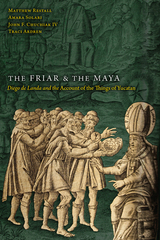
For generations, scholars used (and misused) the Account as the sole eyewitness insight into an ancient civilization. It is credited to the sixteenth-century Spanish Franciscan, monastic inquisitor, and bishop Diego de Landa, whose legacy is complex and contested. His extensive writings on Maya culture and history were lost in the seventeenth century, save for the fragment that is the Account, discovered in the nineteenth century, and accorded near-biblical status in the twentieth as the first “ethnography” of the Maya. However, the Account is not authored by Landa alone; it is a compilation of excerpts, many from writings by other Spaniards—a significant revelation made here for the first time.
This new translation accurately reflects the style and vocabulary of the original manuscript. It is augmented by a monograph—comprising an introductory chapter, seven essays, and hundreds of notes—that describes, explains, and analyzes the life and times of Diego de Landa, the Account, and the role it has played in the development of modern Maya studies. The Friar and the Maya is an innovative presentation on an important and previously misunderstood primary source.
A fruitful reading strategy that reveals expansive meaning in Proverbs
Interpreters often characterize Proverbs 10:1–22:16 as a dead-end of cold, disengaged dogma closed off from the realities of the world. In Genre and Openness in Proverbs 10:1–22:16, Suzanna R. Millar takes a different view, arguing that the didactic proverbs in these chapters are not dull and dry but are filled with poetic complexities open to many possible interpretations and uses. By incorporating paremiology, the technical study of the proverb genre, Millar sheds light on important debates such as character development, kingship, the connection between act and consequence, and the acquisition of wisdom.
Features
- A clarification of the genre of the sayings in light of modern genre theory
- A linguistic analysis of how openness is generated in biblical proverbs
- An examination of the didactic use of proverbs to train the hearer’s mind
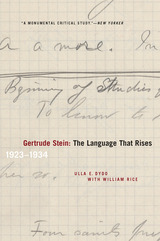
The first extensive examination of Stein's notebooks, manuscripts and letters, prepared over a period of twenty years, Gertrude Stein: The Language That Rises asks new questions and explores new ways of reading Stein. This definitive study give us a finely detailed, deeply felt understanding of Stein, the great modernist, throughout one of her most productive periods. From "An Elucidation" in 1923 to Lectures In America in 1934, Ulla E. Dydo examines the process of the making and remaking of Stein's texts as they move from notepad to notebook to manuscript, from an idea to the ultimate refinement of the author's intentions. The result is an unprecedented view of the development of Stein's work, word by word, text by text, and over time.
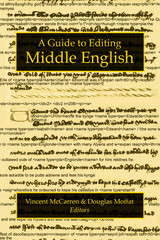
A Guide to Editing Middle English collects nineteen essays and three appendices written by leading text editors in Middle English. A number of essays deal primarily with theoretical questions, while others offer assessments of historical developments in editing, especially in regard to the most well-known Middle English works. Most of the essays deal with practical matters: how to use a computer in preparing and presenting an edition; how to form and arrange the standard parts of an edition; and how to handle problems presented by texts in areas such as science, astrology, and cooking. The three appendices provide bibliographical references to dictionaries, facsimiles, and manuscript description.
Contributors, in addition to the editors, are Peter Baker, Richard Beadle, Norman Blake, Helen Cooper, A. S. G. Edwards, Jennifer Fellows, David C. Greetham, Mary Hamel, Constance Heiatt, Nicholas Jacobs, Geroge Keiser, Peter J. Lucas, Maldwyn Mills, Linne Mooney, and Peter Robinson.
The many and varied perspectives of this volume will make it of interest to readers of Middle English texts, those involved in textual scholarship, and those interested in editing in general. It occupies a unique place in the field of Middle English studies and will likely remain a standard reference tool for a long time.
Vincent McCarren is a Research Associate with the Middle English Dictionary at the University of Michigan. Douglas Moffat, formerly with the Middle English Dictionary, is a Development Officer with the University of Michigan.

In 1924 Ernest Hemingway published a small book of eighteen vignettes, each little more than one page long, with a small press in Paris. Titled in our time, the volume was later absorbed into Hemingway’s story collection In Our Time. Those vignettes, as Milton Cohen demonstrates in Hemingway’s Laboratory, reveal a range of voices, narrative strategies, and fictional interests more wide-ranging and experimental than any other extant work of Hemingway’s. Further, they provide a vivid view of his earliest tendencies and influences, first manifestations of the style that would become his hallmark, and daring departures into narrative forms that he would forever leave behind.
Many of the chapters are pointillistic glimpses of violence--bullfights, a botched execution, the fleeting thoughts of the wounded on the battlefield. Others reach back into childhood. Still others adopt the wry, mannered voice of English aristocracy. Though critics have often read these chapters as secondary asides to the longer stories that constitute the commercial collection, Cohen argues that not only do the vignettes merit consideration as a unit unto themselves, but that they exhibit a plethora of styles and narrative gambits that show Hemingway at his most versatile.
The final section examines in detail the individual chapters of in our time, their historical origins, their drafts, themes, and styles. The result is an account of what is arguably Hemingway’s most crucial formative period.
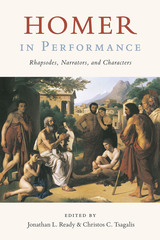
Before they were written down, the poems attributed to Homer were performed orally, usually by rhapsodes (singers/reciters) who might have traveled from city to city or enjoyed a position in a wealthy household. Even after the Iliad and the Odyssey were committed to writing, rhapsodes performed the poems at festivals, often competing against each other. As they recited the epics, the rhapsodes spoke as both the narrator and the characters. These different acts—performing the poem and narrating and speaking in character within it—are seldom studied in tandem. Homer in Performance breaks new ground by bringing together all of the speakers involved in the performance of Homeric poetry: rhapsodes, narrators, and characters.
The first part of the book presents a detailed history of the rhapsodic performance of Homeric epic from the Archaic to the Roman Imperial periods and explores how performers might have shaped the poems. The second part investigates the Homeric narrators and characters as speakers and illuminates their interactions. The contributors include scholars versed in epigraphy, the history of art, linguistics, and performance studies, as well as those capable of working with sources from the ancient Near East and from modern Russia. This interdisciplinary approach makes the volume useful to a spectrum of readers, from undergraduates to veteran professors, in disciplines ranging from classical studies to folklore.
In Homeric studies, there has been an ongoing debate centering on different ways to establish the text of Homer and the different ways to appreciate the poetry created in the language of Homer. Gregory Nagy, a lifelong Homer scholar, takes a stand in the midst of this debate. He presents an overview of millennia of scholarly engagement with Homer's poetry, shows the different editorial principles that have been applied to the texts, and evaluates their impact.
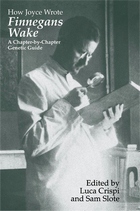
The introduction by Luca Crispi, Sam Slote, and Dirk Van Hulle offers a chronology of the composition of Finnegans Wake, an archival survey of the manuscripts, and an introduction to genetic criticism. Then, the volume provides a chapter-by-chapter interpretation of Finnegans Wake from a variety of perspectives, probing the book as a work in progress. The fruit of more than two decades’ worth of Wakean genetic studies, this book is the essential starting point for all future studies of Joyce’s most complex and fascinating work.
The material features of texts as physical artifacts--their "bibliographic codes" --have over the last decade excited increasing interest in a variety of disciplines. The Iconic Page in Manuscript, Print, and Digital Culture gathers essays by an extraordinarily distinguished group of scholars to offer the most comprehensive examination of these issues yet, drawing on examples from literature, history, the fine arts, and philosophy.
Fittingly, the volume contains over two dozen illustrations that display the iconic features of the works analyzed--from Alfred the Great's Boethius through medieval manuscripts to the philosophy of C. S. Peirce and the dustjackets on works by F. Scott Fitzgerald and William Styron.
The Iconic Page in Manuscript, Print, and Digital Culture will be groundbreaking reading for scholars in a wide range of fields.
George Bornstein is C. A. Patrides Professor of English, University of Michigan. Theresa Tinkle is Associate Professor of English, University of Michigan.
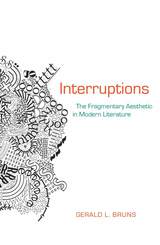
A history of fragmentary—or interrupted—writing in avant-garde poetry and prose by a renowned literary critic.
In Interruptions: The Fragmentary Aesthetic in Modern Literature, Gerald L. Bruns explores the effects of parataxis, or fragmentary writing as a device in modern literature. Bruns focuses on texts that refuse to follow the traditional logic of sequential narrative. He explores numerous examples of self-interrupting composition, starting with Friedrich Schlegel's inaugural theory and practice of the fragment as an assertion of the autonomy of words, and their freedom from rule-governed hierarchies.
Bruns opens the book with a short history of the fragment as a distinctive feature of literary modernism in works from Gertrude Stein to Paul Celan to present-day authors. The study progresses to the later work of Maurice Blanchot and Samuel Beckett, and argues, controversially, that Blanchot's writings on the fragment during the 1950s and early 1960s helped to inspire Beckett’s turn toward paratactic prose.
The study also extends to works of poetry, examining the radically paratactic arrangements of two contemporary British poets, J. H. Prynne and John Wilkinson, focusing chiefly on their most recent, and arguably most abstruse, works. Bruns also offers a close study of the poetry and poetics of Charles Bernstein.
Interruptions concludes with two chapters about James Joyce. First, Bruns tackles the language of Finnegans Wake, namely the break-up of words themselves, its reassembly into puns, neologisms, nonsense, and even random strings of letters. Second, Bruns highlights the experience of mirrors in Joyce’s fiction, particularly in Dubliners, Portrait of the Artist as a Young Man, and Ulysses, where mirrored reflections invariably serve as interruptions, discontinuities, or metaphorical displacements and proliferations of self-identity.
---Greece & Rome
---Irene J.F. de Jong, Gnomon
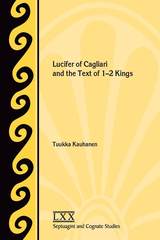
The most up-to-date study of the text history of 1 and 2 Kings
In this book, Tuukka Kauhanen approaches the challenging case of the textual history of 1 and 2 Kings through citations of the text found within the writings of the fourth-century bishop of Sadinia, Lucifer of Cagliari. Kauhanen presents evidence that Lucifer's Latin text sheds important light on lost Hebrew and Greek pieces of the textual puzzle in Kings. In doing so, he compares all of Lucifer's extensive quotations of Kings to extant Greek witnesses as well as Old Latin witnesses where available and subsequently analyzes the probable reasons for textual variations. In each instance he attempts to choose the best possible candidate for the Old Greek reading and where that reading might reflect a now-lost Hebrew text.
Features
- Use of the most current research into the text of the Hebrew Bible and the Septuagint, including the Hebrew Bible: A Critical Edition series and the forthcoming Göttingen Septuagint edition of King
- An appendix listing readings from the analysis sections arranged according to agreement patterns and other meaningful criteria
- Charts comparing readings
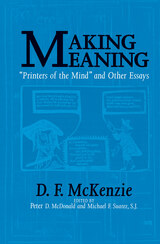
The greatest bibliographer of our time, was how historian Robert Darnton described D. F. McKenzie. Yet until now many of McKenzie's major essays, scattered in specialist journals and inaccessible publications, have circulated mainly in tattered photocopies. This volume, edited by two of McKenzie's former students, brings together for the first time a wide range of his writings on bibliography, the book trade, and the “sociology of texts.” Selected by the author himself before his sudden death in 1999, the essays range from the material transmission of Shakespeare's plays in the seventeenth century to the connections among oral, manuscript, and print cultures.
Making Meaning reflects McKenzie's virtuosity as a traditional bibliographer and reveals how his thought-provoking scholarship made him a driving force in the genesis and development of the new interdisciplinary field of book history. His refusal to recognize the traditional boundary between bibliography and literary history re-energized the study of the social, political, economic, and cultural aspects of book production and reception.
The editors' introduction and headnotes situate McKenzie's innovative and controversial thinking in the debates of his time.
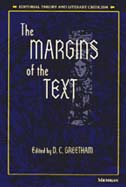
The Margins of the Text is the first attempt to collect a body of essays concerned with specific aspects of the marginal as they relate to text. The volume is divided into two sections. The first part assembles essays concerned with the margins of textual discourse and explores the function of discourses not previously recognized as significant to scholarly editing, such as those of class, race, gender, and sexual orientation. The second section attends to the textual margins in the bibliographical sense--the margins of the book, in which there has been so much recent interest. The two parts of the collection are clearly interrelated, since both study the effects of margins as a form of cultural discourse.
As a whole, the collection spans several periods (medieval, Renaissance, eighteenth-century to modern), several disciplines (drama, literature, art history, politics, and philosophy), and offers a wide-ranging consideration of a single topic as it is manifested in various genres, formats, and media. The contributors are among the most respected textual/critical theorists in their fields.
The Margins of the Text will become a standard reference in the field, and will be read profitably by culture critics and social historians as well as textual critics and editors.
D. C. Greetham is Professor of English and Medieval Studies, City University of New York Graduate School.
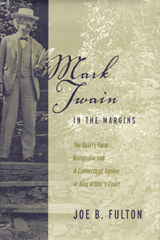
Fulton analyzes Twain's voluminous marginalia in the copies of Macaulay's History of England, Carlyle's History of the French Revolution, and Lecky's History of the Rise of Rationalism and England in the Eighteenth Century available to Twain in the library of Quarry Farm, the New York farm where the novelist and his family routinely spent their summers. Comparing these marginal notes to entries in Twain's writing journal, the manuscript of Connecticut Yankee, and the book as published in 1889, Fulton establishes that Twain's research decisively influenced the novel. Fulton reveals Twain to be both the writer from experience he claimed to be and the careful craftsman that he attempted to downplay. By redefining Twain's aesthetic, Fulton reinvigorates current debates about what constitutes literary realism.
Fulton's transcriptions of the marginalia appear in an appendix; together with his analysis, they provide a valuable new resource for Twain scholars.

Ancient and medieval literary texts often call attention to their existence as physical objects. Shane Butler helps us to understand why. Arguing that writing has always been as much a material struggle as an intellectual one, The Matter of the Page offers timely lessons for the digital age about how creativity works and why literature moves us.
Butler begins with some considerations about the materiality of the literary text, both as a process (the draft) and a product (the book), and he traces the curious history of “the page” from scroll to manuscript codex to printed book and beyond. He then offers a series of unforgettable portraits of authors at work: Thucydides struggling to describe his own diseased body; Vergil ready to burn an epic poem he could not finish; Lucretius wrestling with words even as he fights the madness that will drive him to suicide; Cicero mesmerized by the thought of erasing his entire career; Seneca plumbing the depths of the soul in the wax of his tablets; and Dhuoda, who sees the book she writes as a door, a tunnel, a womb. Butler reveals how the work of writing transformed each of these authors into his or her own first reader, and he explains what this metamorphosis teaches us about how we too should read.
All Greek and Latin quotations are translated into English and technical matters are carefully explained for general readers, with scholarly details in the notes.
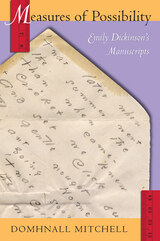
In Measures of Possibility, Domhnall Mitchell sets out to test the hypothesis of Dickinson's textual radicalism, and its consequences for readers, students, and teachers, by looking closely at features such as spacing, the physical direction of the writing, and letter-shapes in handwritten lyric and epistolary texts. Through systematic contextualization and cross-referencing, Mitchell provides the reader with a critical apparatus by which to measure the extent to which contemporary approaches to Dickinson's autograph procedures can reasonably be formulated as corresponding to the poet's own purposes.
The chapters are grouped into four sections. The first section interprets the Highland Maya worldview through examination of the text, analyzing interdependence between deities and human beings as well as the textual and cosmological coherence of the Popol Vuh as a source. The second section analyzes the Precolumbian Maya archaeological record as it relates to the myths of the Popol Vuh, providing new interpretations of the use of space, architecture, burials, artifacts, and human remains found in Classic Maya caves. The third explores ancient Maya iconographic motifs, including those found in Classic Maya ceramic art; the nature of predatory birds; and the Hero Twins’ deeds in the Popol Vuh. The final chapters address mythological continuities and change, reexamining past methodological approaches using the Popol Vuh as a resource for the interpretation of Classic Maya iconography and ancient Maya religion and mythology, connecting the myths of the Popol Vuh to iconography from Preclassic Izapa, and demonstrating how narratives from the Popol Vuh can illuminate mythologies from other parts of Mesoamerica.
The Myths of the Popol Vuh in Cosmology, Art, and Ritual is the first volume to bring together multiple perspectives and original interpretations of the Popol Vuh myths. It will be of interest not only to Mesoamericanists but also to art historians, archaeologists, ethnohistorians, iconographers, linguists, anthropologists, and scholars working in ritual studies, the history of religion, historic and Precolumbian literature and historic linguistics.
Contributors: Jaime J. Awe, Karen Bassie-Sweet, Oswaldo Chinchilla Mazariegos, Michael D. Coe, Iyaxel Cojtí Ren, Héctor Escobedo, Thomas H. Guderjan, Julia Guernsey, Christophe Helmke, Nicholas A. Hopkins, Barbara MacLeod, Jesper Nielsen, Colin Snider, Karl A. Taube
Nahua Horizons: Writing, Persuasion, and Futurities in Colonial Mexico investigates how Nahuas conceptualized their futures in the early colonial period. Scholar Ezekiel G. Stear delves deeply into canonical texts such as the Florentine Codex and the Crónica mexicayotl as well as understudied texts such as the Lienzo de Quauhquechollan, the Tira de Tepechpan, and the Anales de Juan Bautista. The study does more than describe how Nahuas conceived of their own futures: it also shows their specific plans for moving into the coming years.
The book examines how Nahua writers in Central Mexico and other Mesoamerican voices in colonial Spanish America played an active, decisive role in shaping culture, using writing to persuade their communities to mold their own destinies, even amid colonial upheaval. This work opens up new directions for research and teaching, shifting inquiry from how Nahuas preserved cultural continuity to how they envisioned their roles as pathfinders toward times to come.
Nahua Horizons challenges the notion that the Spanish erased Nahua culture. The book emphasizes the ways people kept sovereignty over the futures they envisioned for themselves and their communities. Stear’s bold new approach follows the paths that Nahuas forged ahead into unknown times.
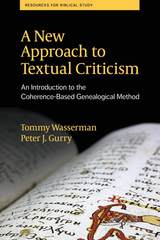
An essential introduction for scholars and students of New Testament Greek
With the publication of the widely used 28th edition of Nestle-Aland’s Novum Testamentum Graece and the 5th edition of the United Bible Society Greek New Testament, a computer-assisted method known as the Coherence-Based Genealogical Method (CBGM) was used for the first time to determine the most valuable witnesses and establish the initial text. This book offers the first full-length, student-friendly introduction to this important new method. After setting out the method’s history, separate chapters clarify its key concepts, including genealogical coherence, textual flow diagrams, and the global stemma. Examples from across the New Testament are used to show how the method works in practice. The result is an essential introduction that will be of interest to students, translators, commentators, and anyone else who studies the Greek New Testament.
Features
- A clear explanation of how and why the text of the Greek New Testament is changing
- Step-by-step guidance on how to use the CBGM in textual criticism
- Diagrams, illustrations, and glossary of key terms

Included for the first time in any language is an extensive account of Nietzsche's finances and his relationships with his publishers. Schaberg reveals a man who was obsessed with money, fought bitterly with his publishers, complained about his readers, and all the while continued to produce more and more books that went unread. He also reveals the influential role of Nietzsche's sister Elizabeth, who provoked disputes between Nietzsche and his publisher during her brother's lifetime and deliberately falsified information after his death.
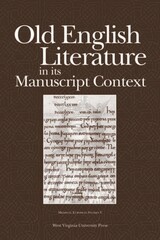
In Old English Literature in its Manuscript Context, editor Joyce Tally Lionarons has developed a multifaceted collection examining the issues facing the textual transmission of Anglo-Saxon writings. Eight established scholars consider the ideas of textual identity, authorship and translation, and editorial standards and obligations. This work also features a scholarly exchange of ideas and photographs of the original Anglo-Saxon manuscripts, making this essential reading for anyone interested in the history of Old English literature. The essays published in this text were originally composed at an NEH summer seminar conducted by Paul Szarmach and Timothy Graham at the Parker Library of Corpus Christi College, Cambridge in 1997.
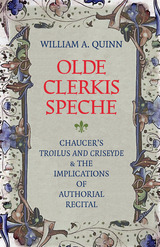

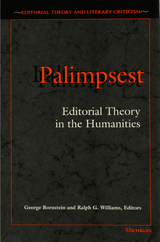
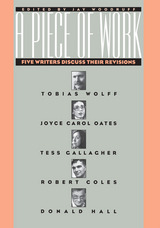
Books on writing generally offer prescriptions and proscriptions about this "craft so hard to learn" instead of evidence. But in A Piece of Work Woodruff's incisive questions guide five writers—Tobias Wolff, Tess Gallagher, Robert Coles, Joyce Carol Oates, and Donald Hall—through specific examples that enable the reader to see how good writing becomes better. From the first draft through various revisions and finally to the printed version of a single piece of each author's work, Woodruff traces the full course of the revision process.
For two and a half millennia philologists have viewed themselves as the modest heirs and curators of their textual past's most glorious periods, collecting and editing text fragments, historicizing them and adding commentary, and ultimately teaching them to contemporary readers.
Gumbrecht argues for a return to this tradition as an alternative to an often free-floating textual interpretation and to the more recent redefinition of literary studies as "cultural studies," which risks a loss of intellectual focus. Such a return to philological core exercises, however, can become more than yet another movement of academic nostalgia only if it takes into account the hidden desire that has inspired
philology since its Hellenistic beginnings: the desire to make the past present again by embodying it.
From the white editorial authentication of slave narratives, to the cultural hybridity of the Harlem Renaissance, to the overtly independent publications of the Black Arts Movement, to the commercial power of Oprah's Book Club, African American textuality has been uniquely shaped by the contests for cultural power inherent in literary production and distribution. Always haunted by the commodification of blackness, African American literary production interfaces with the processes of publication and distribution in particularly charged ways. An energetic exploration of the struggles and complexities of African American print culture, this collection ranges across the history of African American literature, and the authors have much to contribute on such issues as editorial and archival preservation, canonization, and the "packaging" and repackaging of black-authored texts. Publishing Blackness aims to project African Americanist scholarship into the discourse of textual scholarship, provoking further work in a vital area of literary study.
Popol Wujis considered one of the oldest books in the Americas. Various elements of Popol Wuj have appeared in different written forms over the last two millennia and several parts of Popol Wuj likely coalesced in hieroglyphic book form a few centuries before contact with Europeans. Popol Wuj offers a unique interpretation of the Maya world and ways of being from a Maya perspective. However, that perspective is often occluded since the extant Popol Wuj is likely a copy of a copy of a precontact Indigenous text that has been translated many times since the fifteenth century.
Reading Popol Wujoffers readers a path to look beyond Western constructions of literature to engage with this text through the philosophical foundation of Maya thought and culture. This guide deconstructs various translations to ask readers to break out of the colonial mold in approaching this seminal Maya text.
Popol Wuj, or Popol Vuh, in its modern form, can be divided thematically into three parts: cosmogony (the formation of the world), tales of the beings who inhabited the Earth before the coming of people, and chronicles of different ethnic Maya groups in the Guatemala area. Examining thirteen translations of the K’iche’ text, Henne offers a decolonial framework to read between what translations offer via specific practice exercises for reading, studying, and teaching. Each chapter provides a close reading and analysis of a different critical scene based on a comparison of several translations (English and Spanish) of a key K’iche’ word or phrase in order to uncover important philosophical elements of Maya worldviews that resist precise expression in Indo-European languages.
Charts and passages are frontloaded in each chapter so the reader engages in the comparative process before reading any leading arguments. This approach challenges traditional Western reading practices and enables scholars and students to read Popol Wuj—and other Indigenous texts—from within the worldview that created them.
We cannot know why Dickinson compiled the books or what she thought of them, but we can observe what she left in them. What she left is visible only by noting the way the poem answers in a dialogue across the pages, the way lines spilling onto a second page introduce the next poem, the way openings suggest image clusters so that each book has its own network of concerns and language—not a story or philosophical preachment but an aesthetic wholeness.
This book is the first to demonstrate that Dickinson’s poetic and philosophical creativity is most startling when the reader observes the individual lyric in the poet’s own, and only, context for them. For teacher, student, scholar, and poetry lover, Heginbotham creates an important new framework for understanding one of the most complex, clever, and profound U.S. poets.
In Representing Modernist Texts, thirteen internationally known scholars provide major explorations of the topic in the work of particular writers. The issues they raise include the construction of a writer’s canon and the effect of newly available “uncanonical” manuscript materials on existing works and orderings; the replacement of the older idea of a fixed, stable text by a more contemporary notion of the text as process; and the interrogation by advanced textual theory of many of the same notions of “author,” “intention,” and “stability of the text” questioned by advanced literary theory.
This collection of original essays examines how the idea of an authentic Chaucerian text was reimagined and reproduced by medieval and early modern scribes and editors to satisfy and shape the cultural expectations of their audiences. These “reproductions” of Chaucer’s works epitomize the tension between developing notions of what makes a text “authentic” and the cultural pressures that led scribes and editors to construct their own versions of Chaucer and his works.
The book begins by exploring medieval and early modern notions of origins and how they at once illuminate and problematize the recovery of Chaucerian texts. Essays in the second section examine how individual scribes and reading communities reshaped Chaucer’s texts. Finally, we see how the printing press—bringing with it a renewed concern about the idea of authenticity—led both to an increase in the number of works attributed to Chaucer and to increasing anxiety about their authenticity.
The focus on the ways in which Chaucer was rewritten in different cultural and aesthetic contexts will enable medieval and early modern critics to situate Chaucer more fully within his cultural milieu, while illuminating the ways in which his reputation as both a “laureate poet” and a “lewed compilator” affected rewritings of his works. Rewriting Chaucer, then, will appeal both to scholars interested in the critical juncture between manuscript and print culture and to those interested in how culture affects the reproduction of authoritative texts.
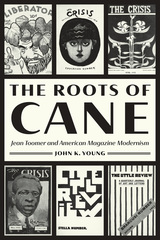
Young interweaves a periodical-studies approach to modernism with book history and critical race theory, resituating Toomer’s uneasy place within Black modernism by asking how original readers would have encountered his work. The different contexts in which those audiences were engaging with Toomer’s portraits of racialized identity in the Jim Crow United States, yield often surprising results.
Explore the groundwork for a new commentary series from SBL Press
This book contains verse by verse commentary on selections from the Greek text of the Hebrew Bible known as the Septuagint. Each chapter is from a different bible book, for which there will eventually be a full commentary published in the Society of Biblical Literature Commentary on the Septuagint. The commentary series focuses on the actual process of translation, so its authors try to describe and explain the kinds of decisions the ancient Alexandrian translators made about how to render Hebrew into Greek.
Features
- Translations from and commentary on Genesis, Exodus, Leviticus, Numbers, Esther, Job, and Psalms Contributions from eight experts on the Septuagint
- Guidelines and procedures used in the production of the translations in the series
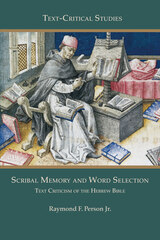
What were ancient scribes doing when they copied a manuscript of a literary work? This question is especially problematic when we realize that ancient scribes preserved different versions of the same literary texts. In Scribal Memory and Word Selection: Text Criticism of the Hebrew Bible, Raymond F. Person Jr. draws from studies of how words are selected in everyday conversation to illustrate that the same word-selection mechanisms were at work in scribal memory. Using examples from manuscripts of the Hebrew Bible, Person provides new ways of understanding the cognitive-linguistic mechanisms at work during the composition/transmission of texts. Person reveals that, while our modern perspective may consider textual variants to be different literary texts, from the perspective of the ancient scribes and their audiences, these variants could still be understood as the same literary text.

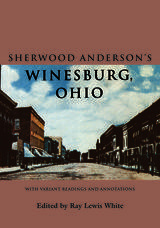
In 1919 a middle-aged Chicago advertising writer from Ohio, a failure as a businessman, husband, and father, published a small yellow book of short stories intended to “reform” American literature. Against all expectations, Winesburg, Ohio: A Group of Tales of Ohio Small Town Life achieved what its author intended: after 1919 and after Winesburg, Ohio, American literature would be written and read freshly and differently.
Winesburg, Ohio has never been out of print, but never has Anderson’s book been published in the form and with the editorial care that the work has needed and deserved. The present text, authorized by the Sherwood Anderson Literary Estate Trust, is an expert text. The editor has relied on years of experience in editing Sherwood Anderson and has consulted all Anderson manuscripts, typescripts, letters, and diaries and all editions of the book to present the masterpiece in its intended state.
New to this expert edition of Winesburg, Ohio are historical and cultural annotations, documentation of changes in the various editions, identification of the Ohio originals for Anderson’s characters, and maps bearing the streets and buildings of the real town of Clyde, Ohio, which is the basis of Anderson’s fictional account.
Included as well are unique photographs of Anderson and Clyde, Ohio, illustrations that deepen knowledge and feeling for the author’s actual hometown and time, revealing Winesburg, Ohio to be an intensely local narrative—very much an “Ohio” book—and yet a book that has found and held worldwide attention.
Understand the purpose and background of the new The Hebrew Bible: A Critical Edition project
Our understanding of the textual history of the Hebrew Bible has been transformed in the wake of the discovery of the Dead Sea Scrolls. Hendel explores and refines this new knowledge and formulates a rationale for a new edition of the Hebrew Bible. The chapters situate The Hebrew Bible; A Critical Edition project in a broad historical context, from the beginnings of textual criticism in late antiquity and the Renaissance to the controversies in contemporary theory and practice. This book combines close analysis with broad synthesis, yielding new perspectives on the text of the Hebrew Bible.
Features- Theory and practice of textual criticism
- Textual history of the Hebrew Bible
- History of text-critical scholarship
Now available in English
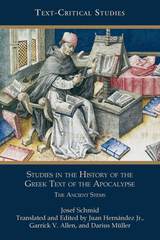
Josef Schmid's landmark publication, Studien zur Geschichte des Griechischen Apokalypse-Textes, has been the standard work for understanding Revelation's Greek manuscript tradition and textual history for more than sixty years. Despite the fact that most major studies on the book are based on Schmid's work, the work itself has long been out of print, making it difficult for the broader scholarly community to reassess Schmid's conclusions in light of recent manuscript discoveries and technological advances. This new translation of the work makes Schmid's detailed review of the history of textual scholarship; his comprehensive examination of the origin, history, and development of the Greek manuscripts of the book of Revelation; and his assessment of John's peculiar linguistic writing style accessible to a new generation of scholars.
Features
- A critical introduction that places Schmid's work in its historical and theoretical context
- Definitions and explanations of Schmid's text-critical terms and categories used in his construction of Revelation's Greek manuscript tradition
- The latest available information used to correct, update, and supplement Schmid's Greek manuscript data and historical and text-critical conclusions

Zhang's book brings together philosophy and literature, theory and practical criticism, the Western and the non-Western in defining common ground on which East and West may come to a mutual understanding. He provides commentary on the rich traditions of poetry and poetics in ancient China; equally illuminating are Zhang's astute analyses of Western poets such as Rilke, Shakespeare, and Mallarmé and his critical engagement with the work of Foucault, Derrida, and de Man, among others.
Wide-ranging and learned, this definitive work in East-West comparative poetics and the hermeneutic tradition will be of interest to specialists in comparative literature, philosophy, literary theory, poetry and poetics, and Chinese literature and history.

Beginning with the Tel Quel group in France in the sixties and seventies, Mowitt's study details how a certain interdisciplinary crisis prompted academics to rethink the conditions of cultural interpretation. Concentrating on three disciplinary projects—literary analysis, film studies, and musicology—Mowitt shows how textuality's emergence called into question not merely the relations among these disciplines, but also the cultural logic of disciplinary reason as such.
At once an effort to define "the text" and to explore and extend the theory of textuality, this book illustrates why the notion of interdisciplinary research has recently acquired such urgency. At the same time, by emphasizing the genealogical dimension of the textual object, Mowitt raises the issues of its "antidisciplinary" character, and by extension its immediate pertinence for the current debates over multiculturalism and Eurocentrism.
Bridging the stage-versus-page gap between actors, critics, and scholars, the contributors in this carefully crafted yet energizing book reflect upon the many kinds of evidence available to us from Shakespeare's various incarnations as historical subject and as “our contemporary” as well as from his amphibious occupation of both stage and study. The constraints become arbitrary as each essayist clarifies the sources of this evidence; the seemingly rigid boundaries of scholarly and creative disciplines are crossed and redrawn.
A key issue in both textual criticism and the so-called crisis of the novel is the tension between the finished and the unfinished. After a theoretical examination of the relationship between genetic and textual criticism, Dirk Van Hulle uses the three case studies to show how?at each stage in the writing process?the text still had the potential of becoming something entirely different; how and why these geneses proceeded the way they did; how Joyce, Proust, and Mann allowed contingencies to shape their work; how these authors recycled the words of their critics in order to inoculate their works against them; how they shaped an intertextual dimension through the processing of source texts and reading notes; and how text continually generated more text.
Van Hulle's exploration of process sheds new light on the remarkable fact that so many modernist authors protected their manuscripts, implying both the authors' urge to grasp everything and their awareness of the dangers of their encyclopedic projects. Textual Awareness offers new insights into the artificiality of the artifact?the novel?that are relevant to the study of literary modernism in general and the study of James Joyce, Marcel Proust, and Thomas Mann in particular.
Dirk Van Hulle is Assistant Professor of English and German Literature, University of Antwerp.
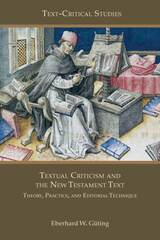
The fruit of more than three decades of research
This collection of fourteen essays by Eberhard W. Güting covers important aspects of editorial science with a particular focus on New Testament textual criticism. Essays cover textual emendation, text-critical procedures, literary criticism, history of scholarship, advantages and disadvantages of online manuscripts, and text-critical studies of words and phrases. The addition of a substantial introduction to text criticism makes this a valuable resource for students and teachers.
Features
- Essays concerned with establishing the original text of New Testament writings
- Nine essays published in English for the first tim
- Two previously unpublished essays
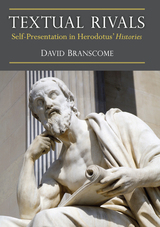
Textual Rivals studies some of the most debated issues in Herodotean scholarship. One such is Herodotus’ self-presentation: the conspicuousness of his authorial persona is one of the most remarkable features of his Histories. So frequently does he interject first-person comments into the narrative that Herodotus at times almost becomes a character within his own text.
Important issues are tied to Herodotus’ self-presentation. First is the narrator’s relationship to truth: to what extent does he expect readers to trust his narrative? While judgments regarding Herodotus’ overall veracity have often been damning, scholars have begun to concentrate on how Herodotus presents his truthfulness. Second is the precise genre Herodotus means to create with his work. Excluding the anachronistic term historian, exactly what would Herodotus have called himself, as author? Third is the presence of “self-referential” characters, whose actions often mirror Herodotus’ as narrator/researcher, in the Histories.
David Branscome’s investigative text points to the rival inquirers in Herodotus’ Histories as a key to unraveling these interpretive problems. The rival inquirers are self-referential characters Herodotus uses to further his authorial self-presentation. Through the contrast Herodotus draws between his own exacting standards as an inquirer and the often questionable standards of those rivals, Herodotus underlines just how truthful readers should find his own work.
Textual Rivals speaks to those interested in Greek history and historiography, narratology, and ethnography. Those in the growing ranks of Herodotus fans will find much to invite and intrigue.

Juan Chapa offers nuanced discussions of many topics that currently occupy the field of textual criticism, including debates over the dating of New Testament papyri, the preference for the codex, the liturgical use of texts, the presence of nomina sacra, textual variants, the establishment of the New Testament text, problems with the term original, and the challenge of textual fluidity. His unique approach illustrates how a Catholic perspective, the rule of faith, and the Latin textual tradition can inform our understanding of the origin, preservation, and authority of the New Testament text. Chapa’s work contributes a distinctively Catholic voice to the largely Protestant chorus that has dominated the field, thus filling a lacuna in contemporary text-critical conversations.
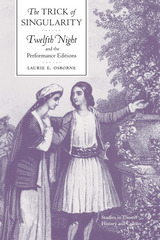
In this innovative union of textual studies and performance criticism, Laurie Osborne explores the important ways in which an apparently single, unproblematic text is in fact multiple and various. Through a close analysis of the performance editions of Twelfth Night, she argues that the complex interaction between text and performance establishes a comedy as a work realized within changing social and erotic constructions.
Because it appears in a relatively clean and dated version in the Folio, Twelfth Night seems to be exempt from arguments for variant texts—but there are significant and persistent variations represented in the performance editions. Osborne's careful reading of these provides a crucial bridge linking theatre history and textual criticism. She employs a wide variety of approaches and disciplines—Shakespearean and Renaissance studies, theatre history, gender studies, contemporary literary criticism, and cultural history—to provide a fresh and engaging yet rigorous view.
Although she focuses on Twelfth Night, Osborne's argument applies more broadly to the history of performance and criticism, including a chapter on video versions of the play. Widely read in Shakespearean and Renaissance scholarship, she employs her archival research in promptbooks, the publishing history of the plays, and the history of Shakespearean production to accomplish a major job of scholarly integration and analysis of Shakespearean drama in performance.
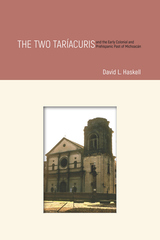
Informed by theoretical approaches to narrative, historicity, structure, and agency developed by cultural and historical anthropologists, Haskell demonstrates that the author of the Relación de Michoacán shaped, and was shaped by, a culturally distinct conceptualization and experience of the time in which the past and the present are mutually informing. The book asks, How reliable are past accounts of events when these accounts are removed from the events they describe? How do the personal agendas of past chroniclers and their informants shape our present understanding of their cultural history? How do we interpret chronicles such as the Relación de Michoacán on multiple levels? It also demonstrates that answers to these questions are possible when attention is paid to the context of narrative production and the narratives themselves are read closely.
The Two Taríacuris and the Early Colonial and Prehispanic Past of Michoacán makes a significant contribution to the scholarship on indigenous experience and its cultural manifestations in Early Colonial period Central Mexico and the anthropological literature on historicity and narrative. It will be of interest to Mesoamerican specialists of all disciplines, cultural and historical anthropologists, and theorists and critics of narrative.
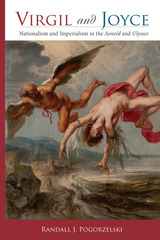
Joyce wrote Ulysses during the Irish War of Independence, when militants, politicians, and intellectuals were attempting to create a new Irish nation. Virgil wrote the Aeneid when, in the wake of decades of civil war, Augustus was founding what we now call the Roman Empire. Randall Pogorzelski applies modern theories of nationalism, intertextuality, and reception studies to illuminate how both writers confronted issues of nationalism, colonialism, political violence, and freedom during times of crisis.
This group of papers, edited by two well-known scholars of the medieval world, offers both general and particular approaches to the issues surrounding manuscripts produced in the medieval habit of "miscellany," works of seemingly diverse natures bound together into one volume. Julia Boffey investigates how certain poetical miscellanies came to be assembled, for example, while Sylvia Huot suggests that the miscellany had many different sorts of function and significance. Siegfried Wenzel considers a taxonomy of such collections, and A. S. G. Edwards' paper considers Bodleian Selden B.24 as an example of how the notions of canon, authorship, and attribution might come into play. Ann Matter's final chapter offers the notion that what we call "miscellanies" are likely to have an internal logic that we have been trained to miss, but can come to understand. Other contributors are Ralph Hanna III, Georg Knauer, Stephen Nichols, James J. O'Donnell, and Barbara A. Shailor.
Because The Whole Book deals not only with the content of miscellanies but also with contemporary literary principles, this volume will be of interest to a wide circle of literary critics and historians, as well as to students of the survival of literature and of cultural values.
Stephen G. Nichols is James M. Beall Professor of French and Chair of the Department of French, The Johns Hopkins University. Siegfried Wenzel is Professor of English, University of Pennsylvania.
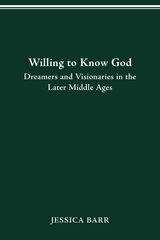
Although authors of mystical treatises and dream visions shared a core set of assumptions about how visions are able to impart transcendent truths to their recipients, the modern divide between “religious” and “secular” has led scholars to study these genres in isolation. Willing to Know God addresses the simultaneous flowering of mystical and literary vision texts in the Middle Ages by questioning how the vision was thought to work. What preconditions must be met in these texts for the vision to transform the visionary? And when, as in poems such as Pearl, this change does not occur, what exactly has gone wrong?
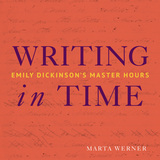
For more than half a century, the story of Emily Dickinson’s “Master” documents has been the largely biographical tale of three letters to an unidentified individual. Writing in Time seeks to tell a different story—the story of the documents themselves. Rather than presenting the “Master” documents as quarantined from Dickinson’s larger scene of textual production, Marta Werner’s innovative new edition proposes reading them next to Dickinson’s other major textual experiment in the years between ca. 1858–1861: the Fascicles. In both, Dickinson can be seen testing the limits of address and genre in order to escape bibliographical determination and the very coordinates of “mastery” itself. A major event in Dickinson scholarship, Writing in Time: Emily Dickinson’s Master Hours proposes new constellations of Dickinson’s work as well as exciting new methodologies for textual scholarship as an act of “intimate editorial investigation.”
READERS
Browse our collection.
PUBLISHERS
See BiblioVault's publisher services.
STUDENT SERVICES
Files for college accessibility offices.
RECENTLY PUBLISHED




UChicago Accessibility Resources
home | accessibility | search | about | contact us
BiblioVault ® 2001 - 2026
The University of Chicago Press