
 A SCHOLARLY BOOK REPOSITORY
49 start with A start with A
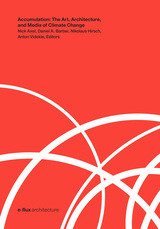
Examines how images of accumulation help open up the climate to political mobilization
The current epoch is one of accumulation: not only of capital but also of raw, often unruly material, from plastic in the ocean and carbon in the atmosphere to people, buildings, and cities. Alongside this material growth, image-making practices embedded within the fields of art and architecture have proven to be fertile, mobile, and capacious. Images of accumulation help open up the climate to cultural inquiry and political mobilization and have formed a cultural infrastructure focused on the relationships between humans, other species, and their environments.
The essays in Accumulation address this cultural infrastructure and the methodological challenges of its analysis. They offer a response to the relative invisibility of the climate now seen as material manifestations of social behavior. Contributors outline opportunities and ambitions of visual scholarship as a means to encounter the challenges emergent in the current moment: how can climate become visible, culturally and politically? Knowledge of climatic instability can change collective behavior and offer other trajectories, counteraccumulations that draw the present into a different, more livable, future.
Contributors: Emily Apter, New York U; Hans Baumann; Amanda Boeztkes, U of Guelph; Dominic Boyer, Rice U; Lindsay Bremner, U of Westminster; Nerea Calvillo, U of Warwick; Beth Cullen, U of Westminster; T. J. Demos, U of California, Santa Cruz; Jeff Diamanti, U of Amsterdam; Jennifer Ferng, U of Sydney; Jennifer Gabrys, U of Cambridge; Ian Gray, U of California, Los Angeles; Gökçe Günel, Rice U; Orit Halpern, Concordia U; Gabrielle Hecht, Stanford U; Cymene Howe, Rice U; Wendy Hui Kyong Chun, Simon Fraser U; Robin Kelsey, Harvard U; Bruno Latour, Sciences Po, Paris; Hannah le Roux, U of the Witwatersrand, Johannesburg; Stephanie LeMenager, U of Oregon; Nashin Mahtani; Kiel Moe, McGill U; Karen Pinkus, Cornell U; Stephanie Wakefield, Life U; McKenzie Wark, The New School; Kathryn Yusoff, Queen Mary U of London.
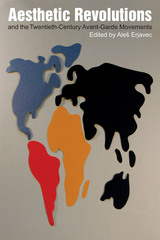
Contributors. John E. Bowlt, Sascha Bru, David Craven, Aleš Erjavec, Tyrus Miller, Raymond Spiteri, Miško Šuvakovic
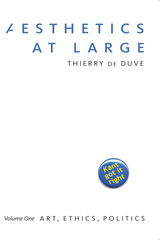
Central to de Duve’s re-reading of the Critique of Judgment is Kant’s idea of sensus communis, ultimately interpreted as the mere yet necessary idea that human beings are capable of living in peace with one another. De Duve pushes Kant’s skepticism to its limits by submitting the idea of sensus communis to various tests leading to questions such as: Do artists speak on behalf of all of us? Is art the transcendental ground of democracy? Or, Was Adorno right when he claimed that no poetry could be written after Auschwitz?
Loaded with de Duve’s trademark blend of wit and erudition and written without jargon, these essays radically renew current approaches to some of the most burning issues raised by modern and contemporary art. They are indispensable reading for anyone with a deep interest in art, art history, or philosophical aesthetics.
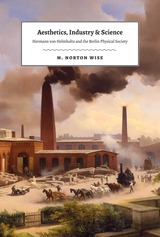
In Aesthetics, Industry, and Science M. Norton Wise answers these questions not simply from a technical perspective of theories and practices but with a broader cultural view of what was happening in Berlin at the time. He emphasizes in particular how rapid industrial development, military modernization, and the neoclassical aesthetics of contemporary art informed the ways in which these young men thought. Wise argues that aesthetic sensibility and material aspiration in this period were intimately linked, and he uses these two themes for a final reappraisal of Helmholtz’s early work. Anyone interested in modern German cultural history, or the history of nineteenth-century German science, will be drawn to this landmark book.
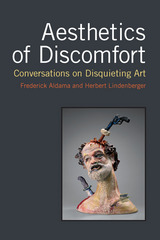
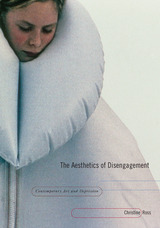
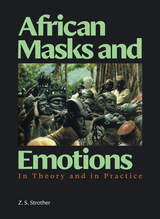
In this groundbreaking book, Z. S. Strother, inspired by dialogues with African masquerade patrons and performers, disputes assumptions that masks universally hide, reveal, or transform.
In Western European languages, the word mask exerts a powerful presence as a figure of speech. To masquerade is to pretend to be someone or something one is not. By extension, unmasking is a heroic metaphor for exposing a hidden truth. In this volume, art historian Z. S. Strother counters that narrative, using African case studies to offer an alternative vision of masquerading. She explores the aesthetic emotions aroused by masks, or more precisely, by “dances of masks”: joy, wonder, awe, fear, and the release of laughing out loud. She also investigates the uncanny—a sensation of “delicious shiveriness” triggered when familiar spaces and individuals become strange and changeable. Inspired by Strother’s studies in DR Congo, African Masks and Emotions takes a comparative perspective and moves emotion from the periphery to the center of analysis.
Reflecting Getty's commitment to open content, African Masks and Emotions is available as a free PDF download at: https://www.getty.edu/publications/virtuallibrary/9781606069936.html. This paperback edition is available for sale for readers who wish to have a bound reference copy.
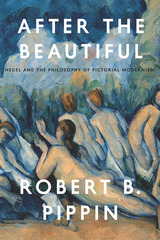
While Hegel could never engage modernist painting, he did have an understanding of modernity, and in it, art—he famously asserted—was “a thing of the past,” no longer an important vehicle of self-understanding and no longer an indispensable expression of human meaning. Pippin offers a sophisticated exploration of Hegel’s position and its implications. He also shows that had Hegel known how the social institutions of his day would ultimately fail to achieve his own version of genuine equality, a mutuality of recognition, he would have had to explore a different, new role for art in modernity. After laying this groundwork, Pippin goes on to illuminate the dimensions of Hegel’s aesthetic approach in the path-breaking works of Manet, the “grandfather of modernism,” drawing on art historians T. J. Clark and Michael Fried to do so. He concludes with a look at Cézanne, the “father of modernism,” this time as his works illuminate the relationship between Hegel and the philosopher who would challenge Hegel’s account of both modernity and art—Martin Heidegger.
Elegantly inter-weaving philosophy and art history, After the Beautiful is a stunning reassessment of the modernist project. It gets at the core of the significance of modernism itself and what it means in general for art to have a history. Ultimately, it is a testament, via Hegel, to the distinctive philosophical achievements of modernist art in the unsettled, tumultuous era we have inherited.
Reconsiders exceptionalism between aesthetics and politics
Here, Arne De Boever proposes the notion of aesthetic exceptionalism to describe the widespread belief that art and artists are exceptional. Against Aesthetic Exceptionalism challenges that belief by focusing on the sovereign artist as genius, as well as the original artwork as the foundation of the art market. Engaging with sculpture, conceptual artwork, and painting by emerging and established artists, De Boever proposes a worldly, democratic notion of unexceptional art as an antidote to the problems of aesthetic exceptionalism.
Forerunners: Ideas First
Short books of thought-in-process scholarship, where intense analysis, questioning, and speculation take the lead
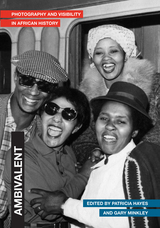
Going beyond photography as an isolated medium to engage larger questions and interlocking forms of expression and historical analysis, Ambivalent gathers a new generation of scholars based on the continent to offer an expansive frame for thinking about questions of photography and visibility in Africa. The volume presents African relationships with photography—and with visibility more generally—in ways that engage and disrupt the easy categories and genres that have characterized the field to date. Contributors pose new questions concerning the instability of the identity photograph in South Africa; ethnographic photographs as potential history; humanitarian discourse from the perspective of photographic survivors of atrocity photojournalism; the nuanced passage from studio to screen in postcolonial digital portraiture; and the burgeoning visual activism in West Africa.
As the contributors show, photography is itself a historical subject: it involves arrangement, financing, posture, positioning, and other kinds of work that are otherwise invisible. By moving us outside the frame of the photograph itself, by refusing to accept the photograph as the last word, this book makes photography an engaging and important subject of historical investigation. Ambivalent‘s contributors bring photography into conversation with orality, travel writing, ritual, psychoanalysis, and politics, with new approaches to questions of race, time, and postcolonial and decolonial histories.
Contributors: George Emeka Agbo, Isabelle de Rezende, Jung Ran Forte, Ingrid Masondo, Phindi Mnyaka, Okechukwu Nwafor, Vilho Shigwedha, Napandulwe Shiweda, Drew Thompson
The only visual artist to have won the Peace Prize of the German Book Trade, Anselm Kiefer is a profoundly literary painter. In these conversations, Kiefer describes how the central materials of his art—lead, sand, water, fire, ashes, plants, clothing, oil paint, watercolor, and ink—influence the act of creation. No less decisive are his intellectual and artistic touchstones: the sixteenth-century Jewish mystic Isaac Luria, the German Romantic poet Novalis, Ingeborg Bachmann, Paul Celan, Martin Heidegger, Marcel Proust, Adalbert Stifter, the operas of Richard Wagner, the Catholic liturgy, and the innovative theater director and artist Tadeusz Kantor. Kiefer and Dermutz discuss all of these influential thinkers, as well as Kiefer’s own status as a controversial figure. His relentless examination of German history, the themes of guilt, suffering, communal memory, and the seductions of destruction have earned him equal amounts of criticism and praise. The conversations in this book offer a rare insight into the mind of a gifted creator, appealing to artists, critics, art historians, cultural journalists, and anyone interested in the visual arts and the literature and history of the twentieth century.

Discussing an aspect of the European avant-garde that has often been neglected-its relationship to the embodied experience of food, its sensation, and its consumption-Cecilia Novero exposes the surprisingly key roles that food plays in the theoretical foundations and material aesthetics of a broad stratum of works ranging from the Italian Futurist Cookbook to the magazine Dada, Walter Benjamin's writings on eating and cooking, Daniel Spoerri's Eat Art, and the French New Realists.
Starting from the premise that avant-garde art involves the questioning of bourgeois aesthetics, Novero demonstrates that avant-garde artists, writers, and performers have produced an oppositional aesthetics of indigestible art. Through the rhetoric of incorporation and consumption and the use of material ingredients in their work, she shows, avant-garde artists active in the 1920s and 1930s as well as the neo-avant-garde movements engaged critically with consumer culture, memory, and history.
Attention to food in avant-garde aesthetics, Novero asserts, reveals how these works are rooted in a complex temporality that associates memory and consumption with dynamics of change.
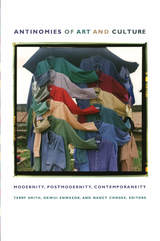
In the volume’s introduction the theorist Terry Smith argues that predictions that postmodernity would emerge as a global successor to modernity have not materialized as anticipated. Smith suggests that the various situations of decolonized Africa, post-Soviet Europe, contemporary China, the conflicted Middle East, and an uncertain United States might be better characterized in terms of their “contemporaneity,” a concept which captures the frictions of the present while denying the inevitability of all currently competing universalisms. Essays range from Antonio Negri’s analysis of contemporaneity in light of the concept of multitude to Okwui Enwezor’s argument that the entire world is now in a postcolonial constellation, and from Rosalind Krauss’s defense of artistic modernism to Jonathan Hay’s characterization of contemporary developments in terms of doubled and even para-modernities. The volume’s centerpiece is a sequence of photographs from Zoe Leonard’s Analogue project. Depicting used clothing, both as it is bundled for shipment in Brooklyn and as it is displayed for sale on the streets of Uganda, the sequence is part of a striking visual record of new cultural forms and economies emerging as others are left behind.
Contributors: Monica Amor, Nancy Condee, Okwui Enwezor, Boris Groys, Jonathan Hay, Wu Hung, Geeta Kapur, Rosalind Krauss, Bruno Latour, Zoe Leonard, Lev Manovich, James Meyer, Gao Minglu, Helen Molesworth, Antonio Negri, Sylvester Okwunodu Ogbechie, Nikos Papastergiadis, Colin Richards, Suely Rolnik, Terry Smith, McKenzie Wark
Combining commentary on his own works with discussions of other artists and the Eastern religious traditions that have inspired him, Gormley offers wisdom on topics such as the body in space, how to approach an environment when conceiving an installation, bringing mindfulness and internal balance to sculpture, and much more. Lavishly illustrated, this book will be of interest to not only art lovers, curators, and critics, but also artists and art students. Dynamic and thought-provoking, Antony Gormley on Sculpture is essential reading for anyone fascinated by sculpture and its long and complex history as a medium.
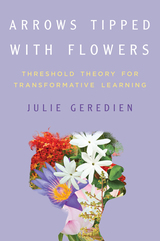
How can learning at the threshold change us and our world? Julie Geredien introduces an approach to transformative learning that draws on a wide range of cultural and disciplinary viewpoints.
Threshold theory challenges unexamined mental habits and exposes absolutisms that hold social order by impeding the comprehension process. As those learning at the threshold approach transition and the unknown, they participate in transformations that illuminate hidden developmental patterns and ecological relationships. Geredien’s threshold theorizing brings together realities at the heart of creativity, relational worldview, and anti-oppression work to forge the philosophical and psychological foundations necessary to reshape policies and practices.
Innovative and expansive, Arrows Tipped with Flowers reveals the psychology of integrity that underpins truly global learning and explains the need to develop more inclusive and reflective approaches to knowledge formation.

Unlike traditional approaches to the topic, Art & Money is not a study of money and exchange as an artistic "theme." It is also not a study of economics as a context for the history of art. Rather, it is a path-breaking exploration of the internal logic—the set of meanings and values—common to both money and art.
Art & Money provides striking insight into current matters of art collection, counterfeiting, and problems of attribution, into the general relation between word and image, and into controversies over taxation and crises or scandals in the financial world. Shell's historical range is immense, and he fills this study with amusing anecdotes and insights ranging from the relic of the Holy Foreskin to the state's arrest of J. S. G. Boggs, a conceptual artist who draws money. Illustrated with over one hundred halftones and eight color plates, this stunning volume will force a rethinking of our old presumptions about where money ends and art begins.
What does a life with art offer that a life without art does not? Art and Freedom asserts that the fundamental point of the enterprise of art is the creation and delivery of values that are not singularly available in the nonart world.
E. E. Sleinis discusses visual art, literature, music, theater, and other art forms, arguing that as art both liberates and provides new points of focus and awareness, the art enterprise depends on a positive freeing from the nonart world, rather than on mere addition to it.
Art and Freedom introduces a novel classificatory system for representation, expression, and formalist theories of art. Sleinis argues that a characteristic defect of contemporary theories of art is their neglect of the issue of value. Challenging these reductive, formalist notions of art, he emphasizes the potential, and the need, for art to evolve and make progress in ways comparable to the sciences, albeit on a very different model.
A smart blend of incisive commentary and illuminating philosophy, Art and Freedom provides a useful context for transforming a sometimes baffling medium into a means of fostering personal growth and creating and sharing values.
Ranging from brief reviews to extended essays, and including major critiques of Jackson Pollock, Morris Louis, Kenneth Noland, Jules Olitski, Frank Stella, and Anthony Caro, these writings establish a set of basic terms for understanding key issues in high modernism: the viability of Clement Greenberg’s account of the infralogic of modernism, the status of figuration after Pollock, the centrality of the problem of shape, the nature of pictorial and sculptural abstraction, and the relationship between work and beholder. In a number of essays Fried contrasts the modernist enterprise with minimalist or literalist art, and, taking a position that remains provocative to this day, he argues that minimalism is essentially a genre of theater, hence artistically self-defeating.
For this volume Fried has also provided an extensive introductory essay in which he discusses how he became an art critic, clarifies his intentions in his art criticism, and draws crucial distinctions between his art criticism and the art history he went on to write. The result is a book that is simply indispensable for anyone concerned with modernist painting and sculpture and the task of art criticism in our time.

Starting with an analysis of the censorship of the play My Name is Rachel Corrie, which was withdrawn from production by a major New York theater due to a political pressure, Davis shows how all art that challenges the mainstream is either suppressed or distorted to suit the politics of our time---one that will not recognize the truth of human experience and the disorder at the heart of all civilization.

A sustained engagement between contemporary art and philosophy relating to our place in, and responsibility to, the nonhuman world
How do contemporary art and theory contemplate the problem of the “bio” of biopolitics and bioart? How do they understand the question of “life” that binds human and nonhuman worlds in their shared travail? In Art and Posthumanism, Cary Wolfe argues for the reconceptualization of nature in art and theory to turn the idea of the relationship between the human and the planet upside down.
Wolfe explores a wide range of contemporary artworks—from Sue Coe’s illustrations of animals in factory farms and Eduardo Kac’s bioart to the famous performance pieces of Joseph Bueys and the video installations of Eija-Liisa Ahtila, among others—examining how posthumanist theory can illuminate, and be illuminated by, artists’ engagement with the more-than-human world. Looking at biological and social systems, the question of the animal, and biopolitics, Art and Posthumanism explores how contemporary art rivets our attention on the empirically thick, emotionally charged questions of “life” and the “living” amid ecological catastrophe.
One of the foremost theorists of posthumanism, Wolfe pushes that philosophy out of the realm of the purely theoretical to show how a posthumanist engagement with particular works and their conceptual underpinnings help to develop more potent ethical and political commitments.
Derived from the internal struggles of Soviet Constructivism, as it confronted the massive problems of cultural transformation after 'War Communism', Arvatov's writing is a major force in the split that occurred in the revolutionary horizons of Constructivism in the early 1920s. Critical of early Constructivism's social-aesthetic process of art's transformation of daily life - epitomised in studio-based painting, photography and object making - Arvatov polemicises for the devolution of artistic skills directly into the relations of production and the factory.
Whilst acknowledging the problems of a pure factory-based Productivism, Arvatov remains overwhelmingly committed to a new role and function for art outside the conventional studio and traditional gallery. Addressing issues such as artistic labour and productive labour, the artist as technician, art and multidisciplinarity and a life for art beyond 'art' - finding new relevance amidst the extensive social turn of contemporary participatory art - Art and Production offers a timely and compelling manifesto.
Art from Start to Finish gathers a unique group of contributors from the worlds of sociology, musicology, literature, and communications—many of them practicing artists in their own right—to discuss how artists from jazz musicians to painters work: how they coordinate their efforts, how they think, how they start, and, of course, how they finish their productions.
Specialists in the arts have much to say about the works themselves, which are often neglected by scholarsi n other fields. Art from Start to Finish takes a different tack by exploring the creative process itself and its social component. Any reader who makes art or has an interest in it will value this book.
Tracing the various movements of realism through the major metropolitan centers of Europe and America, Boime strikingly evokes the milieus that shaped the lives and works of Gustave Courbet, Edouard Manet, Émile Zola, Honoré Daumier, Walt Whitman, Abraham Lincoln, and the earliest photographers, among countless others. In doing so, he spearheads a powerful new way of reassessing how art emerges from the welter of cultural and political events and the artist’s struggle to interpret his surroundings. Boime supports this multifaceted approach with a wealth of illustrations and written sources that demonstrate the intimate links between visual culture and social change. Culminating at the transition to impressionism, Art in an Age of Civil Struggle makes historical sense of a movement that paved the way for avant-garde aesthetics and, more broadly, of how a particular style emerges at a particular moment.
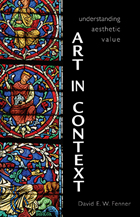
Art in Context is a systematic, historically situated, and historically evidenced attempt to demonstrate the importance of considering contexts that will, in the vast majority of cases, increase the aesthetic experience. While focusing on distance, detachment, aestheticism, art for art’s sake, and formalism can at times be instructive and interesting, such approaches risk missing the larger and often central issue of the piece.
Based on the findings of philosophers and critics, and on artwork throughout
history, Art in Context provides a solid foundation for understanding and valuing a work of art in perspective as well as within the particular world in which it exists.
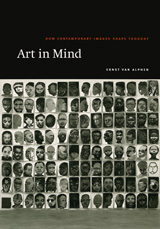
Examining a broad range of works, van Alphen—a renowned art historian and cultural theorist—demonstrates how art serves a socially constructive function by actually experimenting with the parameters of thought. Employing work from artists as diverse as Picasso, Watteau, Francis Bacon, Marlene Dumas, and Matthew Barney, he shows how art confronts its viewers with the "pain points" of cultural experience-genocide, sexuality, diaspora, and transcultural identity-and thereby transforms the ways in which human existence is conceived. Van Alphen analyzes how art visually "thinks" about these difficult cultural issues, tapping into an understudied interpretation of art as the realm where ideas and values are actively created, given form, and mobilized. In this way, van Alphen's book is a work of art in itself as it educates us in a new mode of thought that will forge equally new approaches and responses to the world.
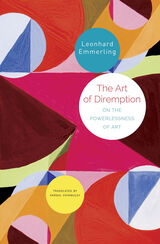
One of the most astonishing aspects of the discourse on contemporary art is the firm and unwavering belief that art has the power to transform society for the better. There seems to be a consensus around the idea that art, especially visual art, is greatly suited to addressing all manner of social, political, economic, ecological, and other imbalances. Celebrated as a powerful remedy for social grievances, art finds its justification in the service it seems to provide to society.
But as art historian Leonhard Emmerling contends in this timely volume, this presumptuous heroism shows willful blindness towards art’s subjugation to contradictions inherent in social relations. He argues that the narrative of the power of art has its specific history. In trying to reconstruct this history in Art of Diremption, he discovers instead art’s fundamental powerlessness as the foundation for art’s political relevance. Art is weak, argues Emmerling. It, therefore, requires an ethics of weakness, which rejects the discourse of impact and power to enable a politics of art containing the permanence of reflection, the unreliability of thought, and the emergence of form as the event of the new. With a meticulously studied and well-argued case about the “powerlessness of art,” Art of Diremption will be an important contribution to the field of art, aesthetics, and philosophy.

With The Art of Living in Avant-Garde Paris, Rachel Silveri takes a fresh look at the desire to unify art and life, an ambition long regarded as foundational to the European historical avant-gardes. She reveals how many early twentieth-century artists saw their own everyday lives—their bodies, identities, and relationships—as a type of creative material and a central component to their avant-garde practice. These artists abandoned traditional forms of artmaking and venues of art viewing, instead aspiring to integrate art with everyday life, creating an “art of living.”
Considering Tristan Tzara’s performances of Dadaist identity, Sonia Delaunay’s simultaneous fashions and self-branding, and the collective endeavor to open and operate the Surrealist Research Bureau, Silveri offers a new narrative about how the artists of interwar Paris developed experiential life practices that resisted dominant forms of “lifestyle” and normative discourses surrounding gender, ethnicity, and office work. This book argues that ethical questions of “How should I live?” and “How should I relate to others?” were as important to the avant-garde as politics, and that aspirations to change the world played out in daily practices of self-making.
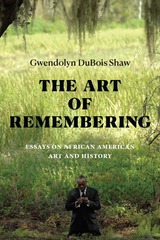
People all over the world make art and take pleasure in it, and they have done so for millennia. But acknowledging that art is a universal part of human experience leads us to some big questions: Why does it exist? Why do we enjoy it? And how do the world’s different art traditions relate to art and to each other?
Art Without Borders is an extraordinary exploration of those questions, a profound and personal meditation on the human hunger for art and a dazzling synthesis of the whole range of inquiry into its significance. Esteemed thinker Ben-Ami Scharfstein’s encyclopedic erudition is here brought to bear on the full breadth of the world of art. He draws on neuroscience and psychology to understand the way we both perceive and conceive of art, including its resistance to verbal exposition. Through examples of work by Indian, Chinese, European, African, and Australianartists, Art Without Borders probes the distinction between accepting a tradition and defying it through innovation, which leads to a consideration of the notion of artistic genius. Continuing in this comparative vein, Scharfstein examines the mutual influence of European and non-European artists. Then, through a comprehensive evaluation of the world’s major art cultures, he shows how all of these individual traditions are gradually, but haltingly, conjoining into a single current of universal art. Finally, he concludes by looking at the ways empathy and intuition can allow members of one culture to appreciate the art of another.
Lucid, learned, and incomparably rich in thought and detail, Art Without Borders is a monumental accomplishment, on par with the artistic achievements Scharfstein writes about so lovingly in its pages.
Rachael Z. DeLue rejects the traditional assumption that Dove can only be understood in terms of his nature paintings and association with photographer and gallerist Alfred Stieglitz and his circle. Instead, she uncovers deep and complex connections between Dove’s work and his world, including avant-garde literature, popular music, meteorology, mathematics, aviation, and World War II. Arthur Dove also offers the first sustained account of Dove’s Dadaesque multimedia projects and the first explorations of his animal imagery and the role of humor in his art. Beautifully illustrated with works from all periods of Dove’s career, this book presents a new vision of one of America’s most innovative and captivating artists—and reimagines how the story of modern art in the United States might be told.


Edited by Re’al Christian, Carin Kuoni, and Eriola Pira, an opening score by Raven Chacon and contributions by Salome Asega, Carolina Caycedo with Lupita Limón Corrales, Raven Chacon, Jesse Chun, Asia Dorsey, Taraneh Fazeli and Cannach MacBride, Pablo Helguera, Emmanuel Iduma, Mary Maggic, Shannon Mattern, V. Mitch McEwen with Nadir Jeevanjee, Rashaun Mitchell with Silas Riener, Romy Opperman, Rasheedah Phillips, Leanne Betasamosake Simpson with Maria Hupfield, Ultra-red with Robert Sember, and Underground Resistance.
Projection has long been transforming space, from shadow plays to camera obscuras and magic lantern shows. Our fascination with projection is alive on the walls of museums and galleries and woven into our daily lives. Giuliana Bruno explores the histories of projection and atmosphere in visual culture and their continued importance to contemporary artists who are reinventing the projective imagination with atmospheric thinking and the use of elemental media.
To explain our fascination with projection and atmosphere, Bruno traverses psychoanalysis, environmental philosophy, architecture, the history of science, visual art, and moving image culture to see how projective mechanisms and their environments have developed over time. She reveals how atmosphere is formed and mediated, how it can change, and what projection can do to modify a site. In so doing, she gives new life to the alchemic possibilities of transformative projective atmospheres. Showing how their “environmentality” produces sites of exchange and relationality, this book binds art to the ecology of atmosphere.

Tom Gunning is the author of multiple books and nearly two hundred essays that have defined the field of cinema and media studies. His works have transformed our understanding of early cinema and the American avant-garde and reset the terms of many central debates in film and media history and theory. His 1986 essay “The Cinema of Attractions” is among the most cited essays on film ever published. Gunning’s writings articulate a distinctive and powerful model for thinking about cinema’s history and likely future, addressing the full range of moving-image media, from film to still photography to digital media. His discussions draw on stage melodrama and magic lantern shows, as well as criminology, world’s fairs, and Spiritualism, surveying the medium as a cultural phenomenon informed by the industrial and information ages, psychiatry, urban experience, discourses on art and aesthetics, and more.
This collection brings together twenty-six essays that showcase the depth and range of Gunning’s scholarship, including four that have never before been published. Together, they solidify Gunning’s place as a scholar who has transformed the way generations of scholars, archivists, critics, and artists think about cinema.
The museum of contemporary art might be the most advanced recording device ever invented. It is a place for the storage of historical grievances and the memory of forgotten artistic experiments, social projects, or errant futures. But in late nineteenth and early twentieth-century Russia, this recording device was undertaken by artists and thinkers as a site for experimentation.
Arseny Zhilyaev’s Avant-Garde Museology presents essays documenting the wildly encompassing progressivism of this period by figures such as Nikolai Fedorov, Aleksandr Rodchenko, Kazimir Malevich, Alexander Bogdanov, and others—many which are translated from the Russian for the first time. Here the urgent question is: How might the contents of the museum be reanimated so as to transcend even the social and physical limits imposed on humankind?
Contributors: David Arkin; Vladimir Bekhterev; Alexander Bogdanov; Osip Brik; Vasiliy Chekrygin; Leonid Chetyrkin; Nikolai Druzhinin; Nikolai Fedorov; Pavel Florensky; R. N. Frumkina; M. S. Ilkovskiy; V. I. Karmilov; V. Karpov; Valentin Kholtsov; P. N. Khrapov; Yuriy Kogan; Natalya Kovalenskaya; Nadezhda Krupskaya; S. P. Lebedyansky; A. F. Levitsky; Vera Leykina (Leykina-Svirskaya); Ivan Luppol; Kazimir Malevich; Andrey Platonov; Nikolay Punin; Aleksandr Rodchenko; Yuriy Samarin; I. F. Sheremet; Andrey Shestakov; Natan Shneerson; Ivan Skulenko; M. Vorobiev; N. Vorontsovsky; Boris Zavadovsky; I. M. Zykov.
READERS
Browse our collection.
PUBLISHERS
See BiblioVault's publisher services.
STUDENT SERVICES
Files for college accessibility offices.
RECENTLY PUBLISHED



UChicago Accessibility Resources
home | accessibility | search | about | contact us
BiblioVault ® 2001 - 2026
The University of Chicago Press