
 A SCHOLARLY BOOK REPOSITORY
The first volume in the series, African Successes: Governments and Institutions considers the role governments and institutions have played in recent developments and identifies the factors that enable economists to predict the way institutions will function.
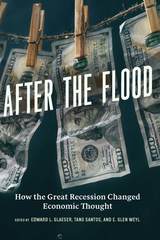
A momentous collection of the best recent scholarship, After the Flood illustrates both the scope of the crises’ impact on our understanding of global financial markets and the innovative processes whereby scholars have adapted their research to gain a greater understanding of them. Among the contributors are José Scheinkman and Lars Peter Hansen, who bring up to date decades of collaborative research on the mechanisms that tie financial markets to the broader economy; Patrick Bolton, who argues that limiting bankers’ pay may be more effective than limiting the activities they can undertake; Edward Glaeser and Bruce Sacerdote, who study the social dynamics of markets; and E. Glen Weyl, who argues that economists are influenced by the incentives their consulting opportunities create.
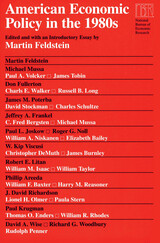
In his introduction, Martin Feldstein provides compelling analysis of policies with which he was closely involved as chairman of the Council of Economic Advisers during the Reagan administration: monetary and exchange rate policy, tax policy, and budget issues. Other leading economists and policymakers examine a variety of domestic and international issues, including monetary and exchange rate policy, regulation and antitrust, as well as trade, tax, and budget policies.
The contributors to this volume are Alberto Alesina, Phillip Areeda, Elizabeth Bailey, William F. Baxter, C. Fred Bergsten, James Burnley, Geoffrey Carliner, Christopher DeMuth, Douglas W. Elmendorf, Thomas O. Enders, Martin Feldstein, Jeffrey A. Frankel, Don Fullerton, William M. Isaac, Paul L Joskow, Paul Krugman, Robert E. Litan, Russell B. Long, Michael Mussa, William A. Niskanen, Roger G. Noll, Lionel H. Olmer, Rudolph Penner, William Poole, James M. Poterba, Harry M. Reasoner, William R. Rhodes, J. David Richardson, Charles Schultze, Paula Stern, David Stockman, William Taylor, James Tobin, W. Kip Viscusi, Paul A. Volcker, Charles E. Walker, David A. Wise, and Richard G. Woodbury.
A sweeping history of the inventors, inventions, and innovations that together created modern America.
A stunning, wide-ranging history from one of the foremost historians of technology of our age American Genesis tells the sweeping story of the technological revolution that made modern America. Unlike other histories of technology, which focus on particular inventions like the light bulb or the automobile, American Genesis makes these inventions characters in a broad chronicle, both shaped by and shaping a culture. By weaving scientific and technological advancement into other cultural trends, and bringing in fascinating characters like Edison, Ford, and Frederick Taylor, Hughes demonstrates here the myriad ways in which the two are inexorably linked, and in a new preface, he recounts his earlier missteps in predicting the future of technology and follows its move into the information age.

*PULITZER PRIZE FINALIST*
A sweeping history of the inventors, inventions, and innovations that together created modern America.
A stunning, wide-ranging history from one of the foremost historians of technology of our age American Genesis tells the sweeping story of the technological revolution that made modern America. Unlike other histories of technology, which focus on particular inventions like the light bulb or the automobile, American Genesis makes these inventions characters in a broad chronicle, both shaped by and shaping a culture. By weaving scientific and technological advancement into other cultural trends, and bringing in fascinating characters like Edison, Ford, and Frederick Taylor, Hughes demonstrates here the myriad ways in which the two are inexorably linked, and in a new preface, he recounts his earlier missteps in predicting the future of technology and follows its move into the information age.
Two decades of financial crises have dramatically expanded central banks’ powers. In 2008, and then again in 2020, unelected banking officials found themselves suddenly responsible for the public welfare—not just because it was necessary but based on an idea that their independence from political systems would insulate them from the whims of populism. Now, as international crises continue and the scope of monetary interventions grows in response, these bankers have become increasingly powerful.
In Balance of Power, economist and historian Éric Monnet charts the rise of central banks as the nominally independent—but unavoidably political—superpowers of modern societies. This trajectory, Monnet argues, is neither inevitable nor unstoppable. By embracing the political natures of today’s central banks, we can construct systems of accountability for how they interact with states and societies. Monnet shows that this effort will do more than guard against unjust power; it will put the banks to work for greater, more democratic ends.
With existential challenges looming and the work of the Federal Reserve and European Central Bank more important than ever, Balance of Power offers a trenchant case for what this century’s central banks can—and must—become.
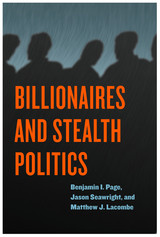
Page, Seawright, and Lacombe argue that while political contributions offer a window onto billionaires’ influence, especially on economic policy, they do not present a full picture of policy preferences and political actions. That is because on some of the most important issues, including taxation, immigration, and Social Security, billionaires have chosen to engage in “stealth politics.” They try hard to influence public policy, making large contributions to political parties and policy-focused causes, leading policy-advocacy organizations, holding political fundraisers, and bundling others’ contributions—all while rarely talking about public policy to the media. This means that their influence is not only unequal but also largely unaccountable to and unchallengeable by the American people. Stealth politics makes it difficult for ordinary citizens to know what billionaires are doing or mobilize against it. The book closes with remedies citizens can pursue if they wish to make wealthy Americans more politically accountable, such as public financing of political campaigns and easier voting procedures, and notes the broader types of reforms, such as a more progressive income tax system, that would be needed to increase political equality and reinvigorate majoritarian democracy in the United States.
In The Changing Frontier, Adam B. Jaffe and Benjamin Jones bring together a group of prominent scholars to consider the changes in science and innovation in the ensuing decades. The contributors take on such topics as changes in the organization of scientific research, the geography of innovation, modes of entrepreneurship, and the structure of research institutions and linkages between science and innovation. An important analysis of where science stands today, The Changing Frontier will be invaluable to practitioners and policy makers alike.
This volume, consisting of papers presented at a conference held at Williamsburg, Va., 2-3 April 1981, is a progress report on the National Bureau of Economic Research project, The Changing Roles of Debt and Equity in Financing U.S. Capital Formation. The National Bureau has undertaken this project—including the conference, the research described in this volume, and the publication of the volume itself—with the support of the American Council of Life Insurance.
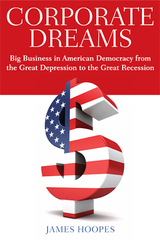
Public trust in corporations plummeted in the wake of the 2008 financial crisis, when “Lehman Brothers” and “General Motors” became dirty words for many Americans. In Corporate Dreams, James Hoopes argues that Americans still place too much faith in corporations and, especially, in the idea of “values-based leadership” favored by most CEOs. The danger of corporations, he suggests, lies not just in their economic power, but also in how their confused and undemocratic values are infecting Americans’ visions of good governance.
Corporate Dreams proposes that Americans need to radically rethink their relationships with big business and the government. Rather than buying into the corporate notion of “values-based leadership,” we should view corporate leaders with the same healthy suspicion that our democratic political tradition teaches us to view our political leaders. Unfortunately, the trend is moving the other way. Corporate notions of leadership are invading our democratic political culture when it should be the reverse.
To diagnose the cause and find a cure for our toxic attachment to corporate models of leadership, Hoopes goes back to the root of the problem, offering a comprehensive history of corporate culture inAmerica, from the Great Depression to today’s Great Recession. Combining a historian’s careful eye with an insider’s perspective on the business world, this provocative volume tracks changes in government economic policy, changes in public attitudes toward big business, and changes in how corporate executives view themselves.
Whether examining the rise of Leadership Development programs or recounting JFK’s Pyrrhic victory over U.S. Steel, Hoopes tells a compelling story of how America lost its way, ceding authority to the policies and values of corporate culture. But he also shows us how it’s not too late to return to our democratic ideals—and that it’s not too late to restore the American dream.

Economic Analysis and Infrastructure Investment explores the links between infrastructure investment and economic outcomes, analyzing key economic issues in the funding and management of infrastructure projects. It includes new research on the short-run stimulus effects of infrastructure spending, develops new estimates of the stock of US infrastructure capital, and explores incentive aspects of public-private partnerships with particular attention to their allocation of risk. The volume provides a reference for researchers seeking to study infrastructure issues and for policymakers tasked with determining the appropriate level and allocation of infrastructure spending.
These two volumes update the earlier Means-Tested Transfer Programs in the United States with a discussion of the many changes in means-tested government programs and the results of new research over the past decade. While some programs that experienced falling outlays in the years prior to the previous volume have remained at low levels of expenditure, many others have grown, including Medicaid, the Earned Income Tax Credit, the Supplemental Nutrition Assistance Program, and subsidized housing programs. For each program, the contributors describe its origins and goals, summarize its history and current rules, and discuss recipients’ characteristics and the types of benefits they receive.
This is an invaluable reference for researchers and policy makers that features detailed analyses of many of the most important transfer programs in the United States.
These two volumes update the earlier Means-Tested Transfer Programs in the United States with a discussion of the many changes in means-tested government programs and the results of new research over the past decade. While some programs that experienced falling outlays in the years prior to the previous volume have remained at low levels of expenditure, many others have grown, including Medicaid, the Earned Income Tax Credit, the Supplemental Nutrition Assistance Program, and subsidized housing programs. For each program, the contributors describe its origins and goals, summarize its history and current rules, and discuss recipients’ characteristics and the types of benefits they receive.
This is an invaluable reference for researchers and policy makers that features detailed analyses of many of the most important transfer programs in the United States.

The Western energy crisis was one of the great financial disasters of the past century. The crisis began in April 2000, when price spikes started to rattle California’s electricity markets. Decades later, some blame economic fundamentals and ignorant politicians, while others accuse the energy sellers who raided the markets. In Failure by Design, sociologist Georg Rilinger offers a different explanation, one that focuses on the practical challenges of market design. The unique physical attributes of electricity made it exceedingly difficult to introduce markets into the coordination of the electricity system, so market designers were brought in to construct the infrastructures that coordinate how market participants interact. An exercise in social engineering, these infrastructures were intended to guide market actors toward behavior that would produce optimal market results and facilitate grid management. Yet, though these experts spent their days worrying about incentive misalignment and market manipulation, they unintentionally created a system riddled with opportunities for destructive behavior. Rilinger’s analysis not only illuminates the California energy crisis but also develops a broader theoretical framework for thinking about markets as the products of organizational planning and the limits of social engineering, contributing broadly to sociological and economic thinking about the nature of markets.

A new framework for studying markets as the product of organizational planning and understanding the practical limits of market design.
The Western energy crisis was one of the great financial disasters of the past century. The crisis began in April 2000, when price spikes started to rattle California’s electricity markets. Decades later, some blame economic fundamentals and ignorant politicians, while others accuse the energy sellers who raided the markets. In Failure by Design, sociologist Georg Rilinger offers a different explanation, one that focuses on the practical challenges of market design. The unique physical attributes of electricity made it exceedingly difficult to introduce markets into the coordination of the electricity system, so market designers were brought in to construct the infrastructures that coordinate how market participants interact. An exercise in social engineering, these infrastructures were intended to guide market actors toward behavior that would produce optimal market results and facilitate grid management. Yet, though these experts spent their days worrying about incentive misalignment and market manipulation, they unintentionally created a system riddled with opportunities for destructive behavior. Rilinger’s analysis not only illuminates the California energy crisis but also develops a broader theoretical framework for thinking about markets as the products of organizational planning and the limits of social engineering, contributing broadly to sociological and economic thinking about the nature of markets.
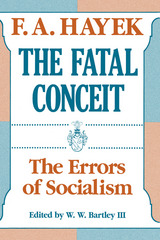
"The achievement of The Fatal Conceit is that it freshly shows why socialism must be refuted rather than merely dismissed—then refutes it again."—David R. Henderson, Fortune.
"Fascinating. . . . The energy and precision with which Mr. Hayek sweeps away his opposition is impressive."—Edward H. Crane, Wall Street Journal
F. A. Hayek is considered a pioneer in monetary theory, the preeminent proponent of the libertarian philosophy, and the ideological mentor of the Reagan and Thatcher "revolutions."
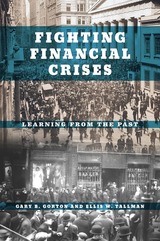
Yet these pre-Fed banking panics, as Gary B. Gorton and Ellis W. Tallman show, bear striking similarities to our recent financial crisis. Fighting Financial Crises thus turns to the past to better understand our uncertain present, investigating how panics during the National Banking Era played out and how they were eventually quelled and prevented. The authors then consider the Fed’s and the SEC’s reactions to the recent crisis, building an informative new perspective on how the modern economy works.
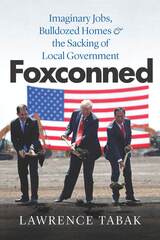
When Wisconsin governor Scott Walker stood shoulder to shoulder with President Trump and Speaker of the House Paul Ryan at the White House in July 2017, they painted a glorious picture of his state’s future. Foxconn, the enormous China-based electronics firm, was promising to bring TV manufacturing back to the United States with a $10 billion investment and 13,000 well-paying jobs. They actually were making America great again, they crowed.
Two years later, the project was in shambles. Ten thousand construction workers were supposed to have been building what Trump had promised would be “the eighth wonder of the world.” Instead, land had been seized, homes had been destroyed, and hundreds of millions of municipal dollars had been committed for just a few hundred jobs—nowhere near enough for Foxconn to earn the incentives Walker had shoveled at them. In Foxconned, journalist Lawrence Tabak details the full story of this utter collapse, which was disturbingly inevitable.
As Tabak shows, everything about Foxconn was a disaster. But worse, he reveals how the economic incentive infrastructure across the country is broken, leading to waste, cronyism, and the steady transfer of tax revenue to corporations. Tabak details every kind of financial chicanery, from eminent domain abuse to good old-fashioned looting—all to benefit a coterie of consultants, politicians, and contractors. With compassion and care, he also reports the distressing stories of the many individuals whose lives were upended by Foxconn.

This book reports the authors' research on one of the most sophisticated general equilibrium models designed for tax policy analysis. Significantly disaggregated and incorporating the complete array of federal, state, and local taxes, the model represents the U.S. economy and tax system in a large computer package. The authors consider modifications of the tax system, including those being raised in current policy debates, such as consumption-based taxes and integration of the corporate and personal income tax systems. A counterfactual economy associated with each of these alternatives is generated, and the possible outcomes are compared.
Shows how the proliferation of contractors within the federal agencies is fundamentally reshaping American governance.
Much of what the federal government does today is carried out by people the public rarely sees. While debates focus on bureaucrats and political appointees, agencies increasingly rely on a vast contractor workforce to perform functions ranging from tech support to policy analysis to regulatory drafting services. This quiet transformation has altered how the government functions while simultaneously preserving the public-facing image of a bureaucracy run by civil servants. The federal government does not keep reliable data on how many contractors it employs, but many estimates suggest that contractors outnumber career bureaucrats.
In Going Private, Rachel Augustine Potter explains how this shift reshapes the everyday operation of the administrative state and coalesces power within the presidency. Easily hired and easily fired, contractors have strong incentives to please their clients, making them malleable to the president’s will. Presidents from both parties have leveraged these features and learned to rely on contractors to advance political priorities, bypass uncooperative bureaucrats, and gain increased control over agency work.
Drawing on new data and interviews, Going Private argues that outsourcing is not merely an administrative convenience. Rather, it is a defining feature of contemporary governance—one that complicates accountability, blurs the boundaries of the administrative state, and alters the exercise of presidential power.
On the faulty intellectual origins of shareholder primacy—and how policy can win back what’s been lost.
In an era of shareholder primacy, share price is king. Businesses operate with short-term goals to deliver profits to shareholders, enjoying stability (and bonuses) in the process. While the public bemoans the doctrine for its insularity and wealth-consolidating effects, its influence over corporate governance persists. Good Company offers an exacting argument for why shareholder primacy was never the right model to follow for truly understanding how corporations operate.
Lenore Palladino shows that corporations draw power from public charters—agreements that allow corporations to enjoy all manner of operational benefits. In return, companies are meant to innovate for the betterment of the societies that support them. However, that debt—increasingly wielded for stock buybacks and shareholder bonuses—is not being repaid. Palladino theorizes a modern corporation that plays its intended role while delivering social and economic good in the process and offers tangible policy solutions to make this a reality. Good Company is both an expert introduction to the political economy of the firm—as it was, as it is, as it can be—and a calibrating examination of how public policy can shape companies, and societies, for the better.
The American economy has provided a level of well-being that has consistently ranked at or near the top of the international ladder. A key source of this success has been widespread participation in political and economic processes. In The Government and the American Economy, leading economic historians chronicle the significance of America’s open-access society and the roles played by government in its unrivaled success story.
America’s democratic experiment, the authors show, allowed individuals and interest groups to shape the structure and policies of government, which, in turn, have fostered economic success and innovation by emphasizing private property rights, the rule of law, and protections of individual freedom. In response to new demands for infrastructure, America’s federal structure hastened development by promoting the primacy of states, cities, and national governments. More recently, the economic reach of American government expanded dramatically as the populace accepted stronger limits on its economic freedoms in exchange for the increased security provided by regulation, an expanded welfare state, and a stronger national defense.
Two and a half centuries after the American Revolution the United States stands as one of the greatest powers on earth and the undoubted leader of the western hemisphere. This stupendous evolution was far from a foregone conclusion at independence. The conquest of the North American continent required violence, suffering, and bloodshed. It also required the creation of a national government strong enough to go to war against, and acquire territory from, its North American rivals.
In A Hercules in the Cradle, Max M. Edling argues that the federal government’s abilities to tax and borrow money, developed in the early years of the republic, were critical to the young nation’s ability to wage war and expand its territory. He traces the growth of this capacity from the time of the founding to the aftermath of the Civil War, including the funding of the War of 1812 and the Mexican War. Edling maintains that the Founding Fathers clearly understood the connection between public finance and power: a well-managed public debt was a key part of every modern state. Creating a debt would always be a delicate and contentious matter in the American context, however, and statesmen of all persuasions tried to pay down the national debt in times of peace.
To understand why the Federal Reserve acted as it did at key points in its history, Meltzer draws on meeting minutes, correspondence, and other internal documents (many made public only during the 1970s) to trace the reasoning behind its policy decisions. He explains, for instance, why the Federal Reserve remained passive throughout most of the economic decline that led to the Great Depression, and how the Board's actions helped to produce the deep recession of 1937 and 1938. He also highlights the impact on the institution of individuals such as Benjamin Strong, governor of the Federal Reserve Bank of New York in the 1920s, who played a key role in the adoption of a more active monetary policy by the Federal Reserve. Meltzer also examines the influence the Federal Reserve has had on international affairs, from attempts to build a new international financial system in the 1920s to the Bretton Woods Agreement of 1944 that established the International Monetary Fund and the World Bank, and the failure of the London Economic Conference of 1933.
Written by one of the world's leading economists, this magisterial biography of the Federal Reserve and the people who helped shape it will interest economists, central bankers, historians, political scientists, policymakers, and anyone seeking a deep understanding of the institution that controls America's purse strings.
"It was 'an unprecedented orgy of extravagance, a mania for speculation, overextended business in nearly all lines and in every section of the country.' An Alan Greenspan rumination about the irrational exuberance of the late 1990s? Try the 1920 annual report of the board of governors of the Federal Reserve. . . . To understand why the Fed acted as it did—at these critical moments and many others—would require years of study, poring over letters, the minutes of meetings and internal Fed documents. Such a task would naturally deter most scholars of economic history but not, thank goodness, Allan Meltzer."—Wall Street Journal
"A seminal work that anyone interested in the inner workings of the U. S. central bank should read. A work that scholars will mine for years to come."—John M. Berry, Washington Post
"An exceptionally clear story about why, as the ideas that actually informed policy evolved, things sometimes went well and sometimes went badly. . . . One can only hope that we do not have to wait too long for the second installment."—David Laidler, Journal of Economic Literature
"A thorough narrative history of a high order. Meltzer's analysis is persuasive and acute. His work will stand for a generation as the benchmark history of the world's most powerful economic institution. It is an impressive, even awe-inspiring achievement."—Sir Howard Davies, Times Higher Education Supplement

In this collection of writings, Nobel laureate Friedrich A. Hayek discusses topics from moral philosophy and the methods of the social sciences to economic theory as different aspects of the same central issue: free markets versus socialist planned economies. First published in the 1930s and 40s, these essays continue to illuminate the problems faced by developing and formerly socialist countries.
F. A. Hayek, recipient of the Medal of Freedom in 1991 and winner of the Nobel Memorial Prize in Economics in 1974, taught at the University of Chicago, the University of London, and the University of Freiburg. Among his other works published by the University of Chicago Press is The Road to Serfdom, now available in a special fiftieth anniversary edition.
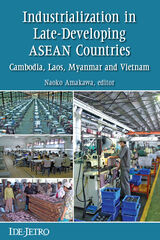
The outcomes differed significantly owing to geographical location, government policies, and internal economic conditions. Industrialization in Late-Developing ASEAN Countries explores these differences through case studies based on an extended research program conducted by the Institute of Developing Economies in Tokyo, which offered insights into models of economic growth, and into the trajectories followed by the four countries examined.
Inflation, Tax Rules, and Capital Formation brings together fourteen papers that show the importance of the interaction between tax rules and monetary policy. Based on theoretical and empirical research, these papers emphasize the importance of including explicit specifications of the tax system in such study.
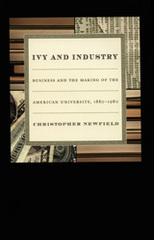
Newfield views management as neither inherently good nor bad, but rather as a challenge to and tool for negotiating modern life. In Ivy and Industry he integrates business and managerial philosophies from Taylorism through Tom Peters’s “culture of excellence” with the speeches and writings of leading university administrators and federal and state education and science policies. He discusses the financial dependence on industry and government that was established in the university’s early years and the equal influence of liberal arts traditions on faculty and administrators. He describes the arrival of a managerial ethos on campus well before World War II, showing how managerial strategies shaped even fields seemingly isolated from commerce, like literary studies. Demonstrating that business and the humanities have each had a far stronger impact on higher education in the United States than is commonly thought, Ivy and Industry is the dramatic story of how universities have approached their dual mission of expanding the mind of the individual while stimulating economic growth.
This book contains new research, both empirical and methodological, on the measurement and management of these costs and risks. The analyses encompass a broad spectrum of federal programs, including housing, catastrophe insurance, student loans, social security, and environmental liabilities. Collectively, the contributions gathered in Measuring and Managing Federal Financial Risk demonstrate that the logic of financial economics can be a useful tool for studying a range of federal activities.

This accessible, engaging text examines the impact of the trends that have shaped Michigan’s economy, and offers innovative solutions to the current economic crisis. Charles Ballard’s illuminating book explores the structure of Michigan’s economy, including its roots in agriculture, the rise and fall of the automotive industry, and the long-term decline of manufacturing. Ballard proposes that investing in education to create a highly skilled workforce can help Michigan’s people to compete in the rapidly evolving global economy. Discussing the state’s transportation infrastructure, environment, public expenditures, and tax system, Ballard describes how changes in attitudes, policies, and political institutions will help to promote economic recovery and growth.

The activities of state governments have always been important in the American federal system. However, recent partisan gridlock in Washington, DC has placed states at the forefront of policymaking as the national government maintains the status quo. Pennsylvania Politics and Policy, Volume 1 is designed to showcase current issues of interest to Pennsylvanians. This reader contains updated chapters from recent issues of Commonwealth: A Journal of Pennsylvania Politics and Policy on education, health care, public finance, tax policy, environmental policy, alcohol policy and more. Each chapter is supplemented by forums with arguments in support of or opposed to contested elements of state policy, discussion questions, and suggestions for further reading.
In addition, Pennsylvania Politics and Policy, Volume 1 includes a comprehensive guide to researching state government and policy online. It is designed as a text or supplement for college or advanced high school classes in American government, state and local politics, public policy, and public administration.
Contributors include: David G. Argall, Tom Baldino, Michele Deegan, Michael Dimino, George Hale, Rachel L. Hampton , Paula Duda Holoviak Jon Hopcraft, Vera Krekanova, Maureen W. McClure, Barry G. Rabe, Marguerite Roza, Lanethea Mathews Shultz, Jennie Sweet-Cushman, Amanda Warco, and the editors.
Designed to showcase current issues of interest, Pennsylvania Politics and Policy, Volume 2 isthe second reader consisting of updated chapters from recent issues of Commonwealth: A Journal of Pennsylvania Politics and Policy. The editors and contributors to this volume focus on government institutions, election laws, the judiciary, government finance and budgeting, the opioid crisis, childcare, property taxes, environmental policy, demographics, and more. Each chapter is supplemented by discussion questions, suggestions for further reading, and forums with arguments in support of or opposed to contested elements of state policy.
In addition, Pennsylvania Politics and Policy, Volume 2 includes a detailed guide to researching state government and policy online, as well as a comprehensive chapter on the structure of Pennsylvania government. It is designed as a text or supplement for college or advanced high school classes in American government, state and local politics, public policy, and public administration.
Contributors include: John Arway, Jenna Becker Kane, Jeffrey Carroll, Bob Dick, Ashley Harden, Stefanie I. Kasparek, Vera Krekanova, Maureen W. McClure, John F. McDonald, Josh Shapiro, Marc Stier, Jennie Sweet-Cushman, James Vike, and the editors.
Certain to provoke controversy, this interdisciplinary volume brings together policy experts to provide a coherent analysis of the most important economic policy changes of the 1980s. Through a detailed examination of voting patterns, monetary and fiscal policies, welfare spending, tax reform, minimum wage legislation, the savings and loan collapse, and international trade policy, the authors explore how politics can influence the direction of economic policymaking.


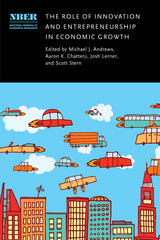
We live in an era in which innovation and entrepreneurship seem ubiquitous, particularly in regions like Silicon Valley, Boston, and the Research Triangle Park. But many metrics of economic growth, such as productivity growth and business dynamism, have been at best modest in recent years. The resolution of this apparent paradox is dramatic heterogeneity across sectors, with some industries seeing robust innovation and entrepreneurship and others seeing stagnation. By construction, the impact of innovation and entrepreneurship on overall economic performance is the cumulative impact of their effects on individual sectors. Understanding the potential for growth in the aggregate economy depends, therefore, on understanding the sector-by-sector potential for growth. This insight motivates the twelve studies of different sectors that are presented in this volume. Each study identifies specific productivity improvements enabled by innovation and entrepreneurship, for example as a result of new production technologies, increased competition, or new organizational forms. These twelve studies, along with three synthetic chapters, provide new insights on the sectoral patterns and concentration of the contributions of innovation and entrepreneurship to economic growth.
Administrative burdens are the learning, compliance, and psychological costs that individuals incur during encounters with public services. While some burdens are created unintentionally, others are deliberately constructed as barriers to limit claims to programs and services. Often, burdens fall most heavily on marginalized groups, preventing them from resources they need. In this double issue of RSF public administration scholar Pamela Herd, economist Hilary Hoynes, political scientists Jamila Michener and Donald Moynihan, and an interdisciplinary group of contributors explore how administrative burdens shape inequality.
Issue 1 examines how administrative burdens impact Medicaid and health inequality, student loan repayment programs, and immigration to the U.S. Emily Rauscher and Ailish Burns find that combinations of reforms to reduce administrative burdens in the late 1980s increased Medicaid enrollment and improved infant health nearly as much as Medicaid expansion. Adam Goldstein and colleagues show that administrative burdens in enrolling in income-driven repayment student loan programs causes borrowers with lower socioeconomic status to be disproportionately excluded from these programs. Lilly Yu finds that dramatic changes to immigration law and policy during the Trump Administration led immigration lawyers to inadvertently exacerbate inequality among undocumented and vulnerable immigrants’ access to legal representation.
Issue 2 looks at the role of administrative burdens in experiences with child and family support programs, the child welfare system, disaster and housing relief programs, and housing support programs. Carolyn Barnes and colleagues find that mothers’ perceptions of the costs and benefits of participation in the Special Supplemental Nutrition Assistance Program for Women, Infants, and Children (WIC) vary over time and influence whether they choose to enroll or continue participating in the program. Ethan J. Raker and Tyler M. Woods find applications from poor communities of color for Federal Emergency Management Agency (FEMA) housing aid after Hurricanes Katrina and Rita were disproportionately denied or delayed due to burdensome program requirements and implementation. Stephanie Casey Pierce and Stephanie Moulton reveal that reforms to reduce administrative burden in foreclosure programs are associated with a significant increase in the rate of benefit receipt and decrease in the foreclosure rate. Frank Edwards and colleagues show child welfare system-involved parents must navigate considerable administrative burdens in order to retain custody of their children.
This volume of RSF sheds light on the origins, experiences, and consequences of administrative burdens.
Administrative burdens are the learning, compliance, and psychological costs that individuals incur during encounters with public services. While some burdens are created unintentionally, others are deliberately constructed as barriers to limit claims to programs and services. Often, burdens fall most heavily on marginalized groups, preventing them from resources they need. In this double issue of RSF public administration scholar Pamela Herd, economist Hilary Hoynes, political scientists Jamila Michener and Donald Moynihan, and an interdisciplinary group of contributors explore how administrative burdens shape inequality.
Issue 1 examines how administrative burdens impact Medicaid and health inequality, student loan repayment programs, and immigration to the U.S. Emily Rauscher and Ailish Burns find that combinations of reforms to reduce administrative burdens in the late 1980s increased Medicaid enrollment and improved infant health nearly as much as Medicaid expansion. Adam Goldstein and colleagues show that administrative burdens in enrolling in income-driven repayment student loan programs causes borrowers with lower socioeconomic status to be disproportionately excluded from these programs. Lilly Yu finds that dramatic changes to immigration law and policy during the Trump Administration led immigration lawyers to inadvertently exacerbate inequality among undocumented and vulnerable immigrants’ access to legal representation.
Issue 2 looks at the role of administrative burdens in experiences with child and family support programs, the child welfare system, disaster and housing relief programs, and housing support programs. Carolyn Barnes and colleagues find that mothers’ perceptions of the costs and benefits of participation in the Special Supplemental Nutrition Assistance Program for Women, Infants, and Children (WIC) vary over time and influence whether they choose to enroll or continue participating in the program. Ethan J. Raker and Tyler M. Woods find applications from poor communities of color for Federal Emergency Management Agency (FEMA) housing aid after Hurricanes Katrina and Rita were disproportionately denied or delayed due to burdensome program requirements and implementation. Stephanie Casey Pierce and Stephanie Moulton reveal that reforms to reduce administrative burden in foreclosure programs are associated with a significant increase in the rate of benefit receipt and decrease in the foreclosure rate. Frank Edwards and colleagues show child welfare system-involved parents must navigate considerable administrative burdens in order to retain custody of their children.
This volume of RSF sheds light on the origins, experiences, and consequences of administrative burdens.
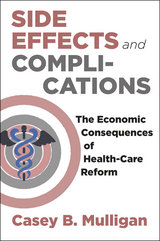
Looking specifically at the labor market, Mulligan reveals how the costs of health care under the ACA actually create implicit taxes on individuals, and how increased costs to employers will be passed on to their employees. Mulligan shows how, as a result, millions of workers will find themselves in a situation in which full-time work, adjusted for the expense of health care, will actually pay less than part-time work or even not working at all. Analyzing the incentives—or lack thereof—for people to earn more by working more, Mulligan offers projections on how many hours people will work and how productively they will work, as well as how much they will spend in general. Using the powerful tools of economics, he then illustrates the detrimental consequences on overall employment in the near future.
Drawing on extensive knowledge of the labor market and the economic theories at its foundation, Side Effects and Complications offers a crucial wake-up call about the risks the ACA poses for the economy. Plainly laying out the true costs of the ACA, Mulligan’s grounded and thorough predictions are something that workers and policy makers cannot afford to ignore.

Many of us suspect that Social Security faces eventual bankruptcy. But the government projects its future finances using long outdated methods. Employing a more up-to-date approach, Jagadeesh Gokhale here argues that the program faces insolvency far sooner than previously thought.
To assess Social Security’s fate more accurately under current and alternative policies, Gokhale constructs a detailed simulation of the forces shaping American demographics and the economy to project their future evolution. He then uses this simulation to analyze six prominent Social Security reform packages—two liberal, two centrist, and two conservative—to demonstrate how far they would restore the program’s financial health and which population groups would be helped or hurt in the process.
Arguments over Social Security have raged for decades, but they have taken place in a relative informational vacuum; Social Security provides the necessary bedrock of analysis that will prove vital for anyone with a stake in this important debate.
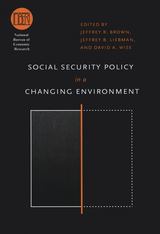

The sixth stage of an ongoing research project studying the relationship between social security programs and labor force participation, this volume draws on the work of an eminent group of international economists to consider the extent to which differences in labor force participation across countries are determined by the provisions of disability insurance programs. Presented in an easily comparable way, their research covers twelve countries, including Canada, Japan, and the United States, and considers the requirements of disability insurance programs, as well as other pathways to retirement.
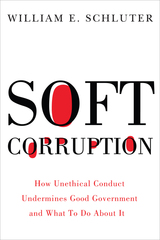
In this searing personal narrative, the former state senator recounts his fight to expose and reform these acts of government misconduct. Not afraid to cite specific cases of soft corruption in New Jersey politics, he paints a vivid portrait of public servants who care more about political power and personal gain than the public good. By recounting events that he witnessed firsthand in the Garden State, he provides dramatic illustrations of ills that afflict American politics nationwide.
As he identifies five main forms of soft corruption, Schluter diagnoses the state government’s ethical malaise, and offers concrete policy suggestions for how it might be cured. Not simply a dive through the muck of New Jersey politics, Soft Corruption is an important first step to reforming our nation’s political system, a book that will inspire readers to demand that our elected officials can and must do better.
Visit: www.softcorruption.com (http://www.softcorruption.com)
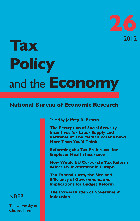
Natasha Sarin, Lawrence Summers, Owen Zidar, and Eric Zwick study how investors respond to taxes on capital gains, whether their incentives to invest are affected by those taxes, and whether that responsiveness has changed over time. Ethan Rouen, Suresh Nallareddy, and Juan Carlos Suárez Serrato revisit the question of whether cuts to corporate taxes increase income inequality, bringing new data and new statistical techniques to generate fresh findings. Alan Auerbach and William Gale investigate whether the advantages and disadvantages of different types of taxation are affected when interest rates stay low for long periods, as has been the case in the U.S. for many years. Nora Gordon and Sarah Reber study the distributional impact of emergency subsidies to schools made by the federal government during the recent COVID pandemic and whether those subsidies were sufficient to cover the increased school costs induced by the pandemic. Jacob Goldin, Elaine Maag, and Katherine Michelmore investigate the fiscal cost of an expansion of the U.S. child tax credit, which has been discussed extensively in policy circles recently. They take into account not only the direct expenditure on the allowance but how cost is affected by the existence of work incentives and by possible beneficial effects on childrens’ adult earnings.
Assaf Razin and Joel Slemrod gathered experts from two traditionally distinct specialties, taxation and international economics, to lay the groundwork for understanding these issues, which will require the attention of scholars and policymakers for years to come.
Contributors describe the basic provisions of the U.S. tax code with respect to international transactions, highlighting the changes contained in the U.S. Tax Reform Act of 1986; explore the ways that tax systems influence the decisions of multinationals; examine the effect of taxation on trade patterns and capital flows; and discuss the implications of the opening world economy for the design of optimal international tax policy. The papers will prove valuable not only to scholars and students, but to government economists and international tax lawyers as well.
Nobel Prize winning economist and former World Bank Chief Economist, Joseph Stiglitz, has repeatedly discussed the importance of transparency in policymaking at the World Bank and International Monetary Fund. He believes a lack of transparency in the two institutions has lead to bad decisions. Bad decisions at IMF and the World Bank mean real pain for the world’s poor.
There is a perception that “the suits” close the World Bank’s doors to deliberate the fate of earth’s poorest populations and only when the doors are unlocked do people living in poverty learn what has been decided about their future. Meanwhile donations are down. The bank’s critical International Development Association’s funding has dropped dramatically. Managers are discouraged by studies examining the World Bank’s effectiveness. How, they wonder, could such large beneficences have so little impact on poor populations?
Events of the past two years have only increased the stakes. First, rising fuel prices caused a worldwide rise in the price of basic foods. Then the deepest economic downturn since the Great Depression sapped donor nation’s coffers. By the end of the Bush administration in 2009, giving by the USA lagged more than any other wealthy nation.
In 1999, two Bank researchers understood the situation was already on a precipice. World Bank loans had ceased to make significant impact on poverty in many client nations. Certain governments and multi-national corporations were destroying environments and desecrating indigenous cultures, all to achieve short-term gains for a fortunate few.
Demonstrable successes were few, and every World Bank conference became a melee of demonstrators and police. The two researchers asked themselves whether it was possible to open up the institution by increased transparency, improve its accountability, and mute criticism. They decided to launch an internet-based broadcast to disseminate unedited videos of internal discussions and debates. The bank’s culture and bureaucracy, hardened over a half-century, presented them with a formidable foe. Some powerful officials feared the transparency initiative; others withheld public support while standing on the sidelines. The World Bank Unveiled documents this epic struggle. It is the story of a revolution to transform the World Bank and a case study of the power of the Bank to transform people’s lives.
READERS
Browse our collection.
PUBLISHERS
See BiblioVault's publisher services.
STUDENT SERVICES
Files for college accessibility offices.
RECENTLY PUBLISHED







UChicago Accessibility Resources
home | accessibility | search | about | contact us
BiblioVault ® 2001 - 2026
The University of Chicago Press