
 A SCHOLARLY BOOK REPOSITORY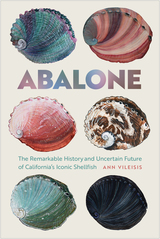
From rocky coves at Mendocino and Monterey to San Diego’s reefs, abalone have held a cherished place in California culture for millennia. Prized for iridescent shells and delectable meat, these unique shellfish inspired indigenous artisans, bohemian writers, California cuisine, and the popular sport of skin diving, but also became a highly coveted commercial commodity. Mistakenly regarded as an inexhaustible seafood, abalone ultimately became vulnerable to overfishing and early impacts of climate change.
As the first and only comprehensive history of these once abundant but now tragically imperiled shellfish, Abalone guides the reader through eras of discovery, exploitation, scientific inquiry, fierce disputes between sport and commercial divers, near-extinction, and determined recovery efforts. Combining rich cultural and culinary history with hard-minded marine science, grassroots activism, and gritty politics, Ann Vileisis chronicles the plight of California’s abalone species and the growing biological awareness that has become crucial to conserve these rare animals into the future.
Abalone reveals the challenges of reckoning with past misunderstandings, emerging science, and political intransigence, while underscoring the vulnerability of wild animals to human appetites and environmental change. An important contribution to the emerging field of marine environmental history, this is a must-read for scientists, conservationists, environmental historians, and all who remember abalone fondly.
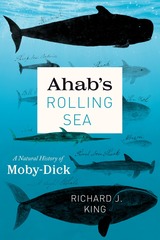
A revelation for Moby-Dick devotees and neophytes alike, Ahab’s Rolling Sea is a chronological journey through the natural history of Melville’s novel. From white whales to whale intelligence, giant squids, barnacles, albatross, and sharks, Richard J. King examines what Melville knew from his own experiences and the sources available to a reader in the mid-1800s, exploring how and why Melville might have twisted what was known to serve his fiction. King then climbs to the crow’s nest, setting Melville in the context of the American perception of the ocean in 1851—at the very start of the Industrial Revolution and just before the publication of On the Origin of Species. King compares Ahab’s and Ishmael’s worldviews to how we see the ocean today: an expanse still immortal and sublime, but also in crisis. And although the concept of stewardship of the sea would have been entirely foreign, if not absurd, to Melville, King argues that Melville’s narrator Ishmael reveals his own tendencies toward what we would now call environmentalism.
Featuring a coffer of illustrations and an array of interviews with contemporary scientists, fishers, and whale watch operators, Ahab’s Rolling Sea offers new insight not only into a cherished masterwork and its author but also into our evolving relationship with the briny deep—from whale hunters to climate refugees.
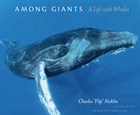
It all started in 1965 with a guy riding a whale. The guy was Flip Nicklin’s father, Chuck, and the whale was an unlucky Bryde’s Whale that had gotten caught up in some anchor line. Hoping to free the whale, Chuck and some friends took their boat as near as they could, and, just before they cut it loose, Chuck posed astride it for a photo.
That image, carried on wire services nationwide, became a sensation and ultimately changed the life of Chuck’s young son, Flip. In the decades since that day, Flip Nicklin has made himself into the world’s premier cetacean photographer. It’s no exaggeration to say that his photos, published in such venues as National Geographic and distributed worldwide, have virtually defined these graceful, powerful creatures in the mind of the general public—even as they helped open new ground in the field of marine mammalogy.
Among Giants tells the story of Nicklin’s life and career on the high seas, from his first ill-equipped shoots in the mid-1970s through his long association with the National Geographic Society to the present, when he is one of the founders of Whale Trust, a nonprofit conservation and research group. Nicklin is equal parts photographer, adventurer, self-trained scientist, and raconteur, and Among Giants reflects all those sides, matching breathtaking images to firsthand accounts of their making, and highlighting throughout the importance of conservation and new advances in our understanding of whale behavior. With Nicklin as our guide, we see not just whales but also our slowly growing understanding of their hidden lives, as well as the evolution of underwater photography—and the stunning clarity and drama that can be captured when a determined, daring diver is behind the lens.
Humpbacks, narwhals, sperm whales, orcas—these and countless other giants of the ocean parade through these pages, spouting, breaching, singing, and raising their young. Nicklin’s photographs bring us so completely into the underwater world of whales that we can’t help but feel awe, while winning, personal accounts of his adventures remind us of what it’s like to be a lone diver sharing their sea.
For anyone who has marveled at the majesty of whales in the wild, Among Giants is guaranteed to be inspiring, even moving—its unmatched images of these glorious beings an inescapable reminder of our responsibility as stewards of the ocean.

A captivating meditation on coral beyond iconic tropical corals
Coralations is a philosophical exploration of the media that come into focus when we shift our attention from the highly recognizable coral of the tropics. Focusing on soft corals and deep-water corals leads to different narratives about climate change and involves different analogies to media. Through thought-provoking analyses of photography, science fiction, visual art, and scientific images, Melody Jue renews our curiosity and broadens our understanding of corals beyond the dominant narratives about their endangerment. Coralations shows how paying attention to particular corals can change what we take for granted.
Because every drug certified by the FDA must be tested using the horseshoe crab derivative known as Limulus lysate, a multimillion-dollar industry has emerged involving the license to bleed horseshoe crabs and the rights to their breeding grounds. William Sargent presents a thoroughly accessible insider’s guide to the discovery of the lysate test, the exploitation of the horseshoe crab at the hands of multinational pharmaceutical conglomerates, local fishing interests, and the legal and governmental wrangling over the creatures’ ultimate fate. In the end, the story of the horseshoe crab is a sobering reflection on the unintended consequences of scientific progress and the danger of self-regulated industries controlling a limited natural resource. This new edition brings the story up to date as companies race to manufacture alternatives to the horseshoe crab blood, which is now essential for testing vaccines such as those developed to counter COVID-19. However, horseshoe crab populations are still dwindling, with profound implications not only for the future of the crabs themselves but also for the ecosystems that depend on them.
A comprehensive assessment of the 99 known species of crayfishes inhabiting the state of Alabama
Crayfishes are common organisms in many freshwater habitats. They are usually the largest invertebrates and often represent the greatest amount of invertebrate biomass in their environments. Identified as a keystone species in many ecological communities, aquatic biologists are fond of saying “they eat everything, and everything eats them.”
Crayfishes—sometimes called crawfishes, crawdads, mudbugs, ditchbugs, yabbies, and flusskrebs—are taxonomically and ecologically a diverse group of aquatic crustaceans. There are more than 600 known species worldwide and North America alone is home to more than 400. As home to 99 documented species, Alabama is a global hotspot for crayfish diversity.
Crayfishes of Alabama is the first comprehensive reference work on the subject and provides the most up-to-date information on the vast range of crayfishes known to reside in Alabama. The authors have collected specimens and data from the state’s major and minor waterways and lakes, as well as specialized habitats such as burrows, caves, roadside ditches, marshes, swamps, and temporary autumnal ponds. This volume represents the most in-depth treatment of crayfishes found in the southeastern United States and offers detailed species accounts including descriptions of morphological characters, color, maximum size, comparative species, distribution and habitat, biology, crayfish associates, and conservation status. The species accounts are accentuated with color photographs, photographic morphological plates, and dot maps showing state and national distributions. A photographic key is provided to guide the identification of all 99 species.
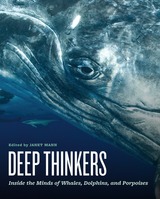
Diving into our current understanding of and dynamic research on dolphin and whale cognition, communication, and culture, Deep Thinkers reveals how incredibly sophisticated these mammals are—and how much we can learn about other animal minds by studying cetacean behavior. Through a combination of fascinating text and more than 150 beautiful and informative illustrations, chapters compare the intelligence markers of cetaceans with those of birds, bats, and primates, asking how we might properly define intelligence in nonhumans. As all-encompassing and profound as the seas in which these deep cetacean cultures have evolved, Deep Thinkers is an awesome and inspiring journey into the fathoms—a reminder of what we gain through their close study, and of what we lose when the great minds of the sea disappear.
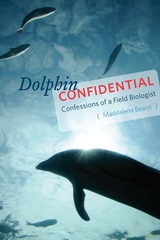
In this intimate narrative, Bearzi recounts her experiences at sea, tracing her own evolution as a woman and a scientist from her earliest travails to her transformation into an advocate for conservation and dolphin protection. These compelling, in-depth descriptions of her fieldwork also present a captivating look into dolphin social behavior and intelligence. The central part of the book is devoted to the metropolitan bottlenose dolphins of California, as Bearzi draws on her extensive experience to offer insights into the daily lives of these creatures—as well as the difficulties involved in collecting the data that transforms hunches into hypotheses and eventually scientific facts. The book closes by addressing the critical environmental and conservation problems facing these magnificent, socially complex, highly intelligent, and emotional beings.
An honest, down-to-earth analysis of what it means to be a marine biologist in the field today, Dolphin Confidential offers an entertaining, refreshingly candid, and always informative description of life among the dolphins.
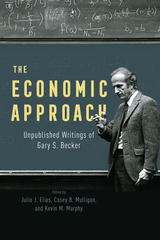
Now in paperback, a revealing collection from the intellectual titan whose work shaped the modern world.
As an economist and public intellectual, Gary S. Becker was a giant. The recipient of a Nobel Prize, a John Bates Clark Medal, and a Presidential Medal of Freedom, Becker is widely regarded as the greatest microeconomist in history.
After forty years at the University of Chicago, Becker left a slew of unpublished writings that used an economic approach to human behavior, analyzing such topics as preference formation, rational indoctrination, income inequality, drugs and addiction, and the economics of family.
These papers unveil the process and personality—direct, critical, curious—that made him a beloved figure in his field and beyond. The Economic Approach examines these extant works as a capstone to the Becker oeuvre—not because the works are perfect, but because they offer an illuminating, instructive glimpse into the machinations of an economist who wasn’t motivated by publications. Here, and throughout his works, an inquisitive spirit remains remarkable and forever resonant.
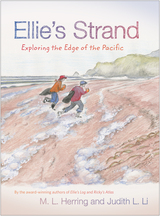
Green Earth Book Award, Honor Book
There are days in late winter when the Pacific coast enjoys a brief spell of clear, warm weather. Most of the winter storms have passed and the summer fog has not yet settled in. This is when some coastal communities plan their annual beach clean-ups.
In this sequel to Ellie’s Log and Ricky’s Atlas, Ellie and Ricky travel to the Oregon coast from their home in the Cascade Mountains to help with a one-day beach clean-up. Hoping to find a prized Japanese glass float, they instead find more important natural treasures, and evidence of an ocean that needs its own global-scale clean-up.
Ellie and Ricky are amazed by their discoveries at the edge of the world’s largest ocean. Together, they realize the power of volunteering and grapple with the challenges of ocean conservation. In her journal Ellie records her observations of their adventures in her own words and pictures.
With charming pen-and-ink drawings and a compelling story, Ellie's Strand makes coastal science exciting for upper elementary school students. It will be a treasured companion for young beach explorers everywhere.
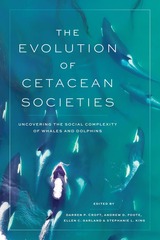
Cetaceans—whales, dolphins, and porpoises—represent an evolutionary peak with respect to their advanced cognitive capacities; flexible communication systems; and structured, multilevel societies. Indeed, the social lives of whales and dolphins have long fascinated scientists and the public alike. The Evolution of Cetacean Societies provides a comprehensive overview of the significant advancements made in studying cetacean behavior and ecology over the last twenty-five years, focusing on our growing understanding of these animals’ complex social lives.
Bringing together scientists from multiple disciplines, the volume summarizes key innovations and progress related to studying cetacean societies’ cultural and genetic basis, their complex social structures, their use of cooperation and patterns of social conflict, and their significant interactions with humans. Each chapter provides an in-depth account of the social lives of whales and dolphins, incorporating the latest cutting-edge research from genomics, communication, network analysis, and animal culture to explain how these animals form societies, maintain relationships, and share information. The final chapters focus on the existential threats facing these diverse and charismatic species, how human-cetacean interactions have shaped our perceptions, and what scientists can learn from their diverse social lives by championing researcher diversity in marine mammal science. The result is an essential and forward-looking book that both contextualizes the lessons of the past two decades and questions the challenges these enigmatic species might face in the future.
Published in 2000 by Chicago, Cetacean Societies: Field Studies of Dolphins and Whales, edited by Janet Mann, Richard C. Connor, Peter Tyack, and Hal Whitehead, inspired a generation of marine biologists. In this new volume, Darren P. Croft, Andrew D. Foote, Ellen C. Garland, and Stephanie L. King—all respected cetacean researchers—offer a worthy successor.
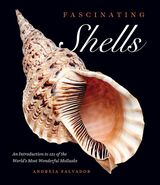
Beautiful photographs of stunning shells from London's Natural History Museum, home to one of the most significant and comprehensive collections in the world.
Collected and treasured for their beauty, used in religious rituals, or even traded as currency, shells have fascinated humans for millennia. Ancient and enchanting, dazzling in form and variety, these beautiful objects come from mollusks, one of the most diverse groups in the animal kingdom, including snails, oysters, cuttlefish, and chitons. Soft-bodied, these creatures rely on shells for protection from enemies and their environments, from snowy mountains to arid deserts, in deep-sea hydrothermal vents and the jungles of the tropics, on rocky shores, and in coral reefs.
In this book, mollusk expert Andreia Salvador profiles some of the world’s most beautiful and quirky shells, each selected from the more than eight million specimens held in the collection at London’s Natural History Museum. We lock eyes with the hundred-eyed cowry, named after "the all-seeing one," the giant Argus Panoptes of Greek mythology. We see how shells' appearances translate into defense strategies, as with the zigzag nerite, which varies its patterning to deceive and confuse predators. And we meet shell inhabitants, such as the amber snail, which eats earthworms by sucking them up like spaghetti. Reproduced in full color and striking detail, these shells have much to reveal about the history of collecting, the science of taxonomy, and the human desire to understand the natural world.
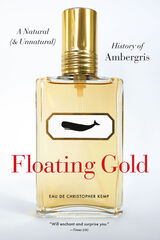
A fascinating natural history of an incredibly curious substance.
“Preternaturally hardened whale dung” is not the first image that comes to mind when we think of perfume, otherwise a symbol of glamour and allure. But the key ingredient that makes the sophisticated scent linger on the skin is precisely this bizarre digestive by-product—ambergris. Despite being one of the world’s most expensive substances (its value is nearly that of gold and has at times in history been triple it), ambergris is also one of the world’s least known. But with this unusual and highly alluring book, Christopher Kemp promises to change that by uncovering the unique history of ambergris.
A rare secretion produced only by sperm whales, which have a fondness for squid but an inability to digest their beaks, ambergris is expelled at sea and floats on ocean currents for years, slowly transforming, before it sometimes washes ashore looking like a nondescript waxy pebble. It can appear almost anywhere but is found so rarely, it might as well appear nowhere. Kemp’s journey begins with an encounter on a New Zealand beach with a giant lump of faux ambergris—determined after much excitement to nothing more exotic than lard—that inspires a comprehensive quest to seek out ambergris and its story. He takes us from the wild, rocky New Zealand coastline to Stewart Island, a remote, windswept island in the southern seas, to Boston and Cape Cod, and back again. Along the way, he tracks down the secretive collectors and traders who populate the clandestine modern-day ambergris trade.
Floating Gold is an entertaining and lively history that covers not only these precious gray lumps and those who covet them, but presents a highly informative account of the natural history of whales, squid, ocean ecology, and even a history of the perfume industry. Kemp’s obsessive curiosity is infectious, and eager readers will feel as though they have stumbled upon a precious bounty of this intriguing substance.
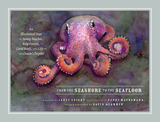
Have you ever walked along the beach and wondered what kind of creatures can be found beneath the waves? Have you pictured what it would be like to see the ocean not from the shore but from its depths? These questions drive Janet Voight, an expert on mollusks who has explored the seas in the submersible Alvin that can dive some 14,000 feet below the water’s surface. In this book, she partners with artist Peggy Macnamara to invite readers to share her undersea journeys of discovery.
With accessible scientific descriptions, Voight introduces the animals that inhabit rocky and sandy shores, explains the fragility of coral reefs, and honors the extraordinary creatures that must search for food in the ocean’s depths, where light and heat are rare. These fascinating insights are accompanied by Macnamara’s stunning watercolors, which illuminate these ecosystems and other scenes from Voight’s research. Together, they show connections between life at every depth—and warn of the threats these beguiling places and their eccentric denizens face.
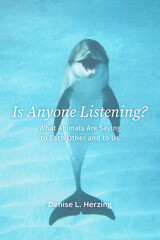
If you could pose one question to a dolphin, what would it be? And what might a dolphin ask you? For forty years, researcher and author Denise L. Herzing has investigated these and related questions of marine mammal communication. With the assistance of a friendly community of Atlantic spotted dolphins in the Bahamas, Herzing studies two-way communication between different dolphin species and between humans and dolphins using a variety of cutting-edge experiments. But the dolphins are not the only ones talking, and in this wide-ranging and accessible book, Herzing explores the astonishing realities of interspecies communication, a skill that humans currently lack.
Is Anyone Listening? connects research on dolphin communication to findings from Jane Goodall on chimpanzees, Dian Fossey on mountain gorillas, Cynthia Moss on African elephants, and others driving today’s exploration of possible animal languages. Although humans have long attempted to crack animal communication codes, only now do we have the advanced machine-learning tools to help. As Herzing reveals, researchers are finding fascinating hints of language in nonhuman species, including linguistic structures, vowel equivalents, and complex repeated sequences. By looking at the many ways animals use and manipulate signals, we see that we’ve only just begun to appreciate the diversity of animal intelligence and the complicated and subtle aspects of animal communication.
Considering dolphins and other nonhuman animals as colleagues instead of research subjects, Herzing asks us to meet animals as both speakers and listeners, as mutually curious beings, and to listen to what they are saying.
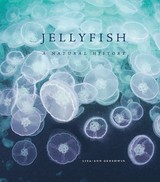
Jellyfish presents these aquarium favorites in all their extraordinary and captivating beauty. Fifty unique species, from stalked jellyfish to black sea nettles, are presented in stunning color photographs along with the most current scientific information on their anatomy, history, distribution, position in the water, and environmental status. Foremost jellyfish expert Lisa-ann Gershwin provides an insightful look at the natural history and biology of each of these spellbinding creatures, while offering a timely take on their place in the rapidly changing and deteriorating condition of the oceans. Readers will learn about immortal jellyfish who live and die and live again as well as those who camouflage themselves amid sea grasses and shells, hiding in plain sight.
Approachably written and based in the latest science and ecology, this colorful book provides an authoritative guide to these ethereal marine wonders.
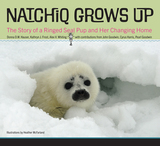
Beginning in the 1980s, scientists started traveling to northwest Alaska to research the lives of ringed seals, bringing Labrador retrievers who could sniff out seals and their snow cave homes (called lairs) on the sea ice. Decades later, scientists partnered with the Iñupiaq people of
Qikiktaġruk (Kotzebue) to learn more about ringed seals. They relied on a combination of Indigenous Knowledge and scientific techniques to capture and apply tags to understand the movements and behavior of ringed seals.
But the Arctic homes of ringed seals are changing, and the long history of ringed seal science in the Kotzebue Sound proved to be just the beginning of long and cooperative relationships melding science and Indigenous knowledge. During 2018 and 2019, with unprecedented sea ice conditions, Qikiktagrumiut Elders and scientists returned to the ice to measure changes in the habitat available for ringed seal pups in the region.
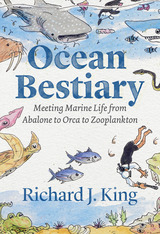
For millennia, we have taken to the waves. And yet, for humans, the ocean remains our planet’s most inaccessible region, the place about which we know the least. From A to Z, abalone to zooplankton, and through both text and original illustrations, Ocean Bestiary is a celebration of our ongoing quest to know the sea and its creatures.
Focusing on individual species or groups of animals, Richard J. King embarks upon a global tour of ocean wildlife, including beluga whales, flying fish, green turtles, mako sharks, noddies, right whales, sea cows (as well as sea lions, sea otters, and sea pickles), skipjack tuna, swordfish, tropicbirds, walrus, and yellow-bellied sea snakes. But more than this, King connects the natural history of ocean animals to the experiences of people out at sea and along the world’s coastlines. From firsthand accounts passed down by the earliest Polynesian navigators to observations from Wampanoag clamshell artists, African-American whalemen, Korean female divers (or haenyeo), and today’s pilots of deep-sea submersibles—and even to imaginary sea expeditions launched through poems, novels, and paintings—Ocean Bestiary weaves together a diverse array of human voices underrepresented in environmental history to tell the larger story of our relationship with the sea. Sometimes funny, sometimes alarming, but always compelling, King’s vignettes reveal both how our perceptions of the sea have changed for the better and how far we still have to go on our voyage.
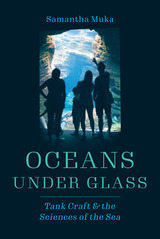
Atlantic coral is rapidly disappearing in the wild. To save the species, they will have to be reproduced quickly in captivity, and so for the last decade conservationists have been at work trying to preserve their lingering numbers and figure out how to rebuild once-thriving coral reefs from a few survivors. Captive environments, built in dedicated aquariums, offer some hope for these corals. This book examines these specialized tanks, charting the development of tank craft throughout the twentieth century to better understand how aquarium modeling has enhanced our knowledge of the marine environment.
Aquariums are essential to the way we understand the ocean. Used to investigate an array of scientific questions, from animal behavior to cancer research and climate change, they are a crucial factor in the fight to mitigate the climate disaster already threatening our seas. To understand the historical development of this scientific tool and the groups that have contributed to our knowledge about the ocean, Samantha Muka takes up specialty systems—including photographic aquariums, kriesel tanks (for jellyfish), and hatching systems—to examine the creation of ocean simulations and their effect on our interactions with underwater life. Lively and engaging, Oceans under Glass offers a fresh history about how the aquarium has been used in modern marine biology and how integral it is to knowing the marine world.
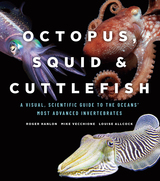
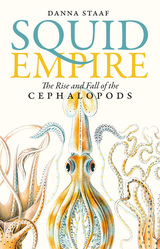
Largely shell-less relatives of clams and snails, the marine mollusks in the class Cephalopoda—Greek for “head-foot”—are colorful creatures of many-armed dexterity, often inky self-defense, and highly evolved cognition. They are capable of learning, of retaining information—and of rapid decision-making to avoid predators and find prey. They have eyes and senses rivaling those of vertebrates like birds and fishes, they morph texture and body shape, and they change color faster than a chameleon. In short, they captivate us.
From the long-armed mimic octopus—able to imitate the appearance of swimming flounders and soles—to the aptly named flamboyant cuttlefish, whose undulating waves of color rival the graphic displays of any LCD screen, there are more than seven hundred species of cephalopod. Featuring a selection of species profiles, Octopus, Squid, and Cuttlefish reveals the evolution, anatomy, life history, behaviors, and relationships of these spellbinding animals. Their existence proves that intelligence can develop in very different ways: not only are cephalopods unusually large-brained invertebrates, they also carry two-thirds of their neurons in their arms.
A treasure trove of scientific fact and visual explanation, this worldwide illustrated guide to cephalopods offers a comprehensive review of these fascinating and mysterious underwater invertebrates—from the lone hunting of the octopus, to the social squid, and the prismatic skin signaling of the cuttlefish.
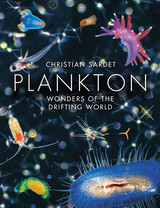
Viewing these creatures up close for the first time can be a thrilling experience—an elaborate but hidden world truly opens up before your eyes. Through hundreds of close-up photographs, Plankton transports readers into the currents, where jeweled chains hang next to phosphorescent chandeliers, spidery claws jut out from sinuous bodies, and gelatinous barrels protect microscopic hearts. The creatures’ vibrant colors pop against the black pages, allowing readers to examine every eye and follow every tentacle. Jellyfish, tadpoles, and bacteria all find a place in the book, representing the broad scope of organisms dependent on drifting currents.
Christian Sardet’s enlightening text explains the biological underpinnings of each species while connecting them to the larger living world. He begins with plankton’s origins and history, then dives into each group, covering ctenophores and cnidarians, crustaceans and mollusks, and worms and tadpoles. He also demonstrates the indisputable impact of plankton in our lives. Plankton drift through our world mostly unseen, yet they are diverse organisms that form ninety-five percent of ocean life. Biologically, they are the foundation of the aquatic food web and consume as much carbon dioxide as land-based plants. Culturally, they have driven new industries and captured artists’ imaginations.
While scientists and entrepreneurs are just starting to tap the potential of this undersea forest, for most people these pages will represent uncharted waters. Plankton is a spectacular journey that will leave readers seeing the ocean in ways they never imagined.
The Soviet Union killed over six hundred thousand whales in the twentieth century, many of them illegally and secretly. That catch helped bring many whale species to near extinction by the 1970s, and the impacts of this loss of life still ripple through today’s oceans. In this new account, based on formerly secret Soviet archives and interviews with ex-whalers, environmental historian Ryan Tucker Jones offers a complete history of the role the Soviet Union played in the whales’ destruction. As other countries—especially the United States, Great Britain, Japan, and Norway—expanded their pursuit of whales to all corners of the globe, Stalin determined that the Soviet Union needed to join the hunt. What followed was a spectacularly prodigious, and often wasteful, destruction of humpback, fin, sei, right, and sperm whales in the Antarctic and the North Pacific, done in knowing violation of the International Whaling Commission’s rules. Cold War intrigue encouraged this destruction, but, as Jones shows, there is a more complex history behind this tragic Soviet experiment. Jones compellingly describes the ultimate scientific irony: today’s cetacean studies benefited from Soviet whaling, as Russian scientists on whaling vessels made key breakthroughs in understanding whale natural history and behavior. And in a final twist, Red Leviathan reveals how the Soviet public began turning against their own country’s whaling industry, working in parallel with Western environmental organizations like Greenpeace to help end industrial whaling—not long before the world’s whales might have disappeared altogether.
When the Nazis came, Étienne Boltanski divorced his wife and walked out the front door, never to be seen again during the war. So far as the outside world knew, the Jewish doctor had fled. The truth was that he had sneaked back to hide in a secret crawl space at the heart of the house. There he lived for the duration of the war. With the Liberation, Étienne finally emerged, but he and his family were changed forever—anxious, reclusive, yet proudly eccentric. Their lives were spent, amid Bohemian disarray and lingering wartime fears, in the mansion’s recesses or packed comically into the protective cocoon of a Fiat.
That house (and its vehicular appendage) is at the heart of Christophe Boltanski’s ingeniously structured, lightly fictionalized account of his grandparents and their extended family. The novel unfolds room by room—each chapter opening with a floorplan—introducing us to the characters who occupy each room, including the narrator’s grandmother—a woman of “savage appetites”—and his uncle Christian, whose haunted artworks would one day make him famous. “The house was a palace,” Boltanski writes, “and they lived like hobos.” Rejecting convention as they’d rejected the outside world, the family never celebrated birthdays or even marked the passage of time, living instead in permanent stasis, ever more closely bonded to the house itself.
The Safe House was a literary sensation when published in France in 2015 and won the Prix de Prix, France’s most prestigious book prize. A French-language film adaptation, La cache, was released in 2025 from director Lionel Baier. With hints of Oulipian playfulness and an atmosphere of dark humor, The Safe House is an unforgettable portrait of a self-imprisoned family.

The story of a fascinating fish and the forward-thinking people who saved them in Wisconsin
For millennia, sturgeon swam the waterways of Wisconsin. Before the 1800s, an estimated eleven million sturgeon lived in Lake Michigan alone. Menominee and Ojibwe people depended on the fish for food and harvested them sustainably. But in the early 1900s, the lake sturgeon was near extinction. Saving Our Sturgeon tells the remarkable story of lake sturgeon in Wisconsin, the conservation efforts to save the species, and what is being done to keep the population healthy and thriving today.
Readers will learn about the natural history of the lake sturgeon—its anatomy, behavior, and habitat—and the factors that threatened its survival, from overharvesting to the building of dams that prevented sturgeon from reaching spawning areas. The book, written for young readers aged eleven and up, explains how government agencies, conservationists, and citizen groups worked together to save the sturgeon population in Wisconsin.
Saving Our Sturgeon includes a chapter about the Menominee Nation’s work to revitalize cultural traditions focused on the sturgeon and restore access to the fish on their reservation. The book also highlights how young people can get involved with sturgeon conservation efforts.
A great resource for classroom use, Saving Our Sturgeon contains maps, photos, and diagrams, plus a glossary of terms, a timeline of events, a Who’s Who list of individuals and groups featured in the book, and a bibliography that highlights kid-friendly sources to learn more. Young readers will learn basic facts about sturgeon biology, what it means for a species to be threatened or endangered, and how scientists use data to support repopulation. This inspiring book shares a conservation success story about one remarkable (and plenty peculiar) species of fish and shows young readers how they, too, can help protect these incredible creatures.
Ages 11 - 14; Grade level 6 - 9; Lexile® measure 1060L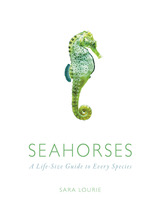
Seahorses celebrates the remarkable variety of seahorse species as well as their exquisiteness. 57 species, including seadragons and pipefish, are presented in lush, life-size photographs alongside descriptive drawings, and each entry includes detailed and up-to-date information on natural history and conservation. Sara Lourie, a foremost expert on seahorse taxonomy, presents captivating stories of species that range from less than an inch to over a foot in height, while highlighting recent discoveries and ecological concerns. Accessibly written, but comprehensive in scope, this book will be a stunning and invaluable reference on seahorse evolution, biology, habitat, and behavior.
Masters of camouflage and rarely seen, seahorses continue to be a fascinating subject of active research. This visually rich and informative book is certain to become the authoritative guide to these charming and unusual wonders of the sea, beloved at aquariums the world over.
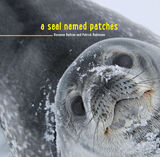
Scientists Roxanne Beltran and Patrick Robinson set off on a polar adventure, traveling to Antarctica to study the lives of Weddell seals. By finding Patches, a wily seal they’ve been tracking since its birth, they’ll be able to learn a lot about how much the seals get to eat and how many pups they raise. A Seal Named Patches takes young readers into the world at the very bottom of the globe, where they meet the extraordinary animals that live in cold, icy conditions. Through breathtaking photos and real-life stories, young readers will learn about how scientists do fieldwork, the challenges of researching animals in harsh climates, and even what it’s like to fly a helicopter over Antarctica. This engaging story will especially entertain and educate children in grades K-2 (ages 5–8.)
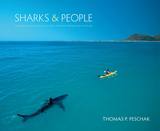
A contributing photographer to National Geographic, Peschak is best known for his unusual photographs of sharks—his iconic image of a great white shark following a researcher in a small yellow kayak is one of the most recognizable shark photographs in the world. The other images gathered here are no less riveting, bringing us as close as possible to sharks in the wild. Alongside the photographs, Sharks and People tells the compelling story of the natural history of sharks. Sharks have roamed the oceans for more than four hundred million years, and in this time they have never stopped adapting to the ever-changing world—their unique cartilage skeletons and array of super-senses mark them as one of the most evolved groups of animals. Scientists have recently discovered that sharks play an important role in balancing the ocean, including maintaining the health of coral reefs. Yet, tens of millions of sharks are killed every year just to fill the demand for shark fin soup alone. Today more than sixty species of sharks, including hammerhead, mako, and oceanic white-tip sharks, are listed as vulnerable or in danger of extinction.
The need to understand the significant part sharks play in the oceanic ecosystem has never been so urgent, and Peschak’s photographs bear witness to the thrilling strength and unique attraction of sharks. They are certain to enthrall and inspire.

From morning to night and from the Arctic to the equator, snails, clams, and other shell-making mollusks have busy days. In this short book, acclaimed author and marine biologist Helen Scales shows readers exactly how these animals spend their time. Each chapter of Shell Day features a single mollusk during a single hour, highlighting twenty-four different species.
Far in the north, the Svalbard archipelago lies deep in the darkness of the polar night. And yet, in what remains a scientific mystery, Iceland scallops continue their daily rhythms, closing and opening their fan-shaped shells using an internal clock. At noon, we observe a clam shell sitting still on the seabed of a sandy tropical lagoon. The two shells open slightly, and a pair of rounded eyes peep out. A small, rust-colored coconut octopus hiding inside lets the clam shells fall apart and gathers them up in her arms. This mollusk’s ancestors long ago lost the ability to produce their own shells, but the cephalopod is happy to use another animal’s castoff as a temporary home. At ten that night, we find ourselves in Southern France. A male moon snail uses his huge, fleshy foot like a plow as he digs down into the seabed in search of food. When the moon snail finds a cockle, he swiftly smothers it, then sets about drilling, aided by a daub of acidic slime. Cockles are tasty, but so are other moon snails, and his snacking has a cannibalistic flavor.
For each chapter, illustrator and cartoonist Aaron John Gregory has depicted molluscan scenes with entrancing pen-and-ink drawings. Working together to narrate and illustrate these unique moments in time, Scales and Gregory have created an engaging read that is a perfect way to spend an hour or two—and a true gift for beachcombers, naturalists, or anyone eager to learn about the mollusks that make their favorite shells.
From the Bible’s “Canst thou raise leviathan with a hook?” to Captain Ahab’s “From Hell’s heart I stab at thee!,” from the trials of Job to the legends of Sinbad, whales have breached in the human imagination as looming figures of terror, power, confusion, and mystery.
In the twentieth century, however, our understanding of and relationship to these superlatives of creation underwent some astonishing changes, and with The Sounding of the Whale, D. Graham Burnett tells the fascinating story of the transformation of cetaceans from grotesque monsters, useful only as wallowing kegs of fat and fertilizer, to playful friends of humanity, bellwethers of environmental devastation, and, finally, totems of the counterculture in the Age of Aquarius. When Burnett opens his story, ignorance reigns: even Nature was misclassifying whales at the turn of the century, and the only biological study of the species was happening in gruesome Arctic slaughterhouses. But in the aftermath of World War I, an international effort to bring rational regulations to the whaling industry led to an explosion of global research—and regulations that, while well-meaning, were quashed, or widely flouted, by whaling nations, the first shot in a battle that continues to this day. The book closes with a look at the remarkable shift in public attitudes toward whales that began in the 1960s, as environmental concerns and new discoveries about whale behavior combined to make whales an object of sentimental concern and public adulation.
A sweeping history, grounded in nearly a decade of research, The Sounding of the Whale tells a remarkable story of how science, politics, and simple human wonder intertwined to transform the way we see these behemoths from below.
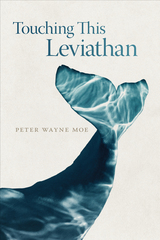
Touching This Leviathan asks how we might come to know the unknowable—in this case, whales, animals so large yet so elusive, revealing just a sliver of back, a glimpse of a fluke, or a split-second breach before diving away.
Whale books often sit within disciplinary silos. Touching This Leviathan starts a conversation among them. Drawing on biology, theology, natural history, literature, and writing studies, Peter Wayne Moe offers a deep dive into the alluring and impalpable mysteries of Earth’s largest mammal.
Entertaining, thought-provoking, and swimming with intelligence and wit, Touching is Leviathan is creative nonfiction that gestures toward science and literary criticism as it invites readers into the belly of the whale.
Relating his experiences caring for endangered whales, a veterinarian and marine scientist shows we can all share in the salvation of these imperiled animals.
The image most of us have of whalers includes harpoons and intentional trauma. Yet eating commercially caught seafood leads to whales’ entanglement and slow death in rope and nets, and the global shipping routes that bring us readily available goods often lead to death by collision. We—all of us—are whalers, marine scientist and veterinarian Michael J. Moore contends. But we do not have to be.
Drawing on over forty years of fieldwork with humpback, pilot, fin, and, in particular, North Atlantic right whales—a species whose population has declined more than 20 percent since 2017—Moore takes us with him as he performs whale necropsies on animals stranded on beaches, in his independent research alongside whalers using explosive harpoons, and as he tracks injured whales to deliver sedatives. The whales’ plight is a complex, confounding, and disturbing one. We learn of existing but poorly enforced conservation laws and of perennial (and often failed) efforts to balance the push for fisheries profit versus the protection of endangered species caught by accident.
But despite these challenges, Moore’s tale is an optimistic one. He shows us how technologies for ropeless fishing and the acoustic tracking of whale migrations make a dramatic difference. And he looks ahead with hope as our growing understanding of these extraordinary creatures fuels an ever-stronger drive for change.
For more information on Moore’s book and research, please visit his webpage at the Woods Hole Oceanographic Institution.
This is an audiobook version of this book.
Relating his experiences caring for endangered whales, a veterinarian and marine scientist shows we can all share in the salvation of these imperiled animals.
The image most of us have of whalers includes harpoons and intentional trauma. Yet eating commercially caught seafood leads to whales’ entanglement and slow death in rope and nets, and the global shipping routes that bring us readily available goods often lead to death by collision. We—all of us—are whalers, marine scientist and veterinarian Michael J. Moore contends. But we do not have to be.
Drawing on over forty years of fieldwork with humpback, pilot, fin, and, in particular, North Atlantic right whales—a species whose population has declined more than 20 percent since 2017—Moore takes us with him as he performs whale necropsies on animals stranded on beaches, in his independent research alongside whalers using explosive harpoons, and as he tracks injured whales to deliver sedatives. The whales’ plight is a complex, confounding, and disturbing one. We learn of existing but poorly enforced conservation laws and of perennial (and often failed) efforts to balance the push for fisheries profit versus the protection of endangered species caught by accident.
But despite these challenges, Moore’s tale is an optimistic one. He shows us how technologies for ropeless fishing and the acoustic tracking of whale migrations make a dramatic difference. And he looks ahead with hope as our growing understanding of these extraordinary creatures fuels an ever-stronger drive for change.
For more information on Moore’s book and research, please visit his webpage at the Woods Hole Oceanographic Institution.
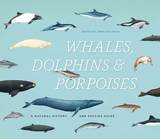
Opening with an accessible rundown of cetacean biology—including the most recent science on feeding, mating, and communication—Whales, Dolphins, and Porpoises then presents species-specific natural history on a range of topics, from anatomy and diet to distribution and conservation status. Each entry also includes original drawings of the species and its key identifiers, such as fin shape and color, tooth shape, and characteristic markings as they would appear both above and below water—a feature unique to this book.
Figures of myth and—as the debate over hunting rages on—figures of conflict since long before the days of Moby-Dick, whales, dolphins, and porpoises are also ecologically important and, in many cases, threatened. Written for general enthusiasts, emergent cetacean fans, and biologists alike, this stunning, urgently needed book will serve as the definitive guide for years to come.
READERS
Browse our collection.
PUBLISHERS
See BiblioVault's publisher services.
STUDENT SERVICES
Files for college accessibility offices.
RECENTLY PUBLISHED



UChicago Accessibility Resources
home | accessibility | search | about | contact us
BiblioVault ® 2001 - 2026
The University of Chicago Press