
 A SCHOLARLY BOOK REPOSITORY
43 start with A start with A
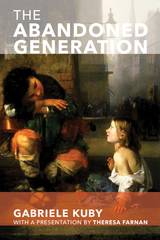
Reading Kuby’s analysis of cultural, sociological and biological data, the danger is clear and present. Yet Kuby asserts that, generally, our plight goes unnoticed and is veiled from our eyes. We need to see children for who and what they really are to us, to the family, and society at large. In the words of Fulton Sheen, “Children play a redeemer role in the family. The represent the victory of love over the insatiable ego. They symbolize the defeat of selfishness and the triumph of giving love.” Tragically, children are increasingly less a part of Western culture. This leaves the family, in the best case scenario, an artifact, and in the worst case, a casualty.
The topics addressed by Kuby cover towering influences in postmodern family life: Gender politics, the abortion mentality, daycare (“Socialism 2.0”), premature stress, rights of children, digital distractions, pornography, and divorce. A native German, Kuby’s work is, heartbreakingly, as relevant to American society as her own. This European perspective drives home the urgent need to recognize our situation as global and embedded, and one that requires more than political mobilization of mainstream efforts and responses. What really is good and normal, and how to we realize it? Listen to the heartstrings that yearn for true knowledge of oneself, Kuby implores, of God, and how in the surprise of God’s mercy we are guided through life. Kuby backs up this invitation to personal conversion and betterment with hard data.
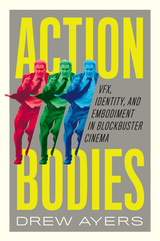
Exploring how digital visual effects have changed the representations of the body and identity in action films.
When Harrison Ford appeared digitally de-aged in Indiana Jones and the Dial of Destiny, audiences witnessed more than a technical feat; they saw how visual effects are reshaping what bodies can be on screen. In Action Bodies, Drew Ayers examines how the contemporary action genre redefines embodiment across human, superhuman, animal, and machine forms. Ayers argues that action films are a crucial site for understanding how popular media both reflect and shape cultural debates about identity, citizenship, disability, and ethics in the era of big data and algorithmic culture.
Through case studies including Top Gun: Maverick, The Woman King, The Fast & the Furious franchise, and Avatar: The Way of Water, Ayers explores how VFX-altered bodies carry ideological weight. While the action genre has long leaned conservative in its politics of identity, its digitally mediated bodies also generate unexpected opportunities: glimpses of more inclusive and flexible modes of embodiment. As artificial intelligence and synthetic imagery continue to transform film production, Action Bodies demonstrates why careful attention to action cinema is essential for understanding how contemporary culture imagines and engineers the future of the body.


Whether in the private parlor, public hall, commercial "dance palace," or sleazy dive, dance has long been opposed by those who viewed it as immoral--more precisely as being a danger to the purity of those who practiced it, particularly women. In Adversaries of Dance, Ann Wagner presents a major study of opposition to dance over a period of four centuries in what is now the United States.
Wagner bases her work on the thesis that the tradition of opposition to dance "derived from white, male, Protestant clergy and evangelists who argued from a narrow and selective interpretation of biblical passages," and that the opposition thrived when denominational dogma held greater power over people's lives and when women's social roles were strictly limited.
Central to Wagner's work, which will be welcomed by scholars of both religion and dance, are issues of gender, race, and socioeconomic status.
After Plato redefines the relationships of rhetoric for scholars, teachers, and students of rhetoric and writing in the twenty-first century. Featuring essays by some of the most accomplished scholars in the field, the book explores the diversity of ethical perspectives animating contemporary writing studies—including feminist, postmodern, transnational, non-Western, and virtue ethics—and examines the place of ethics in writing classrooms, writing centers, writing across the curriculum programs, prison education classes, and other settings.
When truth is subverted, reason is mocked, racism is promoted, and nationalism takes center stage, teachers and scholars of writing are challenged to articulate the place of rhetorical ethics in the writing classroom and throughout the field more broadly. After Plato demonstrates the integral place of ethics in writing studies and provides a roadmap for future conversations about ethical rhetoric that will play an essential role in the vitality of the field.
Contributors: Fred Antczak, Patrick W. Berry, Vicki Tolar Burton, Rasha Diab, William Duffy, Norbert Elliot, Gesa E. Kirsch, Don J. Kraemer, Paula Mathieu, Robert J. Mislevy, Michael A. Pemberton, James E. Porter, Jacqueline Jones Royster, Xiaoye You, Bo Wang
These days, so much of our lives takes place online—but what about our afterlives? Thanks to the digital trails that we leave behind, our identities can now be reconstructed after our death. In fact, AI technology is already enabling us to “interact” with the departed. Sooner than we think, the dead will outnumber the living on Facebook. In this thought-provoking book, Carl Öhman explores the increasingly urgent question of what we should do with all this data and whether our digital afterlives are really our own—and if not, who should have the right to decide what happens to our data.
The stakes could hardly be higher. In the next thirty years alone, about two billion people will die. Those of us who remain will inherit the digital remains of an entire generation of humanity—the first digital citizens. Whoever ends up controlling these archives will also effectively control future access to our collective digital past, and this power will have vast political consequences. The fate of our digital remains should be of concern to everyone—past, present, and future. Rising to these challenges, Öhman explains, will require a collective reshaping of our economic and technical systems to reflect more than just the monetary value of digital remains.
As we stand before a period of deep civilizational change, The Afterlife of Data will be an essential guide to understanding why and how we as a human race must gain control of our collective digital past—before it is too late.


Against Ecological Sovereignty is a passionate defense of radical ecology that speaks directly to current debates concerning the nature, and dangers, of sovereign power. Engaging the work of Bataille, Arendt, Levinas, Nancy, and Agamben, among others, Mick Smith reconnects the political critique of sovereign power with ecological considerations, arguing that ethical and political responsibilities for the consequences of our actions do not end with those defined as human.
Against Ecological Sovereignty is the first book to turn Agamben’s analysis of sovereignty and biopolitics toward an investigation of ecological concerns. In doing so it exposes limits to that thought, maintaining that the increasingly widespread biopolitical management of human populations has an unrecognized ecological analogue—reducing nature to a “resource” for human projects. Smith contends that a radical ecological politics must resist both the depoliticizing exercise of sovereign power and the pervasive spread of biopolitics in order to reveal new possibilities for creating healthy human and nonhuman communities.
Presenting a stinging critique of human claims to sovereignty over the natural world, Smith proposes an alternative way to conceive of posthumanist ecological communities—one that recognizes the utter singularity of the beings in them.
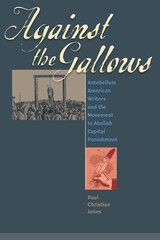
In Against the Gallows, Paul Christian Jones explores the intriguing cooperation of America’s writers—including major figures such as Walt Whitman, John Greenleaf Whittier, E. D. E. N. Southworth, and Herman Melville—with reformers, politicians, clergymen, and periodical editors who attempted to end the practice of capital punishment in the United States during the 1840s and 1850s. In an age of passionate reform efforts, the antigallows movement enjoyed broad popularity, waging its campaign in legislatures, pulpits, newspapers, and literary journals.
Do patients have the right to know their physician's HIV status?
Can a dentist refuse treatment to an HIV-positive patient?
How do educators determine whether to allow an HIV-positive child to attend school, and if they do, should the parents of other children be informed?
Should a counselor break confidentiality by disclosing to a wife that her husband is infected with HIV?
This collection of original essays carefully examines the difficult moral choices the AIDS pandemic has presented for many professionals—physicians, nurses, dentists, teachers and school administrators, business managers, psychotherapists, lawyers, clergy, journalists, and politicians. In the workplace, problems posed by HIV and AIDS have led to a reexamination of traditional codes of ethics. Providing systematic and reasoned discussions, the authors explore the moral, legal, and ethical issues involved in the reconsideration of policies, standards of conduct, and the practicality of balancing personal and professional ethics.
Contributors: Albert Flores, Joan C. Callahan, Jill Powell, Kenneth Kipnis, Al Gini, Howard Cohen, Martin Gunderson, Joseph A. Edelheit, Michael Pritchard, Vincent J. Samar, Sohair ElBaz, William Pardue, and the editors.
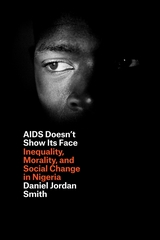
Drawing on twenty years of fieldwork in Nigeria, Smith tells a story of dramatic social changes, ones implicated in the same inequalities that also factor into local perceptions about AIDS—inequalities of gender, generation, and social class. Nigerians, he shows, view both social inequality and the presence of AIDS in moral terms, as kinds of ethical failure. Mixing ethnographies that describe everyday life with pointed analyses of public health interventions, he demonstrates just how powerful these paired anxieties—medical and social—are, and how the world might better alleviate them through a more sensitive understanding of their relationship.
The contributors tackle the biggest questions in higher education: What are the proper aims of the university? What role do the liberal arts play in fulfilling those aims? What is the justification for the humanities? How should we conceive of critical reflection, and how should we teach it to our students? How should professors approach their intellectual relationship with students, both in social interaction and through curriculum? What obligations do elite institutions have to correct for their historical role in racial and social inequality? And, perhaps most important of all: How can the university serve as a model of justice? The result is a refreshingly thoughtful approach to higher education and what it can, and should, be doing.

The book is the first of its kind to draw together in conversation the views of the early Church, contemporary biblical and theological scholarship, and post-conciliar teachings. Steck develops a comprehensive, Catholic theology of animals based on an in-depth exploration of Catholicism's fundamental doctrines—trinitarian theology, Christology, pneumatology, eschatology, and soteriology.
All God's Animals makes two central claims. First, we can hope that God will include animals of the present age in the kingdom inaugurated by Christ. Second, because of this inclusion, our responses to animals should be guided by the values of the kingdom.
As Christians await the final liberation of all creation, they are to be witnesses to God’s kingdom by embodying its ideals in their relations with animal life. Because the kingdom's fullness is yet to come and because our world remains marked by the wounds of sin, however, Christian treatment of animals will at times require acts that are at odds with the kingdom’s ideals (for example, those causing suffering and death). Steck examines each of these ideas and explores all of their complexities.
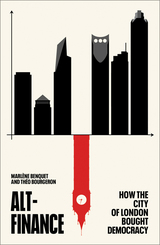
Powerful financial forces have supported the neoliberal project since the 1980s to advance their interests, but there are now signs that these forces have a new face and a new strategy.
The majority of the British finance sector threw its support behind Britain leaving the European Union, a flagship institution of neoliberalism. Beyond this counterintuitive move, what was really happening and why? Alt-Finance examines a new authoritarian turn in financialised democracies, focusing on the City of London, revealing a dangerous alternative political project in the making.
In a clash with traditional finance, the new behemoths of financial capital - hedge funds, private equity firms, and real estate funds - have started to cohere around a set of political beliefs, promoting libertarian, authoritarian, climate-denying, and Eurosceptic views. Protecting investments, suppressing social dissent, and reducing state interference is at the core of their mission for a new world order.
By following the money, the authors provide indisputable evidence of these worrying developments. Through a clear analysis of the international dealings of this new authoritarian-libertarian regime, not just in Britain but in the US and Brazil, we can understand how our world is being shaped against our will by struggles between dominant groups.

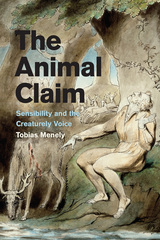
In the Restoration and eighteenth century, philosophers emphasized the role of sympathy in collective life and began regarding the passionate expression humans share with animals, rather than the spoken or written word, as the elemental medium of community. Menely shows how poetry came to represent this creaturely voice and, by virtue of this advocacy, facilitated the development of a viable discourse of animal rights in the emerging public sphere. Placing sensibility in dialogue with classical and early-modern antecedents as well as contemporary animal studies, The Animal Claim uncovers crucial connections between eighteenth-century poetry; theories of communication; and post-absolutist, rights-based politics.
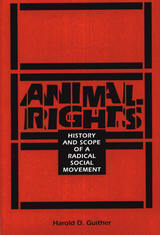
In the past decade, philosopher Bernard Rollin points out, we have "witnessed a major revolution in social concern with animal welfare and the moral status of animals." Adopting the stance of a moderate, Harold Guither attempts to provide an unbiased examination of the paths and goals of the members of the animal rights movement and of its detractors.
Given the level of confusion, suspicion, misunderstanding, and mistrust between the two sides, Guither admits the difficulty in locating, much less staying in, the middle of the road. The philosophical conflict, however, is fairly clear: those who resist reform, fearing that radical change in the treatment of animals will infringe on their business and property rights, versus the new activists who espouse a different set of moral and ethical obligations toward animals.
From his position as a moderate, Guither presents a brief history of animal protection and the emergence of animal rights, describes the scope of the movement, and identifies major players such as Paul and Linda McCartney and organizations such as People for the Ethical Treatment of Animals that are actively involved in the movement. He concentrates on what is actually happening in the 1990s, discussing in detail the possible consequences of the current debate for those who own, use, or enjoy animals in entertainment and leisure pursuits. A reference work for students in animal sciences and veterinary medicine, the book also poses questions for philosophers, sociologists, and public policymakers as well as animal owners, animal and biomedical researchers, and manufacturers and distributors of animal equipment and supplies.
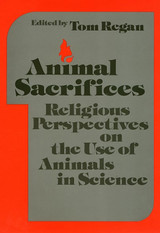
The issues of animal rights and the use of animals in scientific experimentation are fraught with controversy. In an effort to define the bases of such strong emotional response towards an ethical issue, this book presents the teachings of the major religions of the world concerning animals and, more specifically, their use in science. Judaism, Christianity, Islam, Hinduism, Jainism, Buddhism, and Confucianism are represented in this collection of eight essays by religious authorities.
Scriptural writings, written and oral tradition, law, religious parables, and even folklore are used to illustrate the position of each religion on this question. When there are no specific teachings regarding the relatively recent use of animals in scientific research, conclusions are derived from the view of man’s relations with the rest of the world.
In addition to the essays dealing with specific religions, there is also a chapter detailing recent uses of animals in scientific research throughout the world. It is estimated that 500 million animals a year are sacrificed to science. This volume attempts to find out for what purposes they are used, under what conditions, and with what legal protection.
Based on a conference which explored the views of religion toward scientific experimentation on animals, this collection of essays addresses an explosive issue from a number of different perspectives. Animal Sacrifices is a fair-minded and informative discussion of a contemporary ethical dilemma.
Contributors: John Bowker, Sidney Gendin, Rabbi Dr. J. David Bleich, Andrew Linzey, James Gaffney, Al-Hafiz, B. Z. Masri, Basant K. Lal, Christopher Chapple, Rodney L. Taylor, and the editor.



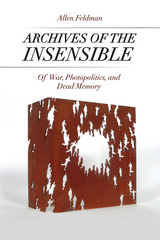
Excavating a scenography of trials—formal or covert, orchestrated or improvised, criminalizing or criminal—Feldman shows how the will to truth disappears into the very violence it interrogates. He maps the sensory inscriptions and erasures of war, highlighting war as a media that severs factuality from actuality to render violence just. He proposes that war promotes an anesthesiology that interdicts the witness of a sensory and affective commons that has the capacity to speak truth to war. Feldman uses layered deconstructive description to decelerate the ballistical tempo of war to salvage the embodied actualities and material histories that war reduces to the ashes of collateral damage, the automatism of drones, and the opacities of black sites. The result is a penetrating work that marries critical visual theory, political philosophy, anthropology, and media archeology into a trenchant dissection of emerging forms of sovereignty and state power that war now makes possible.
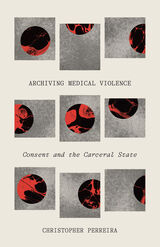
A major new reading of a U.S. public health system shaped by fraught perceptions of culture, race, and criminality
At the heart of Archiving Medical Violence is an interrogation of the notions of national and scientific progress, marking an advance in scholarship that shows how such violence is both an engine of medical progress and, more broadly, the production of empire. It reads the medical archive through a lens that centers how it is produced, remembered, and contested within cultural production and critical memory.
In this innovative and interdisciplinary book, Christopher Perreira argues that it is in the contradictions of settler colonialism and racial capitalism that we find how medical violence is narrated as a public good. He presents case studies from across a range of locations—Hawai‘i, California, Louisiana, Guatemala—and historical periods from the nineteenth century on. Examining national and scientific conceptions of progress through the lens of medicine and public health, he places official archives in dialogue with visual and literary works, patient writing, and more.
Archiving Medical Violence explores the contested public terrains for narrating value and vulnerabilities, bodies and geographical locations. Ultimately, Perreira reveals for us a medical imaginary built on racialized criminality driving contemporary politics of citizenship, memory, and identity.
Retail e-book files for this title are screen-reader friendly with images accompanied by short alt text and/or extended descriptions.
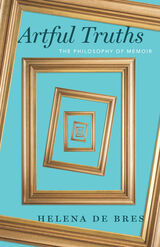
Artful Truths offers a concise guide to the fundamental philosophical questions that arise when writing a literary work about your own life. Bringing a philosopher’s perspective to a general audience, Helena de Bres addresses what a memoir is, how the genre relates to fiction, memoirists’ responsibilities to their readers and subjects, and the question of why to write a memoir at all. Along the way, she delves into a wide range of philosophical issues, including the nature of the self, the limits of knowledge, the idea of truth, the obligations of friendship, the relationship between morality and art, and the question of what makes a life meaningful.
Written in a clear and conversational style, it offers a resource for those who write, teach, and study memoirs, as well as those who love to read them. With a combination of literary and philosophical knowledge, de Bres takes the many challenges directed at memoirists seriously, while ultimately standing in defense of a genre that, for all its perplexities—and maybe partly because of them—continually proves to be both beloved and valuable.
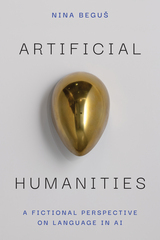
Highlighting the impact of human-like AI design, from gendered virtual assistants to romanticized social robots, the book shows how these technologies intersect with longstanding humanistic questions about the concepts of creativity and language as well as the relations between humans and machines. Additionally, the book explores AI’s applications in medical fields, particularly psychiatry and neurotechnology, including how AI interacts with the human body and mind to address conditions like paralysis. By emphasizing the philosophical and cultural implications of these technologies, Beguš highlights the need for responsible innovation that prioritizes human well-being as well as machine potential outside of human imitation. Accessible and thought-provoking, Artificial Humanities offers tools for analyzing and assessing technologies while they are being developed and invites readers to see how the humanities can guide us toward a more thoughtful future for AI.
During the past few decades, high-profile cases like that of Terry Schiavo have fueled the public debate over forgoing or withdrawing artificial nutrition and hydration from patients in a persistent vegetative state (PVS). These cases, whether involving adults or young children, have forced many to begin thinking in a measured and careful way about the moral legitimacy of allowing patients to die. Can families forgo or withdraw artificial hydration and nutrition from their loved ones when no hope of recovery seems possible?
Many Catholics know that Catholic moral theology has formulated a well-developed and well-reasoned position on this and other end-of-life issues, one that distinguishes between "ordinary" and "extraordinary" treatment. But recent events have caused uncertainty and confusion and even acrimony among the faithful. In his 2004 allocution, Pope John Paul II proposed that artificial nutrition and hydration is a form of basic care, thus suggesting that the provision of such care to patients neurologically incapable of feeding themselves should be considered a moral obligation. The pope's address, which seemed to have offered a new development to decades of Catholic health care ethics, sparked a contentious debate among the faithful over how best to treat permanently unconscious patients within the tenets of Catholic morality.
In this comprehensive and balanced volume, Ronald Hamel and James Walter present twenty-one essays and articles, contributed by physicians, clergy, theologians, and ethicists, to reflect the spectrum of perspectives on the issues that define the Catholic debate. Organized into six parts, each with its own introduction, the essays offer clinical information on PVS and feeding tubes; discussions on the Catholic moral tradition and how it might be changing; ecclesiastical and pastoral statements on forgoing or withdrawing nutrition and hydration; theological and ethical analyses on the issue; commentary on Pope John Paul II's 2004 allocution; and the theological commentary, court decisions, and public policy resulting from the Clarence Herbert and Claire Conroy legal cases.
A valuable resource for students and scholars, this teachable volume invites theological dialogue and ethical discussion on one of the most contested issues in the church today.
Animals have always been compelling subjects for artists, but the rise of animal advocacy and posthumanist thought has prompted a reconsideration of the relationship between artist and animal. In this book, Steve Baker examines the work of contemporary artists who directly confront questions of animal life, treating animals not for their aesthetic qualities or as symbols of the human condition but rather as beings who actively share the world with humanity.
The concerns of the artists presented in this book—Sue Coe, Eduardo Kac, Lucy Kimbell, Catherine Chalmers, Olly and Suzi, Angela Singer, Catherine Bell, and others—range widely, from the ecological to the philosophical and from those engaging with the modification of animal bodies to those seeking to further the cause of animal rights. Drawing on extensive interviews he conducted with the artists under consideration, Baker explores the vital contribution that contemporary art can make to a broader conception of animal life, emphasizing the importance of creativity and trust in both the making and understanding of these artworks.
Throughout, Baker is attentive to issues of practice, form, and medium. He asks, for example, whether the animal itself could be said to be the medium in which these artists are working, and he highlights the tensions between creative practice and certain kinds of ethical demands or expectations. Featuring full-color, vivid examples of their work, Artist Animal situates contemporary artists within the wider project of thinking beyond the human, asserting art’s power to open up new ways of thinking about animals.
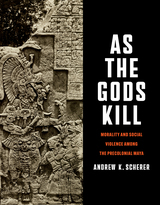
An exploration of war, violence, and sacrifice in precolonial Maya culture and its importance in religious practices.
As the Gods Kill delivers new insights into warfare, weaponry, violence, and human sacrifice among the ancient Maya. While attending to the particularity of a singular historical context, anthropologist and archaeologist Andrew Scherer also suggests that Maya practices have something to tell us about human propensities toward violence more broadly.
Focusing on moral frameworks surrounding deliberate injury and killing, Scherer examines Maya justifications of violence—in particular the obligations to one another, to ancestors, and to the gods that made violence not only permissible but necessary. The analysis isolates key themes underpinning the morality of violence—including justice, vengeance, payment, and costumbre (ritual)—and explores the ethics of violent agents, including warriors, ritual specialists, and the gods. Finally, Scherer addresses motivations for warfare, including the acquisition of spoils, tribute, captives, and slaves. An interdisciplinary case study of morality in an ancient society, As the Gods Kill synthesizes scholarship on an important dimension of precolonial American culture while taking stock of its implications for the social sciences at large.
Contributors
Vincanne Adams
Nancy N. Chen
Stefan Ecks
Kathleen Erwin
Phuoc V. Le
Jennifer Liu
Aihwa Ong
Margaret Sleeboom-Faulkner
Kaushik Sunder Rajan
Wen-Ching Sung
Charis Thompson
Ara Wilson

Ask the animals, and they will tell you.
Birds, beasts, and creeping things swarm throughout the Bible’s pages. Despite their prevalence, most biblical scholars have viewed them merely as metaphors, passive objects, or background embellishment to the human experience. This collection seeks to move beyond this traditional view of biblical animals by engaging the growing interdisciplinary field of animal studies. Contributors Peter Joshua Atkins, Jared Beverly, William P. Brown, Margaret Cohen, Jacob R. Evers, Michael J. Gilmour, William “Chip” Gruen, Dong Hyeon Jeong, Brian Fiu Kolia, Anne Létourneau, Robert R. MacKay, Suzanna R. Millar, Timothy J. Sandoval, Robert Paul Seesengood, Ken Stone, Brian James Tipton, Arthur W. Walker-Jones, and Jaime L. Waters showcase the breadth and depth of inquiry that animal studies can foster in biblical studies as well as what animal studies can gain from a more rigorous engagement with biblical texts. Together the essays offer an animal hermeneutic that supports the flourishing of all creatures.
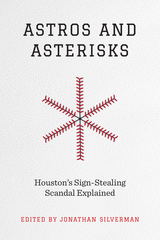
An in-depth and multiperspectival look at the Astros’ sign-stealing scandal and its roots in the culture of baseball fandom.
In 2017 the Houston Astros won their first World Series title, a particularly uplifting victory for the city following Hurricane Harvey. But two years later, the feel-good energy was gone after The Athletic revealed that the Astros had stolen signs from opposing catchers during their championship season, perhaps even during the playoffs and World Series. Their methods were at once high-tech and crude: staff took video of opponents’ pitching signals and transmitted the footage in real time to the Astros’ dugout, where players banged on trash cans to signal to their teammates at bat which pitches were coming their way. Wry observers labeled them the Asterisks, pointing to the title that no longer seemed so earned.
Astros and Asterisks examines the scandal from historical, journalistic, legal, ethical, and cultural perspectives. Authors delve into the Astros’ winning-above-all attitude, cultivated by a former McKinsey consultant; the significance of hiring a pitcher recently suspended for domestic abuse; the career-ending effects of the Astros’ transgression on opposing players; and the ethically fraught choices necessary to participate in sign-stealing. Ultimately, it links the Astros’ choices to the sporting world’s obsession with analytics. What emerges is a sobering tale about the impact of new technology on a game whose romanticized image feels increasingly incongruous with its reality in the era of big data and video.
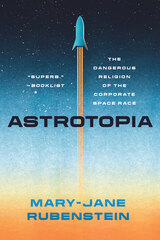
As environmental, political, and public health crises multiply on Earth, we are also at the dawn of a new space race in which governments team up with celebrity billionaires to exploit the cosmos for human gain. The best-known of these pioneers are selling different visions of the future: while Elon Musk and SpaceX seek to establish a human presence on Mars, Jeff Bezos and Blue Origin work toward moving millions of earthlings into rotating near-Earth habitats. Despite these distinctions, these two billionaires share a core utopian project: the salvation of humanity through the exploitation of space.
In Astrotopia, philosopher of science and religion Mary-Jane Rubenstein pulls back the curtain on the not-so-new myths these space barons are peddling, like growth without limit, energy without guilt, and salvation in a brand-new world. As Rubenstein reveals, we have already seen the destructive effects of this frontier zealotry in the centuries-long history of European colonialism. Much like the imperial project on Earth, this renewed effort to conquer space is presented as a religious calling: in the face of a coming apocalypse, some very wealthy messiahs are offering an other-worldly escape to a chosen few. But Rubenstein does more than expose the values of capitalist technoscience as the product of bad mythologies. She offers a vision of exploring space without reproducing the atrocities of earthly colonialism, encouraging us to find and even make stories that put cosmic caretaking over profiteering.

The state is often regarded as an abstract and neutral bureaucratic entity. Against this common sense idea, At the Heart of the State argues that it is also a concrete and situated reality, embodied in the work of its agents and inscribed in the issues of its time.
The result of a five-year investigation conducted by ten scholars, this book describes and analyses the police, the court system, the prison apparatus, the social services, and mental health facilities in France. Combining genealogy and ethnography, its authors show that these state institutions do not simply implement laws, rules and procedures: they mobilise values and affects, judgements and emotions. In other words, they reflect the morality of the state.
Of immense interest to both social scientists and political theorists, this work will make an important contribution to the ever expanding literature on the contemporary state.
READERS
Browse our collection.
PUBLISHERS
See BiblioVault's publisher services.
STUDENT SERVICES
Files for college accessibility offices.
RECENTLY PUBLISHED




UChicago Accessibility Resources
home | accessibility | search | about | contact us
BiblioVault ® 2001 - 2026
The University of Chicago Press