
 A SCHOLARLY BOOK REPOSITORY

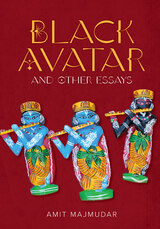
The eight pieces in this deeply engaging volume reflect author Amit Majmudar’s comprehensive studies of American, European, and Indian traditions, as well as his experiences in both suburban Ohio and the western Indian state of Gujarat. The volume begins with the title piece, a fifteen-part examination of “How Colorism Came to India.” Tracing the evolution of India’s bias in favor of light skin, Majmudar reflects on the effects of colonialism, drawing upon sources ranging from early Sanskrit texts to contemporary film and television.
Other essays illuminate subjects both timely and timeless. “The Ramayana and the Birth of Poetry” discusses how suffering is portrayed in art and literature (“The spectrum of suffering: slapstick on one end, scripture on the other, with fiction and poetry . . . in the vastness between them”), while in “Five Famous Asian War Photographs”—a 2018 Best American Essays selection—Majmudar analyzes why these iconic images of atrocity have such emotional resonance. In “Nature/Worship,” another multi-part piece, the author turns his attention to climate change, linking notions of environmentalism to his ancestral tradition of finding divinity within the natural world, connections that form the basis of religious belief.
Perhaps the greatest achievement of these wide-ranging essays is the prose itself—learned yet lively, erudite yet accessible—nimbly revealing the workings of a wonderfully original mind.
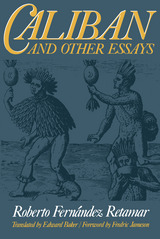
Roberto Fernández Retamar--poet, essayist, and professor of philology at the University of Havana--has long served as the Cuban Revolution’s primary cultural and literary voice. An erudite and widely respected hispanist, Retamar is known for his meticulous efforts to dismantle Eurocentric colonial and neocolonial thought. Since its publication in Cuba in 1971, “Caliban"--the first and longest of the five essays in this book--has become a kind of manifesto for Latin American and Caribbean writers; its central figure, the rude savage of Shakespeare’s Tempest, becomes in Retamar’s hands a powerful metaphor of their cultural situation--both its marginality and its revolutionary potential.
Retamar finds the literary and historic origins of Caliban in Columbus’s Navigation Log Books, where the Carib Indian becomes a cannibal, a bestial human being situated on the margins of civilization. The concept traveled from Montaigne to Shakespeare, on down to Ernest Renan and, in the twentieth century, to Aimé Césaire and other writers who consciously worked with or against the vivid symbolic figures of Prospero, Calivan, and Ariel. Retamar draws especially upon the life and work of José Marti, who died in 1895 in Cuba’s revolutionary struggle against Spain; Marti’s Calibanesque vision of “our America” and its distinctive mestizo culture-Indian, African, and European-is an animating force in this essay and throughout the book.
Edward Shils understood the university as a great symphonic conductor comprehends the value of each instrument and section, both separately and in cooperation. The Calling of Education offers Shils's insightful perspective on problems that are no less pressing than when he first confronted them.
Edward Shils (1910-1995) was distinguished service professor in the Committee on Social Thought and the department of sociology at the University of Chicago. Among his many books published by the University of Chicago Press are Portraits: A Gallery of Intellectuals and the three-volume Selected Papers of Edward Shils.
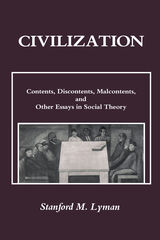
In order to bring sociology to the recognition of a social world of contingencies and of an obdurate but protean reality that changes shapes as humans define it, Stanford Lyman re-introduces the concept of “civilization,” employing it as both an intellectual resource and a proper topic for sociological investigations.
The fifteen essays in this collection by one of America’s premier sociologists reflect Lyman’s concern with all that is meant by the term civilization. Primarily inspired by his attempts to synthesize the ideas of Erving Goffman, Émile Durkheim, Max Weber, Herbert Blumer, and other social thinkers, the essays reflect the author’s abiding interest in the structures and the processes attending race relations, minority communities, and the constitution of the social self.
1991 Mid-South Sociological Association Book Award
In 1982, a century after the laying of the cornerstone of its first building, the University of Texas was ranked by the New York Times among the best in the nation. No one had more to do with that extraordinary achievement than Harry Huntt Ransom. From 1935 to his death in 1976, he served the University in positions ranging from instructor in English to chancellor of The University of Texas System. In the fifties, sixties, and seventies, he held a succession of administrative posts requiring him to face a myriad of perplexing problems. Among the critical issues calling for analysis and decision in those years were the post-Sputnik pressure for greater emphasis on science and technology, the student revolts during the 1960s, and the defection of growing numbers of university faculty to industry and government.
Harry Huntt Ransom did not merely respond to the problems of the times. He had his own large ambitions for the University of Texas, in particular the improvement of student programs, the development of a vigorous faculty, and—the achievement for which he is best remembered—the building of a world-renowned library.
He was concerned with the role of the university in society, what the university should do and do well, and what it should not do. Always he viewed these matters in broad perspective, and his approach to them was far-sighted and deeply philosophical.
As dean, vice-president, president, and chancellor, Ransom wrote and spoke often on these and other important subjects. Aside from the books that he wrote and edited, he left a prodigious amount of material, some of which had been published in various journals and some of which had been delivered as lectures and addresses and never made available in printed form.
For the last twenty-five years of Ransom's life his wife, Hazel, was his closest companion and confidant. At the urging of Harry's friends, colleagues, and admirers, she undertook the task of sifting through her late husband's papers in an effort to organize and preserve some of the important contributions he had made to the thought and planning that were so instrumental in shaping the University of Texas and higher education in general. In these essays we see the force of reasoning and grace of style for which Ransom was so widely admired. It was he who reminded us that books last longer than buildings. This is a book of lasting importance that Harry Ransom himself might have given us had he lived longer.
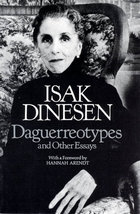
"Through these daguerreotypes we begin to understand other periods, the renunciations of World War I, the purpose of houses and mansions, of ritual ceremonials, such as tatooing. We are given a fresh and vivid view of the women's movement . . . which urges that what our 'small society' needs beyond human beings who have demonstrated what they can do, is people who are. 'Indeed, our own time,' she wrote in 1953, 'can be said to need a revision from doing to being.' She demonstrated it in her own work and craft, with courage and with dignity. This collection is as real as a gallery of old daguerreotypes, moving and unfaded. The work, as Hannah Arendt says, of a wise woman."—Robert Kirsch, Los Angeles Times
"These essays . . . have the flavor of good conversation: humorous, easy, personal but not oppressive, the distillation of reading, thought, and experience. Their subjects are of surprisingly current interest. We need make no concessions to the past, need not set our watches back to 'historical.' Isak Dinesen was not a faddish thinker. . . . 'In history it is always the human element that has a chance for eternal life,' Dinesen remarks, and she gives these essays their chance."—Penelope Mesic, Chicago
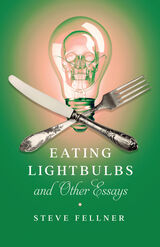

Faced with the prospect of moving to another place, Bowers finds herself thinking about the familiar world in new and unfamiliar ways. Through her eyes, too, we see how an interest in nature and the outdoors developed from early childhood and how simple curiosity has led her to the most surprising discoveries. At odd and unexpected moments, her work also seems to bring new insights into herself and her life as a writer, a wife, and a mother. These pages promise a new adventure at every turn in the trail. For sheer terror, there's a climb up the face of Baboquivari, for laughs, there's the great bagworm caper, and for some quiet truths, there are themes of gain and loss, of connection and reconcilliation. Crunching through winter snow or sweating under summer sun, we know we're in the hands of an experienced guide. And we know we couldn't ask for a better companion.

The collection contains the following eight essays:
• “Verisimilitude and the Portrait of an Angel: On the Fortunes of a Swedish-Russian artist” (on painter Carl August Tholander)
• “The Grand Theme: A Journey in the Musical Universe” (on composer Tommie Haglund, music, and classical philosophy)
• “An Angle of Vision”(on Swedenborg’s clairvoyance)
• “The Heart of the Matter” (on Swedenborg’s influence on psychology)
• “In the Garden of God” (on Swedenborg’s and Carl Linnaeus’s influence in Australia)
• “Jardin des Plantes: The Most Important Place on Earth’” (on Swedenborg, Emerson, Strindberg, and Honoré de Balzac in Paris)
• “In the Shadow of Le Morne Brabant” (on Swedenborgianism in Mauritius)
• “The Oceanic Mind” (on Swedenborgianism in Cuba)
Winner, Massachusetts Book Award
A Book of the Year pick from Kirkus, BuzzFeed, and Literary Hub
“The essays in this collection are restless, brilliant and short.…The brevity suits not just Walker’s style but his worldview, too.…Keeping things quick gives him the freedom to move; he can alight on a truth without pinning it into place.” —Jennifer Szalai, the New York Times
For the black community, Jerald Walker asserts in How to Make a Slave, “anger is often a prelude to a joke, as there is broad understanding that the triumph over this destructive emotion lay in finding its punchline.” It is on the knife’s edge between fury and farce that the essays in this exquisite collection balance. Whether confronting the medical profession’s racial biases, considering the complicated legacy of Michael Jackson, paying homage to his writing mentor James Alan McPherson, or attempting to break free of personal and societal stereotypes, Walker elegantly blends personal revelation and cultural critique. The result is a bracing and often humorous examination by one of America’s most acclaimed essayists of what it is to grow, parent, write, and exist as a black American male. Walker refuses to lull his readers; instead his missives urge them to do better as they consider, through his eyes, how to be a good citizen, how to be a good father, how to live, and how to love.
Presenting Dewey’s new view of philosophical inquiry
This critical edition of The Influence of Darwin on Philosophy and Other Essays in Contemporary Thought presents the results of John Dewey’s patient construction, throughout the previous sixteen years, of the radically new view of the methods and concerns of philosophical inquiry. It was a view that he continued to defend for the rest of his life.
In the 1910 The Influence of Darwin on Philosophy and Other Essays in Contemporary Thought—the first collection of Dewey’s previously published, edited essays—John Dewey provided readers with an overview of the scope and direction of his philosophical vision in one volume. The order in which the eleven essays were presented was a reverse chronology, with more recently published essays appearing first. The collection of eleven essays offered a detailed portrait of Dewey’s proposed reconstruction of the traditional concepts of knowledge and truth. It furthermore elaborated on how his new logic and his proposal regarding knowledge and truth fit comfortably together, not only with each other but also with a pragmatically proper understanding of belief, reality, and experience.
Because material in the Collected Works of John Dewey, 1882–1953 was published chronologically, however, the essays published together in the 1910 Darwin book have appeared in seven different volumes in the Collected Works. This new, critical edition restores a classic collection of essays authored and edited by John Dewey as they originally appeared in the volume. The edition is presented with ancillary materials, including responses by Dewey’s critics and an introduction by Douglas Browning.
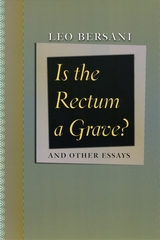
Over the course of a distinguished career, critic Leo Bersani has tackled a range of issues in his writing, and this collection gathers together some of his finest work. Beginning with one of the foundations of queer theory—his famous meditation on how sex leads to a shattering of the self, “Is the Rectum a Grave?”—this volume charts the inspired connections Bersani has made between sexuality, psychoanalysis, and aesthetics.
Over the course of these essays, Bersani grapples with thinkers ranging from Plato to Descartes to Georg Simmel. Foucault and Freud recur as key figures, and although Foucault rejected psychoanalysis, Bersani contends that by considering his ideas alongside Freud’s, one gains a clearer understanding of human identity and how we relate to one another. For Bersani, art represents a crucial guide for conceiving new ways of connecting to the world, and so, in many of these essays, he stresses the importance of aesthetics, analyzing works by Genet, Caravaggio, Proust, Almodóvar, and Godard.
Documenting over two decades in the life of one of the best minds working in the humanities today, Is the Rectum a Grave? and Other Essays is a unique opportunity to explore the fruitful career of a formidable intellect.
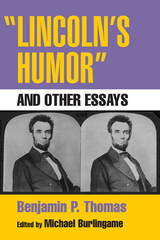
A skilled historian and a masterful storyteller himself, Thomas was widely regarded as the greatest Lincoln historian of his generation. With these essays, he combines historical depth with narrative grace in delineating Lincoln's qualities as a humorist, lawyer, and politician. From colorful tall tales to clever barbs aimed at political opponents, Lincoln clothed a shrewd wit in a homespun, backwoods vernacular. He used humor to defuse tension, illuminate a point, put others at ease--and sometimes for sheer fun. From an early reliance on broad humor and ridicule in speeches and on the stump, Lincoln's style shifted in 1854 to a more serious vein in which humor came primarily to elucidate an argument. "If I did not laugh occasionally I should die," he is said to have told his cabinet, "and you need this medicine as much as I do." Thomas brings his deep knowledge of Lincoln to essays on the great man's tumultuous career in Congress, his work as a lawyer, his experiences in the Courts, and his opinions of the South. A gracious survey of Lincoln's early biographers, particularly Ida Tarbell, stands alongside an appreciation of Harry Edward Pratt, a key figure in the early days of the Abraham Lincoln Association. Thomas also assesses Lincoln's use of language and the ongoing significance of the Gettysburg Address.
This diverse collection is enhanced by an introduction by Michael Burlingame, himself a leading biographer of Lincoln. Burlingame provides a balanced portrait of Thomas and his circuitous path toward writing history.
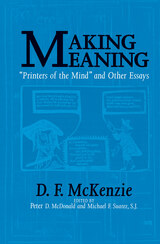
The greatest bibliographer of our time, was how historian Robert Darnton described D. F. McKenzie. Yet until now many of McKenzie's major essays, scattered in specialist journals and inaccessible publications, have circulated mainly in tattered photocopies. This volume, edited by two of McKenzie's former students, brings together for the first time a wide range of his writings on bibliography, the book trade, and the “sociology of texts.” Selected by the author himself before his sudden death in 1999, the essays range from the material transmission of Shakespeare's plays in the seventeenth century to the connections among oral, manuscript, and print cultures.
Making Meaning reflects McKenzie's virtuosity as a traditional bibliographer and reveals how his thought-provoking scholarship made him a driving force in the genesis and development of the new interdisciplinary field of book history. His refusal to recognize the traditional boundary between bibliography and literary history re-energized the study of the social, political, economic, and cultural aspects of book production and reception.
The editors' introduction and headnotes situate McKenzie's innovative and controversial thinking in the debates of his time.

"Professor Lowinsky's method is the only kind of 'writing about music' that I value."—Igor Stravinsky

A keen observer of culture, Czech writer Vladimír Macura (1945–99) devoted a lifetime to illuminating the myths that defined his nation. The Mystifications of a Nation, the first book-length translation of Macura’s work in English, offers essays deftly analyzing a variety of cultural phenomena that originate, Macura argues, in the “big bang” of the nineteenth-century Czech National Revival, with its celebration of a uniquely Czech identity.
In reflections on two centuries of Czech history, he ponders the symbolism in daily life. Bridges, for example—once a force of civilization connecting diverse peoples—became a sign of destruction in World War I. Turning to the Soviet and post-Soviet eras, Macura probes a range of richly symbolic practices, from the naming of the Prague metro system, to the mass gymnastic displays of the Communist period, to post–Velvet Revolution preoccupations with the national anthem. In “The Potato Bug,” he muses on one of the stranger moments in the Cold War—the claim that the United States was deliberately dropping insects from airplanes to wreak havoc on the crops of Czechoslovakia.
While attending to the distinctively Czech elements of such phenomena, Macura reveals the larger patterns of Soviet-brand socialism. “We were its cocreators,” he declares, “and its analysis touches us as a scalpel turned on its own body.” Writing with erudition, irony, and wit, Macura turns the scalpel on the authoritarian state around him, demythologizing its mythology.
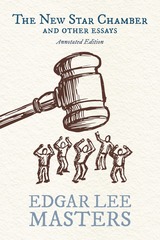
Coedited by noted Masters scholar, Jason Stacy, and his class, “Editing History,” this annotated edition of Edgar Lee Masters’s The New Star Chamber and Other Essays reappears at a perilous time in US history, when large corporations and overseas conflicts once again threaten the integrity of American rights and liberties, and the United States still finds itself beholden to corporate power and the legacy of imperial hubris. In speaking to his times, Masters also speaks to ours.
These thirteen essays lay bare the political ideology that informed Spoon River Anthology. Masters argues that the dangerous imperialism championed by then-President Theodore Roosevelt was rooted in the Constitution itself. By debating the ethics of the Philippine-American War, criticizing Hamiltonian centralization of government, and extolling the virtues of Jeffersonian individualism, Masters elucidates the ways in which America had strayed from its constitutional morals and from democracy itself. The result is a compelling critique of corporate capitalism and burgeoning American imperialism, as well as an exemplary source for understanding its complicated author in the midst of his transformation from urban lawyer to poet of rural America.
In print again for the first time since 1904, this edition includes an introduction and historical annotations throughout. Edited and annotated by students at Southern Illinois University Edwardsville, and designed and illustrated by students at Southern Illinois University Carbondale, this volume traces economic and political pathologies to the origins of the American republic. The New Star Chamber and Other Essays is as vital now as it was over 100 years ago.
Moments of clarity are rare and fleeting; how can we become comfortable outside of them, in the more general condition of uncertainty within which we make our lives? Written by English professor Emily Ogden while her children were small, On Not Knowing forays into this rich, ambivalent space. Each of her sharply observed essays invites the reader to think with her about questions she can’t set aside: not knowing how to give birth, to listen, to hold it together, to love.
Unapologetically capacious in her range of reference and idiosyncratic in the canon she draws on, Ogden moves nimbly among the registers of experience, from the operation of a breast pump to the art of herding cattle; from one-night stands to the stories of Edgar Allan Poe; from kayaking near a whale to a psychoanalytic meditation on drowning. Committed to the accumulation of knowledge, Ogden nonetheless finds that knowingness for her can be a way of getting stuck, a way of not really living. Rather than the defensiveness of willful ignorance, On Not Knowing celebrates the defenselessness of not knowing yet—possibly of not knowing ever. Ultimately, this book shows how resisting the temptation of knowingness and embracing the position of not knowing becomes a form of love.
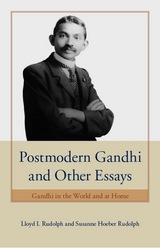
Gandhi, with his loincloth and walking stick, seems an unlikely advocate of postmodernism. But in Postmodern Gandhi, Lloyd and Susanne Rudolph portray him as just that in eight thought-provoking essays that aim to correct the common association of Gandhi with traditionalism.
Combining core sections of their influential book Gandhi: The Traditional Roots of Charisma with substantial new material, the Rudolphs reveal here that Gandhi was able to revitalize tradition while simultaneously breaking with some of its entrenched values and practices. Exploring his influence both in India and abroad, they tell the story of how in London the young activist was shaped by the antimodern “other West” of Ruskin, Tolstoy, and Thoreau and how, a generation later, a mature Gandhi’s thought and action challenged modernity’s hegemony. Moreover, the Rudolphs argue that Gandhi’s critique of modern civilization in his 1909 book Hind Swaraj was an opening salvo of the postmodern era and that his theory and practice of nonviolent collective action (satyagraha) articulate and exemplify a postmodern understanding of situational truth.
This radical interpretation of Gandhi's life will appeal to anyone who wants to understand Gandhi’s relevance in this century, as well as students and scholars of politics, history, charismatic leadership, and postcolonialism.
In the fifth volume in the Studies in American Sociology Series, Stanford M. Lyman offers commentaries on and critiques of postmodernism, poststructuralism, and deconstruction, posing questions concerning theoretical and epistemological problems arising from what appears to be a “nouvelle vague.”
Postmodernism, poststructuralism, and deconstructionism are interrelated aspects of the newest theoretical development in sociology and the social sciences. This new wave of thought challenges virtually all paradigms currently in use. In this, his fifth volume in the Studies in American Sociology Series, Stanford M. Lyman offers commentaries on and critiques of this new perspective, posing questions concerning theoretical and epistemological problems arising from what appears to be a nouvelle vague.
Among the basic themes and issues explored are the allegation that modernity has defaulted on the promise of the Enlightenment; the question of whether the rational basis for knowledge and action is still valid; the controversy over the place of metanarratives and macrosociological outlooks; and newer concerns over race, gender, sexual preferences, the self, and the “Other.”
Professor Lyman provides empirically based and historically specific analyses of the relation of the race question to the problem of otherness and to the legal construction of racial identity in American court proceedings. Focusing on the issues of citizenship affecting European, Middle Eastern, and Asian immigrants; African Americans; and the special cases of the Chinese and Native Americans, he relates major public problems to the modern as well as the postmodern perspectives on justice. The debate over assimilation and multiculturalism, the dynamics of gender-specific emotions as expressed in six decades of Hollywood films, and the postmodern approach to deviance are each examined. He also offers proposals for a social science attuned to, but critical of, postmodernism and poststructuralism. Such a sociology might offer a perspective that treats the drama of social relations in the routine as well as the remarkable aspects of everyday life. Professor Lyman provides not only a new understanding of postmodernism but also a program of how to proceed with respect to its challenges.
John Perry discusses how these kinds of words work, and why they express important philosophical thoughts. He shows that indexicals pose a challenge to traditional assumptions about language and thought. Over the years a number of these papers, now included in this book, have sparked lively debates and have been influential in philosophy, linguistics and other areas of cognitive science.
With seven new papers, including the previously unpublished ``What Are Indexicals?,'' the present volume expands on an earlier version of this book published in the early nineties. Also included are the well-known papers ``Frege on Demonstratives,'' ``Cognitive Significance and New Theories of Reference,'' ``Evading the Slingshot,'' ``The Prince and the Phone booth'' (coauthored with Mark Crimmins), ``Fodor on Psychological Explanations'' (coauthored with David Israel), and related papers on situation semantics, direct reference, and the structure of belief. This book also includes afterwords written by the author that discuss responses to his work by Gareth Evans, Robert Stalnaker, Barbara Partee, Howard Wettstein and others.

In Sex and Isolation, readers will encounter eccentric street people, Latin American literary geniuses, a French cabaret owner, a transvestite performer, and many other unusual characters; they’ll visit subcultures rarely described in writing and be treated to Benderson’s iconoclastic opinions about culture in former and contemporary urban society. Whether proposing new theories about the relationship between art, entertainment, and sex, analyzing the rise of the Internet and the disappearance of public space, or considering how religion and sexual identity interact, each essay demonstrates sharp wit, surprising insight and some startling intellectual positions.
This is the first American volume of Benderson’s collected essays, featuring both new work and some of his best-known writings, including his famous essay “Toward the New Degeneracy.”
Sign Here If You Exist explores states of being and states of mind, from the existence of God to sense of place to adoptive motherhood. In it, Jill Sisson Quinn examines how these states both disorient and anchor us as she treks through forests, along shorelines and into lakes and rivers as well as through memories and into scientific literature.Each essay hinges on an unlikely pairing—parasitic wasps and the afterlife, or salamanders and parenthood—in which each element casts the other in unexpectedly rich light. Quinn joins the tradition of writers such as Annie Dillard, Scott Russell Sanders, and Eula Biss to deliver essays that radiate from the junction of science and imagination, observation and introspection, and research and reflection.
Octavio Paz has long been known for his brilliant essays as well as for his poetry. Through the essays, he has sought to confront the tensions inherent in the conflict between art and society and to achieve a unity of their polarities. The Siren and the Seashell is a collection of Paz’s essays, focusing on individual poets and on poetry in general. The first five poets he treats are Latin American: Sor Juana Inés de la Cruz, Rubén Darío, José Juan Tablada, Ramón López Velarde, and Alfonso Reyes. Then there are essays on Robert Frost, e. e. cummings, Saint-John Perse, Antonio Machado, and Jorge Guillén. Finally, there are Paz’s reflections on the poetry of solitude and communion and the literature of Latin America. Each essay is more than Paz’s impressions of one person or issue; each is the occasion for a wider discussion of cultural, historical, psychological, and philosophical themes. The essays were selected from Paz’s writing between 1942 and 1965 and provide an overview of the development of his thinking and an exploration of the ideas central in his works.
The essays, all of them about English and American writers, are arranged chronologically, beginning with Shakespeare, an Edmund Burke, and proceeding through the nineteenth and twentieth centuries to end with contemporaries like Kinglsey Amis, V. S. Naipaul, and Doris Lessing. Pritchard writes with equal authority about poetry and fiction; the collection also includes assessments of critics such as Matthew Arnold and Thomas Carlyle, Ford Madox Ford and R. P. Blackmur.

This provocative collection of essays reveals the passionate voice of a Native American feminist intellectual. Elizabeth Cook-Lynn, a poet and literary scholar, grapples with issues she encountered as a Native American in academia. She asks questions of critical importance to tribal people: who is telling their stories, where does cultural authority lie, and most important, how is it possible to develop an authentic tribal literary voice within the academic community?
In the title essay, “Why I Can’t Read Wallace Stegner,” Cook-Lynn objects to Stegner’s portrayal of the American West in his fiction, contending that no other author has been more successful in serving the interests of the nation’s fantasy about itself. When Stegner writes that “Western history sort of stopped at 1890,” and when he claims the American West as his native land, Cook-Lynn argues, he negates the whole past, present, and future of the native peoples of the continent. Her other essays include discussion of such Native American writers as Michael Dorris, Ray Young Bear, and N. Scott Momaday; the importance of a tribal voice in academia, the risks to American Indian women in current law practices, the future of Indian Nationalism, and the defense of the land.
Cook-Lynn emphasizes that her essays move beyond the narrowly autobiographical, not just about gender and power, not just focused on multiculturalism and diversity, but are about intellectual and political issues that engage readers and writers in Native American studies. Studying the “Indian,” Cook-Lynn reminds us, is not just an academic exercise but a matter of survival for the lifeways of tribal peoples. Her goal in these essays is to open conversations that can make tribal life and academic life more responsive to one another.
READERS
Browse our collection.
PUBLISHERS
See BiblioVault's publisher services.
STUDENT SERVICES
Files for college accessibility offices.
RECENTLY PUBLISHED


UChicago Accessibility Resources
home | accessibility | search | about | contact us
BiblioVault ® 2001 - 2026
The University of Chicago Press