
 A SCHOLARLY BOOK REPOSITORY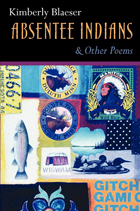
Absentee Indians and Other Poems evokes personal yet universal experiences of the places that Native Americans call home, their family and national histories, and the emotional forces that help forge Native American identities. These are poems of exile, loss, and the celebration of that which remains. Anchored in the physical landscape, Blaeser’s poetry finds the sacred in those ordinary actions that bind a community together. As Blaeser turns to the mysterious passage from sleeping to wakefulness, or from nature to spirit, she reveals not merely the movement from one age or place to another, but the movement from experience to vision.
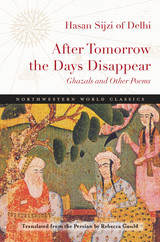
Hasan Sijzi, also known as Amir Hasan Sijzi Dehlavi, is considered the originator of the Indo-Persian ghazal, a poetic form that endures to this day—from the legacy of Hasan’s poetic descendent, Hafez, to contemporary Anglophone poets such as John Hollander, Maxine Kumin, Agha Shahid Ali, and W. S. Merwin.
As with other Persian poets, Hasan worked within a highly regulated set of poetic conventions that brought into relief the interpenetration of apparent opposites—metaphysical and material, mysterious and quotidian, death and desire, sacred and profane, fleeting time and eternity. Within these strictures, he crafted a poetics that blended Sufi Islam with non-Muslim Indic traditions. Of the Persian poets practiced the ghazal, Hafez and Rumi are best known to Western readers, but their verse represents only a small fraction of a rich tradition. This collection reveals the geographical range of the literature while introducing an Indian voice that will find a place on reader’s bookshelves alongside better known Iranian names.
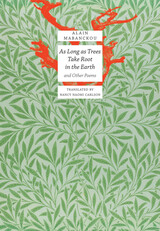
These compelling poems by novelist and essayist Alain Mabanckou conjure nostalgia for an African childhood where the fauna, flora, sounds, and smells evoke snapshots of a life forever gone. Mabanckou’s poetry is frank and forthright, urging his compatriots to no longer be held hostage by the civil wars and political upheavals that have ravaged their country and to embrace a new era of self-determination where the village roosters can sing again.
These music-infused texts, beautifully translated by Nancy Naomi Carlson and supported by a grant from the National Endowment for the Arts, appear together in English for the first time. In these pages, Mabanckou pays tribute to his beloved mother, as well as to the regenerative power of nature, especially of trees, whose roots are a metaphor for the poet’s roots, anchored in the red earth of his birthplace. Mabanckou’s yearning for the land of his ancestors is even more poignant because he has been declared persona non grata in his homeland, now called Congo-Brazzaville, due to his biting criticism of the country’s regime. Despite these barriers, his poetry exudes hope that nature’s resilience will lead humankind on the path to redemption and reconciliation.

Published by the Center for Literary Publishing at Colorado State University

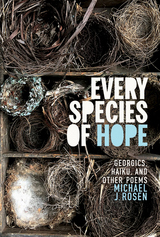
At the center of this book is a suite of poems inspired by Virgil’s Georgics, or “poems of pastoral instruction.” In Rosen’s case, he is more the student than the teacher. Likewise, five short sections of haiku continue his meditation on—or mediation of—art and nature. As he has written, “Haiku provides a brief and mirror-like calm in the choppy waters—in the undertow—of current events: a stillness in time where more than our singular lives can be reflected.”
Illustrated with two dozen pages from the author’s own journal, Every Species of Hope is the consummation of decades of observation, humility, and awe.

The Inventors includes a brief introduction to Char’s life and work, as well as a series of notes on the backstories of the works, which explain allusions that may not be immediately familiar to the English-speaking reader. These new translations stay true to the originals, while at the same time conveying much of the music and beauty of the French poems.
Praise for René Char
“Char, I believe, is a poet who will tower over twentieth-century French poetry.”—George Steiner
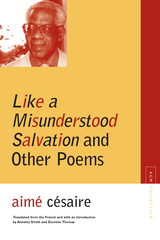
Annette Smith and Dominic Thomas’s new translations of Aimé Césaire’s Like a Misunderstood Salvation and Solar Throat Slashed (poems deleted) expose to a new audience a pivotal figure in twentieth-century French literature. This collection presents the early and last stages of a poet’s course, encapsulating in one volume Césaire’s entire literary career and creative evolution as perhaps the only French poet writing simultaneously at the crossroads of the avant-garde and classical movements.
This volume’s inclusion of previously deleted poems from Solar Throat Slashed is politically important; despite their initial exclusion from a French republication of Soleil Cou Coupé in 1961, these thirty-one poems are crucial to understanding Césaire’s legacy and remain of tremendous pertinence today as they provide helpful ways of thinking about and contextualizing discussions on race, identity, global identities, and the links between “black consciousness” and “social consciousness.”
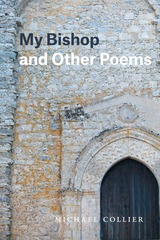
The poems of this collection explore such everyday dualities—how the human need for attachment is as much a source of pain as of vitality and how our longing for transcendence often leads to sinister complicities. The title poem tells the conflicted and devastating story of the poet’s friendship with the now-disgraced Bishop of Phoenix, Arizona, interweaving fragments of his parents’ funerals, which the Bishop concelebrated, with memories of his childhood spiritual leanings and how they were disrupted by a pedophilic priest the Bishop failed to protect him from.
This meditation on spiritual life, physical death, and betrayal is joined by an array of poised, short lyrics and expansive prose poems exploring how the terror and unpredictability of our era intrudes on our most intimate moments. Whether Michael Collier is writing about an airline disaster, Huey Newton’s trial, Thomas Jefferson’s bees, a piano in the woods, or his own fraught friendship with the disgraced Catholic Bishop, his syntactic verve, scrupulously observed detail, and flawless ear bring the felt—and sometimes frightening—dimensions of the mundane to life. Throughout, this collection pursues a quiet but ferocious need to get to the bottom of things.

Supported by the Institute for Scholarship in the Liberal Arts, Collegeof Arts and Letters, University of Notre Dame
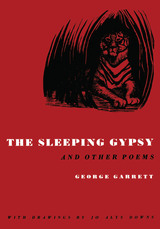
The Sleeping Gypsy is an important collection of poems by an American writer who was only twenty-nine when awarded the coveted Prix de Rome in 1958. When George Garrett’s first collected verse, The Reverend Ghost and Other Poems, appeared in Scribner’s Poets of Today: IV, critics hailed the emergence of an authentic new talent of great promise. Babette Deutsch, writing in the New York Herald Tribune, said, “His poems are short, highly charged, and also, as he intended, clear. They move rapidly, without waste, exhibiting a lively skill and vigor in action.… His sensitive perceptivity makes his thoughtful insights more memorable.” Louise Bogan, writing in the New Yorker, said, “It is good to come upon [in Garrett’s work] an ordered brilliance and effects, long neglected, that link us to the ancient tradition of English ‘song.’”
Readers will find in The Sleeping Gypsy all of the qualities that distinguished Garrett’s earlier collection of verse—the pointed, incisive writing, the abhorrence of “pretty” poetic words, the harsh impact of language that is, at the same time, strangely musical. Many will feel that, in this later work, these qualities have been enhanced and that Garrett’s advancing maturity indicates strongly that his early promise will be richly fulfilled.
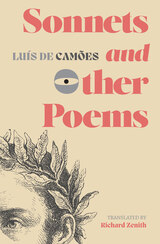
This revised and updated bilingual edition of Sonnets and Other Poems offers a cross-section of lyric poetry by Portugal's Luís de Camões, author of The Lusiads (1572), the great Renaissance epic memoralizing Vasco da Gama's inaugural voyage to India (1497-99). A selection of forty sonnets is followed by poems using other metrical patterns and rhyme schemes, including terza rima, ottava rima, the sestina, the canzone, and the redondilha, a verse form typical of Portuguese poetry. Richard Zenith's fluid renditions, far from attempting to "update" Camões, closely adhere to the original text, employing modern English but resisting the temptation to expand on the relatively small and simple lexicon of the Portuguese. Along with discussing his method of translation, Zenith's illuminating introduction shows how Camões's life and work were intimately entwined.

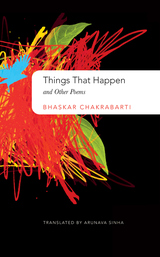
In this first-ever comprehensive translation of Chakrabarti’s work, award-winning translator Arunava Sinha masterfully articulates that clarity of vision, retaining the unique cadence and idioms of the Bengali language. Presenting verses and prose poems from all of Chakrabarti’s life—from his first volume, When Will Winter Come, published in 1971, to his last, The Language of Giraffes, published just before his death in 2005, and collecting several unpublished works as well—Things That Happen and Other Poems introduces the world to a brilliant and universal poetic voice of urban life.
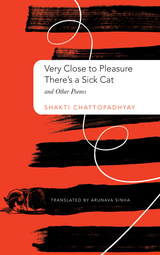
This book presents more than one hundred of Chattopadhyay’s poems, introducing an international audience to one of the most prominent and important Bengali poets of the twentieth century.
READERS
Browse our collection.
PUBLISHERS
See BiblioVault's publisher services.
STUDENT SERVICES
Files for college accessibility offices.
RECENTLY PUBLISHED






UChicago Accessibility Resources
home | accessibility | search | about | contact us
BiblioVault ® 2001 - 2026
The University of Chicago Press