
 A SCHOLARLY BOOK REPOSITORY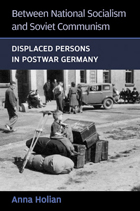
"Though its primary focus is on the immediate postwar, Between National Socialism and Soviet Communism will surely illuminate the contemporary crisis around citizenship and definitions of Germanness in the context of European Union and globalization."
---Geoff Eley, University of Michigan
In May of 1945, there were more than eight million "displaced persons" (or DPs) in Germany---recently liberated foreign workers, concentration camp prisoners, and prisoners of war from all of Nazi-occupied Europe, as well as eastern Europeans who had fled west before the advancing Red Army. Although most of them quickly returned home, it soon became clear that large numbers of eastern European DPs could or would not do so. In the aftermath of National Socialism, Germany thus ironically became a temporary home for a large population of "foreigners." Focusing on Bavaria, in the heart of the American occupation zone, Between National Socialism and Soviet Communism examines the cultural and political worlds that four groups of displaced persons---Polish, Ukrainian, Russian, and Jewish---created in Germany during the late 1940s and early 1950s. The volume investigates the development of refugee communities and how divergent interpretations of National Socialism and Soviet Communism defined these displaced groups.
Combining German and eastern European history, Anna Holian draws on a rich array of sources in cultural and political history and engages the broader literature on displacement in the fields of anthropology, sociology, political theory, and cultural studies. Her book will interest students and scholars of German, eastern European, and Jewish history; migration and refugees; and human rights.
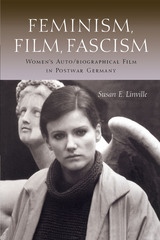
German society's inability and/or refusal to come to terms with its Nazi past has been analyzed in many cultural works, including the well-known books Society without the Father and The Inability to Mourn. In this pathfinding study, Susan Linville challenges the accepted wisdom of these books by focusing on a cultural realm in which mourning for the Nazi past and opposing the patriarchal and authoritarian nature of postwar German culture are central concerns—namely, women's feminist auto/biographical films of the 1970s and 1980s.
After a broad survey of feminist theory, Linville analyzes five important films that reflect back on the Third Reich through the experiences of women of different ages—Marianne Rosenbaum's Peppermint Peace, Helma Sanders-Brahms's Germany, Pale Mother, Jutta Brückner's Hunger Years, Margarethe von Trotta's Marianne and Juliane, and Jeanine Meerapfel's Malou. By juxtaposing these films with the accepted theories on German culture, Linville offers a fresh appraisal not only of the films' importance but especially of their challenge to misogynist interpretations of the German failure to grieve for the horrors of its Nazi past.
READERS
Browse our collection.
PUBLISHERS
See BiblioVault's publisher services.
STUDENT SERVICES
Files for college accessibility offices.
RECENTLY PUBLISHED





UChicago Accessibility Resources
home | accessibility | search | about | contact us
BiblioVault ® 2001 - 2026
The University of Chicago Press