
 A SCHOLARLY BOOK REPOSITORY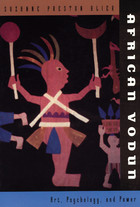
In this first major study of its kind, Suzanne Preston Blier examines the artworks of the contemporary vodun cultures of southern Benin and Togo in West Africa as well as the related voudou traditions of Haiti, New Orleans, and historic Salem, Massachusetts. Blier employs a variety of theoretically sophisticated psychological, anthropological, and art historical approaches to explore the contrasts inherent in the vodun arts—commoners versus royalty, popular versus elite, "low" art versus "high." She examines the relation between art and the slave trade, the psychological dynamics of artistic expression, the significance of the body in sculptural expression, and indigenous perceptions of the psyche.
Throughout, Blier pushes African art history to a new height of cultural awareness that recognizes the complexity of traditional African societies as it acknowledges the role of social power in shaping aesthetics and meaning generally. This book will be of critical importance not only to those concerned with African, African American, and Caribbean art, but also to anthropologists, African diaspora scholars, students of comparative religion and comparative psychology, and anyone fascinated by the traditions of voudou and vodun.
"An extraordinary tour de force."—Choice
"Extraordinarily detailed....Blier's examination of the entire, often mysterious history of vodun is...in a word, definitive."—Booklist
"A serious study that concentrates on the hidden power of objects and the meaning behind that potency is long overdue. Welcome Susan Blier's African Vodun....Certainly a must for...those concerned with the psychology of art."—Janet L. Stanley, Art Documentation
"[Blier] is usually sensitive to the need to resist imposing Western artistic values and academic methodologies inappropriately upon such art. But she offers the reader a gift even more precious; she offers rare insights into how various art forms—sculpture and home architecture in particular—yield meanings for the African users of such art.—Norman Weinstein, Boston Book Review

In this splendid and unique collection of photographs, Stella Snead captures the extraordinary vitality, intelligence, and variety of animals in Indian sculpture found at sites from prehistory through the eighteenth century. Here are cats, peacocks, mongooses, anteaters, cows, hyenas, and tigers, as well as such fantastic creatures as double-bodied lions and elephants with fish tails. Collected from all areas of India, these photographs include images from famous Indian monuments, and museum collections, as well as images from remote sites, some of which have never before been published.
Wendy Doniger's essay explores and explains the four worlds or dimensions that animals occupy in Indian thought: nature, the human world, the divine world, and the world of fantasy. George Michell places Indian sculptures of animals in their architectural and art historical context. His chronological survey identifies the location and the subject of the animals photographed and describes the artistic activity of the regions and period from which the photographs are drawn.
This beautifully illustrated book will appeal to a wide audience: to those interested in Asian studies, art, architecture, and animals, and to those drawn to Snead's powerful photographs, which capture both the idiosyncratic genius of tiny details and the grand sweep of cosmic symbols.
Combining commentary on his own works with discussions of other artists and the Eastern religious traditions that have inspired him, Gormley offers wisdom on topics such as the body in space, how to approach an environment when conceiving an installation, bringing mindfulness and internal balance to sculpture, and much more. Lavishly illustrated, this book will be of interest to not only art lovers, curators, and critics, but also artists and art students. Dynamic and thought-provoking, Antony Gormley on Sculpture is essential reading for anyone fascinated by sculpture and its long and complex history as a medium.
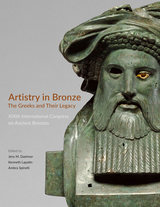
www.getty.edu/publications/artistryinbronze
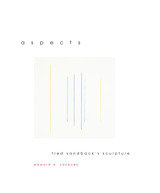
Drawing on Sandback’s substantial archive, Edward A. Vazquez demonstrates that the artist’s work—with all its physical slightness and attentiveness to place, as well as its relationship to minimal and conceptual art of the 1960s—creates a link between viewers and space that is best understood as sculptural even as it almost surpasses physical form. At the same time, the economy of Sandback’s site-determined practice draws viewers’ focus to their connection to space and others sharing it. As Vazquez shows, Sandback’s art aims for nothing less than a total recalibration of the senses, as the spectator is caught on neither one side nor the other of an object or space, but powerfully within it.

Of the conceptual artists who began their careers in the 1960s and 1970s—Bruce Nauman, Chris Burden, Vito Acconci, and Mel Bochner among them—Barry Le Va may be the most elusive. As this first study of his work reveals, his rigorously planned art was instigated to mask its creator’s intentions and methods, presenting itself as an “aftermath” of modernism’s claim to permanency and civil society’s preferred mode of monumentalism.
For Michael Maizels, Le Va’s work constitutes a particularly productive subject of inquiry because it clearly articulates the interconnection between the avant-garde’s distrust of autonomous art objects, two decades of social unrest, the emergence of information theory, and lingering notions of scientific objectivity. Barry Le Va: The Aesthetic Aftermath explores how Le Va used such materials as shattered glass, spent bullets, sound recordings, scattered flour, and meat cleavers embedded in a floor to challenge the interlocking assumptions behind blind faith in lasting beauty, just government, and perfectible knowledge. Taking inspiration from popular crime novels as well as contemporary art theory, Le Va charged his viewers to attempt, like detectives at a crime scene, to decipher an order underlying the apparent chaos.
Le Va’s installations were designed to erode not simply the presumed autonomy of the art object but also the economic and political authority of the art establishment. In his concluding chapter, Maizels looks at the more fixed work of the past two decades in which Le Va turned to architectural themes and cast concrete to probe the limits of dynamism and the idea of permanence.
Boaz Vaadia (1951–2017), the internationally acclaimed sculptor, amassed a prodigious body of work over his 40-year artistic career. With Boaz Vaadia: Sculpture, Grounds For Sculpture in Hamilton, New Jersey, presented the first retrospective exhibition of his indoor and outdoor works in 2016 in a comprehensive survey of the artist's journey from abstraction to figuration. Detailing 125 works installed in two buildings and throughout the 42-acre sculpture park, the exhibition's color catalogue presents Vaadia's ritualistic and highly personal early works, his later sculptures in stone, slate, and bronze, and his explorations of the ancient genre of bas-relief. With the global recognition his art has received, he continued working at the edge, discovering new possibilities in the constantly shifting grounds of his sculpture. Boaz Vaadia: Sculpture is a celebration of the artist's long and prolific career, and his unwavering advancement of his art.
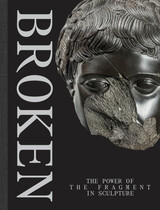
A compelling exploration of fragments in sculpture across time and cultures.
Some objects draw power from the way they have been broken. Becoming beautiful abstract shapes, they provoke consideration of how destruction can create something so aesthetically appealing. Beyond the visual, these fragments are compelling because they force us to confront the often unsettling stories of their breakage.
Published in conjunction with the National Gallery of Art and accompanying a traveling exhibition, this lavishly illustrated book explores our enduring fascination with broken statues through a range of interdisciplinary perspectives, featuring contributions by scholars and artists, along with examples of striking works from around the world spanning the third millennium BCE to the present.
Organized in three sections, Broken begins by investigating what makes fragments so intriguing and reveals the optical and neurological processes behind the strong emotions they evoke. It then moves to the act of breaking itself, exploring the forces—both natural and human—that shaped these objects, the power dynamics of iconoclastic dismantling and defacement, and how various cultures treat broken statues. The book concludes by considering one of the most powerful ways humans have responded to fragments over the course of history: by creating new works that are intentionally fractured.
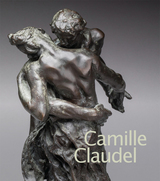
Camille Claudel (1864–1943) was among the most daring and visionary sculptors of the late nineteenth century. Although much attention has been paid to her tumultuous life—her affair with her mentor, Auguste Rodin; the premature end to her career; her thirty-year institutionalization in an asylum—her art remains little known outside of France. Memorably praised by critic Octave Mirbeau in 1895 as “a revolt of nature: a woman of genius,” Claudel was celebrated for her brilliance during a time when women sculptors were rare.
Featuring more than two hundred photographs along with contributions from leading experts, this publication accompanies the first comprehensive survey of Claudel’s oeuvre in nearly forty years. With essays exploring the many facets of her life, work, and reception; a biography; commentary by American sculptor Kiki Smith; and a fascinating appendix of documents written by Claudel and her contemporaries, this volume reevaluates the artist’s work on its own merits and repositions her legacy within a more complex genealogy of modernism.
This volume, copublished with The Art Institute of Chicago, accompanies an exhibition on view at The Art Institute of Chicago from October 7, 2023, to February 19, 2024 and at the J. Paul Getty Museum at the Getty Center from April 2 to July 21, 2024.
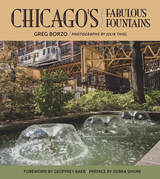
Winner, ISHS Annual Award for Other Publications, 2018
Most people do not realize it, but Chicago is home to many diverse, artistic, fascinating, and architecturally and historically important fountains. In this attractive volume, Greg Borzo reveals more than one hundred outdoor public fountains of Chicago with noteworthy, amusing, or surprising stories about these gems. Complementing Borzo’s engagingly written text are around one hundred beautiful fine-art color photos of the fountains, taken by photographer Julia Thiel for this book, and a smaller number of historical photos.
Greg Borzo begins by providing an overview of Chicago’s fountains and discussing the oldest ones, explaining who built them and why, how they survived as long as they have, and what they tell us about early Chicago. At the heart of the book are four thematic chapters on drinking fountains, iconic fountains, plaza fountains, and park and parkway fountains. Among the iconic fountains described are Buckingham (in Grant Park), Crown (in Millennium Park), Centennial (with its water cannon shooting over the Chicago River), and two fountains designed by famed sculptor Lorado Taft (Time and Great Lakes). Plazas all around Chicago—in the neighborhoods as well as downtown—have fountains that anchor communities or enhance the skyscrapers they adorn. Also presented are the fountains in Chicago’s parks, some designed by renowned artists and many often overlooked or taken for granted. A chapter on the self-proclaimed City of Fountains, Kansas City, Missouri, shows how Chicago’s city planners could raise public awareness and funding for the care and preservation of these important landmarks. Also covered are a brief period of fountain building and rehabbing (1997–2002) that vastly enriched the city; fountains that no longer exist; and proposed Chicago fountains that were never built, as well as the future of fountain design.
A beautiful photography book and a guide to the city’s many fountains, Chicago’s Fabulous Fountains also provides fascinating histories and behind-the-scenes stories of these underappreciated artistic and architectural treasures of the Windy City.
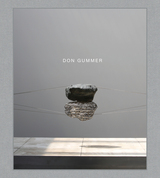
The trajectory of Don Gummer's career as a sculptor began in New York City in the late 1970s with his wall reliefs of painted wood, carefully layered geometric works exhibiting a strong architectural influence. Moving beyond wood to stone, bronze, stainless steel, aluminum, and glass as his primary materials, his artworks evolved into subtly inventive freestanding sculptures, often of monumental scale, that exhibit his unfailing attention to craftsmanship and detail.
In a 2001 interview with Peter Plagens, American artist and art critic, Gummer described his interest in sculpture as "the recontextualization of natural phenomena, of unaltered things brought into aesthetic balance by choosing and placing." Using balance, proportion, and his unique sense of harmony, the artist is able to make durable materials seem almost buoyant. Negative space becomes an intrinsic element in his work, imparting a sense that his exquisite, seemingly permanent forms are ultimately as fleeting as any of nature's creations would be. The Artist Book Foundation is delighted to present Don Gummer, a new monograph on the artist and his highly acclaimed body of work.
Published to accompany Salcedo’s first retrospective exhibition and the American debut of her major work Plegaria muda, Doris Salcedo is the most comprehensive survey of her sculptures and installations to date. In addition to featuring new contributions by respected scholars and curators, the book includes over one hundred color illustrations highlighting many pieces from Salcedo’s thirty-year career. Offering fresh perspectives on a vital body of work, Doris Salcedo is a testament to the power of one of today’s most important international artists.
A Dan Josselyn Memorial Publication
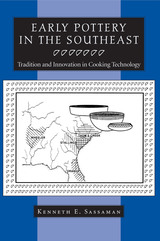
Among southeastern Indians pottery was an innovation that enhanced the economic value of native foods and the efficiency of food preparation. But even though pottery was available in the Southeast as early as 4,500 years ago, it took nearly two millenia before it was widely used. Why would an innovation of such economic value take so long to be adopted?
The answer lies in the social and political contexts of traditional cooking technology. Sassaman's book questions the value of using technological traits alone to mark temporal and spatial boundaries of prehistoric cultures and shows how social process shapes the prehistoric archaeological record.
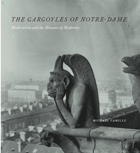
Michael Camille begins his long-awaited study by recounting architect Eugène Viollet-le-Duc’s ambitious restoration of the structure from 1843 to 1864, when the gargoyles were designed, sculpted by the little-known Victor Pyanet, and installed. These gargoyles, Camille contends, were not mere avatars of the Middle Ages, but rather fresh creations—symbolizing an imagined past—whose modernity lay precisely in their nostalgia. He goes on to map the critical reception and many-layered afterlives of these chimeras, notably in the works of such artists and writers as Charles Méryon, Victor Hugo, and photographer Henri Le Secq. Tracing their eventual evolution into icons of high kitsch, Camille ultimately locates the gargoyles’ place in the twentieth-century imagination, exploring interpretations by everyone from Winslow Homer to the Walt Disney Company.
Lavishly illustrated with more than three hundred images of its monumental yet whimsical subjects, The Gargoyles of Notre-Dame is a must-read for historians of art and architecture and anyone whose imagination has been sparked by the lovable monsters gazing out over Paris from one of the world’s most renowned vantage points.
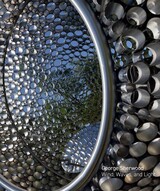
Intricate and innovative, George Sherwood's kinetic sculptures invite us to observe, experience, contemplate and engage more fully in the natural world around us.
American sculptor George Sherwood, with degrees in both art and engineering, explores aesthetic systems of space and time, as well as the dynamic interplay of objects in motion. Sherwood’s kinetic sculptures invite us to observe, experience, contemplate and engage more fully in the natural world around us. His works are often made of stainless steel, a reflective material that serves to integrate the works into the unique and often transient light of their environments. The choreography of each piece is governed by a set of basic movements, facilitated by an arrangement of aerodynamic surfaces connected by rotational points.
The Artist Book Foundation is pleased to present George Sherwood: Wind, Waves, and Light, the first monograph on this award-winning artist’s lustrous, subtly transformative works. Featuring 100 sculptures from Sherwood’s early whimsical explorations to his monumental commissions that have graced private and public gardens, city sites, and exhibition spaces around the world, readers will witness how changing winds, shades of light, times of day, precipitation, and the seasons’ changing colors alter the sculptures, animate their surroundings, and ignite the imagination.
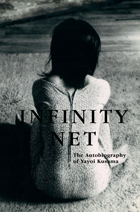
In 1957, encouraged by Georgia O’Keeffe, artist Yayoi Kusama left Japan for New York City to become a star. By the time she returned to her home country in 1973, she had established herself as a leader of New York’s avant-garde movement, known for creating happenings and public orgies to protest the Vietnam War and for the polka dots that had become a trademark of her work. Her sculptures, videos, paintings, and installations are to this day included in major international exhibitions.

An expansive and revelatory study of Robert Smithson’s life and the hidden influences on his iconic creations
This first biography of the major American artist Robert Smithson, famous as the creator of the Spiral Jetty, deepens understanding of his art by addressing the potent forces in his life that were shrouded by his success, including his suppressed early history as a painter; his affiliation with Christianity, astrology, and alchemy; and his sexual fluidity. Integrating extensive investigation and acuity, Suzaan Boettger uncovers Smithson’s story and, with it, symbolic meanings across the span of his painted and drawn images, sculptures, essays, and earthworks up to the Spiral Jetty and beyond, to the circumstances leading to what became his final work, Amarillo Ramp.
While Smithson is widely known for his monumental earthwork at the edge of the Great Salt Lake, Inside the Spiral delves into the arc of his artistic production, recognizing it as a response to his family’s history of loss, which prompted his birth and shaped his strange intelligence. Smithson configured his personal conflicts within painterly depictions of Christ’s passion, the rhetoric of science fiction, imagery from occult systems, and the impersonal posture of conceptual sculpture. Aiming to achieve renown, he veiled his personal passions and transmuted his professional persona, becoming an acclaimed innovator and fierce voice in the New York art scene.
Featuring copious illustrations never before published of early work that eluded Smithson’s destruction, as well as photographs of Smithson and his wife, the noted sculptor Nancy Holt, and recollections from nearly all those who knew him throughout his life, Inside the Spiral offers unprecedented insight into the hidden impulses of one of modern art’s most enigmatic figures. With great sensitivity to the experiences of loss and existential strife that defined his distinct artistic language, this biographical analysis provides an expanded view of Smithson’s iconic art pilgrimage site and the experiences and works that brought him to its peculiar blood red water.
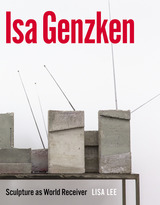
Through penetrating analyses of individual works as well as archival and interview material from the artist herself, Lee establishes four major themes in Genzken’s oeuvre: embodied perception, architecture and built space, the commodity, and the body. Contextualizing the sculptor’s engagement with fellow artists, such as Joseph Beuys and Bruce Nauman, Lee situates Genzken within a critical and historical framework that begins in politically fraught 1960s West Germany and extends to the globalized present. Here we see how Genzken tests the relevance of the utopian aspirations and formal innovations of the early twentieth century by submitting them to homage and travesty. Sure to set the standard for future studies of Genzken’s work, Isa Genzken is essential for anyone interested in contemporary art.
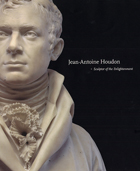
This lavish exhibition catalogue will immediately take its rightful place as the definitive work on Houdon. With more than one hundred color plates and two hundred black and white halftones, Jean-Antoine Houdon: Sculptor of the Enlightenment illustrates every stage of the sculptor's fascinating career, from his early portrayals of Louis XVI and Marie Antoinette to his stunning portraits of American patriots such as George Washington, the Marquis de Lafayette, John Paul Jones, Benjamin Franklin, and Thomas Jefferson. Indeed the images we hold dear of legendary Enlightenment figures like Diderot, Rousseau, d'Alembert, and Voltaire are based on works by Houdon. More than mere representations, these sculptures provide us fascinating, intimate glimpses into the very core of who these figures were. Houdon's genius animated even his less illustrious subjects, like his portraits of his family and friends, and filled his sculptures of children with delicacy and freshness. Accompanying the images of Houdon's masterworks are four insightful essays that discuss Houdon's views on art (based in part on a newly discovered manuscript written by the artist) as well as his prominence in the highly varied cultures of eighteenth-century France, Germany, and Russia.
From aristocrats to revolutionaries, actors to philosophers, Houdon's amazingly vivid portraits constitute the visual record of the Enlightenment and capture the true spirit of a remarkable age. Jean-Antoine Houdon finally gives these gorgeous works their due.
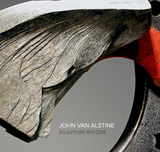
For nearly fifty years, John Van Alstine has created abstract sculptures forged from steel and stone. In John Van Alstine: Sculpture, 1971–2018, three notable essayists explore the sculptor's abstract landscapes that reveal the complex synergy between natural foces and man-made elements; by grappling with the challenges of balancing stone and steel, Van Alstine's indoor, outdoor, and site-specific sculptures are measured and calculated, yet simultaneously poetic; their swooping angular lines create expansive spaces beyond the limits of their stone-and-steel frames to unveil our collective history and imagination, illuminating a deft interplay of natural energies and the human experience.
The artist weaves into his works elements of mythology, celestial navigation, implements, human figures, movement, urban forms, and found objects, while using motion, balance, and intertia to incorporate the eternal forces of gravity, tension, and erosion. In an essay on his drawings, Van Alstine details the critical role they play in the initiation and planning of his projects, offering the reader a firsthand perspective on the artist's creative process. The Artist Book Foundation is gratified to publish this lavishly illustrated monograph on an esteemed and prolific contemporary artist.
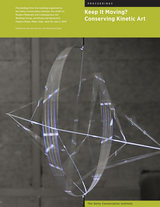
Professionals responsible for conserving contemporary art are in the midst of rethinking the concept of authenticity and solving the dichotomy often felt between original materials and functionality of the work of art. The contrast is especially acute with kinetic art when a compromise between the two often seems impossible. Also to be considered are issues of technological obsolescence and the fact that an artist’s chosen technology often carries with it strong sociological and historical information and meanings.
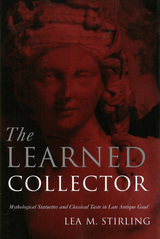
The majority of statues in late antique homes were heirlooms and antiques. Mythological statuary, which would be interpreted in varying degrees of complexity, favored themes reflecting aristocratic pastimes such as dining and hunting. The Learned Collector investigates the manufacture of these distinctive statuettes in the later fourth century, the reasons for their popularity, and their modes of display in Gaul and the empire.
Although the destruction of ancient artwork looms large in the common view of late antiquity, statuary of mythological figures continued to be displayed and manufactured into the early fifth century. Stirling surveys the sculptural decor of late antique villas across the empire to reveal the universal and regional trends in the late antique confluence of literary education, mythological references, aristocratic mores, and classicizing taste. Deftly combining art historical, archaeological, and literary evidence, this book will be important to classicists and art historians alike. Stirling's accessible writing style makes this an important work for scholars, students, and anyone with an interest in Roman statues of this era.
Lea M. Stirling is Associate Professor of Classics at the University of Manitoba and holds a Canada Research Council Chair in Roman Archaeology. She co-directs excavations at the ancient city of Leptiminus, Tunisia.
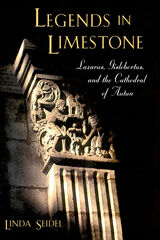
Legends in Limestone reveals how "Gislebertus, sculptor" was discovered and subsequently sanctified over the course of the last century. Seidel makes a compelling case for the identification of the name with an ancestor of the local ducal family, invoked for his role in the acquisition of the precious relics. With the aid of evidence drawn from the richly carved decoration of the building, she demonstrates how medieval visitors would have read a different holy narrative in the church fabric, one that constructed before their eyes an account of their patron saint's life.
Legends in Limestone, an absorbing study of one of France's most revered medieval monuments, provides fresh insights into modern and medieval interpretive practices.
In 1912, Scheerbart published The Light Club of Batavia, a Novelle about the formation of a club dedicated to building a spa for bathing—not in water, but in light—at the bottom of an abandoned mineshaft. Translated here into English for the first time, this rare story serves as a point of departure for Josiah McElheny, who, with an esteemed group of collaborators, offers a fascinating array of responses to this enigmatic work.
The Light Club makes clear that the themes of utopian hope, desire, and madness in Scheerbart’s tale represent a part of modernism’s lost project: a world based on political and spiritual ideals rather than efficiency and logic. In his compelling introduction, McElheny describes Scheerbart’s life as well as his own enchantment with the writer, and he explains the ways in which The Light Club of Batavia inspired him to produce art of uncommon breadth. The Light Club also features inspired writings from Gregg Bordowitz and Ulrike Müller, Andrea Geyer, and Branden W. Joseph, as well as translations of original texts by and about Scheerbart. A unique response by one visionary artist to another, The Light Club is an unforgettable examination of what it might mean to see radical potential in absolute illumination.
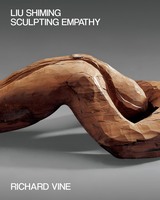
Liu Shiming (1926–2010) is a revered Chinese artist whose works have had a distinct impact on the course of modern Chinese sculpture. Born in Tianjin in 1926, Shiming attended the prestigious Central Academy of Fine Arts (CAFA) in Beijing, where he was part of the first generation of sculptors trained by the People’s Republic of China to study both traditional Chinese art and French modernist principles. Shiming received early recognition for his work, and his student project Measuring Land (1950) was one of the first works exhibited abroad following the establishment of the People’s Republic of China.
Though well respected in China, the sculptor, who died in 2010 at the age of eighty-four, is only now beginning to win the wider recognition he deserves. Meanwhile, contemporary competitors are numberless, most of them Instagram-friendly, while art history tends to focus on towering names and indisputably major movements and events: Braque and Picasso inventing Cubism, Duchamp’s readymades redefining art itself, Warhol’s mind-bending Brillo Boxes, and so on. So why examine an artist in the middle ground? Perhaps, first, because that is where the vast majority of us live, trying to make sense of our lives and grateful for the occasional insight, release, or enrichment that visual art can bring us. Second, because the story of Liu Shiming reveals a great deal about the forces that have shaped postwar art worldwide. He was a man who sought to lead a simple life, dedicated entirely to art, in the midst of China’s epochal, dangerously complex twentieth-century social and political changes.
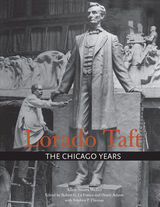
Returning to Chicago from France, Taft established a bustling studio and began a twenty-one-year career as an instructor at the Art Institute, succeeded by three decades as head of the Midway Studios at the University of Chicago. This triumphant era included ephemeral sculpture for the 1893 World's Columbian Exposition; a prolific turn-of-the-century period marked by the gold-medal-winning The Solitude of the Soul; the 1913 Fountain of the Great Lakes; the 1929 Alma Mater at the University of Illinois; and large-scale projects such as his ambitious program for Chicago's Midway with the monumental Fountain of Time. In addition, the book charts Taft's mentoring of women artists, including the so-called White Rabbits at the World's Fair, many of whom went on to achieve artistic success.
Lavishly illustrated with color images of Taft's most celebrated works, Lorado Taft: The Chicago Years completes the first major study of a great American artist.
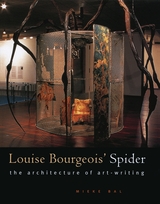
Known for her commentary on the issue of temporality in art, Bal argues that art must be understood in relationship to the present time of viewing as opposed to the less-immediate contexts of what has preceded the viewing, such as the historical past of influences and art movements, biography and interpretation. In ten short chapters, or "takes," Bal demonstrates that the closer the engagement with the work of art, the more adequate the result of the analysis. She also confronts issues of biography and autobiography—key themes in Bourgeois's work—and evaluates the consequences of "ahistorical" experiences for art criticism, drawing on diverse sources such as Bernini and Benjamin, Homer and Eisenstein.
This short, beautiful book offers both a theoretical model for analyzing art "out of context" and a meditation on a key work by one of the most engaging artists of our era.
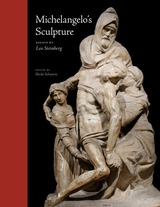
For half a century, Steinberg delved into Michelangelo’s work, revealing the symbolic structures underlying the artist’s highly charged idiom. This volume of essays and unpublished lectures explicates many of Michelangelo’s most celebrated sculptures, applying principles gleaned from long, hard looking. Almost everything Steinberg wrote included passages of old-fashioned formal analysis, but here put to the service of interpretation. He understood that Michelangelo’s rendering of figures as well as their gestures and interrelations conveys an emblematic significance masquerading under the guise of naturalism. Michelangelo pushed Renaissance naturalism into the furthest reaches of metaphor, using the language of the body and its actions to express fundamental Christian tenets once expressible only by poets and preachers—or, as Steinberg put it, in Michelangelo’s art, “anatomy becomes theology.”
Michelangelo’s Sculpture is the first in a series of volumes of Steinberg’s selected writings and unpublished lectures, edited by his longtime associate Sheila Schwartz. The volume also includes a book review debunking psychoanalytic interpretation of the master’s work, a light-hearted look at Michelangelo and the medical profession and, finally, the shortest piece Steinberg ever published.

In eighteenth-century Europe, connoisseurs, financiers, artists, and aristocrats alike all avidly collected the terracotta vases and statues made by Claude Michel, called Clodion. Yet, despite the widespread enthusiasm for his work, Clodion’s terracottas have since then been largely dismissed as decorative, feminine, or mere luxury. Modeling Sculpture, the first English-language monograph dedicated to Clodion’s terracotta oeuvre, counters such conventional narratives. Against the understanding of “serious” sculpture as works that publicly perpetuate the heroic actions and virtues of great men, author Elizabeth Saari Browne argues instead that philosophically engaged sculpture might be found in materials, forms, and places where one least expects it. Across this richly illustrated, multi-disciplinary study, earthen clay emerges as a medium suited to the flexible modes of thought advocated by some of the period’s most renowned philosophers, naturalists, and even arts reformers. This book therefore foregrounds clay’s potential to challenge the perceived primacy of white figurative statuary in art historiography, emblematic of hierarchical notions of class, power, learning, and prestige.
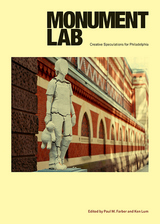
What is an appropriate monument for the current city of Philadelphia? That was the question posed by the curators, artists, scholars, and students who comprise the Philadelphia-based public art and history studio Monument Lab. And in 2017, along with Mural Arts Philadelphia, they produced and organized a groundbreaking, city-wide exhibition of temporary, site-specific works that engaged directly with the community. The installations, by a cohort of diverse artists considering issues of identity, appeared in iconic public squares and neighborhood parks with research and learning labs and prototype monuments.
Monument Lab is a fabulous compendium of the exhibition and a critical reflection of the proceedings, including contributions from interlocutors and collaborators. The exhibition and this handbook were designed to generate new ways of thinking about monuments and public art as well as to find new, critical perspectives to reflect on the monuments we have inherited and to imagine those we have yet to build. Monument Lab energizes acivic dialogue about place and history as forces for a deeper questioning of what it means to be Philadelphian in a time of renewal and continuing struggle.
Contributors: Alexander Alberro, Alliyah Allen, Laurie Allen, Andrew Friedman, Justin Geller, Kristen Giannantonio, Jane Golden, Aviva Kapust, Fariah Khan, Homay King, Stephanie Mach, Trapeta B. Mayson, Nathaniel Popkin, Ursula Rucker, Jodi Throckmorton, Salamishah Tillet, Jennifer Harford Vargas, Naomi Waltham-Smith, Bethany Wiggin, Mariam I. Williams, Leslie Willis-Lowry, and the editors.
Artists: Tania Bruguera, Mel Chin, Kara Crombie, Tyree Guyton, Hans Haacke, David Hartt, Sharon Hayes, King Britt and Joshua Mays, Klip Collective, Duane Linklater, Emeka Ogboh, Karyn Olivier, Michelle Angela Ortiz, Kaitlin Pomerantz, RAIR, Alexander Rosenberg, Jamel Shabazz, Hank Willis Thomas, Shira Walinsky and Southeast by Southeast, and Marisa Williamson.
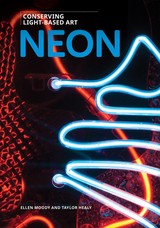
The first of its kind, this authoritative open-access volume offers tips, guidelines, and best practices on preserving, installing, and storing neon artworks.
Neon lighting first emerged as a cutting-edge technology in the late nineteenth century, illuminating the night sky with bright, colorful commercial signage. Artists soon began to test its potential, and figures like Chryssa, Bruce Nauman, Dan Flavin, Mary Weatherford, and Glenn Ligon created iconic works that established neon as a legitimate artistic medium. As the earliest neon artworks approach one hundred years old, their conservation becomes ever more important. Unfortunately, the practice of preserving light-based art is absent from most conservation training programs. This publication fills that gap, offering an invaluable resource for conservators, collectors, preparators, and anyone else with a professional involvement with, or just curiosity about, neon artifacts.
Ellen Moody and Taylor Healy, conservators working with light- and time-based art, have created a comprehensive manual to serve as a practical tool kit for the installation, preservation, and storage of neon art. They provide foundational knowledge on history, technology, terminology, and best practices, along with step-by-step instructions, real-world case studies, and templates for documentation and identification. The online version of the publication is enhanced with informative, practical videos that give hands-on guidance on repairs and maintenance. This is an indispensable compendium for anyone actively engaged with or interested in the preservation of neon.
The free online edition of this open-access publication is available at getty.edu/publications/neon/ and includes zoomable illustrations, videos, and downloadable appendices. Also available are free PDF and EPUB downloads of the book.

Unlock the stories of Pablo Neruda’s rare nineteenth-century carved-wood ship figurehead collection in Chile, why they mattered in his tumultuous life, and how we benefit from them now.
Poet Pablo Neruda’s nineteenth-century ship figurehead collection in Chile is one of the most significant in the world. Containing carved wood images of dramatically postured men and women, these figures are now better understood due to years of research, a willingness to challenge Neruda’s ever-changing stories about them, and a realization that the names Neruda chose for his figureheads perhaps had more to do with his life than theirs. The rhythm and beauty of Neruda’s worn wood figures is counterpoint to his own tumultuous life as an author, politician, and communist dissident.
Collecting ship figureheads was central to Neruda’s passion for owning things made of wood, a material he said was his best friend, and for standing out among others as he gradually built the public persona that helped move him toward winning the Nobel Prize in Literature. With his choir of immobilized figureheads stationed upright in his living room and facing the Pacific Ocean, Neruda was surrounded by dramatic images from the sea that ignited his most powerful feelings.
The nineteenth century saw figureheads on the bows of ships of sail and steam, yet when a figurehead was lost or removed, its history soon disappeared. The significant ship figureheads that Neruda avidly collected preserve that history and reveal new dimensions concerning his life and work. Each year, his collection is viewed by thousands of visitors to the Pablo Neruda Foundation’s house museum at Isla Negra.
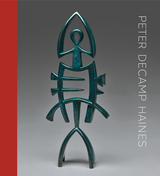
The first major monograph on Peter DeCamp Haines, this title explores how the sculptor's interest in psychology and anthropology deeply informed his art.
This book is the first major monograph on the work of Peter DeCamp Haines (March 27, 1942–October 25, 2024), which builds on the evolution of Modernism as much as it harkens back to the Bronze Age. The clearest expression of this is a series of 1,000 elemental bronze “artifacts” he created over the course of nearly fifty years, to which he contributed yearly, ranging from palm-size pieces to colossal outdoor works. He called this output “a personal archaeology,” or “an archaeology of the subconscious,” referencing ancient tools, animal and human shapes, and the synchronicity of antique forms with the purely abstract.
Haines’s interest in psychology and anthropology deeply informed his art. Working in a Modernist tradition, his career pursued a continuing exploration of the formal attributes of sculpture: form, scale, negative space, and composition. As Haines saw it, one of the satisfactions of sculpture is that ideas such as wholeness, beauty, and timelessness can be expressed without words and one of the critical elements of this wordless communication is negative space. Thus, the doorways, windows, and silhouettes of his sculptures can suggest an area larger than the sculpture itself.
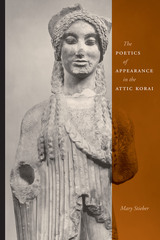
Some of the loveliest works of Archaic art were the Athenian korai—sculptures of beautiful young women presenting offerings to the goddess Athena that stood on the Acropolis. Sculpted in the sixth and early fifth centuries B.C., they served as votives until Persians sacked the citadel in 480/79 B.C. Subsequently, they were buried as a group and forgotten for nearly twenty-four centuries, until archaeologists excavated them in the 1880s. Today, they are among the treasures of the Acropolis Museum.
Mary Stieber takes a fresh look at the Attic korai in this book. Challenging the longstanding view that the sculptures are generic female images, she persuasively argues that they are instead highly individualized, mimetically realistic representations of Archaic young women, perhaps even portraits of real people. Marshalling a wide array of visual and literary evidence to support her claims, she shows that while the korai lack the naturalism that characterizes later Classical art, they display a wealth and realism of detail that makes it impossible to view them as generic, idealized images. This iconoclastic interpretation of the Attic korai adds a new dimension to our understanding of Archaic art and to the distinction between realism and naturalism in the art of all periods.
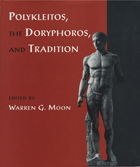
Polykleitos of Argos, who flourished between 450 and 420 BC, is one of the most celebrated sculptors of classical Greece. A philosopher and theoretician as well as a sculptor, Polykleitos sought to capture in his statues the ideal proportions of the human body, and his work was frequently copied by later artists. This richly illustrated volume of superb essays by art historians, classical scholars, and archaeologists discusses Polykleitos’ life and influence, his intellectual and cultural milieu, and his best-known work, the Doryphoros, or “Spearbearer.”
Polykleitos, the Doryphoros, and Tradition displays an impressive range of approaches, beginning with commentary on the artistic and philosophical antecedents that influenced Polykleitos’ own aesthetic, as well as the role of contemporary Greek anatomical knowledge in his representation of the human form. Many of the essays offer extended analysis and detailed illustration of his surviving sculptures, later copies of his work, and reflections of his style in sculpture, paintings, coins, and other art in Greece, Italy, and Asia Minor. Several essays offer an extended discussion of Polykleitos’ original bronze Doryphoros, its pose, its relation to other spearbearer sculptures, and the fine Roman marble copy of it now at the Minneapolis Institute of Arts.
The volume as a whole is a visually and intellectually appealing work that will interest not only specialists but general readers interested in the art of ancient Greece. This volume resulted from a 1989 symposium held at the University of Wisconsin–Madison and the Minneapolis Institute of Arts.
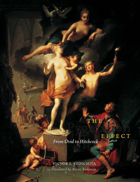
Stoichita traces the reverberations of Ovid’s founding myth from ancient times through the advent of cinema. Emphasizing its erotic origins, he locates echoes of this famous fable in everything from legendary incarnations of Helen of Troy to surrealist painting to photographs of both sculpture and people artfully posed to simulate statues. But it was only with the invention of moving pictures, Stoichita argues, that the modern age found a fitting embodiment of the Pygmalion story’s influence. Concluding with an analysis of Alfred Hitchcock films that focuses on Kim Novak’s double persona in Vertigo, The Pygmalion Effect illuminates the fluctuating connections that link aesthetics, magic, and technical skill. In the process, it sheds new light on a mysterious world of living artifacts that, until now, has occupied a dark and little-understood realm in the history of Western image making.
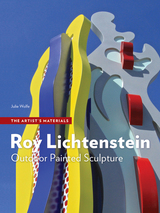
Vibrant color was essential to the paintings of the American pop artist Roy Lichtenstein (1923–1997), and when he began exploring the creation of outdoor sculpture in the late 1970s, vivid hues remained an important part of his artistic vocabulary. Today, preserving these remarkable works after they have endured decades in outdoor environments around the world is an issue of pressing concern.
This abundantly illustrated volume is based on extensive archival research of Lichtenstein’s studio materials, interviews with his assistants, and a thorough technical analysis of the sculpture Three Brushstrokes. The book concludes with a chapter showing various options for the care, conservation, and restoration of his sculptural works, making this an essential resource for conservators, curators, and others interested both in the iconic artist and modern sculpture in general.
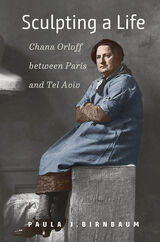
In Sculpting a Life, the first book-length biography of sculptor Chana Orloff (1888-1968), author Paula Birnbaum tells the story of a fiercely determined and ambitious woman who fled antisemitism in Ukraine, emigrated to Palestine with her family, then travelled to Paris to work in haute couture before becoming an internationally recognized artist. Against the backdrop of revolution, world wars, a global pandemic and forced migrations, her sculptures embody themes of gender, displacement, exile, and belonging. A major figure in the School of Paris, Orloff contributed to the canon of modern art alongside Picasso, Modigliani and Chagall.
Stories from her unpublished memoir enrich this life story of courage, perseverance, and extraordinary artistic accomplishments that take us through the aftermath of the Holocaust when Orloff lived between Paris and Tel Aviv. This biography brings new perspectives and understandings to Orloff’s multiple identities as a cosmopolitan émigré, woman, and Jew, and is a much-needed intervention into the narrative of modern art.
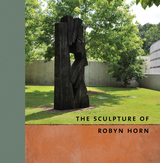
The essays and images in The Sculpture of Robyn Horn sketch the industrious career of this Little Rock, Arkansas-based sculptor, illuminating her attention to geometry, physics, and the philosophy of design, and exploring the context and origin of the various series—Geodes, Millstones, Standing Stones, and Slipping Stones, among others—that characterize her body of work.
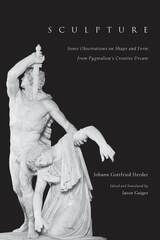
Long recognized as one of the most important eighteenth-century works on aesthetics and the visual arts, Johann Gottfried Herder's Plastik (Sculpture, 1778) has never before appeared in a complete English translation. In this landmark essay, Herder combines rationalist and empiricist thought with a wide range of sources—from the classics to Norse legend, Shakespeare to the Bible—to illuminate the ways we experience sculpture.
Standing on the fault line between classicism and romanticism, Herder draws most of his examples from classical sculpture, while nevertheless insisting on the historicity of art and of the senses themselves. Through a detailed analysis of the differences between painting and sculpture, he develops a powerful critique of the dominance of vision both in the appreciation of art and in our everyday apprehension of the world around us. One of the key articulations of the aesthetics of Sturm und Drang, Sculpture is also important as an anticipation of subsequent developments in art theory.
Jason Gaiger's translation of Sculpture includes an extensive introduction to Herder's thought, explanatory notes, and illustrations of all the sculptures discussed in the text.
Speaking of Furniture: Conversations with 14 American Masters is a fresh, stimulating, and in-depth examination of the modus operandi of 14 accomplished—and diverse—furniture makers. An engaging history of studio furniture, this colorful, informative study includes engaging conversations with James Krenov, Wendell Castle, Jere Osgood, Judy Kensley McKie, David Ebner, Richard Scott Newman, Hank Gilpin, Alphonse Mattia, John Dunnigan, Wendy Maruyama, James Schriber, Timothy S. Philbrick, Michael Hurwitz, and Thomas Hucker. The insightful interviews illuminate how these creative and gifted craftspeople arrived professionally and what their craft means to them individually.
In his enlightening foreword, Edward S. Cook, Jr. maps out the background of the studio furniture movement. Author and furniture maker Roger Holmes offers an insider's perspective on the art and craft of producing exquisite contemporary furniture in his conversational introduction and maintains, "Art or craft, this is very personal work." This elegant presentation skillfully sheds light on the thought processes and techniques of a celebrated and exceptional gathering of studio furniture makers who are as unique as they are stellar. As sculptor and furniture designer Wendell Castle remarks, "What I admired was that... fine art and craft were the same thing."

Erin Hogan hit the road in her Volkswagen Jetta and headed west from Chicago in search of the monuments of American land art: a salty coil of rocks, four hundred stainless steel poles, a gash in a mesa, four concrete tubes, and military sheds filled with cubes. Her journey took her through the states of Utah, Nevada, New Mexico, Arizona, and Texas. It also took her through the states of anxiety, drunkenness, disorientation, and heat exhaustion. Spiral Jetta is a chronicle of this journey.
A lapsed art historian and devoted urbanite, Hogan initially sought firsthand experience of the monumental earthworks of the 1970s and the 1980s—Robert Smithson’s Spiral Jetty, Nancy Holt’s Sun Tunnels, Walter De Maria’s Lightning Field, James Turrell’s Roden Crater, Michael Heizer’s Double Negative, and the contemporary art mecca of Marfa, Texas. Armed with spotty directions, no compass, and less-than-desert-appropriate clothing, she found most of what she was looking for and then some.
“I was never quite sure what Hogan was looking for when she set out . . . or indeed whether she found it. But I loved the ride. In Spiral Jetta, an unashamedly honest, slyly uproarious, ever-probing book, art doesn’t magically have the power to change lives, but it can, perhaps no less powerfully, change ways of seeing.”—Tom Vanderbilt, New York Times Book Review
“The reader emerges enlightened and even delighted. . . . Casually scrutinizing the artistic works . . . while gamely playing up her fish-out-of-water status, Hogan delivers an ingeniously engaging travelogue-cum-art history.”—Atlantic
“Smart and unexpectedly hilarious.”—Kevin Nance, Chicago Sun-Times
“One of the funniest and most entertaining road trips to be published in quite some time.”—June Sawyers, Chicago Tribune
“Hogan ruminates on how the work affects our sense of time, space, size, and scale. She is at her best when she reexamines the precepts of modernism in the changing light of New Mexico, and shows how the human body is meant to be a participant in these grand constructions.”—New Yorker

Erin Hogan hit the road in her Volkswagen Jetta and headed west from Chicago in search of the monuments of American land art: a salty coil of rocks, four hundred stainless steel poles, a gash in a mesa, four concrete tubes, and military sheds filled with cubes. Her journey took her through the states of Utah, Nevada, New Mexico, Arizona, and Texas. It also took her through the states of anxiety, drunkenness, disorientation, and heat exhaustion. Spiral Jetta is a chronicle of this journey.
A lapsed art historian and devoted urbanite, Hogan initially sought firsthand experience of the monumental earthworks of the 1970s and the 1980s—Robert Smithson’s Spiral Jetty, Nancy Holt’s Sun Tunnels, Walter De Maria’s Lightning Field, James Turrell’s Roden Crater, Michael Heizer’s Double Negative, and the contemporary art mecca of Marfa, Texas. Armed with spotty directions, no compass, and less-than-desert-appropriate clothing, she found most of what she was looking for and then some.
“I was never quite sure what Hogan was looking for when she set out . . . or indeed whether she found it. But I loved the ride. In Spiral Jetta, an unashamedly honest, slyly uproarious, ever-probing book, art doesn’t magically have the power to change lives, but it can, perhaps no less powerfully, change ways of seeing.”—Tom Vanderbilt, New York Times Book Review
“The reader emerges enlightened and even delighted. . . . Casually scrutinizing the artistic works . . . while gamely playing up her fish-out-of-water status, Hogan delivers an ingeniously engaging travelogue-cum-art history.”—Atlantic
“Smart and unexpectedly hilarious.”—Kevin Nance, Chicago Sun-Times
“One of the funniest and most entertaining road trips to be published in quite some time.”—June Sawyers, Chicago Tribune
“Hogan ruminates on how the work affects our sense of time, space, size, and scale. She is at her best when she reexamines the precepts of modernism in the changing light of New Mexico, and shows how the human body is meant to be a participant in these grand constructions.”—New Yorker
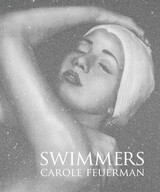
Realist sculptor Carole A. Feuerman's human-figure sculptures express a refreshing perspective on the mundane but intensely personal activities of modern life. her powers of observation and versatility find unique expression through various materials that include marble, bronze, vinyl, and painted resins, while she incorporates both ancient and contemporary methods in the creation of her works. Swimmers: Carole Feuerman is a gorgeous and shimmering glimpse at transitory, contemplative moments in time, often captured in a veil of clear resin that replicates tumbling water droplets.
In his astute and insightful essay, John Yau describes Feuerman's exquisitely rendered figures as subjects "caught in a moment of transition that radiates an intense eroticism." She evokes an inward life for her figures that invites our speculation, while revealing a mysterious chasm between them and the viewer that can never be plumbed. We cannot know their thoughts and perhaps that is exactly the point. Feuerman fuses the tactile nature of her sculpture with a visual verisimilitude that provides us a fleeting glimpse into private and isolated environments—women stepping out of the shower, in the rain, or swimming—that suggest a meditative bliss.

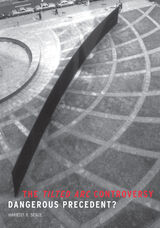
A comprehensive look at a controversy that continues to fuel debates about the role of public art in America.
Since its installation at and subsequent removal from New York City’s Federal Plaza, noted sculptor Richard Serra’s Tilted Arc has been a touchstone for debates over the role of public art. Installed in 1981, the 10-foot-high, 120-foot-long curved wall of Cor-Ten self-rusting steel instantly became a magnet for criticism. Art critics in the New York Times and the Village Voice labeled it the city’s worst public sculpture, and many denounced it as an example of the elitism associated with art and as an obstacle to the use and enjoyment of the plaza.
Harriet F. Senie explores the history of Tilted Arc, including its 1979 commission and the heated public hearings that eventually led to its removal in 1989 (it was dismantled and is currently stored in a government warehouse in Maryland). Analyzing the archive of popular opinion, Senie shows how the sculpture was caught in an avalanche of shifting local and national discussions about public funding for the arts. She examines the tactics of those opposed to the sculpture and the media’s superficial and sensational coverage of the controversy, reframing the dialogue in terms of public art, public space, and public policy instead of the question of whether the removal of Tilted Arc was poetic justice or a dangerous precedent. Senie provides an enlightening history and analysis of a controversy that will continue to inform our discussions about public art for years to come.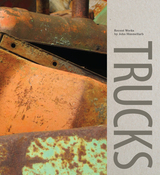
With sculpture, paintings, prints, and drawings, award-winning artist John Himmelfarb explores the iconic American truck. An in-depth consideration of the vehicles that are intrinsically and culturally significant to the American landscape, Trucks: Recent Works by John Himmelfarb showcases the artist's diverse and lighthearted approach, adeptly shifting between mediums, style, and message during his decade-long contemplation of trucks and their specific functions. Under his skillful hands, the utilitarian vehicles of commerce and construction become unique and provocative art forms.
In 2005 and 2006, the truck as narrative becomes center stage for Himmelfarb's work. With his seamless, animated traverse of multiple mediums, viewers cannot help but smile as they appreciate the common truck through unique perspectives. In 2007, another tectonic change occurs in Himmelfarb's pursuit of his theme: as a result of a three-month residency at the John Michael Kohler Arts Center's Arts/Industry program, he begins his first meaningful foray into three-dimensional works.

An examination of Japanese contemporary art through the lens of ecocriticism and environmental history
Collectively referred to by the word tsuchi, earthy materials such as soil and clay are prolific in Japanese contemporary art. Highlighting works of photography, ceramics, and installation art, Bert Winther-Tamaki explores the many aesthetic manifestations of tsuchi and their connection to the country’s turbulent environmental history, investigating how Japanese artists have continually sought a passionate and redemptive engagement with earth.
In the seven decades following 1955, Japan has experienced severe environmental degradation as a result of natural disasters, industrial pollution, and nuclear irradiation. Artists have responded to these ongoing catastrophes through modes of “mudlarking” and “muckracking,” utilizing raw elements from nature to establish deeper contact with the primal resources of their world and expose its unfettered contamination. Providing a comparative assessment of more than seventy works of art, this study reveals Japanese artists’ engagement with a richly diverse repertoire of earthy materialities, elucidating their aesthetic properties, changing conditions, and cultural significance.
By focusing on the role of tsuchi as a convergence point for a wide range of creative practices, this book offers a critical reassessment of contemporary art in Japan and its intrinsic relationship to the environment. Situating art within the context of ecology and urbanization, Tsuchi shows artists striving to explore and reprocess raw forms of earth beneath the corruptions of human activity.
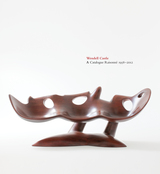
Sculptor and furniture designer Wendell Castle (1932–2018) carved a distinct path in furniture making over nearly six decades of a distinguished career, and this long-awaited recording of his oeuvre, Wendell Castle: A Catalogue Raisonné, 1958–2012, beautifully presents the extraordinary scope of his artistry and craftsmanship. The voluminous accounting of his works, beginning with Castle's earliest, mid-century works through to his unabashed experiments with unconventional materials (gel-coated fiberglass and metallic automobile paint) and his latest signature wood laminations, is comprehensive and detailed. Three essays of varying perpectives introduce the catalogue raisonné followed by an extensive accounting of his enormous oeuvre, his exhibitions, numerous awards, and the collections of his works, as well as a substantive bibliography.
With his organic and whimsical approach to his various mediums, Castle seamlessly merged sculpture and design into one discipline, obscuring the distinction between the two. He invented the technique of carving stacked laminations of wood, and his later explorations into the qualities of fiberglass as a sculptural medium are unparalleled.
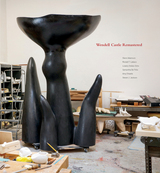
Wendell Castle (1932–2018), master furniture maker, designer, sculptor, and educator, was in the sixth decade of his extraordinary creativity when an emblematic exhibition of his signature works was mounted by the Museum of Art and Design in 2016. It blended the artist's seminal works with his latest collection, produced with digital technology. In part a self-reflection, this eponymous, full-color companion book examines some of Castle's historically representative works as well as significant contemporary furniture pieces, continuing his highly respected and acclaimed sculptural/functional dialogue. Castle, ever the innovator, was remarkable for his openness to new technologies; he not only embraced an initially complex practice but has "remastered" it. His vast oeuvre represents a prodigious lifework that began in 1958 and aligns with the development of the American art furniture movement.
The solo exhibition was a somewhat self-reflective examination of his early ground-breaking works that tested the boundaries of traditional furniture making by presenting his later innovations using new digital technologies such as 3D scanning and modeling, and computer-controlled milling—a digital "remastering" of his immense oeuvre. Unique perspectives on the master's work are presented by informative essays by authors well-versed on Castle's celebrated career.
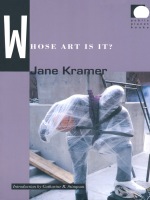
This compelling narrative raises questions about community and public art policies, about stereotypes and multiculturalism. With wit, drama, sympathy, and circumspection, Kramer draws the reader into the multicultural debate, challenging our assumptions about art, image, and their relation to community. Her portrait of the South Bronx takes the argument to its grass roots—provocative, surprising in its contradictions and complexities and not at all easy to resolve.
Accompanied by an introduction by Catharine R. Stimpson exploring the issues of artistic freedom, "political correctness," and multiculturalism, Whose Art Is It? is a lively and accessible introduction to the ongoing debate on representation and private expression in the public sphere.
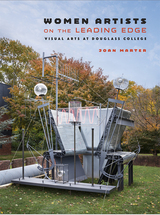
How do students develop a personal style from their instruction in a visual arts program? Women Artists on the Leading Edge explores this question as it describes the emergence of an important group of young women artists from an innovative post-war visual arts program at Douglass College.
The women who studied with avant-garde artists at Douglas were among the first students in the nation to be introduced to performance art, conceptual art, Fluxus, and Pop Art. These young artists were among the first to experience new approaches to artmaking that rejected the predominant style of the 1950s: Abstract Expressionism. The New Art espoused by faculty including Robert Watts, Allan Kaprow, Roy Lichtenstein, Geoffrey Hendricks, and others advocated that art should be based on everyday life. The phrase “anything can be art” was frequently repeated in the creation of Happenings, multi-media installations, and video art. Experimental approaches to methods of creation using a remarkable range of materials were investigated by these young women. Interdisciplinary aspects of the Douglass curriculum became the basis for performances, videos, photography, and constructions. Sculpture was created using new technologies and industrial materials. The Douglass women artists included in this book were among the first to implement the message and direction of their instructors.
Ultimately, the artistic careers of these young women have reflected the successful interaction of students with a cutting-edge faculty. From this BA and MFA program in the Visual Arts emerged women such as Alice Aycock. Rita Myers, Joan Snyder, Mimi Smith, and Jackie Winsor, who went on to become lifelong innovators. Camaraderie was important among the Douglass art students, and many continue to be instructors within a close circle of associates from their college years. Even before the inception of the women’s art movement of the 1970s, these women students were encouraged to pursue professional careers, and to remain independent in their approach to making art. The message of the New Art was to relate one’s art production to life itself and to personal experiences. From these directions emerged a “proto-feminist” art of great originality identified with women’s issues. The legacy of these artists can be found in radical changes in art instruction since the 1950s, the promotion of non-hierarchical approaches to media, and acceptance of conceptual art as a viable art form.
READERS
Browse our collection.
PUBLISHERS
See BiblioVault's publisher services.
STUDENT SERVICES
Files for college accessibility offices.
RECENTLY PUBLISHED


UChicago Accessibility Resources
home | accessibility | search | about | contact us
BiblioVault ® 2001 - 2026
The University of Chicago Press