
 A SCHOLARLY BOOK REPOSITORY
Absinthe 24 pushes and prods Hellenism beyond its geographic and cultural comfort zones, and sets it tumbling off beyond both internal and external borders of its nation-state, in a wide-ranging but always site-specific and localized itinerary. At each stop along the way, this Greekness finds its plurals—hence the “Hellenisms” of the title. While they present no unified topography, tongue or even topic, these Hellenisms map out the contours of a shared conversation. Today’s Hellenism isn’t limited to Hellas, nor to the Hellenic language. The selected texts in this volume explore Greece from the perspective of visitors, displaced persons, and marginalized people looking in, or, conversely, from the perspective of locals striving to break out.
Absinthe: A Journal of World Literature in Translation publishes foreign literature in English translation, with a particular focus on previously untranslated contemporary fiction, poetry, and creative non-fiction by living authors. The magazine has its home in the Department of Comparative Literature at the University of Michigan and is edited by graduate students in the Department, as well as by occasional guest editors.
As sign language interpreting has emerged and evolved in the last 20 years as an academic field of study, the scope of learning has broadened to include fields beyond the language and culture of deaf people. This text surveys six disciplines that have informed the study of sign language interpreting: history, translation, linguistics, sociology, social psychology, and cognitive psychology, along with their major ideas, principal scholars, and ways of viewing human interaction. Each chapter includes clear learning goals, definitions, discussion questions, and images to aid understanding. The Academic Foundations of Interpreting Studies is required reading for upper-level undergraduate or first-year graduate students in interpreting, Deaf studies, and sign language programs.
Author Thania Muñoz D. looks at immigrant experiences impacted by a prism of social and political factors, including free trade agreements, drug trafficking, political violence, massive foreign debt, and economic dependency. The author examines why these writers refuse to identify as immigrants and reject stereotypical portrayals. Throughout, Muñoz D. makes the case for a new field within Latinx literature: Latin American immigrant writing in Spanish. She explains why this type of literary work is critical across Latin American, Latinx, and U.S. literature.
This book highlights the benefits of comparative, interdisciplinary interpretations that allow readers and scholars to grapple with the realities of a multilingual Latin American–origin literary present and future of the United States.
Winston and Fitzmaurice argue massive systemic paradigm shifts in interpreted educations are as needed now as they were when the first volume was published, and that these changes require the collaborative efforts of everyone on the educational team, including: administrators, general education teachers, teachers of the deaf, interpreters, and counselors. The contributors to this volume address research-based challenges and make recommendations for how interpreting practitioners, and all members of the educational team, can enact meaningful changes in their work towards becoming part of a more comprehensive solution to deaf education.
Picking up where Innovative Practices in Teaching Sign Language Interpreters left off, this new collection presents the best new interpreter teaching techniques proven in action by the eminent contributors assembled here. In the first chapter, Dennis Cokely discusses revising curricula in the new century based upon experiences at Northeastern University. Jeffrey E. Davis delineates how to teach observation techniques to interpreters, while Elizabeth Winston and Christine Monikowski suggest how discourse mapping can be considered the Global Positioning System of translation.
In other chapters, Laurie Swabey proposes ways to handle the challenge of referring expressions for interpreting students, and Melanie Metzger describes how to learn and recognize what interpreters do in interaction. Jemina Napier contributes information on training interpreting students to identify omission potential. Robert G. Lee explains how to make the interpreting process come alive in the classroom. Mieke Van Herreweghe discusses turn-taking and turn-yielding in meetings with Deaf and hearing participants in her contribution. Anna-Lena Nilsson defines “false friends,” or how contextually incorrect use of facial expressions with certain signs in Swedish Sign Language can be detrimental influences on interpreters. The final chapter by Kyra Pollitt and Claire Haddon recommends retraining interpreters in the art of telephone interpreting, completing Advances in Teaching Sign Language Interpreters as the new authoritative volume in this vital communication profession.

The Americas’ First Sermons presents the first English translation and critical study of the complete set of sermons composed by Franciscan friar Bernardino de Sahagún and his Nahua students at the Imperial College of Santa Cruz in Tlatelolco, Mexico in 1540. The volume represents a crucial moment in the cultural exchange between European and Indigenous civilizations in sixteenth-century colonial Mexico.
With the collaboration of Mario Alberto Sánchez Aguilera, this edition offers unprecedented access to the collaboration between European friars and Nahua scholars in translating Christian concepts into Native languages. It captures Sahagún’s evolving methods across three phases (1530s–1560s) through his extensive annotations, bridging the divide between his ethnographic and doctrinal works. Unique in its analysis of both text and manuscript features—such as rare maguey paper—it highlights Indigenous intellectual contributions at the Colegio de Santa Cruz. This translation provides essential insights into early colonial religious negotiations and makes previously inaccessible material available to scholars across multiple disciplines.

One, two! one, two! And through and through
The vorpal blade went snicker-snack!
He left it dead, and with its head
He went galumphing back.
Un deux, un deux, par le milieu,
Le glaive vorpal fait pat-à-pan!
La bête défaite, avec sa tête,
Il rentre gallomphant.
Eins, Zwei! Eins, Zwei! Und durch und durch
Seins vorpals Schwert zerschniferschnück.
Da blieb es todt! Er, Kopf in Hand,
Geläumfig zog zurück!
The late Victor Proetz was by vocation a visual artist who created many distinguished architectural and decorative designs. His favorite avocation, however, was to explore the possibilities (and impossibilities) of words, especially words in translation, and to share his discoveries. As Alastair Reid says in his foreword, "He turned words over in his head, he listened to them, he unraveled them, he looked them up, he played with them, he passed them on like presents, all with an unjadeable astonishment."
What, Proetz wondered, do some of the familiar and not-so-familiar works of English and American literature sound like in French? In German? "How," he asked, "do you say 'Yankee Doodle' in French—if you can?" And "How do they say 'Hounyhnhnm' and 'Cheshire Cat' and things like that in German?" And, in either language, "How, in God's name, can you possibly say 'There she blows!'?"
This book, unfortunately left incomplete on his death in 1966, contains many of his answers. They are given not only in the assembled texts and translations but also in his wry, curious, sometimes hilarious commentaries. None of it is scholarly in any formal, academic sense—"and yet," Reid reminds us, "his is precisely the kind of enthusiastic curiosity that gives scholarship its pointers."


Discovered in the archives of the Hispanic Society of America in New York inside a notebook of miscellaneous Nahuatl-Christian texts written almost entirely by an Indigenous writer named Fabían de Aquino, the plays are filled with references to human sacrifice, bloodletting, ritual divination, and other religious practices declared “idolatrous” at a time when ecclesiastical authorities actively sought to suppress writing about Indigenous religion. These are Indigenous plays for an Indigenous audience that reveal how Nahuas made sense of Christianity and helped form its colonial image—the title figure is a powerful Indigenous being, an “Aztec Antichrist,” who violently opposes the evangelizing efforts of the church and seeks to draw converted Nahuas back to the religious practices of their ancestors. These practices include devotion to Nahua deities such as Tlaloc, Quetzalcoatl, and Tezcatlipoca who, in one of the most striking moves made by Aquino, are cast as characters in the plays.
Along with the translations, Leeming provides context and analysis highlighting these rare and fascinating examples of early Indigenous American literature that offer a window into the complexity of Nahua interactions with Christianity in the early colonial period. The work is extremely valuable to all students and scholars of Latin American religion, colonialism, Indigenous history, and early modern history and theater.

Set in the early years of Brazil’s Old Republic after the abolition of slavery, Júlia Lopes de Almeida's The Bankruptcy depicts the rise and fall of a wealthy coffee exporter against a kaleidoscopic background of glamour, poverty, seduction, and financial speculation. The novel introduces readers to a turbulent period in Brazilian history seething with new ideas about democracy, women’s emancipation, and the role of religion in society. Originally published in 1901, its prescient critiques of financial capitalism and the patriarchal family remain relevant today.
In her lifetime, Júlia Lopes de Almeida was compared to Machado de Assis, the most important Brazilian writer of the nineteenth century. She was also considered for the inaugural list of members of the Brazilian Academy of Letters but was excluded because of her gender. In the decades after her death, her work was largely forgotten. This publication, a winner of the English PEN award, includes an introduction to the novel and a translators' preface and accompanies a general rediscovery of her extraordinary body of work in Brazil.

How does one become an interpreter, and what knowledge and skills are developed along the way? What does developing an identity as an interpreter involve? Becoming an Interpreter bridges the gap between theory and practice, weaving together personal narratives and research insights to explore questions like these.
Becoming an Interpreter is structured around five dimensions of becoming that connect foundational concepts to lived experience: community, social aspects, acquisition of interpreting skills, ethical reasoning and decision-making, and coping with emotion and stress. Together, these varied perspectives and experiences show that there is no one single breakthrough moment for becoming an interpreter; there are many. At the end of each chapter, there are interactive prompts that invite readers to pause and reflect.
Designed for students, developing interpreters, and individuals considering interpreting as a career, Becoming an Interpreter is an introduction to the field and an essential resource for professional reflection and growth.
There is a longstanding need for valid, reliable measurements of interpreting competence. Although rubrics and checklists are commonly used in both academic and employment settings, a review of available rubrics indicates that many do not focus on interpreting performance. Traditional metrics for sign language interpreting often conflate language proficiency with interpreting proficiency. Conflating fundamental aspects of language in use—vocabulary, grammar, and prosody— with fundamental aspects of interpretation—content, intent, and monitoring—compromises the valid assessment of interpreting proficiency. Beyond Equivalence: Reconceptualizing Interpreting Performance Assessment argues for a shift toward more nuanced and evidence-based conceptualizations of interpreting, communication, and meaning to improve the creation and use of rubrics for assessment in interpreter education, certification, and professional development.
This inaugural volume in the Currents series introduces a rubric and accompanying scale, which can be used to assess both simultaneous and consecutive interpreting performance in terms of both process and product, in both signed and spoken language interpreting, and in a variety of settings. Beyond Equivalence offers an appreciation of the multivarious nature of meaning in the interpreting process and presents a new paradigm for the measurement of interpreting proficiency.
Drawing on more than one hundred hours of taped recordings of Spanish/English court proceedings in federal, state, and municipal courts—along with extensive psycholinguistic research using translated testimony and mock jurors—Susan Berk-Seligson's seminal book presents a systematic study of court interpreters, and raises some alarming, vitally important concerns: contrary to the assumption that interpreters do not affect the contents of court proceedings, they could potentially make the difference between a defendant being found guilty or innocent of a crime.
Captioning and Subtitling for d/Deaf and Hard of Hearing Audiences is a comprehensive guide to the theory and practice of captioning and subtitling, with examples and exercises at the end of each chapter. Analyzing the requirements of d/Deaf and hard of hearing audiences in detail, as well as treating the linguistic and technical considerations necessary for effective captioning, this volume will familiarize the reader with the characteristics, needs, and diversity of d/Deaf and hard of hearing audiences. Based on first-hand experience in the field, the book provides a step-by-step guide to making live performances accessible to d/Deaf and hard of hearing audiences. The guide will be valuable reading to students of audiovisual translation, professional subtitlers, and captioners, as well as any organization or venue that engages with d/Deaf and hard of hearing people.
In Conversations with Interpreter Educators, Monikowski assembles a group of 17 professors in the field of sign language interpretation. Through individual interviews conducted via Skype, Monikowski engages them in informal conversations about their teaching experiences and the professional publications that have influenced their teaching philosophies. She guides each conversation by asking these experts to share a scholarly publication that they assign to their students. They discuss the merits of the text and its role in the classroom, which serves to highlight the varying goals each professor sets for students. The complexity of the interpreting task, self-reflection, critical thinking, linguistics, backchannel feedback, and cultural understanding are a sampling of topics explored in these exchanges. Engaging and accessible, Monikowski’s conversations offer evidence-based practices that will inform and inspire her fellow educators.
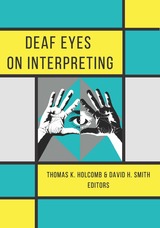
Deaf Eyes on Interpreting brings Deaf people to the forefront of the discussions about what constitutes quality interpreting services. The contributors are all Deaf professionals who use interpreters on a regular basis, and their insights and recommendations are based on research as well as on personal experiences. These multiple perspectives reveal strategies to maximize access to interpreted work and hearing environments and to facilitate trust and understanding between interpreters and Deaf consumers. Interpreter educators, interpreting students, professional interpreters, and Deaf individuals will all benefit from the approaches offered in this collection.

Along with volume coeditors Robert Adam, Christopher Stone, and Steven D. Collins, contributors include Markus Aro, Karen Bontempo, Juan Carlos Druetta, Senan Dunne, Eileen Forestal, Della Goswell, Juli af Klintberg, Patricia Levitzke-Gray, Jemina Napier, Brenda Nicodemus, Debra Russell, Stephanie Sforza, Marty Taylor, and Linda Warby. The scope of their research spans the world, including many unique facets of interpreting by deaf people in Argentina, Australia, Canada, England, Finland, Ireland, Sweden, and the United States, establishing this work as the standard in this burgeoning discipline.
This incisive book explores the current state of educational interpreting and how it is failing deaf students. The contributors, all renowned experts in their field, include former educational interpreters, teachers of deaf students, interpreter trainers, and deaf recipients of interpreted educations.
Educational Interpreting presents the salient issues in three distinct sections. Part 1 focuses on deaf students—their perspectives on having interpreters in the classroom, the language myths that surround them, the accessibility of language to them, and their cognition. Part 2 raises questions about the support and training that interpreters receive from the school systems, the qualifications that many interpreters bring to an interpreted education, and the accessibility of everyday classrooms for deaf students placed in such environments. Part 3 presents a few of the possible suggestions for addressing the concerns of interpreted educations, and focuses primarily on the interpreter.
The contributors discuss the need to (1) define the core knowledge and skills interpreters must have and (2) develop standards of practice and assessment. They also stress that interpreters cannot effect the necessary changes alone; unless and until administrators, parents, teachers, and students recognize the inherent issues of access to education through mediation, little will change for deaf students.

Students of advanced Spanish share a desire to use and understand the language, even as their backgrounds and goals for the language may vary widely. En otras palabras provides advanced learners of Spanish with hands-on manipulation of grammatical, lexical, and cultural detail through the practice of translation (traducción). This challenging and enjoyable textbook—now in its second edition with up-to-date texts on current events, new exercises, and new and expanded instructions—presents students with incisive grammar explanation, relevant lexical information, and a wide variety of translation texts and exercises in order to increase their mastery of the Spanish language.
En otras palabras contains Spanish texts to be translated into English as well as English texts for translation into Spanish. Translating into English requires students to understand every detail of the Spanish text and decide how these details might best be expressed in English. Translating into Spanish requires students to recognize how Spanish structures and words do—and do not—parallel those of English. Both activities provide advanced students of Spanish with an invigorating linguistic workout and serve as an effective introduction to the practice of translation.
Translation is a cultural as well as a linguistic activity; for students, learning how to translate provides invaluable experience of the inseparability of language and culture. En otras palabras addresses the errors made by advanced learners of Spanish while involving students in the pleasurable, problem-solving process of translation. This second edition contains a wide variety of usage-based exercises for both individual and group work. Concise and complete texts feature narrative and description, marketing and publicity materials, medical and legal topics, sports journalism, and internet posts.
En otras palabras is designed for a three-credit semester class; an online Instructor's Manual is provided at no charge to professors who adopt the text in their classrooms.

For the first time, Jane Fenoulhet has made this important, modernist novel accessible to English-language readers, her deft translation capturing the rich expressiveness of van Bruggen’s original Dutch. In insightful accompanying commentary, Fenoulhet describes how, just as the novel depicts the becoming of both Eva and her creator, so too can the translation be seen as the translator’s own becoming. Fenoulhet also describes the challenges of translating van Bruggen’s dynamic, intense narrative, which necessitated deep personal engagement with the novel.
This volume brings together a cadre of world-renowned interpreting educators and researchers who conduct a rich exploration of paradigms, both old and new, in interpreter education. They review existing research, explicate past and current practices, and call for a fresh look at the roots of interpreter education in anticipation of the future. Expert commentary accompanies each chapter to provide a starting point for reflection on and discussion of the growing needs in this discipline.
Volume coeditor Christine Monikowski begins by considering how interpreter educators can balance their responsibilities of teaching, practice, and research. Her chapter is accompanied by commentary about the capacity to “academize” what has been thought of as a semi-profession. Helen Tebble shares research on medical interpreting from an applied linguistic perspective. Terry Janzen follows with the impact of linguistic theory on interpretation research methodology. Barbara Shaffer discusses how interpreting theory shapes the interpreter’s role. Elizabeth A. Winston, also a volume coeditor, rounds out this innovative collection with her chapter on infusing evidence-based teaching practices into interpreting education. Noted interpreter educators and researchers also provide an international range of insights in this collection, including Rico Peterson, Beppie van den Bogaerde, Karen Bontempo, Ian Mason, Ester Leung, David Quinto-Pozos, Lorraine Leeson, Jemina Napier, Christopher Stone, Debra Russell, and Claudia Angelelli.

General History of the Indies was the first universal history of the recent discoveries and conquests of the New World made available to the Old World audience. At publication it consisted of two parts: the first a general history of the European discovery, conquest, and settlement of the Americas, and the second a detailed description of Cortés’s conquest of Mexico. Part one—in the multiple Spanish editions and translations into Italian and French published at the time—was the most comprehensive, popular, and accessible account of the natural history and geography of the Americas, the ethnology of the peoples of the New World, and the history of the Spanish conquest, including the most recent developments in Peru. Despite its original and continued importance, however, it had never been translated into English.
Gómara’s history communicates Europeans’ general understanding of the New World throughout the middle and later sixteenth century. A lively, comparatively brief description of Europe’s expansion into the Americas with significant importance to today’s understanding of the early modern worldview, Francisco López de Gómara’s General History of the Indies will be of great interest to students of and specialists in Latin American history, Latin American literature, anthropology, and cultural studies, as well as specialists in Spanish American intellectual history and colonial Latin America.

For generations, scholars used (and misused) the Account as the sole eyewitness insight into an ancient civilization. It is credited to the sixteenth-century Spanish Franciscan, monastic inquisitor, and bishop Diego de Landa, whose legacy is complex and contested. His extensive writings on Maya culture and history were lost in the seventeenth century, save for the fragment that is the Account, discovered in the nineteenth century, and accorded near-biblical status in the twentieth as the first “ethnography” of the Maya. However, the Account is not authored by Landa alone; it is a compilation of excerpts, many from writings by other Spaniards—a significant revelation made here for the first time.
This new translation accurately reflects the style and vocabulary of the original manuscript. It is augmented by a monograph—comprising an introductory chapter, seven essays, and hundreds of notes—that describes, explains, and analyzes the life and times of Diego de Landa, the Account, and the role it has played in the development of modern Maya studies. The Friar and the Maya is an innovative presentation on an important and previously misunderstood primary source.

"Translation is like a reverse-engineering process—whereby, say, we might take apart a clock made of metal parts in order to build a functioning replica made entirely of plastic. Our final product will not look the same as the original clock, and it would be impossible to simply copy the designs of its inner workings, because plastic and metals have very different properties. For example, we cannot make small plastic springs or very thin gears of plastic. But these changes do not matter; the only thing that matters is that our replica will tell the time correctly.”
—From the Introduction
The Georgetown Guide to Arabic-English Translation is an essential step-by-step, practical manual for advanced learners of Arabic interested in how to analyze and accurately translate nonfiction Arabic texts ranging from business correspondence to textbooks.
Mustafa Mughazy, a respected Arabic linguist, presents an innovative, functional approach that de-emphasizes word-for-word translation. Based on the Optimality Theory, it favors remaining faithful to the communicative function of the source material, even if this means adding explanatory text, reconfiguring sentences, paraphrasing expressions, or omitting words.
From how to select a text for translation or maintain tense or idiom, to how to establish translation patterns, The Georgetown Guide to Arabic-English Translation is useful both as a textbook and a reference. An invaluable set of appendices offers shortcuts to translate particularly difficult language like abbreviations, collocations, and common expressions in business correspondence, while authentic annotated texts provide the reader opportunities to practice the strategies presented in the book. A must-read for advanced learners of Arabic, this is a book every scholar and graduate-level student will wish to own.


Here or There presents cutting edge, empirical research that informs the professional practice of remote interpreting, whether it be video relay service, video conference, or video remote interpreting. The research is augmented by the perspectives of stakeholders and deaf consumers on the quality of the interpreted work. Among the topics covered are professional attitudes and motivations, interpreting in specific contexts, and adaptation strategies. The contributors also address potential implications for relying on remote interpreting, discuss remote interpreter education, and offer recommendations for service providers.
Nazik Saba Yared’s novel, Improvisations on a Missing String, tells the story of Saada Rayyis, who, after a mastectomy and prior to another operation which she may not survive, considers the course of her life with the purpose of understanding not only where she has been, but also where she is going.
In her attempt to cope with complex feelings of alienation and insecurity, she struggles against traditional expectations in order to secure a sense of belonging and fulfillment—but always on her own terms.
From her childhood in Palestine, through her university studies in Cairo, and finally as a teacher in Beirut, we follow the development of this independent woman as she comes to terms with her feelings about family, lovers, politics, art, and finally her own aspirations for belonging.
Deaf Americans have identified healthcare as the most difficult setting in which to obtain a qualified interpreter. Yet, relatively little attention has been given to developing evidence-based resources and a standardized body of knowledge to educate healthcare interpreters. In Our Hands: Educating Healthcare Interpreters addresses these concerns by delineating the best practices for preparing interpreters to facilitate full access for deaf people in healthcare settings.
The first section of this volume begins with developing domains and competencies toward a teaching methodology for medical and mental health interpreters. The next chapter describes a discourse approach that relies on analyzing actual transcripts and recordings to train healthcare interpreters. Other chapters feature a model mental health interpreter training program in Alabama; using a Demand-Control Schema for experiential learning; the risk of vicarious trauma to interpreters; online educational opportunities; and interpreting for deaf health care professionals. The second section offers four perspectives on education, including healthcare literacy of the clients; the education of Deaf interpreters; the development of standards for spoken-language healthcare interpreters; and the perspectives of healthcare interpreter educators in Europe. The range and depth of In Our Hands takes significant strides in presenting educational opportunities that can enhance the critical services provided by healthcare interpreters to deaf clients.
In the Face of Adversity explores the dynamics of translating texts that articulate particular notions of adverse circumstances. The contributors show how literary records of painful experiences and dissenting voices are at risk of being stripped of their authenticity when not carefully handled by the translator, how cultural moments in which the translation of a text that would have otherwise fallen into oblivion instead gave rise to a translator who enabled its preservation while ultimately coming into their own as an author as a result, and how the difficulties the translator faces in intercultural or transnational constellations in which prejudice plays a role endangers projects meant to facilitate mutual understanding. The authors address translation as a project of making available and preserving a corpus of texts that would otherwise be in danger of becoming censored, misperceived, or ignored. They look at translation and adaptation as a project of curating textual models of personal, communal, or collective perseverance, and they offer insights into the dynamics of cultural inclusion and exclusion through a series of theoretical frameworks, as well as through a set of concrete case studies drawn from different cultural and historical contexts.
In Inclusion, Diversity and Innovation in Translation Education, editors Alejandro Bolaños, García-Escribano, and Mazal Oaknín, emphasize the latest developments in literary and audiovisual translation education and teaching foreign languages while exploring the relevance of equality, diversity, and inclusion. They propose best practices and pieces of training, inviting readers to incorporate social issues affecting marginalized groups in their language and translation teaching practices.
Researchers now understand interpreting as an active process between two languages and cultures, with social interaction, sociolinguistics, and discourse analysis as more appropriate theoretical frameworks. Roy’s penetrating new book acts upon these new insights by presenting six dynamic teaching practices to help interpreters achieve the highest level of skill.
Jeffrey Davis illustrates the translation skills that form the basis for teaching consecutive and simultaneous interpreting to help students understand the intended meaning of the source message, and also the manner in which listeners understand it. Rico Peterson demonstrates the use of recall protocols, which can be used to teach metacognitive skills and to assess the student’s sign language comprehension. Finally, Janice Humphrey details the use of graduation portfolios, a valuable assessment tool used by faculty to determine a student’s level of competency. These imaginative techniques in Innovative Practices promise gains in sign language interpreting that will benefit teachers, students, and clients alike in the very near future.
The Fourth Volume in the Interpreter Education Series
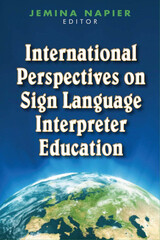
From the moment the World Association of Sign Language Interpreters (WASLI) was established in 2005, an overwhelming wave of requests from around the world arrived seeking information and resources for educating and training interpreters. This new collection provides those answers with an international overview on interpreter training from experts in Austria, Australia, Brazil, Canada, Fiji, Finland, Ireland, Japan, Kenya, Kosovo, the Netherlands, New Zealand, Scotland, Sweden, and the United States. Whether from income-rich or income-poor countries, the 31 contributors presented here provide insights on how sign language interpreter training has developed in each nation, and also how trainers have dealt with the difficulties that they encountered.
Many of the contributors relate the movement away from ad hoc short courses sponsored by Deaf communities. They mark the transition from the early struggles of trainers against the stigmatization of sign languages to full-time degree programs in institutions of higher education funded by their governments. Others investigate how culture, religion, politics, and legislation affect the nurturing of professional sign language interpreters, and they address the challenges of extending training opportunities nationally through the use of new technology. Together, these diverse perspectives offer a deeper understanding and comparison of interpreter training issues that could benefit the programs in every nation.

Each chapter, authored collaboratively by deaf and hearing educators, surveys general interpreter education and training, examines the status of the profession for both deaf and hearing practitioners, and addresses specific challenges faced within the different national frameworks. Contributors also discuss ongoing and future trends, including the impact of the Covid-19 pandemic on educational practices.
This volume disseminates extensive knowledge on sign language translator and interpreter education, covering established programs as well as ad hoc training, and highlighting effective teaching pedagogies and structured classroom strategies. Contributors emphasize a holistic approach to the field, integrating SLTI education, the current profession, future practitioners, and deaf communities. Although the state of the field varies widely around the world depending on the national context, this volume reveals a shared goal of advancing professional standards and improving the provision of service to deaf people worldwide.
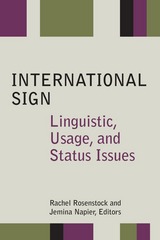
Editors Rachel Rosenstock and Jemina Napier have assembled an international group of renowned linguists and interpreters to examine various aspects of International Sign. Their contributions are divided into three parts: International Sign as a Linguistic System; International Sign in Action—Interpreting, Translation, and Teaching; and International Sign Policy and Language Planning. The chapters cover a range of topics, including the morphosyntactic and discursive structures of interpreted IS, the interplay between conventional linguistic elements and nonconventional gestural elements in IS discourse, how deaf signers who use different signed languages establish communication, Deaf/hearing IS interpreting teams and how they sign depicting verbs, how best to teach foundation-level IS skills, strategies used by IS interpreters when interpreting from IS into English, and explorations of the best ways to prepare interpreters for international events.
The work of the editors and contributors in this volume makes International Sign the most comprehensive, research-based analysis of a young but growing field in linguistics and interpretation.
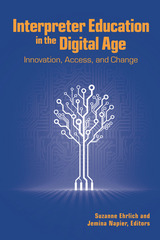
Initiatives described in this collection range from the implementation of on-demand interpreting using iPad technology to create personalized, small-group, multidimensional models suited to digital media for 160 languages; introducing students to interpreting in a 3D world through an IVY virtual environment; applying gaming principles to interpreter education; assessing the amenability of the digital pen in the hybrid mode of interpreting; developing multimedia content for both open access and structured interpreter education environments; to preparing interpreting students for interactions in social media forums, and more. Interpreter Education in the Digital Age provides a context for the application of technologies in interpreter education from an international viewpoint across languages and modalities.
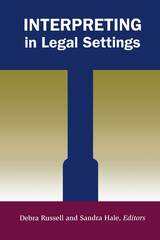
The work of interpreters in legal settings, whether they are spoken or signed language interpreters, is filled with enormous complexity and challenges. This engrossing volume presents six, data-based studies from both signed and spoken language interpreter researchers on a diverse range of topics, theoretical underpinnings, and research methodologies.
In the first chapter, Ruth Morris analyzes the 1987 trial of Ivan (John) Demjanjuk in Jerusalem, and reveals that what might appear to be ethical breaches often were no more than courtroom dynamics, such as noise and overlapping conversation. Waltraud Kolb and Franz Pöchhacker studied 14 asylum appeals in Austria and found that interpreters frequently aligned themselves with the adjudicators. Bente Jacobsen presents a case study of a Danish-English interpreter whose discourse practices expose her attempts to maintain, mitigate, or enhance face among the participants.
In the fourth chapter, Jemina Napier and David Spencer investigate the effectiveness of interpreting in an Australian courtroom to determine if deaf citizens should participate as jurors. Debra Russell analyzed the effectiveness of preparing sign language interpreter teams for trials in Canada and found mixed results. The final chapter presents Zubaidah Ibrahim-Bell’s research on the inadequate legal services in Malaysia due to the fact that only seven sign interpreters are available. Taken together, these studies point to a “coming of age” of the field of legal interpreting as a research discipline, making Interpreting in Legal Settings an invaluable, one-of-a-kind acquisition.
The Seventh Volume in the Studies in Interpretation Series
Nineteen international authorities contribute their research and findings to Interpreting in Multilingual, Multicultural Contexts, probing the complex nature of interpreted interaction involving Deaf and hearing people of diverse linguistic and cultural backgrounds. They also analyze the contextualized interpreting practices and considerations that transpire from this diversity.
In three parts, this trenchant collection shows how Deaf and hearing people use language in fluctuating ways to connect with each other. The chapters in Part 1 — Expanding Frontiers: ASL-English-Spanish Interpreting in the United States — consider sign language interpreting at the border between Baja California and the state; trilingual video relay service (VRS) interpreting; and constructing a valid, reliable trilingual interpreting testing instrument. Part 2 — Mediating Indigenous Voices — explores how to construct roles in a Maori Deaf trilingual context; considerations for interpreting signed languages of American Indian Communities; and interpreting for indigenous Deaf clients in far north Queensland, Australia.
In the final section, Part 3 — Globalizing: Interpreting in International Contexts — protocols for interpreting in multilingual international conferences are analyzed. The last chapter describes the arduousness of sign language interpreting in multilingual, international settings. It acts as a fitting conclusion to this examination of the challenges to the sociolinguistic repertoire of interpreters mediating across multiplex combinations of culture and language.
Jack Hoza’s newest research examines the components that enable interpreters to perform successfully, looking at literature in interpretation, cognitive science, education, psychology, and neuroscience, as well as reviewing the results of two qualitative studies he conducted. He seeks to uncover what it means to interpret in the zone by understanding exactly how the brain works in interpretation scenarios. He explores a range of dichotomies that influence interpretation outcomes, such as:
- Intuition vs. rational thought
- Left brain vs. right brain
- Explicit vs. implicit learning
- Novice vs. master
- Spoken vs. signed languages
- Emotion vs. reasoning
Interpreting in the Zone shows that cognitive research can help us better understand the intricacies of the interpreting process and has implications for how to approach the interpreting task. This resource will be of value to both the interpreter-in-training as well as the seasoned practitioner.
A primer and workbook designed either for classroom use or for individual study. The work concentrates on grammar and syntax in the Latin used by Emanuel Swedenborg (1688-1772). It contains brief Latin-English and English-Latin glossaries.
Investigations in Healthcare Interpreting consists of ten chapters contributed by a broad array of international scholars. They address topics as diverse as the co-construction of medical conversation between interlocutors, healthcare interpretation in Ireland, and how interpreters make requests for clarification in their work. Using a variety of methodological approaches including ethnography, questionnaires, observation, and diary accounts, these scholars report on trials of simultaneous video interpreting in Austrian hospitals; direct, interpreted, and translated healthcare information for Australian deaf people; the interpretation of medical interview questions from English into ASL; and specialized psychological/psychiatric diagnostic tests for deaf and hard of hearing clients. Researchers, practitioners, and students, as well as all healthcare professionals, will find this volume to be an invaluable resource.

With clear, conversational prose, this is the first book dedicated entirely to Ngũgĩ wa Thiong’o’s writings on translation.
Through his many critically acclaimed novels, stories, essays, plays, and memoirs, Kenyan writer Ngũgĩ wa Thiong’o has been at the forefront of world literature for decades. He has also been, in his own words, “a language warrior,” fighting for indigenous African languages to find their rightful place in the literary world. Having begun his writing career in English, Ngũgĩ shifted to writing in his native language Gikũyũ in 1977, a stance both creatively and politically significant. For decades now, Ngũgĩ has been translating his Gikũyũ works into English himself, and he has used many platforms to champion the practice and cause of literary translations, which he calls “the language of languages.”
This volume brings together for the first time Ngũgĩ’s essays and lectures about translation, written and delivered over the past two decades. Here we find Ngũgĩ discussing translation as a conversation between cultures, proposing that dialogue among African languages is the way to unify African peoples, reflecting on the complexities of auto-translation or translating one’s own work, exploring the essential task translation performed in the history of the propagation of thought, and pleading for the hierarchy of languages to be torn down. He also shares his many experiences of writing across languages, including his story The Upright Revolution, which has been translated into more than a hundred languages around the globe and is the most widely translated text written by an African author.
At a time when dialogues between cultures and peoples are more essential than ever, The Language of Languages makes an outspoken case for the value of literature without borders.
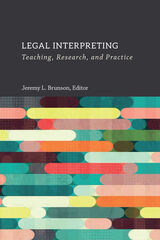
Each chapter features discussion questions and prompts that interpreter educators can use in the classroom. While intended as a foundational text for use in courses, this body of work also provides insight into the current state of the legal interpreting field and will be a valuable resource for scholars, practitioners, and consumers.
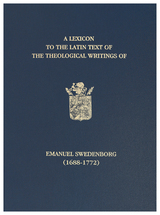
Beyond its use for scholars of Swedenborg, the Lexicon is also of great assistance to students and academics of history, philosophy, theology and science, and anyone who encounters texts written in Neo-Latin (the branch of Latin that was in use by learned writers and thinkers from the Renaissance period through to the Enlightenment and beyond). The Lexicon is beautifully and simply designed and easy to navigate. In addition to a preface by editor John Chadwick, this edition also features a new introduction by Jonathan S. Rose containing an important section on the morphology of Swedenborg’s Neo-Latin (as distinct from the morphology of classical Latin); an appreciation of the life of John Chadwick by John Elliott; an appendix with a detailed listing of the various Latin editions of Swedenborg’s theological works; and an appendix on Swedenborg’s use of the Latin Bible of Sebastian Schmidt.
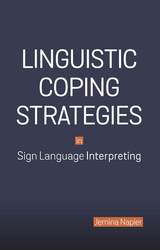
The concept of strategic omissions is explored here as a tool that is consciously used by interpreters as a coping strategy. Instead of being a mistake, omitting part of the source language can actually be part of an active decision-making process that allows the interpreter to convey the correct meaning when faced with challenges. For the first time, Napier found that omission potential existed within every interpretation and, furthermore, she proposed a new taxonomy of five different conscious and unconscious omission types. Her findings also indicate that Auslan/English interpreters use both a free and literal interpretation approach, but that those who use a free approach occasionally switch to a literal approach as a linguistic coping strategy to provide access to English terminology. Both coping strategies help negotiate the demands of interpretation, whether it be lack of subject-matter expertise, dealing with dense material, or the context of the situation.
Napier also analyzes the interpreters’ reflections on their decision-making processes as well as the university students’ perceptions and preferences of their interpreters’ linguistic choices and styles. Linguistic Coping Strategies in Sign Language Interpreting is a foundational text in interpretation studies that can be applied to interpreting in different contexts and to interpreter training.
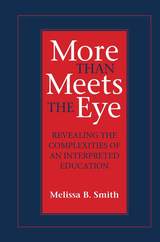
Sign language interpreters often offer the primary avenue of access for deaf and hard of hearing students in public schools. More than 80% of all deaf children today are mainstreamed, and few of their teachers sign well enough to provide them with full access. As a result, many K-12 interpreters perform multiple roles beyond interpreting. Yet, very little is known about what they actually do and what factors inform their moment-to-moment decisions. This volume presents the range of activities and responsibilities performed by educational interpreters, and illuminates what they consider when making decisions.
To learn about the roles of K-12 interpreters, author Melissa B. Smith conducted in-depth analyses at three different schools. She learned that in response to what interpreters feel that their deaf students need, many focus on three key areas: 1) visual access, 2) language and learning, and 3) social and academic participation/inclusion. To best serve their deaf students in these contexts, they perform five critical functions: they assess and respond to the needs and abilities of deaf students; they interpret with or without modification as they deem appropriate; they capitalize on available resources; they rely on interactions with teachers and students to inform their choices; and they take on additional responsibilities as the need arises.

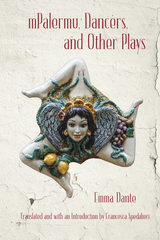
This exquisite first English translation of Emma Dante’s work enables English-speaking readers, theatre scholars, and directors alike to encounter character-driven “civic theatre” with its portraits of individuals existing at the fringes of Italy. Ultimately, it allows us to “listen” to those who are not given a voice anywhere else.

My Language Is a Jealous Lover explores the plights and successes of authors who lived and wrote in languages other than their mother tongue, from Samuel Beckett and Vladimir Nabokov to Ágota Kristóf and Joseph Brodsky. Author Adrián N. Bravi weaves their stories in with his own experiences as an Argentinian-Italian, thinking and writing in the language of his new life while recalling that of his childhood. Bravi bears witness to the frustrations, the soul-searching, the pain, and the joys of embracing another language.
The latest addition to the Interpreter Education series expands the tools available to instructors with six new, vital chapters on new curricula and creative teaching methods. Series editor Cynthia B. Roy leads the way by calling for the use of a discourse-oriented curriculum for educating interpreters. In the following chapter, Claudia Angelelli outlines the bottom-line principles for teaching effective health-care interpreting, postulating a model that depends upon the development of skills in six critical areas: cognitive-processing, interpersonal, linguistics, professional, setting-specific, and sociocultural. Risa Shaw, Steven D. Collins, and Melanie Metzger collaborate on describing the process for establishing a bachelor of arts program in interpreting at Gallaudet University distinct from the already existent masters program.
In the fourth chapter, Doug Bowen-Bailey describes how to apply theories of discourse-based interpreter education in specific contexts by producing customized videos. Jemina Napier blends three techniques for instructing signed language interpreters in Australia: synthesizing sign and spoken language interpreting curricula; integrating various interpreting concepts into a theoretical framework; and combining online and face-to-face instruction. Finally, Helen Slatyer delineates the use of an action research methodology to establish a curriculum for teaching ad hoc interpreters of languages used by small population segments in Australia.

The first of its kind, The Power of Signed Songs: Deaf Artists, Intercultural Reach, and the Politics of Music Making analyzes musical performances that were translated or created in signed languages. Written by an international team of Deaf community researchers, The Power of Signed Songs explores the politics of music making in the form of signed songs, an often controversial art form in Deaf communities.
While raising questions about culture, translation, and authorship, signed songs demonstrate forms of Deaf cultural resistance, defy traditional conceptions of music, and draw attention to language diversity and intersectionality within Deaf communities in varied European settings. Drawing on both signed music performances and field research, the authors highlight the unique contributions of signing musical artists from both the UK and Portugal. Signed songs and translations illustrate a wide range of creative performance strategies, linguistic word and sign play across languages, and sociolinguistic variation.
By analyzing how translated songs created by Deaf artists serve as cultural products, translations, and performance, The Power of Signed Songs provides a glimpse into how translations of music can be a form of both transnational and localized cultural resistance. Ultimately, Deaf-centered signed songs are not just artistic expressions but also political statements, challenging the idea that music belongs exclusively to the hearing world.
Alley considers the question of how VRS fits into the professional field of interpreting, and discovers that—regardless of the profit-focused mentality of VRS providers—interpreters make decisions with the goal of creating quality customer service experiences for deaf consumers, even if it means “breaking the rules.” Her findings shed light on the decision-making process of interpreters and how their actions are governed by principles of self-care, care for colleagues, and concern for the quality of services provided. Professional Autonomy in Video Relay Service Interpreting is essential reading in interpreter education courses and interpreter training programs.
The Fifth Volume in the Studies in Interpretation Series
In interpreting, professionals must be able to convey to their clients the rhythm, stress, and length of phrases used by the communicating parties to indicate their respective emotional states. Such subtleties, which can signal sarcasm and irony or whether a statement is a question or a command, are defined in linguistics as prosody. Brenda Nicodemus’s new volume, the fifth in the Studies in Interpretation series, discusses the prosodic features of spoken and signed languages, and reports the findings of her groundbreaking research on prosodic markers in ASL interpretation.
In her study, Nicodemus videotaped five highly skilled interpreters as they interpreted a spoken English lecture into ASL. Fifty Deaf individuals viewed the videotaped interpretations and indicated perceived boundaries in the interpreted discourse. These identified points were then examined for the presence of prosodic markers that might be responsible for the perception of a boundary. Prosodic Markers and Utterance Boundaries reports on the characteristics of the ASL markers, including their frequency, number, duration, and timing. Among other findings, the results show that interpreters produce an average of seven prosodic markers at each boundary point. The markers are produced both sequentially and simultaneously and under conditions of highly precise timing. Further, the results suggest that the type of prosodic markers used by interpreters are both systematic and stylistic.
In exploring the interaction between form and content, Reflexive Translation Studies promotes the need for an experimental, multisensory, and intuitive practice, which invites students, scholars, and practitioners alike to engage with theory productively and creatively through translation.
Through a series of qualitative interviews and quantitative questionnaires with district administrators, school administrators, general education teachers, and teachers of the deaf, Fitzmaurice documents their perceptions of educational interpreters. Findings from the data reveal the perceptions of administrators and teachers set the stage for role ambiguity, role conflicts, and subsequent role overload for educational interpreters. Fitzmaurice elaborates on the implications of the research, and also provides concrete recommendations for researchers and practitioners, including an emphasis on the importance of involving the Deaf community in this work. This volume aims to offer clarity on the role of the educational interpreter, and dispel the confusion and conflicts created by divergent perspectives. A shared understanding of the role of the educational interpreter will allow administrators, teachers, and interpreters to work collaboratively to improve educational outcomes for deaf students.
Signed chapter summaries will be available on the Gallaudet University Press YouTube channel upon publication.
Institutions of higher learning around the nation have embraced the concept of student civic engagement as part of their curricula, a movement that has spurred administrators in various fields to initiate programs as part of their disciplines. In response, sign language interpreting educators are attempting to devise service-learning programs aimed at Deaf communities. Except for a smattering of journal articles, however, they have had no primary guide for fashioning these programs. Sherry Shaw remedies this in her new book Service Learning in Interpreter Education: Strategies for Extending Student Involvement in the Deaf Community.
Shaw begins by outlining how to extend student involvement beyond the field experience of an internship or practicum and suggests how to overcome student resistance to a course that seems atypical. She introduces the educational strategy behind service-learning, explaining it as a tool for re-centering the Deaf community in interpreter education. She then provides the framework for a service-learning course syllabus, including establishing Deaf community partnerships and how to conduct student assessments.
Service Learning in Interpreter Education concludes with first-person accounts from students and community members who recount their personal and professional experiences with service learning. With this thorough guide, interpreter education programs can develop stand-alone courses or modules within existing coursework.
Sign Language Interpreting relies upon an interactional sociolinguistic approach to ask fundamental questions regarding interpreter neutrality. First, do interpreters influence discourse, and if so, how? Also, what kind of expectations do the participants bring to the event, and what do the interpreters bring to discussions? Finally, how do their remarks affect their alignment with participants in the interaction? Using careful assessments of how these interviews were framed, and also re-interviewing the participants for their perspectives, this penetrating book discloses the ways in which interpreters influence these situations. It also addresses the potential implications of these findings regarding sign language interpretation in medical, educational, and all other general interactions. Interpreter trainers and their students will join certified interpreters and Deaf studies scholars in applauding and benefiting from the fresh ground broken by this provocative study.
The ten papers in Signed Language Interpretation and Translation Research cover a range of topics, including the need for Deaf perspectives in interpretation research, discourse strategies and techniques that are unique to video relay call settings, the benefits of using sociology as a lens for examining sign language interpreting work, translating university entrance exams from written Portuguese into Libras (Brazilian Sign Language), the linguistic choices interpreters make when interpreting ASL figurative language into English, the nature of designated interpreting, and grammatical ambiguity in trilingual VRS interpreting. The research findings and insights contained here will be invaluable to scholars, students, and practitioners.
The ninth volume in the Studies in Interpretation series offers six succinct chapters on the state of signed language interpreting by Brazil by editors Ronice Müller de Quadros, Earl Fleetwood, Melanie Metzger and ten Brazilian researchers. The first chapter advocates for the affiliation of Brazilian Sign Language (Libras) interpretation research with the field of Translation Studies to generate greater academic power empowerment of Libras. The second chapter outlines how Brazilian sign language interpreters construct a position in discourse. Chapter 3 explores the possibility that bimodal, bilingual interpreters—hearing children of deaf adults—face unique cognitive tasks compared to unimodal bilingual interpreters.
Chapter 4 describes how the systematic expansion and documentation of new academic and technical terms in Brazilian Sign Language, in which fingerspelling is uncommon, resulted in the development of an online glossary. The fifth chapter details the challenges of Libras interpreters in high schools. Chapter 6 concludes this revealing collection with findings on whether gender traits influence the act of interpretation of Brazilian Sign Language.
Each chapter provides students with objectives, keywords, and discussion questions. The chapters convey clear information about topics that include credentialing, disposition and aptitude for becoming an interpreter, interpreting for people who are DeafBlind, and working within specialty settings, such as legal and healthcare. A key resource for interpreter certification test preparation, this text follows the interpreter’s ethical, practical, and professional development through a career of lifelong learning and service.
Jules Dickinson’s examination of interpreted workplace interactions is based on the only detailed, empirical study of this setting to date. Using practitioner responses and transcripts of real-life interpreted workplace interactions, Dickinson’s findings demonstrate the complexity of the interpreter’s role and responsibilities. The book concentrates on the ways in which signed language interpreters affect the interaction between deaf and hearing employees in team meetings by focusing on humor, small talk, and the collaborative floor. Signed Language Interpreting in the Workplace demonstrates that deaf employees require highly skilled professionals to enable them to integrate into the workplace on a level equal with their hearing peers. It also provides actionable insights for interpreters in workplace settings that will be a valuable resource for interpreting students, practitioners, interpreter trainers, and researchers.
The contributors explore other important topics in interpreter education including ethics, Deaf translation, performance evaluation, consecutive and simultaneous interpreting, discourse analysis, critical thinking, curriculum sequencing, the social construction of learning, and mentoring. Through this collaborative approach featuring more than thirty scholars, Signed Language Interpreting Pedagogy presents a wealth of theoretical and practical information for interpreter educators and their students.
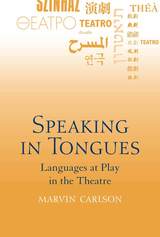
The book begins by investigating various "levels" of language-high and low style, prose and poetry-and the ways in which these have been used historically to mark social positions and relationships. It next considers some of the political and historical implications of dialogue theatre, as well as theatre that literally employs several languages, from classical Greek examples to the postmodern era. Carlson treats with special attention the theatre of the postcolonial world, and especially the triangulation of the local language, the national language, and the colonial language, drawing on examples of theatre in the Caribbean, Africa, Australia, and New Zealand. Finally, Carlson considers the layering of languages in the theatre, such as the use of supertitles or simultaneous signing.
Speaking in Tongues draws important social and political conclusions about the role of language in cultural power, making a vital contribution to the fields of theatre and performance.
Marvin Carlson is Sidney E. Cohn Professor of Theatre and Comparative Literature, CUNY Graduate Center. He is author of Performance: A Critical Introduction; Theories of the Theatre: A Historical and Critical Survey, from the Greeks to the Present; and The Haunted Stage: The Theatre as Memory Machine, among many other books.

A cast with over fifty distinct roles acted out events extending from Palm Sunday to Christ’s death on the cross. One actor became a localized embodiment of Jesus through a process of investiture and mimesis that carried aspects of pre-Columbian materialized divinity into the later colonial period. The play told afar richer version of the Passion story than what later colonial Nahuas typically learned from their priests or catechists. And by assimilating Jesus to an Indigenous, or macehualli, identity, the players enacted a protest against colonial rule.
The situation in eighteenth-century New Spain presents both a unique confrontation between Indigenous communities and Enlightenment era religious reformers and a new chapter in an age-old power game between popular practice and religious orthodoxy. By focusing on how Nahuas localized the universalizing narrative of Christ’s Passion, Staging Christ’s Passion in Eighteenth-Century Nahua Mexico offers an unusually in-depth view of religious life under colonial rule.
Burkhart’s accompanying website also makes available transcriptions and translations of the six Nahuatl-language plays, four Spanish-language plays composed in response to the suppression of the Nahuatl practice, and related documentation, providing a valuable resource for anyone interested in consulting the original material.
Comments restricted to single page
plays composed in response to the suppression of the Nahuatl practice, and related documentation,
providing a valuable resource for anyone interested in consulting the original material
Very real differences do exist between what is spoken and what is written in virtually every language. In Brazilian Portuguese, especially, the gulf between the two is wide: In many cases, the most cultured Brazilian is unable to comprehend with ease Brazilian literature written only fifty years ago.
THE SYNTAX OF SPOKEN BRAZILIAN PORTUGUESE is the first thorough analysis of the spoken language of contemporary Brazil, in English, for students and teachers of the language. Useful as a text in advanced language courses, the work is intended primarily for reference and as a research aid to future authors of Portuguese language textbooks.
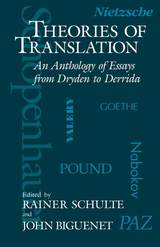
Most of the twenty-one pieces appear in translation, some here in English for the first time and many difficult to find elsewhere. Selections include writings by Scheiermacher, Nietzsche, Ortega, Benjamin, Pound, Jakobson, Paz, Riffaterre, Derrida, and others.
A fine companion to The Craft of Translation, this volume will be a valuable resource for all those who translate, those who teach translation theory and practice, and those interested in questions of language philosophy and literary theory.
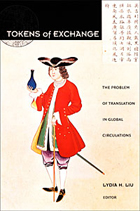
By studying the production and circulation of meaning as value in areas including history, religion, language, law, visual art, music, and pedagogy, essays consider exchanges between Jesuit and Protestant missionaries and the Chinese between the seventeenth and nineteenth centuries and focus on the interchanges occasioned by the spread of capitalism and imperialism. Concentrating on ideological reciprocity and nonreciprocity in science, medicine, and cultural pathologies, contributors also posit that such exchanges often lead to racialized and essentialized ideas about culture, sexuality, and nation. The collection turns to the role of language itself as a site of the universalization of knowledge in its contemplation of such processes as the invention of Basic English and the global teaching of the English language. By focusing on the moments wherein meaning-value is exchanged in the translation from one language to another, the essays highlight the circulation of the global in the local as they address the role played by historical translation in the universalizing processes of modernity and globalization.
The collection will engage students and scholars of global cultural processes, Chinese studies, world history, literary studies, history of science, and anthropology, as well as cultural and postcolonial studies.
Contributors. Jianhua Chen, Nancy Chen, Alexis Dudden Eastwood, Roger Hart, Larissa Heinrich, James Hevia, Andrew F. Jones, Wan Shun Eva Lam, Lydia H. Liu, Deborah T. L. Sang, Haun Saussy, Q. S. Tong, Qiong Zhang
As access to deaf people grows around the world, a new profession has begun to emerge as well, that of Deaf translators and interpreters (T/Is). In his new study Toward a Deaf Translation Norm, Christopher Stone explores this innovation, including its antecedents and how it is manifested in public places. Most importantly, Stone investigates whether or not a translation norm has evolved for Deaf T/Is as increasing numbers of them work in the mainstream translating for websites, public services, government literature, and television media.
For his study, the sixth volume in the Studies in Interpretation series, Stone concentrated his research in the United Kingdom. Specifically, he examined the rendering of English broadcast television news into British Sign Language (BSL) by both Deaf and hearing T/Is. Segments of the data feature simultaneous Deaf and hearing in-vision T/I broadcasts. Recording these broadcasts produced a controlled product that enabled direct comparison of the Deaf and hearing T/Is. Close analysis of these examples revealed to Stone that Deaf T/s not only employ a Deaf translation norm, they take labors to shape their BSL text into a stand-alone product rather than a translation. Ultimately, Toward a Deaf Translation Norm opens up engrossing new vistas on current deliberation about neutrality in translation and interpretation.

Elizabeth Lowe charts her journey to becoming a translator through a series of vignettes relating her life as a “third-culture kid” and living and working abroad in a kaleidoscope of cultures and languages. She lived in Germany as a young child immediately after the Second World War while her father worked in the Nuremberg trials and as a newly married military spouse during the Vietnam War; she lived in Haiti just prior to Papa Doc's consolidation of power, in Brazil when the military dictatorship seized the country in its two-decade vise, at the University of Coimbra, Portugal during Salazar, and Colombia at the height of the guerrilla conflicts, and in Miami during the heyday of the cartels. The book is a reflection on translation as an art, on five decades teaching languages, literatures, and translation, and on her close relationship with writers from the Lusophone world. It explores theoretical aspects of translation as well as practical challenges faced by translators, especially those working in Portuguese literature. Lowe offers intimate insights into the creative process of the writers she translates and her own philosophy of literary translation.
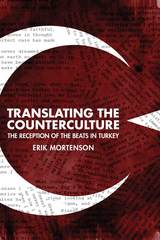
Mortenson examines how in Turkey the Beats have been framed by the label “underground literature”; explores the ways they are repurposed in the counterculture-inspired journal Underground Poetix; looks at the reception of Jack Kerouac’s On the Road and how that reaction provides a better understanding of the construction of “American-ness”; delves into the recent obscenity trial of William S. Burroughs’s novel The Soft Machine and the attention the book’s supporters brought to government repression and Turkish homophobia; and analyzes the various translations of Allen Ginsberg’s Howl to demonstrate the relevance Ginsberg still holds for social rebellion today.
Translating the Counterculture takes a revolutionary look at how contemporary readers in other parts of the world respond to the Beats. Challenging and unsettling an American-centric understanding of the Beats, Mortenson pushes the discipline toward a fuller consideration of their cultural legacy in a globalized twenty-first century.
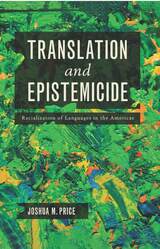
The book gives an account of translation-as-epistemicide in the Americas, drawing on a range of examples from the early colonial period to the War on Terror. The first chapters demonstrate four distinct operations of epistemicide: the commensuration of worlds, the epistemic marginalization of subaltern translators and the knowledge they produce, the criminalization of translators and interpreters, and translation as piracy or extractivism. The second part of the book outlines decolonial translation strategies, including an epistemic posture the author calls “bewilderment.”
Translation and Epistemicide tracks how through the centuries translation practices have enabled colonialism and resulted in epistemicide, or the destruction of Indigenous and subaltern knowledge.
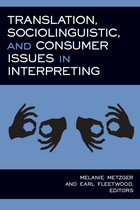
The Third Volume in the Studies in Interpretation Series
This new volume focuses on scholarship over a refined spectrum of issues that confront interpreters internationally. Editors Melanie Metzger and Earl Fleetwood call upon researchers from the United States, Ireland, Australia, and the Philippines to share their findings in six chapters.
In the first chapter, Roberto R. Santiago and Lisa A. Frey Barrick reveal how interpreters deal with translating source language idioms into American Sign Language (ASL). In Chapter 2, Lorraine Neeson and Susan Foley-Cave review the particular demands for decision-making that face interpreters on several levels in a class on semantics and pragmatics. Liza B. Martinez explains in Chapter 3 the complicated, multilingual process of code switching by Filipino interpreters when voice-interpreting Filipino Sign Language.
Chapter 4 offers a deconstruction by Daniel Roush of the stereotype that Deaf ASL-users are direct or blunt, based on his analysis of two speech/social activities of requests and refusals. Jemina Napier investigates interpreting from the perspective of deaf consumers in Australia in Chapter 5 to explore their agenda for quality interpreting services. In the final chapter, Amy Frasu evaluates methods for incorporating visual aids into interpretations from spoken English to American Sign Language and the potential cognitive dissonance for deaf persons that could result.
A critical reassessment of the origins and development of translation studies.
This volume challenges the established historical narratives of “translation studies” by showcasing some of the rich traditions of debate, research, and theory that unfolded around the world in the centuries before the supposed beginnings of the discipline. Bringing together essays from leaders in the field of translation history, Translation Studies before ‘Translation Studies’ decenters the modern-day discipline by giving access to overlooked theoretical reflections, most of them translated into English for the first time, from languages such as Latin, Sanskrit, Chinese, Arabic, Swahili, Ukrainian, French, and Brazilian Portuguese.
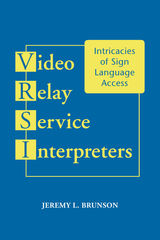
“Signed language interpreting is about access,” states author Jeremy L. Brunson at the outset of his new book, and no manifestation of access for deaf people can be considered more complex than video relay services (VRS). In Video Relay Service Interpreters: Intricacies of Sign Language Access, Brunson delineates exactly how complicated the service can be, first by analyzing sign language interpreting as a profession and its relation to both hearing and deaf clients. He describes how sign language interpreters function in Deaf communities and how regulatory processes imposed by VRS providers can constrain communication access based on each individual’s needs.
Brunson proceeds by acclimating readers to the environment of VRS and how the layout of the typical physical plant alters the practice of interpreting. The focus then falls upon intended VRS users, providing insights into their expectations. Interpreters shared their experiences with Brunson in 21 formal interviews and discussions. Many remarked on the differences between face-to-face interpreting and VRS training, which often runs counter to the concept of relating informally with deaf clients as a way to expand access. This thoughtful, sociological study outlines texts that originate between users and interpreters and how they can be used to develop VRS access. Video Relay Service Interpreters concludes with the implications of VRS interpreting for sign language interpreting in general and suggests where scholarship will lead in the future.

Ergun’s comparative framework reveals translation’s potential to facilitate cross-border flows of feminist theories, empower feminist interventions, connect feminist activists across differences and divides, and forge transnational feminist solidarities. As she considers hopeful and woeful pictures of border crossings, Ergun invites readers to revise their views of translation’s role in transnational feminism and examine their own potential as ethically and politically responsible agents willing to search for new meanings.
Sophisticated and compelling, Virgin Crossing Borders reveals translation’s vital role in exchanges of feminist theories, stories, and knowledge.
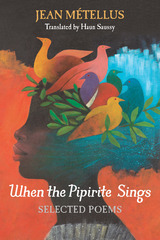
Translated by formidable comparative literature scholar Haun Saussy, When the Pipirite Sings expresses an acute historical consciousness and engages recurrent Haitian themes—the wrenching impact of colonialism and underdevelopment, the purposes of education, and the merging of spiritual and temporal power. And, as always with Métellus’s poetry, the range of voices and points of view evokes other genres, including fiction and cinema. This eminently readable book has formal and thematic ties to Aimé Césaire’s Notebook of a Return to the Native Land, central to the canon of French-language postcolonial writings.
In addition to many books of poetry, Métellus published novels, chiefly about the remembered Haiti of his youth, and plays about the conquest of the Caribbean. His nonfiction included reflections on Haitian history and politics, on the iconography of slave emancipation, and studies of aphasia and dyslexia.

Women as Translators in Early Modern England offers a feminist theory of translation that considers both the practice and representation of translation in works penned by early modern women. It argues for the importance of such a theory in changing how we value women’s work. Because of England’s formal split from the Catholic Church and the concomitant elevation of the written vernacular, the early modern period presents a rich case study for such a theory. This era witnessed not only a keen interest in reviving the literary glories of the past, but also a growing commitment to humanist education, increasing literacy rates among women and laypeople, and emerging articulations of national sentiment. Moreover, the period saw a shift in views of authorship, in what it might mean for individuals to seek fame or profit through writing. Until relatively recently in early modern scholarship, women were understood as excluded from achieving authorial status for a number of reasons—their limited education, the belief that public writing was particularly scandalous for women, and the implicit rule that they should adhere to the holy trinity of “chastity, silence, and obedience.”
While this view has changed significantly, women writers are still understood, however grudgingly, as marginal to the literary culture of the time. Fewer women than men wrote, they wrote less, and their “choice” of genres seems somewhat impoverished; add to this the debate over translation as a potential vehicle of literary expression and we can see why early modern women’s writings are still undervalued. This book looks at how female translators represent themselves and their work, revealing a general pattern in which translation reflects the limitations women faced as writers while simultaneously giving them the opportunity to transcend these limitations. Indeed, translation gave women the chance to assume an authorial role, a role that by legal and cultural standards should have been denied to them, a role that gave them ownership of their words and the chance to achieve profit, fame, status and influence.
Published by University of Delaware Press. Distributed worldwide by Rutgers University Press.
Such words as security in Brazil, responsibility in Japan, community in Thailand, and hijāb in France changed the societies in which they moved even as the words were changed by them. Some words threatened to launch wars, as injury did in imperial Britain’s relations with China in the nineteenth century. Others, such as secularism, worked in silence to agitate for political change in twentieth-century Morocco. Words imposed or imported from abroad could be transformed by those who wielded them to oppose the very powers that first introduced them, as happened in Turkey, Indonesia, and the Philippines. Taken together, this selection of fourteen essays reveals commonality as well as distinctiveness across modern societies, making the world look different from the interdisciplinary and transnational perspective of “words in motion.”
Contributors. Mona Abaza, Itty Abraham, Partha Chatterjee, Carol Gluck, Huri Islamoglu, Claudia Koonz, Lydia H. Liu, Driss Maghraoui, Vicente L. Rafael, Craig J. Reynolds, Seteney Shami, Alan Tansman, Kasian Tejapira, Anna Lowenhaupt Tsing
Abdessalam Benabdelali is a revered Moroccan philosopher and translator whose work maps an invaluable history of the status of translation in contemporary Arabic thought and language. Bringing together essays from two linked Arabic works by Benabdelali—On Translation and Hosting the Stranger—this volume represents one of the first extended philosophical explorations of translation by a contemporary Arab philosopher. These works reframe Arabic and European cultural histories around translation to counter hegemonic discourses and celebrate translation as a form of philosophical thought and practice, one that both preserves and proliferates difference.
Whether discussing eighteenth-century European perceptions of Arabic culture, classical Arabic literature and its express intent to resist all translation, or contemporary Arabic authors who write in anticipation of translation, Writings on Translation nimbly outlines the key philosophical questions at stake in translation. It concludes with an impassioned argument for translations that “host the stranger” and allow texts to “lift off and migrate.”
READERS
Browse our collection.
PUBLISHERS
See BiblioVault's publisher services.
STUDENT SERVICES
Files for college accessibility offices.
RECENTLY PUBLISHED







UChicago Accessibility Resources
home | accessibility | search | about | contact us
BiblioVault ® 2001 - 2026
The University of Chicago Press