
 A SCHOLARLY BOOK REPOSITORY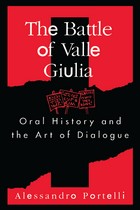
In The Battle of Valle Giulia—the title comes from an Italian student protest of the 1960s—Portelli reflects on how to connect personal memories with history, how to fittingly collect and represent the complexity of memory. Crossing cultures, classes, and generations, he records the private and singular experiences of Italian steelworkers and Kentucky coal miners, veterans and refugees of World War II, soldiers who fought in Vietnam, Italian resistance fighters and Nazis, and members of student movements from Berkeley to Rome. By listening to those whom others presume are "without historical memory"—such as youthful protesters, or the rural Tuscan women who saw every father, son, and brother killed by Nazi soldiers—Portelli clarifies the process by which narratives come into being as oral history, and he illustrates the differences and distances between story-telling and history-telling.
Portelli's articulate discussion of dialogue, representation, narrative and genre link historical analysis with literary and linguistic theory and with the concerns of contemporary anthropology.

Black Star documents the vibrant Asian Youth Movements in 1970s and 80s Britain who struggled against the racism of the street and the state. Anandi Ramamurthy shows how they drew inspiration from Black Power movements as well as anti-imperialist and workers' struggles across the globe.
Drawing on her intimate knowledge and extensive research, Ramamurthy shows how the struggle to make Britain 'home' led to a broad-based identity where 'black' was a political colour inspiring unity amongst all those struggling against racism.
Ramamurthy documents how by the late 1980s this broad based black identity disintegrated as Islamophobia became a new form of racism. In the process the legacy of the Asian Youth Movements has been largely hidden. Black Star retrieves this history and demonstrates its importance for political struggles today.
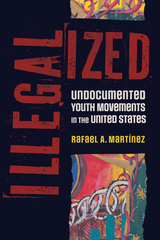
Rafael A. Martínez, an undocu-scholar, intricately weaves his lived experience into this deeply insightful exploration. Martínez’s interdisciplinary approach will engage scholars and readers alike, resonating with disciplines such as history, American studies, Chicana and Chicano studies, and borderlands studies.
Illegalized shows that undocumented youth and their activism represent a disruption to the social imaginary of the U.S. nation-state and its figurative and physical borders. It invites readers to explore how undocumented youth activists changed the way immigrant rights are discussed in the United States today.
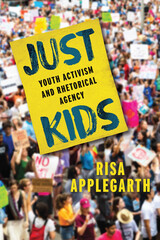
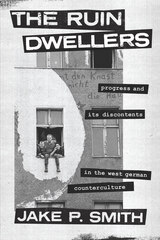
The Ruin Dwellers takes readers into the urban spaces of youth revolts during the 1970s and ’80s in West Germany and elsewhere in western and central Europe. Whereas earlier generations of leftist activists were primarily oriented toward the utopian future, participants in the youth movements of the 1970s and ’80s developed a more complex set of temporal practices that sought to scramble the borders between the past, present, and future.
Examining a rich corpus of radical texts and practices, historian Jake P. Smith shows that squatters and their leftist allies in this period engaged in social, cultural, and aesthetic experiments with modes of autonomous living. Smith brings to life the real and imagined landscapes conjured in squatted houses and street protests; in art, dress, music, graffiti, and film; and in philosophical, poetic, and political texts. In so doing, he offers an eye-opening look at anarchic world-making practices that found new ways of imagining an emancipated future through inhabiting the fractured past.
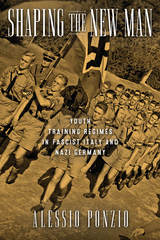
Ponzio shows how the Italian Fascists' pedagogical practices influenced the origin and evolution of the Hitler Youth. He dissects similarities and differences in the training processes of the youth leaders of the Opera Nazionale Balilla, Gioventù Italiana del Littorio, and Hitlerjugend. And, he explores the transnational institutional interactions and mutual cooperation that flourished between Mussolini's and Hitler's youth organizations in the 1930s and 1940s.
Hava Rachel Gordon compares the struggles and successes of two very different youth movements: a mostly white, middle-class youth activist network in Portland, Oregon, and a working-class network of minority youth in Oakland, California. She examines how these young activists navigate schools, families, community organizations, and the mainstream media, and employ a variety of strategies to make their voices heard on some of today's most pressing issuesùwar, school funding, the environmental crisis, the prison industrial complex, standardized testing, corporate accountability, and educational reform. We Fight to Win is one of the first books to focus on adolescence and political action and deftly explore the ways that the politics of youth activism are structured by age inequality as well as race, class, and gender.
First published in Italian in 1968, The World Saved by Kids was written in the aftermath of deep personal change and in the context of what Elsa Morante called the “great youth movement exploding against the funereal machinations of the organized contemporary world.” Morante believed that it was only the youth who could truly hear her revolutionary call. With the fiftieth anniversary of the tumultuous events of 1968 approaching, there couldn’t be a more timely moment for this first English translation of Morante’s work to appear.
Greeted by Antonio Porta as one of the most important books of its decade, The World Saved by Kids showcases Morante’s true mastery of tone, rhythm, and imagery as she works elegy, parody, storytelling, song, and more into an act of linguistic magic through which Gramsci and Rimbaud, Christ and Antigone, Mozart and Simone Weil, and a host of other figures join the sassy, vulnerable neighborhood kids in a renewal of the word’s timeless, revolutionary power to explore and celebrate life’s insoluble paradox.
Morante gained international recognition and critical acclaim for her novels History, Arturo’s Island, and Aracoeli, and The World Saved By Kids may be her best book and the one that most closely represents her spirit.
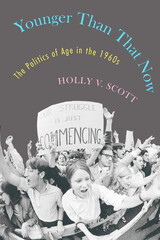
Retrospectives of the 1960s routinely include the face of youth rebellion: long-haired students occupying campus buildings, young men burning draft cards, hippies dancing at Woodstock. In Younger Than That Now, Holly V. Scott explores how the idea of “youth” served as a tactic in the political and social activism of these years. In the early part of that decade, young white activists began to learn from the civil rights movement's defiance of racism. They examined their own lives and concluded that campus rules and the draft were repression as well. As a group, they were ripe for revolution, and their age gave them a unique perspective for understanding and protesting against injustice. In short, young people began to use their youth as a political strategy.
Some in the New Left were dubious of this strategy and asked how it might damage long-term progress. Young feminists and people of color were particularly quick to question the idea that age alone was enough to sustain a movement. And the media often presented young people as impulsive and naive, undermining their political legitimacy. In tracing how “youth” took on multiple meanings as the 1960s progressed, Scott demonstrates the power of this idea to both promote and hinder social change.
READERS
Browse our collection.
PUBLISHERS
See BiblioVault's publisher services.
STUDENT SERVICES
Files for college accessibility offices.
RECENTLY PUBLISHED


UChicago Accessibility Resources
home | accessibility | search | about | contact us
BiblioVault ® 2001 - 2026
The University of Chicago Press