
 A SCHOLARLY BOOK REPOSITORY
Tracing the links between the war and press representations of ethnicity, gender, and sexuality, Žarkov examines the media’s coverage of two major protests by women who explicitly identified themselves as mothers, of sexual violence against women and men during the war, and of women as militants. She draws on contemporary feminist analyses of violence to scrutinize international and local feminist writings on the war in former Yugoslavia. Demonstrating that some of the same essentialist ideas of gender and sexuality used to produce and reinforce the significance of ethnic differences during the war often have been invoked by feminists, she points out the political and theoretical drawbacks to grounding feminist strategies against violence in ideas of female victimhood.

Diaspora communities have formed in North America (especially in St. Louis), Europe, and Australia because of war and displacement, and have themselves become a considerable topic of study spanning the disciplines of anthropology, migration studies, political science, memory studies, conflict and security studies, psychology, and geography.
This volume seeks to illuminate how Bosnian migrant and diaspora scholars are contributing to the development of Bosnian Studies. The authors included in this volume are either writing from their (new) home bases in Australia, Austria, Canada, Switzerland, the United Kingdom, and the United States, among others, or they have returned to Bosnia after a period of migration. Their chapters have distinct entry points of inquiry, demonstrating how scholars have integrated Bosnia as a theme across the range of disciplines in which they are situated. The selections included in the volume range from literary analysis to personal memoirs of the conflict, from studies of heritage and identity to political science analysis of diaspora voting, to genocide studies and questions of (or lack of) ethics in the growing field of Bosnian Studies.


Sympathetic to the UN’s achievements, yet skeptical of its acquiescence to the use of military force, Corwin is critical both of the Bosnian government’s tactics for drawing NATO into the conflict and of NATO’s eagerness to make peace by waging war. He challenges the popular depiction of the Bosnian government as that of noble victim, arguing that the leaders of all three sides in the conflict were “gangsters wearing coats and ties.” Highly caustic about Western reportage, he examines the policies of various Western political and military leaders and gives a detailed account of a pivotal phase of the war in Bosnia, a period that culminated with NATO’s massive bombing of Bosnian Serb targets and ultimately led to the Dayton Peace Agreement. Without a proper understanding of this critical period, he argues, it is difficult to understand the greater scope of the conflict. Corwin also offers insightful portraits of some of the leading players in the Bosnian drama, including Yasushi Akashi, the UN’s top official in the former Yugoslavia in 1994–95; General Rupert Smith, the British commander in Sarajevo in 1995; and Hasan Muratovic, a future Bosnian prime minister.
Capturing the essence of a tense and difficult time, Dubious Mandate will interest diplomats, politicians, military personnel, scholars, and those still trying to fathom the continuing mission of the United Nations and the unfolding of events in the former Yugoslavia during the 1990s.
If your neighbor cannot sleep, you will not be allowed to either: The old adage assumes an overtone of dread as the stirring, wary world witnesses the destruction of Yugoslavia. If the leaders of Serbia and Croatia can get away with tearing apart Bosnia-Herzegovina, a sovereign member of the United Nations, what is to stop military elites in other former Soviet and East European states from proposing similar solutions to their own national grievances and aspirations? And who is to say such attention would be confined to that area of the globe?
The world may well be uneasy, as Bogdan Denitch makes clear in this brilliant book about the causes and possible ramifications of the death of Yugoslavia. Ethnic Nationalism provides a cogent, comprehensive historical analysis of Yugoslavia's demise, one that clearly identifies events and trends that urgently demand the world's attention.
The role of timing in the sequence of events; the consequences of an unworkable constitutional situation; the responsibility of the West; and, above all, the self-transformation of Communist regimes that presaged undemocratic outcomes- Denitch duly considers each of these factors as he gives a detailed description of Yugoslavia's descent into interethnic wars. His discussion of the possible fate of postcommunist states is especially pertinent, and leads to a skillful account of the sources and dangers of nationalistic and ethnic extremism on what threatens to become a global scale. In this analysis, nationalism and populism can be seen as revolts against a new world system where abstract multinational financial and political institutions thwart citizens' attempts at democratic participation.
Active in Yugoslav political and intellectual life for almost thirty years, Denitch is able to imbue the developments he describes with a particular, human immediacy. His personal experiences with the emergence of nationalism and fractious ethnic politics and warfare, movingly recounted here, stand as compelling testimony to the historical drama so thoroughly and incisively detailed in this remarkable book.

The book focuses on the 1991-99 breakup of Yugoslavia, which helped forge the idea that the United States and its allies could stage humanitarian interventions that would end ethnic strife. It is widely believed that NATO bombing campaigns in Bosnia and Kosovo played a vital role in stopping Serb-directed aggression, and thus resolving the conflict.
Gibbs challenges this view, offering an extended critique of Samantha Power's Pulitzer Prize-winning book, A Problem from Hell: America in the Age of Genocide. He shows that intervention contributed to the initial breakup of Yugoslavia, and then helped spread the violence and destruction. Gibbs also explains how the motives for U.S. intervention were rooted in its struggle for continued hegemony in Europe.
First Do No Harm argues for a new, noninterventionist model for U.S. foreign policy, one that deploys nonmilitary methods for addressing ethnic violence.
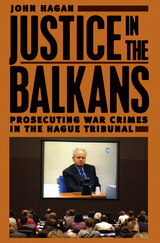
Creating an institution that transcends national borders is a challenge fraught with political and organizational difficulties, yet, as Hagan describes here, the Hague tribunal has increasingly met these difficulties head-on and overcome them. The chief reason for its success, he argues, is the people who have shaped it, particularly its charismatic chief prosecutor, Louise Arbour. With drama and immediacy, Justice in the Balkans re-creates how Arbour worked with others to turn the tribunal's fortunes around, reversing its initial failure to arrest and convict significant figures and advancing the tribunal's agenda to the point at which Arbour and her colleagues, including her successor, Carla Del Ponte (nicknamed the Bulldog), were able to indict Milosevic himself. Leading readers through the investigations and criminal proceedings of the tribunal, Hagan offers the most original account of the foundation and maturity of the institution.
Justice in the Balkans brilliantly shows how an international social movement for human rights in the Balkans was transformed into a pathbreaking legal institution and a new transnational legal field. The Hague tribunal becomes, in Hagan's work, a stellar example of how individuals working with collective purpose can make a profound difference.
"The Hague tribunal reaches into only one house of horrors among many; but, within the wisely precise remit given to it, it has beamed the light of justice into the darkness of man's inhumanity, to woman as well as to man."—The Times (London)
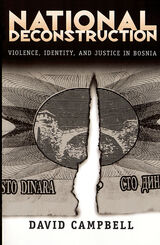
What our response to the Bosnian crisis can tell us about multiculturalism in the United States and beyond.
How did Bosnia, once a polity of intersecting and overlapping identities, come to be understood as an intractable ethnic problem? David Campbell pursues this question-and its implications for the politics of community, democracy, justice, and multiculturalism-through readings of media and academic representations of the conflict in Bosnia. National Deconstruction is a rethinking of the meaning of “ethnic/nationalist” violence and a critique of the impoverished discourse of identity politics that crippled the international response to the Bosnian crisis.
Rather than assuming the preexistence of an entity called Bosnia, Campbell considers the complex array of historical, statistical, cartographic, and other practices through which the definitions of Bosnia have come to be. These practices traverse a continuum of political spaces, from the bodies of individuals and the corporate body of the former Yugoslavia to the international bodies of the world community. Among the book’s many original disclosures, arrived at through a critical reading of international diplomacy, is the shared identity politics of the peacemakers and paramilitaries. Equally significant is Campbell’s conclusion that the international response to the Bosnian war was hamstrung by the poverty of Western thought on the politics of heterogeneous communities. Indeed, he contends that Europe and the United States intervened in Bosnia not to save the ideal of multiculturalism abroad but rather to shore up the nationalist imaginary so as to contain the ideal of multiculturalism at home.By bringing to the fore the concern with ethics, politics, and responsibility contained in more traditional accounts of the Bosnian war, this book is a major statement on the inherently ethical and political assumptions of deconstructive thought-and the reworkings of the politics of community it enables.Awarded “Book of the Year 1999” by the International Forum Bosnia (Sarajevo) and the Human Rights Review (USA).ISBN 0-8166-2936-6 Cloth $62.95xxISBN 0-8166-2937-4 Paper $24.95x382 pages 5 7/8 x 9 SeptemberTranslation inquiries: University of Minnesota Press

Each play was developed by Theater Three Collaborative for production in New York and internationally in Italy, Australia, London, Berlin, and Paris.

The Yugoslav crisis, with its armed conflict, ethnic cleansing and the reverberating ideas and mindsets, has been going on for more than ten years. The Road to War in Serbia is the first serious assessment to explore the roots of the conflict in the former Yugoslavia. Based on years of research, the authors - all eminent scholars in the field who have lived through these social conflicts - highlight key issues which have to date remained unknown or which have been previously neglected.
The issues dealt with include the institutional frameworks of ethnicity and nationalism; the input of the church, science, literature and sports; specific catalysts of the conflict and the role of the political actors, students, the ruling party and the media.
The Road to War in Serbia will be of great interest to all readers who want to understand why and how the violent option of settling disputes and conflicts on the territory of Yugoslavia is being accepted.
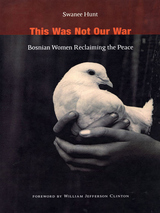
This Was Not Our War shares amazing first-person accounts of twenty-six Bosnian women who are reconstructing their society following years of devastating warfare. A university student working to resettle refugees, a paramedic who founded a veterans’ aid group, a fashion designer running two nonprofit organizations, a government minister and professor who survived Auschwitz—these women are advocates, politicians, farmers, journalists, students, doctors, businesswomen, engineers, wives, and mothers. They are from all parts of Bosnia and represent the full range of ethnic traditions and mixed heritages. Their ages spread across sixty years, and their wealth ranges from expensive jewels to a few chickens. For all their differences, they have this much in common: all survived the war with enough emotional strength to work toward rebuilding their country. Swanee Hunt met these women through her diplomatic and humanitarian work in the 1990s. Over the course of seven years, she conducted multiple interviews with each one. In presenting those interviews here, Hunt provides a narrative framework that connects the women’s stories, allowing them to speak to one another.
The women describe what it was like living in a vibrant multicultural community that suddenly imploded in an onslaught of violence. They relate the chaos; the atrocities, including the rapes of many neighbors and friends; the hurried decisions whether to stay or flee; the extraordinary efforts to care for children and elderly parents and to find food and clean drinking water. Reflecting on the causes of the war, they vehemently reject the idea that age-old ethnic hatreds made the war inevitable. The women share their reactions to the Dayton Accords, the end of hostilities, and international relief efforts. While they are candid about the difficulties they face, they are committed to rebuilding Bosnia based on ideals of truth, justice, and a common humanity encompassing those of all faiths and ethnicities. Their wisdom is instructive, their courage and fortitude inspirational.
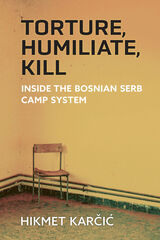
Half a century after the Holocaust, on European soil, Bosnian Serbs orchestrated a system of concentration camps where they subjected their Bosniak Muslim and Bosnian Croat neighbors to torture, abuse, and killing. Foreign journalists exposed the horrors of the camps in the summer of 1992, sparking worldwide outrage. This exposure, however, did not stop the mass atrocities. Hikmet Karčić shows that the use of camps and detention facilities has been a ubiquitous practice in countless wars and genocides in order to achieve the wartime objectives of perpetrators. Although camps have been used for different strategic purposes, their essential functions are always the same: to inflict torture and lasting trauma on the victims.
Torture, Humiliate, Kill develops the author’s collective traumatization theory, which contends that the concentration camps set up by the Bosnian Serb authorities had the primary purpose of inflicting collective trauma on the non-Serb population of Bosnia and Herzegovina. This collective traumatization consisted of excessive use of torture, sexual abuse, humiliation, and killing. The physical and psychological suffering imposed by these methods were seen as a quick and efficient means to establish the Serb “living space.” Karčić argues that this trauma was deliberately intended to deter non-Serbs from ever returning to their pre-war homes. The book centers on multiple examples of experiences at concentration camps in four towns operated by Bosnian Serbs during the war: Prijedor, Bijeljina, Višegrad, and Bileća. Chosen according to their political and geographical position, Karčić demonstrates that these camps were used as tools for the ethno-religious genocidal campaign against non-Serbs. Torture, Humiliate, Kill is a thorough and definitive resource for understanding the function and operation of camps during the Bosnian genocide.
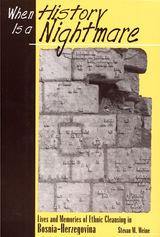
Weine investigates the survivors’ attempts to reconcile the contrasting, collective memories of having lived in a smoothly functioning, multiethnic society with the later memories of the ethnic atrocities. He discusses the little-known group concept of merhamet. Denoting compassion, forgiveness, and charity, merhamet was a critical cultural value for the Bosnian Muslims.
Weine also explores how ethnic cleansing was justified from the vantage point of psychiatrists who played prominent roles in instigating the horrors. He also provides personal portraits of leaders such as Jovan Raskovic and Radovan Karadzic. He concludes by describing the recovery efforts of survivors—how they work to confront the destructive nature of their memories while trying to bring about healing, both individually and collectively.

Based on interviews with seventy women refugees, Women, Violence and War is a book about war as it is seen, lived and interpreted by women who were citizens of the former Yugoslavia.
Many of the accounts portray the horrific experiences the victims had to face and the book addresses issues of sexual, physical and psychological violence, as well as problems of confinement, upheaval and family separation. In a completely new insight the book dispels the myth that many of the women were peasants, and shows that in fact they were educated, middle-class women with independent careers. The study also depicts how some of the victims attempt to come to terms with the aftermath of wartime abuse.
This probing, accurate and unique investigation of victimization is an unparalleled volume that presents a completely new perspective maintaining that violence against women in war is not independent of peace-time victimization and the imbalance of power between sexes.


This gripping account raises questions for healers, survivors, and readers striving to understand the reality of war and the aftermath of terror. Is it possible to find meaning after enduring crimes against humanity? Can people heal after trauma?
Human rights journalist Julia Lieblich takes the reader through Boskailo's early years under Tito to the wars when friends turned on friends. She documents his harrowing experiences in the camps, where the men he once joined for coffee murder his best friend from childhood.
But the story does not end there. Boskailo moves to the United States and decides to become a psychiatrist so he can guide survivors through the long-term process of restoring hope. Today, inspired by the late psychiatrist and Holocaust survivor Viktor Frankl, Boskailo uses his own experience to help patients mourn their losses and find meaning in the aftermath of terror.
READERS
Browse our collection.
PUBLISHERS
See BiblioVault's publisher services.
STUDENT SERVICES
Files for college accessibility offices.
RECENTLY PUBLISHED




UChicago Accessibility Resources
home | accessibility | search | about | contact us
BiblioVault ® 2001 - 2026
The University of Chicago Press