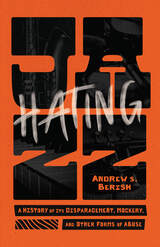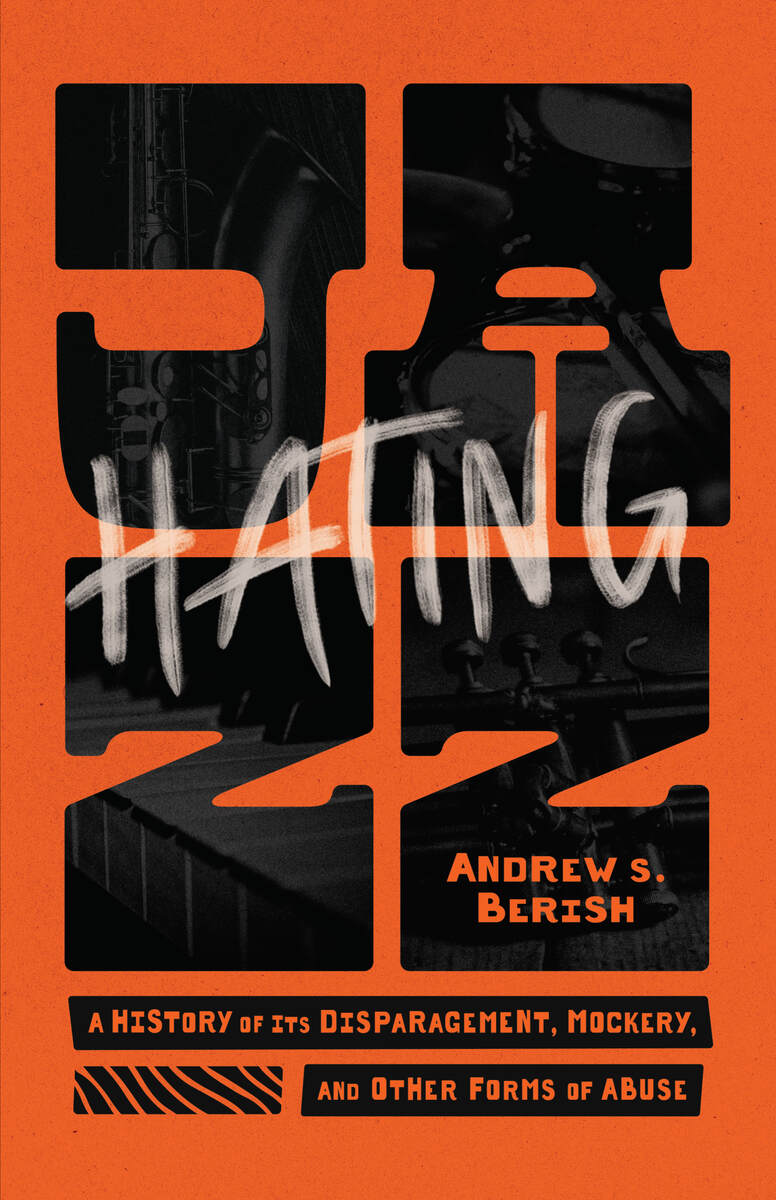
Hating Jazz: A History of Its Disparagement, Mockery, and Other Forms of Abuse
University of Chicago Press, 2025
Cloth: 978-0-226-83833-5 | Paper: 978-0-226-83835-9 | eISBN: 978-0-226-83834-2 (all)
Library of Congress Classification ML3918.J39B47 2025
Dewey Decimal Classification 306.484250973
Cloth: 978-0-226-83833-5 | Paper: 978-0-226-83835-9 | eISBN: 978-0-226-83834-2 (all)
Library of Congress Classification ML3918.J39B47 2025
Dewey Decimal Classification 306.484250973
ABOUT THIS BOOK | AUTHOR BIOGRAPHY | REVIEWS | TOC | REQUEST ACCESSIBLE FILE
ABOUT THIS BOOK
A deep dive into the meaning behind the hatred of jazz.
A rock guitarist plays four notes in front of one thousand people, while a jazz guitarist plays one thousand notes in front of four people. You might laugh or groan at this jazz joke, but what is it about jazz that makes people want to disparage it in the first place?
Andrew S. Berish’s Hating Jazz listens to the voices who have denounced, disparaged, and mocked the music. By focusing on the rejection of the music, Berish says, we see more holistically jazz’s complicated place in American cultural life. Jazz is a display of Black creativity and genius, an art form that is deeply embedded in African American life. Though the explicit racial tenor of jazz jokes has become muted over time, making fun of jazz, either in a lighthearted or aggressive way, is also an engagement with the place of Blackness in America. An individual’s taste in music may seem personal, but Berish’s analysis of jazz hatred demonstrates that musical preferences and trends are a social phenomenon. Criticism of jazz has become inextricable from the ways we understand race in America, past and present. In addition to this form of criticism, Berish also considers jazz hate as a form of taste discrimination and as a conflict over genre boundaries within different jazz cultures.
Both enlightening and original, Hating Jazz shows that our response to music can be a social act, unique to our historical moment and cultural context—we react to music in certain ways because of who we are, where we are, and when we are.
See other books on: Analysis, appreciation | Hate | Humor | Jazz | Music and race
See other titles from University of Chicago Press