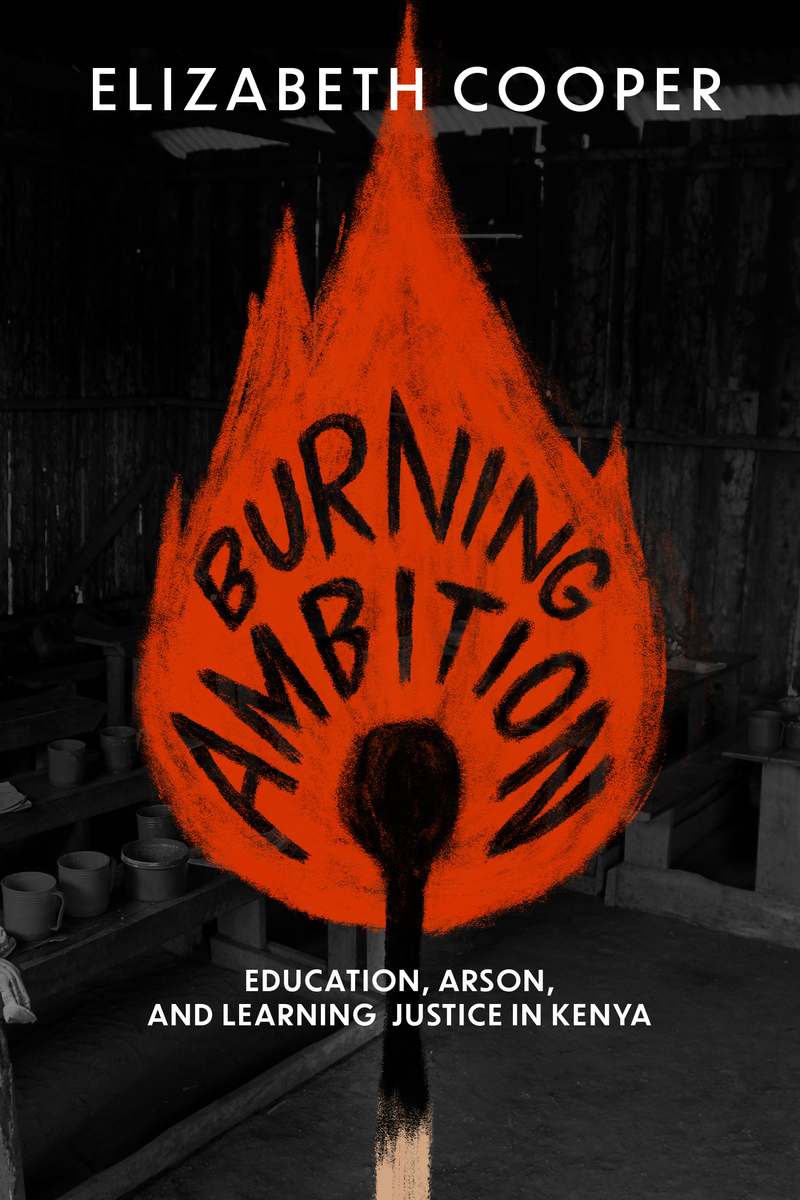
Burning Ambition: Education, Arson, and Learning Justice in Kenya
University of Wisconsin Press, 2022
Cloth: 978-0-299-33790-2 | eISBN: 978-0-299-33793-3
Library of Congress Classification LB3249.C666 2022
Dewey Decimal Classification 371.782096762
Cloth: 978-0-299-33790-2 | eISBN: 978-0-299-33793-3
Library of Congress Classification LB3249.C666 2022
Dewey Decimal Classification 371.782096762
ABOUT THIS BOOK | AUTHOR BIOGRAPHY | REVIEWS | TOC | REQUEST ACCESSIBLE FILE
ABOUT THIS BOOK
Burning Ambition explores how young people learn to understand and influence the workings of power and justice in their society. Since 2008, hundreds of secondary schools across Kenya have been targeted with fire by their students. Through an in-depth study of Kenyan secondary students’ use of arson, Elizabeth Cooper asks why. With insightful ethnographic analysis, she shows that these young students deploy arson as moral punishment for perceived injustices and arson proves an effective tactic in their politics from below.
Drawing from years of research and a rich array of sources, Cooper accounts for how school fires stoke a national conversation about the limited means for ordinary Kenyans, and especially youth, to peacefully influence the governance of their own lives. Further, Cooper argues that Kenyan students’ actions challenge the existing complacency with the globalized agenda of “education for all,” demonstrating that submissive despondency is not the only possible response to the failed promises of education to transform material and social inequalities.
Drawing from years of research and a rich array of sources, Cooper accounts for how school fires stoke a national conversation about the limited means for ordinary Kenyans, and especially youth, to peacefully influence the governance of their own lives. Further, Cooper argues that Kenyan students’ actions challenge the existing complacency with the globalized agenda of “education for all,” demonstrating that submissive despondency is not the only possible response to the failed promises of education to transform material and social inequalities.
See other books on: Arson | East | High school students | Kenya | Political activity
See other titles from University of Wisconsin Press