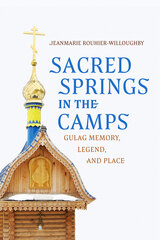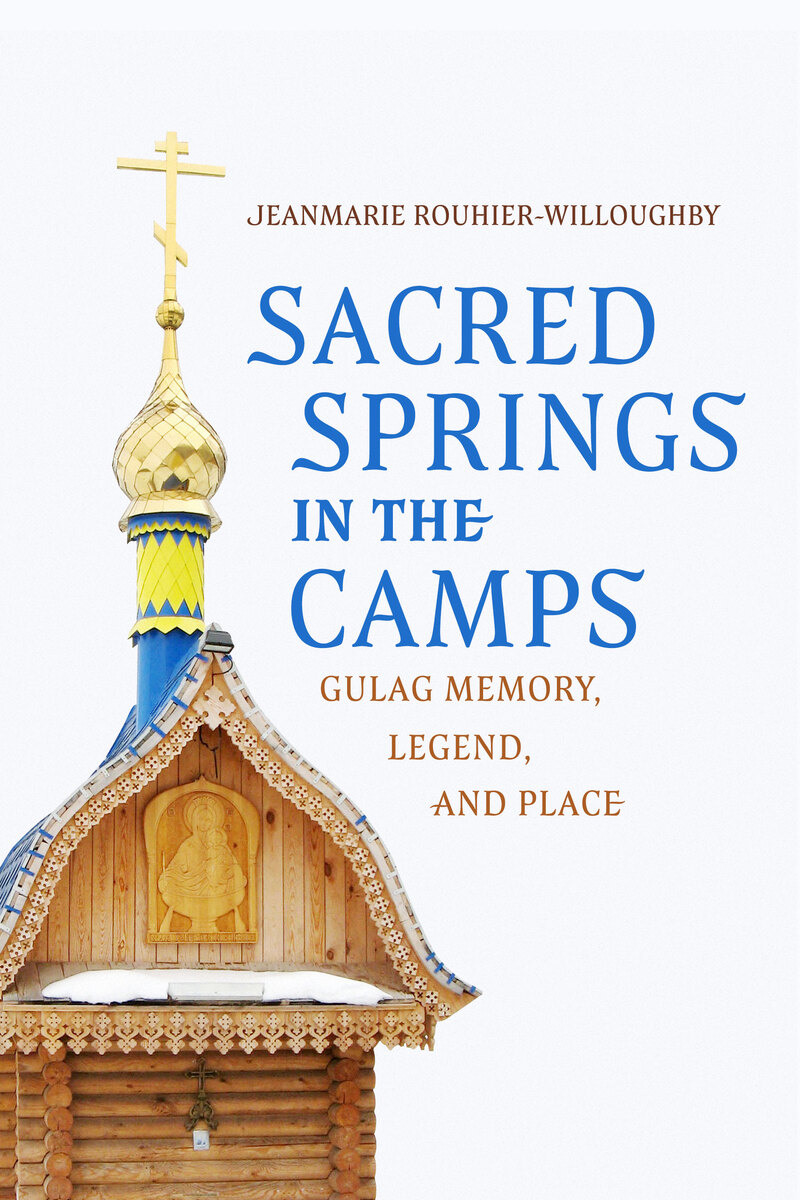
Sacred Springs in the Camps: Gulag Memory, Legend, and Place
University of Wisconsin Press, 2026
Cloth: 978-0-299-35470-1 | eISBN: 978-0-299-35478-7 (ePub) | eISBN: 978-0-299-35473-2 (PDF)
Library of Congress Classification BL980.R8R68 2026
See other books on: Legend | Legends | Place | Religious life and customs | Russia (Federation)
See other titles from University of Wisconsin Press
Cloth: 978-0-299-35470-1 | eISBN: 978-0-299-35478-7 (ePub) | eISBN: 978-0-299-35473-2 (PDF)
Library of Congress Classification BL980.R8R68 2026
ABOUT THIS BOOK | AUTHOR BIOGRAPHY | REVIEWS | TOC | REQUEST ACCESSIBLE FILE
ABOUT THIS BOOK
Former Gulag sites—operating theaters of terror during the Stalinist period—are scattered across western Siberia, where memories of the purges run deep. The camps represent some of the most horrific events of the Soviet past, and yet their current role is complicated. Focusing on three former prison camps, folklorist Jeanmarie Rouhier-Willoughby untangles a surprising nexus of memory, legend, and vernacular religious practice afforded by the sacred springs located at each of these sites.
Grounded by detailed ethnography, Sacred Springs in the Camps explores how legend creates, negotiates, and challenges collective memory; how lived religious practices intersect with the current revival of the Russian Orthodox Church; how politics intertwine with belief; and how the social construction of sacred places affects folk narratives, faith, and local identity. These unlikely holy waters thus reflect important facets of contemporary Russian religion, politics, and society, refracting and reframing memories of the socialist past even as they offer important lessons for the present moment.
See other books on: Legend | Legends | Place | Religious life and customs | Russia (Federation)
See other titles from University of Wisconsin Press