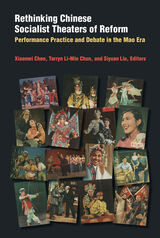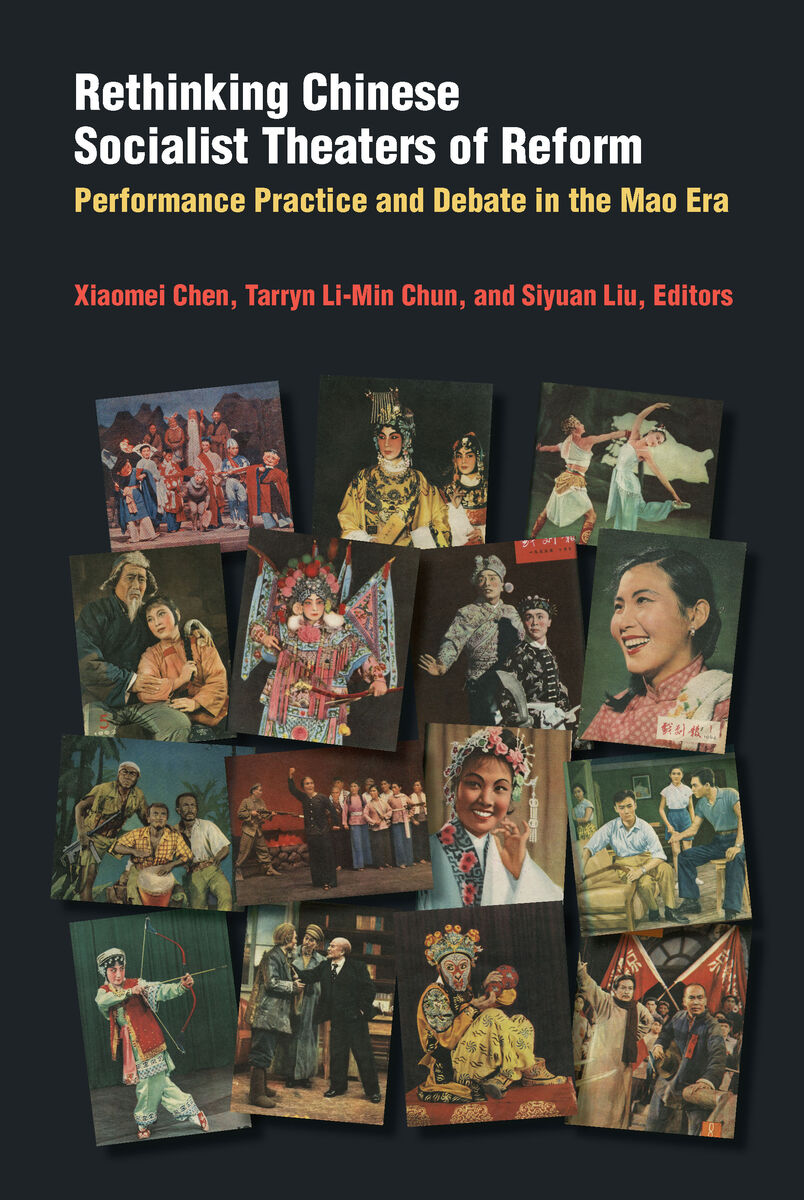
Rethinking Chinese Socialist Theaters of Reform: Performance Practice and Debate in the Mao Era
University of Michigan Press, 2021
Cloth: 978-0-472-07475-4 | eISBN: 978-0-472-12851-8
Library of Congress Classification PN2874.R48 2021
Dewey Decimal Classification 791.09510904
Cloth: 978-0-472-07475-4 | eISBN: 978-0-472-12851-8
Library of Congress Classification PN2874.R48 2021
Dewey Decimal Classification 791.09510904
ABOUT THIS BOOK | AUTHOR BIOGRAPHY | REVIEWS | TOC | REQUEST ACCESSIBLE FILE
ABOUT THIS BOOK
The profound political, economic, and social changes in China in the second half of the twentieth century have produced a wealth of scholarship; less studied however is how cultural events, and theater reforms in particular, contributed to the dynamic landscape of contemporary Chinese society. Rethinking Chinese Socialist Theaters of Reform fills this gap by investigating the theories and practice of socialist theater and their effects on a diverse range of genres, including Western-style spoken drama, Chinese folk opera, dance drama, Shanghai opera, Beijing opera, and rural theater. Focusing on the 1950s and ’60s, when theater art occupied a prominent political and cultural role in Maoist China, this book examines the efforts to remake theater in a socialist image. It explores the unique dynamics between official discourse, local politics, performance practice, and audience reception that emerged under the pressures of highly politicized cultural reform as well as the off-stage, lived impact of rapid policy change on individuals and troupes obscured by the public record. This multidisciplinary collection by leading scholars covers a wide range of perspectives, geographical locations, specific research methods, genres of performance, and individual knowledge and experience. The richly diverse approach leads readers through a nuanced and complex cultural landscape as it contributes significantly to our understanding of a crucial period in the development of modern Chinese theater and performance.
See other books on: Asian Studies | Cultural Revolution, 1966-1976 | Debate | Reform | Socialism and the arts
See other titles from University of Michigan Press