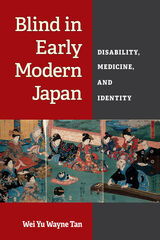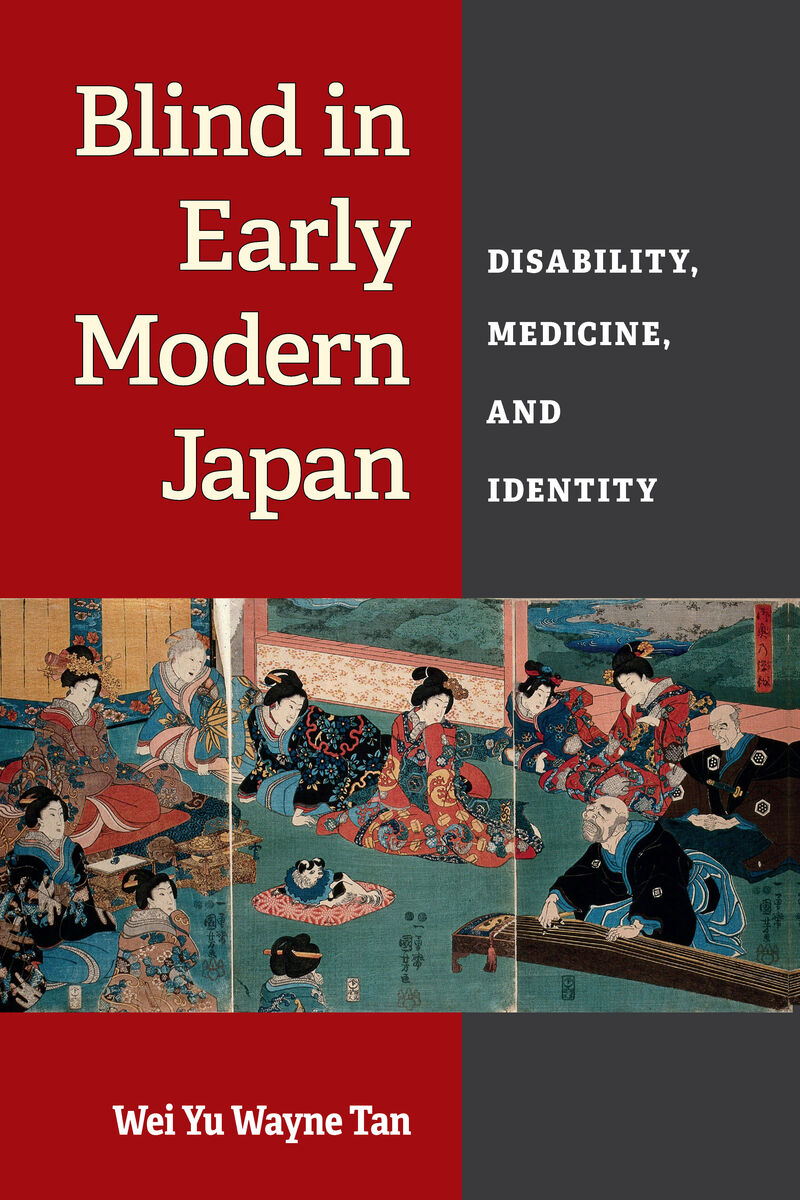
Blind in Early Modern Japan: Disability, Medicine, and Identity
University of Michigan Press, 2022
Paper: 978-0-472-05548-7 | eISBN: 978-0-472-22043-4 | Cloth: 978-0-472-07548-5
Library of Congress Classification HV2113
Dewey Decimal Classification 362.410952
Paper: 978-0-472-05548-7 | eISBN: 978-0-472-22043-4 | Cloth: 978-0-472-07548-5
Library of Congress Classification HV2113
Dewey Decimal Classification 362.410952
ABOUT THIS BOOK | AUTHOR BIOGRAPHY | REVIEWS | TOC | REQUEST ACCESSIBLE FILE
ABOUT THIS BOOK
While the loss of sight—whether in early modern Japan or now—may be understood as a disability, blind people in the Tokugawa period (1600–1868) could thrive because of disability. The blind of the era were prominent across a wide range of professions, and through a strong guild structure were able to exert contractual monopolies over certain trades. Blind in Early Modern Japan illustrates the breadth and depth of those occupations, the power and respect that accrued to the guild members, and the lasting legacy of the Tokugawa guilds into the current moment.
The book illustrates why disability must be assessed within a particular society’s social, political, and medical context, and also the importance of bringing medical history into conversation with cultural history. A Euro-American-centric disability studies perspective that focuses on disability and oppression, the author contends, risks overlooking the unique situation in a non-Western society like Japan in which disability was constructed to enhance blind people’s power. He explores what it meant to be blind in Japan at that time, and what it says about current frameworks for understanding disability.
The book illustrates why disability must be assessed within a particular society’s social, political, and medical context, and also the importance of bringing medical history into conversation with cultural history. A Euro-American-centric disability studies perspective that focuses on disability and oppression, the author contends, risks overlooking the unique situation in a non-Western society like Japan in which disability was constructed to enhance blind people’s power. He explores what it meant to be blind in Japan at that time, and what it says about current frameworks for understanding disability.
See other books on: Blind | Disability | Early Modern Japan | Edo period, 1600-1868 | Occupations
See other titles from University of Michigan Press