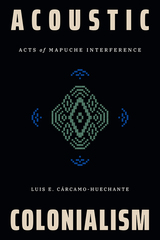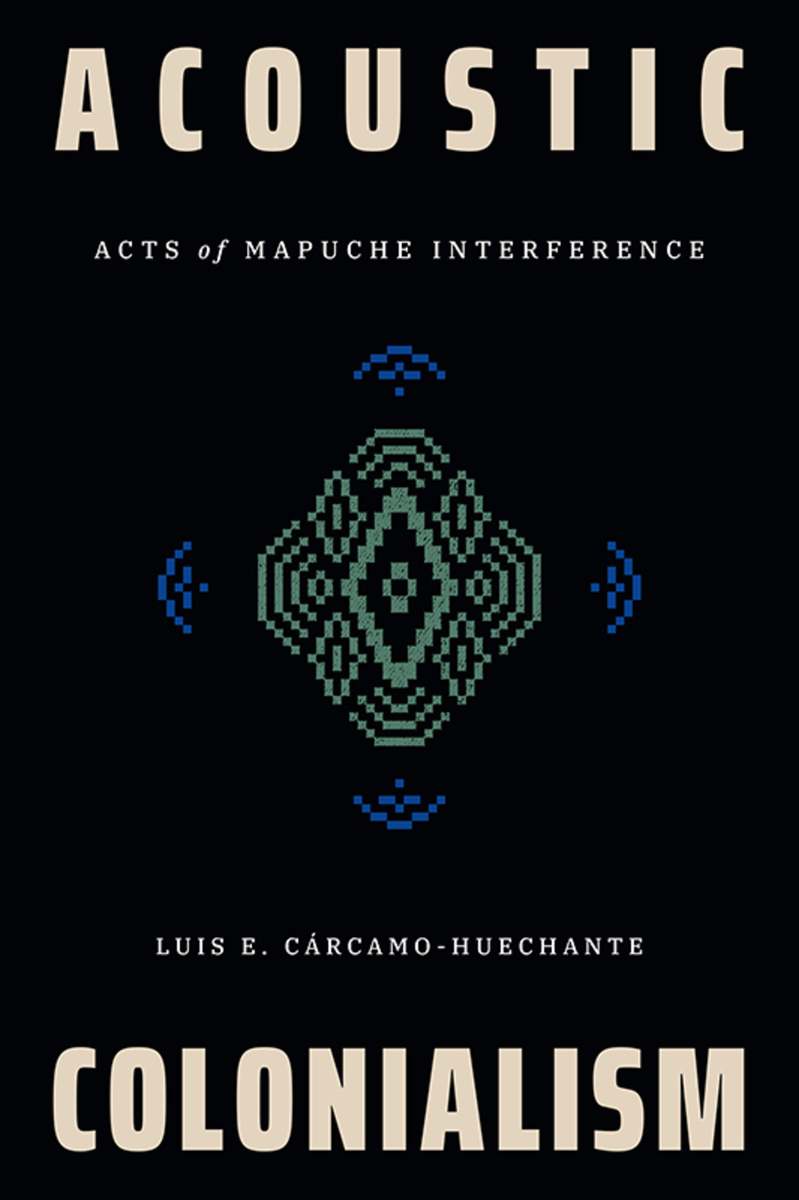
Acoustic Colonialism: Acts of Mapuche Interference
Duke University Press, 2025
Cloth: 978-1-4780-2929-8 | Paper: 978-1-4780-3263-2 | eISBN: 978-1-4780-6153-3 (standard)
Library of Congress Classification F3126.C3525 2025
See other books on: Chile | Indigenous peoples | Oral tradition | Settler colonialism | Sound
See other titles from Duke University Press
Cloth: 978-1-4780-2929-8 | Paper: 978-1-4780-3263-2 | eISBN: 978-1-4780-6153-3 (standard)
Library of Congress Classification F3126.C3525 2025
ABOUT THIS BOOK | AUTHOR BIOGRAPHY | REVIEWS | TOC | REQUEST ACCESSIBLE FILE
ABOUT THIS BOOK
In Acoustic Colonialism, Luis E. Cárcamo-Huechante examines the role of sound in Chilean and Mapuche cultural production over the last two centuries. Cárcamo-Huechante theorizes sound as a territory of racial, patriarchal, and colonial hegemony as well as of Mapuche struggle, agency, and response to what he calls "acoustic colonialism." From the mid-nineteenth century to the present, Chilean literature, radio, and other media have exerted a historic role in disseminating distorted visual and sonic representations of the Mapuche. The enduring effects of what Cárcamo-Huechante defines as the colonial ear—the entry point for these misrepresentations—reflect the logic of the Chilean settler nation-state. In response to these aural and sonorous figurations, contemporary Mapuche writers, artists, and activists have produced their own literary, radiophonic, vocal, and musical expressions. The voices, sounds, and discourses of these Mapuche productions contest and disrupt the acoustic colonialism that has dominated the soundscape of the territory designated in present-day cartography as central and southern Chile.
See other books on: Chile | Indigenous peoples | Oral tradition | Settler colonialism | Sound
See other titles from Duke University Press