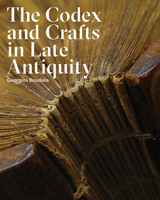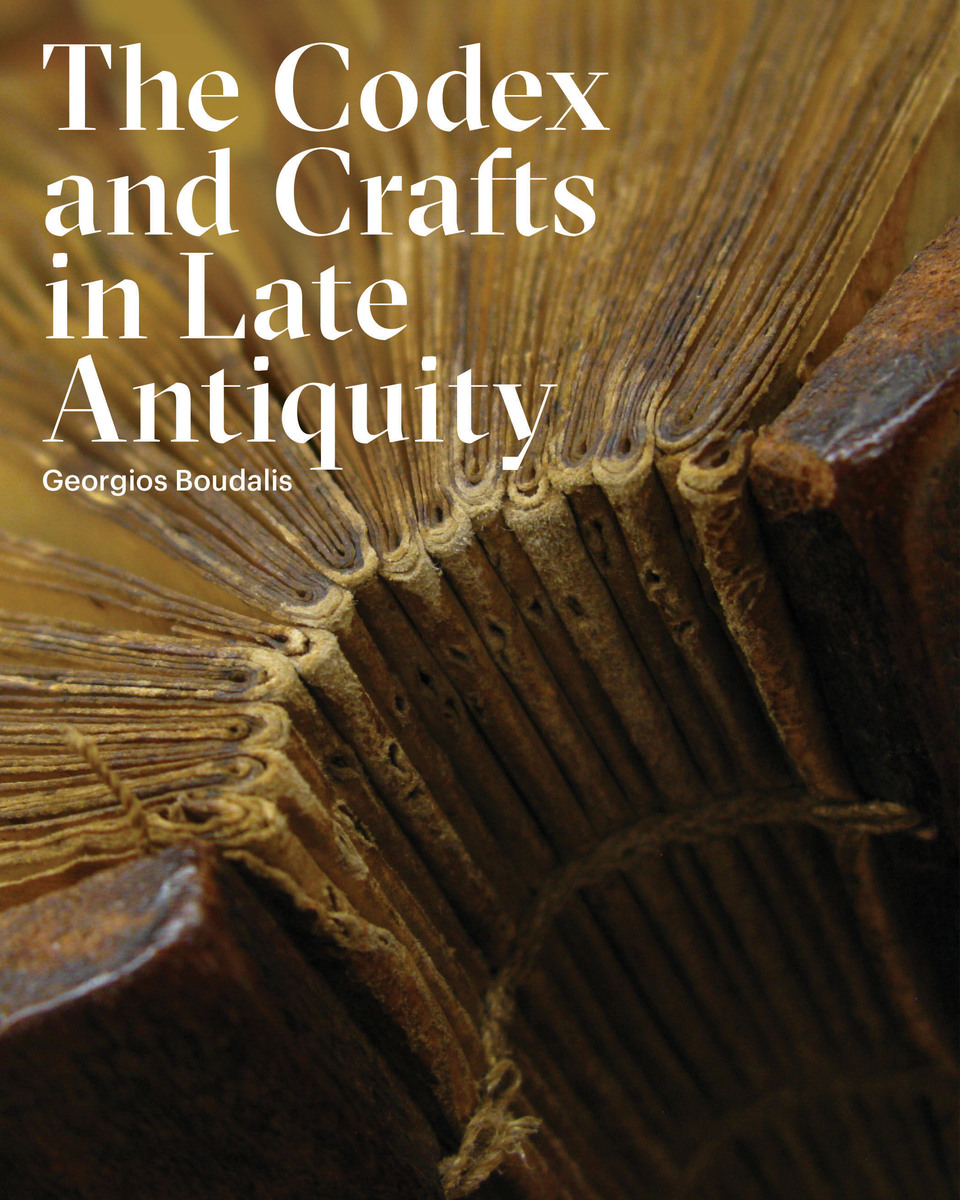
The Codex and Crafts in Late Antiquity
Bard Graduate Center, 2018
Paper: 978-1-941792-12-4
Library of Congress Classification Z8.B9B68 2018
Dewey Decimal Classification 090.74
Paper: 978-1-941792-12-4
Library of Congress Classification Z8.B9B68 2018
Dewey Decimal Classification 090.74
ABOUT THIS BOOK | AUTHOR BIOGRAPHY | REVIEWS | TOC
ABOUT THIS BOOK
The transition from roll to codex as the standard format of the book is one of the most culturally significant innovations of Late Antiquity. The Codex and Crafts in Late Antiquity examines surviving evidence in order to better understand how this transition took place. Placing the codex into the general cultural, religious, and technological context of Late Antiquity, the book examines the major types of codices—the wooden tablet codex, the single-quire codex and the multi-quire codex—in all their structural, technical, and decorative features. Georgios Boudalis argues that the codex was not an ingenious invention but rather an innovation that evolved using techniques already widely employed by artisans and craftspeople in the creation of everyday items such as socks, shoes, and baskets, revealing that the codex was a fascinating, yet practical, development.
See other books on: Books | Byzantine Empire | Crafts | Exhibitions | Late Antiquity
See other titles from Bard Graduate Center