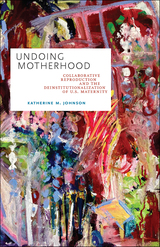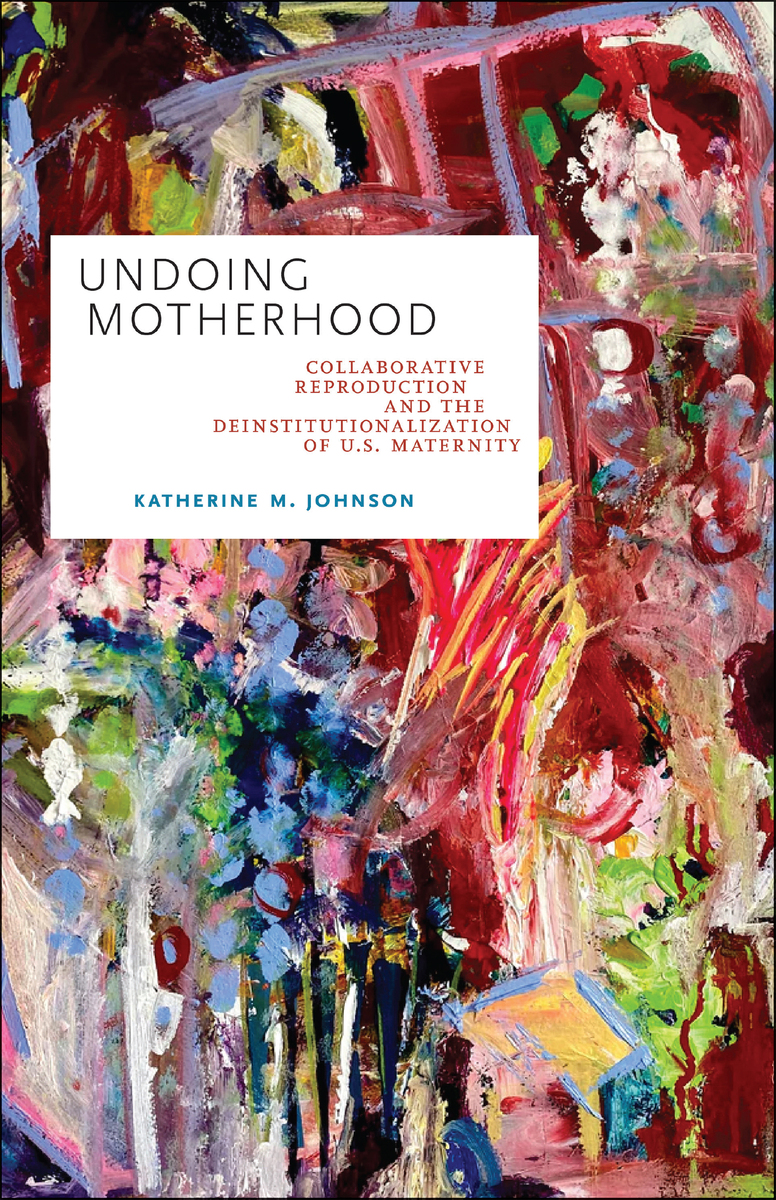
Undoing Motherhood: Collaborative Reproduction and the Deinstitutionalization of U.S. Maternity
Rutgers University Press, 2023
eISBN: 978-1-9788-0871-3 | Paper: 978-1-9788-0867-6 | Cloth: 978-1-9788-0868-3
Library of Congress Classification HQ759.J635 2023
Dewey Decimal Classification 306.87430973
eISBN: 978-1-9788-0871-3 | Paper: 978-1-9788-0867-6 | Cloth: 978-1-9788-0868-3
Library of Congress Classification HQ759.J635 2023
Dewey Decimal Classification 306.87430973
ABOUT THIS BOOK | AUTHOR BIOGRAPHY | REVIEWS | TOC
ABOUT THIS BOOK
In 1978 the world’s first “test-tube baby” was born from in vitro fertilization (IVF), effectively ushering in a paradigm shift for infertility treatment that relied on partially disembodied human reproduction. Beyond IVF, the ability to extract, fertilize, and store reproductive cells outside of the human body has created new opportunities for family building, but also prompted new conflicts about rights to and control over reproductive cells. In collaborative forms of reproduction that build on IVF technologies, such as egg and embryo donation and gestational surrogacy, multiple women may variously contribute to conception, gestation/birth, and the legal and social responsibilities for rearing a child, creating intentionally fragmented maternities. Undoing Motherhood examines the implications of such fragmented maternities in the post-IVF reproductive era for generating maternity uncertainty—an increasing cultural ambiguity about what does and should constitute maternity. Undoing Motherhood explores this uncertainty in the social worlds of reproductive medicine and law.
See other books on: Disease & Health Issues | Human reproductive technology | Motherhood | Pregnancy & Childbirth | Reproductive rights
See other titles from Rutgers University Press