Paper: 978-0-226-90141-1 | Electronic: 978-0-226-03299-3
DOI: 10.7208/chicago/9780226032993.001.0001
ABOUT THIS BOOK
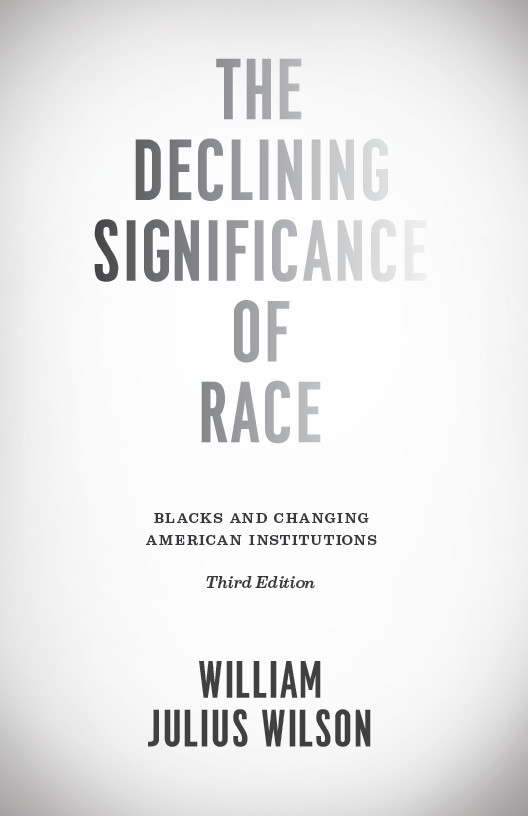
When first published in 1980, The Declining Significance of Race immediately sparked controversy with its contentious thesis that race was becoming less of a deciding factor in the life chances of black Americans than class. This new edition of the seminal book includes a new afterword in which William Julius Wilson not only reflects on the debate surrounding the book, but also presents a provocative discussion of race, class, and social policy.
“The intellectual strength of this book lies in his capacity to integrate disparate findings from historical studies, social theory and research on contemporary trends into a complex and original synthesis that challenges widespread assumptions about the cause of black disadvantage and the way to remove it.”—Paul Starr, New York Times Book Review
“This publication is easily one of the most erudite and sober diagnoses of the American black situation. Students of race relations and anybody in a policy-making position cannot afford to bypass this study.”—Ernest Manheim, Sociology
AUTHOR BIOGRAPHY
REVIEWS
TABLE OF CONTENTS
Preface
1. From Racial Oppression to Economic Class Subordination
2. Slavery and Plantation Hegemony
3. Segregation and the Rise of the White Working Class
4. Industrial Expansion and Dispersed Racial Conflict
5. Modern Industrialization and the Alteration of Competitive Race Relations
6. Protests, Politics, and the Changing Black Class Structure
7. The Declining Significance of Race
8. Epilogue: Race, Class, and Public Policy
Afterwords: The Declining Significance of Race; Revisited and Revised
Notes
Bibliography
Supplement
Index