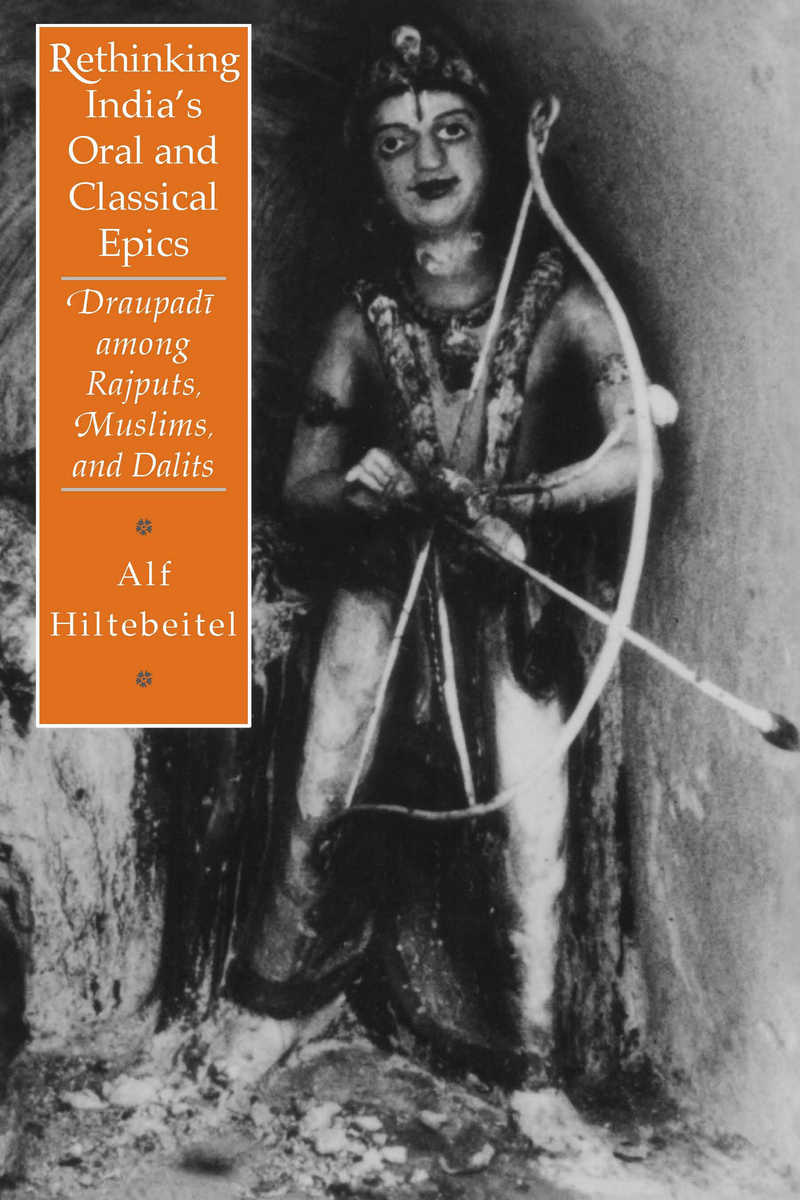
Cloth: 978-0-226-34050-0 | Paper: 978-0-226-34051-7 | Electronic: 978-0-226-34055-5
DOI: 10.7208/chicago/9780226340555.001.0001
AVAILABLE FROM
University of Chicago Press (cloth, paper, ebook)Barnes & Noble Nook
Brytewave (CafeScribe-Follett Higher Ed)
DeGruyter Multi-User Ebook Program
ebrary
EBSCO eBooks (formerly NetLibrary)
Google Play
Kno
ABOUT THIS BOOK
Using his own fieldwork as a starting point, Alf Hiltebeitel analyzes how the oral tradition of the south Indian cult of the goddess Draupadi and five regional martial oral epics compare with one another and tie in with the Sanskrit epics. Drawing on literary theory and cultural studies, he reveals the shared subtexts of the Draupadi cult Mahabharata and the five oral epics, and shows how the traditional plots are twisted and classical characters reshaped to reflect local history and religion. In doing so, Hiltebeitel sheds new light on the intertwining oral traditions of medieval Rajput military culture, Dalits ("former Untouchables"), and Muslims.
Breathtaking in scope, this work is indispensable for those seeking a deeper understanding of South Asia's Hindu and Muslim traditions.
This work is the third volume in Hiltebeitel's study of the Draupadi cult. Other volumes include Mythologies: From Gingee to Kuruksetra (Volume One), On Hindu Ritual and the Goddess (Volume Two), and Rethinking the Mahabharata (Volume Four).
TABLE OF CONTENTS
List of Maps and Tables
List of Plates
Acknowledgments
Conventions
1. Introduction
2. Oral Epics
A. Classical and Oral Epics
B. Epic Development and the "Real Hero"
C. Against Death and Deification
D. Bhakti, Regionality, and the Goddess
E. Back to the Frames
3. The Elder Brothers and the Heroes of Palnadu
1. Births of the Heroes
2. Marriage and Virginity
3. The Virgin's Blessing
4. Campuka's and Anapotu Raju's Stratagems
5. The Virgin's Anger
6. Impalements
7. Satis, Revivals, Salvation
8. Transformations of Dasara
4. The Epic of Pabuji
1. Births of the Heroes
2. Marriage and Virginity
4. Dhebo's Intervention
5. The Virgin's Anger
6. Impalements
7. Satis and Salvation
8. Transformations of Dasara
5. Opening Alha
A. Portions and Incarnations
B. Sons of Devaki
C. Frame Stories and Divine Interventions
D. The Maro Feud
A. Treasures
B. Bela Demands Draupadi's Jewels
C. The Chain
D. Bela's Wedding
E. Bela's Homebringing
F. Desara
G. The Death of Malkhan
H. Sprouts
I. Bela's Tour
7. The Story of Krsnamsa
A. What Kind of Text?
B. The Muslim Captivity of Udal
C. Solar and Lunar Lines
D. The Agnivamsa
E. Defending Folk Hinduism
8. Kuruksetra II
A. Divine Plan, Master Plan
B. The Establishment of Kali and the Last of the Little Kings
C. Duryodhana's Return
9. Time-Routes through the Krsnamsacarita
A. How Do We Get to Where We Are?
B. The Buddhists and the Agnivamsa
C. Vikramaditya's Era
D. Puranic Nationalism
10. Their Name Is Legion
A. Rajputs and Afghans
B. Rajputs and Afghans Looking South
C. The Egalitarian Warband
D. Warrior-Ascetics and Wandering Minstrels
11. The Ballad of Raja Desing
A. The Story and Its Settings
B. The Printed Ballad and an Oral Telling
C. Rajput-Afghan Heroism Goes South
12. Barbarika, Aravan, Kuttantavar: Furthering the Case of the Severed Head
A. Reopening the Case
B. Tracking Barbarika
C. A Permeable Divide
13. The Myth of the Agnivamsa
A. Variants
B. Themes
C. Agnikulas, North and South
A. Disposing of the Kauruva Widows
B. Draupadi Becomes Bela
C. High and Low Satis
D. Bela Becomes Sati
E. Bairagarh
F. Questions, Questions
Abbreviations
Bibliography
General Index