ABOUT THIS BOOK
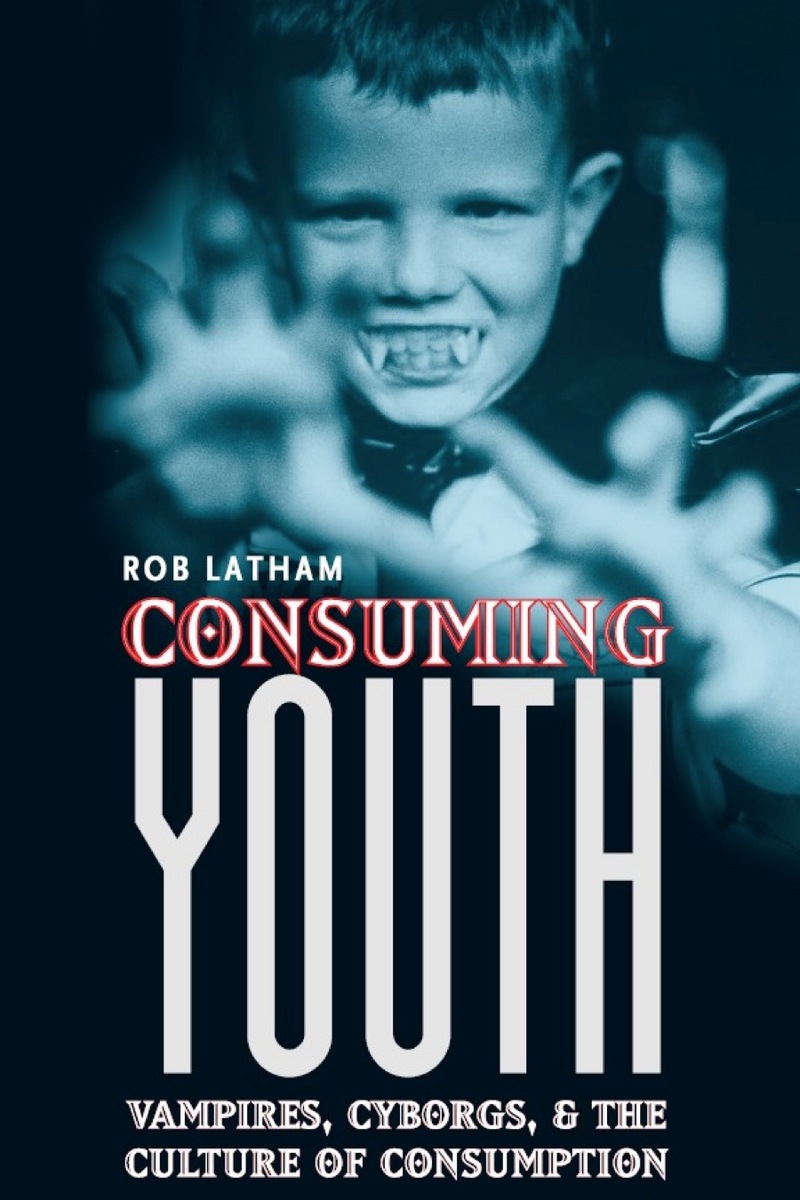
From the novels of Anne Rice to The Lost Boys, from The Terminator to cyberpunk science fiction, vampires and cyborgs have become strikingly visible figures within American popular culture, especially youth culture. In Consuming Youth, Rob Latham explains why, showing how fiction, film, and other media deploy these ambiguous monsters to embody and work through the implications of a capitalist system in which youth both consume and are consumed.
Inspired by Marx's use of the cyborg vampire as a metaphor for the objectification of physical labor in the factory, Latham shows how contemporary images of vampires and cyborgs illuminate the contradictory processes of empowerment and exploitation that characterize the youth-consumer system. While the vampire is a voracious consumer driven by a hunger for perpetual youth, the cyborg has incorporated the machineries of consumption into its own flesh. Powerful fusions of technology and desire, these paired images symbolize the forms of labor and leisure that American society has staked out for contemporary youth.
A startling look at youth in our time, Consuming Youth will interest anyone concerned with film, television, and popular culture.
TABLE OF CONTENTS
List of Illustrations
Acknowledgments
Introduction The Cybernetic Vampire of Consumer Youth Culture - Rob Latham
DOI: 10.7208/chicago/9780226467023.003.0001
[vampires, cyborgs, youth culture, Jean Baudrillard, contemporary cultural theory, dialectical construction]
This chapter presents an examination of what vampires and cyborgs have to say about consumption generally, and then proceeds to their mobilization specifically within contemporary youth culture. The vampire and the cyborg share a genealogy that transcends their seemingly fortuitous convergence in contemporary cultural theory. The chapter provides an interrogation of the early work of Jean Baudrillard, arguing that his rejection of dialectics is premature and, consequently, his account of the code is too abstractly totalizing. A dialectical construction of the image of the vampire-cyborg is significant, since it allows for a sense of the contradictory promises and dangers inherent in consumption as a mode of social integration and personal expression. “Youth” made a set of values desirable both as the means of production and the end of consumption. It was also implicitly a cyborg identity. An overview of the chapters included in this book is given. (pages 1 - 25)
This chapter is available at:
https://academic.oup.com/chica...
Youth Fetishism: The Lost Boys Cruise Mallworld - Rob Latham
DOI: 10.7208/chicago/9780226467023.003.0002
[youth culture, Jean Baudrillard, social hegemony, Somtow Sucharitkul, Mallworld, vampire, cyborg, Vampire Junction, The Lost Boys, Karl Marx]
This chapter presents a more detailed critique of the monolithically negative view of consumption characteristic of Jean Baudrillard. It also explores the popular Fordist construction of “consuming youth.” Youth culture becomes a prominent site of advertisement's social hegemony. It then proposes to deploy, dialectically, both metaphors of vampiric consumption — one foregrounding a controlling system, the other a voluntaristic self-fashioning — in the analysis of youth-culture vampire texts. It introduces Somtow Sucharitkul's science fiction novel Mallworld. This novel potently demonstrates the three meanings of consuming youth. Karl Marx's dialectical image of the vampire-cyborg remains a more compelling metaphor for youth consumption than either the vampire or the cyborg considered by themselves. Vampire Junction and The Lost Boys capture and express the dialectical dynamic of youth consumption. (pages 26 - 69)
This chapter is available at:
https://academic.oup.com/chica...
Dreams of Social Flying: The Yupple-Slacker Dialectic - Rob Latham
DOI: 10.7208/chicago/9780226467023.003.0003
[youth consumption, vampire novel, Interview with the Vampire, Anne Rice, George A. Romero, vampirism, Suckers, The Judas Glass, Bloodsucking Fiends]
This chapter explores how the ideal Fordist image of youth consumption has been impacted by the socioeconomic realities of post-Fordism. It specifically looks at youth-consumer vampirism in the 1970s. It is interesting to observe that George A. Romero's Martin emphatically depicts family relations as powerful constraints on vampiric freedom. It then considers how Anne Rice's Interview with the Vampire, like Martin, marked an epochal moment in the history of the youth-consumer vampire. Vampirism functions in the novel as a means of escape from a dull, yuppified existence. Suckers and The Judas Glass illustrate the yuppie vampire novel taking to heart a sharp critique of its consumerist ethos. The Bloodsucking Fiends displays the slacker vampire novel admitting, however grudgingly, its own implication in the values and pleasures of consumption. It shows the slacker vampire's undead perceptions activating the aesthetic richness latent in consumerist glitz. (pages 70 - 95)
This chapter is available at:
https://academic.oup.com/chica...
Voracious Androgynes: the Vampire Lestat on MTV - Rob Latham
DOI: 10.7208/chicago/9780226467023.003.0004
[objectification, Anne Rice, eroticism, Lestat de Lioncourt, Tony Scott, The Hunger, David Bowie, Vampire Lestat]
This chapter concentrates on the “homosexual panic” aroused by Anne Rice's vampires. It specifically covers Lestat's career as a youth-culture icon. The yuppie vampire contains both progressive and reactionary elements, and it is imperative (if at times quite difficult) to disentangle them from one another. Tony Scott's The Hunger reveals how narcissistic objectification and utopian eroticism function together within the libidinal economy of the yuppie vampire text. David Bowie's appearance in The Hunger marked a crucial stage in the evolution of the youth-consumer vampire, showing the convergence of this figure with a cybernetic logic; it also exerted a profound influence on subsequent vampire texts. Rice's Vampire Lestat discusses the glamorous portrait of rock-star vampire Lestat de Lioncourt. Mainstream bands — those who, like Lestat, depend on extensive commodity chains — emerge as vampiric in a negative sense, as implicit exploiters. (pages 96 - 137)
This chapter is available at:
https://academic.oup.com/chica...
Microserfing the Third Wave: The Dark Side of the Sunrise Industries - Rob Latham
DOI: 10.7208/chicago/9780226467023.003.0005
[computer industry, Silicon Valley, Alain Touraine, Daniel Bell, Microserfs, Douglas Coupland, consumption]
This chapter describes the popular journalistic and fictional treatments of the rise of computer industries. Both Alain Touraine and Daniel Bell argue that the rise of postindustrial society has produced a logic of resistance to the increasingly fossilized norms of capitalist social organization. The Silicon Valley firm is a cyborg formation, a hybrid of human dynamism and machinic proficiency. The Fordist dream of leisure industries generating eternal youth for productivist purposes has transmogrified into the post-Fordist dream of youthful leisure generating productivist industries. Microserfs by Douglas Coupland convincingly expresses the discouraging range of employment options available to young people in the computer industry. It also mounts a sophisticated interrogation of the ways that contemporary youth and high technology are complexly cyborgized. There may well be fresh possibilities for consumer pleasure and autonomy in interactive media that are radically incommensurable with a model of consumption based on passive appropriation. (pages 138 - 179)
This chapter is available at:
https://academic.oup.com/chica...
Fast Sofas and Cyborg Couch Potatoes: Generation X on the Infobahn - Rob Latham
DOI: 10.7208/chicago/9780226467023.003.0006
[Information Superhighway, Don Tapscott, Generation X, Infobahn, Ernest Hebert, Mad Boys]
This chapter deals with the cultural discourses surrounding the so-called Information Superhighway, a vast engineering project conceived on a par with the Fordist construction of the literal superhighway system in the 1950s. The Information Superhighway would realize the fantasy of a totally “wired life” that had circulated in postindustrial discourse in the 1970s. Don Tapscott's indictment of Generation X as a cohort of grumbling slackers cynically complicit with boomer technologies emerges as quite suggestive, since GenXers' transitional status makes them an especially contradictory social formation. A GenX effort to grapple allegorically with the cultural promises and perils of the Infobahn is presented. Ernest Hebert's Mad Boys struggle to find some way out of an invidious double bind, in which every prosthetic enhancement of them as consuming subjects bears with it an inescapable exploitation, a vampiric shadow that leeches their youthful substance and energy. (pages 180 - 215)
This chapter is available at:
https://academic.oup.com/chica...
Teenage Mutant Cyborg Vampires: Consumption as Prosthesis - Rob Latham
DOI: 10.7208/chicago/9780226467023.003.0007
[cyborg vampires, Richard Calder, iconography, teen hacking, Poppy Z. Brite, Drawing Blood, Iain Softley, Hackers, cyberpunk, Cythera]
This chapter examines the cyberpunk subcultures of the 1980s and 1990s, where bold figurations of youth-machine hybrids explicitly emerged. It describes the work of Richard Calder, whose Dead trilogy (1992–97) proposes a decadent retro-futuristic vision actually featuring teenage cyborg vampires. The ways that teen hacking has come to figure as a liberatory cultural practice are explained. Poppy Z. Brite's horror novel Drawing Blood and Iain Softley's film Hackers are then considered. These two texts illustrate how widely cyberpunk themes and iconography have been disseminated throughout contemporary popular culture. Calder's Dead trilogy chronicles the strange relationship between narrator Ignatz Zwakh and Primavera Bobinski. This trilogy and Cythera capture the dialectical logic in which every prosthetic empowerment of consumers both enmeshes them further in a predatory system and promises an amplification of their collective desire and will. (pages 216 - 262)
This chapter is available at:
https://academic.oup.com/chica...
Notes
Index