Cloth: 978-0-226-48125-8 | Paper: 978-0-226-48126-5 | Electronic: 978-0-226-48127-2
DOI: 10.7208/chicago/9780226481272.001.0001
AVAILABLE FROM
This title is no longer available from this publisher at this time. To let the publisher know you are interested in the title, please email bv-help@uchicago.edu.ABOUT THIS BOOK
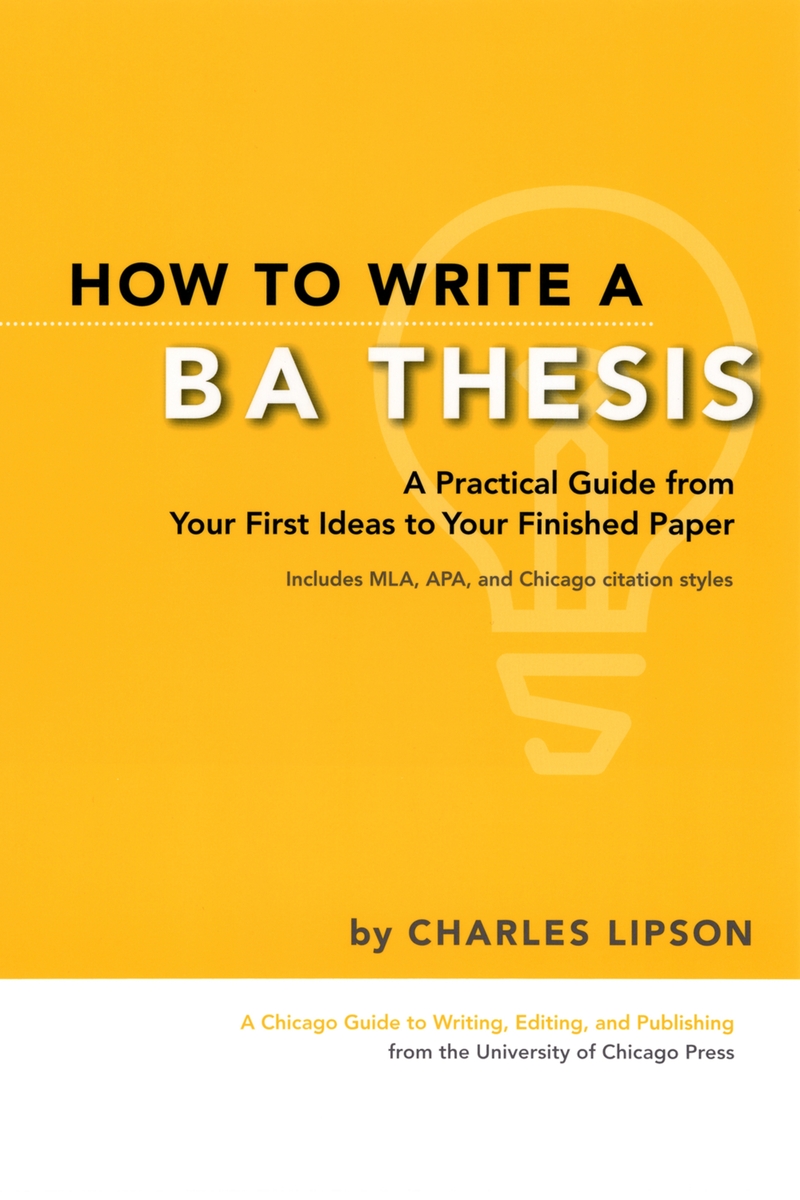
This book offers step-by-step advice on how to turn a vague idea into a clearly defined proposal, then a draft paper, and, ultimately, a polished thesis. Lipson also tackles issues beyond the classroom-from good work habits to coping with personal problems that interfere with research and writing.
Filled with examples and easy-to-use highlighted tips, the book also includes handy time schedules that show when to begin various tasks and how much time to spend on each. Convenient checklists remind students which steps need special attention, and a detailed appendix, filled with examples, shows how to use the three main citation systems in the humanities and social sciences: MLA, APA, and Chicago.
How to Write a BA Thesis will help students work more comfortably and effectively-on their own and with their advisers. Its clear guidelines and sensible advice make it the perfect text for thesis workshops. Students and their advisers will refer again and again to this invaluable resource. From choosing a topic to preparing the final paper, How to Write a BA Thesis helps students turn a daunting prospect into a remarkable achievement.
AUTHOR BIOGRAPHY
REVIEWS
TABLE OF CONTENTS
I . Getting Started
How to Read This Book
1. Introduction
2. Useful Nuts and Bolts
II. Framing Your Topic
3. Taking Effective Notes and Avoiding Plagiarism
4. Refining Your Topic, Writing a Proposal, and Beginning Research
III. Conducting Your Research
5. What Is Good Thesis Research?
6. Using Case Studies Effectively
7. Every Thesis Should Have a Thesis
IV. Writing Your Best
8. Planning and Prewriting: How Do They Help Your Thesis?
9. Writing Your Best
10. Effective Openings, Smooth Transitions, and Strong Closings
11. Good Editing Makes Good Writing
12. Presenting Information Visually
V. Working Your Best
13. Working Efficiently
14. Overcoming Problems
Vl. Scheduling and Completing Your Thesis
15. Thesis Time Schedule
16. Tips and Reminders
17. Frequently Asked Questions
18. What to Do When You’re All Done
VII. Dealing with Special Requirements
19. Thesis Defense and Second Readers: Questions and Answers
20. A One-Semester Thesis
VIII. Citing Your Sources and Getting More Advice
Appendix 1: Best Sources for More Help
Appendix 2: Footnotes
Appendix 3: Advice for New Faculty Advisers
Acknowledgments
Index