Cloth: 978-0-226-55276-7 | Electronic: 978-0-226-55017-6
DOI: 10.7208/chicago/9780226550176.001.0001
AVAILABLE FROM
University of Chicago Press (cloth, ebook)Amazon Kindle (PDF)
Barnes & Noble Nook
ebrary
EBSCO eBooks (formerly NetLibrary)
Google Play
Kno
ABOUT THIS BOOK
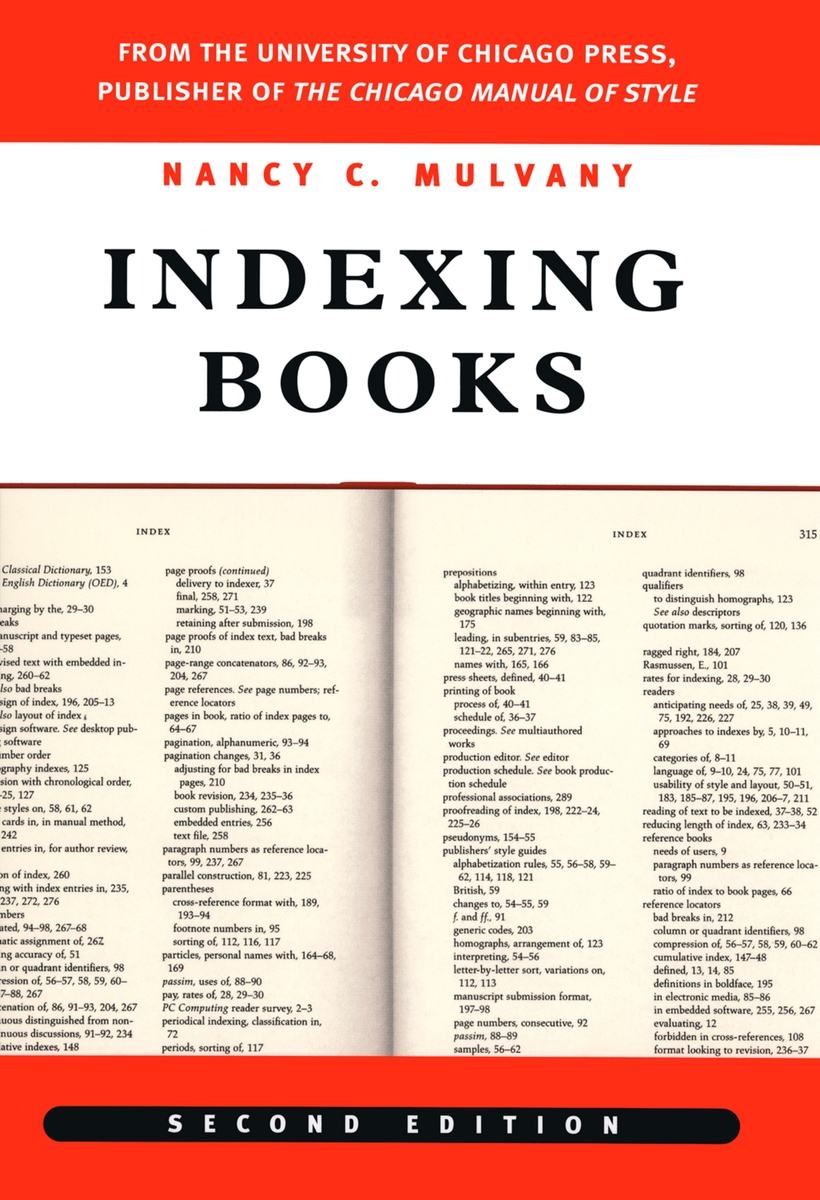
Like its predecessor, this edition of Indexing Books offers comprehensive, reliable treatment of indexing principles and practices relevant to authors and indexers alike. In addition to practical advice, the book presents a big-picture perspective on the nature and purpose of indexes and their role in published works. New to this edition are discussions of "information overload" and the role of the index, open-system versus closed-system indexing, electronic submission and display of indexes, and trends in software development, among other topics.
Mulvany is equally comfortable focusing on the nuts and bolts of indexing—how to determine what is indexable, how to decide the depth of an index, and how to work with publisher instructions—and broadly surveying important sources of indexing guidelines such as The Chicago Manual of Style, Sun Microsystems, Oxford University Press, NISO TR03, and ISO 999. Authors will appreciate Mulvany's in-depth consideration of the costs and benefits of preparing one's own index versus hiring a professional, while professional indexers will value Mulvany's insights into computer-aided indexing. Helpful appendixes include resources for indexers, a worksheet for general index specifications, and a bibliography of sources to consult for further information on a range of topics.
Indexing Books is both a practical guide and a manifesto about the vital role of the human-crafted index in the Information Age. As the standard indexing reference, it belongs on the shelves of everyone involved in writing and publishing nonfiction books.
AUTHOR BIOGRAPHY
REVIEWS
TABLE OF CONTENTS
Preface
Acknowledgments
1. Introduction to Book Indexing
Information Overload
Open-system vs. Closed-system Indexing
The Future of the Book
The Index as Paratext
What Is an Index?
The Purpose of an Index
The Audience: Who Uses Indexes?
Terminology
References
2. The Author and the Index
The Book Contract and the Index
The Writing Process and the Index
Who Should Prepare the Index?
Relationship between Author and Indexer
3. Getting Started
The Book Production Process
The Nature of Indexing Work
What Not to Index
What Is Indexable?
How to Index the Indexable Material
Interpreting the Publisher’s Instructions
Usability and Index Style
Estimating the Size of an Index
4. Structure of Entries
External Structure
Internal Structure
5. Arrangement of Entries
Order of Characters
Letter-by-Letter Alphabetizing
Basic Rules Affecting Both Alphabetizing Orders
Other Alphabetizing Guidelines
Nonalphabetic Arrangement in Indexes
How to Choose an Arrangement Order
6. Special Concerns in Indexing
Abbreviations and Acronyms
International Characters
Numerals, Symbols, and Other Nonalphabetic Characters in Entries
Multiauthored Works
Multivolume Works
Multiple Indexes
Translations
Single-source Indexing
7. Names, Names, Names
Personal Names
Names with Only a Forename
Names with Particles
Non-European Names
Geographic Names
Organization Names
Alphabetizing of Names
Names of Works
8. Format and Layout of the Index
Overall Index Style
Indented Style
Run-in Style
Other Styles
Cross-reference Format and Placement
Special Typography
Final Submission Formats
Layout of the Index
9. Editing the Index
Editing by the Indexer
Review by the Author
Editing by the Editor
Reducing the Length of an Index: Tips for Editors
Revising an Index for a Revised Edition
10. Tools for Indexing
Manual Methods
Automatic Indexing
Computer-aided Indexing
The Future
Appendix A: Index Specifications Worksheet
Appendix B: Resources for Indexers
Professional Associations
Internet Discussion Group
Training in Indexing
Publishers of Dedicated Indexing Software
Winners of the ASI–H. W. Wilson Award forExcellence in Indexing
Internet Resources
References
Index