Cloth: 978-0-226-68976-0 | Electronic: 978-0-226-68993-7
DOI: 10.7208/chicago/9780226689937.001.0001
AVAILABLE FROM
University of Chicago Press (cloth, ebook)Apple Books
Barnes & Noble Nook
Google Play
Kobo
ABOUT THIS BOOK
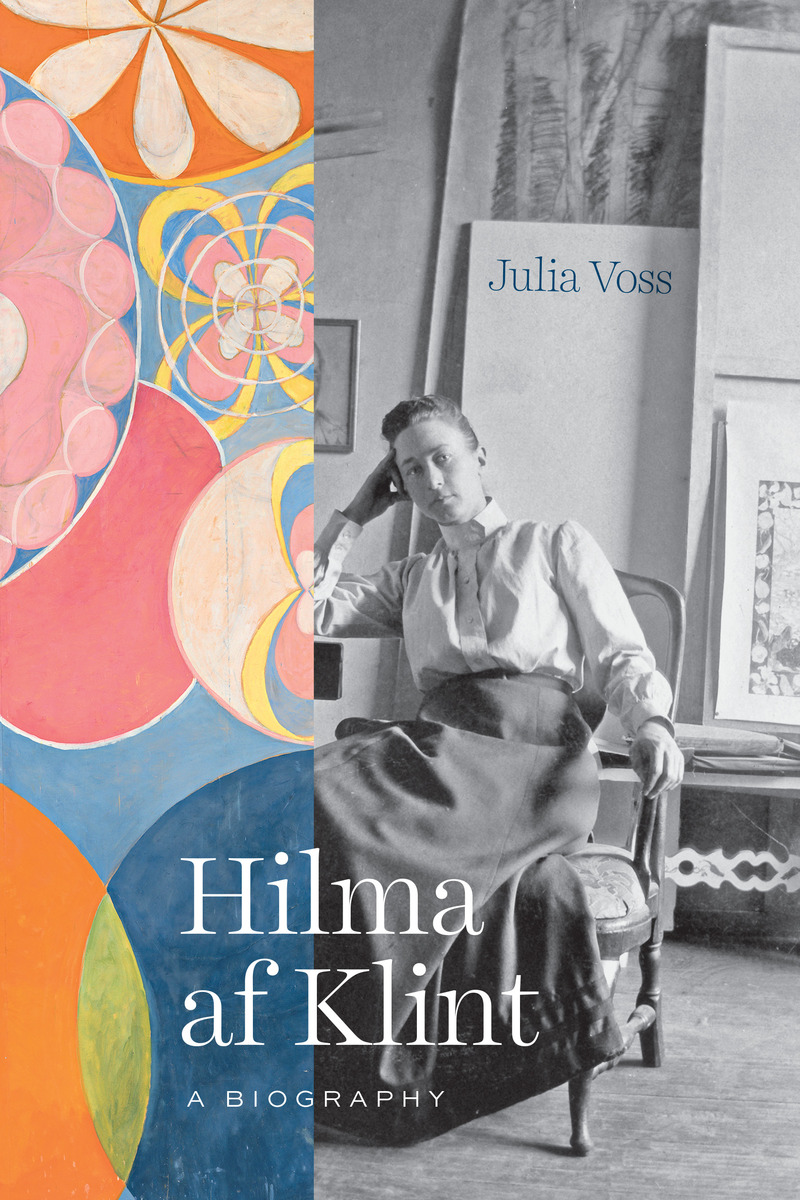
A highly anticipated biography of the enigmatic and popular Swedish painter.The Swedish painter Hilma af Klint (1862–1944) was forty-four years old when she broke with the academic tradition in which she had been trained to produce a body of radical, abstract works the likes of which had never been seen before. Today, it is widely accepted that af Klint was one of the earliest abstract academic painters in Europe.
But this is only part of her story. Not only was she a working female artist, she was also an avowed clairvoyant and mystic. Like many of the artists at the turn of the twentieth century who developed some version of abstract painting, af Klint studied Theosophy, which holds that science, art, and religion are all reflections of an underlying life-form that can be harnessed through meditation, study, and experimentation. Well before Kandinsky, Mondrian, and Malevich declared themselves the inventors of abstraction, af Klint was working in a nonrepresentational mode, producing a powerful visual language that continues to speak to audiences today. The exhibition of her work in 2018 at the Guggenheim Museum in New York City attracted more than 600,000 visitors, making it the most-attended show in the history of the institution.
Despite her enormous popularity, there has not yet been a biography of af Klint—until now. Inspired by her first encounter with the artist’s work in 2008, Julia Voss set out to learn Swedish and research af Klint’s life—not only who the artist was but what drove and inspired her. The result is a fascinating biography of an artist who is as great as she is enigmatic.
AUTHOR BIOGRAPHY
Julia Voss is a German art historian, art critic, and former art editor of the Frankfurter Allgemeine Zeitung. Anne Posten is a literary translator based in Berlin.REVIEWS
“Voss has produced an extraordinarily rich portrait of a radically unusual, but not eccentric, modern artist. . . . Voss’s biography makes af Klint so much more than an artist simply to be inserted into a more gender-inclusive canon of ‘abstract art’. It saves af Klint from art history while sending us deeper into her world. Reading it was a revelation, and it has changed my understanding of the artist, the woman, and her times.”
TABLE OF CONTENTS
A Note from the Translator
Chronology
Introduction
Part One. Family, Childhood, and Youth in Stockholm
1. Mary Wollstonecraft Visits Sweden and Is Upset
2. Birth
3. School and Religion
4. An Exhibition in London
5. Bertha Valerius and the Dead
6. Kerstin Cardon’s Painting School
7. Hermina’s Death
Part Two. Study at the Academy and Independent Work
1. The Academy
2. Guardian Spirit
3. The Prize
4. Anna Cassel
5. “My First Experience with Mediumship”
6. The Young Artist
7. Dr. Helleday and Love
8. The Five
9. Art from the Orient
10. Rose and Cross
11. At the Veterinary Institute
12. Children’s Books and Decorative Art
13. Italy
14. Genius
Part Three. Paintings for the Temple
1. Old Images
2. Revolution
3. Primordial Chaos
4. Eros
5. Medium
6. The Ten Largest
7. “I Was the Instrument of Ecstasy”
8. Rudolf Steiner Visits Sweden
9. The Young Ones
10. Sigrid Lancén
11. The Association of Swedish Women Artists
12. Frank Heyman
13. Island Kingdom in Mälaren
14. First Exhibition with the Theosophists
15. Tree of Knowledge
16. The Kiss
17. Singoalla
18. The Baltic Exhibition
19. War
20. Saint George
21. Kandinsky in Stockholm
22. Parsifal and Atom
23. The Studio on Munsö
24. Thomasine Anderson
Part Four. Dornach, Amsterdam, and London
1. The Suitcase Museum
2. Flowers, Mosses, and Lichens
3. First Visit to the Goetheanum
4. “Belongs to the Astral World According to Doctor Steiner”
5. The Fire and the Letter
6. Amsterdam
7. London
Part Five. Temple and Later Years
1. The Temple and the Spiral
2. +x
3. A Temple in New York
4. The London Blitz
5. Future Woman
6. National Socialism
7. Lecture in Stockholm
8. “Degenerate” Art in Germany and Abstract Art in New York
9. Tyra Kleen and the Plan for a Museum
10 Last Months
11. Conclusion
Afterword by Johan af Klint
Afterword by Ulrika af Klint
Appendix 1. Hilma af Klint’s Travels and Places of Residence
Appendix 2. The Library of Hilma af Klint
Acknowledgments
Illustration Sources
Notes
Bibliography
Index