Cloth: 978-0-226-35992-2 | Paper: 978-0-226-35994-6 | Electronic: 978-0-226-76768-0
DOI: 10.7208/chicago/9780226767680.001.0001
AVAILABLE FROM
University of Chicago Press (cloth, paper, ebook)EBSCO eBooks (formerly NetLibrary)
OverDrive
ABOUT THIS BOOK
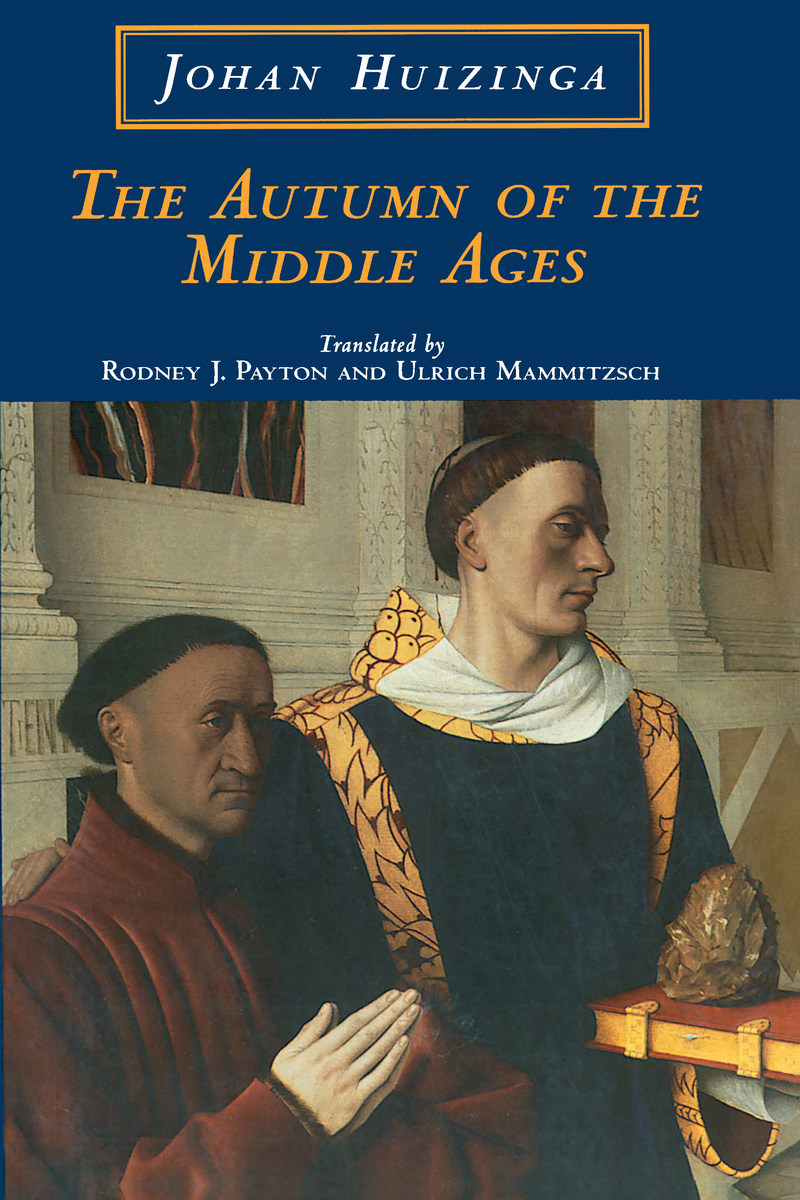
The Autumn of the Middle Ages is Johan Huizinga's classic portrait of life, thought, and art in fourteenth- and fifteenth-century France and the Netherlands. Few who have read this book in English realize that The Waning of the Middle Ages, the only previous translation, is vastly different from the original Dutch, and incompatible will all other European-language translations.
For Huizinga, the fourteenth- and fifteenth-century marked not the birth of a dramatically new era in history—the Renaissance—but the fullest, ripest phase of medieval life and thought. However, his work was criticized both at home and in Europe for being "old-fashioned" and "too literary" when The Waning of the Middle Ages was first published in 1919. In the 1924 translation, Fritz Hopman adapted, reduced and altered the Dutch edition—softening Huizinga's passionate arguments, dulling his nuances, and eliminating theoretical passages. He dropped many passages Huizinga had quoted in their original old French. Additionally, chapters were rearranged, all references were dropped, and mistranslations were introduced.
This translation corrects such errors, recreating the second Dutch edition which represents Huizinga's thinking at its most important stage. Everything that was dropped or rearranged has been restored. Prose quotations appear in French, with translations preprinted at the bottom of the page, mistranslations have been corrected.
"The advantages of the new translation are so many. . . . It is one of the greatest, as well as one of the most enthralling, historical classics of the twentieth century, and everyone will surely want to read it in the form that was obviously intended by the author." —Francis Haskell, New York Review of Books
"A once pathbreaking piece of historical interpretation. . . . This new translation will no doubt bring Huizinga and his pioneering work back into the discussion of historical interpretation." —Rosamond McKitterick, New York Times Book Review
AUTHOR BIOGRAPHY
Johan Huizinga (1872-1945) was a Dutch historian and one of the founders of modern cultural history.REVIEWS
This massive, gorgeously illustrated volume [. . .] offers a new translation of Huizinga’s classic supplemented by all sorts of useful and interesting material. It is in every way a superb production, beginning with Diane Webb’s translator’s note. If you know someone fascinated by the subject (especially someone you want to find a special gift for), you couldn’t go wrong with this. Of course, you might want to add it to your own library as well.
TABLE OF CONTENTS
Translator's Introduction
Preface to the Dutch Edition
Preface to the German Translation
Chapter One: The Passionate Intensity of Life
Chapter Two: The Craving for a More Beautiful Life
Chapter Three: The Heroic Dream
Chapter Four: The Forms of Love
Chapter Five: The Vision of Death
Chapter Six: The Depiction of the Sacred
Chapter Seven: The Pious Personality
Chapter Eight: Religious Excitation and Religious Fantasy
Chapter Nine: The Decline of Symbolism
Chapter Ten: The Failure of Imagination
Chapter Eleven: The Forms of Thought in Practice
Chapter Twelve: Art in Life
Chapter Thirteen: Image and Word
Chapter Fourteen: The Coming of the New Form
Notes
Bibliography
Index