TABLE OF CONTENTS
Introduction
Panthera Lineage
Lion
DOI: 10.7208/chicago/9780226145761.003.0001
[Lion, African cat, Asian cat, Sub-saharan Africa, Gir Forest, India, Pride, Related females, Social cat]
Physically, lions and tigers are built along the same lines, and both are equipped to tackle large prey. However, lions are the only social cat, and the core of their social system is the pride. Prides are composed of related females – mothers, sisters, daughters, aunts and their cubs. Pride members often join forces to hunt large prey. Lion prides compete for the best territories, which has been likened to ‘street gangs’ competing for turf. Successful prides often occupy the same territories for many years. Breeding coalitions of males compete with other male coalitions for mating rights to a pride, and their control may last a few months to several years. (pages 5 - 16)
Jaguar
DOI: 10.7208/chicago/9780226145761.003.0002
[Jaguar, Largest cat in South America, Conflict with ranchers, Most powerful bite of any cat, Spotted coat, Broad head]
Jaguars have broad heads, massive canine teeth, and short, stocky limbs; they are physically equipped to tackle prey much larger than their own weight. However, they survive on mainly small animals such as armadillos, rodents, small deer and marsupials. The large prey that jaguars evolved with disappeared some 12,000 years ago, leaving jaguars in a landscape devoid of large prey. When colonists brought cattle and horses to the New World about 500 years ago they inadvertently reintroduced large prey to the South American landscape. (pages 17 - 28)
Tiger
DOI: 10.7208/chicago/9780226145761.003.0003
[Tigers, Only striped cat, Largest living cat, Asia, Russia Far East, Kill one large deer per week]
Largest of all the living cats, tigers are built to grapple with prey several times their own weight. Tigers from India, Nepal, and the Russian Far East average about 500 lb, while tigresses from these countries are smaller, averaging about 270 lb. Tigers kill large prey with a strangling throat bite and smaller prey with a bite to the back of the neck. Across their vast geographic range large deer and wild boar are dietary staples, and a tigers will kill about one large animal per week. (pages 29 - 40)
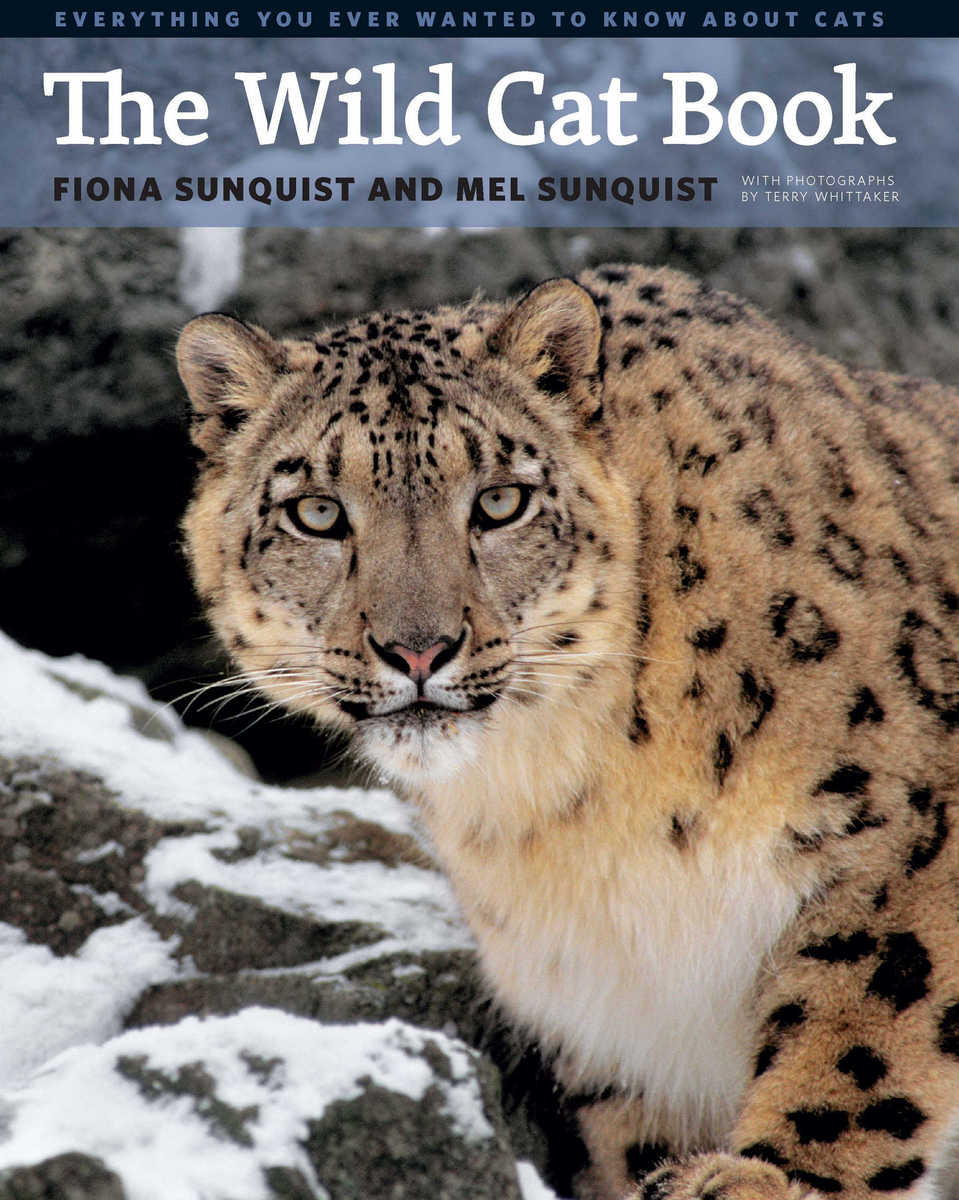
Snow Leopard
DOI: 10.7208/chicago/9780226145761.003.0004
[Snow leopard, High mountains, Central Asia, High-wire feline, Blue sheep, Ibex]
Found only in the mountains of Central Asia, the stocky, short-legged snow leopard uses its long tail as a balancing rod and oversized paws to grip the rocks while chasing blue sheep and ibex across some of the steepest and most rugged terrain on earth. (pages 41 - 48)
Leopard
DOI: 10.7208/chicago/9780226145761.003.0005
[Leopard, African cat, Asian cat, Big cat, Adaptable cat, Vast geographic range]
The quintessential cat, the leopard combines the power and strength of the big cats with the grace and versatility of the smaller cats. Leopards are adaptable hunters, but show a preference for duikers, gazelles, deer and pigs in the 10-40 kg weight range. Leopards are found from southern Africa across the Middle East to the Russian Far East. Leopards can live silently and unobtrusively alongside humans. (pages 49 - 60)
Clouded Leopard
DOI: 10.7208/chicago/9780226145761.003.0006
[Clouded leopard, Forest cat, Southeast Asian cat, Long canine teeth, Saber-tooth cat, Arboreal cat]
Clouded leopards are instantly recognizable by the large, distinctive clouded-shaped markings on their fur. Powerfully built, with a large head, and dagger-like canine teeth, clouded leopards resemble a miniature saber-toothed cat. They kill pigs, small deer, monkeys and porcupines. Their arboreal capabilities rival those of the margay, an agile and acrobatic South American cat. (pages 61 - 66)
Bay Cat Lineage
Bay Cat
DOI: 10.7208/chicago/9780226145761.003.0007
[Bay cat, Rare feild, Endemic to Borneo, Island of Borneo]
The bay cat is found only on the island of Borneo. As more cameras are being set out across Borneo the number of photographs of this cat has increased, but to date we still know little of the cat’s biology. Genetic material from museum specimens shows that the bay cat is part of a lineage that includes the marbled cat and Asiatic golden cat, both little-known felids. (pages 69 - 72)
Marbled Cat
DOI: 10.7208/chicago/9780226145761.003.0008
[Marbled cat, Arboreal, Tropical forest, Climb headfirst down a tree]
Marbled cats live in tropical forests of Southeast Asia. With its long tail, large feet, and blotched coat pattern, the marbled cat looks like a miniature-clouded leopard. The marbled cat also appears to be arboreal. The margay and clouded leopard are the only two other cats known to be able to climb headfirst down a tree. The marbled cat’s diet includes birds, squirrels, rats and the occasional monkey. (pages 73 - 76)
Asiatic Golden Cat
DOI: 10.7208/chicago/9780226145761.003.0009
[African golden cat, Coat color variable, Different lineage than African goldenc at, Southeast Asia, Medium-sized cat]
The coat color of Asiatic golden cats varies from black to spotted to bright red or gray. These cats are found in tropical forests across Southeast Asia, but there are records from scrub and grasslands from sea level to 3700 meters. Their diet includes birds, lizards, monkeys and small deer. Originally classified in the same group with the similar-looking African golden cat, DNA evidence show the golden cats are in separate lineages. (pages 77 - 78)
Caracal Lineage
Serval
DOI: 10.7208/chicago/9780226145761.003.0010
[Serval, Specialized hunting technique, Pounce like a fox, Locate prey with large ears, Long-legged cats, African savannas]
Servals are specialized cats, with the longest legs and feet of any cat. Their extra height gives them an elevated platform to pinpoint the location of small animals hiding in tall grass. Serval pounce like a fox, springing high, then slam their paws down on the prey. Nearly half of all pounces result in a kill. Rats, mice, frogs, birds and snakes are all part of the serval’s diet. (pages 81 - 86)
Caracal
DOI: 10.7208/chicago/9780226145761.003.0011
[Caracal, Leaping abilities, Used in India for hunting, Desert gazelle specialist, Tufted ears]
Though caracals resemble the lynx, DNA studies reveal caracals are actually related to the serval and African golden cat. Caracal are known for their leaping abilities and were used in India for sport hunting. The geographic range of the caracal covers parts of both Africa and India and, like the cheetah, coincides with the ranges of several small desert gazelles. Where these gazelle no longer occur, caracals survive on birds, reptiles and mammals, including sheep and goats. (pages 87 - 92)
African Golden Cat
DOI: 10.7208/chicago/9780226145761.003.0012
[African golden cat, Equatorial African cat, Tropical forest cat, Caracal lineage]
African golden cats are powerful looking, and built like a small leopard. Their coat color is variable and the cat can look completely different in different regions of Africa. Golden cats are found only in tropical forest of Equatorial Africa, along rivers and watercourses. They feed on rats, birds, monkeys as well as the larger forest antelope. African golden cats were once thought to be closely related to Asiatic golden cats, but DNA studies reveal the African golden cat is more closely related to caracal and serval. (pages 93 - 96)
Ocelot Lineage
Ocelot
DOI: 10.7208/chicago/9780226145761.003.0013
[South American cat, Dense cover, preferred, Small prey, Ocelot, Single young per litter]
At 10-16 kg, ocelots are classified as medium-sized cats. Their short, sleek fur is marked with dark spots and rosettes, which merge to form lines on the sides. Found from Texas and Arizona to northern Argentina, the ocelot is one of South America’s most frequently seen cats. Dense cover appears to be a critical habitat component for ocelots. Ocelots survive mostly on small prey, but occasionally kill larger animals. Like margay, ocelots are unusual in having only one young per litter. (pages 99 - 102)
Margay
DOI: 10.7208/chicago/9780226145761.003.0014
[Margay, Arboreal, Acrobatic cat, Fruit eater, Give birth to single kitten]
Margay look like a smaller version of the ocelot and both species have similar spotted markings. Margay are the most agile and acrobatic of the cats, known for their climbing ability. Margay live in forests and feed on birds, insects, small mammals and even fruit. Margay give birth to a single young. (pages 103 - 108)
Geoffroy's Cat
DOI: 10.7208/chicago/9780226145761.003.0015
[Geoffroy's cat, Melanistic cat, Leave feces in trees, Hybrid cat, Safari cat]
About the size of a domestic cat, the Geoffroy’s cat is found in southern South America. Black individuals are not uncommon. Geoffroy’s cats are adaptable, flexible predators and feed on mice, tree porcupines, armadillos, and even the 7-lb Cape hares. The cat has the unusual habit of leaving its feces high in the branches of trees. The Geoffroy’s cat’s beautiful coat and its tractable nature have made it a popular cat among breeders, where it is bred with domestic cats to produce a hybrid called a “Safari cat”. (pages 109 - 114)
Guiña
DOI: 10.7208/chicago/9780226145761.003.0016
[Guiña, Smallest cat in western hemisphere, Restricted range in Chile and Argentina, Melanistic]
The guiña is the smallest cat in the western hemisphere, found only in a small area of Chile and Argentina. All-black cats are common. Guiña hunt in dense cover, preying on small birds, small mammals and lizards, also taking the occasional domestic chicken (pages 115 - 120)
Andean Cat
DOI: 10.7208/chicago/9780226145761.003.0017
[Andean cat, Viscacha specialist, High altitude cat, South American cat, Peru, Argentina, mountains, Endangered cat]
Andean cats live at high altitudes in the Andes Mountains from Peru to Argentina. About the size of a large house cat, the Andean cat has long, thick fur and a fluffy tail, all adaptations for handling the cold temperatures. The cat’s life is tied to the presence of mountain viscachas, a rabbit-sized colonial-living rodent. The Andean cat is only one of four cat species to be listed as Endangered. (pages 121 - 124)
Oncilla
DOI: 10.7208/chicago/9780226145761.003.0018
[Oncilla, South American cat, One kitten per litter]
Oncilla’s look like a small margay, but with larger ears and a narrower muzzle. Originally thought to be strictly forest cats, recent camera trap photos show they also live in savannas and thorn scrub habitats. This six-pound cat hunts birds, mice, lizards and insects. Like margay and ocelot, oncilla give birth to a single kitten. (pages 125 - 128)
Pampas Cat
DOI: 10.7208/chicago/9780226145761.003.0019
[Pampas cat, High altitude cat, grassland cat, South American cat]
Pampas cats look like a burly domestic cat, and their long hair makes them look larger than they really are. Pampas cats are common in South America’s dry open grasslands and high deserts, from Ecuador in the north to Patagonia in the south. Pampas cats feed mainly on small mammals, but are known to hunt flamingoes in Chile’s altiplano and raid nests of Magellan penguin in Patagonia. (pages 129 - 130)
Lynx Lineage
Eurasian Lynx
DOI: 10.7208/chicago/9780226145761.003.0020
[Eurasian lynx, Tall leggy lynx, Roe deer specialist, Twice the size of other lynx species, Reintroductions of lynx in Europe]
The Eurasian lynx is twice the size of other lynx species, a large male can weigh 30 kg. They are forest cats, and their geographic range mirrors that of the 20-kg roe deer, the cat’s principal prey. Lynx were eradicated over much of central and southern Europe by the end of the 19th century, but over the last 40 years Eurasian lynx have been reintroduced to parts of its historic range. (pages 133 - 138)
Iberian Lynx
DOI: 10.7208/chicago/9780226145761.003.0021
[Iberian lynx, Spanish lynx, Critically endangered, Rabbit specialist, Captive breeding program, Myxomatosis, Rabbit Hemorrhagic disease]
The Iberian lynx is the world’s most endangered felid, about 250 individuals remain in southern Spain. This cat is a rabbit specialist and as rabbit habitats have been lost and rabbit populations have been decimated by disease, lynx have disappeared from much of Portugal and Spain. A large-scale captive breeding program was initiated in 2003 in an effort to re-establish the species in its historical range. (pages 139 - 142)
Canada Lynx
DOI: 10.7208/chicago/9780226145761.003.0022
[Canada lynx, Snowshoe hare specialist, Snowshoe-like paws, Lynx's lifestyle tied to snowshoe hare numbers]
The tall, leggy Canada lynx is a specialized hare hunter. Elongated bones in their feet allow them to spread their toes to form a larger surface, creating snowshoes for moving through deep, soft snow. The geographical distribution of the Canada lynx mirrors that of the snowshoe hare, and at times the lynx eats little else. All aspects of the lynx’s lifestyle, from age of first reproduction, to litter size, to density change as hare numbers fluctuate. (pages 143 - 146)
Bobcat
DOI: 10.7208/chicago/9780226145761.003.0023
[Bobcat, Short-tailed cat, Most abundant cat in North America, Recovering populations in Midwest]
Easily recognized by its short tail, the bobcat is the most abundant and widespread wild cat in North America. The bobcat resembles the Canada lynx, but has much smaller feet. Bobcats prefer areas with dense cover and feed on rabbits, birds, rats, mice, and the occasional deer. Hunting and trapping for their fur almost extirpated these cats from the Midwestern US in the 1970s, but populations have since recovered due to legal protection. (pages 147 - 150)
Puma Lineage
Cheetah
DOI: 10.7208/chicago/9780226145761.003.0024
[Cheetah, Africa, Iran, Fastest land mammal on Earth, Attain speeds of 70 mph, Gazelle hunters, Larger litters than most felids]
With a deep-chested build of a sprinter, the cheetah is designed for a short, explosive sprint. Aided by enlarged lungs, heart, nasal passages, and a flexible spine, the cheetah is the fastest land mammal on Earth, reaching speeds of 70 miles per hour in a few seconds. Cheetahs have larger litters than other felids, often five or six kittens in a litter. In places where cheetah are the only large predator, their populations are expanding, but where they live along side lions and hyenas few young survive to adulthood. (pages 153 - 164)
Puma
DOI: 10.7208/chicago/9780226145761.003.0025
[Puma, Cougar, El león, Mountain lion, Adaptable cat, Greatest distribution of any cat in Western Hemispher]
Puma are found from the southern tip of South America to Alaska. The puma lives in deserts, mountains, and tropical forests, where they survive on prey that vary in size from mice to moose. The adaptable puma is not a ‘big cat’, but is more closely related to cheetah and jaguarundi. Once considered vermin and systematically eliminated from most areas east of Rocky Mountains, puma are now making a comeback in the Midwest and eastern USA. (pages 165 - 174)
Jaguarundi
DOI: 10.7208/chicago/9780226145761.003.0026
[Jaguarundi, Marten-looking cat, Hunt during the day, North American origins]
DNA studies reveal that the jaguarundi is closely related to puma and cheetah. All three species have small heads, long slim shapes and long tails, and all three communicate with un-catlike chirps and whistles. Jaguarundi, puma and cheetah all originated in North America. Jaguarundis are also unusual in that they hunt in more open areas than other cats, and are more diurnal. (pages 175 - 178)
Leopard Cat Lineage
Pallas's Cat
DOI: 10.7208/chicago/9780226145761.003.0027
[Pallas's cat, Face resembles Pekingese dog, Mongolia, China, Pikas, Large litters, Short legs]
The squat, short-legged Pallas’s cat has a broad head and a face that resembles a pug or Pekingese dog. The Pallas’s cat lives on the bleak, cold, high-elevation grasslands and semi-desert regions of Mongolia and China. They feed on pikas, gerbils and jerboas. Pallas’s cats have large litters, five or six kittens are not unusual, and most litters are born in spring. (pages 181 - 186)
Fishing Cat
DOI: 10.7208/chicago/9780226145761.003.0028
[Fish-eating cat, Webbed feet, Fishing cat, Swimming cats]
Fishing cats are found in wetland habitats across much of mainland tropical Asia, as well as on the islands of Sri Lanka and Java. The only species named for its habit of eating fish, the fishing cat has partially webbed feet, a thick, muscular tail, and a long, narrow skull — all adaptations for capturing fish. Fishing cats are closely related to leopard cats and flat-headed cats. All three species show strong affinities to water, are excellent swimmers, and exhibit no aversion to getting wet, unlike most other cat species. (pages 187 - 192)
Leopard Cat
DOI: 10.7208/chicago/9780226145761.003.0029
[Leopard cat, Vast north-south geographic range, Excellent swimmer, Bengal cat, Hybridized with domestic cat]
Leopard cats are the only small cat species with a geographic range that extend from the equator north to the Russian Far East. Leopard cat weights vary from 2 lb to 15 lb across this vast distribution. Leopard cats are excellent swimmers, and are closely related to fishing cat and flat-headed cats. Leopard cats have a broad diet, with rats and mice making up the bulk of the their food. The leopard cat is being bred with the domestic cat to create the Bengal cat, a hybrid cross. (pages 193 - 196)
Flat-Headed Cat
DOI: 10.7208/chicago/9780226145761.003.0030
[Flat-headed cat, Fish-eating cat, Small cat]
The flat-headed cat has a short tail and a long, flat head with low-set ears. Flat-headed cats resemble fishing cats, and share the fishing cat’s preference for fish, frogs and small mammals. Flat-headed cats are found only in lowland forests of southern Thailand, Malaysia, Sumatra and Borneo. The few flat-headed cats that have been seen in the wild were all along mud banks, near rivers, and at the edge of streams and ponds. (pages 197 - 200)
Rusty-Spotted Cat
DOI: 10.7208/chicago/9780226145761.003.0031
[Rusty-spotted cat, Smallest cat in Asia, Quick rapid movements]
The rusty-spotted cat is the smallest cat in Asia. This 1-2 kg cat is agile, quick, and moves rapidly. Rusty-spotted cats have been seen in dry forests, thorn forests, and grasslands, where they feed on birds, rodents, insects and lizards. (pages 201 - 204)
Domestic Cat Lineage
Domestic Cat
DOI: 10.7208/chicago/9780226145761.003.0032
[Domestic cat, North African wildcat origins, Early cat domestication in Fertile Crescent region, Cat remains found in 9,500-yr-old human burial site on Cyprus]
Recent genetic evidence points to Mesopotamia as the site of the early domestication of the cat. Wildcats likely domesticated themselves, as cats were attracted to the rodents found in human grain stores. Cats subsequently spread from the Fertile Crescent region to Egypt, around the Mediterranean, and to Europe via Roman armies as well as on sailing ships to distant locations around the world. Today, the Cat Fanciers’ Association recognizes 41 breeds of domestic cats. (pages 207 - 218)
Black-Footed Cat
DOI: 10.7208/chicago/9780226145761.003.0033
[Smallest cat in Africa, Black toe pads, Black-footed cat]
The black-footed cat is the smallest cat in Africa and is found only in southern Africa, where it inhabits dry, open grasslands and semi-desert areas. The hair on the sole of its feet and toe pads are black, hence the name. These cats are very successful hunters, making a kill ever 30 minutes during a night’s travels. Small mammals are the principal prey, followed by birds. Males kill larger prey than females. Though small, black-footed cats travel over large areas, and the sexes communicate via scent marks and a loud, long-distance call. (pages 219 - 224)
Wildcats
DOI: 10.7208/chicago/9780226145761.003.0034
[Wildcat, Eurasian wildcat, AFrican wildcat, Chinese mountain cat, Inbreeding problems, Rodent specialists]
The classification of the wildcats of Eurasia and Africa is the subject of a long and evolving debate. Currently there are five recognized subspecies, including the European wildcat, the Near Eastern wildcat, the Central Asian wildcat, the Southern African wildcat, and the Chinese mountain cat, which until recently was considered a separate species. The domestic cat is sometimes considered a sixth subspecies. Regardless of geography, all wildcats are dependent on small rodents, and occasional bird, rabbit, lizard or frog. While the Near Eastern wildcat is the ancestor of the domestic cat, the domestic cat may prove to be the ultimate threat to all wildcats due to inbreeding. (pages 225 - 232)
Sand Cat
DOI: 10.7208/chicago/9780226145761.003.0035
[Sand cat, Desert cat, Barking call, Dig burrows]
Sand cats are found among the sand dunes and rocky outcrops the Sahara and the Middle East. A thick mat of hair covers the sand cat’s toe pads, protecting the feet from the intense heat of the sand. They dig burrows to escape the cold. Sand cats have exceptional hearing. Sand cats hunt gerbils, geckos, birds and even vipers. They travel widely in search of food and the sexes keep in contact via a loud barking call. (pages 233 - 238)
Jungle Cat
DOI: 10.7208/chicago/9780226145761.003.0036
[Jungle cat, Reed cat, Swamp cat, Small-cat equivalent of the jackal, Plain coat, All-black individuals]
Jungle cats are tall, lanky cats with a plain, unspotted coat, but there are records of all-black cats from Pakistan and India. Jungle cats are seldom found in jungle, preferring tall grasses, thick brush and swamps or reed beds. In many parts of Asia the jungle cat is the small-cat equivalent of the jackal; it has a wide habitat tolerance and adaptable enough to live near villages. (pages 239 - 242)
Acknowledgments
Bibliography
Additional Readings
Illustration Credits
Index