Cloth: 978-0-226-40596-4 | Paper: 978-0-226-40597-1 | Electronic: 978-0-226-85033-7
DOI: 10.7208/chicago/9780226850337.001.0001
AVAILABLE FROM
University of Chicago Press (paper, ebook)Apple Books
Barnes & Noble Nook
Google Play
OverDrive
ABOUT THIS BOOK
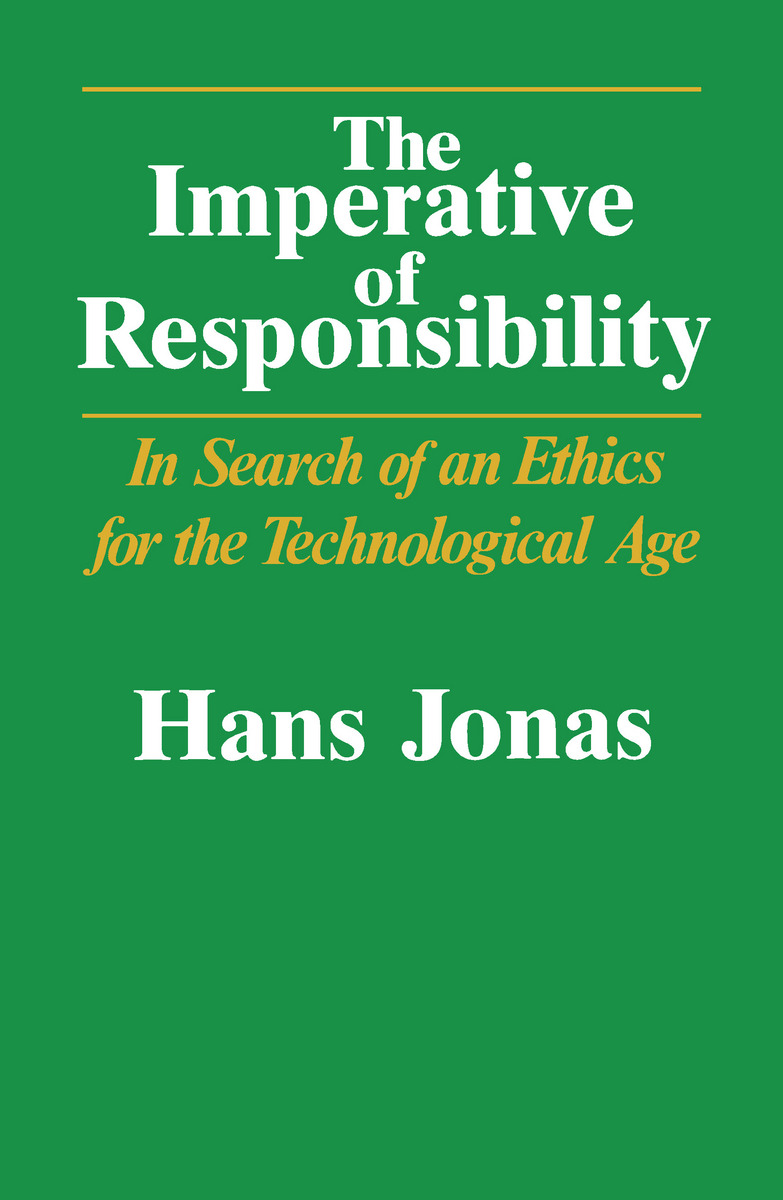
Hans Jonas here rethinks the foundations of ethics in light of the awesome transformations wrought by modern technology: the threat of nuclear war, ecological ravage, genetic engineering, and the like. Though informed by a deep reverence for human life, Jonas's ethics is grounded not in religion but in metaphysics, in a secular doctrine that makes explicit man's duties toward himself, his posterity, and the environment. Jonas offers an assessment of practical goals under present circumstances, ending with a critique of modern utopianism.
AUTHOR BIOGRAPHY
REVIEWS
TABLE OF CONTENTS
Preface
1. The Altered Nature of Human Action
I. The Example of Antiquity
II. Characteristics of Previous Ethics
III. New Dimensions of Responsibility
IV. Technology as the “Calling” of Mankind
V. Old and New Imperatives
VI. Earlier Forms of “Future-oriented” Ethics
VII. Man as an Object of Technology
VIII. The “Utopian” Dynamics of Technical Progress and the Excessive Magnitude of Responsibility
IX. The Ethical Vacuum
I. Ideal and Real Knowledge in the “Ethic of the Future”
II. Prevalence of the Bad over the Good Prognosis
III. The Element of Wager in Human Action
IV. The Duty to Ensure a Future
V. Being and Ought-to-Be
3. Concerning Ends and Their Status in Reality
I. The Hammer
II. The Court of Law
III. Walking
IV. The Digestive Organ
V. From Reality to Validity: From the Problem of Purpose to the Problem of Value
I. Being and Ought-to-Be
II. Theory of Responsibility: First Distinctions
III. Theory of Responsibility: Parent and Statesman as Eminent Paradigms
IV. Theory of Responsibility: The Horizon of the Future
V. How Far Does Political Responsibility Extend into the Future?
VI. Why “Responsibility” Was Not Central in Former Ethical Theory
VII. Parent-Child Relation: The Archetype of Responsibility
I. The Future of Mankind and the Future of Nature
II. The Ominous Side of the Baconian Ideal
III. Is Marxism or Capitalism Better Fitted to Counter the Danger?
IV. Examining the Abstract Chances in the Concrete
V. The Utopia of the Coming “True Man”
VI. Utopia and the Idea of Progress
6. A Critique of Utopia and the Ethic of Responsibility
I. The Wretched of the Earth and World Revolution
II. Critique of Marxist Utopianism
III. From the Critique of Utopia to the Ethics of Responsibility
Appendix: Impotence or Power of Subjectivity
I. The Incompatibility Argument
II. The Epiphenomenalist Argument
III. “Epiphenomenalism” Voided by the Voiding of “Incompatibility”
IV. Quantum-Mechanical Review of the Proposed Solution
Notes
Index