
 A SCHOLARLY BOOK REPOSITORY
1887 start with A start with A
It is 1842—a dramatic year in the history of Texas-Mexican relations. After five years of uneasy peace, of futile negotiations, of border raids and temporary, unofficial truces, a series of military actions upsets the precarious balance between the two countries. Once more the Mexican Army marches on Texas soil; once more the frontier settlers strengthen their strongholds for defense or gather their belongings for flight. Twice San Antonio falls to Mexican generals; twice the Texans assemble armies for the invasion of Mexico. It is 1842—a year of attack and counterattack.
This is the story that Joseph Milton Nance relates, with a definitiveness and immediacy which come from many years of meticulous research. The exciting story of 1842 is a story of emotions which had simmered through the long, insecure years and which now boil out in blustery threats and demands for vengeance. The Texans threaten to march beyond the Sierra Madres and raise their flag at Monterrey; the Mexicans promise to subdue this upstart Texas and to teach its treacherous inhabitants their place. With communications poor and imaginations fertile, rumors magnify chance banditry into military raids, military raids into full-scale invasions. Newspapers incite their readers with superdramatic, intoxicating accounts of the events. Texans and Mexicans alike respond with a kind of madness that has little or no method. Texas solicits volunteers, calls out troops, plans invasions, and assembles her armies, completely disregarding the fact that her treasury is practically empty—there is little money to buy guns. Meanwhile, in Mexico, where gold and silver are needed for other purposes, “invasions” of Texas are launched—but they are only brief forays more suitable for impressive publicity than for permanent gains.
Still, the conflicts of threat and retaliation, so often futile, are frequently dignified by idealism, friendship, courage, and determination. Both Mexicans and Texans are fighting and dying for liberty, defending their homes against foreign invaders, establishing and maintaining friendships that cross racial and national boundaries, struggling with conflicting loyalties, and—all the while—striving to wrest a living for themselves and their families from the grudging frontier.
Attack and Counterattack, continuing the account which was begun in After San Jacinto, tells from original sources the full story of Texas-Mexican relations from the time of the Santa Fe Expedition through the return of the Somervell Expedition from the Rio Grande. These books examine in great detail and with careful accuracy a period of Texas history that had not heretofore been thoroughly studied and that had seldom been given unbiased treatment. The source materials compiled in the notes and bibliography—particularly the military reports, letters, diaries, contemporary newspapers, and broadsides—will be a valuable tool for any scholar who wishes to study this or related periods.
Why did the Confederacy lose so many men? The authors contend that the Confederates bled themselves nearly to death in the first three years of the war by making costly attacks more often than the Federals. Offensive tactics, which had been used successfully by Americans in the Mexican War, were much less effective in the 1860s because an improved weapon—the rifle—had given increased strength to defenders. This book describes tactical theory in the 1850s and suggests how each related to Civil War tactics. It also considers the development of tactics in all three arms of the service during the Civil War.
In examining the Civil War the book separates Southern from Northern tactical practice and discusses Confederate military history in the context of Southern social history. Although the Southerners could have offset their numerical disadvantage by remaining on the defensive and forcing the Federals to attack, they failed to do so. The authors argue that the Southerners’ consistent favoring of offensive warfare was attributable, in large measure, to their Celtic heritage: they fought with the same courageous dash and reckless abandon that had characterized their Celtic forebears since ancient times. The Southerners of the Civil War generation were prisoners of their social and cultural history: they attacked courageously and were killed—on battlefields so totally defended by the Federals that “not even a chicken could get through.”
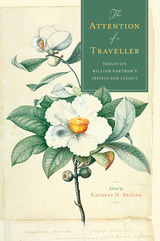
An interdisciplinary reevaluation of William Bartram’s Travels, illuminating the natural, cultural, and intellectual landscapes of the eighteenth‑century Southeast through diverse scholarly lenses.
William Bartram, author of Travels through North and South Carolina, Georgia, East and West Florida, the Cherokee Country, the Extensive Territories of the Muscogulees, or Creek Confederacy, and the Country of the Chactaws, was colonial America’s first native born naturalist and artist, and the first author in the modern genre of writers who portrayed nature through personal experience as well as scientific observation. His book, first published in 1791, was based on his journeys through southern Indian nations and Britain’s southern colonies in the years just prior to the American Revolution and provides descriptions of the natural and cultural environments of what would soon become the American South. Scholars and general readers alike have long appreciated Bartram’s lush, vivid prose, his clarity of observation and evident wonder at the landscapes he traversed, and his engagement with the native nations whose lands he traveled through.
The Attention of a Traveller: Essays on William Bartram’s “Travels” and Legacy offers an interdisciplinary assessment of Bartram’s influence and evolving legacy, opening new avenues of research concerning the flora, fauna, and people connected to Bartram and his writings. Featuring 13 essays divided into five sections, contributors to the volume weave together scholarly perspectives from geology, art history, literary criticism, geography, and philosophy, alongside the more traditional Bartram-affiliated disciplines of biology and history. The collection concludes with a comprehensive treatment of the book as a material historical artifact.
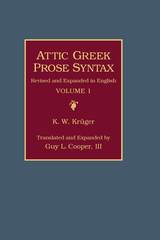
The language of classical Greek literature has been extensively studied since the Renaissance, and the most generally admired approach to Greek grammar and syntax has long been K. W. Krüger's Griechische Sprachlehre. In this translation Guy L. Cooper III accepts Krüger's simple and transparent organization, but greatly expands the substance of the earlier work by increasing the total number of citations from the original texts. Research since 1875, especially the contributions of Basil Lanneau Gildersleeve, is incorporated so as to create a reference work, in English, which covers the full range of this complex subject.
Krüger's original paragraph numbering has been maintained so that references in previously published works can be followed directly in the new work. However, every paragraph and chapter has been revised and expanded, opening up new subheadings within Krüger's format. The English has moved away from Krüger's laconic style to a more flowing, readable presentation, without jargon and unexplained technical language. A complete index of passages cited and the impressive number of citations make the work a running syntactic commentary on the whole range of Attic prose literature. The net result is a new comprehensive reference work, an essential reference for libraries and personal collections alike.
Guy L. Cooper III is Professor Emeritus of Classics, University of North Carolina at Asheville.
Volume 2
cloth ISBN 0-472-10844-1
Set of Volumes 1 & 2
cloth ISBN 0-472-10844-1
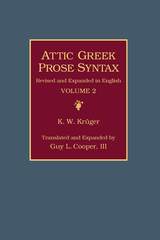
The language of classical Greek literature has been extensively studied since the Renaissance, and the most generally admired approach to Greek grammar and syntax has long been K. W. Krüger's Griechische Sprachlehre. In this translation Guy L. Cooper III accepts Krüger's simple and transparent organization, but greatly expands the substance of the earlier work by increasing the total number of citations from the original texts. Research since 1875, especially the contributions of Basil Lanneau Gildersleeve, is incorporated so as to create a reference work, in English, which covers the full range of this complex subject.
Krüger's original paragraph numbering has been maintained so that references in previously published works can be followed directly in the new work. However, every paragraph and chapter has been revised and expanded, opening up new subheadings within Krüger's format. The English has moved away from Krüger's laconic style to a more flowing, readable presentation, without jargon and unexplained technical language. A complete index of passages cited and the impressive number of citations make the work a running syntactic commentary on the whole range of Attic prose literature. The net result is a new comprehensive reference work, an essential reference for libraries and personal collections alike.
Guy L. Cooper III is Professor Emeritus of Classics, University of North Carolina at Asheville.

Published for the first time in 1957, Attorney for the Damned collects Darrow’s most influential summations and supplements them with scene-setting explanations and comprehensive notes by Arthur Weinberg. Darrow confronts issues that remain relevant over half a century after his death: First Amendment rights, capital punishment, and the separation of church and state. With an insightful forward by Justice William O. Douglas, this volume serves as a powerful reminder of Darrow’s relevance today.


Tom Gunning is the author of multiple books and nearly two hundred essays that have defined the field of cinema and media studies. His works have transformed our understanding of early cinema and the American avant-garde and reset the terms of many central debates in film and media history and theory. His 1986 essay “The Cinema of Attractions” is among the most cited essays on film ever published. Gunning’s writings articulate a distinctive and powerful model for thinking about cinema’s history and likely future, addressing the full range of moving-image media, from film to still photography to digital media. His discussions draw on stage melodrama and magic lantern shows, as well as criminology, world’s fairs, and Spiritualism, surveying the medium as a cultural phenomenon informed by the industrial and information ages, psychiatry, urban experience, discourses on art and aesthetics, and more.
This collection brings together twenty-six essays that showcase the depth and range of Gunning’s scholarship, including four that have never before been published. Together, they solidify Gunning’s place as a scholar who has transformed the way generations of scholars, archivists, critics, and artists think about cinema.

One of those survivors, Nick Golodoff, became a prisoner of war at just six years old. He was among the dozens of Unangan Attu residents swept away to Hokkaido, and one of only twenty-five to survive. Attu Boy tells Golodoff’s story of these harrowing years as he found both friendship and cruelty at the hands of the Japanese. It offers a rare look at the lives of civilian prisoners and their captors in WWII-era Japan. It also tells of Golodoff’s bittersweet return to a homeland torn apart by occupation and forced internments. Interwoven with other voices from Attu, this richly illustrated memoir is a testament to the struggles, triumphs, and heartbreak of lives disrupted by war.
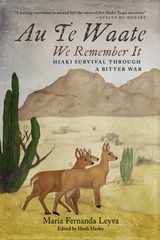
This compelling work delves into the personal narratives of Hiaki (Yaqui) individuals who endured the tumultuous period from 1900 to 1930, when they faced systematic attacks, conscription, deportation, and enslavement under Mexican government policies. Presented in both the original Hiaki language and English translation, these accounts offer an unparalleled glimpse into the lives of those who resisted and survived the era’s harsh realities. The narratives describe military engagements, the struggles of refugee life, forced labor, and the resilience of families under extreme duress. This work provides a unique and unvarnished account of the impacts of Mexican colonialism and aggression on individuals and families, completely from the Hiaki perspective.
Au Te Waate / We Remember It is not just a historical account but a linguistic treasure, preserving the naturally produced speech of five Hiaki speakers from a previous era. Transcriptions of interviews recorded by author Maria Fernanda Leyva with family members and friends provide invaluable insights into the Hiaki language. The interviews document and preserve the narrative styles, vocabulary, and grammatical constructions of the time.
This work also serves as a crucial resource for scholars of linguistics and history alike, capturing dialect variation and illustrating the linguistic evolution of the Hiaki community. Additionally, for Hiaki people studying their own language, this book stands as a rich repository of cultural and linguistic heritage, meticulously maintained through side-by-side translations and contextual historical introductions.
The narratives in this book are anchored by the experiences of five Hiaki speakers, whose stories of displacement, survival, and resistance provide a deeply personal perspective on the broader historical events of the Porfirio Díaz dictatorship and the early years of the Mexican Revolution. Au Te Waate / We Remember It stands as an important record, preserving these critical voices for future generations and offering profound insights into the resilience of the Hiaki people.

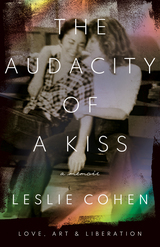
Rendered in bronze, covered in white lacquer, two women sit together on a park bench in Greenwich Village. One of the women touches the thigh of her partner as they gaze into each other’s eyes. The two women are part of George Segal’s iconic sculpture “Gay Liberation,” but these powerful symbols were modeled on real people: Leslie Cohen and her partner (now wife) Beth Suskin.
In this evocative memoir, Cohen tells the story of a love that has lasted for over fifty years. Transporting the reader to the pivotal time when brave gay women and men carved out spaces where they could live and love freely, she recounts both her personal struggles and the accomplishments she achieved as part of New York’s gay and feminist communities. Foremost among these was her 1976 cofounding of the groundbreaking women’s nightclub Sahara, which played host to such luminaries as Betty Friedan, Gloria Steinem, Pat Benatar, Ntozake Shange, Rita Mae Brown, Adrienne Rich, Patti Smith, Bella Abzug, and Jane Fonda. The Audacity of a Kiss is a moving and inspiring tale of how love, art, and solidarity can overcome oppression.
Contributors: Kofi Agawu, Philip V. Bohlman. Michael Denning, Brent Hayes Edwards, Nan Enstad, Andrew Jones, Josh Kun, Morgan Luker, Jairo Moreno, Tejumola Olaniyan, Marc Perry, Ronald Radano, Nitasha Sharma, Micol Seigel, Gavin Steingo, Penny Von Eschen, Amanda Weidman.
Blending cultural studies and the history of communication technology, Sterne follows modern sound technologies back through a historical labyrinth. Along the way, he encounters capitalists and inventors, musicians and philosophers, embalmers and grave robbers, doctors and patients, deaf children and their teachers, professionals and hobbyists, folklorists and tribal singers. The Audible Past tracks the connections between the history of sound and the defining features of modernity: from developments in medicine, physics, and philosophy to the tumultuous shifts of industrial capitalism, colonialism, urbanization, modern technology, and the rise of a new middle class.
A provocative history of sound, The Audible Past challenges theoretical commonplaces such as the philosophical privilege of the speaking subject, the visual bias in theories of modernity, and static descriptions of nature. It will interest those in cultural studies, media and communication studies, the new musicology, and the history of technology.
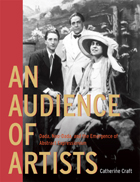
The term Neo-Dada surfaced in New York in the late 1950s and was used to characterize young artists like Robert Rauschenberg and Jasper Johns whose art appeared at odds with the serious emotional and painterly interests of the then-dominant movement, Abstract Expressionism. Neo-Dada quickly became the word of choice in the early 1960s to designate experimental art, including assemblage, performance, Pop art, and nascent forms of minimal and conceptual art.
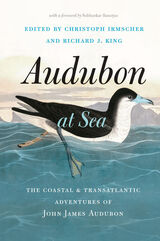
The American naturalist John James Audubon (1785–1851) is widely remembered for his iconic paintings of American birdlife. But as this anthology makes clear, Audubon was also a brilliant writer—and his keen gaze took in far more than creatures of the sky. Culled from his published and unpublished writings, Audubon at Sea explores Audubon’s diverse observations of the ocean, the coast, and their human and animal inhabitants. With Audubon expert Christoph Irmscher and scholar of the sea Richard J. King as our guides, we set sail from the humid expanses of the American South to the shores of England and the chilly landscapes of the Canadian North. We learn not only about the diversity of sea life Audubon documented—birds, sharks, fish, and whales—but also about life aboard ship, travel in early America, Audubon’s work habits, and the origins of beloved paintings. As we face an unfathomable loss of seabirds today, Audubon’s warnings about the fragility of birdlife in his time are prescient and newly relevant.
Charting the course of Audubon’s life and work, from his birth in Haiti to his death in New York City, Irmscher and King’s sweeping introduction and carefully drawn commentary confront the challenges Audubon’s legacy poses for us today, including his participation in American slavery and the thousands of birds he killed for his art. Rounded out by hundreds of historical and ornithological notes and beautiful illustrations, and with a foreword by distinguished photographer and conservationist Subhankar Banerjee, Audubon at Sea is the most comprehensively annotated collection of Audubon’s work ever published.
During the decades of Bourbon ascendancy after 1874, Alabama institutions like those in other southern states were dominated by whites. Former slave and sharecropper Jack Turner refused to accept a society so structured. Highly intelligent, physically imposing, and an orator of persuasive talents, Turner was fearless before whites and emerged as a leader of his race. He helped to forge a political alliance between blacks and whites that defeated and humiliated the Bourbons in Choctaw County, the heart of the Black Belt, in the election of 1882. That summer, after a series of bogus charges and arrests, Turner was accused of planning to lead his private army of blacks in a general slaughter of the county whites. Justice was forgotten in the resultant fear and hysteria.
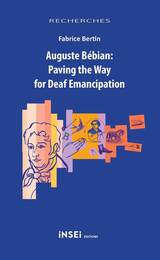
To some, he is a mythical figure; to others, he is unknown. Auguste Bébian (1789-1839) reflects society’s ambivalence toward Deaf history: sometimes recognized, often ignored. In the wake of Abbé de l’Épée, whose name is remembered in posterity and who demonstrated that the large-scale education of Deaf people was possible, Auguste Bébian was nonetheless a key player in an unprecedented upheaval, which in many ways went beyond the educational sphere. The goal of this research on Auguste Bébian, combining biographical elements and analysis of his thinking in unprecedented ways, is not to deconstruct the myth, but rather to decipher the messages it conveys, and to understand what it tells us, indirectly, about the Deaf experience.
Born in 1789 in Guadeloupe, part of the French West Indies, it was on the other side of the Atlantic Ocean, in France, that Auguste Bébian fulfilled most of his destiny. While living at the National Institution for the Deaf in Paris at the beginning of the 19th century, his daily contact with the young students made him the first known hearing person in France to achieve true mastery of sign language, the natural language of Deaf people, and a deep understanding of its inherent culture. On becoming a teacher, he constantly defended the use of sign language as a linguistic system in its own right in order to awaken the intelligence of Deaf children, to whom “we pay no more attention than to the sunlight that shines on us every day.” His numerous publications display a level of modernity rarely seen before or since. This biographical and historical study shows how the passion evinced by Auguste Bébian was a crucial link in the chain of events that led to the emancipation of Deaf people.

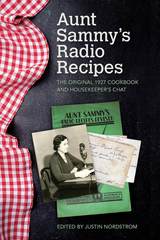
From the 1920s through the 1940s, American kitchens had a welcome guest in “Aunt Sammy,” a creation of the US Department of Agriculture and its Bureau of Home Economics. Through the radio program Housekeeper’s Chat, Aunt Sammy gave lively advice on food preparation, household chores, parenting and children, and gender dynamics as she encouraged women to embrace the radio and a host of modern consumer household products. The recipes she shared were gathered, in 1927, into a cookbook that became a valuable household manual for tens of thousands of Americans.
Aunt Sammy’s Radio Recipes revives the famous cookbook and joins it with extensive excerpts from the accompanying radio broadcasts, providing a fascinating study of how a witty and charming fictionalized personae became one of the early celebrity chefs of the radio age.
Few places in the world carry as heavy a burden of history as Auschwitz. Recognized and remembered as the most prominent site of Nazi crimes, Auschwitz has had tremendous symbolic weight in the postwar world.
Auschwitz, Poland, and the Politics of Commemoration is a history of the Auschwitz memorial site in the years of the Polish People’s Republic. Since 1945, Auschwitz has functioned as a memorial and museum. Its monuments, exhibitions, and public spaces have attracted politicians, pilgrims, and countless participants in public demonstrations and commemorative events.
Jonathan Huener’s study begins with the liberation of the camp and traces the history of the State Museum at Auschwitz from its origins immediately after the war until the 1980s, analyzing the landscape, exhibitions, and public events at the site.
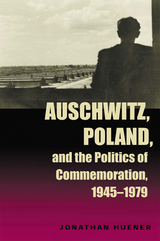
Based on extensive research and illustrated with archival photographs, Auschwitz, Poland, and the Politics of Commemoration accounts for the development and durability of a Polish commemorative idiom at Auschwitz. Emphasis on Polish national “martyrdom” at Auschwitz, neglect of the Shoah as the most prominent element of the camp’s history, political instrumentalization of the grounds and exhibitions—these were some of the more controversial aspects of the camp’s postwar landscape.
Professor Huener locates these and other public manifestations of memory at Auschwitz in the broad scope of Polish history, in the specific context of postwar Polish politics and culture, and against the background of Polish-Jewish relations. Auschwitz, Poland, and the Politics of Commemoration will be of interest to scholars, students, and general readers of the history of modern Poland and the Holocaust.
This monograph provides an analysis of the economic performance and living standard in Czechoslovakia and its successor states, Hungary, and Poland since 1945. The novelty of the book lies in its broad comparative perspective: it places East Central Europe in a wider European framework that underlines the themes of regional disparities and European commonalities. Going beyond the traditional growth paradigm, the author systematically studies the historical patterns of consumption, leisure, and quality of life—aspects that Tomka argues can best be considered in relation to one other. By adopting this “triple approach,” he undertakes a truly interdisciplinary research drawing from history, economics, sociology, and demography.
As a result of Tomka’s three-pillar comparative analysis, the book makes a major contribution to the debates on the dynamics of economic growth in communist and postcommunist East Central Europe, on the socialist consumer culture along with its transformation after 1990, and on how the accounts on East Central Europe can be integrated into the emerging field of historical quality of life research.
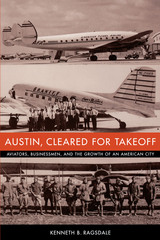
Austin, Texas, entered the aviation age on October 29, 1911, when Calbraith Perry Rodgers landed his Wright EX Flyer in a vacant field near the present-day intersection of Duval and 45th Streets. Some 3,000 excited people rushed out to see the pilot and his plane, much like the hundreds of thousands who mobbed Charles A. Lindbergh and The Spirit of St. Louis in Paris sixteen years later. Though no one that day in Austin could foresee all the changes that would result from manned flight, people here—as in cities and towns across the United States—realized that a new era was opening, and they greeted it with all-out enthusiasm.
This popularly written history tells the story of aviation in Austin from 1911 to the opening of Austin-Bergstrom International Airport in 1999. Kenneth Ragsdale covers all the significant developments, beginning with military aviation activities during World War I and continuing through the barnstorming era of the 1920s, the inauguration of airmail service in 1928 and airline service in 1929, and the dedication of the first municipal airport in 1930. He also looks at the University of Texas's role in training pilots during World War II, the growth of commercial and military aviation in the postwar period, and the struggle over airport expansion that occupied the last decades of the twentieth century. Throughout, he shows how aviation and the city grew together and supported each other, which makes the Austin aviation experience a case study of the impact of aviation on urban communities nationwide.
Three forces—dwindling British power, rising American influence, and nationalism in a variety of forms—have transformed Australia, New Zealand, and the adjacent islands since 1919. In this volume, some of the most distinguished scholars of the Pacific region assess these significant historical changes.
These essays deal with international relations, politics, changing social structures, and literature since World War I. The themes of the volume as a whole are social and humanistic; they concern the evolution of both a regional identity and separate national identities in the Southwest Pacific. The unique areal and thematic concentration of this book makes it essential reading for all those interested in the history, politics, and culture of the Pacific.
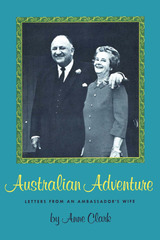
From August 1965 to February 1968, during his period of service in Australia, Ambassador Edward Clark traveled in that country as no other American and probably few Australians ever have. His wife, Anne Clark, traveled with him, then wrote her observations and impressions to friends and family in the United States.
Her letters, published for the first time in this volume, reveal the isolations and involvements as well as the opportunities and the pleasures of embassy life. The etiquette of official functions at times posed problems, as in the Clarks' first black-tie dinner with the Acting Governor General, where Mrs. Clark was supposed to curtsy. "Some Ambassadors feel strongly that the representative of the President of the United States should never bend his knee (or rather his wife's) to any man. Mrs. Battle, wife of our predecessor ... put the question directly to President Kennedy. His answer to her was, 'Curtsy you must, but keep a stiff upper knee.'"
Soon, Anne Clark realized that the routine of appearances and entertainments was constant: "I do not know when I will make peace with the schedule. I am a slave to the little black book that is my calendar."
In addition to the intricacies of embassy life, the Clarks encountered much that was unfamiliar—new people, almost a new language, new flowers, new animals—even a sky with its new moon upside down. But their warm hospitality and genuine interest in things Australian attracted friends throughout the continent. Figures from the government, the church, the diplomatic circle, and everyday life, plus well-known guests from home, all become known to the reader in this perceptive account of official life from the inside.

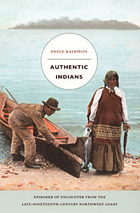
Drawing on research in newspapers, magazines, agency and missionary records, memoirs, and diaries, Raibmon combines cultural and labor history. She looks at three historical episodes: the participation of a group of Kwakwaka’wakw from Vancouver in the 1893 World’s Columbian Exposition in Chicago; the work of migrant Aboriginal laborers in the hop fields of Puget Sound; and the legal efforts of Tlingit artist Rudolph Walton to have his mixed-race step-children admitted to the white public school in Sitka, Alaska. Together these episodes reveal the consequences of outsiders’ attempts to define authentic Aboriginal culture. Raibmon argues that Aboriginal culture is much more than the reproduction of rituals; it also lies in the means by which Aboriginal people generate new and meaningful ways of identifying their place in a changing modern environment.
Winner, Southwest Book Award, Border Regional Library Association, 2015
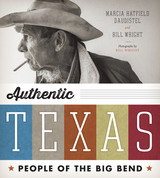
The Texas of vast open spaces inhabited by independent, self-reliant men and women may be more of a dream than a reality for the state’s largely urban population, but it still exists in the Big Bend. One of the most sparsely settled areas of the United States, the Big Bend attracts people who are willing to forego many modern conveniences for a lifestyle that proclaims “don’t fence me in.” Marcia Hatfield Daudistel and Bill Wright believe that the character traits exemplified by folks in the Big Bend—including self-sufficiency, friendliness, and neighborliness—go back to the founding of the state. In this book, they introduce us to several dozen Big Bend residents—old and young, long-settled and recently arrived, racially diverse—who show us what it means to be an authentic Texan.
Interviewing people in Marathon, Big Bend National Park, Terlingua, Redford, Presidio, Alpine, Marfa, Valentine, Balmorhea, Limpia Crossing, and Fort Davis, Daudistel and Wright discover the reasons why residents of the Big Bend make this remote area of Texas their permanent home. In talking to ranchers and writers, entrepreneurs and artists, people living off the grid and urban refugees, they find a common willingness to overcome difficulties through individual skill and initiative. As one interviewee remarks, you have to have a lot of “try” in you to make a life in the Big Bend. Bill Wright’s photographs of the people and landscapes are a perfect complement to the stories of these authentic Texans. Together, these voices and images offer the most complete, contemporary portrait of the Texas Big Bend.
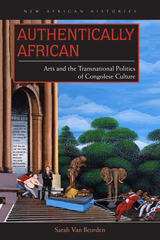
Together, the Royal Museum for Central Africa in Tervuren, Belgium, and the Institut des Musées Nationaux du Zaire (IMNZ) in the Congo have defined and marketed Congolese art and culture. In Authentically African, Sarah Van Beurden traces the relationship between the possession, definition, and display of art and the construction of cultural authenticity and political legitimacy from the late colonial until the postcolonial era. Her study of the interconnected histories of these two institutions is the first history of an art museum in Africa, and the only work of its kind in English.
Drawing on Flemish-language sources other scholars have been unable to access, Van Beurden illuminates the politics of museum collections, showing how the IMNZ became a showpiece in Mobutu’s effort to revive “authentic” African culture. She reconstructs debates between Belgian and Congolese museum professionals, revealing how the dynamics of decolonization played out in the fields of the museum and international heritage conservation. Finally, she casts light on the art market, showing how the traveling displays put on by the IMNZ helped intensify collectors’ interest and generate an international market for Congolese art.
The book contributes to the fields of history, art history, museum studies, and anthropology and challenges existing narratives of Congo’s decolonization. It tells a new history of decolonization as a struggle over cultural categories, the possession of cultural heritage, and the right to define and represent cultural identities.
Author Stuart Z. Charmé explores how debates over authenticity and struggles for recognition are a key to understanding a wide range of controversies between Orthodox and liberal Jews, Zionist and diaspora Jews, white Jews and Jews of color, as well as the status of intermarried and messianic Jews, and the impact of Jewish genetics. In addition, it discusses how and when various cultural practices and traditions such as klezmer music, Israeli folk dance, Jewish yoga and meditation, and others are recognized as authentically Jewish, or not.
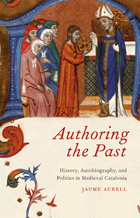
Authoring the Past surveys medieval Catalan historiography, shedding light on the emergence and evolution of historical writing and autobiography in the Middle Ages, on questions of authority and authorship, and on the links between history and politics during the period. Jaume Aurell examines texts from the late twelfth to the late fourteenth century—including the Latin Gesta comitum Barcinonensium and four texts in medieval Catalan: James I’s Llibre dels fets, the Crònica of Bernat Desclot, the Crònica of Ramon Muntaner, and the Crònica of Peter the Ceremonious—and outlines the different motivations for the writing of each.
For Aurell, these chronicles are not mere archaeological artifacts but rather documents that speak to their writers’ specific contemporary social and political purposes. He argues that these Catalonian counts and Aragonese kings were attempting to use their role as authors to legitimize their monarchical status, their growing political and economic power, and their aggressive expansionist policies in the Mediterranean. By analyzing these texts alongside one another, Aurell demonstrates the shifting contexts in which chronicles were conceived, written, and read throughout the Middle Ages.
The first study of its kind to make medieval Catalonian writings available to English-speaking audiences, Authoring the Past will be of interest to scholars of history and comparative literature, students of Hispanic and Romance medieval studies, and medievalists who study the chronicle tradition in other languages.
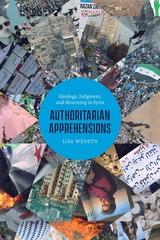
Drawing on extensive fieldwork and a variety of Syrian artistic practices, Wedeen lays bare the ideological investments that sustain ambivalent attachments to established organizations of power and contribute to the ongoing challenge of pursuing political change. This masterful book is a testament to Wedeen’s deep engagement with some of the most troubling concerns of our political present and future.
Employing a vast array of examples drawn from classical antiquity, Scandinavian law, Cold War scholarship, and American presidential politics, Lincoln offers a telling analysis of the performance of authority, and subversions of it, from ancient times to the present. Using a small set of case studies that highlight critical moments in the construction of authority, he goes on to offer a general examination of "corrosive" discourses such as gossip, rumor, and curses; the problematic situation of women, who often are barred from the authorizing sphere; the role of religion in the construction of authority; the question of whether authority in the modern and postmodern world differs from its premodern counterpart; and a critique of Hannah Arendt's claims that authority has disappeared from political life in the modern world. He does not find a diminution of authority or a fundamental change in the conditions that produce it. Rather, Lincoln finds modern authority splintered, expanded, and, in fact, multiplied as the mechanisms for its construction become more complex—and more expensive.
As Loewenstein shows, copyright is a form of monopoly that developed alongside a range of related protections such as commercial trusts, manufacturing patents, and censorship, and cannot be understood apart from them. The regulation of the press pitted competing interests and rival monopolistic structures against one another—guildmembers and nonprofessionals, printers and booksellers, authors and publishers. These struggles, in turn, crucially shaped the literary and intellectual practices of early modern authors, as well as early capitalist economic organization.
With its probing look at the origins of modern copyright, The Author's Due will prove to be a watershed for historians, literary critics, and legal scholars alike.
Most scholars dismiss research into the paranormal as pseudoscience, a frivolous pursuit for the paranoid or gullible. Even historians of religion, whose work naturally attends to events beyond the realm of empirical science, have shown scant interest in the subject. But the history of psychical phenomena, Jeffrey J. Kripal contends, is an untapped source of insight into the sacred and by tracing that history through the last two centuries of Western thought we can see its potential centrality to the critical study of religion.
Kripal grounds his study in the work of four major figures in the history of paranormal research: psychical researcher Frederic Myers; writer and humorist Charles Fort; astronomer, computer scientist, and ufologist Jacques Vallee; and philosopher and sociologist Bertrand Méheust. Through incisive analyses of these thinkers, Kripal ushers the reader into a beguiling world somewhere between fact, fiction, and fraud. The cultural history of telepathy, teleportation, and UFOs; a ghostly love story; the occult dimensions of science fiction; cold war psychic espionage; galactic colonialism; and the intimate relationship between consciousness and culture all come together in Authors of the Impossible, a dazzling and profound look at how the paranormal bridges the sacred and the scientific.
When María Vela y Cueto (1561–1617) declared that God had personally ordered her to take only the Eucharist as food and to restore primitive dress and public penance in her aristocratic convent, the entire religious community, according to her confessor, “rose up in wrath.” Yet, when Vela died, her peers joined with the populace to declare her a saint. In her autobiography and personal letters, Vela speaks candidly of the obstacles, perils, and rewards of re-negotiating piety in a convent where devotion to God was no longer expressed through rigorous asceticism. Vela’s experience, told in her own words, reveals her shrewd understanding of the persuasive power of a woman’s body.
Her autobiography, clearly inseparable from her religious vocation, expresses the tensions and conflicts that often accompanied the lives of women whose relationship to the divine endowed them with an authority at odds with the temporary powers of church and state. Last translated into English in 1916, Ana’s writings give modern readers fascinating insights into the nature of monastic life during the highly charged religious and political climate of late-sixteenth- and early-seventeenth-century Spain.

Autobiography in Early Modern Spain was first published in 1991. Minnesota Archive Editions uses digital technology to make long-unavailable books once again accessible, and are published unaltered from the original University of Minnesota Press editions.
Autobiography in Early Modern Spain Nicholas Spadaccini and Jenaro Talens, Editors
Introduction. The Construction of the Self: Notes on Autobiography in Early Modern Spain
Nicholas Spadaccini and Jenaro TalensChapter 1. Narration and Argumentation in Autobiographical Discourse Antonio Gomez-Moriana
Chapter 2. A Clown at Court: Francesillo de Zuniga's Cronica burlesca George Mariscal
Chapter 3. A Methodological Prolegomenon to a Post-Modernist Reading of Santa Teresa's Autobiography
Patrick DustChapter 4. Golden Age Autobiography: The Soldiers Margarita Levisi
Chapter 5. The Picaresque as Autobiography: Story and History Edward Friedman
Chapter 6. The Historical Function of Picaresque Autobiographies: Toward a History of Social Offenders
Anthony N. ZahareasChapter 7. Fortune's Monster and the Monarchy in Las relaciones de Antonio Perez Helen H. Reed
Chapter 8. The Woman at the Border: Some Thoughts on Cervantes and Autobiography Ruth El Saffar
Chapter 9. Poetry as Autobiography: Theory and Poetic Practice in Cervantes Jenaro Talens
Appendix Curriculum vitae
Miguel de Cervantes Saavedra
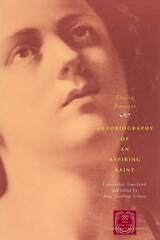
Born in 1609 into an artisan family, Cecilia Ferrazzi wanted to become a nun. When her parents' death in the plague of 1630 made it financially impossible for her to enter the convent, she refused to marry and as a single laywoman set out in pursuit of holiness. Eventually she improvised a vocation: running houses of refuge for "girls in danger," young women at risk of being lured into prostitution.
Ferrazzi's frequent visions persuaded her, as well as some clerics and acquaintances among the Venetian elite, that she was on the right track. The socially valuable service she was providing enhanced this impresssion. Not everyone, however, was convinced that she was a genuine favorite of God. In 1664 she was denounced to the Inquisition.
The Inquisition convicted Ferrazzi of the pretense of sanctity. Yet her autobiographical act permits us to see in vivid detail both the opportunities and the obstacles presented to seventeenth-century women.
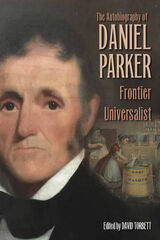
A vastly informative and rare early-American pioneer autobiography rescued from obscurity.
In this remarkable memoir, Daniel Parker (1781–1861) recorded both the details of everyday life and the extraordinary historical events he witnessed west of the Appalachian Mountains between 1790 and 1840. Once a humble traveling salesman for a line of newly invented clothes washing machines, he became an outspoken advocate for abolition and education. With his wife and son, he founded Clermont Academy, a racially integrated, coeducational secondary school—the first of its kind in Ohio.
However, Parker’s real vocation was as a self-ordained, itinerant preacher of his own brand of universal salvation. Raised by Presbyterian parents, he experienced a dramatic conversion to the Halcyon Church, an alternative, millenarian religious movement led by the enigmatic prophet Abel Sarjent, in 1803. After parting ways with the Halcyonists, he continued his own biblical and theological studies, arriving at the universalist conclusions that he would eventually preach throughout the Ohio River Valley.
David Torbett has transcribed Parker’s manuscript and publishes it here for the first time, together with an introduction, epilogue, bibliography, and extensive notes that enrich and contextualize this rare pioneer autobiography.

One of the few autobiographies to have survived from the Middle Ages, this life history of one of the most influential rulers of the fourteenth century, Charles IV of Bohemia, covers his life from birth until his election as King of Germany in 1346.
Charles IV describes his childhood, spent mainly in the court of French kings, his juvenile years, his marriage and his first steps into the international political scene during the early part of the fourteenth century.
A unique addition to this volume is the first ever English translation of the Legend of Saint Wenceslas, written by Charles IV of Luxemburg.
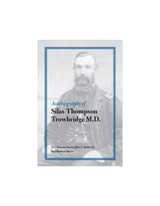
Autobiography of Silas Thompson Trowbridge M.D. is a remarkable account of nineteenth-century medicine, politics, and personal life that recovers the captivating experiences of a Civil War–era regimental surgeon who was also a president of the Illinois State Medical Society and a United States consul in Mexico. First published in 1872 by Trowbridge’s family and even printed on a family-owned press, only a handful of copies of the initial publication survive. In this first paperback edition, Trowbridge’s memoirs are reprinted as they originally appeared.
Indiana-born Trowbridge moved to Illinois in his early twenties. A teacher by trade, he continued that career while he began the study of medicine, eventually starting a medical practice near New Castle, which he later moved to Decatur. Though respected by the community, Trowbridge lacked an authentic medical degree, so he enrolled in a four-month course of medical lectures at Rush Medical College in Chicago. Autobiography describes the atmosphere of the medical school and delineates Trowbridge’s opinions on the lack of quality control in medical colleges of the day.
Although three years of study and two annual terms of sixteen weeks were the actual requirements for the degree, Trowbridge was allowed to graduate after a single course of lectures and completion of a twenty-page thesis due to his previous experience. He then married a young widow and returned to Decatur, where he began a partnership with two local physicians and inaugurated a county medical society. In addition to practicing medicine, he was known and respected for regulating it, too, having supported legislation that would legalize dissection and prohibit incompetent persons from practicing medicine.
In 1861, Trowbridge began service as a surgeon of the 8th Illinois Volunteer Infantry commanded by Colonel Richard J. Oglesby. Autobiography describes his experiences beginning in Cairo, Illinois, where the infantry was involved in several expeditions and where Trowbridge made his “debut at the operating table.” Revealing a litany of surgical duties, replete with gruesome details, these war-time recollections provide a unique perspective on medical practices of the day. Likewise, his commentaries on political issues and his descriptions of combat serve to correct some of the early written histories of the war’s great battles.
After receiving an honorable discharge in 1864, Trowbridge returned to Decatur to resume his partnership with Dr. W. J. Chenoweth and devote himself to surgery. His reminiscences recount several difficult surgeries, his efforts to reorganize the county medical society (which had collapsed during the war), and his communications to the Illinois legislature to set higher qualifications for practicing physicians. He was later elected president of the Illinois State Medical Society and appointed by President Grant United States Consul to Vera Cruz on the eastern coast of Mexico, where he studied and challenged the treatment of yellow fever. The autobiography ends in 1874 with a six-day family vacation and the marriage of his daughter to a merchant of Vera Cruz.
A bold challenge to established scholarship, Autochthonomies ranges from Africa to Europe and the Americas to provide powerful new tools for charting the transnational interactions between African cultural producers and sites.

A critical history of the recurring idea that technology will free us from work and bring about a truly democratic society.
In popular thought, ancient Athens endures as a place ahead of its time—the birthplace of democracy, a cultural center, and a model toward which modern societies should strive. In Automated Athens, Michele Kennerly examines the many and frequent appeals to this nostalgic vision of the ancient city-state throughout the early age of computerized automation. In the mid-twentieth century, people hoped that automation would free us from mindless, dehumanizing work so that we could attend to creative and communal pursuits. Proponents appealed to ancient Athens, saying automated systems and machines would stand in for the craftsmen, enslaved people, and subordinated women who performed the undesirable work that enabled that city-state’s flourishing. Automated Athens scrutinizes this appeal as it moves chronologically into present debates about the promise of automation and AI. For Kennerly, our inability to settle debates about where accelerating automation may take us, especially politically, reveals a deeper cultural indecisiveness about how to live well and live well together.
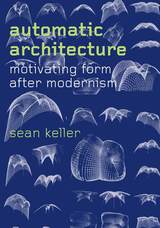
The quixotic attempts to formulate such design processes extended modernist principles and tried to draw architecture closer to mathematics and the sciences. By focusing on design methods, and by examining evidence at a range of scales—from institutions to individual buildings—Automatic Architecture offers an alternative to narratives of this period that have presented postmodernism as a question of style, as the methods and techniques traced here have been more deeply consequential than the many stylistic shifts of the past half century. Sean Keller closes the book with an analysis of the contemporary condition, suggesting future paths for architectural practice that work through, but also beyond, the merely automatic.
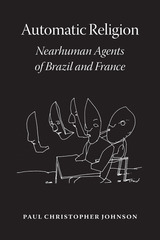
Automatic Religion explores an unlikely series of episodes from the end of the nineteenth century, when crucial ideas related to automatism and, in a different realm, the study of religion were both being born. Paul Christopher Johnson draws on years of archival and ethnographic research in Brazil and France to explore the crucial boundaries being drawn at the time between humans, “nearhumans,” and automata. As agency came to take on a more central place in the philosophical, moral, and legal traditions of the West, certain classes of people were excluded as less-than-human. Tracking the circulation of ideas across the Atlantic, Johnson tests those boundaries, revealing how they were constructed on largely gendered and racial foundations. In the process, he reanimates one of the most mysterious and yet foundational questions in trans-Atlantic thought: what is agency?
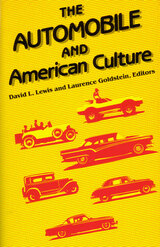
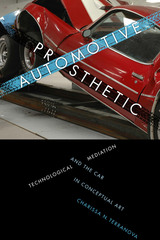
In the twenty-first century, we are continually confronted with the existential side of technology—the relationships between identity and the mechanizations that have become extensions of the self. Focusing on one of humanity’s most ubiquitous machines, Automotive Prosthetic: Technological Mediation and the Car in Conceptual Art combines critical theory and new media theory to form the first philosophical analysis of the car within works of conceptual art. These works are broadly defined to encompass a wide range of creative expressions, particularly in car-based conceptual art by both older, established artists and younger, emerging artists, including Ed Ruscha, Martha Rosler, Richard Prince, Sylvie Fleury, Yael Bartana, Jeremy Deller, and Jonathan Schipper.
At its core, the book offers an alternative formation of conceptual art understood according to technology, the body moving through space, and what art historian, curator, and artist Jack Burnham calls “relations.” This thought-provoking study illuminates the ways in which the automobile becomes a naturalized extension of the human body, incarnating new forms of “car art” and spurring a technological reframing of conceptual art. Steeped in a sophisticated take on the image and semiotics of the car, the chapters probe the politics of materialism as well as high/low debates about taste, culture, and art. The result is a highly innovative approach to contemporary intersections of art and technology.
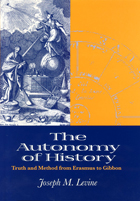
Levine's first three essays discuss Thomas More's preoccupation with the distinction between history and fiction; Erasmus's biblical criticism and the contribution of Renaissance philology to critical method; and the way in which Renaissance rhetoric, as in Thomas Elyot's Book of the Governor, continued to inhibit the autonomy of history. He then shows how these issues persisted into the eighteenth century, even as critical method developed. He concludes with a close description of the great controversy that culminated in Edward Gibbon's day over the authenticity of a biblical text that had been used for centuries to defend the Trinity but which turned out to be a forgery. Levine shows how by then all sides were ready to concede the autonomy of history.
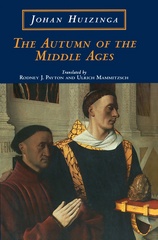
The Autumn of the Middle Ages is Johan Huizinga's classic portrait of life, thought, and art in fourteenth- and fifteenth-century France and the Netherlands. Few who have read this book in English realize that The Waning of the Middle Ages, the only previous translation, is vastly different from the original Dutch, and incompatible will all other European-language translations.
For Huizinga, the fourteenth- and fifteenth-century marked not the birth of a dramatically new era in history—the Renaissance—but the fullest, ripest phase of medieval life and thought. However, his work was criticized both at home and in Europe for being "old-fashioned" and "too literary" when The Waning of the Middle Ages was first published in 1919. In the 1924 translation, Fritz Hopman adapted, reduced and altered the Dutch edition—softening Huizinga's passionate arguments, dulling his nuances, and eliminating theoretical passages. He dropped many passages Huizinga had quoted in their original old French. Additionally, chapters were rearranged, all references were dropped, and mistranslations were introduced.
This translation corrects such errors, recreating the second Dutch edition which represents Huizinga's thinking at its most important stage. Everything that was dropped or rearranged has been restored. Prose quotations appear in French, with translations preprinted at the bottom of the page, mistranslations have been corrected.
"The advantages of the new translation are so many. . . . It is one of the greatest, as well as one of the most enthralling, historical classics of the twentieth century, and everyone will surely want to read it in the form that was obviously intended by the author." —Francis Haskell, New York Review of Books
"A once pathbreaking piece of historical interpretation. . . . This new translation will no doubt bring Huizinga and his pioneering work back into the discussion of historical interpretation." —Rosamond McKitterick, New York Times Book Review
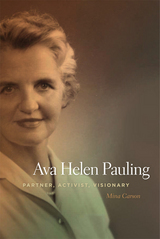
Though she began her public career in the shadow of her spouse, Ava Helen soon found herself tugged between her ardor to support Linus in his career and her desire that he embrace the social and political causes she felt passionate about. She believed it was her destiny to accept duties as a mother and homemaker, but neither of those roles was fully satisfying. Her more complete identity emerged over decades, as she evolved as an influential activist.
Ava Helen Pauling’s story is significant because so many aspects of it were shared with countless American women of her generation and the generations surrounding her. They had new educational opportunities but were expected to conform to the same limited social roles dictated by the gender ideology of the nineteenth century. When second wave feminism erupted in the 1960s, its force did not come solely from the young women rebelling against their elders’ rules and limitations, but also from the frustrated dreams of those elders themselves.
Ava Helen did not experience overt oppression by her husband or community; she even asserted some very non-feminist positions as a young woman. This, combined with a structural lack of opportunity, contributed to the strength and persistence of role expectations in her life. At the same time, she was feisty and willful. Her personality both created her marital loyalty and eventually took her down an openly feminist path.
Ava Helen Pauling: Partner, Activist, Visionary is an important complement to writings about Linus Pauling and a welcome addition to the literature on women’s and family history. It will also appeal to students and scholars of peace and reform movements and the social history of science.
Available Light tells the story of an activist, an artist, a uniquely South African individual, and his community and family across the second half of the twentieth century. Omar Badsha was born in Durban, on the country’s southeastern coast in 1945. His was the third generation of his Gujarati family to call South Africa home. Before he turned five, the country’s white electorate had voted to institute apartheid to strip the rights and privileges of citizenship from most of the population, including Badsha’s Indian community and especially the country’s Black majority. By the time he turned fifteen, nonviolent protest against apartheid had been quashed; by the time he turned twenty, so too had the armed struggle to dislodge white supremacy within the country. The ongoing, resilient, and oft-rebuffed struggle against apartheid was a definitive factor in Badsha’s life.
Furthermore, Badsha was raised in a community where art—painting, carving, music, poetry, theater—was inseparable from other values, whether Islamic and conservative or radical and urgently committed. When Badsha struggled in school, he, like his father, turned to art to express what he otherwise had difficulty conveying. Art brought him into contact with people of disparate backgrounds from far beyond Durban. In time, his friendships with other artists helped him refine his voice, first in drawing and eventually in photography, and capture the political ethic by which he strove to live his life and which he shared with similarly committed artist-activists.
Daniel Magaziner chronicles how art and politics became intertwined in South Africa and explains what it takes to maintain a critical aesthetic approach to political crises in the past and present. The book tracks the personal and social costs that commitment can incur, while also appreciating how Badsha and others like him have maintained their vision of an equitable, transformed society even today, when the ideals that once animated the South African struggle are on the back foot worldwide.
Antliff considers three French fascists: Georges Valois, Philippe Lamour, and Thierry Maulnier, demonstrating how they appropriated the avant-garde aesthetics of cubism, futurism, surrealism, and the so-called Retour à l’Ordre (“Return to Order”), and, in one instance, even defined the “dynamism” of fascist ideology in terms of Soviet filmmaker Sergei Eisenstein’s theory of montage. For these fascists, modern art was the mythic harbinger of a regenerative revolution that would overthrow existing governmental institutions, inaugurate an anticapitalist new order, and awaken the creative and artistic potential of the fascist “new man.”
In formulating the nexus of fascist ideology, aesthetics, and violence, Valois, Lamour, and Maulnier drew primarily on the writings of the French political theorist Georges Sorel, whose concept of revolutionary myth proved central to fascist theories of cultural and national regeneration in France. Antliff analyzes the impact of Sorel’s theory of myth on Valois, Lamour, and Maulnier. Valois created the first fascist movement in France; Lamour, a follower of Valois, established the short-lived Parti Fasciste Révolutionnaire in 1928 before founding two fascist-oriented journals; Maulnier forged a theory of fascism under the auspices of the journals Combat and Insurgé.
The renowned Argentine art historian and critic Andrea Giunta analyzes projects specifically designed to internationalize Argentina’s art and avant-garde during the 1960s: the importation of exhibitions of contemporary international art, the sending of Argentine artists abroad to study, the organization of prize competitions involving prestigious international art critics, and the export of exhibitions of Argentine art to Europe and the United States. She looks at the conditions that made these projects possible—not least the Alliance for Progress, a U.S. program of “exchange” and “cooperation” meant to prevent the spread of communism through Latin America in the wake of the Cuban Revolution—as well as the strategies formulated to promote them. She describes the influence of Romero Brest, prominent art critic, supporter of abstract art, and director of the Centro de Artes Visuales del Instituto Tocuato Di Tella (an experimental art center in Buenos Aires); various group programs such as Nueva Figuración and Arte Destructivo; and individual artists including Antonio Berni, Alberto Greco, León Ferrari, Marta Minujin, and Luis Felipe Noé. Giunta’s rich narrative illuminates the contentious postwar relationships between art and politics, Latin America and the United States, and local identity and global recognition.

Mike Sell's study is groundbreaking in its consideration of the avant-garde in relationship to a crucial but rarely considered agent: the scholar and critic. The book examines the role of the scholar and critic in the cultural struggles of radical artists and activists and reveals how avant-garde performance identifies the very limits of critical consideration. The book also explores the popularization of the avant-garde: how formerly subversive art is eventually discovered by the mass media, is gobbled up by the marketplace, and eventually finds its way onto the syllabi of college and university courses. Avant-Garde Performance and the Limits of Criticism is a timely and significant book that will become a standard reference for scholars in the fields of avant-garde literary criticism, theater history, critical theory, and performance studies.
"A provocative exploration of relations between the historical avant-garde and Cold War vanguard art and theatre. Sell's compelling historical and cultural narrative shows how the connections between the two exist at a very deep level of radical politics and aesthetics--an amazing concoction of rigorous scholarship, interdisciplinary learning, and progressive theorizing."
--Michael Vanden Heuvel, University of Wisconsin, Madison
"One of the most sophisticated, engaged, and engaging studies of the avant-garde in the United States that I've read-an important study that will raise the bar not only on scholarship of the Black Arts Movement, but on U.S. avant-gardism generally."
--James Smethurst, University of Massachusetts
A volume in the series Theater: Theory/Text/Performance. A list of recent titles in the series appears at the front of this volume.
By examining six mainline white denominations—Episcopalians, Methodists, Presbyterians, Baptists, Disciples of Christ, and Lutherans—Samuel C. Shepherd Jr. emphasizes the extent to which the city fostered religious diversity, even as “blind spots” remained regarding Catholics, African Americans, Mormons, and Jews. Shepherd explores such topics as evangelism, interdenominational cooperation, the temperance campaign, the Sunday school movement, the international peace initiatives, and the expanding role of lay people of both sexes. He also notes the community’s widespread rejection of fundamentalism, a religious phenomenon almost automatically associated with the South, and shows how it nurtured social reform to combat a host of urban problems associated with public health, education, housing, women’s suffrage, prohibition, children, and prisons.
In lucid prose and with excellent use of primary sources, Shepherd delivers a fresh portrait of Richmond Protestants who embraced change and transformed their community, making it an active, progressive religious center of the New South.

Salt Lake City’s oldest residential historic district is a neighborhood known as the Avenues. During the late nineteenth century this area was home to many of the most influential citizens of Salt Lake City. Built from 1860 until 1930, it contains a mix of middle and upper middle class homes of varying architectural styles. This architectural diversity makes the Avenues unique among Utah's historic districts. For the past thirty years, as citizens have rediscovered the value of living in historic properties near downtown and the University of Utah, preservation efforts have soared in the area.
In 1980, the Avenues was established as a historic district and the Utah Historical Society published The Avenues of Salt Lake City. That book’s authors, Karl T. Haglund and Philip F. Notarianni, gleaned much about the area’s history by using information found on the historic district applications. This newly revised edition of The Avenues of Salt Lake City by Cevan J. LeSieur updates the original with a greatly expanded section on the historic homes in the neighborhood, including more than 600 new photos, and additional material covering the history of the Avenues since 1980.
The book is designed so that readers can take it along as a guide when exploring the neighborhoods. All the pictures of Avenues homes are accompanied with architectural information and brief histories of the properties. This volume makes a valuable resource for those interested in the history of the Avenues and its diverse architecture, and for anyone interested in Utah history, Utah architecture, and historic preservation.
A territory split by slavery, a state forged for union
Avenues of Transformation traces the surprising path, marked by shame, ambition, and will that led to Illinois’s admission to the Union in 1818. Historian James A. Edstrom guides the reader through this story by associating each stage of the narrative—the original statehood campaign, the passage of Illinois’s statehood-enabling act by Congress, and Illinois’s first constitutional convention—with the primary leaders in each of those episodes. The lives of these men—Daniel Pope Cook, Nathaniel Pope, and Elias Kent Kane—reflect the momentous tangle of politics, slavery, and geography. This history maps the drive for statehood in the conflict between nation and state, in the perpetuation of slavery, and in the sweep of water and commerce. It underscores the ways in which the Prairie State is uniquely intertwined—economically, socially, and politically—with every region of the Union: North, South, East, and West—and captures the compelling moment when Illinois statehood stood ready to more perfectly unify the nation.
This volume is the first full-length book in over a century to describe and analyze Illinois’s admission to the Union. It marks the first time that a historian has analyzed in detail the roll-call votes of the first state constitutional convention, seated evenly by pro- and antislavery delegates. Edstrom’s wit and prose weave a lively narrative of political ambition and human failure. Patiently crafted, Avenues of Transformation will be the first source for readers to turn to for gaining a better understanding of Illinois statehood.
Bonner finds that India’s inability or refusal to address its debilitating social structure may be the precursor to an apocalyptic social upheaval unless heed is paid to the social movements that his first-hand investigation reveals.

In the years between the American Revolution and the Civil War, there was an awkward persistence of sovereign rituals, vestiges of a monarchical past that were not easy to shed. In Awkward Rituals, Dana Logan focuses our attention on these performances, revealing the ways in which governance in the early republic was characterized by white Protestants reenacting the hierarchical authority of a seemingly rejected king. With her unique focus on embodied action, rather than the more common focus on discourse or law, Logan makes an original contribution to debates about the relative completeness of America’s Revolution.
Awkward Rituals theorizes an under-examined form of action: rituals that do not feel natural even if they sometimes feel good. This account challenges common notions of ritual as a force that binds society and synthesizes the self. Ranging from Freemason initiations to evangelical societies to missionaries posing as sailors, Logan shows how white Protestants promoted a class-based society while simultaneously trumpeting egalitarianism. She thus redescribes ritual as a box to check, a chore to complete, an embarrassing display of theatrical verve. In Awkward Rituals, Logan emphasizes how ritual distinctively captures what does not change through revolution.
The half century between statehood in 1896 and the end of World War II in 1945 was a period of transformation and transition for Utah. This book interprets those profound changes, revealing sweeping impacts on both institutions and ordinary people. Drawing upon expertise honed over decades of teaching, researching, and writing about Utah’s history, the authors incorporate fresh archival sources, new oral histories, and hundreds of scholarly articles and books as they narrate the little-known story of the crucial formative years when Utah came of age.
During its sometimes awkward years of adolescence and maturation, Utah was gradually incorporated into the American political, social, and economic mainstream. Urban and industrial influences supplanted agrarian traditions, displacing people socially, draining the countryside of population, and galvanizing a critical crisis in values and self-identification. National corporations and mass labor movements took root in the state as commerce expanded. Involvement in world events such as the Spanish-American War, two world wars, and the Great Depression further set the stage for entry into the modern, globalized world as Utahns immersed themselves in national politics and became part of the democratic, corporate culture of twentieth-century America.

Why did abstraction dominate American art, social science, and natural science in the mid-twentieth century? Why, despite opposition, did abstraction and theoretical knowledge flourish across a diverse set of intellectual pursuits during the Cold War? In recovering the centrality of abstraction across a range of modernist projects in the United States, Alma Steingart brings mathematics back into the conversation about midcentury American intellectual thought. The expansion of mathematics in the aftermath of World War II, she demonstrates, was characterized by two opposing tendencies: research in pure mathematics became increasingly abstract and rarified, while research in applied mathematics and mathematical applications grew in prominence as new fields like operations research and game theory brought mathematical knowledge to bear on more domains of knowledge. Both were predicated on the same abstractionist conception of mathematics and were rooted in the same approach: modern axiomatics.
For American mathematicians, the humanities and the sciences did not compete with one another, but instead were two complementary sides of the same epistemological commitment. Steingart further reveals how this mathematical epistemology influenced the sciences and humanities, particularly the postwar social sciences. As mathematics changed, so did the meaning of mathematization.
Axiomatics focuses on American mathematicians during a transformative time, following a series of controversies among mathematicians about the nature of mathematics as a field of study and as a body of knowledge. The ensuing debates offer a window onto the postwar development of mathematics band Cold War epistemology writ large. As Steingart’s history ably demonstrates, mathematics is the social activity in which styles of truth—here, abstraction—become synonymous with ways of knowing.

Aymara Indians are a geographically isolated, indigenous people living in the Andes Mountains near Chile’s Atacama Desert, one of the most arid regions of the world. As rapid economic growth in the area has begun to divert scarce water to hydroelectric and agricultural projects, the Aymara struggle to maintain their sustainable and traditional systems of water use, agriculture, and pastoralism.
In Aymara Indian Perspectives on Development in the Andes, Amy Eisenberg provides a detailed exploration of the ethnoecological dimensions of the tension between the Aymara, whose economic, spiritual, and social life are inextricably tied to land and water, and three major challenges: the paving of Chile Highway 11, the diversion of the Altiplano waters of the Río Lauca for irrigation and power-generation, and Chilean national park policies regarding Aymara communities, their natural resources, and cultural properties within Parque Nacional Lauca, the International Biosphere Reserve.
Pursuing collaborative research, Eisenberg performed ethnographic interviews with Aymara people in more than sixteen Andean villages, some at altitudes of 4,600 meters. Drawing upon botany, agriculture, natural history, physical and cultural geography, history, archaeology, and social and environmental impact assessment, she presents deep, multifaceted insights from the Aymara’s point of view.
Illustrated with maps and dramatic photographs by John Amato, Aymara Indian Perspectives on Development in the Andes provides an account of indigenous perspectives and concerns related to economic development that will be invaluable to scholars and policy-makers in the fields of natural and cultural resource preservation in and beyond Chile.
Birmingham and Goldstein attempt to unlock some of the mysteries, providing insights and information about the group of people who first settled here in 1100 AD. Filled with maps, drawings, and photographs of artifacts, this small volume examines a time before modern Native American people settled in this area.
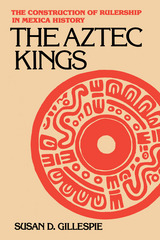
The Aztec Kings is the first major study to take into account the Aztec cyclical conception of time—which required that history constantly be reinterpreted to achieve continuity between past and present—and to treat indigenous historical traditions as symbolic statements in narrative form. Susan Gillespie focuses on the dynastic history of the Mexica of Tenochtitlan, whose stories reveal how the Aztecs used "history" to construct, elaborate, and reify ideas about the nature of rulership and the cyclical nature of the cosmos, and how they projected the Spanish conquest deep into the Aztec past in order to make history accommodate that event.
By demonstrating that most of Aztec history is nonliteral, she sheds new light on Aztec culture and on the function of history in society. By relating the cyclical structure of Aztec dynastic history to similar traditions of African and Polynesian peoples, she introduces a broader perspective on the function of history in society and on how and why history must change.
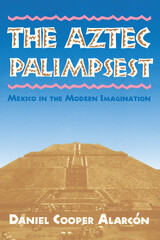
He shows how the Chicano myth of Aztlan was constructed upon earlier Mesoamerican myths, discusses representations of Mexico in texts by nineteenth- and twentieth-century writers, and analyzes the content of tourist literature, thereby revealing the economic, social, and political interests that drive the production of Mexicanness today. This original linking of seemingly incongruous discourses corrects the misconception that Mexicanness is produced only by hegemonic groups. Cooper shows how Mexico has been defined and represented, by both Mexicans and non-Mexicans, as more than a political or geographic entity, and he particularly reveals how Mexicanness has been exploited by Mexicans themselves through the promotion of tourism as a form of neocolonialism.
Cooper's work is valuable both for identifying attempts to revise and control Mexican myth, history, and culture and for defining the intricate relationship between history, historiography, and cultural nationalism. The Aztec Palimpsest extends existing analyses of Mexicanness into new theoretical realms and provides a fresh perspective on the relationship between the United States and Mexico at a time when these two nations are becoming more intimately linked.

Supported with ample iconographic, ethnohistoric, etymological, and scientific evidence, Aztec Science is a groundbreaking endeavor introducing a new and radical approach to the study of Aztec art. It demonstrates that the Indigenous peoples of ancient Mesoamerica recorded scientific information about plants in their material culture. The detailed analysis of plant imagery in Aztec art, including in manuscripts such as the Codex Borgia, reveals that the cultural importance of maize and other plants was closely linked to scientific concepts that were well known in central Mexico centuries before they were subsequently “discovered” in Europe.
For the Nahua, Helen Burgos-Ellis argues, maize’s significance went far beyond economic value and religious importance. In Nahua art, references to maize, grass, and Quetzalcoatl reflect historic and scientifically relevant information. These images and glyphs, when studied against the ethnohistoric and scientific record of central Mexicans’ vast knowledge of plants, indicate that the Nahua understood key concepts about the maize plant, including its genetic origin from a common grass, pollination process, life cycle, and sexual reproduction. Consequently, the cultural significance of maize for the Nahuas was deeply intertwined with scientific understanding.
Aztec Science is a radical departure from bulk of the scholarship on the Codex Borgia, which has primarily been understood to contain calendrical and ritual information rather than botanical content, and is of significant interest to Pre-Columbianists and students and scholars of ethnohistory, Indigenous history and culture, traditional ecological knowledge, art history, and the history of science and botany.
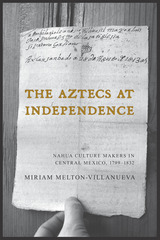
The Aztecs at Independence offers the first internal ethnographic view of these central Mexican indigenous communities in the critical transitional time of Independence. Miriam Melton-Villanueva uses previously unknown Nahuatl-language sources—primarily last wills and testaments—to provide a comprehensive understanding of indigenous societies during the transition from colonial to postcolonial times. The book describes the cultural life of people now called Nahuas or Mexicas in the nineteenth century—based on their own words, their own written records. The book uses previously unknown, unstudied, and untranslated indigenous texts to bring Nahua society into history, fleshing out glimpses of daily life in the early nineteenth century. Thus, The Aztecs at Independence describes life at the most local level: Nahua lineages of ritual and writing, guilds and societies, the people that take turns administering festivals and attending to the last wishes of the dying.
Interwoven with personal stories and memory, The Aztecs at Independence invites a general audience along on a scholarly journey, where readers are asked to imagine Nahua concepts and their contemporary meanings that give light to modern problems.
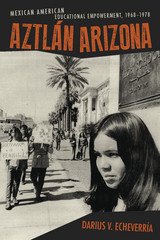
The word Aztlán, originally meaning the legendary ancestral home of the Nahua peoples of Mesoamerica, was adopted as a symbol of independence by Chicano/a activists during the movement of the 1960s and 1970s. In an era when poverty, prejudice, and considerable oppositional forces blighted the lives of roughly one-fifth of Arizonans, the author argues that understanding those societal realities is essential to defining the rise and power of the Chicano Movement.
The book illustrates how Mexican American communities fostered a togetherness that ultimately modified larger Arizona society by revamping the educational history of the region. The concluding chapter outlines key Mexican American individuals and organizations that became politically active in order to address Chicano educational concerns. This Chicano unity, reflected in student, parent, and community leadership organizations, helped break barriers, dispel the Mexican American inferiority concept, and create educational change that benefited all Arizonans.
No other scholar has examined the emergence of Chicano Movement politics and its related school reform efforts in Arizona. Echeverría’s thorough research, rich in scope and interpretation, is coupled with detailed and exact endnotes. The book helps readers understand the issues surrounding the Chicano Movement educational reform and ethnic identity. Equally important, the author shows how residual effects of these dynamics are still pertinent today in places such as Tucson.
READERS
Browse our collection.
PUBLISHERS
See BiblioVault's publisher services.
STUDENT SERVICES
Files for college accessibility offices.
RECENTLY PUBLISHED


UChicago Accessibility Resources
home | accessibility | search | about | contact us
BiblioVault ® 2001 - 2026
The University of Chicago Press