
 A SCHOLARLY BOOK REPOSITORY
257 start with A start with A
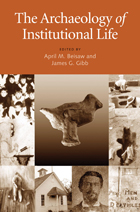
Institutions pervade social life. They express community goals and values by defining the limits of socially acceptable behavior. Institutions are often vested with the resources, authority, and power to enforce the orthodoxy of their time. But institutions are also arenas in which both orthodoxies and authority can be contested. Between power and opposition lies the individual experience of the institutionalized. Whether in a boarding school, hospital, prison, almshouse, commune, or asylum, their experiences can reflect the positive impact of an institution or its greatest failings. This interplay of orthodoxy, authority, opposition, and individual experience are all expressed in the materiality of institutions and are eminently subject to archaeological investigation.
A few archaeological and historical publications, in widely scattered venues, have examined individual institutional sites. Each work focused on the development of a specific establishment within its narrowly defined historical context; e.g., a fort and its role in a particular war, a schoolhouse viewed in terms of the educational history of its region, an asylum or prison seen as an expression of the prevailing attitudes toward the mentally ill and sociopaths. In contrast, this volume brings together twelve contributors whose research on a broad range of social institutions taken in tandem now illuminates the experience of these institutions. Rather than a culmination of research on institutions, it is a landmark work that will instigate vigorous and wide-ranging discussions on institutions in Western life, and the power of material culture to both enforce and negate cultural norms.
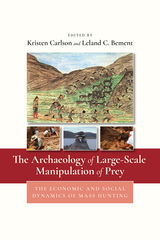
The Archaeology of Large-Scale Manipulation of Prey explores the social and functional aspects of large-scale hunting adaptations in the archaeological record. Mass-kill hunting strategies are ubiquitous in human prehistory and exhibit culturally specific economic, social, environmental, and demographic markers. Here, seven case studies—primarily from the Americas and spanning from the Folsom period on the Great Plains to the ethnographic present in Australia—expand the understanding of large-scale hunting methods beyond the customary role of subsistence and survival to include the social and political realms within which large-scale hunting adaptations evolved.
Addressing a diverse assortment of archaeological issues relating to the archaeological signatures and interpretation of mass-kill sites, The Archaeology of Large-Scale Manipulation of Prey reevaluates and rephrases the deep-time development of hunting and the themes of subsistence to provide a foundation for the future study of hunting adaptations around the globe. Authors illustrate various perspectives and avenues of investigation, making this an important contribution to the field of zooarchaeology and the study of hunter-gatherer societies throughout history. The book will appeal to archaeologists, ethnologists, and ecologists alike.
Contributors: Jane Balme, Jonathan Driver, Adam C. Graves, David Maxwell, Ulla Odgaard, John D. Speth, María Nieves Zedeño
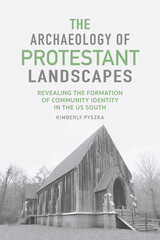
The Archaeology of Protestant Landscapes focuses on three religious institutions in the US South in the eighteenth and nineteenth centuries: St. Paul’s Parish Church in coastal South Carolina, St. Luke’s Episcopal Church in central Alabama, and Cane Hill College in Northwest Arkansas. Drawing from archaeological surveys and excavations, artifact analysis, archival research, geophysical testing, and architectural information on religious structures, Kimberly Pyszka offers case studies of these institutions, which were located in developing communities that varied socially, politically, and economically.
Pyszka uses these case studies to demonstrate that select religious institutions used and modified natural landscape features to create cultural landscapes to express their ideology, identity, goals, and social, religious, and political power. She notes that where those structures were constructed, how they sat on the landscape, their architectural style, and their overall visual appearance were well-considered decisions made by religious leaders to benefit their organizations, communities, and, sometimes, themselves.
Pyszka also uses these case studies to highlight the social roles that religious organizations played in the development of communities. She points to landscape decisions—specifically to how the architectural design of religious structures was used, intentionally or not, to unite people, often those of differing religious backgrounds—as contributing to the creation of a common identity among people living in new and still-growing settlements, aiding in community development. This book contributes to the growing body of work within historical archaeology on churches, churchyards, and cemeteries and to the increasing awareness among archaeologists of how these sites contribute to questions of identity, consumerism, trade, and colonialism.
How did ancient peoples experience, view, and portray the night? What was it like to live in the past when total nocturnal darkness was the norm? Archaeology of the Night explores the archaeology, anthropology, mythology, iconography, and epigraphy of nocturnal practices and questions the dominant models of daily ancient life. A diverse team of experienced scholars uses a variety of methods and resources to reconstruct how ancient peoples navigated the night and what their associated daily—and nightly—practices were.
This collection challenges modern ideas and misconceptions regarding the night and what darkness and night symbolized in the ancient world, and it highlights the inherent research bias in favor of “daytime” archaeology. Numerous case studies from around the world (including Oman, Mesoamerica, Scandinavia, Rome, Great Zimbabwe, Indus Valley, Peru, and Cahokia) illuminate subversive, social, ritual, domestic, and work activities, such as witchcraft, ceremonies, feasting, sleeping, nocturnal agriculture, and much more. Were there artifacts particularly associated with the night? Authors investigate individuals and groups (both real and mythological) who share a special connection to nighttime life.
Reconsidering the archaeological record, Archaeology of the Night views sites, artifacts, features, and cultures from a unique perspective. This book is relevant to anthropologists and archaeologists and also to scholars of human geography, history, astronomy, sensory studies, human biology, folklore, and mythology.
Contributors: Susan Alt, Anthony F. Aveni, Jane Eva Baxter, Shadreck Chirikure, Minette Church, Jeremy D. Coltman, Margaret Conkey, Tom Dillehay, Christine C. Dixon, Zenobie Garrett, Nancy Gonlin, Kathryn Kamp, Erin Halstad McGuire, Abigail Joy Moffett, Jerry D. Moore, Smiti Nathan, April Nowell, Scott C. Smith, Glenn R. Storey, Meghan Strong, Cynthia Van Gilder, Alexei Vranich, John C. Whittaker, Rita Wright
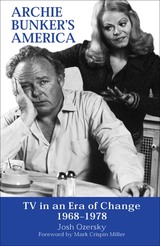
Around 1968, advertisers who were anxious to break into the lucrative baby-boomer demographic convinced television networks to begin to abandon prime-time programming that catered to universal audiences. With the market splintering, networks ventured into more issue-based and controversial territories. While early network attempts at more “relevant” programming failed, Ozersky examines how CBS struck gold with the political comedy All in the Family in 1971 and how other successful, conflict-based comedies turned away from typical show business conventions. As the 1970s wore on, the innovations of the previous years began to lose their public appeal. After Vietnam and Watergate, Ozersky argues, Americans were exhausted from the political turbulence of the preceding decade and were ready for a televisual “return to normalcy.”
Straightforward, engaging, and liberally illustrated, Archie Bunker’s America is peppered with the stories of outsider cops and failed variety shows, of a young Bill Murray and an old Ed Sullivan, of Mary Tyler Moore, Fonzie, and the Skipper, too. Drawing on interviews with television insiders, trade publications, and the programs themselves, Ozersky chronicles the ongoing attempts of prime-time television to program for a fragmented audience—an audience whose greatest common denominator, by 1978, may well have been the act of watching television itself. The book also includes a foreword by renowned media critic Mark Crispin Miller and an epilogue of related commentary on the following decades.
Winner of the MLA Prize for Independent Scholars
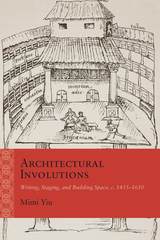
Taking the reader on an inward journey from façades to closets, from physical to psychic space, Architectural Involutions offers an alternative genealogy of theater by revealing how innovations in architectural writing and practice transformed an early modern sense of interiority. The book launches from a matrix of related “platforms”—a term that in early modern usage denoted scaffolds, stages, and draftsmen’s sketches—to situate Alberti, Shakespeare, Jonson, and others within a landscape of spatial and visual change.
As the English house underwent a process of inward folding, replacing a logic of central assembly with one of dissemination, the subject who negotiated this new scenography became a flashpoint of conflict in both domestic and theatrical arenas. Combining theory with archival findings, Mimi Yiu reveals an emergent desire to perform subjectivity, to unfold an interior face to an admiring public. Highly praised for its lucid writing, comprehensive supplementary material, and engaging tone, Architectural Involutions was the winner of the 2016 MLA Prize for Independent Scholars.
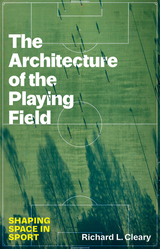
A novel exploration of playing fields as aesthetic and architectural spaces that frame athletes’ creativity and spectators’ evolving experiences of sport.
The playing field is more than an arena for sporting rivalry. It is a laboratory of invention, where athletes and coaches create new uses for the human body in response to the constraints and affordances of space. Indeed, Richard Cleary argues that, from translucent squash courts to the NBA three-point line to the city streets used by skateboarders, all sports have embedded spatial relationships that are also charged with social significance.
The Architecture of the Playing Field explores the aesthetic and physical experiences of the grounds on which we compete. Cleary digs into the perspectives of spectators, athletes, coaches, and umpires—perspectives that have changed along with the shifting configuration and mediation of the field, from early live sports coverage to today’s TV broadcasts overlaid with high-tech graphics and observed from every angle. Cleary shows how rules governing the size, shape, and divisions of the field reflect sports’ entwinement with societies at large, in particular the politics of race and gender. Mindful as well that some sports resist containment, he analyzes the disruptive use of space by snowboarders and parkour athletes. The Architecture of the Playing Field sensitizes us to the interplay of settings and bodies in motion fundamental to the power of sport.
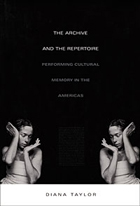
Examining various genres of performance including demonstrations by the children of the disappeared in Argentina, the Peruvian theatre group Yuyachkani, and televised astrological readings by Univision personality Walter Mercado, Taylor explores how the archive and the repertoire work together to make political claims, transmit traumatic memory, and forge a new sense of cultural identity. Through her consideration of performances such as Coco Fusco and Guillermo Gómez-Peña’s show Two Undiscovered Amerindians Visit . . . , Taylor illuminates how scenarios of discovery and conquest haunt the Americas, trapping even those who attempt to dismantle them. Meditating on events like those of September 11, 2001 and media representations of them, she examines both the crucial role of performance in contemporary culture and her own role as witness to and participant in hemispheric dramas. The Archive and the Repertoire is a compelling demonstration of the many ways that the study of performance enables a deeper understanding of the past and present, of ourselves and others.
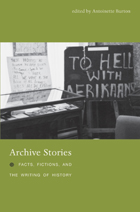
Archive Stories brings together ethnographies of the archival world, most of which are written by historians. Some contributors recount their own experiences. One offers a moving reflection on how the relative wealth and prestige of Western researchers can gain them entry to collections such as Uzbekistan’s newly formed Central State Archive, which severely limits the access of Uzbek researchers. Others explore the genealogies of specific archives, from one of the most influential archival institutions in the modern West, the Archives nationales in Paris, to the significant archives of the Bakunin family in Russia, which were saved largely through the efforts of one family member. Still others explore the impact of current events on the analysis of particular archives. A contributor tells of researching the 1976 Soweto riots in the politically charged atmosphere of the early 1990s, just as apartheid in South Africa was coming to an end. A number of the essays question what counts as an archive—and what counts as history—as they consider oral histories, cyberspace, fiction, and plans for streets and buildings that were never built, for histories that never materialized.
Contributors. Tony Ballantyne, Marilyn Booth, Antoinette Burton, Ann Curthoys, Peter Fritzsche, Durba Ghosh, Laura Mayhall, Jennifer S. Milligan, Kathryn J. Oberdeck, Adele Perry, Helena Pohlandt-McCormick, John Randolph, Craig Robertson, Horacio N. Roque Ramírez, Jeff Sahadeo, Reneé Sentilles

A major new reading of a U.S. public health system shaped by fraught perceptions of culture, race, and criminality
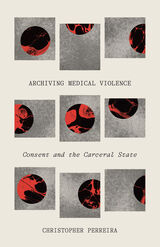
At the heart of Archiving Medical Violence is an interrogation of the notions of national and scientific progress, marking an advance in scholarship that shows how such violence is both an engine of medical progress and, more broadly, the production of empire. It reads the medical archive through a lens that centers how it is produced, remembered, and contested within cultural production and critical memory.
In this innovative and interdisciplinary book, Christopher Perreira argues that it is in the contradictions of settler colonialism and racial capitalism that we find how medical violence is narrated as a public good. He presents case studies from across a range of locations—Hawai‘i, California, Louisiana, Guatemala—and historical periods from the nineteenth century on. Examining national and scientific conceptions of progress through the lens of medicine and public health, he places official archives in dialogue with visual and literary works, patient writing, and more.
Archiving Medical Violence explores the contested public terrains for narrating value and vulnerabilities, bodies and geographical locations. Ultimately, Perreira reveals for us a medical imaginary built on racialized criminality driving contemporary politics of citizenship, memory, and identity.
Retail e-book files for this title are screen-reader friendly with images accompanied by short alt text and/or extended descriptions.
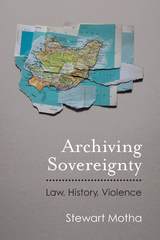
Sovereignty is often cast as a limit-concept, constituent force, determining the boundary of law. Archiving Sovereignty reverses this to explain how judicial pronouncements inscribe and sustain extravagant claims to exceptionality and sovereign solitude. This wide-ranging, critical work distinguishes between myths that sustain neocolonial orders and fictions that generate new forms of political and ethical life.
The new volume in the Urban Agenda series examines the technological questions still surrounding autonomous vehicles and the uncertain societal and legislative impact of widespread AV adoption. Assessing both short- and long-term concerns, the authors probe how autonomous vehicles might change transportation but also land use, energy consumption, mass transit, commuter habits, traffic safety, job markets, the freight industry, and supply chains. At the same time, the essays discuss opportunities for industry, researchers, and policymakers to make the autonomous future safer, more efficient, and more mobile.
Contributors: Austin Brown, Stan Caldwell, Chris Hendrickson, Kazuya Kawamura, Taylor Long, and P. S. Srira.


Chapters cover G8 attitudes to the key issues: war, corporate power, climate change, immigration, trade, debt, food. Ideal for anyone who is troubled by the current direction set by our world leaders, this book is also a great tool for activists.
Arms and the People explores the impact of profound social polarisation on the internal cohesion of the state’s ‘armed bodies of men’ and on the contested loyalties of soldiers. The different contributors examine a series of historical moments in which a crisis in the military institution has reflected a deeper social crisis which has penetrated that institution and threatened to disable it.
With a range of international contributors who have either studied or been directly involved in such social upheavals, Arms and the People is a pioneering contribution to the study of revolutionary change and will appeal to students and academics in history, politics and sociology.
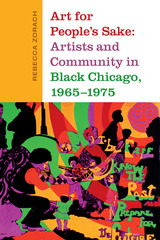

In order to both demystify and complicate our understanding of the practice of graffiti writing, this book pushes past the narrative that links the origins of graffiti to criminal gangs and instead offers a detailed portrait of graffiti as a rich urban culture with its own rules and practices. To do so, it examines the cultural history of graffiti in Philadelphia from the early 1970s onward and explores what it is like to be a graffiti writer in the city today. Ultimately, Tyson Mitman aims to humanize graffiti writers and to show that what they do is not merely destructive or puerile, but, rather, adds something important to the urban experience that is a conscious and deliberate act on the part of its practitioners.

MacDonald examines memes from feminist, queer, antiracist, and anticapitalist accounts on Instagram, as well as how meme genres and themes shift when they travel across different platforms and subcultures. By considering memes as a medium, she sheds light on how they operate within contemporary digital culture as a beacon for online public discourse that pushes against dominant norms.
Part ethnography and part historical study, The Artificial Ear is based on interviews with researchers who were pivotal in the early development and implementation of the new technology. Through an analysis of the scientific and clinical literature, Stuart Blume reconstructs the history of artificial hearing from its conceptual origins in the 1930s, to the first attempt at cochlear implantation in Paris in the 1950s, and to the widespread clinical application of the "bionic ear" since the 1980s.

Ingenious automatons which appeared to think on their own. Dubious mermaids and wild men who resisted classification. Elegant sleight-of-hand artists who routinely exposed the secrets of their trade. These were some of the playful forms of fraud which astonished, titillated, and even outraged nineteenth-century America's new middle class, producing some of the most remarkable urban spectacles of the century.
In The Arts of Deception, James W. Cook explores this distinctly modern mode of trickery designed to puzzle the eye and challenge the brain. Championed by the "Prince of Humbug," P. T. Barnum, these cultural puzzles confused the line between reality and illusion. Upsetting the normally strict boundaries of value, race, class, and truth, the spectacles offer a revealing look at the tastes, concerns, and prejudices of America's very first mass audiences. We are brought into the exhibition halls, theaters, galleries, and museums where imposture flourished, and into the minds of the curiosity-seekers who eagerly debated the wonders before their eyes. Cook creates an original portrait of a culture in which ambiguous objects, images, and acts on display helped define a new value system for the expanding middle class, as it confronted a complex and confusing world.

France is often depicted as the model of assimilationist or republican integration in the international literature on immigration. However, rarely have surveys drilled down to provide individual responses from a double representative sample. In As French as Everyone Else?, Sylvain Brouard and Vincent Tiberj provide a comprehensive assessment of the state of integration in France and challenge the usual crisis of integration by systematically comparing the "new French" immigrants, as well as their children and grandchildren born in France, with a sample of the French general population.
The authors' survey considers a wide range of topics, including religious affiliation and religiosity, political attitudes and political efficacy, value systems (including gender roles, work ethics, and anti-Semitism), patterns of integration, multiple identities and national belongings, and affirmative action. As the authors show, despite existing differences, immigrants of Maghrebin, African, and Turkish origin share a wide scope of commonality with other French citizens.

Through the experiences and reflections of steelworkers, Jill A. Schennum demonstrates the significance of work, and particularly of industrial work, in giving meaning to people’s lives, identities, and sense of worth. She uses workers’ narratives and voices to show the importance of work space, time, and social relations, rejecting dominant interpretations of blue-collar workers as alienated from their work but well-paid and co-opted by a middle-class standard of living. Schennum covers thirty-five years of investment and disinvestment, managerial initiatives, transfer decisions, layoffs and downsizings, external transfers, the eventual bankruptcy of the Bethlehem Steel Corporation, and movement into retirement, unemployment, and new postindustrial jobs.
The very solidarities, rights of citizenship, and rule of law forged in the mill and built on by the union were constructed, in part, through exclusions based on race, ethnicity, gender, and region. These lines of fracture were mobilized to undermine working-class strength in the postindustrial period. Through the experiences of African American, Puerto Rican, coal country, and women workers in the steel mills, this book explores these issues of fracture and solidarity.

Ashes of Immortality attempts to see the satis through Hindu eyes, providing an extensive experiential and psychoanalytic account of ritual self-sacrifice and self-mutilation in South Asia. Based on fifteen years of fieldwork in northern India, where the state-banned practice of sati reemerged in the 1970s, as well as extensive textual analysis, Weinberger-Thomas constructs a radically new interpretation of satis. She shows that their self-immolation transcends gender, caste and class, region and history, representing for the Hindus a path to immortality.
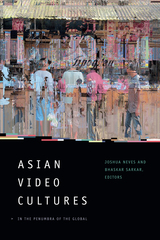
Contributors. Conerly Casey, Jenny Chio, Michelle Cho, Kay Dickinson, Bishnupriya Ghosh, Feng-Mei Heberer, Tzu-hui Celina Hung, Rahul Mukherjee, Joshua Neves, Bhaskar Sarkar, Nishant Shah, Abhigyan Singh, SV Srinivas, Marc Steinberg, Chia-chi Wu, Patricia Zimmerman

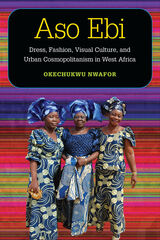
The Nigerian and West African practice of aso ebi fashion invokes notions of wealth and group dynamics in social gatherings. Okechukwu Nwafor’s volume Aso ebi investigates the practice in the cosmopolitan urban setting of Lagos, and argues that the visual and consumerist hype typical of the late capitalist system feeds this unique fashion practice. The book suggests that dress, fashion, aso ebi, and photography engender a new visual culture that largely reflects the economics of mundane living. Nwafor examines the practice’s societal dilemma, whereby the solidarity of aso ebi is dismissed by many as an ephemeral transaction. A circuitous transaction among photographers, fashion magazine producers, textile merchants, tailors, and individual fashionistas reinvents aso ebi as a product of cosmopolitan urban modernity. The results are a fetishization of various forms of commodity culture, personality cults through mass followership, the negotiation of symbolic power through mass-produced images, exchange value in human relationships through gifts, and a form of exclusion achieved through digital photo editing. Aso ebi has become an essential part of Lagos cosmopolitanism: as a rising form of a unique visual culture it is central to the unprecedented spread of a unique West African fashion style that revels in excessive textile overflow. This extreme dress style is what an individual requires to transcend the lack imposed by the chaos of the postcolonial city.

Contributors
Ebony Coletu, Kay Dickinson, Stefano Harney, Matthew Hockenberry, Tung-Hui Hu, Shannon Mattern, Fred Moten, Michael Palm, Ned Rossiter, Nicole Starosielski, Liam Cole Young, Susan Zieger
In response to increasingly negative attitudes toward journalism and its coverage of public affairs, many newspapers and television stations across the United States have experimented with novel approaches to reporting to better meet the public's demand for news. Known as "civic" or "public" journalism, this new movement seeks to improve the news media's ability to supply the information and insights needed by citizens of a democratic society. Critics of public journalism say it contradicts some principles of traditional reporting. As a result, the new movement has spurred great controversy among journalists. Assessing Public Journalism is the first book to evaluate this movement.
Public journalists use a variety of innovative methods to achieve their goals. To connect more closely with citizens, they may listen to their readers and viewers in neighborhood settings and public forums. To frame stories more accurately, they sometimes conduct focus groups and opinions polls. To maximize the reach of their work, print and electronic journalists have experimented with coordinated coverage of key elections and major public issues. Their goal is a form of journalism that improves the quality of citizen deliberation and participation in public life.
By collecting and focusing a wide range of original research and selected professional commentary, Assessing Public Journalism provides the necessary framework for examining the issues surrounding public journalism and for determining what must be done to enable it to meet its full potential. Scholars, journalists, and concerned citizens will benefit from this vital study.
At Home Among Strangers presents an engrossing portrait of the Deaf community as a complex, nationwide social network that offers unique kinship to deaf people across the country. Schein depicts in striking detail the history and culture of the Deaf community, its structural underpinnings, the intricacies of family life, issues of education and rehabilitation, economic factors, and interaction with the medical and legal professions. This book is a fascinating, provocative exploration of the Deaf community in the United States for scholars and lay people alike.

In At the Table, Miller shares the essential techniques she developed for the James Beard Foundation’s Chefs Boot Camp for Policy and Change. Readers will learn how to focus their philanthropic efforts; pinpoint their audience and develop their argument; recruit allies and support action; and maybe most importantly, grab people’s attention in a crowded media landscape.
Miller also shares the moving stories of chefs who used these skills to create lasting change. Tom Colicchio became one of the word’s most respected voices on ending hunger. Bakers Against Racism recruited more than 3,000 people to participate in their global bake sales. Chefs from around the country pushed Congress to provide financial relief to the restaurant industry at the height of the COVID-19 pandemic.
At the Table is filled with inspiration for anyone who has ever wanted to make a difference outside the four walls of their restaurant. And most importantly, it offers proven methods to become a successful advocate. You don’t have to be a celebrity chef to change the food system; you just need the will and the tools in this unique guide.
Despite the growing interest in atomic culture and history, the body of relevant scholarship is relatively sparse. Atomic Culture opens new doors into the field by providing a substantive, engaging, and historically based consideration of the topic that will appeal to students and scholars of the Atomic Age as well as general readers.
Contributors include Michael A. Amundson, Mick Broderick, Peter Goin, John Hunner, Ferenc M. Szasz, A. Costandina Titus, Peter C. van Wyck, and Scott C. Zeman.

While basketball didn’t take up residence in the White House in January 2009, the game nonetheless played an outsized role in forming the man who did. In The Audacity of Hoop, celebrated sportswriter Alexander Wolff examines Barack Obama, the person and president, by the light of basketball. This game helped Obama explore his identity, keep a cool head, impress his future wife, and define himself as a candidate.
Wolff chronicles Obama’s love of the game from age 10, on the campaign trail—where it eventually took on talismanic meaning—and throughout his two terms in office. More than 125 photographs illustrate Obama dribbling, shooting free throws, playing pickup games, cooling off with George Clooney, challenging his special assistant Reggie Love for a rebound, and taking basketball to political meetings. There is also an assessment of Obama’s influence on the NBA, including a dawning political consciousness in the league’s locker rooms.
Sidebars reveal the evolution of the president’s playing style, “Baracketology”—a not-entirely-scientific art of filling out the commander in chief’s NCAA tournament bracket—and a timeline charts Obama’s personal and professional highlights.
Equal parts biographical sketch, political narrative, and cultural history, The Audacity of Hoop shows how the game became a touchstone in Obama’s exercise of the power of the presidency.
Contributors: Kofi Agawu, Philip V. Bohlman. Michael Denning, Brent Hayes Edwards, Nan Enstad, Andrew Jones, Josh Kun, Morgan Luker, Jairo Moreno, Tejumola Olaniyan, Marc Perry, Ronald Radano, Nitasha Sharma, Micol Seigel, Gavin Steingo, Penny Von Eschen, Amanda Weidman.
Blending cultural studies and the history of communication technology, Sterne follows modern sound technologies back through a historical labyrinth. Along the way, he encounters capitalists and inventors, musicians and philosophers, embalmers and grave robbers, doctors and patients, deaf children and their teachers, professionals and hobbyists, folklorists and tribal singers. The Audible Past tracks the connections between the history of sound and the defining features of modernity: from developments in medicine, physics, and philosophy to the tumultuous shifts of industrial capitalism, colonialism, urbanization, modern technology, and the rise of a new middle class.
A provocative history of sound, The Audible Past challenges theoretical commonplaces such as the philosophical privilege of the speaking subject, the visual bias in theories of modernity, and static descriptions of nature. It will interest those in cultural studies, media and communication studies, the new musicology, and the history of technology.
Americans love to hate consumerism. Scholars, intellectuals, musicians, and writers of all kinds take pleasure in complaining that consumer culture endangers the “real” things in life, including self-determination and individualism. In Authenticity Guaranteed, Sally Robinson brings to light the unacknowledged gender and class assumptions of anti-consumerist critique in the second half of the twentieth century. American anti-consumerism, despite its apparent complexity, takes a remarkably consistent and predictable narrative form. From the mid-century Organization Man to the millennial No Logo, anti-consumerist critique reinforces the gender order by insisting that authenticity is threatened, and masculine agency curtailed, by the feminizing forces of consumer culture.
Robinson identifies a tradition of masculine protest and rebellion against feminization in iconic texts such as The Catcher in the Rye and Fight Club, as well as in critiques of postmodernism, academic denunciations of shopping, and a variety of other discourses that aim to diagnose what ails American consumer culture. This fresh and timely argument enters into conversation with a wide range of existing scholarship and opens up new questions for scholarly and political discussion.

Whether it is used as an icebreaker in conversation or as the subject of serious inquiry, “the weather” is one of the few subjects that everyone talks about. And though we recognize the faces that bring us the weather on television, how government meteorologists and forecasters go about their jobs is rarely scrutinized. Given recent weather-related disasters, it’s time we find out more. In Authors of the Storm, Gary Alan Fine offers an inside look at how meteorologists and forecasters predict the weather.
Based on field observation and interviews at the Storm Prediction Center in Oklahoma, the National Weather Service in Washington, D.C., and a handful of midwestern outlets, Fine finds a supremely hard-working, insular clique of professionals who often refer to themselves as a “band of brothers.” In Fine’s skilled hands, we learn their lingo, how they “read” weather conditions, how forecasts are written, and, of course, how those messages are conveyed to the public. Weather forecasts, he shows, are often shaped as much by social and cultural factors inside local offices as they are by approaching cumulus clouds. By opening up this unique world to us, Authors of the Storm offers a valuable and fascinating glimpse of a crucial profession.

Global awareness of autism has skyrocketed since the 1980s, and popular culture has caught on, with film and television producers developing ever more material featuring autistic characters. Autism in Film and Television brings together more than a dozen essays on depictions of autism, exploring how autistic characters are signified in media and how the reception of these characters informs societal understandings of autism.
Editors Murray Pomerance and R. Barton Palmer have assembled a pioneering examination of autism’s portrayal in film and television. Contributors consider the various means by which autism has been expressed in films such as Phantom Thread, Mercury Rising, and Life Animated and in television and streaming programs including Atypical, The Bridge, Stranger Things, Star Trek: The Next Generation, and Community. Across media, the figure of the brilliant, accomplished, and “quirky” autist has proven especially appealing. Film and television have thus staked out a progressive position on neurodiversity by insisting on screen time for autism but have done so while frequently ignoring the true diversity of autistic experience. As a result, this volume is a welcome celebration of nonjudgmental approaches to disability, albeit one that is still freighted with stereotypes and elisions.

In Avocado Dreams, Ana Patricia Rodríguez draws from her own positionality as a Salvadoran transplant to examine the construction of the unique Salvadoran cultural imaginary made in the greater D.C. area. Through a careful reading of the creative works of local writers, performers, artists, and artivists, Rodríguez demonstrates how the people have remade themselves in relation to the cultural, ethnoracial, and sociolinguistic diversity of the area. She discusses how Salvadoran people have developed unique, intergenerational Salvadoreñidades, manifested in particular speech and symbolic acts, ethnoracial embodiments, and local identity formations in relation to the diverse communities, most notably Black Washingtonians, who co-inhabit the region.
This timely and relevant work not only enriches our understanding of Salvadoran diasporic experiences but also contributes significantly to broader discussions on migration, identity, and cultural production in the United States.
After sketching a broader framework for understanding what evidence is, Awful Archives then asks how we can practice more ethical and productive forms of debate, especially when we’re faced with arguments that feel like a dead end. Thorough, engaging, and deeply insightful, Awful Archives:Conspiracy Theory, Rhetoric, and Acts of Evidence introduces an entirely new perspective on evidence—one that will impact the field for years to come.
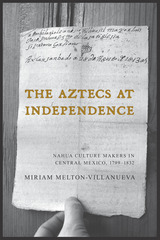
The Aztecs at Independence offers the first internal ethnographic view of these central Mexican indigenous communities in the critical transitional time of Independence. Miriam Melton-Villanueva uses previously unknown Nahuatl-language sources—primarily last wills and testaments—to provide a comprehensive understanding of indigenous societies during the transition from colonial to postcolonial times. The book describes the cultural life of people now called Nahuas or Mexicas in the nineteenth century—based on their own words, their own written records. The book uses previously unknown, unstudied, and untranslated indigenous texts to bring Nahua society into history, fleshing out glimpses of daily life in the early nineteenth century. Thus, The Aztecs at Independence describes life at the most local level: Nahua lineages of ritual and writing, guilds and societies, the people that take turns administering festivals and attending to the last wishes of the dying.
Interwoven with personal stories and memory, The Aztecs at Independence invites a general audience along on a scholarly journey, where readers are asked to imagine Nahua concepts and their contemporary meanings that give light to modern problems.
READERS
Browse our collection.
PUBLISHERS
See BiblioVault's publisher services.
STUDENT SERVICES
Files for college accessibility offices.
RECENTLY PUBLISHED



UChicago Accessibility Resources
home | accessibility | search | about | contact us
BiblioVault ® 2001 - 2025
The University of Chicago Press