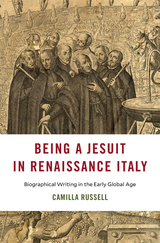
front cover of Being a Jesuit in Renaissance Italy
Being a Jesuit in Renaissance Italy
Biographical Writing in the Early Global Age
Camilla Russell
Harvard University Press, 2022

A new history illuminates the Society of Jesus in its first century from the perspective of those who knew it best: the early Jesuits themselves.

The Society of Jesus was established in 1540. In the century that followed, thousands sought to become Jesuits and pursue vocations in religious service, teaching, and missions. Drawing on scores of unpublished biographical documents housed at the Roman Jesuit Archive, Camilla Russell illuminates the lives of those who joined the Society, building together a religious and cultural presence that remains influential the world over.

Tracing Jesuit life from the Italian provinces to distant missions, Russell sheds new light on the impact and inner workings of the Society. The documentary record reveals a textual network among individual members, inspired by Ignatius of Loyola’s Spiritual Exercises. The early Jesuits took stock of both quotidian and spiritual experiences in their own records, which reflect a community where the worldly and divine overlapped. Echoing the Society’s foundational writings, members believed that each Jesuit’s personal strengths and inclinations offered a unique contribution to the whole—an attitude that helps explain the Society’s widespread appeal from its first days.

Focusing on the Jesuits’ own words, Being a Jesuit in Renaissance Italy offers a new lens on the history of spirituality, identity, and global exchange in the Renaissance. What emerges is a kind of genetic code—a thread connecting the key Jesuit works to the first generations of Jesuits and the Society of Jesus as it exists today.

[more]

front cover of Beloved Children
Beloved Children
History of Aristocratic Childhood in Hungary in the Early Modern Age
Katalin Peter
Central European University Press, 2001

Drawing on evidence from a wide collection of surviving family papers, Beloved Children is a valuable contribution to literature available concerning childhood history in pre-industrial Central Europe.

With the aid of detailed case studies, the volume illustrates every aspect of Hungarian childhood in the early modern age from a variety of contrasting perspectives—birth, care, education, marriage, orphanhood and death. The book also includes a unique portrayal of family life in the Hungarian aristocracy.

Beloved Children is a comprehensive study examining topics such as family intimacy, paternal and maternal attitudes, providing the reader with a valuable insight into a child’s life in Hungary during the sixteenth and seventeenth centuries.


[more]

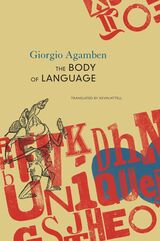
front cover of The Body of Language
The Body of Language
esperruquancluzelubelouzerirelu
Giorgio Agamben
Seagull Books, 2025

An erudite exploration of transgressive language from the Renaissance by one of Europe’s greatest living philosophers. 

This book explores how early modern authors broke linguistic boundaries, creating new words and languages that challenged traditional grammar and lexicon, providing historical insight into today’s debates on the politics of language.  Through a scholarly analysis by Giorgio Agamben, the text delves into the boundary-shifting language of the Renaissance, exemplified by giants like Pantagruel and Gargantua, whose outsized bodies mirror the vastness of their speech.  The macaronic language invented by Teofilo Folengo, blending Latin and vernacular, embodies a linguistic rebellion that transforms language into a tangible, unruly force. Featuring illustrations from the Songes drolatiques de Pantagruel and Folengo’s Baldo, this volume offers a vivid portrayal of language as a physical, dynamic entity that defies grammatical norms. 

[more]


Send via email Share on Facebook Share on Twitter