
 A SCHOLARLY BOOK REPOSITORY
18 start with B start with B

As the nation tried to absorb the shock of the 9/11 attacks, Muslim Americans were caught up in an unprecedented wave of backlash violence. Public discussion revealed that widespread misunderstanding and misrepresentation of Islam persisted, despite the striking diversity of the Muslim community.
Letting the voices of 140 ordinary Muslim American men and women describe their experiences, Lori Peek's path-breaking book, Behind the Backlash presents moving accounts of prejudice and exclusion. Muslims speak of being subjected to harassment before the attacks, and recount the discrimination they encountered afterwards. Peek also explains the struggles of young Muslim adults to solidify their community and define their identity during a time of national crisis.
Behind the Backlash seeks to explain why blame and scapegoating occur after a catastrophe. Peek sets the twenty-first century experience of Muslim Americans, who were vilified and victimized, in the context of larger sociological and psychological processes. Peek’s book will be of interest to those in disaster research studies, sociology of religion, and race and ethnic relations.

In this sweeping history of United States policy toward Latin America, Lars Schoultz shows that the United States has always perceived Latin America as a fundamentally inferior neighbor, unable to manage its affairs and stubbornly underdeveloped.
This perception of inferiority was apparent from the beginning. John Quincy Adams, who first established diplomatic relations with Latin America, believed that Hispanics were "lazy, dirty, nasty...a parcel of hogs." In the early nineteenth century, ex-President John Adams declared that any effort to implant democracy in Latin America was "as absurd as similar plans would be to establish democracies among the birds, beasts, and fishes."
Drawing on extraordinarily rich archival sources, Schoultz, one of the country's foremost Latin America scholars, shows how these core beliefs have not changed for two centuries. We have combined self-interest with a "civilizing mission"--a self-abnegating effort by a superior people to help a substandard civilization overcome its defects. William Howard Taft felt the way to accomplish this task was "to knock their heads together until they should maintain peace," while in 1959 CIA Director Allen Dulles warned that "the new Cuban officials had to be treated more or less like children." Schoultz shows that the policies pursued reflected these deeply held convictions.
While political correctness censors the expression of such sentiments today, the actions of the United States continue to assume the political and cultural inferiority of Latin America. Schoultz demonstrates that not until the United States perceives its southern neighbors as equals can it anticipate a constructive hemispheric alliance.

In 1985 the media announced a new therapy for cancer. It was expensive, labor-intensive, and toxic--but, they said, it worked. How it worked is the story Ilana Löwy tells in Between Bench and Bedside, a compelling account of the clinical trials of interleukin-2 at a major French cancer hospital. Her book offers a remarkable insider's view of the culture of clinical experimentation in oncology--and of how this culture affects the development of new treatments for cancer.
Löwy, a historian of science who trained as an immunologist, makes the life of the laboratory and the hospital comprehensible and immediate. Before immersing us in the clinical drama, she fills in the history behind the action--a background of chemotherapy and radiation, controlled clinical trials, and the long line of immunological approaches that finally led to interleukin-2. The story then shifts to the introduction of interleukin-2 in a cancer ward. Löwy conveys the clinical investigation as a complex, multilayered phenomenon that defies the stereotypes of modern biomedicine. In this picture, the miracle-makers and arrogant, self-centered professionals of myth give way to moving images of real people negotiating the tensions between institutional and professional constraints, the search for a scientific breakthrough, and the obligation to alleviate the suffering of a patient. The result is a rare firsthand look at the multiple factors that shape real-life clinical experiments and the institutional tangle and emotional muddle that surround such trials--an invaluable view at a time when medicine is undergoing such great and confusing changes.
Gillison shows how the themes expressed in Gimi myths—especially sexual hostility and an obsession with menstrual blood—are dramatized in the elaborate public rituals that accompany marriage, death, and other life crises. The separate myths of Gimi women and men seem to speak to one another, to protest, alter, and enlarge upon myths of the other sex. The sexes cast blame in the veiled imagery of myth and then play out their debate in joint rituals, cooperating in shows of conflict and resolution that leave men undefeated and accord women the greater blame for misfortune.
Vividly documenting the real world of the contemporary hospital, its nurses, and their moral and ethical crises, Dan Chambliss offers a sobering revelation of the forces shaping moral decisions in our hospitals.
Based on more than ten years' field research, Beyond Caring is filled with eyewitness accounts and personal stories demonstrating how nurses turn the awesome into the routine. It shows how patients, many weak and helpless, too often become objects of the bureaucratic machinery of the health care system and how ethics decisions, once the dilemmas of troubled individuals, become the setting for political turf battles between occupational interest groups. The result is a compelling combination of realism and a powerful theoretical argument about moral life in large organizations.
Davis analyzes how white engagement with African American novels, film narratives, and hip-hop can help form anti-racist attitudes that may catalyze social change and racial justice. Though acknowledging past failures to establish cross-racial empathy, she focuses on examples that show avenues for future progress and change. Her study of ethnographic data from book clubs and college classrooms shows how engagement with African American culture and pedagogical support can lead to the kinds of white self-examination that make empathy possible. The result is a groundbreaking text that challenges the trend of focusing on society's failures in achieving cross-racial empathy and instead explores possible avenues for change.
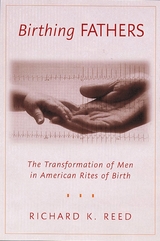
In the past two decades, men have gone from being excluded from the delivery room to being admitted, then invited, and, finally, expected to participate actively in the birth of their children. No longer mere observers, fathers attend baby showers, go to birthing classes, and share in the intimate, everyday details of their partners' pregnancies.
In this unique study, Richard Reed draws on the feminist critique of professionalized medical birthing to argue that the clinical nature of medical intervention distances fathers from child delivery. He explores men's roles in childbirth and the ways in which birth transforms a man's identity and his relations with his partner, his new baby, and society. In other societies, birth is recognized as an important rite of passage for fathers. Yet, in American culture, despite the fact that fathers are admitted into delivery rooms, little attention is given to their transition to fatherhood.
The book concludes with an exploration of what men's roles in childbirth tell us about gender and American society. Reed suggests that it is no coincidence that men's participation in the birthing process developed in parallel to changing definitions of fatherhood more broadly. Over the past twenty years, it has become expected that fathers, in addition to being strong and dependable, will be empathetic and nurturing.
Well-researched, candidly written, and enriched with personal accounts of over fifty men from all parts of the world, this book is as much about the birth of fathers as it is about fathers in birth.

Beginning in 1950, the state of Israel prosecuted and jailed dozens of Holocaust survivors who had served as camp kapos or ghetto police under the Nazis. At last comes the first full account of the kapo trials, based on records newly declassified after forty years.
In December 1945, a Polish-born commuter on a Tel Aviv bus recognized a fellow rider as the former head of a town council the Nazis had established to manage the Jews. When he denounced the man as a collaborator, the rider leapt off the bus, pursued by passengers intent on beating him to death. Five years later, to address ongoing tensions within Holocaust survivor communities, the State of Israel instituted the criminal prosecution of Jews who had served as ghetto administrators or kapos in concentration camps.
Dan Porat brings to light more than three dozen little-known trials, held over the following two decades, of survivors charged with Nazi collaboration. Scouring police investigation files and trial records, he found accounts of Jewish policemen and camp functionaries who harassed, beat, robbed, and even murdered their brethren. But as the trials exposed the tragic experiences of the kapos, over time the courts and the public shifted from seeing them as evil collaborators to victims themselves, and the fervor to prosecute them abated.
Porat shows how these trials changed Israel’s understanding of the Holocaust and explores how the suppression of the trial records—long classified by the state—affected history and memory. Sensitive to the devastating options confronting those who chose to collaborate, yet rigorous in its analysis, Bitter Reckoning invites us to rethink our ideas of complicity and justice and to consider what it means to be a victim in extraordinary circumstances.

Centering Black grief in the aftermath of Lincoln’s assassination
On April 14, 1865, John Wilkes Booth carried out the first presidential assassination in United States history. The euphoria resulting from General Lee’s surrender evaporated at the news of Abraham Lincoln’s murder. The nation—excepting many white Southerners—found itself consumed with grief, and no group mourned Lincoln more deeply than people of color. African Americans did not speak with a monolithic voice on social or political issues, but even Lincoln’s Black contemporaries who may not have approved of him while he was alive mourned his death, understanding its implications for their future.
Beginning with the assassination itself and chronicling Lincoln’s three-week-long national funeral, historian Leonne M. Hudson captures the profound sadness of Black Americans as they mourned the crafter of the Emancipation Proclamation and the man they thought of as their earthly Moses, father, friend, and benefactor. Hudson continues the narrative by detailing the postwar efforts of African Americans to gain citizenship and voting rights.
Black Americans in Mourning includes the tributes of prominent figures such as Frederick Douglass, Martin R. Delany, and Elizabeth Keckley, who raised their voices to honor Lincoln, as well as formal expressions of grief by institutions and organizations such as the United States Colored Troops. In a triumph of research, Hudson also features the voices of lesser-known Black people who mourned Lincoln across the country, showing that the outpouring of individual and collective grief helped set the stage for his enduring glorification.
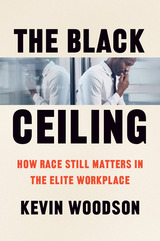
America’s elite law firms, investment banks, and management consulting firms are known for grueling hours, low odds of promotion, and personnel practices that push out any employees who don’t advance. While most people who begin their careers in these institutions leave within several years, work there is especially difficult for Black professionals, who exit more quickly and receive far fewer promotions than their White counterparts, hitting a “Black ceiling.”
Sociologist and law professor Kevin Woodson knows firsthand what life at a top law firm feels like as a Black man. Examining the experiences of more than one hundred Black professionals at prestigious firms, Woodson discovers that their biggest obstacle in the workplace isn’t explicit bias but racial discomfort, or the unease Black employees feel in workplaces that are steeped in Whiteness. He identifies two types of racial discomfort: social alienation, the isolation stemming from the cultural exclusion Black professionals experience in White spaces, and stigma anxiety, the trepidation they feel over the risk of discriminatory treatment. While racial discomfort is caused by America’s segregated social structures, it can exist even in the absence of racial discrimination, which highlights the inadequacy of the unconscious bias training now prevalent in corporate workplaces. Firms must do more than prevent discrimination, Woodson explains, outlining the steps that firms and Black professionals can take to ease racial discomfort.
Offering a new perspective on a pressing social issue, The Black Ceiling is a vital resource for leaders at preeminent firms, Black professionals and students, managers within mostly White organizations, and anyone committed to cultivating diverse workplaces.

Blackness, as the entertainment and sports industries well know, is a prized commodity in American pop culture. Marketed to white consumers, black culture invites whites to view themselves in a mirror of racial difference, while at the same time offering the illusory reassurance that they remain “wholly” white. Charting a rich landscape that includes classic American literature, Hollywood films, pop music, and investigative journalism, Eric Lott reveals the hidden dynamics of this self-and-other mirroring of racial symbolic capital.
Black Mirror is a timely reflection on the ways provocative representations of racial difference serve to sustain white cultural dominance. As Lott demonstrates, the fraught symbolism of racial difference props up white hegemony, but it also tantalizingly threatens to expose the contradictions and hypocrisies upon which the edifice of white power has been built. Mark Twain’s still-controversial depiction of black characters and dialect, John Howard Griffin’s experimental cross-racial reporting, Joni Mitchell’s perverse penchant for cross-dressing as a black pimp, Bob Dylan’s knowing thefts of black folk music: these instances and more show how racial fantasy, structured through the mirroring of identification and appropriation so visible in blackface performance, still thrives in American culture, despite intervening decades of civil rights activism, multiculturalism, and the alleged post-racialism of the twenty-first century. In Black Mirror, white and black Americans view themselves through a glass darkly, but also face to face.
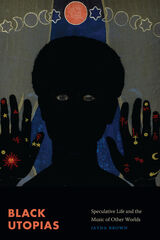

Anderson leads readers through the tumultuous years just after World War II when the Roman Catholic Church in the American South struggled to reconcile its commitment to social justice with the legal and social heritage of Jim Crow society. Though these early efforts at reform, by and large, failed, they did serve to galvanize Catholic supporters and opponents of the Civil Rights Movement and provided a model for more successful efforts at desegregation in the '60s.
As a Jesuit himself, Anderson has access to archives that remain off-limits to other scholars. His deep knowledge of the history of the Catholic Church also allows him to draw connections between this historical period and the present. In the resistance to desegregation, Anderson finds expression of a distinctly American form of Catholicism, in which lay people expect Church authorities to ratify their ideas and beliefs in an almost democratic fashion. The conflict he describes is as much between popular and hierarchical models of the Church as between segregation and integration.
This book has been made possible through a grant from the Louisiana Endowment for the Humanities, a state affiliate of the National Endowment for the Humanities.
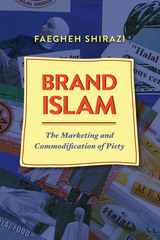
From food products to fashions and cosmetics to children’s toys, a wide range of commodities today are being marketed as “halal” (permitted, lawful) or “Islamic” to Muslim consumers both in the West and in Muslim-majority nations. However, many of these products are not authentically Islamic or halal, and their producers have not necessarily created them to honor religious practice or sentiment. Instead, most “halal” commodities are profit-driven, and they exploit the rise of a new Islamic economic paradigm, “Brand Islam,” as a clever marketing tool.
Brand Islam investigates the rise of this highly lucrative marketing strategy and the resulting growth in consumer loyalty to goods and services identified as Islamic. Faegheh Shirazi explores the reasons why consumers buy Islam-branded products, including conspicuous piety or a longing to identify with a larger Muslim community, especially for those Muslims who live in Western countries, and how this phenomenon is affecting the religious, cultural, and economic lives of Muslim consumers. She demonstrates that Brand Islam has actually enabled a new type of global networking, joining product and service sectors together in a huge conglomerate that some are referring to as the Interland. A timely and original contribution to Muslim cultural studies, Brand Islam reveals how and why the growth of consumerism, global communications, and the Westernization of many Islamic countries are all driving the commercialization of Islam.
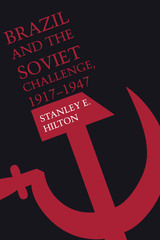
Between 1918 and 1961, Brazil and the USSR maintained formal diplomatic ties for only thirty-one months, at the end of World War II. Yet, despite the official distance, the USSR is the only external actor whose behavior, real or imagined, influenced the structure of the Brazilian state in the twentieth century. In Brazil and the Soviet Challenge, 1917–1947, Stanley Hilton provides the first analysis in any language of Brazilian policy toward the Soviet Union during this period.
Drawing on American, British, and German diplomatic archives and unprecedented access to official and private Brazilian records, Hilton elucidates the connection between the Brazilian elite’s perception of a communist threat and the creation of the authoritarian Estado Novo (1937–1945), the forerunner of the post-1964 national security state. He shows how the 1935 communist revolt, prepared by Comintern agents, was a pivotal event in Brazilian history, making prophets of conservative alarmists and generating irresistible pressure for an authoritarian government to contain the Soviet threat. He details the Brazilian government’s secret cooperation with the Gestapo during the 1930s and its concomitant efforts to forge an anti-Soviet front in the Southern Cone. And he uncovers an unexplored aspect of Brazil’s national security policy, namely, the attempt to build counterintelligence capabilities not only within Brazil but also in neighboring countries.
While the history of the Brazilian communist movement has been extensively studied, this is the first work to explore how images of the Soviet Union and its policies influenced the Brazilian foreign policy elite. It will be important reading for all students of twentieth-century political history.

Breaks in the Chain shows how immigrant workers-individually and sometimes collectively-both reinforce and contest a tacit but lethal form of biopolitics that differentiates the life chances of racial groups. Examining their personal narratives, Apostolidis recasts our understanding of the ways immigrants construct and transform social power.
Apostolidis uses empirical inquiry to spark new reflections in critical theory as he analyzes how immigrant workers' local practices confront structural power within and beyond America's borders. Linking stories of immigration to stories about working on the meat production line-the chain-he reveals the surprising power of activism by immigrant workers and their allies and demonstrates how it can-and should-promote social and political democracy in America.

"Matthews writes with sympathy and substantial understanding of the dilemmas colleges face these days."—Tara Fitzpatrick, Chicago Tribune
"A wide-ranging, well-written and lively account of contemporary academia."—Christian Wiman, Dallas Morning News
"Notable Book of the Year." New York Times
"An eye-opening, startling exposé;. . . . Matthews' energetic and well-written report provides a dismal yet concise insider portrait of college life."—Booklist
READERS
Browse our collection.
PUBLISHERS
See BiblioVault's publisher services.
STUDENT SERVICES
Files for college accessibility offices.
RECENTLY PUBLISHED





UChicago Accessibility Resources
home | accessibility | search | about | contact us
BiblioVault ® 2001 - 2025
The University of Chicago Press