
 A SCHOLARLY BOOK REPOSITORY
4 start with B start with B
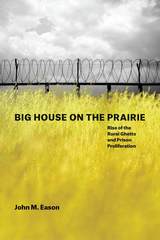
In 2007, John M. Eason moved his family to Forrest City, Arkansas, in search of answers to key questions about this trend: Why is America building so many prisons? Why now? And why in rural areas? Eason quickly learned that rural demand for prisons is complicated. Towns like Forrest City choose to build prisons not simply in hopes of landing jobs or economic wellbeing, but also to protect and improve their reputations. For some rural leaders, fostering a prison in their town is a means of achieving order in a rapidly changing world. Taking us into the decision-making meetings and tracking the impact of prisons on economic development, poverty, and race, Eason demonstrates how groups of elite whites and black leaders share power. Situating prisons within dynamic shifts that rural economies are undergoing and showing how racially diverse communities lobby for prison construction, Big House on the Prairie is a remarkable glimpse into the ways a prison economy takes shape and operates.
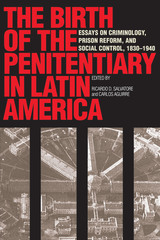
Opening a new area in Latin American studies, The Birth of the Penitentiary in Latin America showcases the most recent historical outlooks on prison reform and criminology in the Latin American context. The essays in this collection shed new light on the discourse and practice of prison reform, the interpretive shifts induced by the spread of criminological science, and the links between them and competing discourses about class, race, nation, and gender. The book shows how the seemingly clear redemptive purpose of the penitentiary project was eventually contradicted by conflicting views about imprisonment, the pervasiveness of traditional forms of repression and control, and resistance from the lower classes.
The essays are unified by their attempt to view the penitentiary (as well as the variety of representations conveyed by the different reform movements favoring its adoption) as an interpretive moment, revealing of the ideology, class fractures, and contradictory nature of modernity in Latin America. As such, the book should be of interest not only to scholars concerned with criminal justice history, but also to a wide range of readers interested in modernization, social identities, and the discursive articulation of social conflict. The collection also offers an up-to-date sampling of new historical approaches to the study of criminal justice history, illuminates crucial aspects of the Latin American modernization process, and contrasts the Latin American cases with the better known European and North American experiences with prison reform.
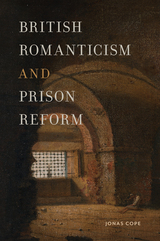
In eighteenth-century Britain, criminals were routinely whipped, branded, hanged, or transported to America. Only in the last quarter of the century—with the War of American Independence and legal and sociopolitical challenges to capital punishment—did the criminal justice system change, resulting in the reformed prison, or penitentiary, meant to educate, rehabilitate, and spiritualize even hardened felons. This volume is the first to explore the relationship between historical penal reform and Romantic-era literary texts by luminaries such as Godwin, Keats, Byron, and Austen. The works examined here treat incarceration as ambiguous: prison walls oppress and reinforce the arbitrary power of legal structures but can also heighten meditation, intensify the imagination, and awaken the conscience. Jonas Cope skillfully traces the important ideological work these texts attempt: to reconcile a culture devoted to freedom with the birth of the modern prison system that presents punishment as a form of rehabilitation.
Published by Bucknell University Press. Distributed worldwide by Rutgers University Press.
READERS
Browse our collection.
PUBLISHERS
See BiblioVault's publisher services.
STUDENT SERVICES
Files for college accessibility offices.
RECENTLY PUBLISHED




UChicago Accessibility Resources
home | accessibility | search | about | contact us
BiblioVault ® 2001 - 2025
The University of Chicago Press