
 A SCHOLARLY BOOK REPOSITORY
2474 start with C start with C
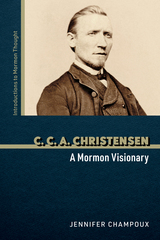
Drawing on the artist’s voluminous writings, Jennifer Champoux illuminates Christensen’s influential art, including recently rediscovered works. Christensen received Church commissions and approval and helped shape Latter-day Saints’ vision of themselves. Over time the work of other artists eclipsed his achievements, but a twenty-first century revival of interest began to restore his reputation. Champoux also profiles how Christensen’s expansive activities outside of the art world gave him a unique vantage point for chronicling how the Latter-day Saint faith and culture evolved in Utah.
A revealing intellectual biography, C. C. A. Christensen offers a rare in-depth look at a major Latter-day Saint artist.
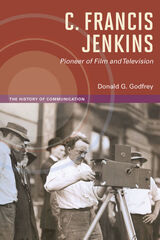
This is the first biography of the important but long-forgotten American inventor Charles Francis Jenkins (1867-1934). Historian Donald G. Godfrey documents the life of Jenkins from his childhood in Indiana and early life in the West to his work as a prolific inventor whose productivity was cut short by an early death. Jenkins was an inventor who made a difference.
As one of America's greatest independent inventors, Jenkins's passion was to meet the needs of his day and the future. In 1895 he produced the first film projector able to show a motion picture on a large screen, coincidentally igniting the first film boycott among his Quaker viewers when the film he screened showed a woman's ankle. Jenkins produced the first American television pictures in 1923, and developed the only fully operating broadcast television station in Washington, D.C. transmitting to ham operators from coast to coast as well as programming for his local audience.
Godfrey's biography raises the profile of C. Francis Jenkins from his former place in the footnotes to his rightful position as a true pioneer of today's film and television. Along the way, it provides a window into the earliest days of both motion pictures and television as well as the now-vanished world of the independent inventor.

A business biography of C. Y. Tung, founder of the Orient Overseas Container Line and philanthropist.
Shipowner Tung Chao-Yung (1912–82) is remembered worldwide as a champion for Chinese shipping and a pioneer of container shipping. Despite coming from a humble background, by the time of his death, he controlled a huge fleet of passenger liners, bulk carriers, tankers, and container ships, while also managing a diverse network of port terminals, dockyards, banks, and prime real estate. C. Y. Tung and the Rise of Modern Chinese Shipping sets out his pathway from a junior executive in the early 1930s to one of the world’s leading private shipowners. The authors argue that Tung achieved his dream of developing Chinese ocean shipping through his ability to learn, innovate, network, and devise strategies through decades of rapid technical and organizational change. He also earned wide respect for his generous philanthropy. The book concludes with an overview of the emergence of the state-owned PRC fleet and brief histories of other multi-generational family companies in Hong Kong, Taiwan, and Singapore.

The result is a complex and informative study on a missing chapter in the history of the Dominican Republic and, more broadly, a contribution to the often forgotten history of the cold war in the Caribbean.
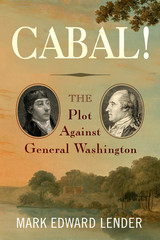
In the spring of 1778, General George Washington wrote to his friend Landon Carter about a rumored “disposition in the Northern Officers to see me superceded in my Command.” This was as candid a statement as the general ever made about the so-called “Conway Cabal” of patriot officers and politicians critical of his leadership. Most early historians of the Revolution took the threat to Washington seriously, but by the mid-twentieth century interpretations had reversed, with the plot—if one existed—posing no real danger to the commander-in-chief. Yet, as historian Mark Edward Lender reveals in his compelling Cabal! The Plot Against General Washington, clues found in original new research provide a more comprehensive understanding of the personalities and political maneuverings of those involved in the Cabal, and the real nature of the challenge to Washington.
Rather than the “classic Cabal” of Generals Horatio Gates, Thomas Mifflin, and Thomas Conway in a plot to remove Washington quickly, the threat to Washington’s command was a gradual administrative attempt by the Board of War and political allies to take over the war effort. Reorganized in late 1777 under the leadership of Mifflin, with Gates assuming the board presidency in January 1778, the Board of War sought authority to determine military policy and strategic goals, all training, organizational, personnel, and logistical functions, and even the assignment of theater commanders. Had they succeeded, Washington’s title of commander-in-chief would have been utterly hollow. The Cabal tested Washington as few other things did during the war and perhaps tempered him into the man we remember today. Washington adroitly navigated the challenges to his leadership, meeting and defeating every attempt to curtail his authority. His response revealed a leadership style that saw him safely through the war, and gave him overwhelming support from his countrymen to become their first president.
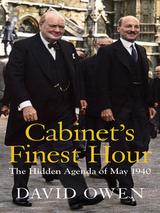
Eight months into the war, defeat seemed to many a certainty. With the United States still a year and half away from entering, Britain found itself in a perilous position, and foreign secretary Lord Halifax pushed prime minister Winston Churchill to explore the possibility of a negotiated peace with Hitler, using Mussolini as a conduit. Speaking for England is the story of Churchill’s triumph in the face of this pressure, but it is also about how collective debate and discussion won the day—had Churchill been alone, Owen argues, he would almost certainly have lost to Halifax, changing the course of history. Instead, the Cabinet system, all too often disparaged as messy and cumbersome, worked in Britain’s interests and ensured that a democracy on the brink of defeat had the courage to fight on.
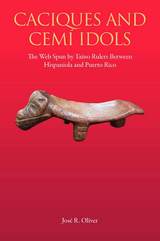
Cemís are both portable artifacts and embodiments of persons or spirit, which the Taínos and other natives of the Greater Antilles (ca. AD 1000-1550) regarded as numinous beings with supernatural or magic powers. This volume takes a close look at the relationship between humans and other (non-human) beings that are imbued with cemí power, specifically within the Taíno inter-island cultural sphere encompassing Puerto Rico and Hispaniola. The relationships address the important questions of identity and personhood of the cemí icons and their human “owners” and the implications of cemí gift-giving and gift-taking that sustains a complex web of relationships between caciques (chiefs) of Puerto Rico and Hispaniola.

The Cadastral Map in the Service of the State, illustrated with 126 maps, traces the development and application of rural property mapping in Europe from the Renaissance through the nineteenth century. Beginning with a review of the roots of cadastral mapping in the Roman Empire, the authors concentrate on the use of cadastral maps in the Netherlands, France, England, the Nordic countries, the German lands, the territories of the Austrian Habsburgs, and the European colonies. During the sixteenth century government institutions began to use maps to secure economic and political bases; by the nineteenth century these maps had become tools for aggressive governmental control of land as tax bases, natural resources, and national territories. This work demonstrates how the seemingly neutral science of cartography became a political instrument for national
interests.
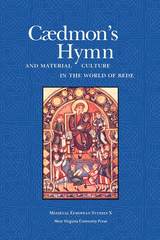
The essays in this book use the nine-line poem known as Cædmon’s Hymn as a lens on the world of Bede’s Ecclesiastical History. A cowherd who is given a divine gift, Cædmon retells the great narratives of Christian history in the traditional form of Anglo-Saxon verse. An immense amount has been written about this episode, much of it concentrating on the hymn’s significance in the history of English literature. Relatively little attention, however, has been paid to what the story of Cædmon and his hymn might tell us about the material, as well as the textual, culture of Bede’s world. The essays in this collection seek to connect Cædmon’s Hymn to Bede’s material world in various ways. Each chapter begins with the hymn and moves from the text to the worlds of scientific thought, settlements and social hierarchy, monastic reform, and ordinary things. The connections explored here are a sampling of the material concerns Cædmon’s Hymn raises.
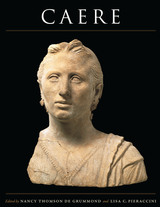
The Etruscan city of Caere and eleven other Etruscan city-states were among the first urban centers in ancient Italy. Roman descriptions of Etruscan cities highlight their wealth, beauty, and formidable defenses. Although Caere left little written historical record outside of funerary inscriptions, its complex story can be deciphered by analyzing surviving material culture, including architecture, tomb paintings, temples, sanctuaries, and materials such as terracotta, bronze, gold, and amber found in Etruscan crafts. Studying Caere provides valuable insight not only into Etruscan history and culture but more broadly into urbanism and the development of urban centers across ancient Italy.
Comprehensive in scope, Caere is the first English-language book dedicated to the study of its eponymous city. Collecting the work of an international team of scholars, it features chapters on a wide range of topics, such as Caere’s formation and history, economy, foreign relations, trade networks, art, funerary traditions, built environment, religion, daily life, and rediscovery. Extensively illustrated throughout, Caere presents new perspectives on and analysis of not just Etruscan civilization but also the city’s role in the wider pan-Mediterranean basin.
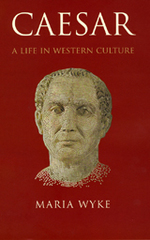
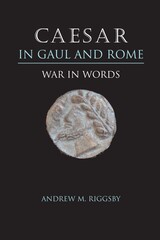
Winner, AAP/PSP Award for Excellence, Classics and Ancient History, 2006
Anyone who has even a passing acquaintance with Latin knows "Gallia est omnis divisa in partes tres" ("All Gaul is divided into three parts"), the opening line of De Bello Gallico, Julius Caesar's famous commentary on his campaigns against the Gauls in the 50s BC. But what did Caesar intend to accomplish by writing and publishing his commentaries, how did he go about it, and what potentially unforeseen consequences did his writing have? These are the questions that Andrew Riggsby pursues in this fresh interpretation of one of the masterworks of Latin prose.
Riggsby uses contemporary literary methods to examine the historical impact that the commentaries had on the Roman reading public. In the first part of his study, Riggsby considers how Caesar defined Roman identity and its relationship to non-Roman others. He shows how Caesar opens up a possible vision of the political future in which the distinction between Roman and non-Roman becomes less important because of their joint submission to a Caesar-like leader. In the second part, Riggsby analyzes Caesar's political self-fashioning and the potential effects of his writing and publishing the Gallic War. He reveals how Caesar presents himself as a subtly new kind of Roman general who deserves credit not only for his own virtues, but for those of his soldiers as well. Riggsby uses case studies of key topics (spatial representation, ethnography, virtus and technology, genre, and the just war), augmented by more synthetic discussions that bring in evidence from other Roman and Greek texts, to offer a broad picture of the themes of national identity and Caesar's self-presentation.
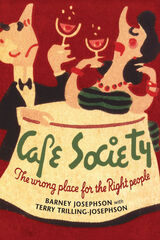
Set against the drama of the Great Depression, the conflict of American race relations, and the inquisitions of the House Un-American Activities Committee, Cafe Society tells the personal history of Barney Josephson, proprietor of the legendary interracial New York City night clubs Cafe Society Downtown and Cafe Society Uptown and their successor, The Cookery. Famously known as "the wrong place for the Right people," Cafe Society featured the cream of jazz and blues performers--among whom were Billie Holiday, boogie-woogie pianists, Big Joe Turner, Lester Young, Buck Clayton, Big Sid Catlett, and Mary Lou Williams--as well as comedy stars Imogene Coca, Zero Mostel, and Jack Gilford, and also gospel and folk singers. A trailblazer in many ways, Josephson welcomed black and white artists alike to perform for mixed audiences in a venue whose walls were festooned with artistic and satiric murals lampooning what was then called "high society."
Featuring scores of photographs that illustrate the vibrant cast of characters in Josephson's life, this exceptional book speaks richly about Cafe Society's revolutionary innovations and creativity, inspired by the vision of one remarkable man.
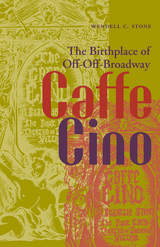
“It’s Magic Time!” That colorful promise began each performance at the Caffe Cino, the storied Greenwich Village coffeehouse that fostered the gay and alternative theatre movements of the 1960s and launched the careers of such stage mainstays as Sam Shepard, Lanford Wilson, Robert Heide, Harry Koutoukas, Robert Patrick, Robert Dahdah, Helen Hanft, Al Pacino, and Bernadette Peters. As Off-Off-Broadway productions enjoy a deserved resurgence, theatre historian and actor Wendell C. Stone reopens the Cino’s doors in this vibrant look at the earliest days of OOB.
Rife with insider interviews and rich with evocative photographs, Caffe Cino: The Birthplace of Off-Off-Broadway provides the first detailed account of Joe Cino’s iconic café theatre and its influence on American theatre. A hub of artistic innovation and haven for bohemians, beats, hippies, and gays, the café gave a much-sought outlet to voices otherwise shunned by mainstream entertainment. The Cino’s square stage measured only eight feet, but the dynamic ideas that emerged there spawned the numerous alternative theatre spaces that owe their origins to the risky enterprise on Cornelia Street.
For over a hundred years, Venezuelans have referred to themselves as a café con leche (coffee with milk) people. This colorful expression well describes the racial composition of Venezuelan society, in which European, African, and Indian peoples have intermingled to produce a population in which almost everyone is of mixed blood. It also expresses a popular belief that within their blended society Venezuelans have achieved a racial democracy in which people of all races live free from prejudice and discrimination. Whether or not historical facts actually support this popular perception is the question Winthrop Wright explores in this study.
Wright's research suggests that, contrary to popular belief, blacks in Venezuela have not enjoyed the full benefits of racial democracy. He finds that their status, even after the abolition of slavery in 1854, remained low in the minds of Venezuelan elites, who idealized the European somatic type and viewed blacks as inferior. Indeed, in an effort to whiten the population, Venezuelan elites promoted European immigration and blocked the entry of blacks and Asians during the early twentieth century.
These attitudes remained in place until the 1940s, when the populist Acción Democrática party (AD) challenged the elites' whitening policies. Since that time, blacks have made significant strides and have gained considerable political power. But, as Wright reveals, other evidence suggests that most remain social outcasts and have not accumulated significant wealth. The popular perception of racial harmony in Venezuela hides the fact of ongoing discrimination.
Whereas Weber contends that the administration of all modern nation-states would eventually converge in one form characterized by rationality and legal authority, Silberman argues that the process of bureaucratic rationalization took, in fact, two courses. One path is characterized by permeable organizational boundaries and the allocation of information by "professionals." The other features well-defined boundaries and the allocation of information by organizational rules. Through case studies of France, Japan, the United States, and Great Britain, Silberman demonstrates that this divergence stems from differences in leadership structure and in levels of uncertainty about leadership succession in the nineteenth century.
Silberman concludes that the rise of bureacratic rationality was primarily a response to political problems rather than social and economic concerns. Cages of Reason demonstrates how rationalization can have occurred over a wide range of cultures at various levels of economic development. It will be of considerable interest to readers in a number of disciplines: political science, sociology, history, and public administration.
"Silberman has produced an invaluable, densely packed work that those with deep knowledge of public administrative development will find extremely rewarding." —David H. Rosenbloom, American Political Science Review
"An erudite, incisive, and vibrant book, the product of intensive study and careful reflection. Given its innovative theoretical framework and the wealth of historical materials contained in it, this study will generate debate and stimulate research in sociology, political science, and organizational theory. It is undoubtedly the best book on the comparative evolution of the modern state published in the last decade."—Mauro F. Guillen, Contemporary Sociology
With a death rate of 5 percent, Alabama's Cahaba Federal Prison boasted a better survival rate than the notorious Confederate prisoner-of-war camps of Andersonville, Libby Prison, Elmira, Rock Island, Johnson's Island, and Camp Douglas. Yet it was a ghastly facility, a hastily converted agricultural warehouse so overcrowded that each man barely had space to lie down to sleep.
At the war's conclusion in 1865, however, in a harrowing reversal of the inmates' fates, captured Union soldiers were sent on a grueling overland march to the Mississippi River. Held there in camps at Vicksburg along with other prisoners of war, the soldiers embarked on the steamship Sultana for transportation north.
Traveling first to New Orleans and then heading north, the vessel held by some estimates six times more passengers than its safe limit, many of them ill, injured, or malnourished. The flow of the swollen Mississippi that April was wide, swift, and cold, and the Sultana struggled to make the journey. Then, on April 27, 1865, seven miles north of Memphis, a series of three boilers exploded within seconds of one another.
The lucky passengers were flung into the water as chunks of the Sultana blasted apart. The remaining wooden structure caught fire and the upper deck collapsed. Only an estimated one third of the passengers survived, hundreds of whom later died from their wounds.
First published in 1988, Bryant's account weaves together the many strands of the Cahaba story. Combining masterful storytelling and insightful analysis, he describes Civil War prisons, the history of the Cahaba Federal Prison and its construction, as well as the prison's commanders, prisoners, and local women who provided medical care and food to the prisoners. He tells of the violent struggles among Union inmates, a mutiny and flood that occurred during the final days of the camp, and the harrowing deaths of the liberated soldiers aboard the Sultana. Bryant's Cahaba Prison and the Sultana Disaster remains a vital part of any library of Civil War history.
Examines the authority a ruling elite exercised over the surrounding countryside through a complex of social, political, and religious symbolism
This study uses the theoretical concepts of agency, power, and ideology to explore the development of cultural complexity within the hierarchically organized Cahokia Middle Mississippian society of the American Bottom from the 11th to the 13th centuries. By scrutinizing the available archaeological settlement and symbolic evidence, Emerson demonstrates that many sites previously identified as farmsteads were actually nodal centers with specialized political, religious, and economic functions integrated into a centralized administrative organization. These centers consolidated the symbolism of such 'artifacts of power' as figurines, ritual vessels, and sacred plants into a rural cult that marked the expropriation of the cosmos as part of the increasing power of the Cahokian rulers.
During the height of Cahokian centralized power, it is argued, the elites had convinced their subjects that they ruled both the physical and the spiritual worlds. Emerson concludes that Cahokian complexity differs significantly in degree and form from previously studied Eastern Woodlands chiefdoms and opens new discussion about the role of rural support for the Cahokian ceremonial center.
Chappell seeks to answer fundamental questions about this unique, yet still relatively unknown space, which was designated a UNESCO World Heritage Site in 1982. How did this swampy land become so amenable to human life? Who were the remarkable people who lived here before the Europeans came? Why did the whole civilization disappear so rapidly? What became of the land in the centuries after the Mississippians abandoned it? And finally, what can we learn about ourselves as we look into the changing meaning of Cahokia through the ages?
To explore these questions, Chappell probes a wide range of sources, including the work of astronomers, geographers, geologists, anthropologists, and archaeologists. Archival photographs and newspaper accounts, as well as interviews with those who work at the site and Native Americans on their annual pilgrimage to the site, bring the story up to the present.
Tying together these many threads, Chappell weaves a rich tale of how different people conferred their values on the same piece of land and how the transformed landscape, in turn, inspired different values in them-cultural, spiritual, agricultural, economic, and humanistic.
A Dan Josselyn Memorial Publication
Provides a comprehensive collection of Moorehead's investigations of the nation's largest prehistoric mound center
Covering almost fourteen square kilometers in Illinois, Cahokia Mounds State Historic Site is the largest prehistoric mound center in North America and has been designated a World Heritage Site by the United Nations. Built between A.D. 1050 and 1350, Cahokia originally contained the remains of over 100 earthen mounds that were used as places for Native American rituals, homes of chiefs, or elite tombs. Earlier scientists debated whether the mounds were part of the natural landscape, and many were destroyed by urban and industrial development
This book is a report of archaeological investigations conducted at Cahokia from 1921 to 1927 by Warren K. Moorehead, who confirmed that the mounds were built by indigenous peoples and who worked to assure preservation of the site. The volume includes Moorehead's final 1929 report along with portions of two preliminary reports, covering both Cahokia and several surrounding mound groups.
John Kelly's introduction to the book sets Moorehead's investigations in the context of other work conducted at Cahokia prior to the 1920s and afterwards. Kelly reviews Moorehead's work, which employed 19th-century excavation techniques combined with contemporary analytical methods, and explains how Moorehead contended with local social and political pressures.
Moorehead's work represented important excavations at a time when little other similar work was being done in the Midwest. The reissue of his findings gives us a glimpse into an important archaeological effort and helps us better appreciate the prehistoric legacy that he helped preserve.

Ever since its scientific discovery, the great Nasca site of Cahuachi on the south coast of the Central Andes has captured the attention of archaeologists, art historians, and the general public. Until Helaine Silverman's fieldwork, however, ancient Nasca culture was seen as an archaeological construct devoid of societal context. Silverman's long-term, multistage research as published in this volume reconstructs Nasca society and contextualizes the traces of this brilliant civilization (ca. 200 B.C.-A.D. 600).
Silverman shows that Cahuachi was much larger and more complex than portrayed in the current literature but that, surprisingly, it was not a densely populated city. Rather, Cahuachi was a grand ceremonial center whose population, size, density, and composition changed to accommodate a ritual and political calendar. Silverman meticulously presents and interprets an abundance of current data on the physical complexities, burials, and artifacts of this prominent site; in addition, she synthesizes the history of previous fieldwork at Cahuachi and introduces a corrected map and a new chronological chart for the Rio Grande de Nazca drainage system.
On the basis of empirical field data, ethnographic analogy, and settlement pattern analysis, Silverman constructs an Andean model of Nasca culture that is crucial to understanding the development of complex society in the Central Andes. Written in a clear and concise style and generously illustrated, this first synthesis of the published data about the ancient Nasca world will appeal to all archaeologists, art historians, urban anthropologists, and historians of ancient civilizations.
Cahuilla Nation Activism and the Tribal Casino Movement tells the bigger story of how the Cahuilla nations—including the Cabazon—have used self-reliance and determination to maintain their culture and independence against threats past and present. From California’s first governor’s “war of extermination” against native peoples through today’s legal and political challenges, Gordon shows that successful responses have depended on the Cahuilla’s ability to challenge non-natives’ assumptions and misconceptions.

Cai Guo-Qiang (China, b. 1957) is among the most prominent contemporary artists active today. His prolific, diverse creative practice—which includes gunpowder drawings and paintings, explosion events, videos, multimedia installations, and site-specific works—draws on a personal belief system that freely blends symbols and tenets from Eastern and Western traditions. Cai’s output seeks to establish dialogues among different cultures, different periods of time, and even different species—always while probing our shared humanity and the connections that can be divined across space and time, out of chaos and disorder. Based on in-depth interviews between the author and artist and with studio assistants, as well as extensive examination, sampling, and scientific analysis of a wide range of artworks, this publication addresses the implications of Cai’s distinctive materials and processes and their associated conservation issues.
Written for conservation scientists, conservators, specialists in contemporary art history, museum curators, collections managers, practicing artists, collectors, and art enthusiasts, this book offers insights into the life, methods, and materials of a leading figure in the art world. The technical discussions provide essential findings that will inform strategies for the future care of his works.
Cairo Pop is the first book to examine the dominant popular music of Egypt, shababiyya. Scorned or ignored by scholars and older Egyptians alike, shababiyya plays incessantly in Cairo, even while Egyptian youth joined in mass protests against their government, which eventually helped oust longtime Egyptian president Hosni Mubarak in early 2011. Living in Cairo at the time of the revolution, Daniel Gilman saw, and more importantly heard, the impact that popular music can have on culture and politics. Here he contributes a richly ethnographic analysis of the relationship between mass-mediated popular music, modernity, and nationalism in the Arab world.
Before Cairo Pop, most scholarship on the popular music of Egypt focused on musiqa al-ṭarab. Immensely popular in the 1950s and ’60s and even into the ’70s, musiqa al-ṭarab adheres to Arabic musical theory, with non-Western scales based on tunings of the strings of the ‘ud—the lute that features prominently, nearly ubiquitously, in Arabic music. However, today one in five Egyptians is between the ages of 15 and 24; half the population is under the age of 25. And shababiyya is their music of choice. By speaking informally with dozens of everyday young people in Cairo, Gilman comes to understand shababiyya as more than just a musical genre: sometimes it is for dancing or seduction, other times it propels social activism, at others it is simply sonic junk food.
In addition to providing a clear Egyptian musical history as well as a succinct modern political history of the nation, Cairo Pop elevates the aural and visual aesthetic of shababiyya—and its role in the lives of a nation’s youth.
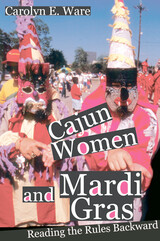
Cajun Women and Mardi Gras is the first book to explore the importance of women’s contributions to the country Cajun Mardi Gras tradition, or Mardi Gras “run.” Most Mardi Gras runs--masked begging processions through the countryside, led by unmasked capitaines--have customarily excluded women. Male organizers explain that this rule protects not only the tradition’s integrity but also women themselves from the event’s rowdy, often drunken, play.
Throughout the past twentieth century, and especially in the past fifty years, women in some prairie communities have insisted on taking more active and public roles in the festivities. Carolyn E. Ware traces the history of women’s participation as it has expanded from supportive roles as cooks and costume makers to increasingly public performances as Mardi Gras clowns and (in at least one community) capitaines. Drawing on more than a decade of fieldwork interviews and observation in Mardi Gras communities, Ware focuses on the festive actions in Tee Mamou and Basile to reveal how women are reshaping the celebration as creative artists and innovative performers.
California’s Calaveras County—made famous by Mark Twain and his celebrated Jumping Frog—is the focus of this comprehensive study of Mother Lode mining. Most histories of the California Mother Lode have focused on the mines around the American and Yuba Rivers. However, the “Southern Mines”—those centered around Calaveras County in the central Sierra—were also important in the development of California’s mineral wealth. Calaveras Gold offers a detailed and meticulously researched history of mining and its economic impact in this region from the first discoveries in the 1840s until the present. Mining in Calaveras County covered the full spectrum of technology from the earliest placer efforts through drift and hydraulic mining to advanced hard-rock industrial mining. Subsidiary industries such as agriculture, transportation, lumbering, and water supply, as well as a complex social and political structure, developed around the mines. The authors examine the roles of race, gender, and class in this frontier society; the generation and distribution of capital; and the impact of the mines on the development of political and cultural institutions. They also look at the impact of mining on the Native American population, the realities of day-to-day life in the mining camps, the development of agriculture and commerce, the occurrence of crime and violence, and the cosmopolitan nature of the population. Calaveras County mining continued well into the twentieth century, and the authors examine the ways that mining practices changed as the ores were depleted and how the communities evolved from mining camps into permanent towns with new economic foundations and directions. Mining is no longer the basis of Calaveras’s economy, but memories of the great days of the Mother Lode still attract tourists who bring a new form of wealth to the region.
Near the structure known today as the Great Ball Court and within the interior of the Lower Temple of the Jaguar, a mural depicts a female Mayan astronomer called K'uk'ul Ek' Tuyilaj. Weaving together archaeology, mathematics, history, and astronomy, Calculating Brilliance brings to light the discovery by this Mayan astronomer, which is recorded in the Venus Table of the Dresden Codex. As the book demonstrates, this brilliant discovery reverberated throughout Mayan science. But it has remained obscured to modern eyes.
Jumping from the vital contributions of K'uk'ul Ek' Tuyilaj, Gerardo Aldana y Villalobos critically reframes science in the pre-Columbian world. He reexamines the historiography of the Dresden Codex and contextualizes the Venus Table relative to other Indigenous literature. From a perspective anchored to Indigenous cosmologies and religions, Aldana y Villalobos delves into how we may understand Indigenous science and discovery—both its parallels and divergences from modern globalized perspectives of science.
Calculating Brilliance brings different intellectual threads together across time and space, from the Classic to the Postclassic, the colonial period to the twenty-first century to offer a new vision for understanding Mayan astronomy.

Caldwell and Company was founded in Nashville in 1917 by Rogers Caldwell, the son of a leading local banker and businessman. Beginning as a small underwriter and distributor of Southern municipal bonds, the firm soon branched out into real estate bonds and industrial securities as well. Control of important banks in Tennessee and Arkansas was acquired; newspapers, and even Nashville's professional baseball team, came under the firm’s ownership. Caldwell and Company was, truly, a pioneer conglomerate.
Caldwell and Company also ventured into the realm of politics, supporting certain politicians (notably Colonel Luke Lea) with questionable benefits accruing to the firm, including substantial state deposits in Caldwells Bank of Tennessee.
In November 1930 the firm went into receivership. Unethical practices, including overextension in the acquisition of banks, insurance companies, and other business, had already strain Caldwell and Company’s assets. With the 1929 collapse of stock prices. Rogers Caldwell could not meet the company’s obligations, and he began to squeeze all available cash from the various controlled firms. He also negotiated a merger between Caldwell and Company and Banco-Kentucky Company of Louisville—a transaction which must stand as one of the strangest deals in the annals of American business. Even the aforementioned State of Tennessee deposits, which helped float his empire for a while, could not prevent its collapse—a collapse which resulted in a multi-million dollar loss to Tennessee’s Treasury, public hysteria, and clamor for the impeachment of the Governor of Tennessee.
Originally Published in 1939, this edition includes a new introduction in which the author comments on the long-run implications of the Caldwell episode and reports the outcome of legal actions, both civil and criminal, still pending at the time the book was first published.
A “sleepy crossroads that exists at a global flashpoint,” Calexico serves as the reference point for veteran journalist Peter Laufer’s chronicle of day-to-day life on the border. This wide-ranging, interview-driven book finds Laufer and travel companion/photographer on a weeklong road trip through the Imperial Valley and other border locales, engaging in earnest and revealing conversations with the people they meet along the way. Laufer talks to secretaries and politicians, restaurateurs and salsa dancers, poets and real estate agents about the issues that matter to them the most.
What draws them to border towns? How do they feel about border security and the fences that may someday run through their backyards? Is “English-only” a realistic policy? Why have some towns flourished and others declined? What does it mean to be Mexican or American in such a place? Waitress Bonnie Peterson banters with customers in Spanish and English. Mayor Lewis Pacheco laments the role that globalization has played in his city’s labor market. Some of their anecdotes are humorous, others grim. Moreover, not everyone agrees. But this very diversity is part of the fabric of the borderlands, and these stories demand to be heard.
Although John C. Calhoun (1782-1850) remains one of the major figures in American political thought, many of his critics have tried to discredit him as merely a Southern partisan whose ideas were obsolete even during his lifetime. In Calhoun and Popular Rule, H. Lee Cheek, Jr., attempts to correct such misconceptions by presenting Calhoun as an original political thinker who devoted his life to the recovery of a "proper mode of popular rule." He argues that Calhoun had a coherent, systematic view of human nature and society and made a lasting contribution to the theory of constitutionalism and democracy.
Cheek suggests that Calhoun was not a political or philosophical aberration, but an authentic exponent of American constitutionalism. He contends that Calhoun's view of democracy forms part of a philosophy of humankind and politics that has relevance beyond the American experience. Although his idea of popular rule was original, it was also related to earlier attempts in America and elsewhere to limit the power of the majority and protect minority interests. According to Cheek, Calhoun stood in the American political tradition and attempted to rearticulate some of its central elements. He explains Calhoun's idea of the concurrent majority and examines how it has been presented by Calhoun's critics, as well as his followers.
As the first combined evaluation of Calhoun's most important treatises, The Disquisition and The Discourse, this work merges Calhoun's theoretical position with his endeavors to restore the need for popular rule. It also compares Calhoun's ideas with those of other great political thinkers such as Thomas Jefferson and James Madison--while explaining what is truly unique about Calhoun's political thought.
Calhoun's philosophy—his understanding of the need for ethical and political restraint and for institutional means for obtaining concurrence—is still relevant today, especially given the current growing ethnic and cultural conflict of the Western world. Scholars of government, American history, and political thought, as well as those interested in understanding "popular rule" and its theoretical and practical impact on modern American government, will find this groundbreaking work to be of great value.
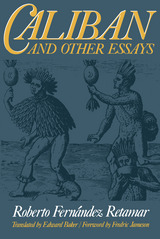
Roberto Fernández Retamar--poet, essayist, and professor of philology at the University of Havana--has long served as the Cuban Revolution’s primary cultural and literary voice. An erudite and widely respected hispanist, Retamar is known for his meticulous efforts to dismantle Eurocentric colonial and neocolonial thought. Since its publication in Cuba in 1971, “Caliban"--the first and longest of the five essays in this book--has become a kind of manifesto for Latin American and Caribbean writers; its central figure, the rude savage of Shakespeare’s Tempest, becomes in Retamar’s hands a powerful metaphor of their cultural situation--both its marginality and its revolutionary potential.
Retamar finds the literary and historic origins of Caliban in Columbus’s Navigation Log Books, where the Carib Indian becomes a cannibal, a bestial human being situated on the margins of civilization. The concept traveled from Montaigne to Shakespeare, on down to Ernest Renan and, in the twentieth century, to Aimé Césaire and other writers who consciously worked with or against the vivid symbolic figures of Prospero, Calivan, and Ariel. Retamar draws especially upon the life and work of José Marti, who died in 1895 in Cuba’s revolutionary struggle against Spain; Marti’s Calibanesque vision of “our America” and its distinctive mestizo culture-Indian, African, and European-is an animating force in this essay and throughout the book.
Caliban's Curse draws upon a range of theories--postcolonial, Marxist, and feminist--to contextualize the black diaspora of the modern Caribbean through one of its primary anglophone novelists. Putting George Lamming in conversation with such contemporaries as C.L.R. James, Derek Walcott, and Wilson Harris, Nair argues that Lamming's works expand the protest of Shakespeare's Caliban to articulate a reinvention of Caribbean cultures. Both cursed by and cursing the weight of colonial history, Lamming works against the paralysis induced by such an encounter; his work serves to rewrite canonical icons and to reimagine popular cultures.
"Supriya Nair writes about the problems of history and social revolution with passion and clarity and an amazing range of critical and cultural reference. . . . She brings to existing studies of Lamming a wide and sustained knowledge of the forces that have shaped the West Indian novel, and the wider postcolonial debates in which these novels are read and discussed." --Simon Gikandi, University of Michigan
Supriya Nair is Associate Professor of English, Tulane University.
A dynamic exploration of the Califia Community, a long-running Los Angeles based grassroots alternative education group formed in the mid-1970s, whose richly diverse membership offered a compelling array of responses to feminism’s key issues.
Launched in 1975, the Califia Community organized activist educational camps and other programs in southern California until its dissolution in 1987. An alternative to mainstream academia’s attempts to tie feminism to university courses, Califia blended aspects of feminism that spanned the labels “second wave” and “radical,” attracting women from a range of gender expressions, sexual orientations, class backgrounds, and races or ethnicities. Califia Women captures the history of the organization through oral history interviews, archives, and other forms of primary research. The result is a lens for re-reading trends in feminist and social justice activism of the time period, contextualized against a growing conservative backlash.
Throughout each chapter, readers learn about the triumphs and frictions feminists encountered as they attempted to build on the achievements of the postwar Civil Rights movement. With its backdrop of southern California, the book emphasizes a region that has often been overlooked in studies of East Coast or San Francisco Bay–area activism. Califia Women also counters the notions that radical and lesbian feminists were unwilling to address intersectional identities generally and that they withdrew from political activism after 1975. Instead, the Califia Community shows evidence that these and other feminists intentionally created an educational forum that embraced oppositional consciousness and sought to serve a variety of women, including radical Christian reformers, Wiccans, scholars of color, and GLBT activists.
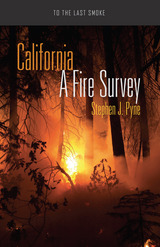
In this collection of essays on the region, Stephen J. Pyne colorfully explores the ways the region has approached fire management and what sets it apart from other parts of the country. Pyne writes that what makes California’s fire scene unique is how its dramatically distinctive biomes have been yoked to a common system, ultimately committed to suppression, and how its fires burn with a character and on a scale commensurate with the state’s size and political power. California has not only a ferocity of flame but a cultural intensity that few places can match. California’s fires are instantly and hugely broadcast. They shape national institutions, and they have repeatedly defined the discourse of fire’s history. No other place has so sculpted the American way of fire.
California is part of the multivolume series describing the nation’s fire scene region by region. The volumes in To the Last Smoke also cover Florida, the Northern Rockies, the Great Plains, the Southwest, and several other critical fire regions. The series serves as an important punctuation point to Pyne’s fifty-year career with wildland fire—both as a firefighter and a fire scholar. These unique surveys of regional pyrogeography are Pyne’s way of “keeping with it to the end,” encompassing the directive from his rookie season to stay with every fire “to the last smoke.”
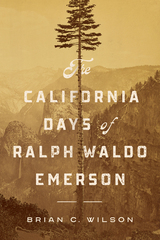
In the spring of 1871, Ralph Waldo Emerson boarded a train in Concord, Massachusetts, bound for a month-and-a-half-long tour of California—an interlude that became one of the highlights of his life. On their journey across the American West, he and his companions would take in breathtaking vistas in the Rockies and along the Pacific Coast, speak with a young John Muir in the Yosemite Valley, stop off in Salt Lake City for a meeting with Brigham Young, and encounter a diversity of communities and cultures that would challenge their Yankee prejudices.
Based on original research employing newly discovered documents, The California Days of Ralph Waldo Emerson maps the public story of this group’s travels onto the private story of Emerson’s final years, as aphasia set in and increasingly robbed him of his words. Engaging and compelling, this travelogue makes it clear that Emerson was still capable of wonder, surprise, and friendship, debunking the presumed darkness of his last decade.

California Dreaming: Boosterism, Memory, and Rural Suburbs in the Golden State analyzes the growth, promotion, and agricultural colonization that fed this dream during the early 1900s. Through this analysis, Paul J. P. Sandul introduces a newly identified rural-suburban type: the agriburb, a rural suburb deliberately planned, developed, and promoted for profit. Sandul reconceptualizes California’s growth during this time period, establishing the agriburb as a suburban phenomenon that occurred long before the booms of the 1920s and 1950s.
Sandul’s analysis contributes to a new suburban history that includes diverse constituencies and geographies and focuses on the production and construction of place and memory. Boosters purposefully “harvested” suburbs with an eye toward direct profit and metropolitan growth. State boosters boasted of unsurpassable idyllic communities while local boosters bragged of communities that represented the best of the best, both using narratives of place, class, race, lifestyle, and profit to avow images of the rural and suburban ideal.
This suburban dream attracted people who desired a family home, nature, health, culture, refinement, and rural virtue. In the agriburb, a family could live on a small home grove while enjoying the perks of a progressive city. A home located within the landscape of natural California with access to urban amenities provided a good place to live and a way to gain revenue through farming.
To uncover and dissect the agriburb, Sandul focuses on local histories from California’s Central Valley and the Inland Empire of Southern California, including Ontario near Los Angeles and Orangevale and Fair Oaks outside Sacramento. His analysis closely operates between the intersections of history, anthropology, geography, sociology, and the rural and urban, while examining a metanarrative that exposes much about the nature and lasting influence of cultural memory and public history upon agriburban communities.
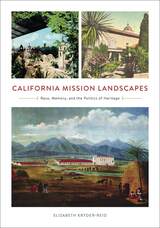
“Nothing defines California and our nation’s heritage as significantly or emotionally,” says the California Mission Foundation, “as do the twenty-one missions that were founded along the coast from San Diego to Sonoma.” Indeed, the missions collectively represent the state’s most iconic tourist destinations and are touchstones for interpreting its history. Elementary school students today still make model missions evoking the romanticized versions of the 1930s. Does it occur to them or to the tourists that the missions have a dark history?
California Mission Landscapes is an unprecedented and fascinating history of California mission landscapes from colonial outposts to their reinvention as heritage sites through the late nineteenth and twentieth centuries. Illuminating the deeply political nature of this transformation, Elizabeth Kryder-Reid argues that the designed landscapes have long recast the missions from sites of colonial oppression to aestheticized and nostalgia-drenched monasteries. She investigates how such landscapes have been appropriated in social and political power struggles, particularly in the perpetuation of social inequalities across boundaries of gender, race, class, ethnicity, and religion. California Mission Landscapes demonstrates how the gardens planted in mission courtyards over the past 150 years are not merely anachronistic but have become potent ideological spaces. The transformation of these sites of conquest into physical and metaphoric gardens has reinforced the marginalization of indigenous agency and diminished the contemporary consequences of colonialism. And yet, importantly, this book also points to the potential to create very different visitor experiences than these landscapes currently do.
Despite the wealth of scholarship on California history, until now no book has explored the mission landscapes as an avenue into understanding the politics of the past, tracing the continuum between the Spanish colonial period, emerging American nationalism, and the contemporary heritage industry.
This interdisciplinary study draws on performance studies, theatre historiography, and New Western History to identify how the unique power relations of historical California were constituted and perpetuated through public performances—not only traditional theatrical productions but also social events such as elite weddings and community dances—and historical events like the U.S. seizure of the city of Monterey, the feting of Commodore Stockton in San Francisco, and the Bear Flag Revolt.

This edited collection explores how Luca Guadagnino’s film Call Me by Your Name speaks powerfully to questions of contemporary sexual identity and romance.
Adapted by James Ivory from André Aciman’s novel and directed by Luca Guadagnino, the film Call Me by Your Name has been passionately received among audiences and critics ever since its 2017 release. A love story between seventeen-year-old Elio (Timothée Chalamet) and graduate student Oliver (Armie Hammer) set in 1983 “somewhere in northern Italy,” Call Me by Your Name presents a gay relationship in a romantic idyll seemingly untroubled by outside pressures, prejudices, or tragedy.
While this means it offers audiences welcome opportunities to swoon in front of an LGBTQ+ romance that equals classic heterosexual romances onscreen, its relevance or political significance today may not be immediately apparent. This edited collection points out the ways in which the film is abundantly infused with narrative, thematic, and stylistic elements that can be interpreted as speaking powerfully to contemporary audiences on questions of sexual identity. How does this love story explore wider tensions that exist between the specific and the general, between the open and the hidden, and between the past and the present? The contributors to this collection provide stimulating and contemplative responses to this question.
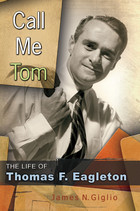
Born in St. Louis, Eagleton began his public career in 1956 as St. Louis Circuit Attorney. At 27, he was the youngest person in the history of the state to hold that position, and he duplicated the feat in his next two elected positions, attorney general in 1960 and lieutenant governor in 1964. In 1968, he was elected to the U.S. Senate, where he served until 1987. He was thrown into the national spotlight in 1972 when revelations regarding his mental health, particularly the shock treatments he received for depression, forced his resignation as a vice presidential nominee of the Democratic Party. All of that would overshadow his significant contributions as senator, especially on environmental and social legislation, as well as his defense of Congressional authority on war making and his role in the U. S. military disengagement from Southeast Asia in 1973.
Respected biographer James N. Giglio provides readers with an encompassing and nuanced portrait of Eagleton by placing the man and his career in the context of his times. Giglio allows readers to see his rumpled suits, smell the smoke of his Pall Mall cigarettes, hear his gravelly voice, and relish his sense of humor. At the same time, Giglio does not shy away from the personal torments that Eagleton had to overcome. A definitive examination of the senator’s career also reveals his unique ability to work with Republican counterparts, especially prior to the 1980s when bipartisanship was more possible.
Measuring the effect his mental illness had on his career, Giglio determines that the removal of aspirations for higher office in 1972 made Eagleton a better senator. He consistently took principled stands, with the ultimate goal of preserving and modernizing the agenda of Franklin D. Roosevelt, his favorite president.
Thoroughly researched using the Eagleton Papers and interviews with more than eighty-five people close to Eagleton, including family, friends, colleagues, subordinates, and former classmates, Call Me Tom offers an engaging and in-depth portrayal of a man who remained a devoted public servant throughout his life.
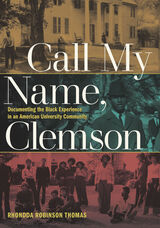
Between 1890 and 1915, a predominately African American state convict crew built Clemson University on John C. Calhoun’s Fort Hill Plantation in upstate South Carolina. Calhoun’s plantation house still sits in the middle of campus. From the establishment of the plantation in 1825 through the integration of Clemson in 1963, African Americans have played a pivotal role in sustaining the land and the university. Yet their stories and contributions are largely omitted from Clemson’s public history.
This book traces “Call My Name: African Americans in Early Clemson University History,” a Clemson English professor’s public history project that helped convince the university to reexamine and reconceptualize the institution’s complete and complex story from the origins of its land as Cherokee territory to its transformation into an increasingly diverse higher-education institution in the twenty-first century. Threading together scenes of communal history and conversation, student protests, white supremacist terrorism, and personal and institutional reckoning with Clemson’s past, this story helps us better understand the inextricable link between the history and legacies of slavery and the development of higher education institutions in America.
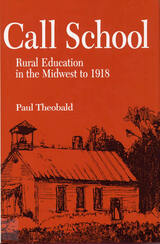
Paul Theobald chronicles the history of the one-room country schools that were spread throughout the rural Midwest during the nineteenth and early twentieth centuries.
Focusing on the region’s educational history in light of the religious, economic, and political atmosphere, Theobald explores the tight connection between educational preferences and religious views, between the economics of the countryside and the educational experiences of children, and between the politics of local power and the educational prospects of the powerless.
Basing his study on extensive archival research, including findings from eight midwestern states, Theobald neither condemns nor lauds the one-room school experience. Providing an objective evaluation, he examines rural school records, correspondence of early school officers, contemporary texts, and diaries and letters of rural students and teachers.
As he weaves together a contextualized account of the circumstances surrounding and within the one-room country schools of the Midwest, Theobald stresses that religion was of primary importance in nineteenth-century American life. Yet he also looks carefully at the shifting economic environment at work in the countryside, particularly in regard to the development of widespread farm tenancy and the consolidation of agricultural and related industries. He challenges readers to analyze how a national move from an agrarian to an industrial view caused conflict and confusion, thereby introducing irrevocable change into rural American life.
Theobald’s study illuminates the history of education on the plains and sheds light on the social foundations of the period.
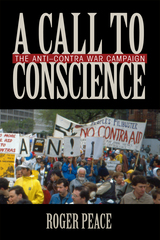
Unlike earlier U.S. interventions in Latin America, the Reagan administration's attempt to overthrow the Sandinista government of Nicaragua during the 1980s was not allowed to proceed quietly. Tens of thousands of American citizens organized and agitated against U.S. aid to the counterrevolutionary guerrillas, known as “contras.” Believing the Contra War to be unnecessary, immoral, and illegal, they challenged the administration's Cold War stereotypes, warned of “another Vietnam,” and called on the United States to abide by international norms.
A Call to Conscience offers the first comprehensive history of the anti–Contra War campaign and its Nicaragua connections. Roger Peace places this eight-year campaign in the context of previous American interventions in Latin America, the Cold War, and other grassroots oppositional movements. Based on interviews with American and Nicaraguan citizens and leaders, archival records of activist organizations, and official government documents, this book reveals activist motivations, analyzes the organizational dynamics of the anti–Contra War campaign, and contrasts perceptions of the campaign in Managua and Washington.
Peace shows how a variety of civic groups and networks—religious, leftist, peace, veteran, labor, women's rights—worked together in a decentralized campaign that involved extensive transnational cooperation.
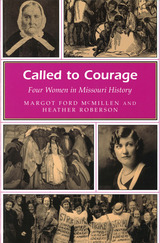

In this deeply personal work, acclaimed art historian Dora Apel examines how memorials, photographs, artworks, and autobiographical stories can be used to fuel a process of “unforgetting”—reinterpreting the past by recalling the events, people, perspectives, and feelings that get excluded from conventional histories. The ten essays in Calling Memory into Place feature explorations of the controversy over a painting of Emmett Till in the Whitney Biennial and the debates about a national lynching memorial in Montgomery, Alabama. They also include personal accounts of Apel’s return to the Polish town where her Holocaust survivor parents grew up, as well as the ways she found strength in her inherited trauma while enduring treatment for breast cancer.
These essays shift between the scholarly, the personal, and the visual as different modes of knowing, and explore the intersections between racism, antisemitism, and sexism, while suggesting how awareness of historical trauma is deeply inscribed on the body. By investigating the relations among place, memory, and identity, this study shines a light on the dynamic nature of memory as it crosses geography and generations.
Through close readings of more than twelve hundred letters to and from Sarkar along with other archival documents, Dipesh Chakrabarty demonstrates that historians in colonial India formulated the basic concepts and practices of the field via vigorous—and at times bitter and hurtful—debates in the public sphere. He furthermore shows that because of its non-technical nature, the discipline as a whole remains susceptible to pressure from both the public and the academy even today. Methodological debates and the changing reputations of scholars like Sarkar, he argues, must therefore be understood within the specific contexts in which particular histories are written.
Insightful and with far-reaching implications for all historians, The Calling of History offers a valuable look at the double life of history and how tensions between its public and private sides played out in a major scholar’s career.
Normal0falsefalsefalseMicrosoftInternetExplorer4
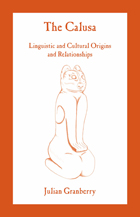
Normal0falsefalsefalseEN-USX-NONEX-NONEMicrosoftInternetExplorer4The linguistic origins of Native American cultures and the connections between these cultures as traced through language in prehistory remain vexing questions for scholars across multiple disciplines and interests. Native American linguist Julian Granberry defines the Calusa language, formerly spoken in southwestern coastal Florida, and traces its connections to the Tunica language of northeast Louisiana.
capitalist transformation, Anne Kelly Knowles traces a community of
Welsh immigrants to Jackson and Gallia counties in southern Ohio. After
reconstructing the gradual process of community-building, Knowles
focuses on the pivotal moment when the immigrants became involved with
the industrialization of their new region as workers and investors in
Welsh-owned charcoal iron companies. Setting the southern Ohio Welsh in
the context of Welsh immigration as a whole from 1795 to 1850, Knowles
explores how these strict Calvinists responded to the moral dilemmas
posed by leaving their native land and experiencing economic success in
the United States.
Knowles draws on a wide variety of sources, including obituaries and
community histories, to reconstruct the personal histories of over 1,700
immigrants. The resulting account will find appreciative readers not
only among historical geographers, but also among American economic
historians and historians of religion.

More than four decades have passed since the end of Khmer Rouge rule in Cambodia in 1979. Even so, the country is still coming to terms with the destruction wrought by the Khmer Rouge during both the time they were in power and during the period of guerrilla resistance that lasted until 1998. The Khmer Rouge Tribunal, or the Extraordinary Chambers in the Court of Cambodia (ECCC), was established in 2006 to bring the Khmer Rouge leadership to justice. In many ways a product of the 1990s, when liberal democracy appeared to be on the rise both in Cambodia and internationally, the ECCC was imagined as a transitional justice initiative that would help ease the transition to liberal democracy.
The ECCC has long been the focus of scholarly attention in Cambodia’s recovery, but this compelling study argues that such an approach is dated, noting that the political circumstances in which the ECCC was born have since changed profoundly, both globally and locally. Cambodia’s current situation can no longer be analyzed solely in terms of transitional justice narratives or the work of the ECCC, and other ways in which Cambodians have come to terms with their past and built new lives must be considered. By decentering the ECCC in the scholarly narrative of Cambodia’s recovery, the volume’s authors offer fascinating new insights into the Khmer Rouge period and more recent years of social, cultural, and political change in Cambodia.

During World War II, members of the Cambridge Psychology Laboratory were commissioned to study pilot fatigue. They set up a Spitfire cockpit in the laboratory, turned it into a piece of laboratory apparatus, and carried out a series of important experiments that appeared to dramatically confirm the dangers of fatigue. Historians of psychology are aware of this episode, but the experiments, the events surrounding them, and the scientific reasoning involved have never been studied in detail. By going into the episode in depth, and by looking behind the scenes at archival material, David Bloor offers an analysis that is both original and more penetrating than anything that has been said before on the topic.
Bloor describes the Cockpit experiments themselves before turning to the theoretical interpretation of the results and the intellectual resources that informed how they were viewed. Bloor then explains a major empirical and theoretical challenge to the Cambridge Cockpit work drawn from a field study of landing accidents apparently showing that fatigue-effects were operationally negligible. Bloor delves into the consequences of this challenge, and the Cambridge reaction to it, in the post-war years. The analysis is deepened by comparison with the corresponding wartime work on fatigue carried out both in Germany and the United States. As the author demonstrates, even today the Cambridge Cockpit experiments pose a challenge to the current understanding of pilot fatigue.
In this book, Jeffery M. Dorwart chronicles more than three centuries of Camden County history. He takes readers on a journey, from the earliest days as a Native American settlement, to the county's important roles in the Revolutionary and Civil Wars, Camden City's booms and busts, the county's increasing suburbanization, and concluding with current inner-city revitalization efforts.
Dorwart details how the earliest European settlers radically changed the local Native American culture and introduced black slavery. In the Revolutionary War, the county's location directly across the Delaware River from Philadelphia placed it at the crossroads of the American Revolution. Dorwart examines the county's conflicted roles during the Civil War, when the older agrarian population, which held traditional social and economic ties to the slave-owing South, clashed with the increasingly industrialized interests of the urban waterfront, which showed strong Unionist tendencies. He explores the changing demographics of the area as waves of European immigrants came to work in the factories. He surveys the rise and fall of first Camden City, then of the suburbs, as both areas experienced population ebbs and flows. Finally, Dorwart looks at the revitalization efforts of 2000 when Camden County began efforts to reinvent the riverfront community where it all began.
Guided by myths of golden cities and worldly rewards, policy makers, conquistador leaders, and expeditionary aspirants alike came to the new world in the sixteenth century and left it a changed land. Came Men on Horses follows two conquistadors—Francisco Vázquez de Coronado and Don Juan de Oñate—on their journey across the southwest.
Driven by their search for gold and silver, both Coronado and Oñate committed atrocious acts of violence against the Native Americans, and fell out of favor with the Spanish monarchy. Examining the legacy of these two conquistadors Hoig attempts to balance their brutal acts and selfish motivations with the historical significance and personal sacrifice of their expeditions. Rich human details and superb story-telling make Came Men on Horses a captivating narrative scholars and general readers alike will appreciate.

Polaroid was often dismissed as a toy, but Buse takes it seriously, showing how it encouraged photographic play as well as new forms of artistic practice. Drawing on unprecedented access to the archives of the Polaroid Corporation, Buse reveals Polaroid as photography at its most intimate, where the photographer, photograph, and subject sit in close proximity in both time and space—making Polaroid not only the perfect party camera but also the tool for frankly salacious pictures taking.
Along the way, Buse tells the story of the Polaroid Corporation and its ultimately doomed hard-copy wager against the rising tide of digital imaging technology. He explores the continuities and the differences between Polaroid and digital, reflecting on what Polaroid can tell us about how we snap photos today. Richly illustrated, The Camera Does the Rest will delight historians, art critics, analog fanatics, photographers, and all those who miss the thrill of waiting to see what develops.
In the early twentieth century, the Boston-based United Fruit Company controlled the production, distribution, and marketing of bananas, the most widely consumed fresh fruit in North America. So great was the company’s power that it challenged the sovereignty of the Latin American and Caribbean countries in which it operated, giving rise to the notion of company-dominated “banana republics.”
In A Camera in the Garden of Eden, Kevin Coleman argues that the “banana republic” was an imperial constellation of images and practices that was checked and contested by ordinary Central Americans. Drawing on a trove of images from four enormous visual archives and a wealth of internal company memos, literary works, immigration records, and declassified US government telegrams, Coleman explores how banana plantation workers, women, and peasants used photography to forge new ways of being while also visually asserting their rights as citizens. He tells a dramatic story of the founding of the Honduran town of El Progreso, where the United Fruit Company had one of its main divisional offices, the rise of the company now known as Chiquita, and a sixty-nine day strike in which banana workers declared their independence from neocolonial domination. In telling this story, Coleman develops a new set of conceptual tools and methods for using images to open up fresh understandings of the past, offering a model that is applicable far beyond this pathfinding study.
These quiet but moving images represent the changing role of photographic portraiture in India, a topic anthropologist Christopher Pinney explores in Camera Indica. Studying photographic practice in India, Pinney traces photography's various purposes and goals from colonial through postcolonial times. He identifies three key periods in Indian portraiture: the use of photography under British rule as a quantifiable instrument of measurement, the later role of portraiture in moral instruction, and the current visual popular culture and its effects on modes of picturing. Photographic culture thus becomes a mutable realm in which capturing likeness is only part of the project. Lavishly illustrated, Pinney's account of the change from depiction to invention uncovers fascinating links between these evocative images and the society and history from which they emerge.
Considering a range of Western and Middle Eastern archival material from the late nineteenth and early twentieth centuries, Ali Behdad offers a rich account of how photography transformed Europe’s distinctly Orientalist vision into what seemed objective fact, a transformation that proved central to the project of European colonialism. At the same time, Orientalism was useful for photographers from both regions, as it gave them a set of conventions by which to frame exotic Middle Eastern cultures for Western audiences. Behdad also shows how Middle Eastern audiences embraced photography as a way to foreground status and patriarchal values while also exoticizing other social classes.
An important examination of previously overlooked European and Middle Eastern photographers and studios, Camera Orientalis demonstrates that, far from being a one-sided European development, Orientalist photography was the product of rich cultural contact between the East and the West.
Camp Chase was a major Union POW camp and also served at various times as a Union military training facility and as quarters for Union soldiers who had been taken prisoner by the Confederacy and released on parole or exchanged. As such, this careful, thorough, and objective examination of the history and administration of the camp will be of true significance in the literature on the Civil War.
Camp Floyd and the Mormons traces the history of the sojourn of “Johnston’s Army” in Utah Territory from the beginning of the Utah War in 1857 through the abandonment of Camp Floyd in Cedar Valley west of Utah Lake at the outbreak of the Civil War. The book describes the relationship between the invading army and the local Mormon population, gives an account of Indian affairs in Utah, and describes the activities of federal officials in Utah during that volatile period.
Completed posthumously by Gene Sessions, Moorman’s colleague at Weber State University, Camp Floyd and the Mormons is a comprehensive analysis of the history of frontier Utah as a decade of isolation ended and confrontations with the United States government began. Moorman had unprecedented access to materials in the LDS Church Archives on subjects ranging from the Mountain Meadows Massacre to the Mormon responses to the presence of the army in Utah from 1858 through 1861.
First published by the University of Utah Press in 1992, this reprint edition includes a new introduction by Gene Sessions in which he recounts Moorman’s research adventures during the 1960s "in the bowels of the old Church Administration Building, where Joseph Fielding Smith and A. Will Lund watched over the contents of the archives like wide-eyed mother hens."
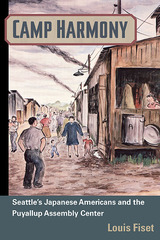
This book is the first full portrait of a single assembly center--located at the Western Washington fairgrounds at Puyallup, outside Seattle--that held Japanese Americans for four months prior to their transfer to a relocation center during World War II. Gathering archival evidence and eyewitness accounts, Louis Fiset reconstructs the events leading up to the incarceration as they unfolded on a local level: arrests of Issei leaders, Nikkei response to the war dynamics, debates within the white community, and the forced evacuation of the Nikkei community from Bainbridge Island. The book explores the daily lives of the more than seven thousand inmates at "Camp Harmony," detailing how they worked, played, ate, and occasionally fought with each other and with their captors. Fiset also examines the inmates' community life, health care, and religious activities. He includes details on how army surveyors selected the center's site, oversaw its construction, and managed the transfer of inmates to the more permanent Minidoka Relocation Center in Idaho.
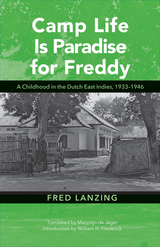
“Children see and hear what is there; adults see and hear what they are expected to and mainly remember what they think they ought to remember,” David Lowenthal wrote in The Past Is a Foreign Country. It is on this fraught foundation that Fred Lanzing builds this memoir of his childhood in a Japanese internment camp for Dutch colonialists in the East Indies during the World War II.
When published in the Netherlands in 2007, the book triggered controversy, if not vitriol, for Lanzing’s assertion that his time in the camp was not the compendium of horrors commonly associated with the Dutch internment experience. Despite the angry reception, Lanzing’s account corresponds more closely with the scant historical record than do most camp memoirs. In this way, Lanzing’s work is a substantial addition to ongoing discussions of the politics of memory and the powerful—if contentious—contributions that subjective accounts make to historiography and to the legacies of the past.
Lanzing relates an aspect of the war in the Pacific seldom discussed outside the Netherlands and, by focusing on the experiences of ordinary people, expands our understanding of World War II in general. His compact, beautifully detailed account will be accessible to undergraduate students and a general readership and, together with the introduction by William H. Frederick, is a significant contribution to literature on World War II, the Dutch colonial experience, the history of childhood, and Southeast Asian history.
Honorable Mention of the 1999 Gustavus Myers Outstanding Book Awards
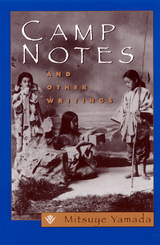
Two collections by an important Asian American writer -- Camp Notes and Other Poeems and Desert Run: Poems and Stories -- return to print in one volume.
Mitsuye Yamada was born in Kyushu, Japan, and raised in Seattle, Washington, until the outbreak of World War II when her family was removed to a concentration camp in Idaho. Camp Notes and Other Writings recounts this experience.
Yamada's poetry yields a terse blend of emotions and imagery. Her twist of words creates a twist of vision that make her poetry come alive. The weight of her cultural experience-the pain of being perceived as an outsider all of her life-permeates her work.
Yamada's strength as a poet stems from the fact that she has managed to integrate both individual and collective aspects of her background, giving her poems a double impact. Her strong portrayal of individual and collective life experience stands out as a distinct thread in the fabric of contemporary literature by women.
"The core poems of Camp Notes and the title come from the notes I had taken when I was in camp, and it wasn’t published until thirty years after most of it was written. I was simply describing what was happening to me, and my thoughts. But, in retrospect, the collection takes on a kind of expanded meaning about that period in our history. As invariably happens, because Japanese American internment became such an issue in American history, I suppose I will be forever identified as the author of Camp Notes. Of course, I try to show that it’s not the only thing I ever did in my whole life; I did other things besides go to an internment camp during World War II. So, in some ways I keep producing to counteract that one image that gets set in the public mind. At the time that I was writing it, I wasn’t necessarily a political person. Now, when I reread it, even to myself, I think it probably has a greater warning about the dangers of being not aware, not aware of one’s own rights, not aware of helping other people who may be in trouble. I think that it does speak to our present age very acutely." -- Mitsuye Yamada, "You should not be invisible”: An Interview with Mitsuye Yamada, Contemporary Women's Writing, March 2014, Vol. 8 Issue 1
Read the whole interview at: https://academic.oup.com/cww/article/8/1/1/414906/You-should-not-be-invisible-An-Interview-with



De Sio shows readers that Obama himself was direct about his vision for the campaign when he instructed his staff to “run it like a business.” Thus, this is less the story of Barack Obama, candidate, and more the story of Barack Obama, CEO. Because campaigns are launched from scratch during every election cycle, they are the ultimate entrepreneurial experience. In the course of the election, the Obama campaign scaled up from a scrappy start-up to a nearly $1 billion operation, becoming a hothouse environment on which the glare of the media spotlight was permanently trained.
Campaign Inc. allows readers to peek behind the curtain at the underdog organization that brought down the Clinton campaign and later went on to defeat the Republican machine, while offering lessons in leadership and organization to innovators, executives, and entrepreneurs.
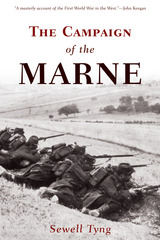
The Definitive Account of the Battle of the Marne, One of World War I's Most Important Events
"A masterly account of the First World War in the West."—John Keegan
"A distinguished piece of historical writing."—Journal of Modern History
"Admirable... clear and interesting."—Foreign Affairs
"Direct and clear... it lays bare a most complicated course of events so that even the layman can follow."—New Republic
Named as One of The 100 Best Nonfiction Books of the Twentieth Century
With diplomacy unraveling during the summer of 1914, Germany swept into Belgium during the first week of August in an audacious attempt to catch France and England off guard. First contemplated after the Franco-Prussian War, the Schlieffen Plan was designed to keep Germany from fighting on two fronts. With a quick and decisive victory over France and its allies to the west, Germany could then confront Russia to the east. Despite the surprise of Germany's initial advance, the plan ultimately failed because it required much more mobile troops than were available at the time - something that would have to await the mechanized blitzkrieg of World War II—allowing France and British Expeditionary Forces to establish a tenacious defense. What followed was a stalemate along the Marne River and the beginning of four long years of destructive trench warfare that would only be lifted by a joint French, British, and American offensive across this same river plain in 1918. In The Campaign of the Marne, the entire genesis of the Schlieffen Plan, its modification, implementation, and the complex series of grueling battles that followed is laid out with the intent to make the entire episode comprehensible to the general reader. Hailed as one of the 100 best nonfiction books of the twentieth century by eminent military historian John Keegan, this is the first time the book has been available since its original publication in 1935.

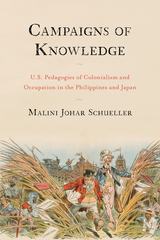
The creation of a new school system in the Philippines in 1898 and educational reforms in occupied Japan, both with stated goals of democratization, speaks to a singular vision of America as savior, following its politics of violence with benevolent recuperation. The pedagogy of recovery—in which schooling was central and natives were forced to accept empire through education—might have shown how Americans could be good occupiers, but it also created projects of Orientalist racial management: Filipinos had to be educated and civilized, while the Japanese had to be reeducated and “de-civilized.”
In Campaigns of Knowledge, Malini Schueller contrapuntally reads state-sanctioned proclamations, educational agendas, and school textbooks alongside political cartoons, novels, short stories, and films to demonstrate how the U.S. tutelary project was rerouted, appropriated, reinterpreted, and resisted. In doing so, she highlights how schooling was conceived as a process of subjectification, creating particular modes of thought, behaviors, aspirations, and desires that would render the natives docile subjects amenable to American-style colonialism in the Philippines and occupation in Japan.
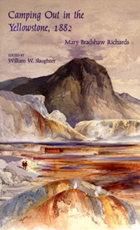
Camping out in Yellowstone, 1882 describes the park at a time when Yellowstone was truly an "out-back and beyond" experience.
Writing just five years after the army chased the Nez Peirce Indians through the area, and only ten years after the park’s establishment, Mary Richards provides a vivid picture of the undeveloped and untouristed Yellowstone Park: Fire Hole Basin, Mammoth Hot Spring, Lower Falls, and the Excelsior Geyser, now defunct but mightier at the time than Old Faithful. Augmented by twenty-eight contemporary photographs, this book offers a fascinating perspective for present-day Park lovers.
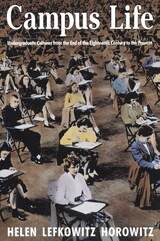
Winner of the 2020 OSCLG Outstanding Book Award
This new book for scholars and university administrators offers a provocative critique of sexual justice language and policy in higher education around the concept of consent. Complicating the idea that consent is plain common sense, Campuses of Consent shows how normative and inaccurate concepts about gender, gender identity, and sexuality erase queer or trans students' experiences and perpetuate narrow, regressive gender norms and individualist frameworks for understanding violence.
Theresa A. Kulbaga and Leland G. Spencer prove that consent in higher education cannot be meaningfully separated from larger issues of institutional and structural power and oppression. While sexual assault advocacy campaigns, such as It's On Us, federal legislation from Title IX to the Clery Act, and more recent affirmative-consent measures tend to construct consent in individualist terms, as something “given” or “received” by individuals, the authors imagine consent as something that can be constructed systemically and institutionally: in classrooms, campus communication, and shared campus spaces.
The remarkable story of pastor Donald Gay and his family’s lasting contributions to gospel music and Chicago culture.
When the preacher Gregory Donald Gay joined his sisters onstage at Carnegie Hall in 1950, on a sold-out bill they shared with Mahalia Jackson and the Clara Ward Singers, he became a participant in a landmark moment: the first concert in the venue to feature entirely gospel music. He was just five years old.
The Gay Sisters—Evelyn, Geraldine, and Mildred—were key figures in gospel’s Golden Age, and their youngest brother had a front-row seat. Evelyn and Geraldine each innovated singular approaches to gospel piano, while Mildred sang. Together, they toured and performed on a series of influential gospel recordings from 1948 to 1973, playing the Apollo Theatre and crossing paths with musical luminaries like Sister Rosetta Tharpe, Sam Cooke, Pops Staples, and Dizzy Gillespie. But despite a hit record and prodigious talent, the Gay Sisters faded from the limelight. In the ensuing years, they weathered personal trials while their mother, Fannie, devoted her attention to another family undertaking: starting a church.
Can I Get a Witness! is a call-and-response between Steven B. Dolins, founder of The Sirens Records, and Donald Gay, who vividly describes his boyhood in Chicago’s Woodlawn neighborhood, his family’s remarkable place in gospel history, his mother’s work as a faith leader, and his own calling as a pastor. The book spotlights the rich contributions of a family remembered not only for the songs they recorded but also for their unwavering kindness to others, a legacy that the legendary Sonny Rollins recounts in a moving foreword.

The advent of the testimonio--loosely, a political autobiography of a Latin American activist who hopes, through the telling of her life story, to bring about change--was met with a great deal of excitement by scholars who posited it as a radical new form of literature. Those accolades were almost immediately followed by a series of critical problems. In what sense were testimonios "true"? What right did privileged scholars in the U.S. have to engage accounts of suffering with traditional modes of criticism? Were questions of veracity or aesthetics more important? Were these texts autobiography or political screeds? It seemed critics didn't know quite what to make of the testimonio and so, after a brief bout of engagement, disregarded it.
Nance, however, argues that any form as prolific as the testimonio is well worth examining and that these questions, rather than being insurmountable, are exactly the questions with which scholars ought to be wrestling. If, as critics claim, that the testimonio is one of the most pervasive contemporary Latin American cultural genres, then it is high time for a comprehensive study of the genre such as Nance's.

Originally published in 1769, Domestic Medicine was produced for the benefit of those without access to—or means to afford—medical assistance, and copies of the book were found in apothecaries and coffee houses, private households and clubs. In 1797, Bounty mutineer Fletcher Christian and his crew even had the foresight to pack a copy before fleeing to the Pitcairns. Derived from folklore and the emerging medical science of the day, some of Buchan’s recommendations for how to live a healthy life still ring true: for instance, exercising, enjoying a varied diet, and getting an abundance of fresh air. Others are delightfully dodgy or even downright dangerous, such as genital trusses, the prescription of mercury, or the suggestion that Spanish fly might soothe aching joints.
Bringing together an exceedingly entertaining selection of entries from one of the earliest self-help books, Can Onions Cure Ear-ache? offers fascinating insight into the popular treatments of the time.
In the rural America of the past, a woman's reputation was sometimes made by her cherry pie—or her chocolate layer cake, or her biscuits. As America modernized and as women left the home, entered the paid labor force, and battled their way to success in the professions, mastery of cooking remained an accepted sign that a woman took her gendered responsibilities seriously. Ironically, over the course of the twentieth century, as ready-made foods and kitchen appliances made home cooking less essential and labor-intensive, skill in the kitchen continued to be perceived not only by society but often by women themselves as a measure of a woman's true value.
This book shows how cooking developed and evolved during the twentieth century. From Fannie Farmer to Julia Child, new challenges arose to replace the old. Women found themselves still tied to the kitchen, but for different reasons and with the need to acquire new skills. Instead of simply providing sustenance for the family, they now had to master more complex cooking techniques, the knowledge of “ethnic” cuisines, the science of nutrition, the business of consumerism, and, perhaps most important of all, the art of keeping their husbands and children happy and healthy.

Each essay looks at the role of a particular photographic genre in the making of modern Latin American identities. Articles cover the adaptation in late-nineteenth-century Oaxaca of European type photography as a tool of imperialist enterprise and science, state consolidation, and consumer culture; the use of portrait photography by the K’iche Mayans of Quetzaltenango; and the family album—made up of snapshots, postcards, and other memorabilia—as a historical document.
Contributors. Greg Grandin, Daniel James, Mirta Zaida Lobato, Deborah Poole
In the late seventeenth century a group of about a dozen escaped African slaves from the English colony of Carolina reached the Spanish settlement of St. Augustine. In a diplomatic bid for sanctuary, to avoid extradition and punishment, they requested the sacrament of Catholic baptism from the Spanish Catholic Church. Their negotiations brought about their baptism and with it their liberation. The Cana Sanctuary focuses on what author Frank Marotti terms “folk diplomacy”—political actions conducted by marginalized, non-state sectors of society—in this instance by formerly enslaved African Americans in antebellum East Florida. The book explores the unexpected transformations that occurred in seventeenth- and eighteenth-century St. Augustine as more and more ex-slaves arrived to find their previously disregarded civil rights upheld under sacred codes by an international, nongovernmental, authoritative organization.
With the Catholic Church acting as an equalizing, empowering force for escaped African slaves, the Spanish religious sanctuary policy became part of popular historical consciousness in East Florida. As such, it allowed for continual confrontations between the law of the Church and the law of the South. Tensions like these survived, ultimately lending themselves to an “Afro-Catholicism” sentiment that offered support for antislavery arguments.
The Great Migration--the exodus of more than six million blacks from
their southern homes hoping for better lives in the North--is a defining
event of post-emancipation African-American life and a central feature
of twentieth-century black literature. Lawrence Rodgers explores the historical
and literary significance of this event and in the process identifies
the Great Migration novel as a literary form that intertwines geography
and identity.
Drawing on a wide range of major literary voices, including Richard Wright,
Ralph Ellison, and Toni Morrison, as well as lesser-known writers such
as William Attaway (Blood on the Forge) and Dorothy West (The Living Is
Easy), Rodgers conducts a kind of literary archaeology of the Great Migration.
He mines the writers' biographical connections to migration and teases
apart the ways in which individual novels relate to one another, to the
historical situation of black America, and to African-American literature
as a whole.
In reading migration novels in relation to African-American literary
texts such as slave narratives, folk tales, and urban fiction, Rodgers
affirms the southern folk roots of African-American culture and argues
for a need to stem the erosion of southern memory.

How democratic regimes should engage with authoritarian regimes, or self-proclaimed authorities in states under occupation, has long been a subject of debate. The work examines Canada's relations with member-states of the Warsaw Pact during the Cold War. Central and East European communist states were nominally independent but established under occupation. Canadian leaders explored whether engaging in foreign relations with these countries would encourage liberalization or embolden dictatorships. Over time, Canada's position evolved as a policy of encouraging bilateral and multilateral diplomacy, while calling for the respect of human rights. However, Canada's economic relationship with East European states was at times at cross-purposes with its democratic principles. Andrea Chandler concludes that while Canada did play a role in encouraging democratization, the country's leaders did not sufficiently consider the impact of these policies on the citizens of Warsaw Pact countries.
This book treats Canada’s engagement with Hungary, Poland, the German Democratic Republic, Romania, Bulgaria and Czechoslovakiaduring the Cold War, in which the Western countries of the North Atlantic Treaty Organization (including Canada) had an adversarial relation with the Soviet bloc nations.
Canada in the Frame describes this little-known collection and includes over one hundred images from the collection. The author asks key questions about what it shows contemporary viewers of Canada and its photographic history, and about the peculiar view these photographs offer of a former part of the British Empire in a postcolonial age, viewed from the old "Heart of Empire." Case studies are included on subjects such as urban centers, railroads and migration, which analyze the complex ways in which photographers approached their subjects in the context of the relationship between Canada, the British Empire, and photography.

The result is a compendium of data and analysis that can be found nowhere else and which will be an invaluable sourcebook for students of Canadian political behavior.
Including essays by anglophone, francophone, and First Nations writers, the reader is divided into three parts, the first of which features essays by scholars who helped set the agenda for cultural and social analysis in Canada and remain important to contemporary intellectual formations: Harold Innis, Marshall McLuhan, and Anthony Wilden in communications theory; Northrop Frye in literary studies; George Grant and Harold Innis in a left-nationalist tradition of critical political economy; Fernand Dumont and Paul-Émile Borduas in Quebecois national and political culture; and Harold Cardinal in native studies.
The volume’s second section showcases work in which contemporary authors address Canada’s problematic and incomplete nationalism; race, difference, and multiculturalism; and modernity and contemporary culture. The final section includes excerpts from federal policy documents that are especially important to Canadians’ conceptions of their social, political, and cultural circumstances. The reader opens with a foreword by Fredric Jameson and concludes with an afterword in which the Quebecois scholar Yves Laberge explores the differences between English-Canadian cultural studies and the prevailing forms of cultural analysis in francophone Canada.
Contributors. Ian Angus, Himani Bannerji, Jody Berland, Paul-Émile Borduas, Harold Cardinal, Maurice Charland, Stephen Crocker, Ioan Davies, Fernand Dumont, Kristina Fagan, Gail Faurschou, Len Findlay, Northrop Frye, George Grant, Rick Gruneau, Harold Innis, Fredric Jameson, Yves Laberge, Jocelyn Létourneau, Eva Mackey, Lee Maracle, Marshall McLuhan, Katharyne Mitchell, Sourayan Mookerjea, Kevin Pask, Rob Shields, Will Straw, Imre Szeman, Serra Tinic, David Whitson, Tony Wilden

The most comprehensive history of Canadian military intelligence and its influence on key military operations
Canadian intelligence has become increasingly central to the operations of the Canadian Armed Forces (CAF). Canadian Military Intelligence: Operations and Evolution from the October Crisis to the War in Afghanistan is the first comprehensive history that examines the impact of tactical, operational, and strategic intelligence on the Canadian military.
Drawing upon a wide range of original documents and interviews with participants in specific operations, author David A. Charters provides an inside perspective on the development of military intelligence since the Second World War. He shows how intelligence influenced key military operations, from domestic internal security to peacekeeping efforts to high-intensity air campaigns—including the October Crisis of 1970, the Oka Crisis, the Gulf War, peacekeeping and enforcement operations in the Balkans, and the war in Afghanistan. He describes how decades of experience, innovation, and increasingly close cooperation with its Five Eyes and NATO allies allowed Canada’s military intelligence to punch above its weight. Its tactical effectiveness and ability to overcome challenges reshaped the outlook of military commanders, and intelligence emerged from the margins to become a central feature of military and defense operations.
Canadian Military Intelligence offers lessons from the past and critical implications for future intelligence support with the creation of the Canadian Forces Intelligence Command. This book will be essential to both intelligence history and military history readers and collections.
Prehistoric farmers in Mexico invented irrigation, developed it into a science, and used it widely. Indeed, many of the canal systems still in use in Mexico today were originally begun well before the discovery of the New World. In this comprehensive study, William E. Doolittle synthesizes and extensively analyzes all that is currently known about the development and use of irrigation technology in prehistoric Mexico from about 1200 B.C. until the Spanish conquest in the sixteenth century A.D.
Unlike authors of previous studies who have focused on the political, economic, and social implications of irrigation, Doolittle considers it in a developmental context. He examines virtually all the known systems, from small canals that diverted runoff from ephemeral mountain streams to elaborate networks that involved numerous large canals to irrigate broad valley floors with water from perennial rivers. Throughout the discussion, he gives special emphasis to the technological elaborations that distinguish each system from its predecessors. He also traces the spread of canal technology into and through different ecological settings.
This research substantially clarifies the relationship between irrigation technology in Mexico and the American Southwest and argues persuasively that much of the technology that has been attributed to the Spaniards was actually developed in Mexico by indigenous people. These findings will be important not only for archaeologists working in this area but also for geographers, historians, and engineers interested in agriculture, technology, and arid lands.
Canaletto’s Camera provides a revelatory look at how the Venetian master Antonio Canaletto (1697–1768) used the camera obscura, a precursor to the modern camera, to create his meticulous cityscapes. Drawing on new research, Steadman examines Canaletto’s connections to contemporary scientists and his reliance on measured architectural drawings, discovering previously unrecognized techniques that shaped his iconic views of Venice and London.
By analyzing Canaletto’s sketches and reconstructing an 18th-century camera obscura, Steadman and his colleagues have recreated the artist’s process, demonstrating how he traced real scenes, altered them in his finished works, and even engaged in a form of early photomontage. Through digital overlays and side-by-side comparisons with contemporary photographs, the book challenges assumptions about Canaletto’s realism and artistic manipulation.
Lavishly illustrated and deeply engaging, Canaletto’s Camera is a compelling read for art historians, scholars of optical devices, and those fascinated by the intersection of art and science.
College campuses have become flashpoints of the current culture war and, consequently, much ink has been spilled over the relationship between universities and the cultivation or coddling of young American minds. Philosopher Sigal R. Ben-Porath takes head-on arguments that infantilize students who speak out against violent and racist discourse on campus or rehash interpretations of the First Amendment. Ben-Porath sets out to demonstrate the role of the university in American society and, specifically, how it can model free speech in ways that promote democratic ideals.
In Cancel Wars, she argues that the escalating struggles over “cancel culture,” “safe spaces,” and free speech on campus are a manifestation of broader democratic erosion in the United States. At the same time, she takes a nuanced approach to the legitimate claims of harm put forward by those who are targeted by hate speech. Ben-Porath’s focus on the boundaries of acceptable speech (and on the disproportional impact that hate speech has on marginalized groups) sheds light on the responsibility of institutions to respond to extreme speech in ways that proactively establish conversations across difference. Establishing these conversations has profound implications for political discourse beyond the boundaries of collegiate institutions. If we can draw on the truth, expertise, and reliable sources of information that are within the work of academic institutions, we might harness the shared construction of knowledge that takes place at schools, colleges, and universities against truth decay. Of interest to teachers and school leaders, this book shows that by expanding and disseminating knowledge, universities can help rekindle the civic trust that is necessary for revitalizing democracy.
READERS
Browse our collection.
PUBLISHERS
See BiblioVault's publisher services.
STUDENT SERVICES
Files for college accessibility offices.
RECENTLY PUBLISHED


UChicago Accessibility Resources
home | accessibility | search | about | contact us
BiblioVault ® 2001 - 2026
The University of Chicago Press