
 A SCHOLARLY BOOK REPOSITORY
2474 start with C start with C
First published in 1925, The City is a trailblazing text in urban history, urban sociology, and urban studies. Its innovative combination of ethnographic observation and social science theory epitomized the Chicago school of sociology. Robert E. Park, Ernest W. Burgess, and their collaborators were among the first to document the interplay between urban individuals and larger social structures and institutions, seeking patterns within the city’s riot of people, events, and influences. As sociologist Robert J. Sampson notes in his new foreword, though much has changed since The City was first published, we can still benefit from its charge to explain where and why individuals and social groups live as they do.
Medieval Europe is known for its sense of ceremony and drama. Knightings, tournaments, coronations, religious processions, and even private celebrations such as baptisms, weddings, and funerals were occasions for ritual, feasting, and public display. This volume is the first to take a comprehensive look at the many types of city spectacles that entertained the masses and confirmed various messages of power in late medieval Europe. Bringing together leading scholars in history, art history, and literature, this interdisciplinary collection sets new standards for the study of medieval popular culture.
Drawing examples from Spain, England, France, Italy, and the Netherlands, most of them in the fifteenth century, the authors explore the uses of ceremony as statements of political power, as pleas for divine intercession, and as expressions of popular culture. Their essays show us spectacles meant to confirm events such as victories, the signing of a city charter, or the coronation of a king. In other circumstances, the spectacle acts as a battleground where a struggle for the control of the metaphors of power is played out between factions within cities or between cities and kings. Still other ceremonies called upon divine spiritual powers in the hope that their intervention might save the urban inhabitants. We see here a public cognizant of the power of symbols to express its goals and achievements, a society reaching the height of sophistication in its manipulation of popular and elite culture for grand shows.
A history of San Francisco that studies change in the postwar urban landscape in relation to the city's queer culture.
The City Aroused is a lively history of urban development and its influence on queer political identity in postwar San Francisco. By reconstructing the planning and queer history of waterfront drinking establishments, Damon Scott shows that urban renewal was a catalyst for community organizing among racially diverse operators and patrons with far-reaching implications for the national gay rights movement.
Following the exclusion of suspected homosexuals from the maritime trades in West Coast ports in the early 1950s, seamen’s hangouts in the city came to resemble gay bars. Local officials responded by containing the influx of gay men to a strip of bars on the central waterfront while also making plans to raze and rebuild the area. This practice ended when city redevelopment officials began acquiring land in the early 1960s. Aided by law enforcement, they put these queer social clubs out of business, replacing them with heteronormative, desexualized land uses that served larger postwar urban development goals. Scott argues that this shift from queer containment to displacement aroused a collective response among gay and transgender drinking publics who united in solidarity to secure a place in the rapidly changing urban landscape.
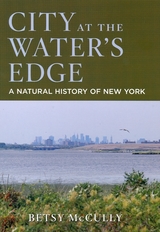
City at the Water's Edge invites readers to do just that. Betsy McCully, a long-time urban dweller, argues that this city of lights is much more than a human-made metropolis. It has a rich natural history that is every bit as fascinating as the glitzy veneer that has been built atop it. Through twenty years of nature exploration, McCully has come to know New York as part of the Lower Hudson Bioregion-a place of salt marshes and estuaries, sand dunes and barrier islands, glacially sculpted ridges and kettle holes, rivers and streams, woodlands and outwash plains. Here she tells the story of New York that began before the first humans settled in the region twelve thousand years ago, and long before immigrants ever arrived at Ellis Island. The timeline that she recounts is one that extends backward half a billion years; it plumbs the depths of Manhattan's geological history and forecasts a possible future of global warming, with rising seas lapping at the base of the Empire State Building.
Counter to popular views that see the city as a marvel of human ingenuity diametrically opposed to nature, this unique account shows how the region has served as an evolving habitat for a diversity of species, including our own. The author chronicles the growth of the city at the expense of the environment, but leaves the reader with a vision of a future city as a human habitat that is brought into balance with nature.
A City Called Heaven celebrates a sound too mighty and too joyous for even church walls to hold.
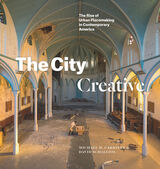
Spanning the 1950s to the post-recession 2010s, The City Creative highlights the roles of such prominent individuals and organizations as Jane Jacobs, Christopher Alexander, Richard Sennett, Project for Public Spaces, and the National Endowment for the Arts in the development of urban placemaking, both in the abstract and on the ground. But that’s only half the story. Bringing the narrative to the present, Michael H. Carriere and David Schalliol also detail placemaking interventions at more than 200 sites in more than 40 cities, combining archival research, interviews, participant observation, and Schalliol’s powerful documentary photography. Carriere and Schalliol find that while these formal and informal placemaking interventions can bridge local community development and regional economic plans, more often than not, they push the boundaries of mainstream placemaking. Rather than simply stressing sociability or market-driven economic development, these initiatives offer an alternative model of community-led progress with the potential to redistribute valuable resources while producing tangible and intangible benefits for their communities. The City Creative provides a kaleidoscopic overview of how these initiatives grow, and sometimes collapse, illustrating the centrality of placemaking in the evolution of the American city and how it can be reoriented to meet demands for a more equitable future.
As the African American population grew in size and assertiveness, whites increasingly identified blacks with those factors that most deprived a given space of its middle-class character. Consequently, African Americans came to represent the antithesis of middle-class values, and the white middle class established its identity by excluding blacks from the urban spaces it occupied.
By 1930, racial discrimination rested firmly on gender and family values as well as class. Inequitable law enforcement in the ghetto increased criminal activity, both real and perceived, within the African American community. White Kansas Citians maintained this system of racial exclusion and denigration in part by “misdirection,” either by denying that exclusion existed or by claiming that segregation was necessary to prevent racial violence. Consequently, African American organizations sought to counter misdirection tactics. The most effective of these efforts followed World War II, when local black activists devised demonstration strategies that targeted misdirection specifically.
At the same time, a new perception emerged among white liberals about the role of race in shaping society. Whites in the local civil rights movement acted upon the belief that integration would produce a better society by transforming human character. Successful in laying the foundation for desegregating public accommodations in Kansas City, black and white activists nonetheless failed to dismantle the systems of spatial exclusion and inequitable law enforcement or to eradicate the racial ideologies that underlay those systems.
These racial perceptions continue to shape race relations in Kansas City and elsewhere. This study demystifies these perceptions by exploring their historical context. While there have been many studies of the emergence of ghettos in northern and border cities, and others of race, gender, segregation, and the origins of white ideologies, A City Divided is the first to address these topics in the context of a dynamic, urban society in the Midwest.
The American West, from the beginning of Euro-American settlement, has been shaped by diverse ideas about how to utilize physical space and natural environments to create cohesive, sometimes exclusive community identities. When westerners developed their towns, they constructed spaces and cultural identities that reflected alternative understandings of modern urbanity. The essays in City Dreams, Country Schemes utilize an interdisciplinary approach to explore the ways that westerners conceptualized, built, and inhabited urban, suburban, and exurban spaces in the twentieth century.
The contributors examine such topics as the attractions of open space and rural gentrification in shaping urban development; the role of tourism in developing national parks, historical sites, and California's Napa Valley; and the roles of public art, gender, and ethnicity in shaping urban centers. City Dreams, Country Schemes reveals the values and expectations that have shaped the West and the lives of the people who inhabit it.
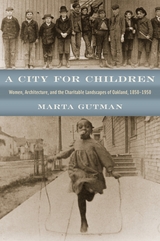
In A City for Children, Marta Gutman focuses on the use and adaptive reuse of everyday buildings in Oakland, California, to make the city a better place for children. She introduces us to the women who were determined to mitigate the burdens placed on working-class families by an indifferent industrial capitalist economy. Often without the financial means to build from scratch, women did not tend to conceive of urban land as a blank slate to be wiped clean for development. Instead, Gutman shows how, over and over, women turned private houses in Oakland into orphanages, kindergartens, settlement houses, and day care centers, and in the process built the charitable landscape—a network of places that was critical for the betterment of children, families, and public life. The industrial landscape of Oakland, riddled with the effects of social inequalities and racial prejudices, is not a neutral backdrop in Gutman’s story but an active player. Spanning one hundred years of history, A City for Children provides a compelling model for building urban institutions and demonstrates that children, women, charity, and incremental construction, renovations, alterations, additions, and repurposed structures are central to the understanding of modern cities.
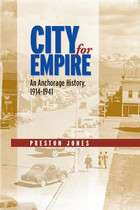
First settled in 1915, Anchorage, Alaska, was founded with the American empire in mind. During World War I, it served as a conduit through which coal could be shipped to the Pacific, where the US Navy was engaged with Japan. Decades later, during World War II, Anchorage became an equally important site for the defense of the mainland and the projection of American power. City for Empire tells the story of Anchorage's development in that period, focusing in particular on the international context of the city's early decades and its surprisingly diverse inhabitants. A thorough yet accessible read, City for Empire captures the history of this remarkable city.

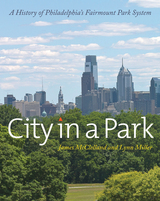
Fairmount Park is the municipal park system of Philadelphia, Pennsylvania. It consists of more than one hundred parks, squares, and green spaces totaling about 11,000 acres, and is one of the largest landscaped urban park systems in the world. In City in a Park, James McClelland and Lynn Miller provide an affectionate and comprehensive history of this 200-year-old network of parks.
Originated in the nineteenth century as a civic effort to provide a clean water supply to Philadelphia, Fairmount Park also furnished public pleasure grounds for boat races and hiking, among other activities. Millions travel to the city to view its eighteenth-century villas, attend boat races on the Schuylkill River, hike the Wissahickon Creek, visit the Philadelphia Zoo, hear concerts in summer, stroll the city’s historic squares and the Benjamin Franklin Parkway, and enjoy its enormous collection of public art. Green initiatives flower today; Philadelphia lives amidst its parks.
Filled with nearly 150 gorgeous full-color photographs, City in a Park chronicles the continuing efforts to create what founder William Penn desired: a “greene countrie town.”
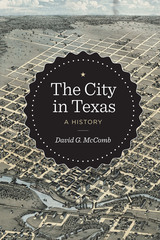
Texans love the idea of wide-open spaces and, before World War II, the majority of the state’s people did live and work on the land. Between 1940 and 1950, however, the balance shifted from rural to urban, and today 88 percent of Texans live in cities and embrace the amenities of urban culture. The rise of Texas cities is a fascinating story that has not been previously told. Yet it is essential for understanding both the state’s history and its contemporary character.
In The City in Texas, acclaimed historian David G. McComb chronicles the evolution of urban Texas from the Spanish Conquest to the present. Writing in lively, sometimes humorous and provocative prose, he describes how commerce and politics were the early engines of city growth, followed by post–Civil War cattle shipping, oil discovery, lumbering, and military needs. McComb emphasizes that the most transformative agent in city development was the railroad. This technology—accompanied by telegraphs that accelerated the spread of information and mechanical clocks that altered concepts of time—revolutionized transportation, enforced corporate organization, dictated town location, organized space and architecture, and influenced thought. McComb also thoroughly explores the post–World War II growth of San Antonio, Dallas, Fort Worth, Austin, and Houston as incubators for businesses, educational and cultural institutions, and health care centers.
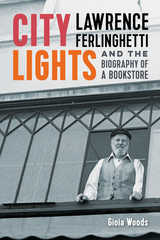
City Lights: Lawrence Ferlinghetti and the Biography of a Bookstore is the seminal story of the bookstore, its press, and the inimitable Ferlinghetti.
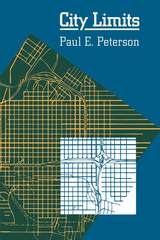
"City Limits radically reinterprets urban politics by deriving its dominant forces from the logic of the American federal structure. It is thereby able to explain some pervasive tendencies of urban political outcomes that are puzzling or scarcely noticed at all when cities are viewed as autonomous units, outside the federal framework. Professor Peterson's analysis is imaginativelyfor conceived and skillfully carried through. His beautifully finished volume will lastingly alter our understanding of urban affairs in America."—from the citation by the selection committee for the Woodrow Wilson Foundation Award
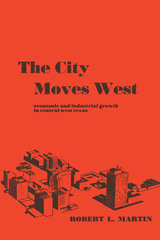
Where water supply, railway transportation, and oil reserves have been abundant, towns in central West Texas have prospered; where these resources are few, settlements have maintained only slight growth or disappeared entirely. Supporting his conclusions with profuse statistical evidence, Robert L. Martin traces the economic development of six major towns in the area, all with over 10,000 residents in 1960: Lamesa, Snyder, Sweetwater, Big Spring, Midland, and Odessa.
Ranching brought the first settlers to West Texas in the 1870s and dominated the economy until 1900. In the 1880s farmers began to arrive, and between 1900 and 1930 agricultural production replaced ranching as the most important industry.
With the influx of population came the railroad, and small settlements were established along its route. Those with sufficient water supply prospered and, as counties were organized, became county seats and supply centers for the surrounding agricultural regions.
The land could not support a large agricultural population, and agriculture-related manufactures soon drew population to the towns. However, it was not until the oil discoveries of the 1920's that the modern city emerged. After World War II, oil production and oil-related industries generated great wealth and caused a boom in population growth and urban development. Despite the growth in prosperity, the economy is precariously balanced. Urban centers dependent on oil—an industry of limited life—have matured in an area without sufficient water or agricultural resources to support them. Martin concludes that, without careful planning and a solution to the water problem, these cities could some day become ghost towns on the plains.
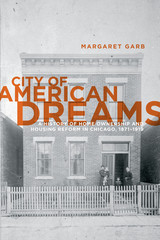
Based on research of real estate markets, housing and health reform, and ordinary homeowners—African American and white, affluent and working class—City of American Dreams provides a richly detailed picture of life in one of America's great urban centers. Garb shows that the pursuit of a single-family house set on a tidy yard, commonly seen as the very essence of the American dream, resulted from clashes of interests and decades of struggle.
Below the middle class managers and professionals yet above the skilled blue-collar workers, sales and office workers occupied an intermediate position in urban America's social structure as the nation industrialized. Jerome P. Bjelopera traces the shifting occupational structures and work choices that facilitated the emergence of a white-collar workforce. His fascinating portrait reveals the lives led by Philadelphia's male and female clerks, both inside and outside the workplace, as they formed their own clubs, affirmed their "whiteness," and challenged sexual norms.
A vivid look at an overlooked but recognizable workforce, City of Clerks reveals how the notion of "white collar" shifted over half a century.
Contemporary Los Angeles is commonly seen as an American bulwark of progressive secular politics, a place that values immigration, equity, diversity, and human rights. But what accounts for the city’s embrace of such staunchly liberal values, which are more hotly contested in other parts of the country? The answer, Sean Dempsey reveals, lies not with those frequent targets of credit and blame—Democrats in Hollywood—but instead with liberal Protestants and other steadfast religious organizations of the postwar era.
As the Religious Right movement emerged in the 1970s, progressive religious activists quietly began promoting an ethical vision that made waves worldwide but saw the largest impact in its place of origin: metropolitan Los Angeles. At the center of this vision lay the concept of human dignity—entwining the integral importance of political and expressive freedom with the moral sanctity of the human condition—which suffused all of the political values that arose from it, whether tolerance, diversity, or equality of opportunity. The work of these religious organizations birthed such phenomena as the Sanctuary Movement—which provided safe haven for refugees fleeing conflict-torn Central America—and advocacy for the homeless, both of which became increasingly fraught issues amid the rising tides of neoliberalism and conservatism. City of Dignity explores how these interwoven spiritual and theological strands found common ground—and made common impacts—in the humanitarian ecosystem of one of America’s largest and most dynamic metro areas.
City of Dignity illuminates how liberal Protestants quietly, yet indelibly, shaped the progressive ethics of postwar Los Angeles.
Contemporary Los Angeles is commonly seen as an American bulwark of progressive secular politics, a place that values immigration, equity, diversity, and human rights. But what accounts for the city’s embrace of such staunchly liberal values, which are more hotly contested in other parts of the country? The answer, Sean Dempsey reveals, lies not with those frequent targets of credit and blame—Democrats in Hollywood—but instead with liberal Protestants and other steadfast religious organizations of the postwar era.
As the Religious Right movement emerged in the 1970s, progressive religious activists quietly began promoting an ethical vision that made waves worldwide but saw the largest impact in its place of origin: metropolitan Los Angeles. At the center of this vision lay the concept of human dignity—entwining the integral importance of political and expressive freedom with the moral sanctity of the human condition—which suffused all of the political values that arose from it, whether tolerance, diversity, or equality of opportunity. The work of these religious organizations birthed such phenomena as the Sanctuary Movement—which provided safe haven for refugees fleeing conflict-torn Central America—and advocacy for the homeless, both of which became increasingly fraught issues amid the rising tides of neoliberalism and conservatism. City of Dignity explores how these interwoven spiritual and theological strands found common ground—and made common impacts—in the humanitarian ecosystem of one of America’s largest and most dynamic metro areas.
Victorian London was a world where long-standing traditions of class and gender were challenged by a range of public spectacles, mass media scandals, new commercial spaces, and a proliferation of new sexual categories and identities. In the midst of this changing culture, women of many classes challenged the traditional privileges of elite males and
asserted their presence in the public domain.
An important catalyst in this conflict, argues Walkowitz, was W. T. Stead's widely read 1885 article about child prostitution. Capitalizing on the uproar caused by the piece and the volatile political climate of the time, women spoke of sexual danger, articulating their own grievances against men, inserting themselves into the public discussion of sex to an unprecedented extent, and gaining new entree to public spaces and journalistic practices. The ultimate manifestation of class anxiety and gender antagonism came in 1888 with the tabloid tales of Jack the Ripper. In between, there were quotidien stories of sexual possibility and urban adventure, and Walkowitz examines them all, showing how women were not simply figures in the imaginary landscape of male spectators, but also central actors in the stories of metropolotin life that reverberated in courtrooms, learned journals, drawing rooms, street corners, and in the letters columns of the daily press.
A model of cultural history, this ambitious book will stimulate and enlighten readers across a broad range of interests.
Combining insights from urban studies, cultural geography, and urban sociology with extensive research in South Africa, Murray reflects on the implications of Johannesburg’s dual character as a city of fortified enclaves that proudly displays the ostentatious symbols of global integration and the celebrated “enterprise culture” of neoliberal design, and as the “miasmal city” composed of residual, peripheral, and stigmatized zones characterized by signs of a new kind of marginality. He suggests that the “global cities” paradigm is inadequate to understanding the historical specificity of cities in the Global South, including the colonial mining town turned postcolonial megacity of Johannesburg.
Examines Miami’s turbulent transformation from a segregated vacation destination to a global, multicultural metropolis
City of Hope, City of Rage gives a fascinating account of three turbulent and transformative decades in the history of Miami. Marked by mass immigration, racially motivated uprisings, economic inequity, rising crime, and social change, Miami’s history from 1968 to 1994 saw the city evolve rapidly from a predominantly white southern city and vacation spot into a global, Hispanic-majority metropolis with an international tourist base. And yet Miami remains highly segregated today.
Exploring beyond the clichés of the Magic City as a bastion of hope for immigrants, a fantasy of beaches and art deco architecture, or a hotbed of drugs and crime, historian Seth A. Weitz reveals the social, political, and cultural shifts that transformed the city. Utilizing archival research and personal stories to reveal the diverse experiences of Miami’s Black, Latinx, Jewish, and LGBTQ+ communities, Weitz explores the struggles for social justice, the rise of the drug trade, and the ongoing fight to mold Miami’s image.
A Miami native, Weitz challenges simplistic narratives about the city, revealing a place defined by hope, rage, and struggle for identity. Illuminating the way Miami is defined and who gets to define it, City of Hope, City of Rage offers a fresh perspective on this vibrant and complex city, making it a valuable resource for anyone interested in Miami’s unique history.
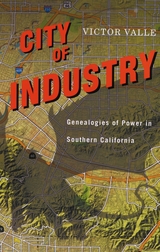
Valle investigated an untapped archive of Industry's built landscape, media coverage, and public records, including sealed FBI reports, to uncover a cascading series of scandals. A kaleidoscopic view of the corruption that resulted when local land owners, media barons, and railroads converged to build the city, this suspenseful narrative explores how new governmental technologies and engineering feats propelled the rationality of privatization using their property-owning servants as tools.
Valle's tale of corporate greed begins with the city's founder James M. Stafford and ends with present day corporate heir, Edward Roski Jr., the nation's biggest industrial developerùco-owner of the L.A. Staples Arena and possible future owner of California's next NFL franchise. Not to be forgotten in Valle's captivating story are Latino working class communities living within Los Angeles's distribution corridors, who suffer wealth disparities and exposure to air pollution as a result of diesel-burning trucks, trains, and container ships that bring global trade to their very doorsteps. They are among the many victims of City of Industry.
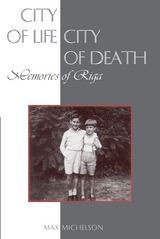
Michelson had a serene boyhood in an upper middle-class Jewish family in Riga, Latvia--at least until 1940, when the fifteen-year old Michelson witnessed the annexation of Latvia by the Soviet Union. Private properties were nationalized, and Stalin's terror spread to Soviet Latvia. Soon after, Michelson's family was torn apart by the 1941 Nazi invasion of the Soviet Union. He quickly lost his entire family, while witnessing the unspeakable brutalities of war and genocide.
Michelson's memoir is an ode to his lost family; it is the speech of their muted voices and a thank you for their love. Although badly scarred by his experiences, like many other survivors he was able to rebuild his life and gain a new sense of what it means to be alive.
His experiences will be of interest to scholars of both the Holocaust and Eastern European history, as well as the general reader.
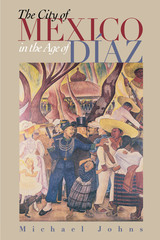
Mexico City assumed its current character around the turn of the twentieth century, during the dictatorship of Porfirio Díaz (1876-1911). In those years, wealthy Mexicans moved away from the Zócalo, the city's traditional center, to western suburbs where they sought to imitate European and American ways of life. At the same time, poorer Mexicans, many of whom were peasants, crowded into eastern suburbs that lacked such basic amenities as schools, potable water, and adequate sewerage. These slums looked and felt more like rural villages than city neighborhoods. A century—and some twenty million more inhabitants—later, Mexico City retains its divided, robust, and almost labyrinthine character.
In this provocative and beautifully written book, Michael Johns proposes to fathom the character of Mexico City and, through it, the Mexican national character that shaped and was shaped by the capital city. Drawing on sources from government documents to newspapers to literary works, he looks at such things as work, taste, violence, architecture, and political power during the formative Díaz era. From this portrait of daily life in Mexico City, he shows us the qualities that "make a Mexican a Mexican" and have created a culture in which, as the Mexican saying goes, "everything changes so that everything remains the same."
Americans’ current trust in journalists is at a dismayingly low ebb, particularly on the subject of national and international politics. For some, it might be tempting to look back to the mid-twentieth century, when the nation’s press corps was a seemingly venerable and monolithic institution that conveyed the official line from Washington with nary a glint of anti-patriotic cynicism. As Kathryn McGarr’s City of Newsmen shows, however, the real story of what Cold War–era journalists did and how they did it wasn’t exactly the one you’d find in the morning papers.
City of Newsmen explores foreign policy journalism in Washington during and after World War II—a time supposedly defined by the press’s blind patriotism and groupthink. McGarr reveals, though, that DC reporters then were deeply cynical about government sources and their motives, but kept their doubts to themselves for professional, social, and ideological reasons. The alliance and rivalries among these reporters constituted a world of debts and loyalties: shared memories of harrowing wartime experiences, shared frustrations with government censorship and information programs, shared antagonisms, and shared mentors. McGarr ventures into the back hallways and private clubs of the 1940s and 1950s to show how white male reporters suppressed their skepticism to build one of the most powerful and enduring constructed realities in recent US history—the Washington Cold War consensus. Though by the 1960s, this set of reporters was seen as unduly complicit with the government—failing to openly critique the decisions and worldviews that led to disasters like the Vietnam War—McGarr shows how self-aware these reporters were as they negotiated for access, prominence, and, yes, the truth—even as they denied those things to their readers.
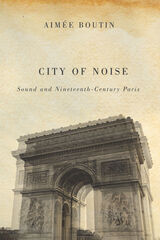
Aimée Boutin tours the sonic space that orchestrated the different, often conflicting sound cultures that defined the street ambience of Paris. Mining accounts that range from guidebooks to verse, Boutin braids literary, cultural, and social history to reconstruct a lost auditory environment. Throughout, impressions of street noise shape writers' sense of place and perception of modern social relations. As Boutin shows, the din of the Cris contrasted economic abundance with the disparities of the capital, old and new traditions, and the vibrancy of street commerce with an increasing bourgeois demand for quiet. In time, peddlers who provided the soundtrack for Paris's narrow streets yielded to modernity, with its taciturn shopkeepers and wide-open boulevards, and the fading songs of the Cris became a dirge for the passing of old ways.
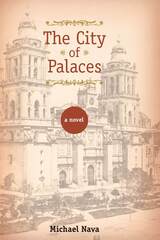
Against this backdrop, The City of Palaces opens in a Mexico City jail with the meeting of Miguel Sarmiento and Alicia Gavilán. Miguel is a principled young doctor, only recently returned from Europe but wracked by guilt for a crime he committed as a medical student ten years earlier. Alicia is the spinster daughter of an aristocratic family. Disfigured by smallpox, she has devoted herself to working with the city’s destitute. This unlikely pair—he a scientist and atheist and she a committed Christian—will marry. Through their eyes and the eyes of their young son, José, readers follow the collapse of the old order and its bloody aftermath.
The City of Palaces is a sweeping novel of interwoven lives: Miguel and Alicia; José, a boy as beautiful and lonely as a child in a fairy tale; the idealistic Francisco Madero, who overthrows Díaz but is nevertheless destroyed by the tyrant’s political system; and Miguel’s cousin Luis, shunned as a “sodomite.” A glittering mosaic of the colonial past and the wealth of the modern age, The City of Palaces is a story of faith and reason, cathedrals and hovels, barefoot street vendors and frock-coated businessmen, grand opera and silent film, presidents and peasants, the living and the dead.
Winner, International Latino Book Award for Latino Fiction, Latino Literacy Now
Second place, International Latino Book Award for Historical Fiction, Latino Literacy Now
Finalist, Gay Fiction, Lambda Literary Awards
Honorable Mention in Drama, Latino Books into Movies Award, International Latino Book Awards
Best Books for General Audiences, selected by the American Association of School Librarians
Outstanding Book, selected by the Public Library Reviewers
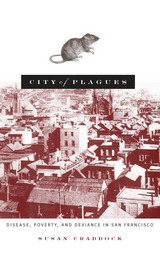
An eye-opening discussion of the ways disease shapes urban society
Disease may not discriminate, but it helps those who do. In this fascinating book, Susan Craddock examines the role of disease and health policy in the construction of race, gender, and class, and in urban development in nineteenth- and twentieth-century San Francisco. An absorbing look at the role of disease and health policy in the construction of race, gender, and class in urban development during nineteenth- and twentieth-century San Francisco. Susan Craddock considers tuberculosis, plague, smallpox, and syphilis as diseases whose devastations were derived in part from their use as political tools and disciplinary mechanisms
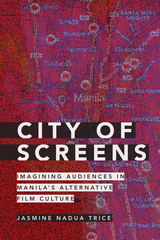


Stein takes us on a tour through Philadelphia's bars, restaurants, bookstores, bathhouses, movie theaters, parks, and parades where lesbian and gay cultures thrived.
We learn about the scientific experts, religious leaders, public officials, and journalists who attacked and ignored same-sex sexualities. And we read about the courageous people who fought back with strategies of everyday resistance and organized political activism.
Stein argues against the idea that a conspiracy of silence surrounded gays and lesbians in the 1940s and 1950s. He shows that same-sex sexualities were regularly discussed in controversies concerning the tennis player Big Bill Tilden, the Walt Whitman Bridge, sex murders and crimes, and police raids. Philadelphians became national leaders in the gay and lesbian movement. They conducted sit-ins at Dewey's restaurant, organized pickets at Independence Hall, edited the movement's most widely circulated publications the Ladder and Drum, and pursued court cases all the way to the U.S. Supreme Court.
Beautifully crafted and exceptionally well-written, Stein's book not only provides a new starting place for thinking about lesbian and gay history but also challenges readers to rethink twentieth-century urban history.
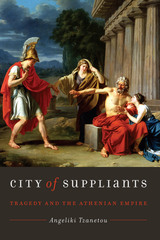
After fending off Persia in the fifth century BCE, Athens assumed a leadership position in the Aegean world. Initially it led the Delian League, a military alliance against the Persians, but eventually the league evolved into an empire with Athens in control and exacting tribute from its former allies. Athenians justified this subjection of their allies by emphasizing their fairness and benevolence towards them, which gave Athens the moral right to lead. But Athenians also believed that the strong rule over the weak and that dominating others allowed them to maintain their own freedom. These conflicting views about Athens’ imperial rule found expression in the theater, and this book probes how the three major playwrights dramatized Athenian imperial ideology.
Through close readings of Aeschylus’ Eumenides, Euripides’ Children of Heracles, and Sophocles’ Oedipus at Colonus, as well as other suppliant dramas, Angeliki Tzanetou argues that Athenian tragedy performed an important ideological function by representing Athens as a benevolent and moral ruler that treated foreign suppliants compassionately. She shows how memorable and disenfranchised figures of tragedy, such as Orestes and Oedipus, or the homeless and tyrant-pursued children of Heracles were generously incorporated into the public body of Athens, thus reinforcing Athenians’ sense of their civic magnanimity. This fresh reading of the Athenian suppliant plays deepens our understanding of how Athenians understood their political hegemony and reveals how core Athenian values such as justice, freedom, piety, and respect for the laws intersected with imperial ideology.
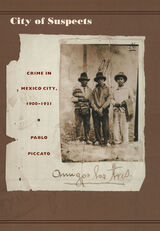
By investigating postrevolutionary examples of corruption and organized crime, Piccato shines light on the historical foundations of a social problem that remains the main concern of Mexico City today. Emphasizing the social construction of crime and the way it was interpreted within the moral economy of the urban poor, he describes the capital city during the early twentieth century as a contested territory in which a growing population of urban poor had to negotiate the use of public spaces with more powerful citizens and the police. Probing official discourse on deviance, Piccato reveals how the nineteenth-century rise of positivist criminology—which asserted that criminals could be readily distinguished from the normal population based on psychological and physical traits—was used to lend scientific legitimacy to class stratifications and to criminalize working-class culture. Furthermore, he argues, the authorities’ emphasis on punishment, isolation, and stigmatization effectively created cadres of professional criminals, reshaping crime into a more dangerous problem for all inhabitants of the capital.
This unique investigation into crime in Mexico City will interest Latin Americanists, sociologists, and historians of twentieth-century Mexican history.
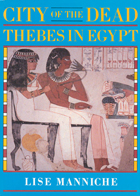
The author traces the history of the site discussing the more important tombs in some detail, and sheds new light on the symbolism used in painting to help the deceased in the Afterlife. She also surveys the role of the treasure hunters and travellers of the eighteenth and early nineteenth-centuries and the pioneer epigraphers who followed them and paved the way for the archeological investigation and research that continues today.
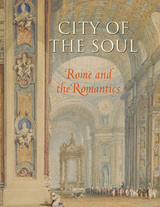
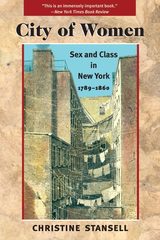
City of Women delves into the misfortunes that New York City's laboring women suffered and the problems that resulted. Looking at how and why a community of women workers came into existence, Christine Stansell analyzes the social conflicts surrounding laboring women and they social pressure these conflicts brought to bear on others. The result is a fascinating journey into economic relations and cultural forms that influenced working women's lives—one that reveals at last the female city concealed within America's first great metropolis.
2025 John Brinckerhoff Jackson Prize, Association of American Geographers
2025 Abbott Lowell Cummings Award
2025 John Brinckerhoff Jackson Prize, UVA Center for Cultural Landscapes
2026 Hagley Prize in Business History, Hagley Museum and Library
2025 Honorable Mention, PROSE Award, Association of American Publishers (AAP)
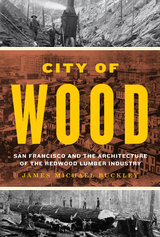
California’s 1849 gold rush triggered creation of the “instant city” of San Francisco as a base to exploit the rich natural resources of the American West. City of Wood examines how capitalists and workers logged the state’s vast redwood forests to create the financial capital and construction materials needed to build the regional metropolis of San Francisco. Architectural historian James Michael Buckley investigates the remote forest and its urban core as two poles of a regional “city.” This city consisted of a far-reaching network of spaces, produced as company owners and workers arrayed men and machines to extract resources and create human commodities from the region’s rich natural environment.
Combining labor, urban, industrial, and social history, City of Wood employs a variety of sources—including contemporary newspaper articles, novels, and photographs—to explore the architectural landscape of lumber, from backwoods logging camps and company towns in the woods to busy lumber docks and the homes of workers and owners in San Francisco. By imagining the redwood lumber industry as a single community spread across multiple sites—a “City of Wood”—Buckley demonstrates how capitalist resource extraction links different places along the production value chain. The result is a paradigm shift in architectural history that focuses not just on the evolution of individual building design across time, but also on economic connections that link the center and periphery across space.
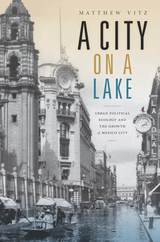
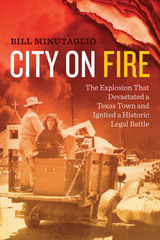
First published in 2003, City on Fire is a gripping, intimate account of the explosions of two ships loaded with ammonium nitrate fertilizer that demolished Texas City, Texas, in April 1947, in one of the most catastrophic disasters in American history.
Storytelling shapes how we view our cities, legitimizing histories, future plans, and understandings of the urban. City Scripts responds to calls by literary theorists to engage a new kind of narrative analysis that recalibrates close reading and interpretation to the multiple ways in which narratives “do things”—how they intervene in the world and take action in everyday life. A multidisciplinary cast of contributors approaches this new way of looking at cities through the stories people tell about them, looking especially at political activism and urban planning, which depend on the invention of plausible stories of connectedness and of a redemptive future.
The stakes are especially high in cities where economic, ecological, and social futures are delimited by histories of large-scale extraction and racialized industrial labor. Contributors thus focus on cities in postindustrial areas of Germany and the United States, examining how narratives about cities become scripts and how these scripts produce real-life results. This approach highlights how uses of narrative and scripting appeal to stakeholders in urban change. These actors continually deploy narrative, media, and performance, with consequences for urban futures worldwide.
Contributors:
Lieven Ameel, Juliane Borosch, Barbara Buchenau, Florian Deckers, Barbara Eckstein, Kornelia Freitag, Walter Grünzweig, Randi Gunzenhäuser, Jens Martin Gurr, Elisabeth Haefs, Chris Katzenberg, Johannes Maria Krickl, Renee M. Moreno, Hanna Rodewald, Julia Sattler, Maria Sulimma, James A. Throgmorton, Michael Wala, Katharina Wood
Brian James Leech provides a social and environmental history of Butte, Montana’s Berkeley Pit, an open-pit mine which operated from 1955 to 1982. Using oral history interviews and archival finds, The City That Ate Itself explores the lived experience of open-pit copper mining at Butte’s infamous Berkeley Pit. Because an open-pit mine has to expand outward in order for workers to extract ore, its effects dramatically changed the lives of workers and residents. Although the Berkeley Pit gave consumers easier access to copper, its impact on workers and community members was more mixed, if not detrimental.
The pit’s creeping boundaries became even more of a problem. As open-pit mining nibbled away at ethnic communities, neighbors faced new industrial hazards, widespread relocation, and disrupted social ties. Residents variously responded to the pit with celebration, protest, negotiation, and resignation. Even after its closure, the pit still looms over Butte. Now a large toxic lake at the center of a federal environmental cleanup, the Berkeley Pit continues to affect Butte’s search for a postindustrial future.
The City, the River, the Bridge represents another set of responses to the disaster. Stemming from a 2008 University of Minnesota symposium on the bridge collapse and the building of a new bridge, it addresses the ramifications of the disaster from the perspectives of history, engineering, architecture, water science, community-based journalism, and geography. Contributors examine the factors that led to the collapse, the lessons learned from the disaster and the response, the policy and planning changes that have occurred or are likely to occur, and the impact on the city and the Mississippi River. The City, the River, the Bridge demonstrates the University's commitment to issues that concern the community and shares insights on public questions of city building, infrastructure, and design policy.
Contributors: John O. Anfinson; Roberto Ballarini; Heather Dorsey; Thomas Fisher; Minmao Liao; Judith A. Martin; Roger Miller; Mark Pedelty; Deborah L. Swackhamer; Melissa Thompson.
The City Wall of Imperial Rome: An Account of Its Architectural Development from Aurelian to Narses by Sir Ian A. Richmond was first published in 1930 and reprinted in facsimile in 1971. This scarce, essential work on the imperial fortifications of Rome has lost none of its relevance since its original publication. Despite the Wall’s great importance for our understanding of Roman fortifications, there have been no further major investigations. Rome had originally been fortified by the old Servian Wall, built during the Republican period in the late fourth century BC. The city expanded greatly over the centuries and by the time of the emperor Augustus (27 BC–14 AD) little trace of the wall remained. However, there was not a need for a protective wall until the crisis of the third century AD, when barbarian tribes in 270 broke into northern Italy. In response to this new threat, the Aurelian Walls were constructed between 271 and 275 to protect the capital against barbarian raids. The walls enclosed all of Rome on both sides of the Tiber River—an area of about 5.3 square miles— and ran for some 12.5 miles. The construction project was one of the greatest in the history of the city of Rome and the walls were built in a remarkably short time, with the emperor Aurelian himself overseeing the project. Initially, the main aim of the wall was not to withstand prolonged siege warfare but to deter barbarian invaders who were insufficiently equipped for siege warfare. Later, emperor Honorius improved both the walls and gates, so that Rome could withstand a real siege and be defended by a smaller garrison. During the time of the Gothic War (535–552), five thousand Roman troops withstood a year-long siege by an estimated 150,000 Goths due to the strength of the walls. When Rome was captured in 545 by the Ostrogothic king Totila, part of the walls were deliberately destroyed to prevent the Romans from ever using them again. The Aurelian Walls remain remarkably well preserved today, due largely to their constant use as Rome’s primary fortification until the nineteenth century. The walls are the largest monument of ancient Rome still to be seen in the city. In this new edition, Late Antiquity specialist Torsten Cumberland Jacobsen provides current information about the state of the walls and their preservation, an updated bibliography, and an essay about Sir Richmond and his career.
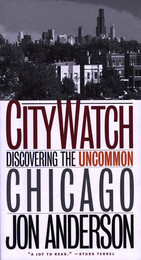
In forty-five years as one of Chicago's liveliest journalists for Time, Life, and the Chicago Tribune, Jon Anderson has established a reputation for picking up on what someone once called "the beauty of the specific fact." Part "Talk of the Town," part On the Road with Charles Kuralt, Anderson's twice-a-week "City Watch" columns in the Chicago Tribune seek out interesting and unexpected people and places from the everyday life of what the author calls the "most typical American big city." In the process he discovers the joys and triumphs of ordinary people.
Anderson writes with wit and insight about those who find themselves inspired or obsessed with alternative ways of viewing life or getting through the day. Like the man who started with one light pole, then painted all the poles in his southside neighborhood. Or the founder of Cats-Are-Purrsons-Too, a nun who lives with sixty-seven cats. Or the philosopher who, with no financial success, still publishes a newsletter called "The Meaning of Life." After years of hunting down moments of everyday life that have drama and meaning, Anderson offers a book that has curious power, because all of its stories are true.
Drawn from the best of Anderson's columns, City Watch introduces readers to an eclectic mix of social clubs, subcultures, and minor celebrities. From Foraging Friends, a group of penniless ecologists who forage for wild foods in a county forest preserve, to the annual Dumpster Diver fashion show, from the Oakton Elementary School chess team to a group that calls itself Some Chicago Anarchists, readers will discover the characters and events that define Chicago's local color.
A City within a City cogently argues that the post-war political reform championed by local Republicans transformed the city's racial geography, creating a racialized "city within a city," featuring a system of "managerial racism" designed to keep blacks in declining inner-city areas. As Robinson indicates, this bold, provocative framework for understanding race relations in Grand Rapids has broader implications for illuminating the twentieth-century African American urban experience in secondary cities.
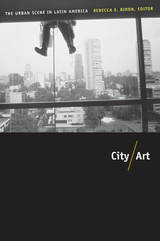
Contributors delve into the aspirations embodied in the modernist urbanism of Brasília and the work of Lotty Rosenfeld, a Santiago performance artist who addresses the intersections of art, urban landscapes, and daily life. One author assesses the political possibilities of public art through an analysis of subway-station mosaics and Julio Cortázar’s short story “Graffiti,” while others look at the representation of Buenos Aires as a “Jewish elsewhere” in twentieth-century fiction and at two different responses to urban crisis in Rio de Janeiro. The collection closes with an essay by a member of the São Paulo urban intervention group Arte/Cidade, which invades office buildings, de-industrialized sites, and other vacant areas to install collectively produced works of art. Like that group, City/Art provides original, alternative perspectives on specific urban sites so that they can be seen anew.
Contributors. Hugo Achugar, Rebecca E. Biron, Nelson Brissac Peixoto, Néstor García Canclini, Adrián Gorelik, James Holston, Amy Kaminsky, Samuel Neal Lockhart, José Quiroga, Nelly Richard, Marcy Schwartz, George Yúdice
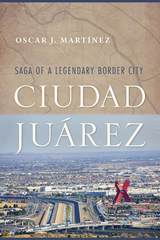
In Ciudad Juárez: Saga of a Legendary Border City, Oscar J. Martínez provides a historical overview of the economic and social evolution of this famous transnational urban center from the 1848 creation of the international boundary between Mexico and the United States to the present, emphasizing the city’s deep ties to the United States.
Martínez also explores major aspects of the social history of the city, including cross-border migration, urbanization, population growth, living standards, conditions among the city’s workers, crime, and the circumstances that led to the horrendous violence that catapulted Juárez to the top rung of the world’s most violent urban areas in the early twenty-first century.
In countless ways, the history of Juárez is the history of the entire Mexican northern frontier. Understanding how the city evolved provides a greater appreciation for the formidable challenges faced by Mexican fronterizos and yields vital insights into the functioning of borderland regions around the world.

This book gathers the men’s stories for the current generation and those to come. Taken together, they become more than simply oral histories—rather, they testify to the importance of transmitting memories and culture and of preserving knowledge of vanishing ways of life.
can see the start of profound social and economic changes in early modern
Amsterdam, Civic Charity in a Golden Age explores the connections
between the developing capitalist economy, the functioning of the government,
and the provision of charitable services to orphans in Amsterdam during
the seventeenth and eighteenth centuries, the period of the city's greatest
prosperity and subsequent decline.
Anne McCants skillfully interprets details of the orphanage's expenditures,
especially for food; its population; the work records of those who were
reared there; and the careers of the regents who oversaw it. The establishment
of the orphanage itself was called for by the changing economic needs
of rapidly expanding commercial centers and the potential instability
of a government that depended on taxes from a large, politically powerless
segment of the population.
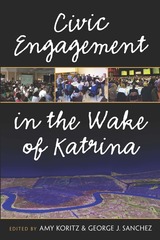
"Civic engagement has been underrated and overlooked. Koritz and Sanchez illuminate the power of what community engagement through art and culture revitalization can do to give voice to the voiceless and a sense of being to those displaced."
---Sonia BasSheva Mañjon, Wesleyan University
"This profound and eloquent collection describes and assesses the new coalitions bringing a city back to life. It's a powerful call to expand our notions of culture, social justice, and engaged scholarship. I'd put this on my 'must read' list."
---Nancy Cantor, Syracuse University
"Civic Engagement in the Wake of Katrina is a rich and compelling text for thinking about universities and the arts amid social crisis. Americans need to hear the voices of colleagues who were caught in Katrina's wake and who responded with commitment, creativity, and skill."
---Peter Levine, CIRCLE (The Center for Information & Research on Civic Learning & Engagement)
This collection of essays documents the ways in which educational institutions and the arts community responded to the devastation wrought by Hurricane Katrina. While firmly rooted in concrete projects, Civic Engagement in the Wake of Katrina also addresses the larger issues raised by committed public scholarship. How can higher education institutions engage with their surrounding communities? What are the pros and cons of "asset-based" and "outreach" models of civic engagement? Is it appropriate for the private sector to play a direct role in promoting civic engagement? How does public scholarship impact traditional standards of academic evaluation? Throughout the volume, this diverse collection of essays paints a remarkably consistent and persuasive account of arts-based initiatives' ability to foster social and civic renewal.
Amy Koritz is Director of the Center for Civic Engagement and Professor of English at Drew University.
George J. Sanchez is Professor of American Studies and Ethnicity and History at the University of Southern California.
Front and rear cover designs, photographs, and satellite imagery processing by Richard Campanella.
digitalculturebooks is an imprint of the University of Michigan Press and the Scholarly Publishing Office of the University of Michigan Library dedicated to publishing innovative and accessible work exploring new media and their impact on society, culture, and scholarly communication. Visit the website at www.digitalculture.org.
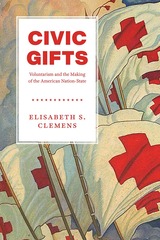

In Civic Gifts, Elisabeth S. Clemens takes a singular approach to probing the puzzle that is the United States. How, she asks, did a powerful state develop within an anti-statist political culture? How did a sense of shared nationhood develop despite the linguistic, religious, and ethnic differences among settlers and, eventually, citizens? Clemens reveals that an important piece of the answer to these questions can be found in the unexpected political uses of benevolence and philanthropy, practices of gift-giving and reciprocity that coexisted uneasily with the self-sufficient independence expected of liberal citizens Civic Gifts focuses on the power of gifts not only to mobilize communities throughout US history, but also to create new forms of solidarity among strangers. Clemens makes clear how, from the early Republic through the Second World War, reciprocity was an important tool for eliciting both the commitments and the capacities needed to face natural disasters, economic crises, and unprecedented national challenges. Encompassing a range of endeavors from the mobilized voluntarism of the Civil War, through Community Chests and the Red Cross to the FDR-driven rise of the March of Dimes, Clemens shows how voluntary efforts were repeatedly articulated with government projects. The legacy of these efforts is a state co-constituted with, as much as constrained by, civil society.
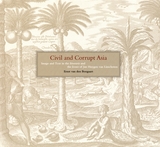
Divine and Spoiled Asia reproduces these engravings and their captions (in English), together with an extensive analysis of them by historian Ernst van den Boogaart. In addition to providing unparalleled insights into early modern European views of the East, the engravings also contain valuable depictions of the peoples, customs, and flora and fauna of late sixteenth-century India and neighboring countries.
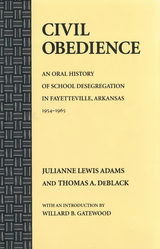
While school desegregation generated much noise and some violence elsewhere in the South, the city of Fayetteville, Arkansas confronted the issue and resolved it with a good deal of dignity and grace, becoming the first Southern city to accommodate the Brown decision.
Through this fascinating collection of interviews with those who were involved in the desegregation process—students, teachers, administrators, civic leaders, and members of local groups—we learn of the determination of citizens to obey the law of the land and to see that freedom and equality took priority over their commitment to a school system that patently discriminated against one group of citizens.
In our continuing efforts to create a society in which all races and cultures can coexist, Civil Obedience is a story worthy of our full attention.
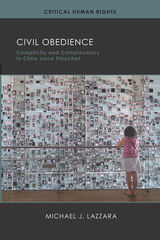
Michael J. Lazzara boldly argues that today's Chile is a product of both complicity and complacency. Combining historical analysis with deft literary, political, and cultural critique, he scrutinizes the post-Pinochet rationalizations made by politicians, artists, intellectuals, bystanders, former revolutionaries-turned-neoliberals, and common citizens. He looks beyond victims and perpetrators to unveil the ambiguous, ethically vexed realms of memory and experience that authoritarian regimes inevitably generate.
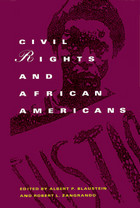
Many of the documents included were previously scattered in hard-to-find sources, not readily available to instructors and students. Civil Rights and African Americans is the first collection of all the seminal texts of the civil rights struggle, an invaluable scholarly reference and riveting reading for anyone interested in the history of racial conflict in the United States.
2024 Outstanding Book Award, National Association for Ethnic Studies
2025 Honorable Mention, Norris & Carol Hundley Award, Pacific Coast Branch of the American Historical Association
2025 The Ambassador Julian Nava Best Ethnic Studies Book, International Latino Book Awards
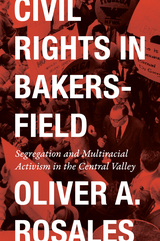
A multiracial history of civil rights coalitions beyond the farm worker movement in twentieth-century Bakersfield, California.
In Civil Rights in Bakersfield, Oliver Rosales uncovers the role of the multiracial west in shaping the course of US civil rights history. Focusing on Bakersfield, one of the few sizable cities within California’s Central Valley for much of the twentieth century in a region most commonly known as a bastion of political conservatism, oil, and industrial agriculture, Rosales documents how multiracial coalitions emerged to challenge histories of racial segregation and discrimination. He recounts how the region was home to both the historic farm worker movement, led by César Chávez, Dolores Huerta, and Larry Itliong, and also a robust multiracial civil rights movement beyond the fields. This multiracial push for civil rights reform included struggles for fair housing, school integration, public health, media representation, and greater political representation for Black and Brown communities. In expanding on this history of multiracial activism, Rosales further explores the challenges activists faced in community organizing and how the legacies of coalition building contribute to ongoing activist efforts in the Central Valley of today.
2022 Best Book Award, Oral History Association
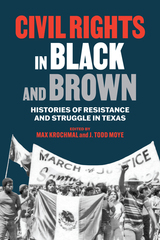
Hundreds of stories of activists at the front lines of the intersecting African American and Mexican American liberation struggle
Not one but two civil rights movements flourished in mid-twentieth-century Texas, and they did so in intimate conversation with one another. Far from the gaze of the national media, African American and Mexican American activists combated the twin caste systems of Jim Crow and Juan Crow. These insurgents worked chiefly within their own racial groups, yet they also looked to each other for guidance and, at times, came together in solidarity. The movements sought more than integration and access: they demanded power and justice.
Civil Rights in Black and Brown draws on more than 500 oral history interviews newly collected across Texas, from the Panhandle to the Piney Woods and everywhere in between. The testimonies speak in detail to the structure of racism in small towns and huge metropolises—both the everyday grind of segregation and the haunting acts of racial violence that upheld Texas’s state-sanctioned systems of white supremacy. Through their memories of resistance and revolution, the activists reveal previously undocumented struggles for equity, as well as the links Black and Chicanx organizers forged in their efforts to achieve self-determination.
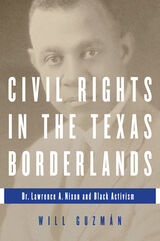
Will Guzmán delves into Nixon's lifelong struggle against Jim Crow. Linking Nixon's activism to his independence from the white economy, support from the NAACP, and the man's own indefatigable courage, Guzmán also sheds light on Nixon's presence in symbolic and literal borderlands--as an educated professional in a time when few went to college, as an African American who made waves when most feared violent reprisal, and as someone living on the mythical American frontier as well as an international boundary.
A powerful addition to the literature on African Americans in the Southwest, Civil Rights in the Texas Borderlands explores seldom-studied corners of the Black past and the civil rights movement.
As the lobbying arm of the civil rights movement, the Leadership Conference on Civil Rights (LCCR)—which has operated since the early 1950s—was instrumental in the historic legislative breakthroughs of the Second Reconstruction. The Civil Rights Lobby skillfully recounts the LCCR’s professional and grassroots lobbying that contributed to these signature civil rights policy achievements in the 1950s and ’60s.
Shamira Gelbman explains how the diversity of this interest group coalition both hindered and enabled lobbyists to generate broad-based support for reforms that often seemed risky to legislators. They coordinated their efforts by identifying common ground among member organizations, developing coalitional positions on substantive and strategic questions, and exhorting organizations to mobilize professional and grassroots lobbying resources accordingly. The result was to “speak with one booming voice” to ultimately help secure the passage of the Civil Rights Act of 1964.
The Civil Rights Lobby concludes by reprising key lessons from the LCCR’s organizational development and participation in civil rights policymaking. Gelbman suggests new directions for research on interest group coalitions and explores how the Leadership Conference’s experience sheds light on the politics of the Second Reconstruction.

European military historian Jeremy Black reorients readers to see what was extraordinary in the civil war of 'the American colonies' and why this was warfare unlike anything that could be properly understood on the world stage at that time. He also examines with expertise the role of foreign powers (or lack thereof).
Black's treatment might be the doom of civil war counterfactuals. Was the south destined to fail? Was it weaker motive, faulty strategy, or lack of European support? Was the north just lucky, or possessed of foresight and providential endowment? Black dispels romanticism and sentimentalist hindsight––the American Civil War is unparalleled in many respects, but it is not without clear lessons in warcraft, diplomacy, and cultural–economic impasse.
Furthermore, Black's Civil War is a new resource that teaches, reaffirms, and reminds readers of the intensity of the American past––in both error and idealistic impulse––that might continue to guide us to the best future and avoid the lose-lose circumstances of a civil war. Black's acumen for historical review in this case renders a kind of warning: May the leaders of men in the future come to a better way of self-realization than give way to the internal conflict that pits father against son, and sister against brother. But if he must engage, at least understand the distinction between war and politics.
Black's objective and concise account is a treasure for students and experts alike who need clarity and insight without too much of an investment. The take-away is an appreciation for the American spirit that civil strife petrified and an understanding of the tactical progression of this conflict and the context of combat of that era.
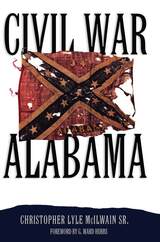
A fledgling state at only forty years old, Alabama approached the 1860s with expanding populations of both whites and black slaves. They were locked together in a powerful yet fragile economic engine that produced and concentrated titanic wealth in the hands of a white elite. Perceiving themselves trapped between a mass of disenfranchised black slaves and the industrializing and increasingly abolitionist North, white Alabamians were led into secession and war by a charismatic cohort who claimed the imprimatur of biblical scripture, romanticized traditions of chivalry, and the military mantle of the American Revolution.
And yet, Alabama’s white citizens were not a monolith of one mind. McIlwain dispels the received wisdom of a white citizenry united behind a cadre of patriarchs and patriots. Providing a fresh and insightful synthesis of military events, economic factors such as inflation and shortages, politics and elections, the pivotal role of the legal profession, and the influence of the press, McIlwain’s Civil War Alabama illuminates the fissiparous state of white, antebellum Alabamians divided by class, geography, financial interests, and political loyalties.
Vital and compelling, Civil War Alabama will take its place among the definitive books about Alabama’s doomed Confederate experiment and legacy. Although he rigorously dismantles idealized myths about the South’s “Lost Cause,” McIlwain restores for contemporary readers the fervent struggles between Alabamians over their response to the epic crisis of their times.
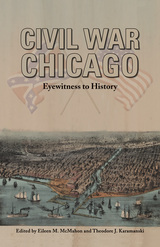
The American Civil War was a crucial event in the development of Chicago as the metropolis of the heartland. Not only did Chicagoans play an important role in the politics of the conflict, encouraging emancipation and promoting a “hard war” policy against Southern civilians, but they supported the troops materially through production of military supplies and foodstuffs as well as morally and spiritually through patriotic publications and songs. The Civil War transformed Chicago from a mere commercial center to an industrial power as well as the nation’s railroad hub and busiest port. The war also divided Chicago, however, between Lincoln supporters and Copperheads, whites and blacks, workers and owners, natives and newcomers.
The city played a key role in elevating Abraham Lincoln to the Republican presidential nomination in 1860, yet only four years later a Chicago politician’ s influence was key in declaring the war a failure and promoting a platform of peace with the Confederacy. Using seldom seen or newly uncovered sources, this book tells the story of the Civil War through the eyes of those who lived that history. Photographs throughout the book effectively convey the geography of events in this pivotal period of Chicago’s history, and the editors have provided a useful driving guide to Civil War sites in and around the city.
Most literature on the Civil War focuses on soldiers, battles, and politics. But for every soldier in the United States Army, there were nine civilians at home. The war affected those left on the home front in many ways. Westward expansion and land ownership increased. The draft disrupted families while a shortage of male workers created opportunities for women that were previously unknown.
The war also enlarged the national government in ways unimagined before 1861. The Homestead Act, the Land Grant College Act, civil rights legislation, the use of paper currency, and creation of the Internal Revenue Service to collect taxes to pay for the war all illustrate how the war fundamentally, and permanently, changed the nation.
The essays in this book, drawn from a wide range of historical expertise and approaching the topic from a variety of angles, explore the changes in life at home that led to a revolution in American society and set the stage for the making of modern America.
Contributors: Jean H. Baker, Jenny Bourne, Paul Finkelman, Guy Gugliotta, Daniel W. Stowell, Peter Wallenstein, Jennifer L. Weber.
Perhaps the hardest-working member of the cabinet, Welles still found time to keep a detailed diary that has become one of the key documents for understanding the inner workings of the Lincoln administration. In this new edition, William E. and Erica L. Gienapp have restored Welles’s original observations, gleaned from the manuscript diaries at the Library of Congress and freed from his many later revisions, so that the reader can experience what he wrote in the moment. With his vitriolic pen, Welles captures the bitter disputes over strategy and war aims, lacerates colleagues from Secretary of State William H. Seward to General-in-Chief Henry Halleck, and condemns the actions of the self-serving southern elite he sees as responsible for the war. He just as easily waxes eloquent about the Navy's wartime achievements, extols the virtues of Lincoln, and drops in a tidbit of Washington gossip.
Carefully edited and extensively annotated, this edition contains a wealth of supplementary material. The appendixes include short biographies of the members of Lincoln’s cabinet, the retrospective Welles wrote after leaving office covering the period missing from the diary proper, and important letters regarding naval matters and international law.
Gary Gallagher's foreword traces the development of Civil War bibliographies and declares that Eicher's annotation exceeds that of any previous comprehensive volume. The Civil War in Books, Gallagher believes, is "precisely the type of guide" that has been needed. The first full-scale, fully-annotated bibliography on the Civil War to appear in more than thirty years, Eicher's The Civil War in Books is a remarkable compendium of the best reading available about the worst conflict ever to strike the United States. The bibliography, the most valuable reference book on the subject since The Civil War Day by Day, will be essential for college and university libraries, dealers in rare and secondhand books, and Civil War buffs.
Both the Union and the Confederacy had a vested interest in Missouri throughout the war. The state offered control of both the lower Mississippi valley and the Missouri River, strategic areas that could greatly factor into either side’s success or failure. Control of St. Louis and mid-Missouri were vital for controlling the West, and rail lines leading across the state offered an important connection between eastern states and the communities out west. The Confederacy sought to maintain the Ozark Mountains as a northern border, which allowed concentrations of rebel troops to build in the Mississippi valley. With such valuable stock at risk, Lincoln registered the importance of keeping rebel troops out of Missouri, and so began the conventional battles investigated by Gerteis.
The first book-length examination of its kind, The Civil War in Missouri: A Military History dares to challenge the prevailing opinion that Missouri battles made only minor contributions to the war. Gerteis specifically focuses not only on the principal conventional battles in the state but also on the effects these battles had on both sides’ national aspirations. This work broadens the scope of traditional Civil War studies to include the losses and wins of Missouri, in turn creating a more accurate and encompassing narrative of the nation’s history.
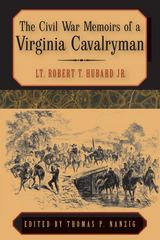
Robert Hubard was an enlisted man and officer of the 3rd Virginia Cavalry in the Army of Northern Virginia (CSA) from 1861 through 1865. He wrote his memoir during an extended convalescence spent at his father’s Virginia plantation after being wounded at the battle of Five Forks on April 1, 1865. Hubard served under such Confederate luminaries as Jeb Stuart, Fitz Lee, Wade Hampton, and Thomas L. Rosser. He and his unit fought at the battles of Antietam, on the Chambersburg Raid, in the Shenandoah Valley, at Fredericksburg, Kelly’s Ford, Chancellorsville, Gettysburg, Bristoe Station, and down into Virginia from the Wilderness to nearly the end of the war at Five Forks.
Hubard was like many of his class and station a son of privilege and may have felt that his service was an act of noblesse oblige. Unlike many of his contemporaries, however, he was a keen observer and a writer of unusual grace, clarity, humor, and intelligence. The editor has fleshed out his memoir by judicious use of Hubard’s own wartime letters, which not only fill in gaps but permit the reader to see developments in the writer’s thinking after the passage of time. Because he was a participant in events of high drama and endured the quotidian life of a soldier, Hubard’s memoir should be of value to both scholars and avocational readers.
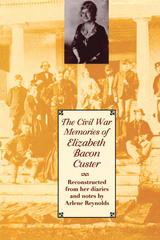
In her first year of marriage (1864-1865) to General George Armstrong Custer, Libbie Custer witnessed the Civil War firsthand. Her experiences of danger, hardship, and excitement made ideal material for a book, one that she worked on for years in later life but ultimately never published.
In this volume, Arlene Reynolds has produced a readable narrative of Libbie Custer's life during the war years by chronologically reconstructing Libbie's original, unpublished notes and diaries found in the archives of the Little Big Horn Battlefield National Monument. In these reminiscences, Libbie Custer adds striking, eloquent details to the Civil War story as she describes her life both in camp and in Washington. Her stories of incidents such as fording a swollen river sidesaddle on horseback, dancing at the Inaugural Ball near President Lincoln, and watching the massive review of the Army of the Potomac after the surrender have the engrossing quality of a well-written novel.
For general readers and students of women's history, this book tells a fascinating story of a sheltered girl's maturation into a courageous woman in the crucible of war. And for both devotees and detractors of her husband, it offers an intimate glimpse into his youth, West Point years, and early military service.
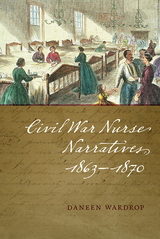
As a subgenre of war literature, the Civil War nurse narrative offered realistic reportage of medical experiences and declined to engage with military strategies or Congressional politics. Instead, nurse narrators chronicled the details of attending wounded soldiers in the hospital, where a kind of microcosm of US democracy-in-progress emerged. As the war reshaped the social and political ideologies of the republic, nurses labored in a workplace that reflected cultural changes in ideas about gender, race, and class. Through interactions with surgeons and other officials they tested women’s rights convictions, and through interactions with formerly enslaved workers they wrestled with the need to live up to their own often abolitionist convictions and support social equality.
By putting these accounts in conversation with each other, Civil War Nurse Narratives productively explores a developing genre of war literature that has rarely been given its due and that offers refreshing insights into women’s contributions to the war effort. Taken together, these stories offer an impressive and important addition to the literary history of the Civil War.
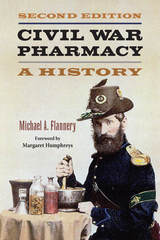
Winner (first edition), Archivists and Librarians in the History of the Health Sciences, Best Book Award
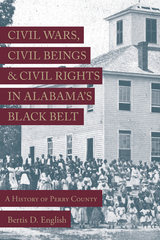
In his fascinating, in-depth study, Bertis D. English analyzes why Perry County, situated in the heart of a violence-prone subregion of Alabama, enjoyed more peaceful race relations and less bloodshed than several neighboring counties. Choosing an atypical locality as central to his study, English raises questions about factors affecting ethnic disturbances in the Black Belt and elsewhere in Alabama. He also uses Perry County, which he deems an anomalous county, to caution against the tendency of some scholars to make sweeping generalizations about entire regions and subregions.
English contends Perry County was a relatively tranquil place with a set of extremely influential African American businessmen, clergy, politicians, and other leaders during Reconstruction. Together with egalitarian or opportunistic white citizens, they headed a successful campaign for black agency and biracial cooperation that few counties in Alabama matched. English also illustrates how a significant number of educational institutions, a high density of African American residents, and an unusually organized and informed African American population were essential factors in forming Perry County’s character. He likewise traces the development of religion in Perry, the nineteenth-century Baptist capital of Alabama, and the emergence of civil rights in Perry, an underemphasized center of activism during the twentieth century.
This well-researched and comprehensive volume illuminates Perry County’s history from the various perspectives of its black, interracial, and white inhabitants, amplifying their own voices in a novel way. The narrative includes rich personal details about ordinary and affluent people, both free and unfree, creating a distinctive resource that will be useful to scholars as well as a reference that will serve the needs of students and general readers.
Winner of the 1989 Jefferson Davis Award of the Museum of the Confederacy, 1989. Winner of the Julia Cherry Spruill Prize of the Southern Association of Women Historians, 1991.
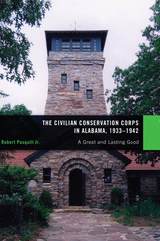
The Civilian Conservation Corps was one of the better known and most successful of the New Deal programs following the Great Depression. The causes of the Great Depression have been addressed and debated from a variety of perspectives through the years. However, the effects explained in terms of human suffering leave little room for debate. By March of 1933, there were more than 13.6 million unemployed, and more than 200,000 of them were wandering the country looking for work. Homes and families were fractured. President Roosevelt proposed to put 500,000 unemployed men from cities and towns into the woods to plant trees, reduce fire hazards, clear streams, check erosion, and improve the park system all across America. With unprecedented speed, national legislation was written, passed, and funded, creating a myriad of programs—referred to as alphabet projects—in hopes of generating useful work and necessary paychecks and creating a “great and lasting good” for the American public.
CCC projects in Alabama would initially employ 20,000 men with projects in all 13 state forests and seven state parks. This volume traces in great detail the work projects, the camp living conditions, the daily lives of the enrollees, the administration and management challenges, and the lasting effects of this Neal Deal program in Alabama. Through archives, government documents, and more than 125 interviews with former enrollees of the CCC, Pasquill has recounted the CCC program in Alabama and brought this humanitarian program to life in the Alabama countryside. It was a truly monumental win-win situation emerging from a national and international economic tragedy.
Part of the massive relief effort of Roosevelt’s New Deal, the CCC was created in 1933 to give young men an opportunity to work and make money to help families devastated by the Great Depression, and to participate in forest and conservation projects across the country. In Arizona, thousands of young men, many of them from the industrial Northeast, served in the state’s CCC forest camps. Arizona’s Mogollon Rim is a spectacular expanse of cliffs that slices through half the state, stretching from Sedona eastward to New Mexico. Along with the White Mountains, it includes the largest contiguous forest of ponderosa pine in America. Remote and little-visited in the 1930s, the Rim Country offered copious outlets for the CCC men’s energies: building roads, public campsites, hiking trails, fire lookout towers, and administration buildings; fighting fires; controlling erosion; eliminating vermin; and restoring damaged soils. The CCC enrollees were also given an opportunity to continue interrupted educations, learn useful skills and self-discipline, participate in sports and other leisure activities, and meet local residents. Author Robert J. Moore interviewed a number of CCC veterans who served in the Rim Country, and their stories are part of this book. So too are photographs—many of them from veterans’ personal collections—of Rim Country camps and workers, and such ephemera as camp newspapers. This is an engrossing account of several thousand young men who came to Arizona to escape the misery of the Great Depression, whose work in the woods changed the state, and who in the process were themselves changed. Here is the human face of Arizona’s CCC, the men’s experiences, their work, and their lasting impact on the forests of the Rim Country.
The Civilian Conservation Corps in Nevada is the first comprehensive history of the Nevada CCC, a program designed to help the nation get back on its feet, and of the “boys” who did so much to restore Nevada’s lands and resources. The book is based on extensive research in private manuscript collections, unpublished memoirs, CCC inspectors’ reports, and other records. The book also includes period photographs depicting the Nevada CCC and its activities.
Drawing on more than thirty years of meticulous research, Kay Rippelmeyer details the Depression-era history of the simultaneous creation of the Civilian Conservation Corps (CCC) and the Shawnee National Forest in southern Illinois. Through the stories of the men who worked in CCC camps devoted to soil and forest conservation projects, she offers a fascinating look into an era of utmost significance to the identity, citizens, wildlife, and natural landscape of the region.
Rippelmeyer outlines the geologic and geographic history of southern Illinois, from Native American uses of the land to the timber industry’s decimation of the forest by the 1920s. Detailing both the economic hardships and agricultural land abuse plaguing the region during the Depression, she reveals how the creation of the CCC under Franklin Delano Roosevelt coincided with the regional campaign for a national forest and how locals first became aware of and involved with the program.
Rippelmeyer mined CCC camp records from the National Archives, newspaper accounts and other correspondence and conducted dozens of oral interviews with workers and their families to re-create life in the camps. An extensive camp compendium augments the volume, featuring numerous photographs, camp locations and dates of operation, work history, and company rosters. Satisfying public curiosity and the need for factual information about the camps in southern Illinois, this is an essential contribution to regional history and a window to the national impact of the CCC.
Copublished with the Utah State Historical Society. Affiliated with the Utah Division of State History, Utah Department of Heritage & Arts
“There was a certain magic about sending young men into the woods. It was not so much man against nature as it was man in league with nature against the economic troubles that were then stalking the land.”—from the book
In 1932, unemployment in Utah was about 34 percent. Nearly every state west of the Mississippi River was struggling not only with unemployment but also with drought, erosion, and overgrazing. To solve these serious difficulties, President Franklin D. Roosevelt launched what would become arguably the most popular of his New Deal programs—the Civilian Conservation Corps (CCC). From 1933 to 1942, the CCC employed three million young men on land-improvement projects that are still used today.
In this book, Kenneth Baldridge chronicles the work of the 10,000 men who served at Utah’s 116 CCC camps. With facts and anecdotes drawn from camp newspapers, government files, interviews, letters written by enrollees, and other sources, he situates the CCC within the political climate and details not only the projects but also the day-to-day aspects of camp life. For thirty dollars a month—of which twenty-five was sent home to their folks—these young recruits planted trees; built roads, bridges, dams, and trails; fought fires; battled pests and noxious weeds; and erected cabins, campgrounds, amphitheaters, and reservoirs, and more.
Today the CCC is credited with creating greater public awareness and appreciation of the outdoors. It has also served as a model for the Student Conservation Corps and other youth programs. This volume documents the public good created by the CCC, provides an extensive bibliography, and is illustrated with numerous historic and modern photos.
READERS
Browse our collection.
PUBLISHERS
See BiblioVault's publisher services.
STUDENT SERVICES
Files for college accessibility offices.
RECENTLY PUBLISHED


UChicago Accessibility Resources
home | accessibility | search | about | contact us
BiblioVault ® 2001 - 2026
The University of Chicago Press