
 A SCHOLARLY BOOK REPOSITORY
2474 start with C start with C

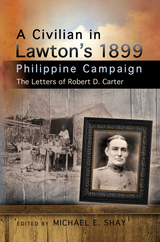
In the midst of the Philippine-American War, twenty-two-year-old Robert Dexter Carter served in Manila as a civilian quartermaster clerk. Through his letters to his family, he provided a vivid picture of army life in Manila—the sights, the smells, and his responses to the native culture. In addition to his letters, his diary and several related articles present a firsthand account of the historic voyage of the United States Army Transport Grant through the Suez Canal to Manila in early 1899. Carter’s writings not only tell of his sometimes harrowing experiences, but also reveal the aspirations and fears of a young man not quite sure of his next steps on life’s journey.
Carter’s father, Robert Goldthwaite Carter, was a war hero and a longtime friend of Maj. Gen. Henry W. Lawton. Carter obtained his position through Lawton’s influence, and his respect for Lawton is clear throughout his writings. A frequent guest in the Lawton home, the young clerk was introduced to many notable figures both military and civilian. Carter’s letters, particularly to his father, are full of news and gossip related to his commander. In other letters, he reveals the kindness and generosity of Mrs. Lawton, who took time to look out for Carter while he was in the hospital and often loaned him books.
This well-researched and expertly edited work casts light on the role of support troops in war, a subject too often minimized or ignored. Shay begins each chapter with an introduction that establishes the setting, the context of events, and the disposition of Carter and his compatriots and provides notes and commentary to place the letters in context. By choosing not to edit the offensive expletives of a sometimes arrogant and racist young man, Shay presents a fully nuanced portrait of a young American exploring the larger world in a time of turmoil.
Enhanced by photographs from collections at the Library of Congress and the Military History Institute, as well as many of Carter’s own whimsical drawings, the book will appeal to armchair historians and scholars alike.
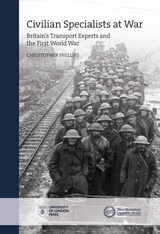
In Civilian Specialists at War, Christopher Phillips examines the relationship between industrial society and industrial warfare through the lens of Britain’s transport experts. Phillips analyzes the multiple connections between the army, the government, and the senior executives of some of prewar Britain’s largest industrial enterprises, revealing that civilian transport experts were a key component of Britain’s strategies in World War I. This book also details the application of recognizably civilian technologies and methods to the prosecution of war, and documents how transport experts were constrained by the political and military requirements of coalition warfare.
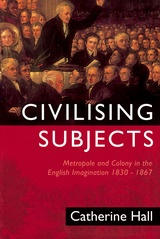
Hall uses the stories of two groups of Englishmen and -women to explore British self-constructions both in the colonies and at home. In Jamaica, a group of Baptist missionaries hoped to make African-Jamaicans into people like themselves, only to be disappointed when the project proved neither simple nor congenial to the black men and women for whom they hoped to fashion new selves. And in Birmingham, abolitionist enthusiasm dominated the city in the 1830s, but by the 1860s, a harsher racial vocabulary reflected a new perception of the nonwhite subjects of empire as different kinds of men from the "manly citizens" of Birmingham.
This absorbing study of the "racing" of Englishness will be invaluable for imperial and cultural historians.
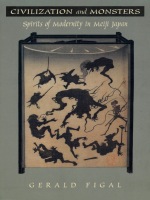
After discussing the role of the fantastic in everyday Japan at the eve of the Meiji period, Figal draws new connections between folklorists, writers, educators, state ideologues, and policymakers, all of whom crossed paths in a contest over supernatural terrain. He shows the ways in which a determined Meiji state was engaged in a battle to suppress, denigrate, manipulate, or reincorporate folk belief as part of an effort toward the consolidation of a modern national culture. Modern medicine and education, functioning as a means for the state to exercise its power, redefined folk practices as a source of evil. Diverse local spirits were supplanted by a new Japanese Spirit, embodied by the newly constituted emperor, the supernatural source of the nation’s strength. The monsters of folklore were identified, catalogued, and characterized according to a new regime of modern reason. But whether engaged to support state power and forge a national citizenry or to critique the arbitrary nature of that power, the fantastic, as Figal maintains, is the constant condition of Japanese modernity in all its contradictions. Furthermore, he argues, modernity in general is born of fantasy in ways that have scarcely been recognized.
Bringing unexplored and provocative new ideas to the Japan specialist, Civilization and Monsters will also appeal to readers concerned with issues of modernity in general.
Civilization and violence are not necessarily the antagonists we presume-withcivilization taming violence, and violence unmaking civilization. Focusing on postindependence Colombia, this book brings to light the ways in which violenceand civilization actually intertwined and reinforced each other in the development of postcolonial capitalism.
The narratives of civilization and violence, Cristina Rojas contends, play key roles in the formation of racial, gender, and class identities; they also provide pivotal logic to both the formation of the nation and the processes of capitalist development. During the Liberal era of Colombian history (1849-1878), a dominant creole elite enforced a "will to civilization" that sought to create a new world in its own image. Rojas explores different arenas in which this pursuit meant the violent imposition of white, liberal, laissez-faire capitalism. Drawing on a wide range of social theory, Rojas develops a new way of understanding the relationship between violence and the formation of national identity-not just in the history of Colombia, but also in the broader narratives of civilization.

of Western culture, has crime itself become more "civilized"?
This book exposes as myths the beliefs that society has become more violent
than it has been in the past and that violence is more likely to occur
in cities than in rural areas.
The product of years of study
by scholars from North America and Europe, The Civilization of Crime
shows that, however violent some large cities may be now, both rural and
urban communities in Sweden, Holland, England, and other countries were
far more violent during the late Middle Ages than any cities are today.
Contributors show that the
dramatic change is due, in part, to the fact that violence was often tolerated
or even accepted as a form of dispute settlement in village-dominated
premodern society. Interpersonal violence declined in the seventeenth
and eighteenth centuries, as dispute resolution was taken over by courts
and other state institutions and the church became increasingly intolerant
of it.
The book also challenges a
number of other historical-sociological theories, among them that contemporary
organized crime is new, and addresses continuing debate about the meaning
and usefulness of crime statistics.
CONTRIBUTORS: Esther Cohen,
Herman Diederiks, Florike Egmond, Eric A. Johnson, Michele Mancino, Eric
H. Monkkonen, Eva Österberg, James A. Sharpe, Pieter Spierenburg,
Jan Sundin, Barbara Weinberger
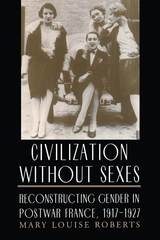
In sources as diverse as parliamentary records, newspaper articles, novels, medical texts, writings on sexology, and vocational literature, Roberts discovers a central question: how to come to terms with rapid economic, social, and cultural change and articulate a new order of social relationships. She examines the role of French trauma concerning the War in legislative efforts to ban propaganda for abortion and contraception, and explains anxieties about the decline of maternity by a crisis in gender relations that linked soldiery, virility, and paternity.
Through these debates, Roberts locates the seeds of actual change. She shows how the willingness to entertain, or simply the need to condemn, nontraditional gender roles created an indecisiveness over female identity that ultimately subverted even the most conservative efforts to return to traditional gender roles and irrevocably altered the social organization of gender in postwar France.
Science was a central pillar of colonialism, but the converse holds true as well: colonialism profoundly shaped the character of nineteenth-century science. Civilizing Natures unravels unexpected relationships between science, technology, and administrative systems in colonial India from the 1850s to the 1930s, deepening our perspective on continuing conflicts over race, resources, and empire.
Botanists, anthropologists, and foresters had their most important sources of data—nature and natives—located at colonial sites. In the hilly, forested regions of Madras Presidency, tribal populations were studied by ethnographers, managed by revenue officials, recruited by plantation contractors, and modernized by missionaries. Racial constructions of nature and modernity helped criminalize and domesticate unruly natives. This is a story about the construction of nature in southern India that is deeply local and irreducibly global.
Through detailed case studies, Kavita Philip shows how race and nature are fundamental to understanding colonial modernities. Through its insightful combination of methodologies from both the humanities and the social sciences, Civilizing Natures complicates our understandings of the relationships between science and religion, pre-modern and civilized, environment and society.
By examining German reconstruction under the Marshall Plan, author Patrick Jackson shows how the rhetorical invention of a West that included Germany was critical to the emergence of the postwar world order. Civilizing the Enemy convincingly describes how concepts are strategically shaped and given weight in modern international relations, by expertly dissecting the history of "the West" and demonstrating its puzzling persistence in the face of contradictory realities.
"By revisiting the early Cold War by means of some carefully conducted intellectual history, Patrick Jackson expertly dissects the post-1945 meanings of "the West" for Europe's emergent political imaginary. West German reconstruction, the foundation of NATO, and the idealizing of 'Western civilization' all appear in fascinating new light."
--Geoff Eley, University of Michigan
"Western civilization is not given but politically made. In this theoretically sophisticated and politically nuanced book, Patrick Jackson argues that Germany's reintegration into a Western community of nations was greatly facilitated by civilizational discourse. It established a compelling political logic that guided the victorious Allies in their occupation policy. This book is very topical as it engages critically very different, and less successful, contemporary theoretical constructions and political deployments of civilizational discourse."
--Peter J. Katzenstein, Cornell University
"What sets Patrick Jackson's book apart is his attention, on the one hand, to philosophical issues behind the kinds of theoretical claims he makes and, on the other hand, to the methodological implications that follow from those claims. Few scholars are willing and able to do both, and even fewer are as successful as he is in carrying it off. Patrick Jackson is a systematic thinker in a field where theory is all the rage but systematic thinking is in short supply."
--Nicholas Onuf, Florida International University
Patrick Thaddeus Jackson is Assistant Professor of International Relations in American University's School of International Service.
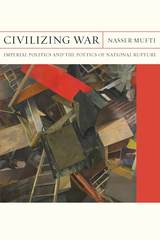
Honorable Mention for the 2019 Sonya Rudikoff Prize, awarded by the Northeast Victorian Studies Association
Civilizing War traces the historical transformation of civil war from a civil affair into an uncivil crisis. Civil war is today synonymous with the global refugee crisis, often serving as grounds for liberal-humanitarian intervention and nationalist protectionism.
In Civilizing War, Nasser Mufti situates this contemporary conjuncture in the long history of British imperialism, demonstrating how civil war has been and continues to be integral to the politics of empire. Through comparative readings of literature, criticism, historiography, and social analysis, Civilizing War shows how writers and intellectuals of Britain’s Anglophone empire articulated a “poetics of national rupture” that defined the metropolitan nation and its colonial others.
Mufti’s tour de force marshals a wealth of examples as diverse as Thomas Carlyle, Benjamin Disraeli, Friedrich Engels, Arthur Conan Doyle, Rudyard Kipling, Joseph Conrad, V. S. Naipaul, Nadine Gordimer, and Michael Ondaatje to examine the variety of forms this poetics takes—metaphors, figures, tropes, puns, and plot—all of which have played a central role in Britain’s civilizing mission and its afterlife. In doing so, Civilizing War shifts the terms of Edward Said’s influential Orientalism to suggest that imperialism was not only organized around the norms of civility but also around narratives of civil war.
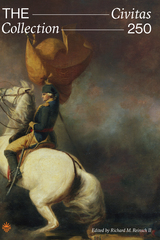
Twenty-five leading scholars examine the Declaration of Independence on its 250th anniversary.
On July 4, 1776, the Second Continental Congress approved a document that would change the world. Drawing on natural rights, moral philosophy, natural and biblical theology, and classical virtue, the Declaration of Independence did not merely announce a political separation—it established the principles upon which a new republic would stand or fall.
As America marks the 250th anniversary of that founding act, The Civitas Collection 250 brings together 25 of the nation's leading scholars to examine the Declaration in depth. These essays resist the temptation to flatten the founding into a simple story. They probe what the Declaration meant in 1776, what it meant to Abraham Lincoln and Martin Luther King, Jr., and what it demands of us now—on questions of liberty and equality, self-government, executive power, religion, race, and the persistent effort to diminish what the founders established.
To read the Declaration as a whole is to discover not a relic but a living challenge. The Civitas Collection 250, featuring essays by scholars from leading universities and research institutions across the country, including from the newly established schools of civic thought, is essential reading for citizens, students, and scholars who take the American founding seriously.
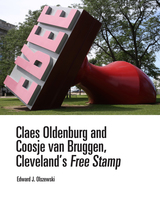
In 1985, the Sohio oil company commissioned Claes Oldenburg and Coosje van Bruggen to design and construct a large outdoor sculpture for its new corporate headquarters in Cleveland, Ohio. The result was Free Stamp, a bold and distinctive installation that captured both a Pop Art sensibility and a connection to the city’s industrial past. Sohio executives approved the design, and work was already underway, when British Petroleum acquired the company. The new owners quickly decided that the sculpture was “inappropriate” for their building and attempted to rid themselves of Free Stamp by donating it to the city of Cleveland—a gift that the city initially had no desire to accept. After much debate and public protest, the sculpture found a home in Willard Park, where it stands today.
This is the first study of any sculpture by Oldenburg and van Bruggen to examine the genesis of their art from conception to installation. Edward J. Olszewski has put together a fascinating narrative based on interviews with the artists, archival material from city records, and in-house corporate memoranda, as well as letters to the editor and political cartoons. He traces the development of the sculpture from the artists’ first sketches and models to the installation of the completed work in its urban environment.
Bona discusses the novels in pairs according to their focus on Italian American life. She first examines the traditions of italianitá (a flavor of things Italian) that inform and enhance works of fiction. The novelists in that tradition were Mari Tomasi (Like Lesser Gods, 1949) and Marion Benasutti (No Steady Job for Papa, 1966).
Bona then turns to later novels that highlight the Italian American belief in the family's honor and reputation. Conflicts between generations, specifically between autocratic fathers and their children, are central to Octavia Waldo's 1961 A Cup of the Sun and Josephine Gattuso Hendin's 1988 The Right Thing to Do.
Even when writers choose to steer away from the familial focus, Bona notes, their developmental narratives trace the reintegration of characters suffering from a crisis of cultural identity. Relating the characters' struggles to their relationship to the family, Bona examines Diana Cavallo's 1961 A Bridge of Leaves and Dorothy Bryant's 1978 Miss Giardino.
Bona then discusses two innovative novels— Helen Barolini's 1979 Umbertina and Tina De Rosa's 1980 Paper Fish— both of which feature a granddaughter who invokes her grandmother, a godparent figure. Through Barolini's feminist and De Rosa's modernist perspectives, both novels present a young girl developing artistically.
Closing with a discussion of the contemporary terrain Italian American women traverse, Bona examines such topics as sexual identity when it meets cultural identity and the inclusion of italianitá when Italian American identity is not central to the story. Italian American women writers, she concludes, continue in the 1980s and 1990s to focus on the interplay between cultural identity and women's development.
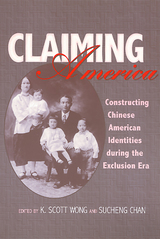
The second section shows how children of the immigrants developed a sense of themselves as having a distinct identity as Chinese Americans. For this generation, many of the opportunities available to other immigrants' children were simply inaccessible. In some districts explicit policies kept Chinese children in segregated schools; in many workplaces discriminatory practices kept them from being hired or from advancing beyond the lowest positions. In the 1930s, in fact, some Chinese Americans felt their only option was to emigrate to China, where they could find jobs better matched to their abilities. Many young Chinese women who were eager to take advantage of the educational and work options opening to women in the wider U.S. society first had to overcome their family's opposition and then racism. As the personal testimonies and historical biographies eloquently attest, these young people deeply felt the contradictions between Chinese and American ways; but they also saw themselves as having to balance the demands of the two cultures rather than as having to choose between them.
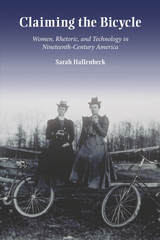
Hallenbeck describes the masculine culture of the “Ordinary” bicycle of the 1880s and the ways women helped bring about changes in this culture; asserts that women contributed to bicycle design, helping to produce the more gender-neutral “Safety” bicycle in response to discourse about their needs; and analyzes women writers’ uses of the new venue of popular magazines to shape a “bicycle girl” ethos that prompted new identities for women. The author considers not only how technical documents written by women bicyclists encouraged new riders to understand their activity as transforming gender definitions but also how women used bicycling as a rhetorical resource to influence medical discourse about their bodies.
Making a significant contribution to studies of feminist rhetorical historiography, rhetorical agency, and technical communication, Claiming the Bicycle asserts the utility of a distributed model of rhetorical agency and accounts for the efforts of widely dispersed actors to harness technology in promoting social change.
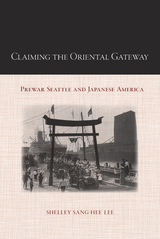
In Claiming the Oriental Gateway, Shelley Sang-Hee Lee explores the various intersections of urbanization, ethnic identity, and internationalism in the experience of Japanese Americans in early twentieth-century Seattle. She examines the development and self-image of the city by documenting how U.S. expansion, Asian trans-Pacific migration, and internationalism were manifested locally—and how these forces affected residents’ relationships with one another and their surroundings.
Lee details the significant role Japanese Americans—both immigrants and U.S. born citizens—played in the social and civic life of the city as a means of becoming American. Seattle embraced the idea of cosmopolitanism and boosted its role as a cultural and commercial "Gateway to the Orient" at the same time as it limited the ways in which Asian Americans could participate in the public schools, local art production, civic celebrations, and sports. She also looks at how Japan encouraged the notion of the "gateway" in its participation in the Alaska-Yukon-Pacific Exposition and International Potlach.
Claiming the Oriental Gateway thus offers an illuminating study of the "Pacific Era" and trans-Pacific relations in the first four decades of the twentieth century.

An appreciative examination of the New England clambake, Neustadt divides her study into three parts: historical (social, economic, political, regional, and cultural) influences on the clambake; a close focus on the Allen's Neck clambake as a cultural phenomenon in its own right; and a critical examination of the central elements of the clambaking tradition—food, ritual, and festival.
The author views the clambake as a unique American folk tradition with interesting connections and rich resonances with other aspects of American culture and history.
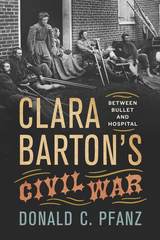
“I always tried to succor the wounded until medical aid and supplies could come up—I could run the risk; it made no difference to anyone if I were shot or taken prisoner.” So recorded Clara Barton, the most famous woman to emerge from the American Civil War. In an age when few women worked in hospitals, much less at the front, Barton served in at least four Union armies, providing food and assistance to wounded soldiers on battlefields stretching from Maryland to South Carolina. Thousands of soldiers benefited from her actions, and she is unquestionably an American heroine. But how much do we really know about her actual wartime service? Most information about Barton’s activities comes from Barton herself. After the war, she toured the country recounting her wartime experiences to overflowing audiences. In vivid language, she described crossing the Rappahannock River under fire to succor wounded Union soldiers at Fredericksburg, transporting critical supplies to field hospitals at Antietam, and enduring searing heat and brackish water on the sunscorched beaches of South Carolina. She willingly braved hardship and danger in order to help the young men under her care, receiving in return their love and respect. Most of Barton’s biographers have accepted her statements at face value, but in doing so, they stand on shaky ground, for Barton was a relentless selfpromoter and often embellished her stories in an effort to enhance her accomplishments.
In Clara Barton’s Civil War: Between Bullet and Hospital, distinguished historian Donald Pfanz revisits Barton’s claims, comparing the information in her speeches with contemporary documents, including Barton’s own wartime diary and letters. In doing so, he provides the first balanced and accurate account of her wartime service—a service that in the end needed no exaggeration.

A border county in a border state, Barbour County, West Virginia felt the full terror and tragedy of the Civil War. The wounds of the Civil War cut most bitterly in the border states, that strip of America from Maryland to Kansas, where conflicting loyalties and traditions ripped apart communities, institutions, and families. Barbour County, in the mountainous Northwest of (West) Virginia, is a telling microcosm of the deep divisions which both caused the war and were caused by it. By examining and interpreting long-ignored documents of the times and the personal accounts of the people who were there, Clash of Loyalties offers a startling new view of America's most bitter hour. Nearly half of the military-age men in the county served in the armed forces, almost perfectly divided between the Union and the Confederacy. After West Virginia split with Virginia to rejoin the Union, Confederate soldiers from the regions could not safely visit their homes on furlough, or even send letters to their families. The county's two leading political figures, Samuel Woods and Spencer Dayton, became leaders of the fight for and against secession, dissolved their close personal friendship, and never spoke to one another again. The two factions launched campaigns of terror and intimidation, leading to the burning of several homes, the kidnapping of a sheriff, the murder of a pacifist minister, and the self-imposed exile of many of the county's influential families. The conflicting loyalties crossed nearly all social and economic lines; even the county's slave owners were evenly divided between Union and Confederate sympathies. With a meticulous examination of census and military records, geneologies, period newspapers, tax rolls, eyewitness accounts, and other relevant documents, Clash of Loyalties presents a compelling account of the passion and violence which tore apart Barbour County and the nation.
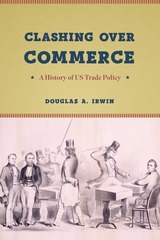
Douglas A. Irwin’s Clashing over Commerce is the most authoritative and comprehensive history of US trade policy to date, offering a clear picture of the various economic and political forces that have shaped it. From the start, trade policy divided the nation—first when Thomas Jefferson declared an embargo on all foreign trade and then when South Carolina threatened to secede from the Union over excessive taxes on imports. The Civil War saw a shift toward protectionism, which then came under constant political attack. Then, controversy over the Smoot-Hawley tariff during the Great Depression led to a policy shift toward freer trade, involving trade agreements that eventually produced the World Trade Organization. Irwin makes sense of this turbulent history by showing how different economic interests tend to be grouped geographically, meaning that every proposed policy change found ready champions and opponents in Congress.
As the Trump administration considers making major changes to US trade policy, Irwin’s sweeping historical perspective helps illuminate the current debate. Deeply researched and rich with insight and detail, Clashing over Commerce provides valuable and enduring insights into US trade policy past and present.
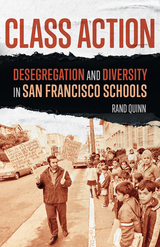
A compelling history of school desegregation and activism in San Francisco
The picture of school desegregation in the United States is often painted with broad strokes of generalization and insulated anecdotes. Its true history, however, is remarkably wide ranging. Class Action tells the story of San Francisco’s long struggle over school desegregation in the wake of the 1954 U.S. Supreme Court decision Brown v. Board of Education.
San Francisco’s story provides a critical chapter in the history of American school discrimination and the complicated racial politics that emerged. It was among the first large cities outside the South to face court-ordered desegregation following the Brown rulings, and it experienced the same demographic shifts that transformed other cities throughout the urban West. Rand Quinn argues that the district’s student assignment policies—including busing and other desegregative mechanisms—began as a remedy for state discrimination but transformed into a tool intended to create diversity. Drawing on extensive archival research—from court docket files to school district records—Quinn describes how this transformation was facilitated by the rise of school choice, persistent demand for neighborhood schools, evolving social and legal landscapes, and local community advocacy and activism.
Class Action is the first book to present a comprehensive political history of post-Brown school desegregation in San Francisco. Quinn illuminates the evolving relationship between jurisprudence and community-based activism and brings a deeper understanding to the multiracial politics of urban education reform. He responds to recent calls by scholars to address the connections between ideas and policy change and ultimately provides a fascinating look at race and educational opportunity, school choice, and neighborhood schools in the aftermath of Brown v. Board of Education.
Mary Rizzo traces the development of the concept of lifestyle marketing, showing how marketers disconnected class identity from material reality, focusing instead on a person’s attitudes, opinions, and behaviors. The book includes discussions of the rebel of the 1950s, the hippie of the 1960s, the white suburban hip-hop fan of the 1980s, and the poverty chic of the 1990s. Class Acts illuminates how the concept of “lifestyle,” particularly as expressed through fashion, has disconnected social class from its material reality and diffused social critique into the opportunity to simply buy another identity. The book will appeal to scholars and other readers who are interested in American cultural history, youth culture, fashion, and style.
Assembling essays written by three generations of labor historians, each with markedly different approaches to the labor histories of early America and the Atlantic world, this issue offers unique insights into the evolution of class analysis and its shifting place in the field of labor history. In one essay, a renowned member of the first generation of “new social historians” reflects on his work, considering the past and future of class analysis while highlighting some of his current views about class in early America. In other essays, a new generation of scholars enriches scholarship on early America and the Atlantic by incorporating complex and nuanced discussions of race and gender into traditional class analyses. Perhaps signaling the future of the field, another essay discusses the theoretical foundations and implications of a globalized mode of historical class analysis, examining the complicated connections among peoples in Europe, Africa, and North America during the seventeenth and eighteenth centuries and the impact these connections had in shaping early America and the Atlantic world.
While scholars have long debated whether the Knights and the Populists were genuine in their efforts to cross the color line, Joseph Gerteis shifts attention from that question to those of how, where, and when the movements’ organizers drew racial boundaries. Arguing that the movements were simultaneously racially inclusive and exclusive, Gerteis explores the connections between race and the movements’ economic and political interests in their cultural claims and in the dynamics of local organizing.
Interpreting data from the central journals of the Knights of Labor and the two major Populist organizations, the Farmers’ Alliance and the People’s Party, Gerteis explains how the movements made sense of the tangled connections between race, class, and republican citizenship. He considers how these collective narratives motivated action in specific contexts: in Richmond and Atlanta in the case of the Knights of Labor, and in Virginia and Georgia in that of the Populists. Gerteis demonstrates that the movements’ collective narratives galvanized interracial organizing to varying degrees in different settings. At the same time, he illuminates the ways that interracial organizing was enabled or constrained by local material, political, and social conditions.
With a focus on certain classics in the working-class literary "canon," such as The Ragged Trousered Philanthropists and Love on the Dole, as well as lesser-known texts by working-class women, Fox uncovers the anxieties that underlie representations of class and consciousness. Shame repeatedly emerges as a powerful counterforce in these works, continually unsettling the surface narrative of protest to reveal an ambivalent relation toward the working-class identities the novels apparently champion.
Class Fictions offers an equally rigorous analysis of cultural studies itself, which has historically sought to defend and value the radical difference of working-class culture. Fox also brings to her analysis a strong feminist perspective that devotes considerable attention to the often overlooked role of gender in working-class fiction. She demonstrates that working-class novels not only expose master narratives of middle-class culture that must be resisted, but that they also reveal to us a need to create counter narratives or formulas of working-class life. In doing so, this book provides a more subtle sense of the role of resistance in working class culture. While of interest to scholars of Victorian and working-class fiction, Pamela Fox’s argument has far-reaching implications for the way literary and cultural studies will be defined and practiced.
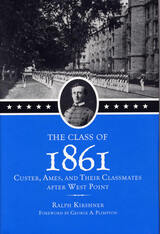
Ralph Kirshner has provided a richly illustrated forum to enable the West Point class of 1861 to write its own autobiography. Through letters, journals, and published accounts, George Armstrong Custer, Adelbert Ames, and their classmates tell in their own words of their Civil War battles and of their varied careers after the war.
Two classes graduated from West Point in 1861 because of Lincoln's need of lieutenants: forty-five cadets in Ames's class in May and thirty-four in Custer's class in June. The cadets range from Henry Algernon du Pont, first in the class of May, whose ancestral home is now Winterthur Garden, to Custer, last in the class of June. “Only thirty-four graduated,” remarked Custer, “and of these thirty-three graduated above me.” West Point's mathematics professor and librarian Oliver Otis Howard, after whom Howard University is named, is also portrayed.
Other famous names from the class of 1861 are John Pelham, Emory Upton, Thomas L. Rosser, John Herbert Kelly (the youngest general in the Confederacy when appointed), Patrick O'Rorke (head of the class of June), Alonzo Cushing, Peter Hains, Edmund Kirby, John Adair (the only deserter in the class), and Judson Kilpatrick (great-grandfather of Gloria Vanderbilt). They describe West Point before the Civil War, the war years, including the Vicksburg campaign and the battle of Gettysburg, the courage and character of classmates, and the ending of the war.
Kirshner also highlights postwar lives, including Custer at Little Bighorn; Custer's rebel friend Rosser; John Whitney Barlow, who explored Yellowstone; du Pont, senator and author; Kilpatrick, playwright and diplomat; Orville E. Babcock, Grant's secretary until his indictment in the "Whiskey Ring"; Pierce M. B. Young, a Confederate general who became a diplomat; Hains, the only member of the class to serve on active duty in World War I; and Upton, "the class genius."
The Class of 1861, which features eighty-three photographs, includes a foreword by George Plimpton, editor of theParis Review and great-grandson of General Adelbert Ames.

Why does the American federal government seem to prioritize elite capitalist interests over those of other groups? Class Politics and the Creation of the American State draws on a wide range of sources—personal letters, official government documents, private notes, and newspaper articles—to reveal that the federal government was built to give the emerging capitalist elite a way to consolidate and institutionalize their power. Challenging both liberal and conservative interpretations about what the US Constitution means, this book tells a new story about how the American state took shape.
The framers of the Constitution constructed an image of the state, enshrined in the Constitution, that presented their power as universal: a system meant to serve all Americans equally. This image helped legitimize the new order, even if the rising capitalist class stood to benefit most of all. Since the United States of the late 1780s was not yet a fully capitalist society, the state that was built opened space for less capitalistically incorporated social classes, including some artisans and yeoman farmers, to have limited representation. Class Politics and the Creation of the American State shows how the structure of the early American state worked primarily to advance capitalist interests, while incorporating other groups enough to maintain a sense of broad representation and inclusion.
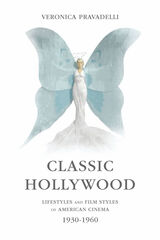
Pravadelli sets her analysis apart by paying particular attention to the gendered desires and identities exemplified in the films. Availing herself of the significant advances in film theory and modernity studies that have taken place since similar surveys first saw publication, she views Hollywood through strategies as varied as close textural analysis, feminism, psychoanalysis, film style and study of cinematic imagery, revealing the inconsistencies and antithetical traits lurking beneath Classic Hollywood's supposed transparency.
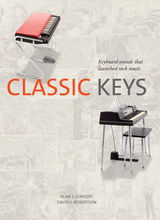
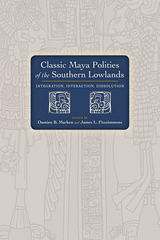
Classic Maya Polities of the Southern Lowlands investigates Maya political and social structure in the southern lowlands, assessing, comparing, and interpreting the wide variation in Classic period Maya polity and city composition, development, and integration. Traditionally, discussions of Classic Maya political organization have been dominated by the debate over whether Maya polities were centralized or decentralized. With new, largely unpublished data from several recent archaeological projects, this book examines the premises, strengths, and weaknesses of these two perspectives before moving beyond this long-standing debate and into different territory.
The volume examines the articulations of the various social and spatial components of Maya polity—the relationships, strategies, and practices that bound households, communities, institutions, and dynasties into enduring (or short-lived) political entities. By emphasizing the internal negotiation of polity, the contributions provide an important foundation for a more holistic understanding of how political organization functioned in the Classic period.
Contributors include Francisco Estrada Belli, James L. Fitzsimmons, Sarah E. Jackson, Caleb Kestle, Brigitte Kovacevich, Allan Maca, Damien B. Marken, James Meierhoff, Timothy Murtha, Cynthia Robin, Alexandre Tokovinine, and Andrew Wyatt.

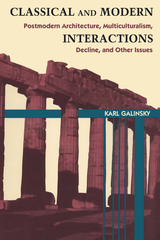
Postmodernism, multiculturalism, the alleged decline of the United States, deconstruction, leadership, and values—these topics have been at the forefront of contemporary intellectual and cultural debate and are likely to remain so for the near future. Participants in the debate can usefully enlarge the perspective to a comparison between the Greco-Roman world and contemporary society. In this thought-provoking work, a noted classics scholar tests the ancient-modern comparison, showing what it can add to the contemporary debates and what its limitations are.
Writing for intellectually adventurous readers, Galinsky explores Greece and Rome as multicultural societies, debates the merits of classicism in postmodern architecture, discusses the reign of Augustus in terms of modern leadership theories, and investigates the modern obsession with finding parallels between the supposed "decline and fall" of Rome and the "decay" of U.S. society.
Within these discussions, Galinsky shows the continuing vitality of the classical tradition in the contemporary world. The Greek and Roman civilizations have provided us not only with models for conscious adaptation but also points for radical departures. This ability to change and innovate from classical models is crucial, Galinsky maintains. It creates a reciprocal process whereby contemporary issues are projected into the past while aspects of the ancient world are redefined in terms of current approaches.
These essays result in a balanced assessment and stimulating restatement of some major issues in both contemporary U.S. society and the Greco-Roman world. The book, which speaks to a wide interdisciplinary audience, is based on a series of lectures that Galinsky gave as a national visiting scholar for Phi Beta Kappa. It concludes with a discussion of the role of classical studies in the United States today.
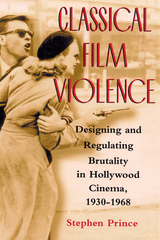
Prince shows that many choices about camera position, editing, and blocking of the action and sound were functional responses by filmmakers to regulatory constraints, necessary for approval from the PCA and then in surviving scrutiny by state and municipal censor boards.
This book is the first stylistic history of American screen violence that is grounded in industry documentation. Using PCA files, Prince traces the negotiations over violence carried out by filmmakers and officials and shows how the outcome left its traces on picture and sound in the films.
Almost everything revealed by this research is contrary to what most have believed about Hollywood and film violence. With chapters such as "Throwing the Extra Punch" and "Cruelty, Sadism, and the Horror Film," this book will become the defining work on classical film violence and its connection to the graphic mayhem of today's movies.
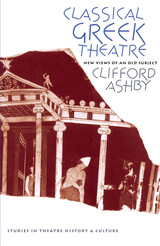
Many dogmas regarding Greek theatre were established by researchers who lacked experience in the mounting of theatrical productions. In his wide-ranging and provocative study, Clifford Ashby, a theatre historian trained in the practical processes of play production as well as the methods of historical research, takes advantage of his understanding of technical elements to approach his ancient subject from a new perspective. In doing so he challenges many long-held views.
Archaeological and written sources relating to Greek classical theatre are diverse, scattered, and disconnected. Ashby's own (and memorable) fieldwork led him to more than one hundred theatre sites in Greece, southern Italy, Sicily, and Albania and as far into modern Turkey as Hellenic civilization had penetrated. From this extensive research, he draws a number of novel revisionist conclusions on the nature of classical theatre architecture and production.
The original orchestra shape, for example, was a rectangle or trapezoid rather than a circle. The altar sat along the edge of the orchestra, not at its middle. The scene house was originally designed for a performance event that did not use an up center door. The crane and ekkyklema were simple devices, while the periaktoi probably did not exist before the Renaissance. Greek theatres were not built with attention to Vitruvius' injunction against a southern orientation and were probably sun-sited on the basis of seasonal touring. The Greeks arrived at the theatre around mid-morning, not in the cold light of dawn. Only the three-actor rule emerges from this eclectic examination somewhat intact, but with the division of roles reconsidered upon the basis of the actors' performance needs. Ashby also proposes methods that can be employed in future studies of Greek theatre. Final chapters examine the three-actor production of Ion, how one should not approach theatre history, and a shining example of how one should.
Ashby's lengthy hands-on training and his knowledge of theatre history provide a broad understanding of the ways that theatre has operated through the ages as well as an ability to extrapolate from production techniques of other times and places.
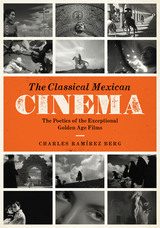
From the mid-1930s to the late 1950s, Mexican cinema became the most successful Latin American cinema and the leading Spanish-language film industry in the world. Many Cine de Oro (Golden Age cinema) films adhered to the dominant Hollywood model, but a small yet formidable filmmaking faction rejected Hollywood’s paradigm outright. Directors Fernando de Fuentes, Emilio Fernández, Luis Buñuel, Juan Bustillo Oro, Adolfo Best Maugard, and Julio Bracho sought to create a unique national cinema that, through the stories it told and the ways it told them, was wholly Mexican. The Classical Mexican Cinema traces the emergence and evolution of this Mexican cinematic aesthetic, a distinctive film form designed to express lo mexicano.
Charles Ramírez Berg begins by locating the classical style’s pre-cinematic roots in the work of popular Mexican artist José Guadalupe Posada at the turn of the twentieth century. He also looks at the dawning of Mexican classicism in the poetics of Enrique Rosas’ El Automóvil Gris, the crowning achievement of Mexico’s silent filmmaking era and the film that set the stage for the Golden Age films. Berg then analyzes mature examples of classical Mexican filmmaking by the predominant Golden Age auteurs of three successive decades. Drawing on neoformalism and neoauteurism within a cultural studies framework, he brilliantly reveals how the poetics of Classical Mexican Cinema deviated from the formal norms of the Golden Age to express a uniquely Mexican sensibility thematically, stylistically, and ideologically.
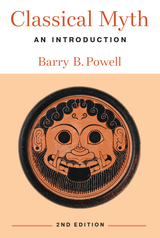
In Classical Myth: An Introduction, Barry B. Powell provides the historical and theoretical background necessary for us to understand not only the concept of what a myth is, but the cultural context of how it emerged, and the different approaches to interpreting myth that were put forward by ancient theorists and their more recent successors. Then he helps readers to understand classical myth as it is found in its primary sources: the works of Homer and Hesiod, and the Greek tragedians and historians, Ovid and Vergil. By examining a number of prominent themes in classical myth, this textbook explores the relationship between myth and art, politics, society, and history of the ancient world. This completely revised second edition features new illustrations and will help readers who want to understand myths or study their original sources.

Nashville has been many things: frontier town, Civil War battleground, New South mecca, and Music City, U.S.A. It is headquarters for several religious denominations, and also the home of some of the largest insurance, healthcare, and publishing concerns in the country. Located culturally as well as geographically between North and South, East and West, Nashville is centered in a web of often-competing contradictions.
One binding image of civic identity, however, has been consistent through all of Nashville's history: the classical Greek and Roman ideals of education, art, and community participation that early on led to the city's sobriquet, "Athens of the West," and eventually, with the settling of the territory beyond the Mississippi River, the "Athens of the South."
Illustrated with nearly a hundred archival and contemporary photographs, Classical Nashville shows how Nashville earned that appellation through its adoption of classical metaphors in several areas: its educational and literary history, from the first academies through the establishment of the Fugitive movement at Vanderbilt; the classicism of the city's public architecture, including its Capitol and legislative buildings; the evolution of neoclassicism in homes and private buildings; and the history and current state of the Parthenon, the ultimate symbol of classical Nashville, replete with the awe-inspiring 42-foot statue of Athena by sculptor Alan LeQuire.
Perhaps Nashville author John Egerton best captures the essence of this modern city with its solid roots in the past. He places Nashville "somewhere between the 'Athens of the West' and 'Music City, U.S.A.,' between the grime of a railroad town and the glitz of Opryland, between Robert Penn Warren and Robert Altman." Nashville's classical identifications have always been forward-looking, rather than antiquarian: ambitious, democratic, entrepreneurial, and culturally substantive. Classical Nashville celebrates the continuation of classical ideals in present-day Nashville, ideals that serve not as monuments to a lost past, but as sources of energy, creativity, and imagination for the future of a city.


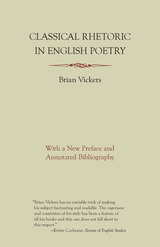
Back in print after 17 years, this is a concise history of rhetoric as it relates to structure, genre, and style, with special reference to English literature and literary criticism from Ancient Greece to the end of the 18th century.
The core of the book is a quite original argument that the figures of rhetoric were not mere mechanical devices, were not, as many believed, a "nuisance, a quite sterile appendage to rhetoric to which (unaccountably) teachers, pupils, and writers all over the world devoted much labor for over 2,000 years." Rather, Vickers demonstrates, rhetoric was a stylized representation of language and human feelings.
Vickers supplements his argument through analyses of the rhetorical and emotional structure of four Renaissance poems. He also defines 16 of the most common figures of rhetoric, citing examples from the classics, the Bible, and major English poets from Chaucer to Pope.
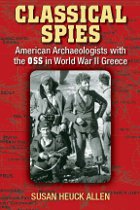
“Classical Spies will be a lasting contribution to the discipline and will stimulate further research. Susan Heuck Allen presents to a wide readership a topic of interest that is important and has been neglected.”
—William M. Calder III, University of Illinois, Urbana-Champaign
Classical Spies is the first insiders’ account of the operations of the American intelligence service in World War II Greece. Initiated by archaeologists in Greece and the eastern Mediterranean, the network drew on scholars’ personal contacts and knowledge of languages and terrain. While modern readers might think Indiana Jones is just a fantasy character, Classical Spies disclosesevents where even Indy would feel at home: burying Athenian dig records in an Egyptian tomb, activating prep-school connections to establish spies code-named Vulture and Chickadee, and organizing parachute drops.
Susan Heuck Allen reveals remarkable details about a remarkable group of individuals. Often mistaken for mild-mannered professors and scholars, such archaeologists as University of Pennsylvania’s Rodney Young, Cincinnati’s Jack Caskey and Carl Blegen, Yale’s Jerry Sperling and Dorothy Cox, and Bryn Mawr’s Virginia Grace proved their mettle as effective spies in an intriguing game of cat and mouse with their Nazi counterparts. Relying on interviews with individuals sharing their stories for the first time, previously unpublished secret documents, private diaries and letters, and personal photographs, Classical Spies offers an exciting and personal perspective on the history of World War II.
In Classicism of the Twenties, Theodore Ziolkowski offers a compelling account of that movement. Giving equal attention to music, art, and literature, and focusing in particular on the works of Stravinsky, Picasso, and T. S. Eliot, he shows how the turn to classicism manifested itself. In reaction both to the excesses of neoromanticism and early modernism and to the horrors of World War I—and with respectful detachment—artists, writers, and composers adapted themes and forms from the past and tried to imbue their own works with the values of simplicity and order that epitomized earlier classicisms.
By identifying elements common to all three arts, and carefully situating classicism within the broader sweep of modernist movements, Ziolkowski presents a refreshingly original view of the cultural life of the 1920s.
Winner, PROSE Award, Classics, Association of American Publishers (AAP), 2018
Writing down the epic tales of the Trojan War and the wanderings of Odysseus in texts that became the Iliad and the Odyssey was a defining moment in the intellectual history of the West, a moment from which many current conventions and attitudes toward books can be traced. But how did texts originally written on papyrus in perhaps the eighth century BC survive across nearly three millennia, so that today people can read them electronically on a smartphone?
Classics from Papyrus to the Internet provides a fresh, authoritative overview of the transmission and reception of classical texts from antiquity to the present. The authors begin with a discussion of ancient literacy, book production, papyrology, epigraphy, and scholarship, and then examine how classical texts were transmitted from the medieval period through the Renaissance and the Enlightenment to the modern era. They also address the question of reception, looking at how succeeding generations responded to classical texts, preserving some but not others. This sheds light on the origins of numerous scholarly disciplines that continue to shape our understanding of the past, as well as the determined effort required to keep the literary tradition alive. As a resource for students and scholars in fields such as classics, medieval studies, comparative literature, paleography, papyrology, and Egyptology, Classics from Papyrus to the Internet presents and discusses the major reference works and online professional tools for studying literary transmission.
Beginning with a short intellectual history of the academic culture wars, Eric Adler’s book examines popular polemics including those by Allan Bloom and Dinesh D’Souza, and considers the oddly marginal role of classical studies in these conflicts. In presenting a brief history of classics in American education, the volume sheds light on the position of the humanities in general.
Adler dissects three significant controversies from the era: the so-called AJP affair, which supposedly pitted a conservative journal editor against his feminist detractors; the brouhaha surrounding Martin Bernal’s contentious Black Athena project; and the dustup associated with Victor Davis Hanson and John Heath’s fire-breathing jeremiad, Who Killed Homer? He concludes by considering these controversies as a means to end the crisis for classical studies in American education. How can the study of antiquity—and the humanities—thrive in the contemporary academy? This book provides workable solutions to end the crisis for classics and for the humanities as well.
This major work also includes findings from a Web survey of American classical scholars, offering the first broadly representative impression of what they think about their discipline and its prospects for the future. Adler also conducted numerous in-depth interviews with participants in the controversies discussed, allowing readers to gain the most reliable information possible about these controversies.
Those concerned about the liberal arts and the best way to educate young Americans should read this book. Accessible and jargon-free, this narrative of scholarly scandals and their context makes for both enjoyable and thought-provoking reading.
Of unique interest to the student of nineteenth century America is this account of the Alabama Clays, who in their private life were typical of the slaveholding aristocracy of the old South, but as lawyer-politicians played significant roles in state and national politics, in the development of the Democratic party, and in the affairs of the Confederacy.
In the period from 1811 to 1915, the Clays were involved in many of the great problems confronting the South. This study of the Clay family includes accounts of the wartime legislation of the Confederate Congress and the activities of the Confederate Commission in Canada. Equally interesting to many readers will be the intimate view of social life in ante-bellum Washington and the story of the domestic struggles of a plantation family during and after the war, as revealed through the letters of Clement Claiborne Clay and his wife Virginia.
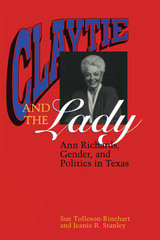
It was like a remake of The Cowboy and the Lady, except that this time they weren't friends. The 1990 Texas governor's race pitted Republican Clayton Williams, a politically conservative rancher and oil millionaire, against Democrat Ann Richards, an experienced progressive politician noted for her toughness and quick wit. Their differences offered voters a choice not only of policies and programs but also of stereotypes and myths of men's and women's proper roles.
Claytie and the Lady is the first in-depth look at how gender affected the 1990 governor's race. The authors' analysis reveals that Ann Richards' victory was a result of a unique combination of characteristics. She was simultaneously tough enough to convince voters that she could lead and feminine enough to put them at ease. At the same time, she remained committed to the progressive and women's issues that had won her the early support of feminists and progressives. The authors also show how Clayton Williams' appeal to the Texas cowboy myth backfired when he broke the cowboy code of chivalry to women.
The authors set their discussion within the historical context of twentieth-century Texas politics and the theoretical context of gender politics in order to pose a number of thought-provoking questions about the effects of women's participation in political life. Interviews with key players in the 1990 election, including Governor Ann Richards, add a lively and insightful counterpoint to the text.

Michael C. Dorf and George Van Dusen draw on scores of interviews and unprecedented access to private papers to illuminate the life of an Illinois political icon. Wise, energetic, charismatic, petty, stubborn--Sid Yates presented a complicated character to constituents and colleagues alike. Yet his get-it-done approach to legislation allowed him to bridge partisan divides in the often-polarized House of Representatives. Following Yates from the campaign trail to the negotiating table to the House floor, Dorf and Van Dusen offer a rich portrait of a dealmaker extraordinaire and tireless patriot on a fifty-year journey through postwar American politics.
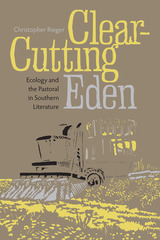
Examines how Southern literary depictions of the natural world were influenced by the historical, social, and ecological changes of the 1930s and 1940s
Rieger studies the ways that nature is conceived of and portrayed by four prominent Southern writers of the era: Erskine Caldwell, Marjorie Kinnan Rawlings, Zora Neale Hurston, and William Faulkner. Specifically, he argues that these writers created new versions of an old literary mode—the pastoral—in response to the destabilizing effects of the Great Depression, the rise of Southern modernism, and the mechanization of agricultural jobs.
Mass deforestation, soil erosion, urban development, and depleted soil fertility are issues that come to the fore in the works of these writers. In response, each author depicts a network model of nature, where humans are part of the natural world, rather than separate, over, or above it, as in the garden pastorals of the Old South, thus significantly revising the pastoral mode proffered by antebellum and Reconstruction-era writers.
Each writer, Rieger finds, infuses the pastoral mode with continuing relevance, creating new versions that fit his or her ideological positions on issues of race, class, and gender. Despite the ways these authors represent nature and humankind’s place in it, they all illustrate the idea that the natural environment is more than just a passive background against which the substance of life, or fiction, is played out.
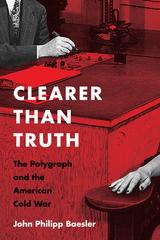
In this first comprehensive history of the polygraph as a tool and symbol of American Cold War policies, John Philipp Baesler tells the story of a technology with weak scientific credentials that was nevertheless celebrated as a device that could expose both internal and external enemies. Considered the go-to technology to test agents' and employees' loyalty, the polygraph's true power was to expose deep ideological and political fault lines. While advocates praised it as America's hard-nosed yet fair answer to communist brainwashing, critics claimed that its use undermined the very values of justice, equality, and the presumption of innocence for which the nation stood.
Clearer Than Truth demonstrates that what began as quick-fix technology promising a precise test of honesty and allegiance eventually came to embody tensions in American Cold War culture between security and freedom, concerns that reach deep into the present day.
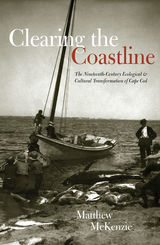
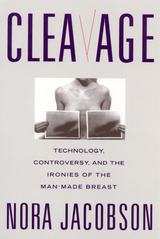
Organized both chronologically and thematically, this book examines the history of breast implant technology from 1895 to 1990, including the controversies that erupted in the early 1990s over the safety of the devices and the Food and Drug Administration's regulation of their use. Jacobson examines such topics as politics and bias in medical practice and the role of bureaucracies, corporations, and governments in establishing policy and regulating implant technology.
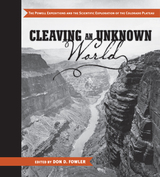
In 2009 the University of Utah Press and the Utah State Historical Society co-published three volumes of long out-of-print journals, letters, and other documents from John Wesley Powell’s expeditions down the Colorado River. We are proud to announce the fourth and final volume. Cleaving an Unknown World collects Powell’s journal (Smithsonian Journal of History, 1968); Jack Hillers’s diary and photographs, previously published as Photographed All the Best Scenery, edited by Don D. Fowler (University of Utah Press, 1972); original maps from Francis Marion Bishop (Utah Historical Quarterly, 1969); Frederick S. Dellenbaugh’s letters (Utah Historical Quarterly, 1969); and John C. Sumner’s journal from the first Powell expedition (Utah Historical Quarterly, 1969). Roy Webb’s foreword provides the context for these disparate pieces.
This beautifully illustrated book features Hillers’s photographs—long regarded as a remarkable and unique record of the Colorado River and the Grand Canyon. Cleaving an Unknown World belongs in the library of any reader interested in the exploration of the American West.
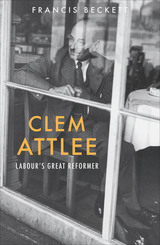
Building on his earlier work on Attlee and including new research and stories, many of which are published here for the first time, Francis Beckett highlights Attlee’s relevance for a new generation. A poet and dreamer, Attlee led a remarkable political life that saw, among other challenges, the beginning of the Cold War. Ultimately, this perceptive biography demonstrates that Attlee’s ideas have never been more relevant.

In this first thorough study of the origins of clemency, Dowling provides a vivid look at the ideology of clemency and new philosophies of mercy and cruelty in Western society, through an examination of ancient art, literature, historical documents, and archaeological artifacts. By illuminating the emergence of mercy and forgiveness as social concepts, and the mechanisms by which peoples are transformed in response to changes in power structures, Dowling makes an important contribution to the study of the ancient Roman world, as well as to modern Western culture.
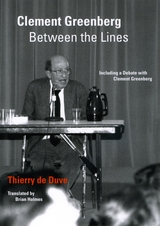
Clement Greenberg (1909–1994), champion of abstract expressionism and modernism—of Pollock, Miró, and Matisse—has been esteemed by many as the greatest art critic of the second half of the twentieth century, and possibly the greatest art critic of all time. This volume, a lively reassessment of Greenberg’s writings, features three approaches to the man and his work: Greenberg as critic, doctrinaire, and theorist. The book also features a transcription of a public debate with Greenberg that de Duve organized at the University of Ottawa in 1988. Clement Greenberg Between the Lines will be an indispensable resource for students, scholars, and enthusiasts of modern art.
“In this compelling study, Thierry de Duve reads Greenberg against the grain of the famous critic’s critics—and sometimes against the grain of the critic himself. By reinterpreting Greenberg’s interpretations of Pollock, Duchamp, and other canonical figures, de Duve establishes new theoretical coordinates by which to understand the uneasy complexities and importance of Greenberg’s practice.” John O’Brian, editor of Clement Greenberg: The Collected Essays and Criticisms
“De Duve is an expert on theoretical aesthetics and thus well suited to reassess the formalist tenets of the late American art critic's theory on art and culture. . . . De Duve's close readings of Greenberg . . . contain much of interest, and the author clearly enjoys matching wits with ‘the world's best known art critic.’” Library Journal
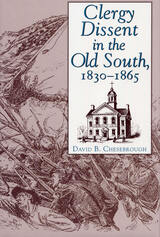
Emphasizing the courage required and the cost of dissent before and throughout the Civil War, David B. Chesebrough identifies dissenters among the southern clergy, tells their stories, and discusses the issues that caused these Christians to split from the majority
After an opening chapter in which he provides an overview of the role of the southern clergy in the antebellum and war years, Chesebrough turns to the South’s efforts to present a united proslavery front from 1830 to 1861. Clergy who could not support the "peculiar institution" kept silent, moved to the North, or suffered various consequences for their nonconformity.
Chesebrough then deals with the war years (1861–1865), when opposition to secession and the war was regarded as much more serious than opposition to slavery had been. Some members of the clergy who formally supported and justified slavery could not support secession and war. This was a dangerous stance, sometimes carrying a death sentence.
The final chapter, "The Creative Minority" stresses the important societal role of dissenters, who, history shows, often perceive events more clearly than the majority.
The dissenters Chesebrough discusses include John H. Aughey, a Presbyterian evangelist from Mississippi who was imprisoned and sentenced to death for his opposition to secession; William G. Brownlow, a Methodist cleric and newspaper publisher who, though he later became governor of Tennessee, was imprisoned and forced to leave the state because of his opposition to secession and the Civil War; John Gregg Fee, the founder of Berea College in Kentucky, who was denounced by his family and forced to leave the state because of his abolitionist views; and Melinda Rankin, a Presbyterian missionary worker in Brownsville, Texas, who was dismissed from her teaching responsibilities because of alleged northern sympathies.
Thomas Augst follows clerks as they made their way through the boarding houses, parlors, and offices of the big city. Tracing the course of their everyday lives, Augst shows how these young men used acts of reading and writing to navigate the anonymous world of market culture and claim identities for themselves within it. Clerks, he reveals, calculated their prospects in diaries, composed detailed letters to friends and family, attended lectures by key thinkers of the day, joined libraries where they consumed fiction, all while wrestling with the boredom of their work. What results, then, is a poignant look at the literary practices of ordinary people and an affecting meditation on the moral lives of men in antebellum America.

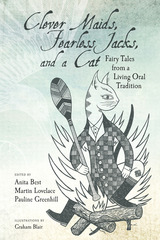
Here, eight tales from Power and five tales from Lannon take up issues of vital concern—such as spousal abuse, bullying, and social and generational conflict—allusively, through a screen of fiction. In commentary following the stories Anita Best, Martin Lovelace, and Pauline Greenhill discuss the transmission of fairy tales in oral tradition, address the relation of these magic tales to Lannon’s and Power’s other stories, and share specifics about Newfoundland storytelling and the two tellers themselves. The text is further enriched by expressive illustrations from artist Graham Blair.
Clever Maids, Fearless Jacks, and a Cat presents the fairy-tale oeuvres of two superb storytellers as a contribution to interdisciplinary fairy-tale studies and folklore—countering fairy-tale studies’ focus on written traditions and printed texts—as well as to gender studies, cultural studies, Newfoundland studies, and Canadian studies. Students, scholars, and general readers interested in folk and fairy tales, contemporary Märchen, Newfoundland folklore, or oral tradition more generally will find much of value in these pages.
Support for this publication was provided, in part, by the University of Winnipeg.
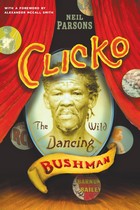
During the 1920s and ’30s, Franz Taibosh—whose stage name was Clicko—performed in front of millions as one of the stars of the Ringling Brothers and Barnum & Bailey Circus. Prior to his fame in the United States, Taibosh toured the world as the “Wild Dancing Bushman,” showing off his frenzied dance moves in freak shows, sideshows, and music halls from Australia to Cuba. When he died in 1940, the New York Times called him “the only African bushman ever exhibited in this country.” In Clicko, Neil Parsons unearths the untold story of Taibosh’s journey from boyhood on a small farm in South Africa to top billing as one of the travelling World’s Fair Freaks.
Through Taibosh’s tale, Parsons brings to life the bizarre golden age of entertainment as well as the role that the dubious new science of race played in it. Beginning with Taibosh’s early life, Clicko untangles the real story of his ancestry from the web of myths spun around him on his rise to international stardom. Parsons then chronicles the unhappy middle period of Taibosh’s career, when he suffered under the heel of a vicious manager. Left to freeze and nearly starve in an unheated apartment, Taibosh was rescued by Frank Cook, Barnum & Bailey’s lawyer. The Cooks adopted Taibosh as a member of their family of circus managers and performers, and his happy—if far from average—years with them make up the final chapter of this remarkable story.
Equal parts entertaining and disturbing, Clicko vividly evokes a forgotten era when vaudeville drew massive crowds and circus freaks were featured in Billboard and Variety. Parsons introduces us to colorful characters such as George Auger the giant and the original Zip the Pinhead, but above all, he gives us an unforgettable portrait of Franz Taibosh, rescued at last from the racists and the romantics and revealed here as an ordinary man with an extraordinary life.
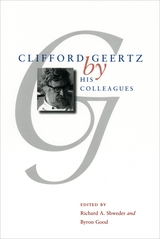
As part of the American Anthropological Association's centennial celebration, the executive board sponsored a presidential session honoring Geertz. Clifford Geertz by His Colleagues compiles the twelve speeches given then by a distinguished panel of social scientists along with a concluding piece by Geertz in which he responds to each speaker and reflects on his own career. These edited speeches cover a broad range of topics, including Geertz's views on morality, cultural critique, interpretivism, time and change, Islam, and violence.
A fitting tribute to one of the great thinkers of our age, this collection will be enjoyed by anthropologists as well as students of psychology, history, and philosophy.
Coming at a time when western labor was purging itself of radicalism and recharting its goals, the Clifton-Morenci strike may well have been that "milestone" in organized labor's groping for recognition in the West. Violence did not erupt—this notable absence of bloodshed thereby making the strike unique in that time of industrial turbulence.
Kluger's answer to the question of why and how peace prevailed is significant reading. Strikers and managers hurled charges at each other, but both sides showed restraint when it came to action. When negotiations reached an impasse, Governor George W. P. Hunt moved to prevent the managers from importing strike-breakers. At the same time, the Department of Labor entered the situation, and the rise in copper prices and loss of wages made a settlement desirable for both sides.
When the mine whistles blew on January 26, 1916, to signal the end of the strike, the repercussions of the events of 1915 were still to be felt. Author Kluger traces how the strike affected working conditions, wages, and the cause of unionism in the district. Overall, he provides insight into feelings concerning the fears of management regarding unionism, and labor's manner of making itself heard during these years.
Western historians, labor historians, and all those concerned with labor relations will recognize the importance of this highly readable work.
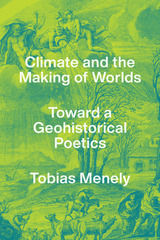
In this book, Tobias Menely develops a materialist ecocriticism, tracking the imprint of the planetary across a long literary history of poetic rewritings and critical readings which continually engage with the climate as a condition of human world making. Menely’s central archive is English poetry written between John Milton’s Paradise Lost (1667) and Charlotte Smith’s “Beachy Head” (1807)—a momentous century and a half during which Britain, emerging from a crisis intensified by the Little Ice Age, established the largest empire in world history and instigated the Industrial Revolution. Incorporating new sciences into ancient literary genres, these ambitious poems aspired to encompass what the eighteenth-century author James Thomson called the “system . . . entire.” Thus they offer a unique record of geohistory, Britain’s epochal transition from an agrarian society, buffeted by climate shocks, to a modern coal-powered nation. Climate and the Making of Worlds is a bracing and sophisticated contribution to ecocriticism, the energy humanities, and the prehistory of the Anthropocene.

Unlike our daily reckoning with the weather, our experience of climate must be mediated through methods that measure the ebb and flow of climate, such as computer models, instruments like thermometers, and organic and inorganic remains known as “proxies.” Climate by Proxy by Melissa Charenko explores how scientists read the record of past climates and how their readings have engendered particular understandings of climate. Charenko focuses on the twentieth century, a period when scientists in Europe and North America began to believe that climate had a dynamic history worth studying. Scientists in this period developed several techniques to infer past climate from fossil pollen, tree rings, pieces of vegetation, and other organic remains imprinted upon by former climates. Climate by Proxy examines how these techniques helped shape notions of climate itself.
Charenko also shows how these varied interpretations of climate played an outsized role in explanations of human history and destiny. Geologists, botanists, ecologists, and other scientists interested in climate over long timescales routinely discussed how climate influenced plants, animals, and, notably, people. By following the scientists who reconstructed climate using natural archives, Climate by Proxy demonstrates how material objects worked with scientists’ perceptions of human groups to compel, constrain, and reinforce their understandings of climate, history, and the future.


Chakrabarty argues that we must see ourselves from two perspectives at once: the planetary and the global. This distinction is central to Chakrabarty’s work—the globe is a human-centric construction, while a planetary perspective intentionally decenters the human. Featuring wide-ranging excursions into historical and philosophical literatures, The Climate of History in a Planetary Age boldly considers how to frame the human condition in troubled times. As we open ourselves to the implications of the Anthropocene, few writers are as likely as Chakrabarty to shape our understanding of the best way forward.
READERS
Browse our collection.
PUBLISHERS
See BiblioVault's publisher services.
STUDENT SERVICES
Files for college accessibility offices.
RECENTLY PUBLISHED




UChicago Accessibility Resources
home | accessibility | search | about | contact us
BiblioVault ® 2001 - 2026
The University of Chicago Press