
 A SCHOLARLY BOOK REPOSITORY
2474 start with C start with C
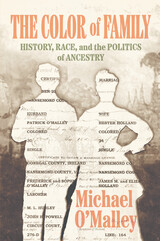
A zealous eugenicist ran Virginia’s Bureau of Vital Statistics in the first half of the twentieth century, misusing his position to reclassify people he suspected of hiding their “true” race. But in addition to being blinded by his prejudices, he and his predecessors were operating more by instinct than by science. Their whole dubious enterprise was subject not just to changing concepts of race but outright error, propagated across generations.
This is how Michael O’Malley, a descendant of a Philadelphia Irish American family, came to have “colored” ancestors in Virginia. In The Color of Family, O’Malley teases out the various changes made to citizens’ names and relationships over the years, and how they affected families as they navigated what it meant to be “white,” “colored,” “mixed race,” and more. In the process, he delves into the interplay of genealogy and history, exploring how the documents that establish identity came about, and how private companies like Ancestry.com increasingly supplant state and federal authorities—and not for the better.
Combining the history of O’Malley’s own family with the broader history of racial classification, The Color of Family is an accessible and lively look at the ever-shifting and often poisoned racial dynamics of the United States.
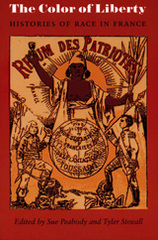
The Color of Liberty addresses four major themes: the evolution of race as an idea in France; representations of "the other" in French literature, art, government, and trade; the international dimensions of French racial thinking, particularly in relation to colonialism; and the impact of racial differences on the shaping of the modern French city. The many permutations of race in French history—as assigned identity, consumer product icon, scientific discourse, philosophical problem, by-product of migration, or tool in empire building—here receive nuanced treatments confronting the malleability of ideas about race and the uses to which they have been put.
Contributors. Leora Auslander, Claude Blanckaert, Alice Conklin, Fred Constant, Laurent Dubois, Yaël Simpson Fletcher, Richard Fogarty, John Garrigus, Dana Hale, Thomas C. Holt, Patricia M. E. Lorcin, Dennis McEnnerney, Michael A. Osborne, Lynn Palermo, Sue Peabody, Pierre H. Boulle, Alyssa Goldstein Sepinwall, Tyler Stovall, Michael G. Vann, Gary Wilder

Telling the story of what they call the Color of Mind—the idea that there are racial differences in intelligence, character, and behavior—they show how philosophers, such as David Hume and Immanuel Kant, and American statesman Thomas Jefferson, contributed to the construction of this pernicious idea, how it influenced the nature of schooling and student achievement, and how voices of dissent such as Frederick Douglass, Frances Ellen Watkins Harper, and W. E. B. Du Bois debunked the Color of Mind and worked to undo its adverse impacts.
Rejecting the view that racial differences in educational achievement are a product of innate or cultural differences, Darby and Rury uncover the historical interplay between ideas about race and American schooling, to show clearly that the racial achievement gap has been socially and institutionally constructed. School leaders striving to bring justice and dignity to American schools today must work to root out the systemic manifestations of these ideas within schools, while still doing what they can to mitigate the negative effects of poverty, segregation, inequality, and other external factors that adversely affect student achievement. While we cannot expect schools alone to solve these vexing social problems, we must demand that they address the dignitary injustices associated with how we track, discipline, and deal with special education that reinforce long-standing racist ideas. That is the only way to expel the Color of Mind from schools, close the racial achievement gap, and afford all children the dignity they deserve.
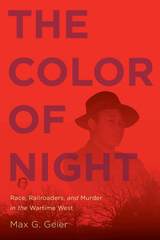
In this deeply researched and detailed account, Geier explores how race, gender, and class affected the attitudes of local town-folk, law officers, and courtroom jurors toward Black trainmen on the West Coast, at a time when militarization skewed perceptions of virtue, status, and authority. He delves into the working conditions and experiences of unionized Black trainmen in their “home and away” lives in Los Angeles and Portland, while illuminating the different ways that they, and other residents of Oregon and southern California, responded to news of “Oregon’s murdered war bride.” Reporters, civil rights activists, and curiosity seekers transformed the trial and appeals process into a public melodrama.
The investigation, trial, and conviction of Robert Folkes galvanized civil rights activists, labor organizers, and community leaders into challenging the flawed judicial process and ultimately the death penalty in Oregon, serving as a catalyst for civil rights activism that bridged rural and urban divides. The Color of Night will appeal to “true crime” aficionados, and to anyone interested in the history of race and labor relations, working conditions, community priorities, and attitudes toward the death penalty in the first half of the 20th century.
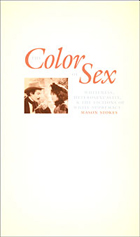
The Color of Sex reveals what happens when race and sexuality meet, when white desire encounters its own ambivalence. As Stokes argues, whiteness and heterosexuality exist in anxious relation to one another. Mutually invested in “the normal,” they support each other in their desperate insistence on the cultural logic of exclusion. At the same time, however, they threaten one another in their attempt to create and sustain a white future, since reproducing whiteness necessarily involves the risk of contamination
Charting the curious movements of this “white heterosexuality,” The Color of Sex inaugurates a new moment in our ongoing attempt to understand the frenzied interplay of race and sexuality in America. As such, it will appeal to scholars interested in race theory, sexuality studies, and American history, culture, and literature.
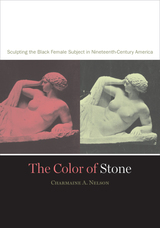
Nineteenth-century neoclassical sculpture was a highly politicized international movement. Based in Rome, many expatriate American sculptors created works that represented black female subjects in compelling and problematic ways. Rejecting pigment as dangerous and sensual, adherence to white marble abandoned the racialization of the black body by skin color.
In The Color of Stone, Charmaine A. Nelson brilliantly analyzes a key, but often neglected, aspect of neoclassical sculpture—color. Considering three major works—Hiram Powers’s Greek Slave, William Wetmore Story’s Cleopatra, and Edmonia Lewis’s Death of Cleopatra—she explores the intersection of race, sex, and class to reveal the meanings each work holds in terms of colonial histories of visual representation as well as issues of artistic production, identity, and subjectivity. She also juxtaposes these sculptures with other types of art to scrutinize prevalent racial discourses and to examine how the black female subject was made visible in high art.
By establishing the centrality of race within the discussion of neoclassical sculpture, Nelson provides a model for a black feminist art history that at once questions and destabilizes canonical texts.
Charmaine A. Nelson is assistant professor of art history at McGill University.
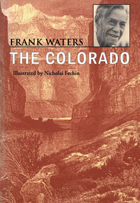
The vast Colorado River collects water from the highest Rocky Mountain peaks and traverses the widest plateaus, the deepest canyons, and the lowest deserts before emptying into the delta of northern Mexico. This austere land and mighty river resist exploration, settlement, and description. But in the hands of one of the West’s great writers, Frank Waters, the history and lore of its past make irresistible reading and a resounding case for mankind’s respect for the environment.

The fifth edition tells of conflicts, shifting alliances, and changing ways of life as Hispanic, European, and African American settlers flooded into a region that was already home to Native Americans. Providing a balanced treatment of the entire state’s history—from Grand Junction to Lamar and from Trinidad to Craig—the authors also reveal how Denver and its surrounding communities developed and gained influence.
While continuing to elucidate the significant impact of mining, agriculture, manufacturing, and tourism on Colorado, this edition broadens and focuses its coverage by consolidating material on Native Americans into one chapter and adding a new chapter on sports history. The authors also expand their discussion of the twentieth century with updated sections on the environment, economy, politics, and recent cultural conflicts. New illustrations, updated statistics, and an extensive bibliography including Internet resources enhance this edition.
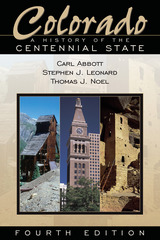
The new edition tells of conflicts, new alliances, and changing ways of life as Hispanic, European, and African American settlers flooded into a region that was already home to Native Americans. Providing balanced coverage of the entire state's history - from Grand Junction to Lamar and from Trinidad to Craig - the authors also reveal how Denver and its surrounding communities developed and gained influence.
While continuing to elucidate the significant impact of mining, agriculture, manufacturing, and tourism on Colorado, this new edition broadens its coverage. The authors expand their discussion of the twentieth century with several new chapters on the economy, politics, and cultural conflicts of recent years. In addition, they address changes in attitudes toward the natural environment as well as the contributions of women, Hispanics, African Americans, and Asian Americans to the state. Dozens of new illustrations, updated statistics, and an extensive bibliography of the most recent research on Colorado history enhance this edition.

Colorado Day by Day is an engaging, this-day-in-history approach to the key figures and forces that have shaped Colorado from ancient times to the present. Historian Derek R. Everett presents a vignette for each day of the calendar year, exploring Colorado’s many facets through distilled tales of people, places, events, and trends.
Entries incorporate tales from each of the state’s sixty-four counties and feature both well-known and obscure cultural moments, including events in Native American, African American, Asian American, Hispano, and women’s history. Allowing the reader to explore the state’s heritage as individual threads or as part of the greater tapestry, Colorado Day by Day recovers much lost history and will be an entertaining and useful source of lore for anyone who enjoys or is curious about Colorado history.

"This canyon world where water yearns toward the ocean is a place so large I can’t take it in. Instead, I am taken in, traveling a near dream as we journey by water, contained by rock walls. In order to see this shorn-away world, I narrow my vision to the small and nearly secret. Never mind the stone’s illusion of permanence or the great strength of water. I look to the most fragile of things here, to the plant world of the canyon. The other river travelers seem taken in by stone, time, and water, and do not see the small things that tempt my attention, the minute fern between stones, the tiny black snails in a pond of water. I am drawn in by the growing life and not by the passing."
- from 'Plant Journey' by Linda Hogan
The mystique of the Colorado River is no less enduring and powerful than is its physical presence in the landscape of the West. Little wonder that narratives about the Colorado still arouse and intrigue readers, or that the river continues to inspire new writing among contemporary authors. What is surprising is that no anthology offering a comprehensive introduction to these works existed - until now.
A Colorado River Reader spans hundreds of years and many cultures and voices to capture an array of responses to this mighty river and tributaries. The collection opens with a Paiute creation myth set in the Grand Canyon and progresses through time, encompassing the Spanish and American exploration narratives of the eighteenth and nineteenth centuries and culminating in the adventure and nature writings of the twentieth.
This is a book that deserves a place next to every armchair and in a pocket of every backpack.
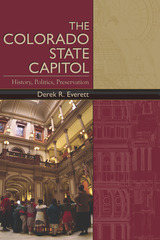
In one comprehensive volume historian Derek Everett traces the establishment, planning, construction, and history of Colorado's state capitol - including a discussion on the importance of restoring and preserving the building for current and future generations of Coloradoans.

In each chapter of this book, you will find some questions, activities, and suggested reading to help you learn more of Colorado's story than we can present here. In these pages. you will discover a high, dry state with rugged natural beauty and an awesome history.

Each chapter is followed by questions, suggested activities, recommended reading, a "Did you know?" trivia section, and recommended websites, movies, and other multimedia that highlight the important concepts covered and lead the reader to more information. Additionally, the book is filled with photographs, making Colorado: The Highest State a fantastic text for middle and high school Colorado history courses.
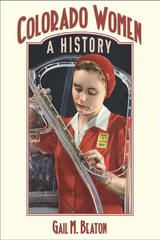
The experiences of Colorado women differed greatly across economic, ethnic, and racial backgrounds. Marital status, religious affiliation, and sexual orientation colored their worlds and others' perceptions and expectations of them. Each chapter addresses the everyday lives of women in a certain period, placing them in historical context, and is followed by vignettes on women's organizations and notable individuals of the time.
Native American, Hispanic, African American, Asian and Anglo women's stories hail from across the state--from the Eastern Plains to the Front Range to the Western Slope--and in their telling a more complete history of Colorado emerges. Colorado Women makes a significant contribution to the discussion of women's presence in Colorado that will be of interest to historians, students, and the general reader interested in Colorado, women's and western history.
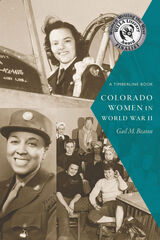
Four months before the attack on Pearl Harbor on December 7, 1941, Mildred McClellan Melville, a member of the Denver Woman’s Press Club, predicted that war would come for the United States and that its long arm would reach into the lives of all Americans. And reach it did. Colorado women from every corner of the state enlisted in the military, joined the workforce, and volunteered on the home front. As military women, they served as nurses and in hundreds of noncombat positions. In defense plants they riveted steel, made bullets, inspected bombs, operated cranes, and stored projectiles. They hosted USO canteens, nursed in civilian hospitals, donated blood, drove Red Cross vehicles, and led scrap drives; and they processed hundreds of thousands of forms and reports. Whether or not they worked outside the home, they wholeheartedly participated in a kaleidoscope of activities to support the war effort.
In Colorado Women in World War II Gail M. Beaton interweaves nearly eighty oral histories—including interviews, historical studies, newspaper accounts, and organizational records—and historical photographs (many from the interviewees themselves) to shed light on women’s participation in the war, exploring the dangers and triumphs they felt, the nature of their work, and the lasting ways in which the war influenced their lives. Beaton offers a new perspective on World War II—views from field hospitals, small steel companies, ammunition plants, college classrooms, and sugar beet fields—giving a rare look at how the war profoundly transformed the women of this state and will be a compelling new resource for readers, scholars, and students interested in Colorado history and women’s roles in World War II.
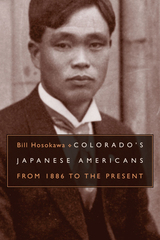
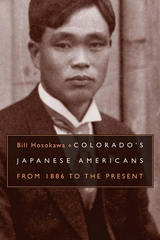
Hosokawa traces personal histories, such as Bob Sakata's journey from internment in a relocation camp to his founding of a prosperous truck farm; the conviction of three sisters for assisting the escape of German POWs; and the years of initiative and determination behind Toshihiro Kizaki's ownership of Sushi Den, a beloved Denver eatery. In addition to personal stories, the author also relates the larger history of the interweave of cultures in Colorado, from the founding of the Navy's Japanese language school at the University of Colorado to the merging of predominantly white and Japanese American congregations at Arvada's Simpson United Methodist Church.
With the author's long view and sharp eye, Colorado's Japanese Americans creates a storied document of lasting legacy about the Issei and Nisei in Colorado.

Winner of the 2023 Association for Ethnic Studies Outstanding Book Award
A study of anti-Blackness and white supremacy across four continents demonstrates that colorblindness is neither new nor a subtype of racist ideology, but a constitutive technology of racism
In Colorblind Tools, Marzia Milazzo offers a transnational account of anti-Blackness and white supremacy that pushes against the dominant emphasis on historical change pervading current racial theory. This emphasis on change, she contends, misses critical lessons from the past.
Bringing together a capacious archive of texts on race produced in Brazil, Cuba, Mexico, Panama, the United States, and South Africa from multiple disciplines and genres, Milazzo uncovers transnational continuities in structural racism and white supremacist discourse from the inception of colonial modernity to the present. In the process, she traces the global workings of what she calls colorblind tools: technologies and strategies that at once camouflage and reproduce white domination. Whether examining Rijno van der Riet’s defense of slavery in the Cape Colony, discourses of racial mixture in Latin American eugenics and their reverberations in contemporary scholarship, the pitfalls of white “antiracism,” or Chicana indigenist aesthetics, Milazzo illustrates how white people collectively disavow racism to maintain power across national boundaries, and how anti-Black and colonial logics can be reproduced even in some decolonial literatures. Milazzo’s groundbreaking study proves that colorblindness is not new, nor is it a subtype of racist ideology or a hallmark of our era. It is a constitutive technology of racism—a tool the master cannot do without.
Gross draws on prison records, trial transcripts, news accounts, and rare mug shot photographs. Providing an overview of Philadelphia’s black women criminals, she describes the women’s work, housing, and leisure activities and their social position in relation to the city’s native-born whites, European immigrants, and elite and middle-class African Americans. She relates how news accounts exaggerated black female crime, trading in sensationalistic portraits of threatening “colored Amazons,” and she considers criminologists’ interpretations of the women’s criminal acts, interpretations largely based on notions of hereditary criminality. Ultimately, Gross contends that the history of black female criminals is in many ways a history of the rift between the political rhetoric of democracy and the legal and social realities of those marginalized by its shortcomings.
In 1858, Cyprian Clamorgan wrote a brief but immensely readable book entitled The Colored Aristocracy of St. Louis. The grandson of a white voyageur and a mulatto woman, he was himself a member of the "colored aristocracy." In a setting where the vast majority of African Americans were slaves, and where those who were free generally lived in abject poverty, Clamorgan's "aristocrats" were exceptional people. Wealthy, educated, and articulate, these men and women occupied a "middle ground." Their material advantages removed them from the mass of African Americans, but their race barred them from membership in white society.
The Colored Aristocracy of St. Louis is both a serious analysis of the social and legal disabilities under which African Americans of all classes labored and a settling of old scores. Somewhat malicious, Clamorgan enjoyed pointing out the foibles of his friends and enemies, but his book had a serious message as well. "He endeavored to convince white Americans that race was not an absolute, that the black community was not a monolith, that class, education, and especially wealth, should count for something."
Despite its fascinating insights into antebellum St. Louis, Clamorgan's book has been virtually ignored since its initial publication. Using deeds, church records, court cases, and other primary sources, Winch reacquaints readers with this important book and establishes its place in the context of African American history. This annotated edition of The Colored Aristocracy of St. Louis includes an introductory essay on African Americans in St. Louis before the Civil War, as well as an account of the lives of the author and the members of his remarkable family—a family that was truly at the heart of the city's "colored aristocracy" for four generations.
A witty and perceptive commentary on race and class, The Colored Aristocracy of St. Louis is a remarkable story about a largely forgotten segment of nineteenth-century society. Scholars and general readers alike will appreciate Clamorgan's insights into one of antebellum America's most important communities.
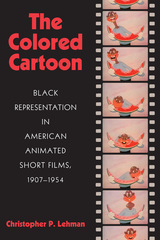
From the introduction of animated film in the early 1900s to the 1950s, ethnic humor was a staple of American-made cartoons. Yet as Christopher Lehman shows in this revealing study, the depiction of African Americans in particular became so inextricably linked to the cartoon medium as to influence its evolution through those five decades. He argues that what is in many ways most distinctive about American animation reflects white animators' visual interpretations of African American cultural expression.
The first American animators drew on popular black representations, many of which were caricatures rooted in the culture of southern slavery. During the 1920s, the advent of the sound-synchronized cartoon inspired animators to blend antebellum-era black stereotypes with the modern black cultural expressions of jazz musicians and Hollywood actors. When the film industry set out to desexualize movies through the imposition of the Hays Code in the early 1930s, it regulated the portrayal of African Americans largely by segregating black characters from others, especially white females. At the same time, animators found new ways to exploit the popularity of African American culture by creating animal characters like Bugs Bunny who exhibited characteristics associated with African Americans without being identifiably black.
By the 1950s, protests from civil rights activists and the growing popularity of white cartoon characters led animators away from much of the black representation on which they had built the medium. Even so, animated films today continue to portray African American characters and culture, and not necessarily in a favorable light.
Drawing on a wide range of sources, including interviews with former animators, archived scripts for cartoons, and the films themselves, Lehman illustrates the intimate and unmistakable connection between African Americans and animation.
Malini Johar Schueller has edited and annotated the 1858 text and added a critical introduction that provides a useful context for understanding and appreciating this important but heretofore neglected document. Her edition of A Colored Man Round the World provides a fascinating account of Dorr's negotiation of the conflicting roles of slave versus man, taking into account all of the racial complexities that existed at the time. As a traveler abroad, Dorr claimed an American selfhood that allowed him mobility in Europe, and he benefited from the privileges accorded American "Orientalists" venturing in the near East. However, any empowerment that Dorr experienced while a tourist vanished upon his return to America.
The book will be welcomed for the rare perspective it provides of the mid-nineteenth century, through the eyes of an African-American slave and for the light it casts on world and U.S. history as well as on questions of racial and national identity.
Malini Johar Schueller is Professor of English, University of Florida.
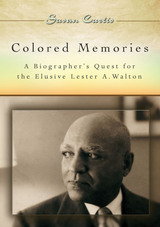
Lester A. Walton was a well-known public figure in his day. An African American journalist, cultural critic, diplomat, and political activist, he was an adviser to presidents and industrialists in a career that spanned the first six decades of the twentieth century. He was a steadfast champion of democracy and lived to see the passage of major civil rights legislation. But one word best describes Walton today: forgotten.
Exploring the contours of this extraordinary life, Susan Curtis seeks to discover why our collective memory of Walton has failed. In a unique narrative of historical research, she recounts a fifteen-year journey, from the streets of Harlem and “The Ville” in St. Louis to scattered archives and obscure public records, as she uncovers the mysterious circumstances surrounding Walton’s disappearance from national consciousness. And despite numerous roadblocks and dead ends in her quest, she tells how she came to know this emblematic citizen of the American Century in surprising ways.
In this unconventional book—a postmodern ghost story, an unprecedented experiment in life-writing—Curtis shares her discoveries as a researcher. Relating her frustrating search through long-overlooked documents to discover this forgotten man, she offers insight into how America’s obsession with race has made Walton’s story unwelcome. She explores the treachery, duplicity, and archival accidents that transformed a man dedicated to the fulfillment of American democracy into a shadowy figure.
Combining anecdotal memories with the investigative instincts of the historian, Curtis embraces the subjectivity of her research to show that what a society forgets or suppresses is just as important as what it includes in its history. Colored Memories is a highly original work that not only introduces readers to a once-influential figure but also invites us to reconsider how we view, understand, and preserve the past.
Treva B. Lindsey presents New Negro womanhood as a multidimensional space that included race women, blues women, mothers, white collar professionals, beauticians, fortune tellers, sex workers, same-gender couples, artists, activists, and innovators. Drawing from these differing but interconnected African American women's spaces, Lindsey excavates a multifaceted urban and cultural history of struggle toward a vision of equality that could emerge and sustain itself. Upward mobility to equal citizenship for African American women encompassed challenging racial, gender, class, and sexuality status quos. Lindsey maps the intersection of these challenges and their place at the core of New Negro womanhood.

Chopin's canonical status as a feminist rebel and reformer conflicts with the fact that one of her most supportive publishers throughout her life was the Youth's Companion, a juvenile periodical whose thoroughly orthodox “family values” contributed to its success as the longest-running and, at one time, most widely circulating periodical in nineteenth-century America. Not surprisingly, Chopin’s Youth’s Companion stories differ from her canonical texts in that they embrace and advance ideals of orthodox white femininity and masculinity. Rather than viewing these two representations as being at odds with each other, Bonnie Shaker asserts that Chopin's endorsement of conventional gender norms is done in the service of a second political agenda beyond her feminism, one that can help the reader appreciate nuances of identity construction previously misunderstood or overlooked in the body of her work.
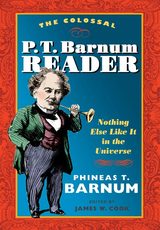
James W. Cook's The Colossal P. T. Barnum Reader is the largest collection of Barnum's works ever produced. Included are excerpts from his pseudo-autobiographical novel The Adventures of an Adventurer (1841), his European letters from 1844-46 informing readers of the New York Atlas of his regal reception overseas, and a large selection from his Ancient and Modern Humbugs of the World, Barnum's 1864-65 insider's look into the frauds of nineteenth-century American culture. It offers a glimpse of Tom Thumb's minstrel and singing performances in front of Queen Victoria, Barnum's many fraudulent representations of the supposedly ancient Joice Heth, and a more immediate, less filtered sense of Barnum as cultural and social critic in his serialized writings and travelogues. This volume also features reproductions of difficult to find posters from Barnum's two-decade collaboration with the prominent New York lithographers, Currier and Ives, and vintage photographs.
Finally, the reader also helps us to understand Barnum's role in building the modern culture industry. We follow his career from itinerant hawker, hardly distinguishable from his pre-industrial forebears, to manager of the world's first show business empire, with a staff of thousands and brand recognition across four continents. The Colossal P. T. Barnum Reader tracks the shifting personas of the great showman, his representational choices, and his publics across the nineteenth century.

The Columbia River Treaty Revisited, with contributions from historians, geographers, environmental scientists, and other experts, is intended to facilitate conversation about the impending expiration. It allows the reader, through the close inspection of the Columbia River Basin, to better grasp the uncertainty of water governance. It aids efforts, already underway, to understand changes in the basin since the treaty was passed, to predict future changes, and to determine whether alteration of the treaty is ultimately advisable.
The Columbia River Treaty Revisited will appeal to those interested in water basin management–scholars, stakeholders, and residents of the Columbia River basin alike.
A Project of the Universities Consoritum on Columbia River Governance
The Universities Consortium on Columbia River Governance, with representatives from universities in the U.S. and Canada, formed to offer a nonpartisan platform to facilitate an informed, inclusive, international dialogue among key decision-makers and other interested people and organizations; to connect university research to problems faced within the basin; and to expose students to a complex water resources problem. The Consortium organized the symposium on which this volume is based.
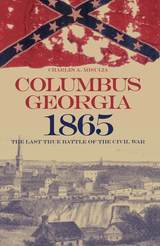
Columbus, Georgia, 1865 is a comprehensive study of the Easter Sunday, April 16, 1865, conflict, which occurred in the dark of night and extended over a mile and half through a series of forts and earthworks and was finally decided in an encounter on a bridge a thousand feet in length. This volume offers the first complete account of this battle, examining and recounting in depth not only the composition and actions of the contending forces, which numbered some three thousand men on each side, but meticulously detailing the effect of the engagement on the city of Columbus and its environs.
Misulia’s study fills in an omission in the grand account of our cataclysmic national struggle and adds a significant chapter to the history of an important regional city. In addition, Misulia takes on the long-vexing question of which encounter should be recognized as the last battle of the Civil War and argues persuasively that Columbus, Georgia, qualifies for this distinction on a number of counts.
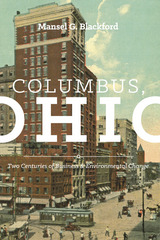
Precisely because they lived in a midsize, midwestern city, Columbus residents could learn from the earlier experiences of their counterparts in older, larger coastal metropolises, and then go beyond them. Not having large sunk costs in pre-existing water systems, Columbus residents could, for instance, develop new, world-class, state-of-the-art methods for treating water and sewage, steps essential for urban expansion. Columbus, Ohio explores how city residents approached urban challenges—especially economic and environmental ones—and how they solved them.
Columbus, Ohio: Two Centuries of Business and Environmental Change concludes that scholars and policy makers need to pay much more attention to environmental issues in the shaping of cities, and that they need to look more closely at what midwestern metropolises accomplished, as opposed to simply examining coastal cities.
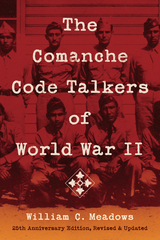
An updated edition of a popular study of the Comanche Code Talkers of WWII.
Among the Allied troops who came ashore in Normandy on D-Day were thirteen Comanches in the 4th Infantry Division’s 4th Signal Company. Under German fire they laid communications lines and sent messages in a form never before heard in Europe—coded Comanche. For the rest of World War II, the Comanche Code Talkers played a vital role transmitting orders in a code the Germans never broke. Drawing on interviews with surviving members of the unit, their training officer, and fellow soldiers, as well as archival records, William C. Meadows traces the Comanche Code Talkers from recruitment and training through wartime service and into their postwar lives. He also places their story within the broader history of Native American code talking in the world wars, comparing the Comanche program with the better-known Navajo Code Talkers and examining the military’s use of Native languages for secure communication.
This twenty-fifth anniversary edition adds a new chapter and photographs documenting long-overdue recognition for the Comanche Code Talkers, in the form of congressional medals, museum exhibits, films, and memorials, along with updates in several areas that clarify the development of code talking, add key details of the unit’s history, and highlight the enduring legacy of these soldiers and their once-secret contribution to Allied victory.
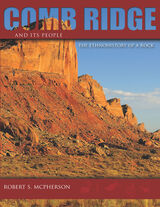
West of the Four Corners and east of the Colorado River, in southeastern Utah, a unique one-hundred-mile-long, two-hundred-foot-high, serrated cliff cuts the sky. Whether viewed as barrier wall or sheltering sanctuary, Comb Ridge has helped define life and culture in this region for thousands of years. Today, the area it crosses is still relatively remote, though an important part of a scenic complex of popular tourist destinations that includes Natural Bridges National Monument and Grand Gulch just to the west, Glen Canyon National Recreation Area and Lake Powell a bit farther west, Canyonlands National Park to the north, Hovenweep National Monument to the east, and the San Juan River and Monument Valley to the south. Prehistorically Comb Ridge split an intensively used Ancient Puebloan homeland. It later had similar cultural—both spiritual and practical—significance to Utes, Paiutes, and Navajos and played a crucial role in the history of European American settlement. To tell the story of this rock that is unlike any other rock in the world and the diverse people whose lives it has affected, Robert S. McPherson, author of multiple books on Navajos and on the Four Corners region, draws on the findings of a major, federally funded project to research the cultural history of Comb Ridge. He carries the story forward to contention over present and future uses of Comb Ridge and the spectacular country surrounding it.
The book is the winner of the 2009 Utah Book Award for Nonfiction.

In this in-depth history of the 7th, acclaimed combat historian John C. McManus takes readers from cold war campaigns through the global war on terror, chronicling the modern era of the regiment’s amazing history. Covering desperate fights for Korean hills, the struggle for control of steamy Vietnamese villages, and the lightning campaign of Desert Storm, the narrative culminates in the 7th’s toils in the Middle East. More than anything, McManus’s chronicle of the 7th portrays these unremarkable, ordinary individuals as the heart and soul of the United States Army. McManus gives a complete account of their struggles, anguish, fears, sacrifices, triumphs, and pride, providing a compelling glimpse not only of these soldiers’ journey through American history, but of the shaping of our nation as a whole.
Based on nearly a decade of research, from archives to battlefield visits to McManus’s personal interviews with countless 7th Infantry soldiers, and illustrated with maps and sixteen pages of photographs, this book is a definitive and moving story of Americans in combat.

At the end of the 1976 football season, more than forty Harvard athletes went to Boston's Combat Zone to celebrate. In the city's adult entertainment district, drugs and prostitution ran rampant, violent crime was commonplace, and corrupt police turned the other way. At the end of the night, Italian American star athlete Andy Puopolo, raised in the city's North End, was murdered in a stabbing. Three African American men were accused of the crime. His murder made national news and led to the eventual demise of the city's red-light district.
Starting with this brutal murder, The Combat Zone tells the story of the Puopolo family's struggle with both a devastating loss and a criminal justice system that produced two trials with opposing verdicts, all within the context of a racially divided Boston. Brogan traces the contentious relationship between Boston’s segregated neighborhoods during the busing crisis; shines a light on a court system that allowed lawyers to strike potential jurors based purely on their racial or ethnic identity; and lays bare the deep-seated corruption within the police department and throughout the Combat Zone. What emerges is a fascinating snapshot of the city at a transitional moment in its recent past.
Loomis provides a clear and disturbing picture of military land-use planning and how it has affected residents in Nevada. He contends that a lack of citizen participation in the development of land-use plans is a weakness in the planning process and that both the military and the citizenry should take an active role to avoid future conflicts.
Drawing from a wide range of examples, including African legal proceedings, German and American museum exhibits, Native American commemorations, public and academic debates, and scholarly research, David William Cohen explores the "walls and passageways" between academic and non-academic productions of history.
From the 1860s through the early twentieth century, Great Britain saw the rise of the department store and the institutionalization of a gendered sphere of consumption. Come Buy, Come Buy considers representations of the female shopper in British women’s writing and demonstrates how women’s shopping practices are materialized as forms of narrative, poetic, and cultural inscription, showing how women writers emphasize consumerism as productive of pleasure rather than the condition of seduction or loss. Krista Lysack examines works by Christina Rossetti, Mary Elizabeth Braddon, George Eliot, and Michael Field, as well as the suffragette newspaper Votes for Women, in order to challenge the dominant construction of Victorian femininity as characterized by self-renunciation and the regulation of appetite.
Come Buy, Come Buy considers not only literary works, but also a variety of archival sources (shopping guides, women’s fashion magazines, household management guides, newspapers, and advertisements) and cultural practices (department store shopping, shoplifting and kleptomania, domestic economy, and suffragette shopkeeping). With this wealth of sources, Lysack traces a genealogy of the woman shopper from dissident domestic spender to aesthetic connoisseur, from curious shop-gazer to political radical.

This book recounts how three larger-than-life personalities—Charles Lindbergh, Howard Hughes, and Carl Icahn—shaped the history of Trans World Airlines (TWA) and determined its fate. It’s the story of how powerful, strong-willed individuals created and ultimately destroyed an American icon that had deep roots in Kansas City and St. Louis, Missouri. Come Fly with Me traces the airline from its origins in the 1920s to the twenty-first century. By using unprecedented access to the entire TWA corporate archives and interviewing key business leaders, the authors have crafted a compelling tale of a corporation, an industry, and an era.
Come In and Hear the Truth uses a range of materials, from classic photographs to original interviews with musicians, to bring the street’s vibrant history to life and to shed new light on the interracial contacts and collaborations it generated.
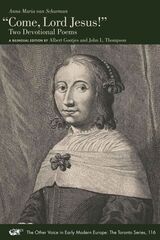
The life and reputation of Anna Maria van Schurman (1607–78) swung dramatically from her early fame as a prodigy and femme savante to the infamy she bore in the wake of her late affiliation with Jean de Labadie. From her late adolescence on, van Schurman was widely known for her intellectual gifts, her mastery of languages, and her skillful portraiture and embroidery. Described by some as a femme savante and “the Star of Utrecht,” she gained an international reputation with the publication of her defense of women’s education. Her later years, however, were marked by a growing disillusionment with her own fame and intellectual achievements, and her reputation was dramatically marred in the eyes of her contemporaries when, in her final decade, she repudiated the Dutch Reformed Church to affiliate with Jean de Labadie. With him and his spiritual community, she lived out her last years in peace while also composing a two-volume defense of her actions and convictions, entitled Eukleria or The Better Choice.
The years between her withdrawal from public life and her supposedly scandalous return are not easily mapped. Drawing on two long devotional poems that she wrote during this period (and that remained unpublished during her lifetime), this bilingual edition introduces readers to van Schurman’s private piety, as well as to her theological acumen, her artistry as a vernacular poet, and her participation in the leadership of a conventicle of like-minded friends and acquaintances. The English translation closely approximates the rhyme, meter, and cadence of the Dutch original and thus facilitates an appreciation not only of the poet’s meaning but also of the auditory aesthetics of each text.
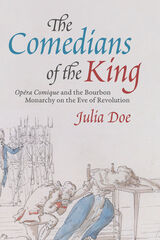
Lyric theater in ancien régime France was an eminently political art, tied to the demands of court spectacle. This was true not only of tragic opera (tragédie lyrique) but also its comic counterpart, opéra comique, a form tracing its roots to the seasonal trade fairs of Paris. While historians have long privileged the genre’s popular origins, opéra comique was brought under the protection of the French crown in 1762, thus consolidating a new venue where national music might be debated and defined.
In The Comedians of the King, Julia Doe traces the impact of Bourbon patronage on the development of opéra comique in the turbulent prerevolutionary years. Drawing on both musical and archival evidence, the book presents the history of this understudied genre and unpacks the material structures that supported its rapid evolution at the royally sponsored Comédie-Italienne. Doe demonstrates how comic theater was exploited in, and worked against, the monarchy’s carefully cultivated public image—a negotiation that became especially fraught after the accession of the music-loving queen, Marie Antoinette. The Comedians of the King examines the aesthetic and political tensions that arose when a genre with popular foundations was folded into the Bourbon propaganda machine, and when a group of actors trained at the Parisian fairs became official representatives of the sovereign, or comédiens ordinaires du roi.
Susenbrotus is in many ways representative of later university comedy. It is a rowdy, bawdy farce with roots in the Roman comedies of Plautus and Terence. The wit and much of the humor in these plays is in the reworking of traditional themes with characters and situations adapted to contemporary types and topical satire. Almost every playwright for the professional stage (with the notable exception of Shakespeare) either wrote or acted in university plays. Moreover, they were popular forms of entertainment and were attended not only by members of the academic community but also by visiting dignitaries, courtiers, foreign ambassadors, and on occasion, the English monarchs.
Susenbrotus is special among later university plays because it was specifically written for King James I. It was meant to flatter the king, who prided himself on his humanist education, with a display of wit and erudition. It was also meant to entertain: the play itself is quite funny. It involves the antics of several contemporary types (the pedant, a poet, a Spanish dandy, and a braggart soldier) vying for the affection of a cross-dressed boy. Much of the wit in Susenbrotus is verbal: scholarly puns, sexual metaphors, classical allusions, and quotations that are explained in annotations. The sustained transvestitism of the character Fortunia distinguishes it from its classical sources as well as from other plays of its type. Unlike Latin texts that were submitted to publishing houses and therefore corrected or stylized by printers, Susenbrotus is an example of Latin as it was written in the seventeenth century.
Connie McQuillen is Associate Professor of Humanities, Southwest State University, Minnesota.
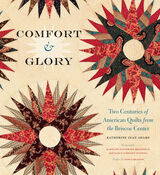
Quilts bear witness to the American experience. With a history that spans the early republic to the present day, this form of textile art can illuminate many areas of American life, such as immigration and settlement, the development of our nation’s textile industry, and the growth of mass media and marketing. In short, each quilt tells a story that is integral to America’s history.
Comfort and Glory introduces an outstanding collection of American quilts and quilt history documentation, the Winedale Quilt Collection at the Briscoe Center for American History at the University of Texas at Austin. This volume showcases 115 quilts—nearly one-quarter of the Winedale Collection—through stunning color photographs (including details) and essays about each quilt’s history and construction. The selections span more than two hundred years of American quiltmaking and represent a broad range of traditional styles and functions. Utility quilts, some worn or faded, join show quilts, needlework masterpieces, and “best” quilts saved for special occasions. Texas quilts, including those made in or brought to Texas during the nineteenth century, constitute a significant number of the selections. Color photographs of related documents and material culture objects from the Briscoe Center’s collections—quilting templates, a painted bride’s box, sheet music, a homespun dress, a brass sewing bird, and political ephemera, among them—enrich the stories of many of the quilts.
A balanced, sensitive study of the history of comfort women in Singapore during World War II.
“Comfort women” or ianfu is the euphemism used by the Japanese military for the women they compelled to do sex work in the Second World War, and has become the term generally used in English to discuss the subject. The role of comfort women in the Japanese empire during World War II remains an important and emotional topic around the world. Most scholarship concentrates on Korean comfort women, with less on their counterparts in Japan, China, and Taiwan, and even less on Southeast Asia. That gap persists despite widespread knowledge of the elaborate series of comfort stations, or comfort houses, that were organized by the Japanese administration across Singapore during the Occupation from 1942 to 1945. So why, the author asks, did no former comfort women from Singapore come forward and tell their stories when others across Asia began to do publicly in the 1990s?
To understand this silence, this book offers a detailed examination of the sex industry serving the Japanese military during the wartime occupation of Singapore: the comfort stations, managers, procuresses, girls, and women who either volunteered or were forced into service and in many cases sexual slavery. Kevin Blackburn then turns from history to the public presence of the comfort women in Singapore’s memory, including newspapers, novels, plays, television, and touristic heritage sites, showing how comfort women became known in Singapore during the 1990s and 2000s. Bringing great care, balance, and sensitivity to a difficult subject, Blackburn helps to fill an important gap in our understanding of this period.

A powerful debunking of simplistic views of a wartime tragedy
In an era marked by atrocities perpetrated on a grand scale, the tragedy of the so-called comfort women—mostly Korean women forced into prostitution by the Japanese army—endures as one of the darkest events of World War II. These women have usually been labeled victims of a war crime, a simplistic view that makes it easy to pin blame on the policies of imperial Japan and therefore easier to consign the episode to a war-torn past. In this revelatory study, C. Sarah Soh provocatively disputes this master narrative.
Soh reveals that the forces of Japanese colonialism and Korean patriarchy together shaped the fate of Korean comfort women—a double bind made strikingly apparent in the cases of women cast into sexual slavery after fleeing abuse at home. Other victims were press-ganged into prostitution, sometimes with the help of Korean procurers. Drawing on historical research and interviews with survivors, Soh tells the stories of these women from girlhood through their subjugation and beyond to their efforts to overcome the traumas of their past. Finally, Soh examines the array of factors— from South Korean nationalist politics to the aims of the international women’s human rights movement—that have contributed to the incomplete view of the tragedy that still dominates today.
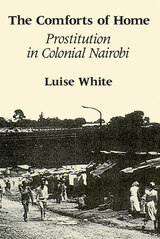
"White's book . . . takes a unique approach to a largely unexplored aspect of African History. It enhances our understanding of African social history, political economy, and gender studies. It is a book that deserves to be widely read."—Elizabeth Schmidt, American Historical Review
2023 Ray and Pat Browne Best Single Work by One or More Authors in Popular and American Culture, Popular and American Culture Association (PACA) / Popular Culture Association (PCA)
2023 Ray and Pat Browne Best Edited Reference/Primary Source Work in Popular Culture Award (Honorable Mention), Popular and American Culture Association (PACA) / Popular Culture Association (PCA)
2023 Peter C. Rollins Book Award, Southwest Texas Popular Culture and American Culture Associations (SWPACA)
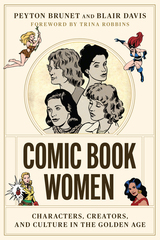
A revisionist history of women's pivotal roles as creators of and characters in comic books.
The history of comics has centered almost exclusively on men. Comics historians largely describe the medium as one built by men telling tales about male protagonists, neglecting the many ways in which women fought for legitimacy on the page and in publishers’ studios. Despite this male-dominated focus, women played vital roles in the early history of comics. The story of how comic books were born and how they evolved changes dramatically when women like June Tarpé Mills and Lily Renée are placed at the center rather than at the margins of this history, and when characters such as the Black Cat, Patsy Walker, and Señorita Rio are analyzed.
Comic Book Women offers a feminist history of the golden age of comics, revising our understanding of how numerous genres emerged and upending narratives of how male auteurs built their careers. Considering issues of race, gender, and sexuality, the authors examine crime, horror, jungle, romance, science fiction, superhero, and Western comics to unpack the cultural and industrial consequences of how women were represented across a wide range of titles by publishers like DC, Timely, Fiction House, and others. This revisionist history reclaims the forgotten work done by women in the comics industry and reinserts female creators and characters into the canon of comics history.
Wendy Gan’s Comic China investigates the circumstances and motivations of cross-cultural humor. How do works that trade in laughter shape our understanding of Western discourses about China? Is humor meant to be inclusive or exclusive? Does it protect or challenge the status quo? Gan suggests that the simple, straightforward laugh may actually be a far more intricate negotiation of power relations.
Gan unpacks texts by authors who had little real contact with China as well as writers whose proximity to China influenced their representations. Looking beyond the familiar canon of serious modernist texts and the Yellow Peril classics of popular fiction, Gan analyzes turn-of-the-twentieth-century musical comedies set in the Far East, Ernest Bramah’s chinoiserie-inspired tales, and interwar travel writing. She also considers the comic works of the missionary Arthur Henderson Smith, the former Maritime Customs Officer J.O.P. Bland, and the Shanghai journalist and advertising man Carl Crow.
Though it includes humor that is less than complimentary to the Chinese, Comic China reminds us that laughter is tied to our common humanity. Gan navigates the humor used in comic depictions ultimately to find, not superiority or ridicule, but common ground.

The fall of communism in Eastern Europe in 1989 marked, in one famous formulation, the "end of history." In his apocalyptic novel Coming from an Off-Key Time, Bogdan Suceavă satirizes the events in his native Romania since the violent end of the Ceauşescu regime that fateful year.
Suceavă uses three interrelated narratives to illustrate the destructive power of Romanian society’s most powerful mythologies. He depicts madness of all kinds but especially religious beliefs and their perversion by all manner of outrageous sects. Here horror and humor reside impossibly in the same time and place, and readers experience the vertiginous feeling of living in the middle of a violent historical upheaval.
Even as Coming from an Off-Key Time suggests the influence of such writers as Mikhail Bulgakov, the fantastic satirist of the early Soviet Union, Suceavă engages the complexities of a quickly changing country in search of its bearings and suspicious of its past. Bogdan Suceavă is an associate professor of mathematics at California State University, Fullerton. One of Romanian literature’s most promising and original young writers, he is the author of four novels, two books of short stories, and several collections of poems.
Alistair Ian Blyth’s previous translations include Filip Florian, Little Fingers (2009); Lucian Dan Teodorovici, Our Circus Presents (2009); and Catalin Avramescu’s An Intellectual History of Cannibalism (2009).
Pegged pants poodle skirts, record hops, rock ‘n’ roll, soda shops: in the interval between the bombing of Hiroshima and the assassination of John F. Kennedy, these were distinguishing marks of the "typical" postwar teenager-if there was a "typical" teenager. In this richly illustrated account of Youth in postwar Buffalo, William Graebner argues that the so-called Youth culture was really a variety of "disparate subcultures, united by age but in conflict over class, race, ethnicity, and gender." Using scrap books, oral histories, school Yearbooks, and material culture, he shows how Buffalo teenagers were products of diverse and often antagonistic subcultures. The innocuous strains of "Rock Around the Clock" muffled the seething gang loyalties and countercultural influence of James Dean, Marlon Brando, and Buffalo’s own "Hound Dog" Lorenz. Racial antipathies once held in check spilled out on Memorial Day, 1956, when white and black Youth clashed on board a take Erie pleasure boat in a "riot" that recast the city’s race relations for decades to come.
While exploring the diversity within Youth subcultures, Graebner examines the ways in which adults—educators, clergy, representatives of the media, and other authorities—sought to contain this generation. The Hi-Teen Club, Buffalo Plan dress code, record hops, graduation ceremonies, film censorship, and restrictions on secret societies and on corner lounging were all forms of social engineering that reinforced social and economic boundaries that were at the heart of the dominant culture. The prevailing adult influence on activities, attitudes, and style served to redirect the "misguided Youth" of the fifties and to obliterate their image from public memory. Although the media still portrays this decade as the golden age of cultural homogeneity, the diversity in musical preferences, hair and clothing styles, and allegiances to disc jockeys suggest the wide diversity of Youth experiences and challenges to adult authority that were part of coming of age in postwar America.
In this absorbing memoir, Merrill D. Peterson traces his progress from a young Kansas Republican to a "Left Liberal," Democrat by reconstructing how the New Republic singularly influenced his intellectual development and academic career during some of the most turbulent years in American history—the final years of the Great Depression through World War II and the beginnings of the Cold War. Peterson recalls how, as a young man, he was guided to intellectual maturity by such extraordinary individuals as Max Lerner, Archibald MacLeish, Vincent Sheean, Alfred Kazin, Lewis Mumford, and Malcolm Cowley—all contributors to this important magazine. We look back, with Peterson, and see how their views are inextricably reflected in his own developing worldview.
Peterson was introduced to this liberal weekly by one of his teachers during his senior year of high school (1938-1939). For the next ten years, the magazine served as his principal guide to the politics and culture of the times. Now, at seventy-eight years of age, Peterson revisits the magazine that he read so eagerly during those early, impressionable years. With considerable skill and charm, Peterson weaves together the fresh reading, the history of the country during the 1940s, and his own personal history to give us the heart of the book. In addition, he includes brief essays on Vernon L. Parrington, Lewis Mumford, and Max Lerner, the three American writers and intellectuals he believes had the most influence on him.
Peterson discusses several turning points in his young life, but he focuses primarily on his education and the role the magazine played in it. The book concludes when Peterson, with a Ph.D. in the history of American civilization, accepts his first academic appointment, at Brandeis University, and approaches the publication of his first book. Thus, a critical chapter in his life comes to a close.
". . . those who would examine the democratic process during a period of progressive breakdown, in order to understand the dangers it embodies within itself, will find The Coming of the Civil War a classic analysis."—Louis D. Rubin, Jr., Sewanee Review
"The book has always been recognized, even by its most severe critics, as a work of consummate scholarship."—T. Harry Williams, Baton Rouge Morning Advocate
From the first story about the discovery of gold in California in 1848 to features on today’s western boomtowns, western expansion and journalism have had a symbiotic relationship. By examining this relationship along its entire timeline, this book argues that newspapers played a crucial role in pushing aside both wildlife and Native Americans to make room for the settlers who would become their readers. The western news sheets not only shaped reader attitudes but also undertook innovations in content and appearance that would affect newspapers nationwide.
In this volume, R. Richard Wagner draws on historical research and materials from his extensive personal archive to not only chronicle an important movement, but also to tell the stories of the state’s LGBT pioneers—from legislators and elected officials to activists, businesspeople, and everyday citizens. Coming Out, Moving Forward documents the rich history of Wisconsin’s LGBT individuals and communities as they pushed back against injustice and found ways to live openly and proudly as themselves.
Coming Out, Moving Forward is a continuation to the first volume in this series, We’ve Been Here All Along.
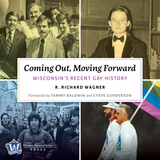
In this volume, R. Richard Wagner draws on historical research and materials from his extensive personal archive to not only chronicle an important movement, but also to tell the stories of the state’s LGBT pioneers—from legislators and elected officials to activists, businesspeople, and everyday citizens. Coming Out, Moving Forward documents the rich history of Wisconsin’s LGBT individuals and communities as they pushed back against injustice and found ways to live openly and proudly as themselves.
Coming Out, Moving Forward is a continuation to the first volume in this series, We’ve Been Here All Along.
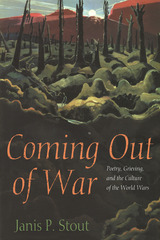
World War I is widely considered “the Great War” and World War II, “the Good War.” Janis Stout thinks of them as two parts of a whole that continues to engage historians and literary scholars searching for an understanding of both the actual war experiences and the modern culture of grief they embody. In Coming Out of War: Poetry, Grieving, and the Culture of the World Wars Stout argues that poetry, of all the arts, most fully captures and conveys those cultural responses.
While probing the work of such well known war poets as Rupert Brooke, Wilfred Owen, and Randall Jarrell, Stout also highlights the impact of the wars on lesser studied, but equally compelling, sources such as the music of Charles Ives and Cole Porter, Aaron Copland and Irving Berlin. She challenges the commonplace belief that war poetry came only from the battlefield and was written only by men by examining the wartime writings of women poets such as Rose Macaulay, Marianne Moore, Elizabeth Bishop, and Gwendolyn Brooks. She also challenges the assumption that World War II did not produce poetry of distinction by studying the work of John Ciardi, Karl Shapiro, Louis Simpson, Robert Frost, and Wallace Stevens. While emphasizing aesthetic continuity between the wars, Stout stresses that the poetry that emerged from each displays a greater variety than is usually recognized.
A final chapter considers Benjamin Britten’s War Requiem as a culmination and embodiment of the anti-war tradition in 20th-century poetry and music, and speculates on the reasons why, despite their abundance and eloquence, these expressions of grief and opposition to war have effected so little change.
One of the most maligned, misunderstood, and even mocked constituencies in American politics, gay Republicans regularly face condemnation from both the LGBTQ+ community and their own political party. Yet they’ve been active and influential for decades. Gay conservatives were instrumental, for example, in ending “Don’t Ask, Don’t Tell” and securing the legalization of same-sex marriage—but they also helped lay the groundwork for the rise of Donald Trump.
In Coming Out Republican, political historian and commentator Neil J. Young provides the first comprehensive history of the gay Right. From the 1950s up to the present day, Young excavates the multifarious origins, motivations, and evolutions of LGBTQ+ people who found their way to the institutions and networks of modern conservatism. Many on the gay Right have championed conservative values—like free markets, a strong national defense, and individual liberty—and believed that the Republican Party therefore offered LGBTQ+ people the best pathway to freedom. Meanwhile, that same party has actively and repeatedly demonized them. With his precise and provocative voice, Young details the complicated dynamics of being in—and yet never fully accepted into—the Republican Party.
Coming Out Republican provides striking insight into who LGBTQ+ conservatives are, what they want, and why many of them continue to align with a party whose rank and file largely seem to hate them. As the Republican Party renews its assaults on LGBTQ+ rights, understanding the significant history of the gay Right has never been more critical.
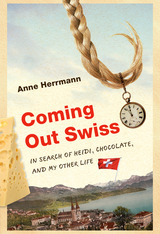
In a work that is part memoir, part history and travelogue, Herrmann explores all our Swiss clichés (chocolate, secret bank accounts, Heidi, Nazi gold, neutrality, mountains, Swiss Family Robinson) and also scrutinizes topics that may surprise (the “invention” of the Alps, the English Colony in Davos, Switzerland’s role during World War II, women students at the University of Zurich in the 1870s). She ponders, as well, marks of Swissness that have lost their identity in the diaspora (Sutter Home, Helvetica, Dadaism) and the enduring Swiss American community of New Glarus, Wisconsin. Coming Out Swiss will appeal not just to the Swiss diaspora but also to those drawn to multi-genre writing that blurs boundaries between the personal and the historical.
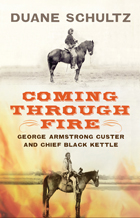
The cold dawn of November 27, 1868, was the moment George Armstrong Custer had longed for ever since the Civil War ended three years before. It was also the moment Black Kettle of the Cheyenne nation had feared ever since he had survived the deadly attack on his people at Sand Creek, Colorado Territory. Custer, who gloried in battle, was no longer the national hero, the celebrity he had been in wartime. He was a forgotten man who had failed in his first Indian campaign the year before. He needed a resounding victory to resurrect the attention he craved, and the sleepy Cheyenne village along the banks of the Washita River—ironically near present-day Cheyenne, Oklahoma—proved irresistible. Custer led his 7th U.S. Cavalry in an early morning charge that wiped out the encampment, killing those who resisted and some of those who fled. Black Kettle’s Cheyenne had signed documents of peace with the U.S. Government as they had done before Sand Creek, but once again that did not protect them. Custer ordered his troops to capture women and children and traveled with these prisoners as a way to shield his column from a retaliatory strike on their way back to their post. Called both a massacre and a battle, the action at the Washita River returned Custer to national prominence as the “greatest Indian fighter of all.”
Coming Through Fire: George Armstrong Custer and Chief Black Kettle tells the converging stories of a Civil War hero and a native warrior who met along the Washita River. Black Kettle had given up fighting—he had “come through the fire”— and made his mark on treaty after treaty to try to save the Cheyenne and their way of life from the encroachments of the U.S. government and white settlers. He watched the government breach the terms of each treaty, yet he continued to work for a compromise, knowing that negotiations were the only way his people could survive. But the flood of wagon trains and settlements, the killing of the great buffalo herds, the new diseases and broken promises, political ambition, naked greed, and continuing restrictions on land, food, and shelter persisted. As the U.S. Army, including Custer, continued to attack and forceably move Indians to reservations despite treaties indicating otherwise, Black Kettle’s dreams of peace were shattered. He ended his life face down in the freezing waters of the Washita River, shot by one of Custer’s troopers. The “greatest Indian fighter” would not survive the Indian Wars either, cut down near the Little Big Horn River, in part for his actions against Black Kettle and the Cheyenne.
Commager on Tocqueville is Henry Steele Commager's masterful interpretation of Alexis de Tocqueville's Democracy in America. Using Tocqueville's classic as a vehicle for discussing such contemporary issues as the environment, civil rights, and the military-industrial complex, Commager calls for a new vision of American leadership that trascends nationalism.

“A military classic. Douhet asserted the decisiveness of strategic bombardment before Billy Mitchell and other air leaders had given that subject any detailed thought.” —Col. John F. Shiner, Air University Review
The Command of the Air presents Giulio Douhet’s groundbreaking argument that air power is the decisive force in modern war. In this classic work of military theory, Douhet defines the revolutionary concept of the “command of the air”—the idea that victory belongs to the nation able to prevent its enemy from flying while striking vital centers deep behind the lines. Through bold logic and vivid examples, the book shows how aviation transformed warfare by bypassing armies and navies entirely, projecting power directly against a nation’s industrial, communications, and civilian infrastructure.
This edition brings together Douhet’s original 1921 text, his expanded 1927 revision, and subsequent essays, all framed by a rich editors’ introduction. Readers gain insight into his vision of the Independent Air Force, the strategic use of mass bombing, and the technological evolution of modern aircraft. Douhet’s credentials—an Italian general, early aviation commander, and one of history’s most influential air‑power theorists—underscore the authority and ambition behind his ideas.
Scholars and students of military history, air‑power strategy, national security, and the evolution of modern warfare will find this volume indispensable. It is equally valuable for contemporary defense professionals seeking to understand how concepts such as strategic bombing, total war, and air superiority first took shape.
When the past is painful, as riddled with violence and injustice as it is in postapartheid South Africa, remembrance presents a problem at once practical and ethical: how much of the past to preserve and recollect and how much to erase and forget if the new nation is to ever unify and move forward? The new South Africa’s confrontation of this dilemma is Martin J. Murray’s subject in Commemorating and Forgetting. More broadly, this book explores how collective memory works—how framing events, persons, and places worthy of recognition and honor entails a selective appropriation of the past, not a mastery of history.
How is the historical past made to appear in the present? In addressing these questions, Murray reveals how collective memory is stored and disseminated in architecture, statuary, monuments and memorials, literature, and art—“landscapes of remembrance” that selectively recall and even fabricate history in the service of nation-building. He examines such vehicles of memory in postapartheid South Africa and parses the stories they tell—stories by turn sanitized, distorted, embellished, and compressed. In this analysis, Commemorating and Forgetting marks a critical move toward recognizing how the legacies and impositions of white minority rule, far from being truly past, remain embedded in, intertwined with, and imprinted on the new nation’s here and now.
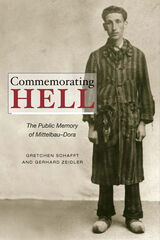
Prisoners at Mittelbau-Dora built the V-1 and V-2 missiles, some of them coming into direct contact with Wernher von Braun and Arthur Rudolph, who later became leading engineers in the U.S. space program. Through the continuing story of Mittelbau-Dora, from its operation as a labor camp to its social construction as a monument, Schafft and Zeidler reflect an abiding interest in the memory and commemoration of notorious national events. In extending the analysis of Mittelbau-Dora into post-war and present-day Germany, Commemorating Hell uncovers the intricate relationship between the politics of memory and broader state and global politics, revealing insights about the camp's relationship to the American space pioneers and the fate of the nearby city of Nordhausen.

The University of Illinois Press has paired the volume with a special web-based companion overseen by the translator and hosted by the Illinois Open Publishing Network. This online resource includes Brokaw’s translations of all 225 of Schulze’s essays alongside digital tools for searching, sorting, and bundling the commentaries according to date of composition, position within the liturgical church year sequence, and librettist.

Parker begins by tracing the criticism of Dante commentaries from the nineteenth century to the present and then examines the tradition of commentary from the Middle Ages to the Renaissance. She shows how the civic, institutional, and social commitments of commentators shaped their response to the Comedy, and how commentators tried to use the poem as an authoritative source for various kinds of social legitimation. Parker discusses how different commentators dealt with a deeply political section of the poem: the damnation of Brutus and Cassius.
The scope and importance of Commentary and Ideology will command the attention of a broad group of scholars, including Italian specialists on Dante, late medievalists, students and professionals in early modern European literature, bibliographers, critical theorists, historians of literary criticism and theory, and cultural and intellectual historians.
In addition to the complete Greek text and commentary, this volume includes a substantial introduction to the playwright’s career and to the historical and political background of the play. It includes advice for students on grammar and syntax, meter, festivals and staging, as well as topical and literary references and allusions that will help guide students to a mature appreciation of the comedy’s humor, seriousness, and artistic quality. Priced and sized for classroom use, this is the first full commentary on Knights since 1901 and will be widely welcomed.
Celia Schultz’s earlier volume in this series presented the text and commentary for De Divinatione I. With Andrew Dyck’s companion volume on the second book of De Divinatione, students and teachers are well served with crucial texts from one of Rome’s most famous philosophers, as he considers important Roman practices and beliefs.

Surprisingly, de Legibus has been one of Cicero's most neglected works. Andrew R. Dyck's commentary is the first to appear on the complete work in well over one hundred years. Dyck provides a detailed interpretation and sets the essay into the context of the politics and philosophical thought of its time. While previous commentaries focused primarily on grammar and textual criticism, this one also seeks to relate Cicero's text to the political, philosophical, and religious trends of his day. The author identifies the influences on Cicero's thinking and analyzes the relation of this theoretical treatise to his other works. This commentary is based on a new text, worked out in consultations between the author and Jonathan Powell of Royal Holloway, London.
Andrew Dyck is Professor of Classics, University of California at Los Angeles.
Composed in haste shortly before Cicero's death, de Officiis has exercised enormous influence over the centuries. It is all the more surprising that Andrew R. Dyck's volume is the first detailed English commentary on the work written in this century. It deals with the problems of the Latin text (taking account of Michael Winterbottom's new edition), it delineates the work's structure and sometimes elusive train of thought, clarifies the underlying Greek and Latin concepts, and provides starting points for approaching the philosophical and historical problems that de Officiis raises.
A work of major importance for classicists, philosophers, and ancient historians, this Commentary will be an invaluable companion to all readers of Cicero's last philosophical work.
Andrew R. Dyck is Professor of Classics, University of California, Los Angeles.
Publication of this volume is supported by a grant from the National Endowment for the Humanities.
This up-to-date, authoritative commentary on the play will prove useful to directors and actors and will readily introduce students to the joys of Roman comedy.

Commentary on Thucydides, Book 3 remedies this situation by offering detailed linguistic explanations and grammatical clarifications designed to appeal both to seasoned Classicists and to a broader group of non-specialist readers who may still be developing their Greek language skills. Starting with 428 BCE, Book 3 covers a critical period of the Peloponnesian War in which the conflict began to manifest its extraordinary violence and scale. The book contains influential and controversial discussions, including Thucydides’ own analysis of the nature of war and the ways that it teaches “lessons of violence” to individuals and states. Book 3 also features the famous Mytilenean Debate, an argument premised on the thesis that all international relations are, or should be, fundamentally amoral. Educated readers have always looked to Thucydides in turbulent times, and this commentary will open up his text to a wider audience.
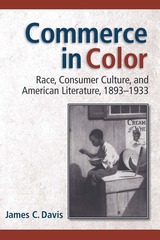
Commerce in Color exploresthe juncture of consumer culture and race by examining advertising, literary texts, mass culture, and public events in the United States from 1893 to 1933. James C. Davis takes up a remarkable range of subjects—including the crucial role publishers Boni and Liveright played in the marketing of Harlem Renaissance literature, Henry James’s critique of materialism in The American Scene, and the commodification of racialized popular culture in James Weldon Johnson’s The Autobiography of anEx-Colored Man—as he argues that racial thinking was central to the emergence of U.S. consumerism and, conversely, that an emerging consumer culture was a key element in the development of racial thinking and the consolidation of racial identity in America. By urging a reassessment of the familiar rubrics of the “culture of consumption” and the “culture of segregation,” Dawson poses new and provocative questions about American culture and social history.
Both an influential literary study and an absorbing historical read, Commerce in Color proves that—in America—advertising, publicity, and the development of the modern economy cannot be understood apart from the question of race.
“A welcome addition to existing scholarship, Davis’s study of the intersection of racial thinking and the emergence of consumer culture makes connections very few scholars have considered.”
—James Smethurst, University of Massachusetts
James C. Davis is Assistant Professor of English at Brooklyn College.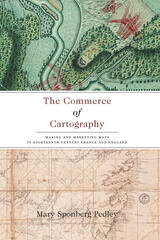
Conceptualizing the relationship between economics and cartography, Pedley traces the process of mapmaking from compilation, production, and marketing to consumption, reception, and criticism. In detailing the rise of commercial cartography, Pedley explores qualitative issues of mapmaking as well. Why, for instance, did eighteenth-century ideals of aesthetics override the modern values of accuracy and detail? And what, to an eighteenth-century mind and eye, qualified as a good map?
A thorough and engaging study of the business of cartography during the Enlightenment, The Commerce of Cartography charts a new cartographic landscape and will prove invaluable to scholars of economic history, historical geography, and the history of publishing.
By the time French colonists sought a portion of the New World’s riches, much of those resources had already been claimed by Spain and Portugal. Once settled in North America, however, they quickly turned their attentions to commerce, specifically to trade within the Louisiana region. For almost 65 years French explorers, soldiers, administrators, and accountants focused on establishing a string of forts and small villages at key points in the Mississippi and Illinois River valleys, eastward to the Mobile River drainage, and westward toward New Mexico. Despite a long and costly war at home, for a time it looked as though the French would be successful in controlling a vast swath of the middle of North America with routes stretching from Quebec City to New Orleans.
Under the guidance of leaders such as LaSalle, Joliet, Father Marquette, Frontenac, Hennepin, and Bienville, the French made a good start in the lucrative trading business and established working relationships with most of the Indians of the region. But by 1763, with war in Europe and a faltering economy at home, commerce in the New World eroded along with the ability of the French to control the region and to protect their investments from the encroachment of the Spanish and English.
Latin epics such as Virgil’s Aeneid, Lucan’s Civil War, and Statius’s Thebaid addressed Roman aristocrats whose dealings in gifts, favors, and payments defined their conceptions of social order. In The Commerce of War, Neil Coffee argues that these exchanges play a central yet overlooked role in epic depictions of Roman society.
Tracing the collapse of an aristocratic worldview across all three poems, Coffee highlights the distinction they draw between reciprocal gift giving among elites and the more problematic behaviors of buying and selling. In the Aeneid, customary gift and favor exchanges are undermined by characters who view human interaction as short-term and commodity-driven. The Civil War takes the next logical step, illuminating how Romans cope once commercial greed has supplanted traditional values. Concluding with the Thebaid, which focuses on the problems of excessive consumption rather than exchange, Coffee closes his powerful case that these poems constitute far-reaching critiques of Roman society during its transition from republic to empire.

An advertising film placed promotional content into movies presented as travelogues, educational shorts, industrial films, or scenes of daily life. Business and government, meanwhile, built systems to distribute the films to unsuspecting audiences in schools, churches, civic groups, and universities. Through experimentation, corporations honed sophisticated tools of persuasion that used moving images to influence the public. What they learned reshaped notions of storytelling, technology, and corporate communication while setting the stage for advertising’s symbiotic relationship with television.
Persuasive and expert, Commercial Cinema illuminates the changing fortunes and eventual fate of a film genre in disguise.
READERS
Browse our collection.
PUBLISHERS
See BiblioVault's publisher services.
STUDENT SERVICES
Files for college accessibility offices.
RECENTLY PUBLISHED


UChicago Accessibility Resources
home | accessibility | search | about | contact us
BiblioVault ® 2001 - 2026
The University of Chicago Press